 Reina
Reina As an Amazon Associate, I may earn a small commission from qualifying purchases at no extra cost to you. This helps me create more valuable, tested content for you.
If you have ever stood in your kitchen holding a saucepan and wondered whether it counts as a utensil, you are not alone. The answer is yes, but the real question is why you are unsure. Most people run into trouble because the word “utensil” gets used in two different ways. One is the broad dictionary definition that includes anything you use to prepare, cook, or serve food. The other is the everyday shopping-list meaning that tends to only cover hand tools like spatulas and ladles. A saucepan fits the first definition perfectly, and it gets left out of the second one. That gap is where the confusion lives. I want to walk you through the system so you never have to guess about classification again.
The Dictionary Trap

Look up “utensil” and you will find something like “any implement, vessel, or tool used in a household, especially a kitchen.” By that definition, a saucepan is obviously a utensil. It is a vessel used for cooking. The problem is that this definition is so broad it does not help you when you are trying to organize your kitchen or search for something in a store catalog. A colander, a mixing bowl, a whisk, and a saucepan all fall under the same umbrella term. That leaves you with no way to tell them apart, which is why the simple yes-or-no answer feels unsatisfying.
But you already knew that. The real issue is that “utensil” is an umbrella term, and a saucepan belongs under a specific branch of that umbrella.
Mapping the Kitchen Taxonomy
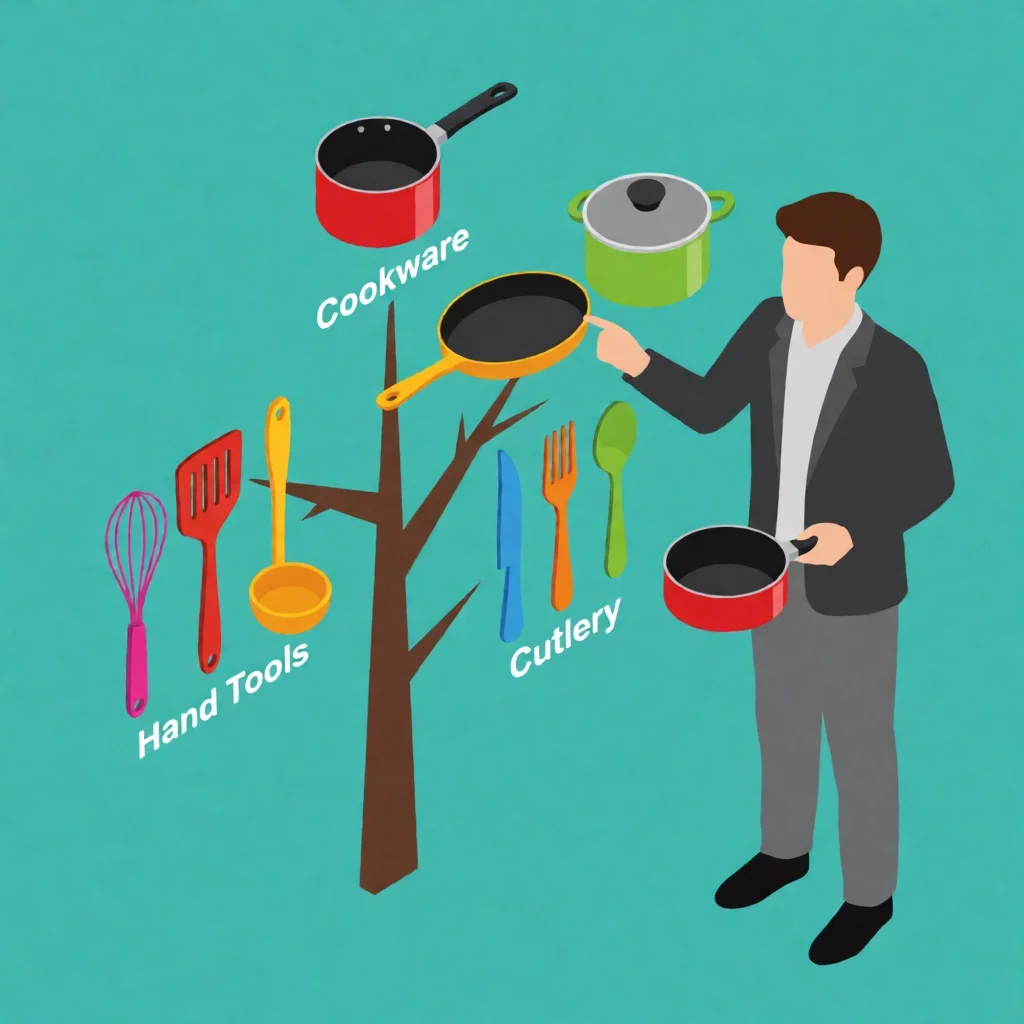
To understand where a saucepan lives, you have to look at the whole structure of kitchen tools. Think of it as a tree with one broad category at the top and several clear branches underneath.
The Broad Category: Kitchen Utensil. This covers anything you use to prepare, cook, or serve food. A saucepan, a spoon, a knife, and a colander all go here.
Branch 1 – Cookware: These are vessels that apply heat to food. They sit on a burner or in an oven. Examples include saucepans, skillets, pots, and Dutch ovens.
Branch 2 – Hand Tools: These are implements you manipulate with your hand during food preparation or cooking. Examples include spatulas, ladles, whisks, tongs, and measuring cups.
Branch 3 – Cutlery: Tools for cutting or eating. Knives, forks, and spoons.
When you use a saucepan, you are using cookware. When you use a whisk to stir what is inside that saucepan, you are using a hand tool. Both are utensils, but they serve different functions within the same classification. The saucepan holds the food while heat does the work. The whisk moves the food around. That distinction matters because it changes how you think about buying or organizing them.
Dispelling the Hand-Held Myth

This is where the real confusion comes from. Many people believe a utensil must be a small, hand-held implement that you actively move during the entire cooking process. A spatula flips an egg. A whisk stirs a sauce. A ladle scoops soup. Those are all active tools. A saucepan, by contrast, sits still on the burner. You touch the handle only to move it onto a burner or to pour something out. So it feels different.
But the handle on a saucepan exists for placement and pouring, not for constant manipulation. That makes it a passive utensil. It is still a tool for a kitchen task, just a different kind of tool.
Think of a hammer and a nail block. The hammer is swung. The nail block is held in place. Both are tools. The saucepan is the nail block — a necessary part of the tool system, even though it does not do the swinging. Once you see that distinction, the classification becomes clear. A saucepan is a utensil, but it belongs to the cookware sub-category, not the hand-tool sub-category.
The Shopping List Nuance
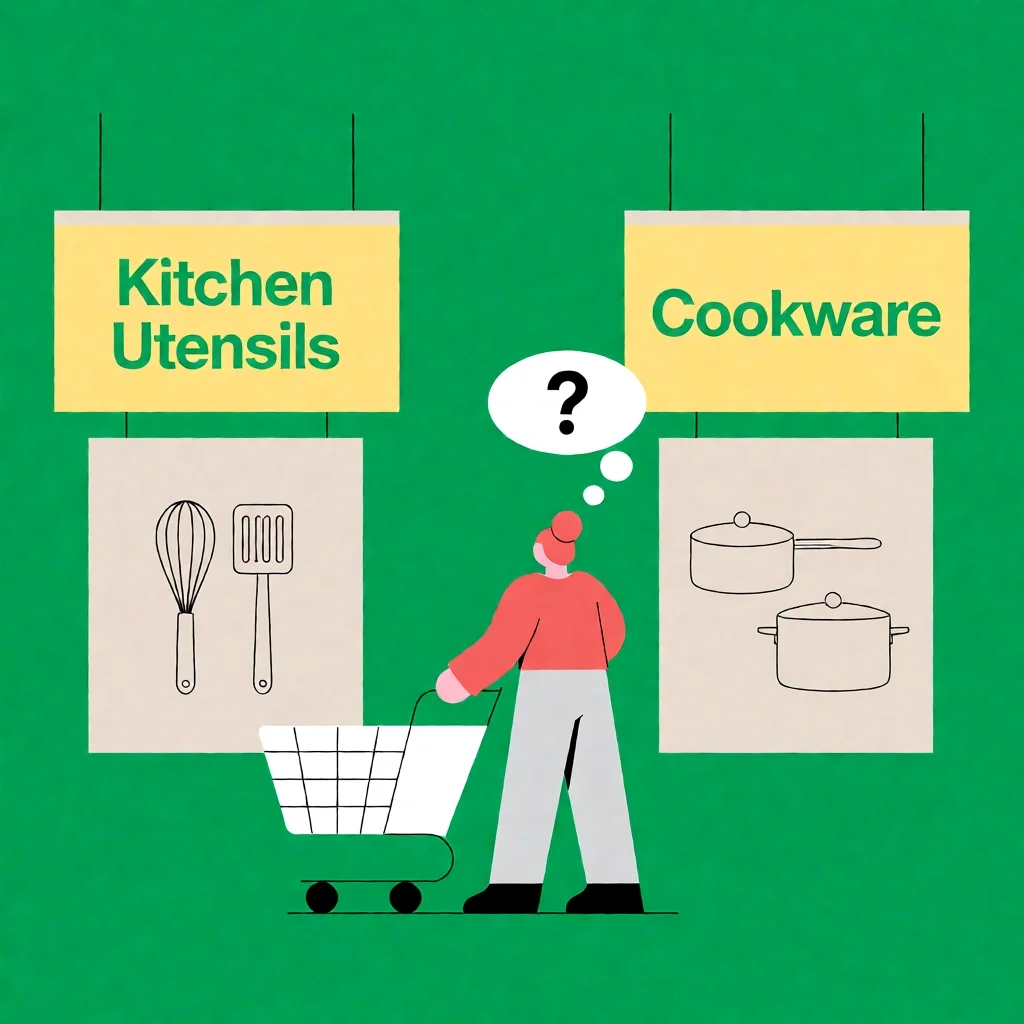
One more layer explains why you may have trouble finding a saucepan when you search under “utensils” in a store or online catalog. Retailers and inventory systems group things by how customers shop. When a store labels a section “Kitchen Utensils,” they almost always mean hand tools. You will find whisks, spatulas, peelers, and measuring spoons there. You will not find saucepans. Those sit in the “Cookware” or “Pots & Pans” section.
This is a search behavior problem, not a definitional problem. If you walk into a store and look for a saucepan under utensils, you will come up empty. That reinforces the idea that a saucepan is not a utensil. But the reality is that the store is using a narrower meaning for their own convenience. The definition from the dictionary has not changed.
So here is the practical takeaway: use the word “cookware” when comparing a saucepan to a skillet or a stockpot. Use the word “utensil” when comparing a saucepan to a spoon or a colander. They are all utensils, but the specific branch matters depending on what you are trying to do.
Frequently Asked Questions
Is a colander a kitchen utensil?
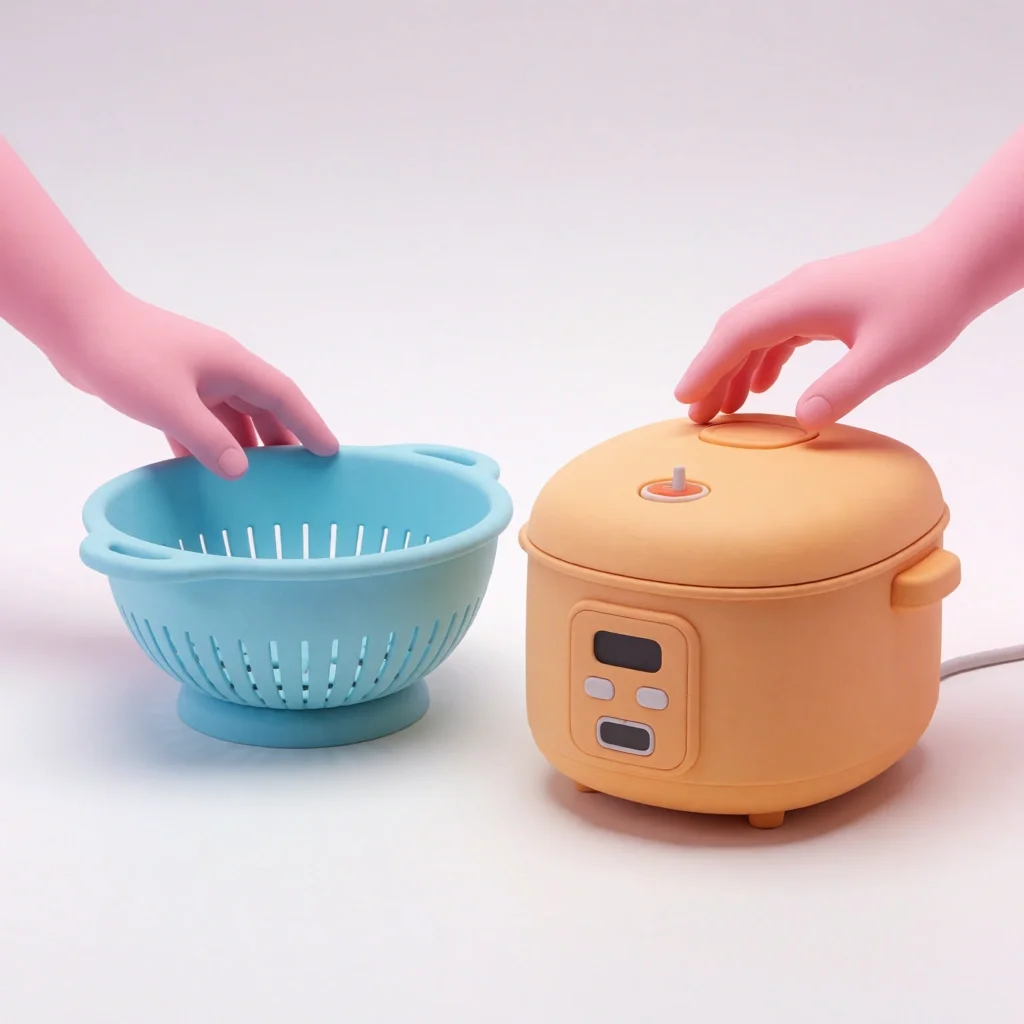
Yes, a colander is a kitchen utensil. It falls under the same logic as a saucepan — it is a vessel utensil. But instead of being cookware (used for heating), a colander is a preparation tool. You use it to drain and rinse food. It belongs under the “preparation tools” sub-category, not the “cookware” sub-category.
Is a rice cooker a kitchen utensil?
Modern definitions typically classify a rice cooker as a kitchen appliance. The key difference is independent electrical function. A rice cooker uses electricity to heat food on its own, without needing a stovetop. It performs a similar task to a saucepan — cooking rice — but because it is a self-contained electric device, it gets classed as an appliance rather than a utensil.
Can I use my saucepan as a utensil for serving?
You can certainly bring a saucepan to the table and serve directly from it. But linguistically and categorically, it is still cookware used for serving purposes. It lacks the direct hand manipulation of a ladle or spoon. So while it works for serving, it does not change the fact that it is primarily a vessel for cooking.

