 Reina
Reina As an Amazon Associate, I may earn a small commission from qualifying purchases at no extra cost to you. This helps me create more valuable, tested content for you.
Learn what makes a good saucepan: materials, size, handle design, and lid quality. A practical guide to choosing a saucepan that performs.
A good saucepan isn’t the one with the fanciest brand name or the highest price tag. It’s the one that heats evenly, pours cleanly, and feels balanced in your hand. After years of cooking daily and testing pans side by side, I’ve learned that quality comes down to a handful of specific engineering choices. Here’s exactly what to look for.
What Makes a Saucepan Good or Bad
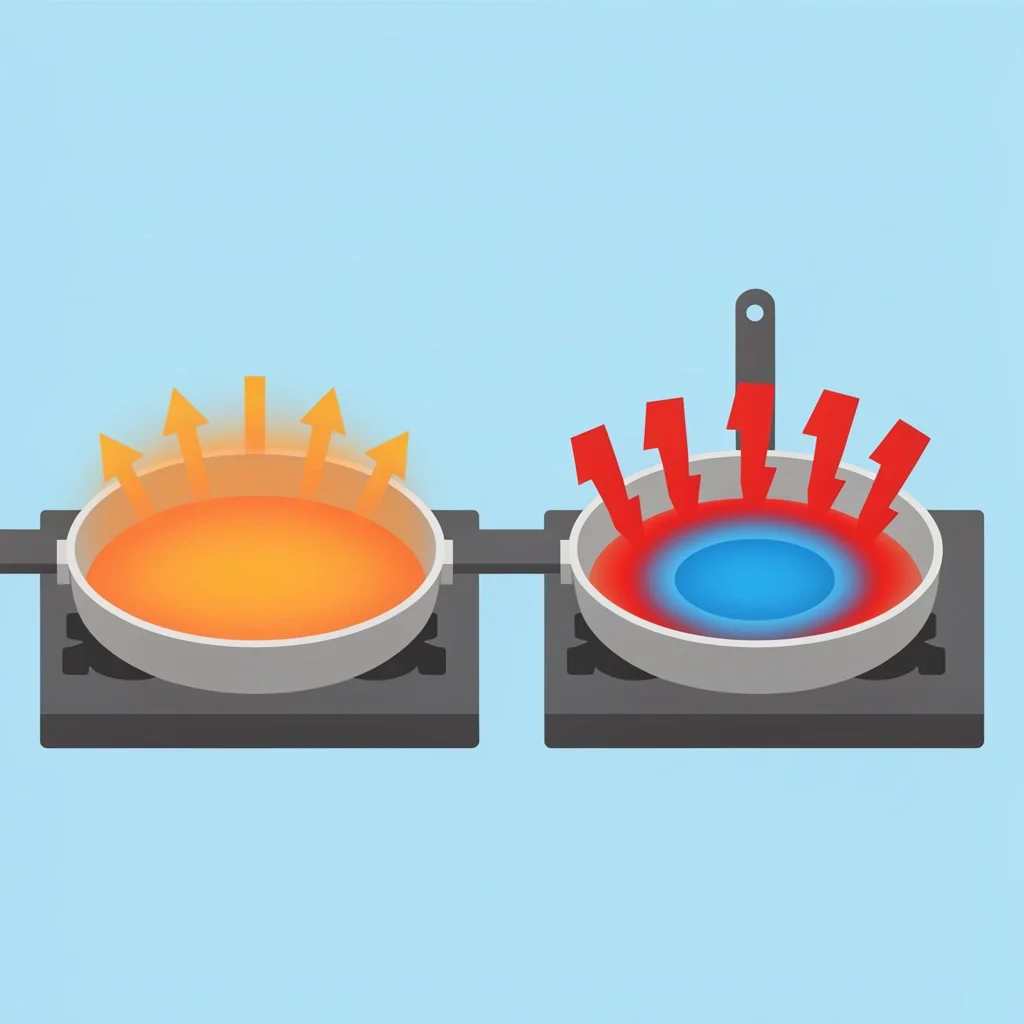
A saucepan has one job: to heat liquid-based foods evenly and predictably. That means boiling water, simmering soup, cooking rice, or reducing a sauce. A bad saucepan creates hot spots—where the milk scorches or the rice sticks in one area while the rest is underdone. A good saucepan distributes heat across the entire flat bottom and up the sides, without burning your handle or making you fight to pour.
The three things a good saucepan must do are:
- Conduct heat evenly from burner to food
- Maintain stable temperature when you add cold ingredients
- Pour cleanly without dripping down the side
If a pan fails at any of these, it doesn’t matter how shiny it is. So let’s break down the construction details that make those three things happen.
Understanding Saucepan Construction and Material Layers
The material your saucepan is made from determines how it heats. You can’t judge a pan by its brand or price alone. You need to know what’s inside the walls.
Why Stainless Steel and Aluminum Work Together
Pure stainless steel is a poor heat conductor. It heats unevenly and develops hot spots quickly. That’s why almost all quality saucepans use a sandwich construction: stainless steel on the inside and outside, with a conductive core of aluminum or copper in the middle.
The stainless steel interior is non-reactive. That means you can cook acidic foods—tomato sauce, lemon-based reductions, wine sauces—without a metallic taste or discoloration. The aluminum or copper core spreads heat rapidly from the burner across the entire base and up the sides.
This layered construction is called “cladding.” The most common is tri-ply: three layers (stainless-aluminum-stainless). Five-ply adds extra layers of aluminum and stainless steel.
Tri-Ply vs. Five-Ply: What Actually Matters
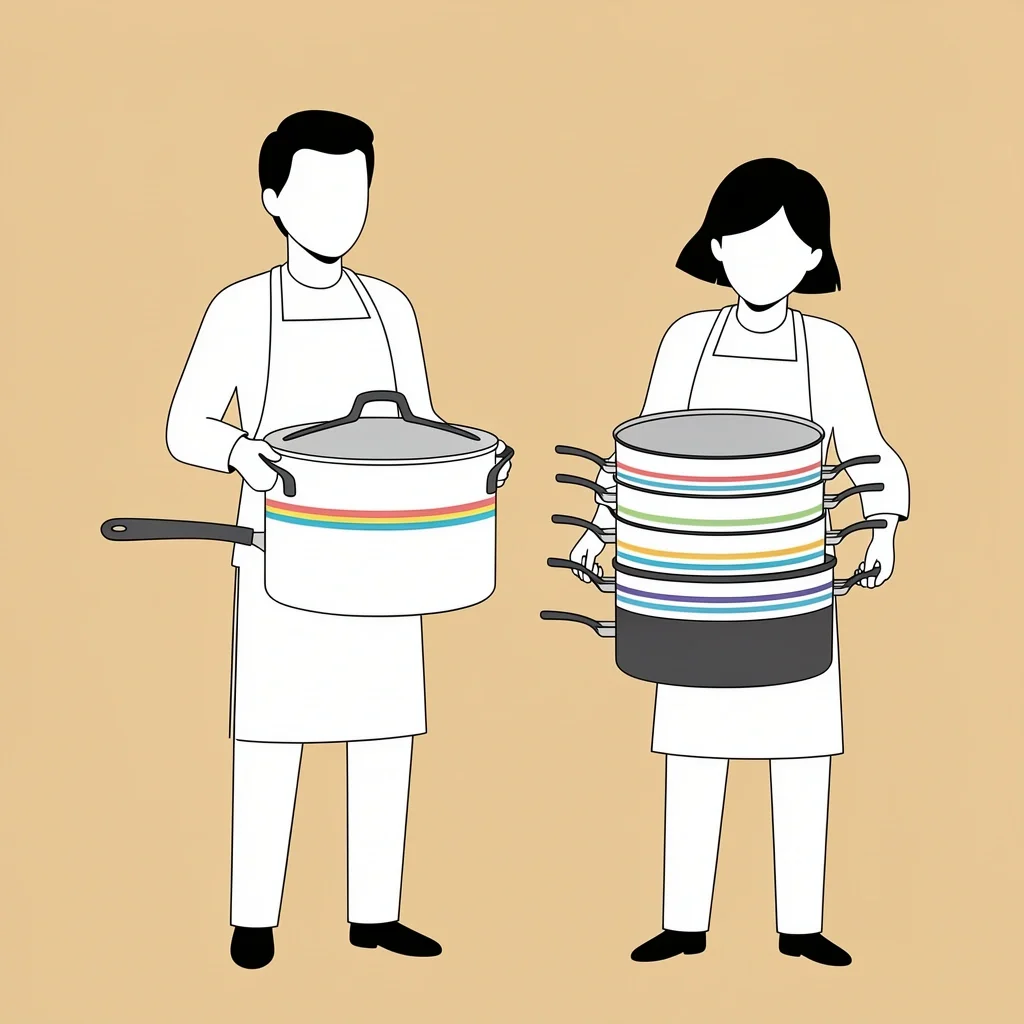
Tri-ply is enough for 99% of home cooking. It heats quickly, responds well to temperature changes, and stays lightweight. Five-ply pans heat up a little slower because there’s more metal to warm, but they hold heat longer. That extra thermal mass can help if you frequently add cold ingredients to a hot pan. But it also makes the pan heavier.
Here’s the practical difference: a five-ply saucepan of the same size can weigh nearly a pound more than a tri-ply version. That extra weight matters every time you lift and pour. Unless you’re making delicate sauces that require extremely steady temperatures, tri-ply gives you the best balance.
You can check the cladding by looking at the rim of the pan. If you see a distinct line where the layers meet, it’s fully clad. If the bottom looks like a separate disc attached to a thinner pot, it’s a “disc bottom” design. Disc bottom pans are cheaper but create a hot ring around the edge, leaving the center cooler. Avoid those.
How to Inspect a Pan’s Build Quality in a Store
Pick it up. A good saucepan feels dense, not light and flimsy. Run your finger along the rim. It should be smooth and rolled, not sharp enough to cut. Check the inside rivets that hold the handle. They should be flush or at least high enough that food won’t get trapped behind them. Low rivets are a hassle to clean.
If you’re buying online, look for the pan’s weight in the specs. A 3-quart saucepan should weigh between 3 and 4 pounds with the lid. Significantly less than that means thin metal.
How Pan Dimensions Affect Your Cooking
Size and shape matter just as much as material. A saucepan that’s too tall makes stirring awkward. One that’s too narrow is hard to whisk in. And a pan that’s too large for your household takes forever to heat a small amount of liquid.
Width vs. Height
The typical saucepan is about 8 inches in diameter (lip to lip). That’s a good sweet spot. Wider pans let you fit a whisk or spoon handle at a lower angle so you can reach the corners. Taller, narrower pans are harder to stir and clean—your whisk hits the sides before it gets to the bottom.
That said, taller sides help prevent boil-overs. If you often cook rice or pasta, a medium height is fine. If you regularly make large batches of soup, a taller pan might be worth it, but then a stockpot is a better choice.
Bottom Curve and Rim Design
The bottom must be completely flat. If it bulges even slightly, heat will concentrate in the center or the edges. A flat bottom is also essential for induction cooktops, which require full contact with the magnetic field.
The rim should be flared outward just a little. A flared rim (also called a pouring lip) guides liquid out of the pan without dripping down the side. Straight rims cause messes. You can test this by tilting the pan slightly—if water runs along the bottom edge before falling off, you’ll get drips.
What Size Saucepan Should You Get?
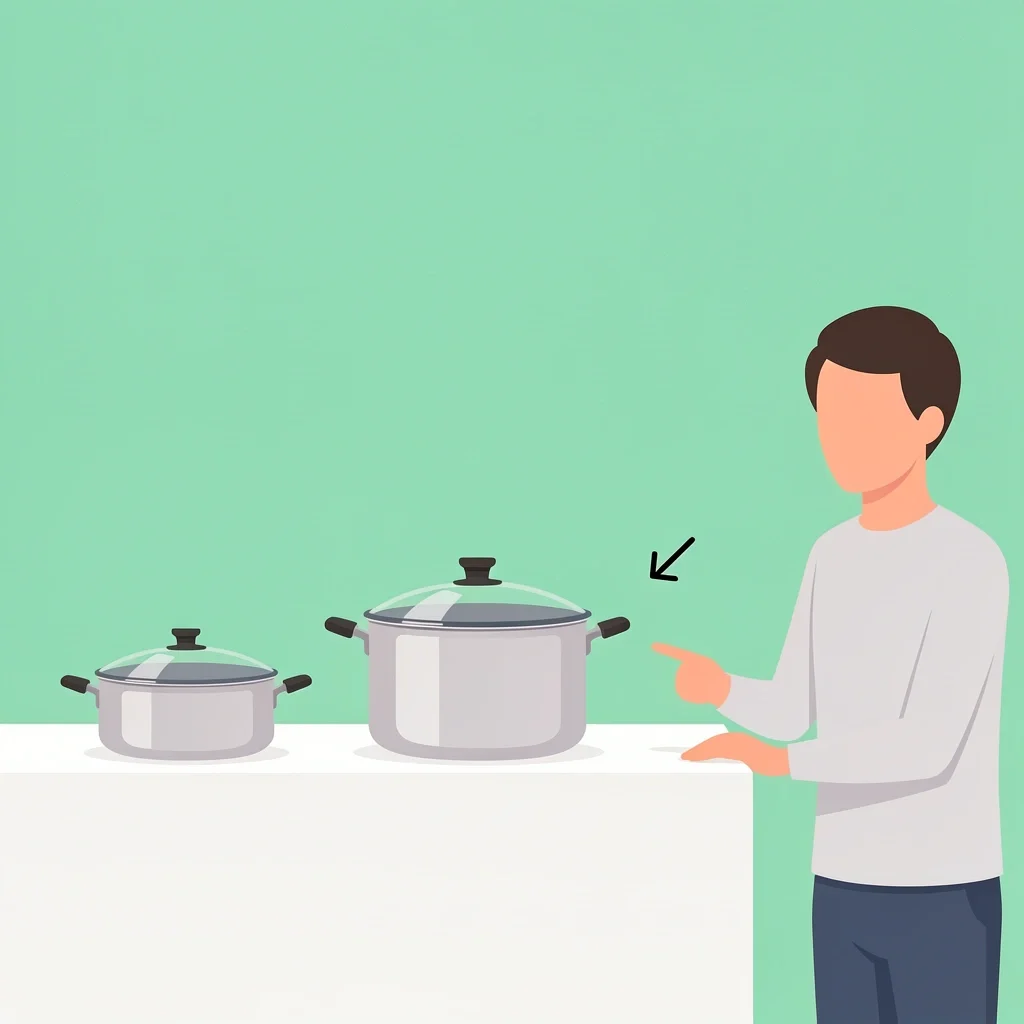
- 2-quart: Good for single people or couples. Great for melting butter, heating single servings of soup, cooking rice for one. Too small for pasta or large batches.
- 3-quart: The most versatile size. Works for 2–4 people. Can cook rice, reheat leftovers, make a batch of oatmeal, simmer a small sauce. Still manageable for one person.
- 4-quart: Better for families of 4–6. Handles larger quantities but takes longer to heat small amounts. If you mostly cook for one or two, a 4-quart is overkill.
Don’t buy a 4-quart just because you think bigger is better. It will be heavier, slower to heat, and awkward to pour when only half full. Match the size to your typical cooking volume.
Evaluating Handles and Lids Before You Buy
This is where most reviews skimp. But a poorly designed handle or lid will frustrate you every day.
Handle Anatomy and Ergonomics
The handle should be long enough to give you good leverage. A 7-inch handle is okay for a small pan, but an 8-inch or longer handle feels much more balanced when the pan is full. Short handles force you to hold the pan closer to the heat, and they make pouring harder because you have less control.
The shape matters too. Rounded handles that fill your palm are comfortable. Flat, thin handles dig into your hand. Some handles have a slight indentation on top where your thumb rests—that’s a nice touch because it prevents the handle from twisting when you pour.
Rivets should be as high as possible on the pan body. Low rivets create a crevice where food gets stuck and is hard to scrub out. Pass on pans with low rivets unless you’re okay with extra cleaning.
Heat Transfer to the Handle
A good handle stays cool for most of its length. That means the metal handle is attached to the pan but heat travels slowly up it, or it’s made of a non-conductive material like silicone or resin. Stainless steel handles can get hot near the pan, but if they’re long enough, you can still hold the far end safely. Handles made entirely of metal with a thin connection to the pan are the worst—they heat up quickly.
Silicone or resin handles stay cool but can’t go in the oven. If you plan to finish dishes under the broiler, you need all-metal handles. Most home cooks don’t put saucepans in the oven often, so either works.
Lid Design and Performance
A lid is not just a cover. Its shape and weight affect how your food cooks.
Flat lids let steam condense and drip randomly back into the pan, which can dilute a sauce. Slightly domed lids encourage moisture to run down the curved surface and fall back more evenly, keeping the pan’s contents moist without waterlogging.
The lid handle should stay cool. Taller handles with a bit of air space between the lid and the knob do this best. Flat, low handles get hot quickly.
Lid weight matters too. A heavier lid creates a better seal, which reduces evaporation and helps you maintain a steady simmer. But if the lid is too heavy, it becomes a nuisance to lift. A good weight is around 8 to 12 ounces.
You might notice a lid “sticking” or creating a vacuum after the pan cools. That’s normal—it’s thermal contraction. It’s not a defect, just physics. To release it, gently warm the pan again or lift the lid slightly.
How to Test a Saucepan in Store or Online
You can evaluate a saucepan without ever cooking in it. Here’s what to look for.
- The weight test: Hold the pan with one hand at the end of the handle. Does it feel front-heavy? A good saucepan should be balanced, not tipping forward. The weight should be distributed so the pan sits level.
- The rim check: Run your finger along the top edge. It should be smooth and rolled, not sharp. A sharp rim will eventually chip or become uncomfortable to clean.
- The rivet inspection: Look at the inside of the pan where the handle meets the body. The rivet heads should be flush with the pan wall or at least high enough that you can wipe a sponge across them without catching food.
- The online checklist: On product pages, look for base diameter, lip diameter, and weight. The base should be nearly as wide as the lip—a narrow base means poor contact with the burner. Check that it explicitly says “induction compatible” if you have an induction cooktop. And read return policy details: lifetime warranties usually cover defects, not warping from misuse.
Common Saucepan Buying Mistakes
Even experienced cooks make these errors.
- Buying too large for versatility: A 4-quart pan seems like a good idea, but if you mostly cook for one or two, it takes forever to heat a small amount of liquid. You end up using a larger pan than necessary every time.
- Prioritizing five-ply over tri-ply: Five-ply adds weight and cost without a noticeable improvement in performance for most tasks. Tri-ply is perfectly fine. Don’t pay extra for something you won’t benefit from.
- Choosing by brand only: A well-known brand often has multiple lines. Their budget line might be thin disc-bottom while their premium line is fully clad. Always check the specific model’s construction, not just the logo.
- Ignoring induction compatibility: Not all stainless steel pans work on induction. The bottom must be magnetic. Check with a magnet before buying if you can. If you can’t, look for “magnetic stainless steel” or “induction ready” in the description.
- Buying a helper handle when not needed: Some large saucepans have a small second handle opposite the main handle. For a 3-quart pan, it’s unnecessary and just adds weight and cleaning hassle. Reserve helper handles for 5-quart pots and larger.
Frequently Asked Questions
Can I use a saucepan on high heat?
You can, but you shouldn’t need to. High heat is often a sign you’re impatient. Most saucepan tasks—boiling water, simmering sauce, cooking rice—work perfectly at medium to medium-high heat. High heat on a thin pan can warp the bottom, creating a permanent bulge that ruins even heating. Stick to medium heat and wait an extra minute.
Is nonstick safer than stainless steel for saucepans?
Nonstick is convenient for delicate foods like eggs or fish, but for saucepans, stainless steel is more durable. Nonstick coatings degrade at high temperatures (above 500°F) and can scratch. A stainless steel liner lasts forever and doesn’t release chemicals. The only downside is that food sticks more, but that’s fixable with technique: preheat the pan, add oil, then add food. For boiling and simmering, stickiness isn’t an issue.
What’s the difference between a saucepan and a saucier?
A saucepan has straight, tall sides and a flat bottom. A saucier has sloped, curved sides and a rounded bottom. The saucier’s shape makes it easier to whisk and stir, especially for sauces that need constant scraping. The saucepan’s flat bottom is more stable and gives better contact with electric coils and induction. For most home cooks, a saucepan is more versatile.
Should I buy a set or individual saucepans?
Sets often include a small and a large saucepan, plus a stockpot and a skillet. If the set is good quality and you actually need all those pieces, it can save money. But many sets include sizes you’ll never use, or they compromise on the quality of the saucepans. Buying individual saucepans lets you pick the exact size and construction you want. It’s usually better for quality, though more expensive upfront.
How do I clean a stainless steel saucepan without damaging it?
Let it cool first. Thermal shock from cold water on a hot pan can warp it. Hand wash with warm soapy water. For stuck-on food, fill the pan with water and a splash of vinegar, bring it to a boil, then scrape with a wooden spoon. Avoid steel wool—it scratches the finish. Use a non-scratch sponge instead.
Can I put my saucepan in the oven?
Only if the handle and lid are oven-safe. All-metal handles (stainless steel) are typically oven-safe up to 500°F. Silicone or resin handles often have lower limits—check the manufacturer’s specification. Glass lids are usually oven-safe to around 400°F, but the knob may have a lower limit. If the lid has a plastic knob, remove it before oven use. When in doubt, don’t exceed 350°F with mixed materials.
A good saucepan is an investment you’ll use almost daily. Focus on tri-ply construction, a size that matches your household, a comfortable handle, and a well-fitting lid. Ignore marketing fluff and brand hype. Pick it up, feel it, inspect the details. That’s the only way to find a pan that truly performs.

