Reina
Reina 
As an Amazon Associate, I may earn a small commission from qualifying purchases at no extra cost to you. This helps me create more valuable, tested content for you.
Most dialing-in advice treats a fast shot and a slow shot as two separate problems that need two separate articles. They don’t.
The same five things control both: grind size, dose, puck prep, bean freshness, and equipment condition.
If your espresso is pulling too fast or too slow, your only real job is to figure out which of those five is fighting you, and then nudge it back in the right direction.
I’ve chased both extremes more times than I can count.
The frustrating part is that the fix usually looks obvious on paper, but in real life it gets muddy because two variables can be wrong at the same time.
This article walks you through a diagnosis you can do right now, starting with what you already know: your shot time.
Start Here: The 10-Second Shot Time Diagnosis
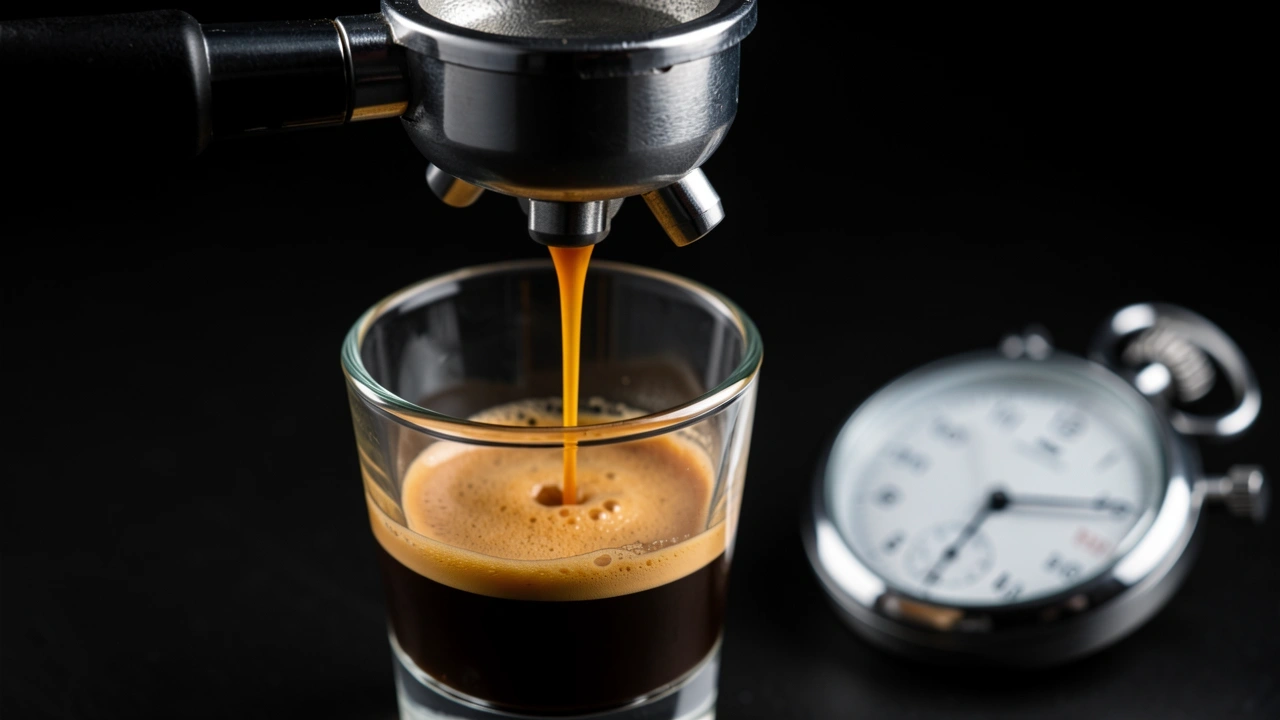
Time your shot from the moment the pump turns on to the moment you stop it at your target yield. Do that once, then taste it. That combination of time and taste tells you which protocol to follow:
- Under 20 seconds and tastes thin, sour, or watery? You’re in the fast-shot protocol.
- Over 40 seconds and tastes bitter, hollow, or ashy? You’re in the slow-shot protocol.
- Times are wildly different shot after shot, even though you changed nothing? Forget about fast or slow for a second. Your problem is consistency, and the cause is almost always puck prep or a grinder that can’t produce even particles.
If you land in that third group, skip the grind adjustments for now and jump to the grinder bottleneck test further down. Grind tweaks won’t help you if the shots are all over the place.
The Five Variables Controlling Shot Speed—in Both Directions
Here is the complete map. Every time you change something in this list, you move shot time one way or the other. The table shows you the fast effect and the slow effect for the same variable.
| Variable | Makes a shot run fast | Makes a shot run slow |
|---|---|---|
| Grind size | Too coarse, water rushes through | Too fine, water barely drips |
| Dose | Under-dosed basket (less coffee, less resistance) | Over-dosed basket (too much coffee, plug) |
| Puck prep | Channeling, water finds a shortcut | Tight packed, uneven in the other direction |
| Bean freshness | Stale beans off-gas less CO₂ | Very fresh beans gas out and stall |
| Equipment | Worn basket, scale buildup, high pump pressure | Clogged group screen, scale in the boiler |
Grind size belongs at the top because it’s the first thing to touch in most cases. But there’s a hidden trap: what do you do when you’ve already ground finer and the shot is still fast?
I’ll walk you through exactly that scenario in the fast-shot section, because it’s where most guides dead-end.
How to Fix a Fast Shot (Under 20 Seconds)
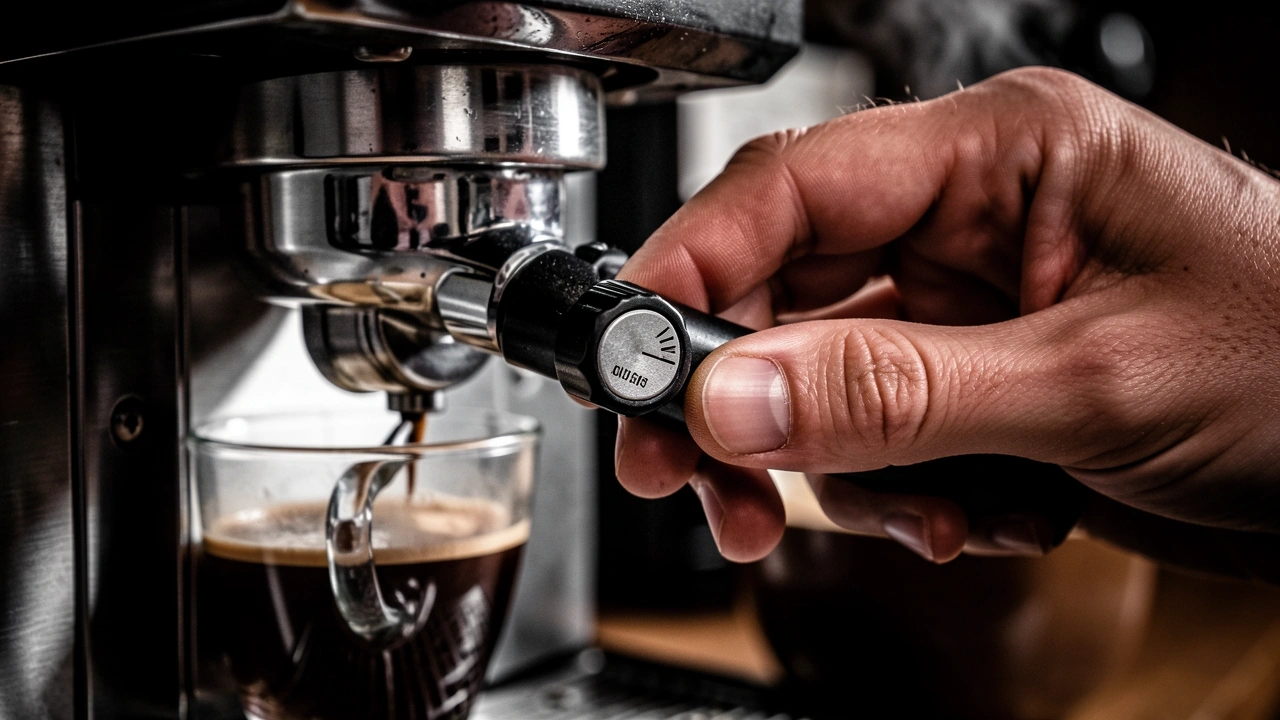
Work through these in order. Do not skip ahead. Each step is designed to isolate one variable at a time.
- Grind finer by one small step. On the grinders I test, a single number change on the dial moves shot time by 3 to 5 seconds. You want to add resistance without choking the machine. Pull a shot after each click. If you’re landing around 15 seconds, two or three clicks is normal. If you’re still under 20 seconds after three finer settings, stop there and move to step two.
- Check your dose with a scale. I can’t tell you how often someone swears their grind is the problem and it turns out they’re dosing 14 grams in a basket built for 18. Less coffee means less resistance, so water flies through. Add one gram and keep everything else the same. That alone can buy you 4 to 6 seconds.
- Look at the roast date on your beans. If they’re more than a month off roast, they’ve lost the CO₂ that creates pressure inside the puck. Stale coffee will run fast no matter how fine you grind. Try a bag that’s 7 to 21 days old and you’ll feel the difference in the first pull.
- Inspect your basket under a bright light. Hold it up and look at the holes. They should be uniform pinpoints. If some are enlarged or irregular, the basket is worn out and water is bypassing the puck. A replacement basket is cheap but it changes everything.
What to Do When Grinding Finer Doesn’t Work
This is the frustration that makes people quit espresso. You’ve gone finer and finer, the shot is still fast, and the dial is almost at the bottom.
Before you blame the grinder, run through this quick diagnostic tree:
- Did you change the yield without noticing? I once spent two hours chasing a fast shot because I’d switched from an 18 gram yield to a 20 gram yield without writing it down. Same dose, same grind, same beans, just more water out. The shot looked faster because I was letting more water pass. Confirm you’re actually pulling the same recipe.
- Is your grinder even capable of espresso-fine? If the grinder is marketed for “all brew methods” or you can’t make the burrs chirp (metal touching metal) at the finest setting, you’ve hit a hardware limit. Many entry-level grinders don’t have a true espresso range. Grinding finer does nothing because the burrs are already misaligned or too dull to crack the coffee consistently.
- Is your distribution off? If your shot is fast but also channels (you’ll see spritzing in the portafilter or a blotchy puck after the shot), the problem isn’t overall grind size. The water is finding a thin spot in the puck. Fix your distribution with a leveler or a good finger-sweep, and the shot time will firm up even at the same grind setting.
If you’ve checked all three and the shot is still gushing at the finest grind, the grinder is the bottleneck. Skip ahead to the grinder bottleneck test for a proper confirmation.
How to Fix a Slow Shot (Over 40 Seconds)
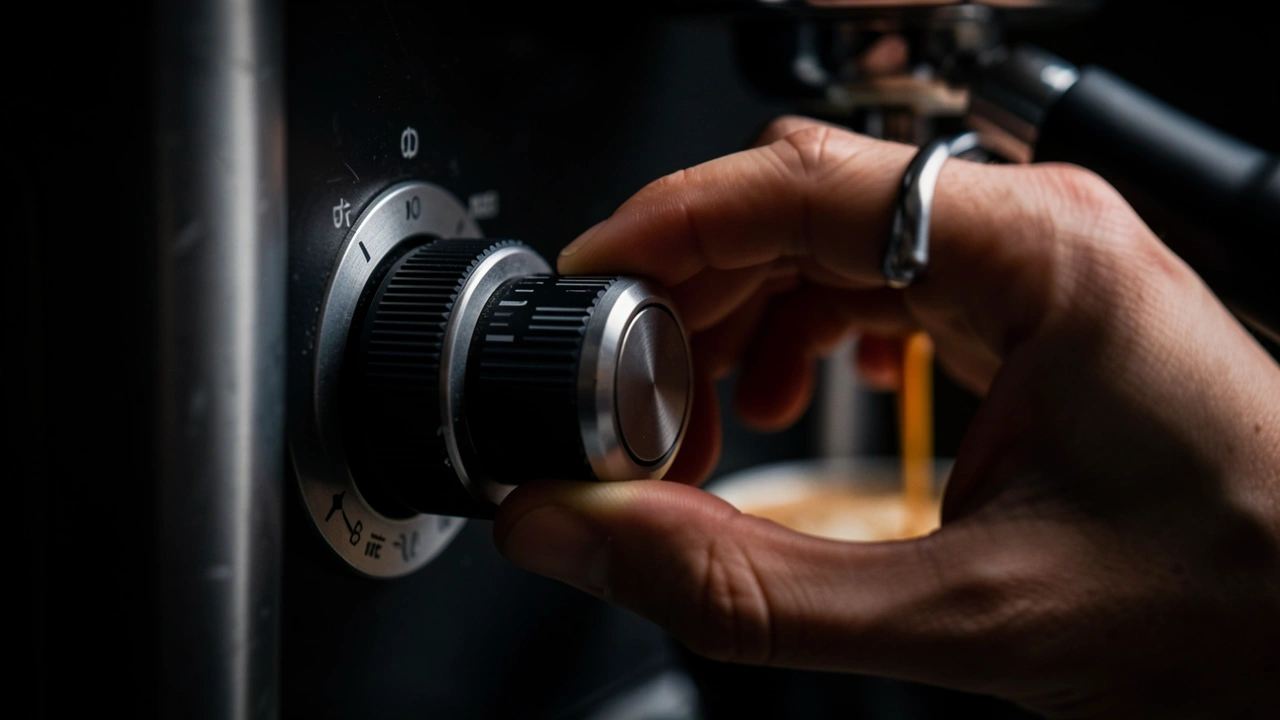
A slow shot is the opposite direction, but the logic is the same. Change one variable, pull a shot, taste it, move on.
- Grind coarser by one small step. If your shot is squeezing out 30 grams in 45 seconds, the puck is too dense. Open up the grind slightly. You may see the shot time drop 5 to 8 seconds on the next pull. Keep going until you’re in the 35-ish range or, more importantly, until it tastes balanced.
- Reduce your dose. If you’re packing 20 grams into a basket that was made for 18, the puck is physically thicker and water has a longer path. Drop to the manufacturer’s recommended range. Yes, you’ll lose a little strength, but the shot will flow properly again.
- Check your tamp and distribution. This is where I see the over-tamping trap, so I’ll cover it in detail below.
- Evaluate the freshness of your beans. Beans that are too fresh, less than five days off roast, produce a crazy amount of CO₂. That gas can stall the shot as bubbles get trapped in the puck. If your beans are still degassing, you’ll see a slow, sputtering stream. Give them a few more days.
The Over-Tamping Trap and How to Avoid It
Tamp pressure is the least impactful variable in the entire espresso system. I’ve tested this side by side on the same grinder and basket.
A level tamp with 15 pounds of pressure produced almost the same shot time as an angled 50-pound tamp. The difference was less than a second.
What actually matters is that the surface of the puck is even before you tamp.
If you have a dome of coffee on one side and a crater on the other, the water will push through the thin part, no matter how hard you press down.
So stop muscling your tamper. Spread the grounds evenly first, or buy a distribution tool that does it for you. You’ll get more consistent shot times than any tamp strength change could ever give you.
When Slow Is Actually Good—The Taste Over Time Rule
Whenever someone tells me their shot is “too slow,” I ask one question: does it taste good? Because some of the best espressos I’ve ever pulled came in at 45 seconds.
Light-roasted natural-processed coffees often need that extra time to pull out sweetness. If you’re hitting 40-something seconds and the cup tastes complex, bright, and sweet, you don’t have a problem.
You have a different recipe, and that’s allowed.
The problem only appears when the slow shot also tastes bitter, ashy, or hollow. That means you’re over-extracting, regardless of the time.
In that case, coarsen the grind or drop the yield, and the flavor will clean up.
The Grinder Bottleneck Test
When your shot times behave like a lottery, or when grinding finer genuinely changes nothing, test the grinder itself. Here’s the method I use:
- The two-shot test: Pull two shots back to back with the exact same settings, dose, and prep. If the times differ by more than three seconds, your grinder is producing uneven particles. One shot flows through the coarse bits, the other gets slowed by clumps of fines.
- The burr sound test: Run the grinder empty at its finest setting. If you hear a high-pitched chirp (the burrs touching), the grinder is capable of espresso-fine. If it just hums, there’s still room in the range, but if it hums and the shot is still fast, the burrs are likely worn out of alignment.
- The fingers test: Take a pinch of ground coffee and roll it between your fingers. A good espresso grind feels like powdered sugar with a slight grit. If you feel obvious boulders mixed in with dust, your particle distribution is too wide.
If you confirm the grinder is the weak link, there’s no technique fix that will save you.
You can still make drinkable espresso by playing with dose and yield, but you’ll be fighting the grinder every single shot. A dedicated espresso grinder with flat burrs is the real cure.
The Bean-Effect Adjustment Protocol
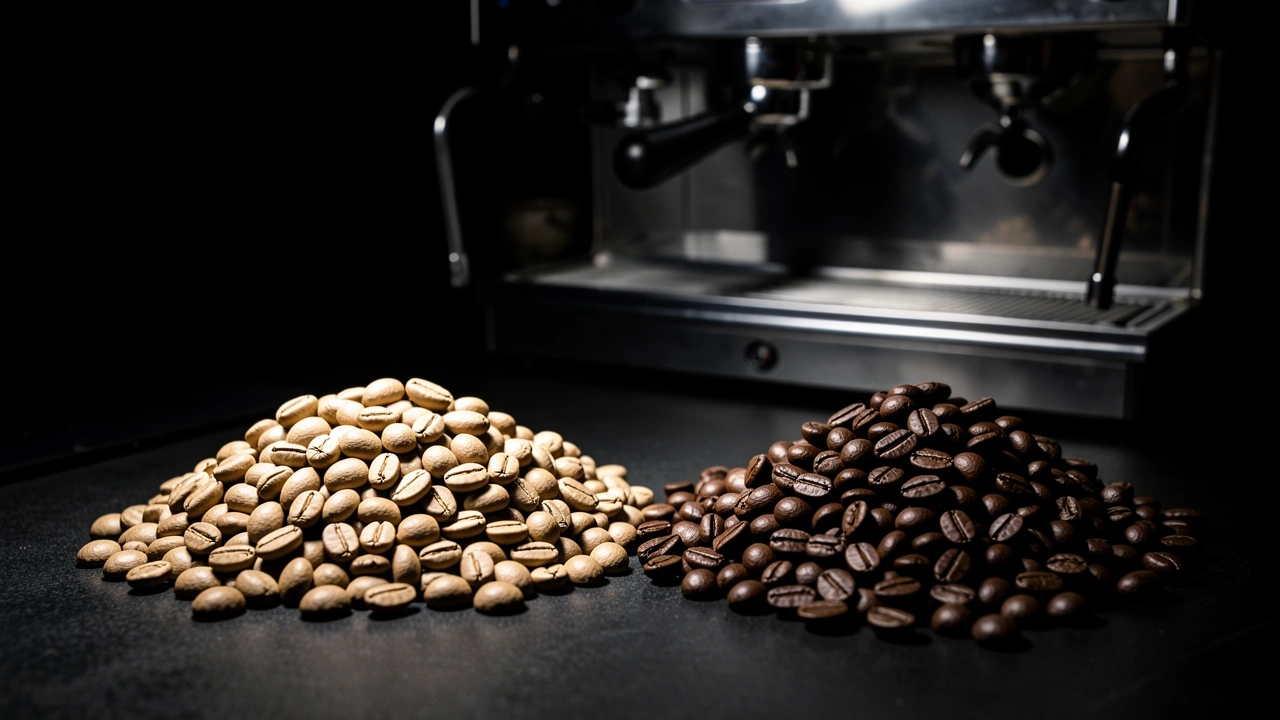
You dial in a bag of coffee perfectly. Then you open a new bag from the same roaster, same roast level, same everything, and the shot runs wild. This isn’t a mistake.
Different beans demand different settings, and the difference goes beyond roast date. A washed Ethiopian light roast and a natural Sumatran dark roast they’re not even playing the same sport.
Here’s how I recalibrate with a new bag in just two shots:
- Shot one: If the new beans are lighter than the previous ones, grind one step finer. If they’re darker, grind one step coarser. Pull the shot at your usual dose and yield.
- Shot two: Look at the time and, more importantly, the taste. If it’s fast and sour, go finer again. If it’s slow and bitter, go coarser. You should be in the right neighborhood by now.
One tip from experience: write the grind setting and shot time right on the bag with a marker. You’ll thank yourself a month later when you buy the same coffee again.
Equipment Condition Checklist
When technique is perfect and the coffee is fresh, but shot times are still off, go through this checklist in order of impact:
- Basket condition: Hold it up to a light. Look for uneven holes, burrs around the edges, or any shiny spots that suggest wear. Worn baskets make shots run fast and uneven.
- Group head screen: Take the screen out and soak it in a descaling solution. A clogged screen causes odd flow patterns that show up as both fast and slow shots depending on where the water actually comes through.
- Scale buildup: If you’ve been using hard water, scale inside the boiler and the group head changes everything. It restricts flow and messes with brew temperature. A proper descale every couple months usually restores normal shot times.
- Pump pressure: Most home machines are set to 9 bars, but some come out of the box at 10 or 11 bars. Higher pressure pushes water through faster, which makes shots run quick and taste harsh. If your shots are consistently fast, sour, and bitter all at once, it’s worth putting a pressure gauge on the portafilter or having a shop check it.
Frequently Asked Questions
Can a shot be too fast but taste good?
Rarely, but it happens. Some light-roasted coffees taste bright and sweet at 20 seconds, especially if you’re pulling a ristretto. The real question is whether you’re leaving flavor on the table.
If the cup tastes complete, you’re fine. If it tastes thin or slightly sour, a slower shot would extract more complexity.
Does water temperature affect shot speed?
Indirectly, yes. Hotter water extracts faster, so a shot that runs at 95°C might finish a second or two quicker than the same shot at 91°C.
It’s rarely the main cause of a too-fast or too-slow shot, but if your machine has wild temperature swings, you’ll see inconsistent times.
How do I know if my basket is the problem vs. my distribution?
Look at consistency. If every shot runs fast at the same setting, suspect the basket or grind. If some shots are fast and some are slow under identical conditions, that’s a distribution problem.
Fix your prep, and if the chaos persists, replace the basket.
Should I adjust grind or dose first when my shot slows down after changing beans?
Always grind first. Dose changes have a bigger effect on extraction yield, so they muddy your diagnosis. A couple of clicks on the grinder gets you back in range without changing the strength too much.
Only touch dose if you’ve run out of grind adjustment.
Is there a difference between “too slow” and “choked”?
Yes. A choked shot barely drips, maybe 15 grams of output in 60 seconds or less, and looks like the machine is broken. A slow shot still flows but takes 40 to 50 seconds.
Choked needs a coarser grind, immediately. A slow shot might just need a slightly coarser grind, or it might be fine if it tastes great.