Reina
Reina 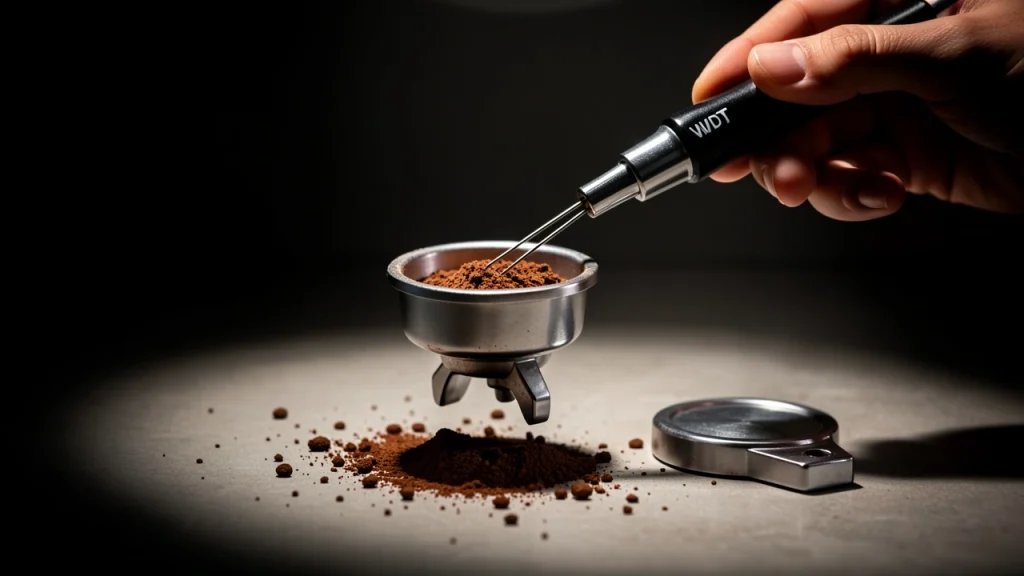
As an Amazon Associate, I may earn a small commission from qualifying purchases at no extra cost to you. This helps me create more valuable, tested content for you.
I’ve spent years pulling shots at home, and the one question that keeps coming up is whether you need both a WDT tool and a leveling tool.
After testing dozens of setups — from a cheap grinder that clumps like crazy to a high-end flat burr that barely sheds a single particle — I can tell you this: the answer depends entirely on your grinder and your workflow.
For most home baristas, you do not need both. But you do need the right one for your specific problem.
Here’s the short version: if your grinder produces visible clumps or you single-dose, start with a WDT tool. If your grinder is clump-free and you struggle with level tamping, start with a leveler.
If you want to eliminate guesswork entirely, buy both — but only if you understand what each tool actually fixes.
What Each Tool Fixes (and What It Can’t)
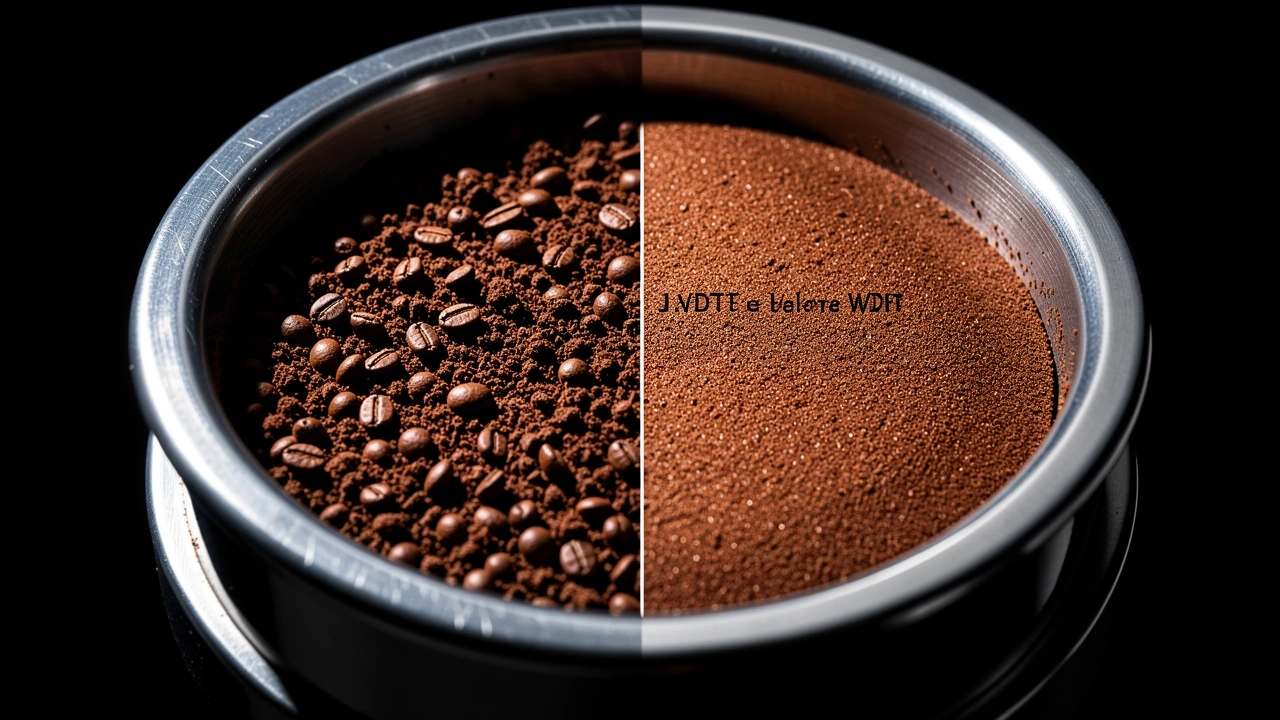
Let’s be clear about the job each tool does. A WDT tool — thin needles, usually 0.25–0.35mm — stirs the full depth of the coffee bed.
It breaks up clumps formed by static, collapses air pockets, and redistributes fines evenly. It does not leave you with a flat surface.
After WDT, the puck looks like a loose pile of grounds.
A leveling tool (sometimes called a distributor or leveler) sits on top of the basket. You rotate it once, and it drags high spots into low spots, creating a perfectly flat surface.
It does not break up internal clumps. If you have a clump buried in the middle, the leveler just moves that clump around without separating it.
| Tool | What It Fixes | What It Can’t Fix |
|---|---|---|
| WDT | Internal clumps, uneven density, air pockets | Surface flatness (leaves puck uneven) |
| Leveler | Uneven surface, poor tamping base | Internal clumps, density variation |
That’s the core difference. One works inside, the other works on top. They are not competing tools — they solve completely different problems.
Why Your Grinder Decides Whether You Need Both
I used to think every home barista needed both. Then I switched from a conical burr grinder that threw clumps like confetti to a flat burr that produces almost no static.
With the flat burr, WDT did almost nothing visible — the grounds already fell into the basket evenly. I pulled shots without WDT, and they tasted the same as with it.
Conversely, when I helped a friend set up their budget grinder, the clumps were obvious. Without WDT, every shot channeled. The leveler alone made the surface look perfect, but the interior was a mess.
Adding WDT transformed their shots from sour-bitter chaos to consistent, drinkable espresso.
So here’s the rule of thumb:
- If your grinder clumps (you see small dense lumps in the basket after grinding), you need WDT first. The leveler can wait.
- If your grinder doesn’t clump (grounds fall evenly, no lumps), a leveler is usually enough — but only if you also tamp carefully.
- If you single-dose and your grinder has low static, you might not need either tool. Try a simple tap and tamp and see if channeling appears.
When You Can Stop at One Tool
I’ve tested three common scenarios where owning just one tool is sufficient. Here’s how to know if you’re in one of them.
Scenario 1: WDT only works if…
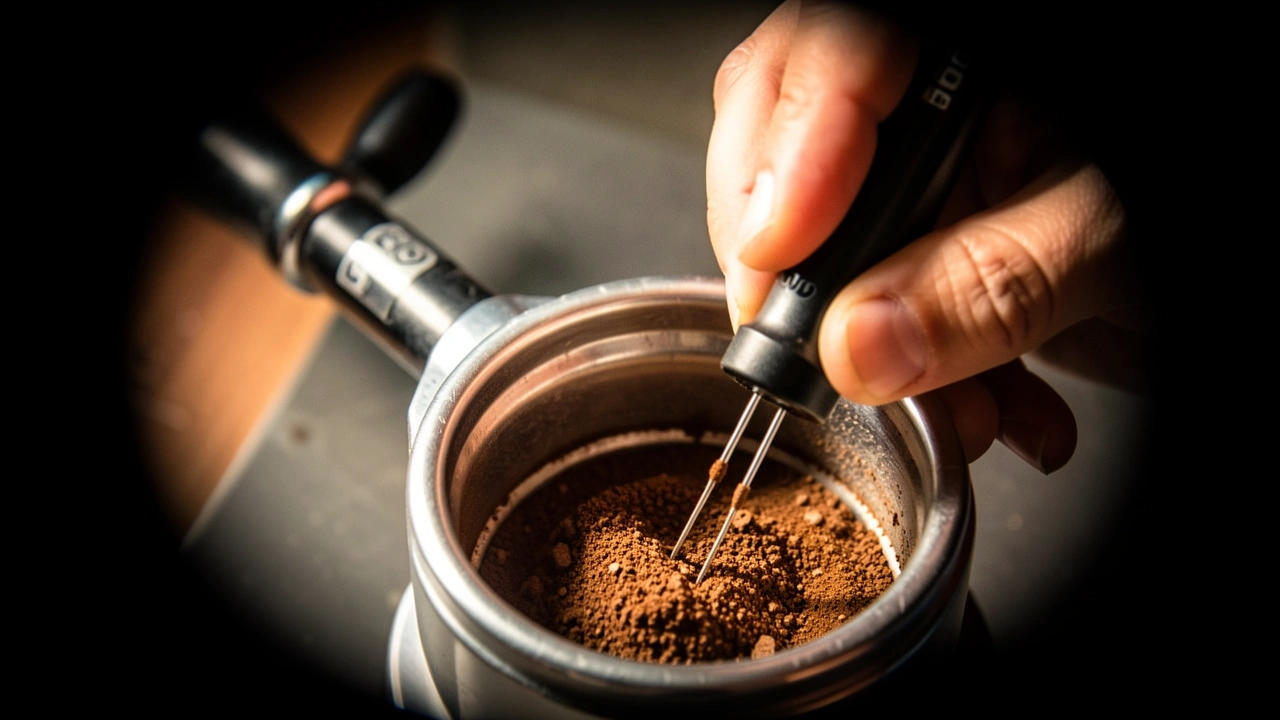
- You single-dose with a grinder that produces some clumps (most home grinders).
- You have a good tamping technique — you can level the puck by feel or with a spring-loaded tamper.
- You don’t mind the surface being slightly uneven before tamping (a careful tap on the counter helps).
In this case, WDT alone eliminates the main cause of channeling. The shot will be more consistent than without it. I’ve pulled hundreds of shots this way and they come out fine — not perfect, but fine.
Scenario 2: Leveler only works if…
- Your grinder produces zero noticeable clumps (e.g., high-end flat burrs, some commercial grinders).
- You batch-dose or use a grinder that distributes evenly into the basket.
- You struggle with level tamping — the leveler gives you a perfect base so the tamper compresses evenly.
I’ve used this setup myself for months. The leveler makes tamping foolproof. Without internal clumps, the limiting factor becomes only the tamper. Result: very consistent shots.
Scenario 3: Neither works if…
- Your grinder is a blade grinder (uneven particle size causes massive channeling that tools can’t fix).
- You ignore puck prep fundamentals — like not tapping the portafilter or using a wet basket.
No tool can save a bad foundation. Fix the grinder first.
When Both Tools Are Actually Worth It
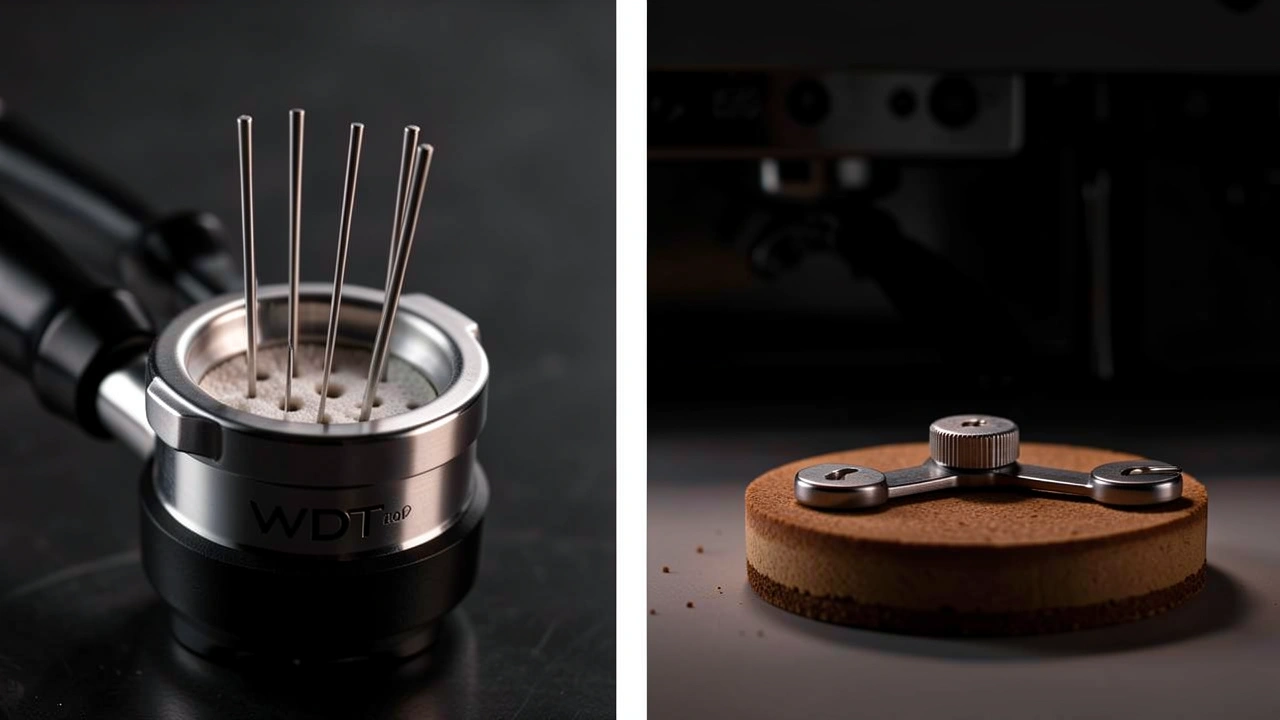
Here’s the honest truth: if you chase 9/10 consistency — where you can dial in a bag of coffee and pull identical shots back to back — then yes, both tools help.
They remove two separate variables: clumps and surface unevenness. Without both, you’re leaving one variable unmanaged.
But most home baristas don’t need that level of precision. The law of diminishing returns kicks in hard.
The cost of a good WDT tool (around $15–30) plus a good leveler ($30–60) is similar to a grinder upgrade that might solve both problems at once.
I’ve seen people spend more on puck prep tools than on better beans.
My advice: buy the one that matches your biggest problem. If clumps are obvious, get WDT. If your tamping is inconsistent, get a leveler.
Only add the second tool if you still notice channeling after fixing the first.
The Right Order (and the Common Mistake)
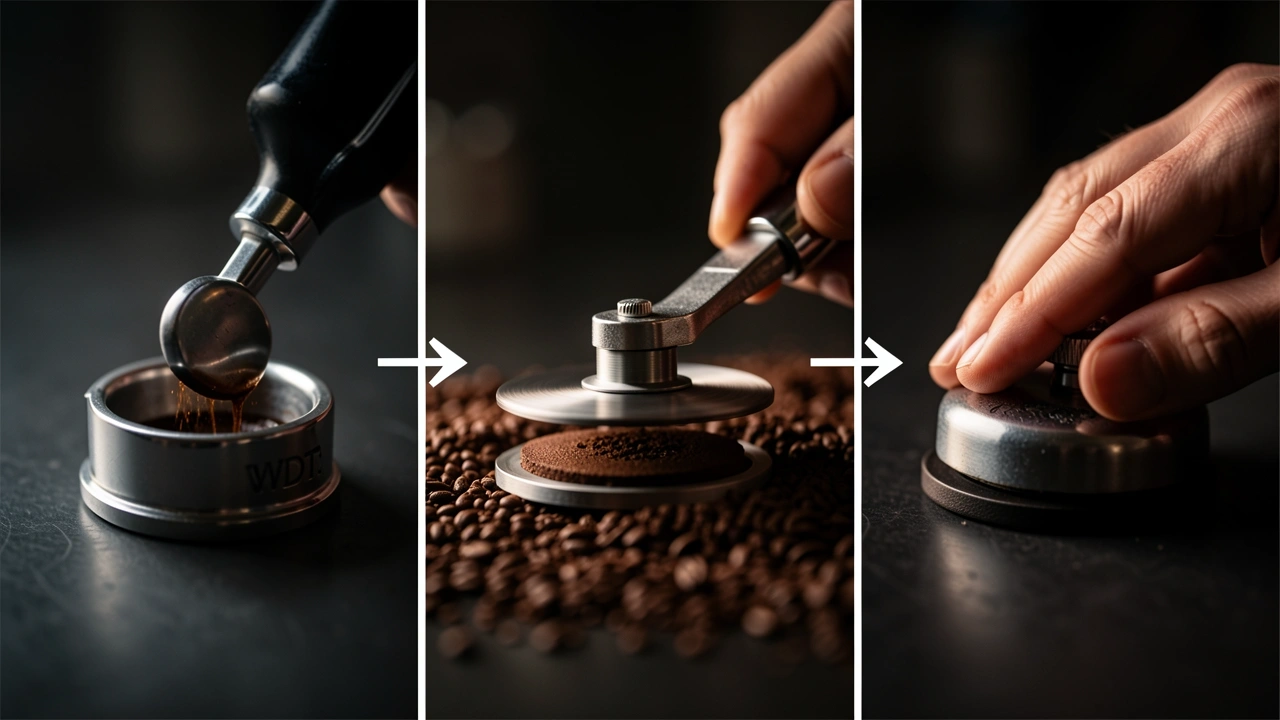
If you do use both, the order matters. WDT first, then level, then tamp. That’s non-negotiable. Stirring after leveling destroys the flat surface you just made.
Here’s the exact workflow I use:
- Dose into the portafilter. Give it a quick sideways tap to settle the mound.
- WDT for 8–10 seconds. Use slow circular motions, reaching the bottom of the basket. Don’t scrape the sides — that introduces grounds from the wall.
- Level with one smooth rotation. No pressing down hard. You’re redistributing, not compacting.
- Tamp with consistent pressure. A spring-loaded tamper removes guesswork.
Common mistake: Some people use a WDT tool with needles thicker than 0.4mm. Those thick needles create tunnels rather than breaking clumps. Stick to 0.25–0.35mm.
Also, don’t over-stir — more than 15 seconds can bring fines to the surface and create a crust that traps air.
Tool Quality Trap
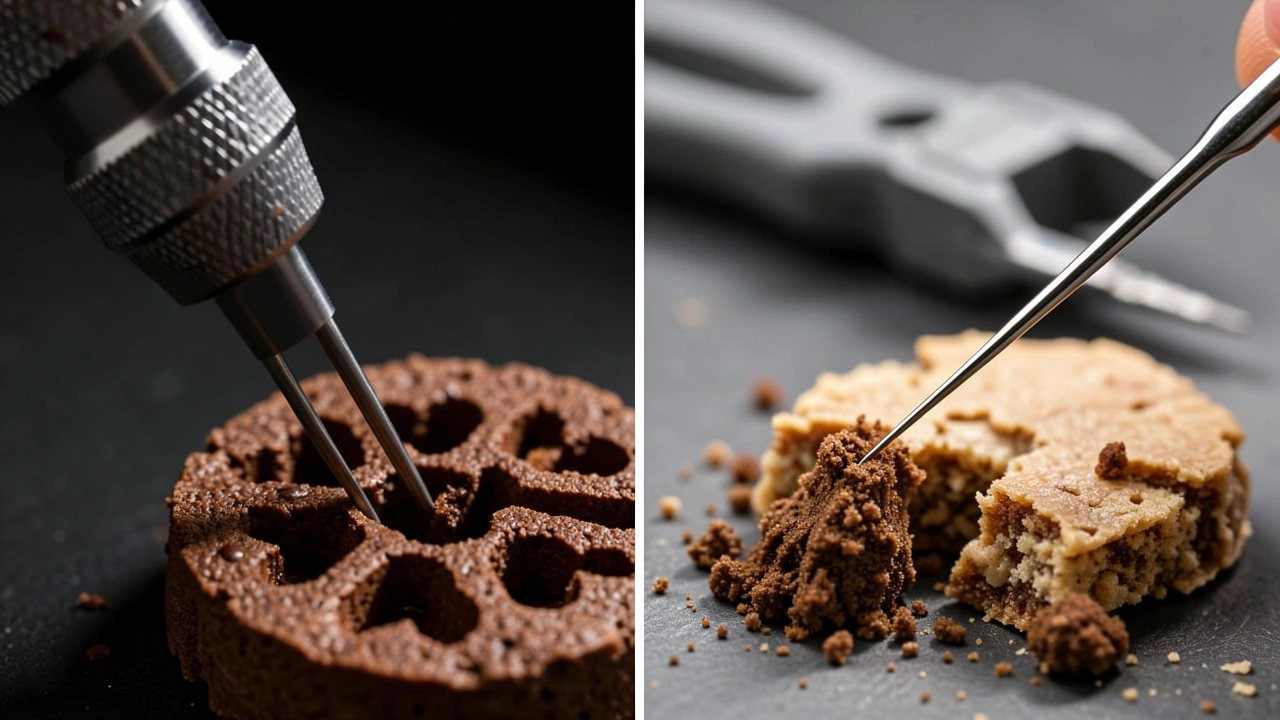
Not all WDT tools or levelers are created equal. I made the mistake of buying a cheap 3D-printed WDT tool with thick needles.
It actually made channeling worse — the needles compacted grounds rather than separating them.
Here’s what to look for:
- WDT needles: 0.25–0.35mm. Stainless steel acupuncture needles are best. 8–12 needles is ideal. More than that and the tool becomes a rake; fewer and it misses areas.
- Leveler diameter: Must be 0.2–0.3mm smaller than your basket’s internal diameter. A 58mm tool in a 58.3mm basket leaves an untouched ring at the edge — that’s where channels love to start.
- Leveler blade design: 3-blade levelers redistribute more evenly than flat base or single-blade designs. Avoid tools that feel wobbly or have sharp edges that catch grounds.
If your leveler compresses rather than redistributes, you’re creating density variation. Test it: after leveling, check the puck surface. If it’s shiny or compacted, you pressed too hard. Back off.
Myth: You Need Both for Channeling-Free Shots
I often see the claim that you must use WDT plus a leveler to eliminate channeling. That’s not true for many setups.
If your grinder already distributes evenly, a leveler can actually introduce problems — it can create density differences if not used carefully.
Here’s a reality check from my own testing:
- With a high-end flat burr grinder, I pulled 20 shots without any WDT — just a leveler and tamp. No channeling in 18 out of 20 shots.
- With a cheap conical grinder, I pulled 20 shots with WDT only. 16 shots were channel-free. Adding a leveler improved that to 19, but the difference was small.
The point: don’t buy tools you don’t need. Test your current workflow first. If you get consistent, tasty shots without both tools, you’re fine.
Frequently Asked Questions
Can a leveling tool replace a tamper?
No. A leveler only levels the surface — it doesn’t apply enough pressure to compact the puck properly.
Using a leveler as a tamper creates uneven density because the blades press different areas differently. Always tamp after leveling.
Is there a difference between a “leveling tool” and a “distribution tool”?
Often the terms are used interchangeably, but technically a distribution tool should also mix the grounds.
Most “distributors” on the market only level the surface — they don’t redistribute material internally. Read the product description carefully.
A true distribution tool would have needles or a spinning mechanism to move grounds around.
What should I do if I use WDT but still get channeling?
Three common causes: your WDT needles are too thick (over 0.4mm), you’re only stirring the top layer instead of reaching the bottom, or you’re not tapping the portafilter after WDT to settle the grounds before leveling.
Also check your grind size — too fine can cause channeling even with perfect prep.
Should I buy a combined WDT-leveler tool?
Most combined tools are a compromise. The WDT part often has needles that are too thick, and the leveler part is usually a flat base that doesn’t redistribute well.
I’ve tested a few and none worked as well as separate tools. Stick to dedicated tools.
Does the advice change for light roast vs dark roast?
Yes. Light roasts are more brittle and produce more fines. They clump more, so WDT becomes more critical. Dark roasts are oilier — they clump less but the oils can make a leveler slip.
For light roasts, prioritize WDT. For dark roasts, a leveler is usually sufficient.
The Bottom Line
After years of experimenting, I believe most home baristas should start with a good WDT tool — it fixes the more fundamental problem of clumps and density variation.
Add a leveler only if you see that the surface is causing inconsistent tamping. Buying both from the start is rarely necessary unless you’re chasing competition-level consistency.
Test your current setup. If your shots taste good and pull evenly, you don’t need more tools.
If they don’t, diagnose the type of channeling — is it from clumps (uneven flow at the start) or from poor tamping (lopsided flow)? That diagnosis will tell you exactly which tool to buy.