Reina
Reina 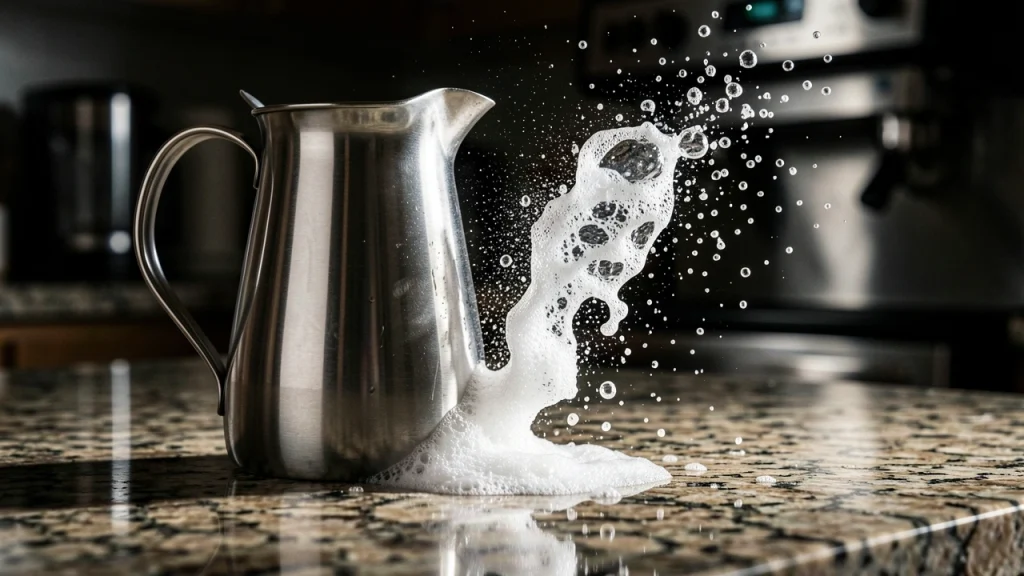
As an Amazon Associate, I may earn a small commission from qualifying purchases at no extra cost to you. This helps me create more valuable, tested content for you.
You have seen it a hundred times. A barista finishes steaming milk, then gives the bottom of the pitcher a sharp, confident knock on the counter. It looks like a habit or maybe a way to get attention.
But it is neither. That tap is a precise physical maneuver that determines whether your latte art will hold or collapse into a bubbly mess.
I have spent years behind the bar, and I can tell you that a good knock is the difference between pour-ready microfoam and a pitcher full of frothy chaos.
The knock uses a quick burst of acceleration to force large, unstable air bubbles up to the surface, where they pop.
At the same time, the impact pushes the denser, colder milk from the bottom of the pitcher upward, blending everything into a uniform, silky texture. It is not about muscle.
It is about gravity and timing.
Why a Gentle Tap Beats a Hard Bang
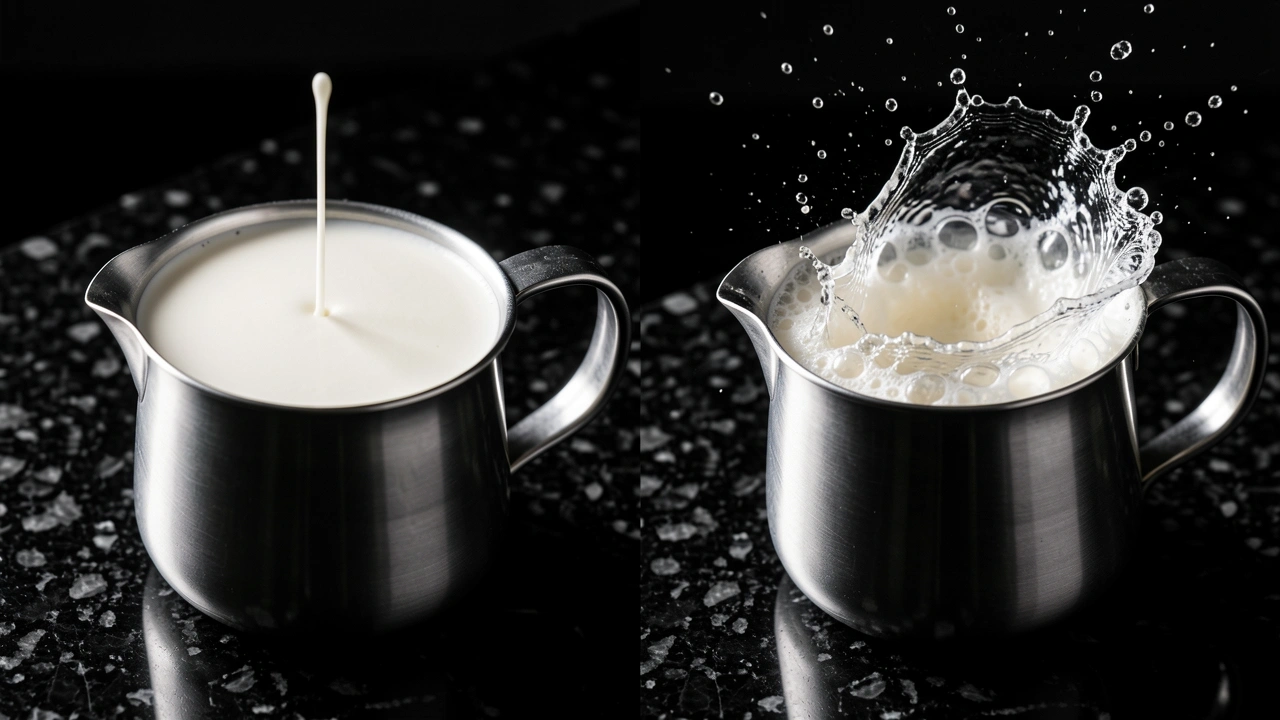
Many people think you have to slam the pitcher to get results. That is wrong. A hard, aggressive bang creates shockwaves inside the milk.
Those shockwaves actually generate new, large bubbles by breaking apart the good microfoam you just spent 20 seconds creating. I learned this the hard way during my first week on the job.
I was smashing the pitcher, wondering why my milk looked like dish soap foam.
A gentle, sharp tap works differently. The key is the speed of the impact, not the force.
When you tap the pitcher bottom on a hard surface, the linear acceleration forces the largest bubbles to rise fast. The impact breaks the surface tension that holds those big bubbles together.
They pop instantly. The smaller, desirable bubbles, which are stable and tightly packed, remain intact. Two taps is the maximum you ever need. More than that, and you risk deflating the entire texture.
The physics is simple: gravity pulls the heavy liquid down, and the lighter, large air bubbles shoot up. The counter absorbs the shock, but the milk feels the acceleration.
That is why a solid, hard countertop works best. A rubber mat or a soft surface absorbs the shock and does nothing for your milk.
The Three-Step Post-Steam Workflow
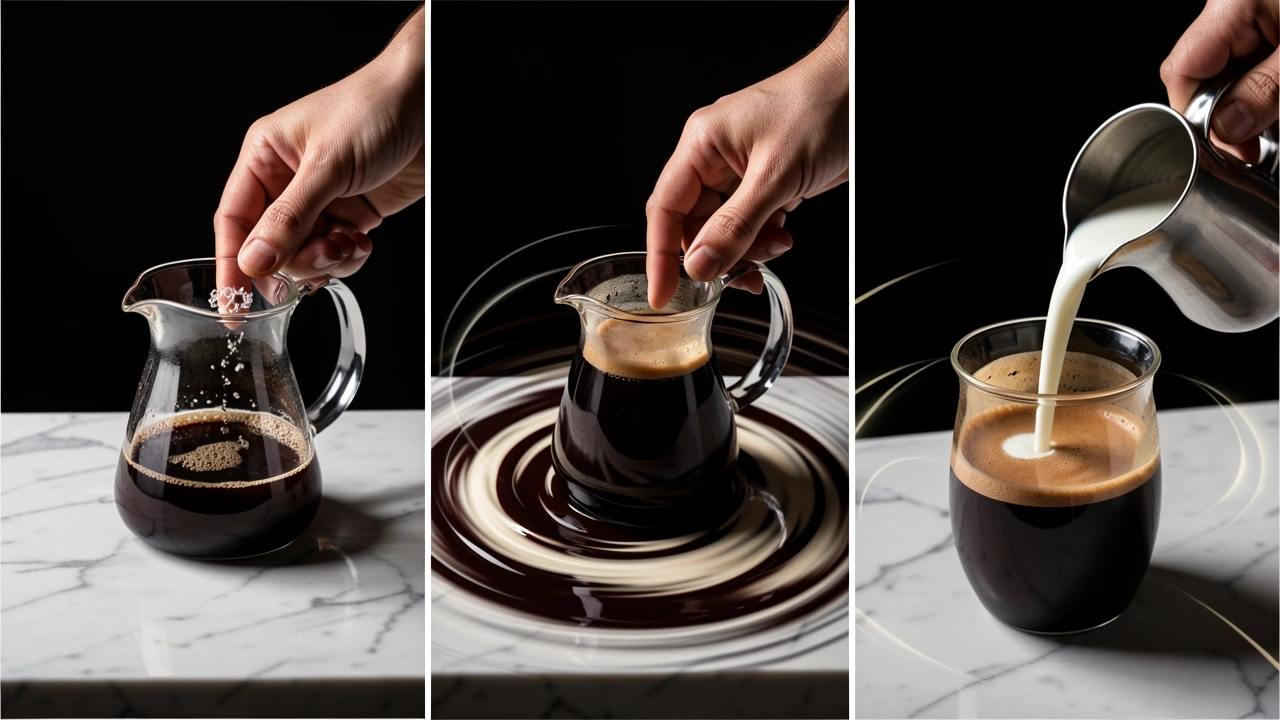
Tapping the pitcher is never a standalone action. It is part of a short, critical sequence that every barista follows to get consistent texture.
Skipping a step or mixing up the order leads to uneven milk.
- Tap – After steaming, immediately give the pitcher one or two gentle taps on a hard counter. This bursts the large bubbles that formed during the aeration phase. You should see the surface of the milk become visibly smoother and less foamy.
- Swirl – Next, swirl the pitcher in a circular motion on the counter for a few seconds. This action integrates the thick, dense foam layer on top with the liquid milk below. Without swirling, you get a thick cap of foam sitting on watery milk. The texture becomes uniform and glossy.
- Pour – Now the milk is ready. The pour should start immediately. If you wait too long, the milk begins to separate again, and you lose the seamless texture needed for latte art.
I have seen new baristas tap the pitcher, then start swirling, then tap again. That second tap is unnecessary and actually undoes the swirl.
Follow the sequence exactly, and your pours will improve overnight.
When Knocking Hurts More Than Helps
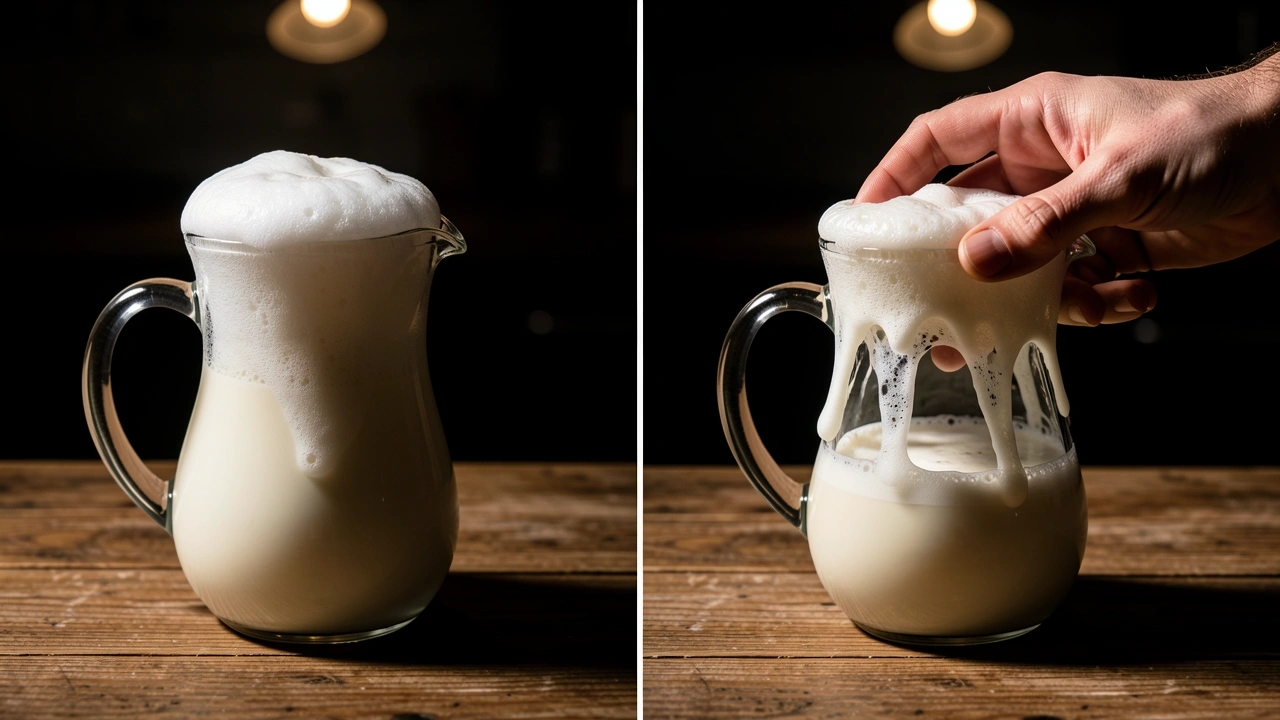
Knocking the pitcher is not a universal fix. There are specific situations where hitting the counter does nothing or makes things worse.
Knowing when to skip the tap is just as important as knowing how to do it.
Cold foam is a different beast. Cold foam is aerated with a frother or a blender, not steam. There is no large bubble structure to collapse because the foam is already homogenous.
Tapping a cold foam pitcher is pointless. The motion just disturbs the foam without improving it.
Oat milk and other plant-based milks are delicate. They have less protein structure than dairy, so the foam is weaker. A hard knock can deflate the entire foam cap.
I have learned to use a single, very gentle tap with oat milk. Sometimes I skip it entirely and rely only on swirling. The result is a smoother pour that holds better.
Over-aerated milk cannot be fixed with a knock. If you introduced too much air during steaming, the milk looks like a thick, stiff pillow.
Tapping it does nothing because the large bubbles are everywhere, not just on top. The only fix is to swirl harder to incorporate the foam, or start over.
I tell new baristas that if the milk looks grainy or too thick after tapping, the problem is not the knock. The problem happened during steaming.
The Counter Material Matters
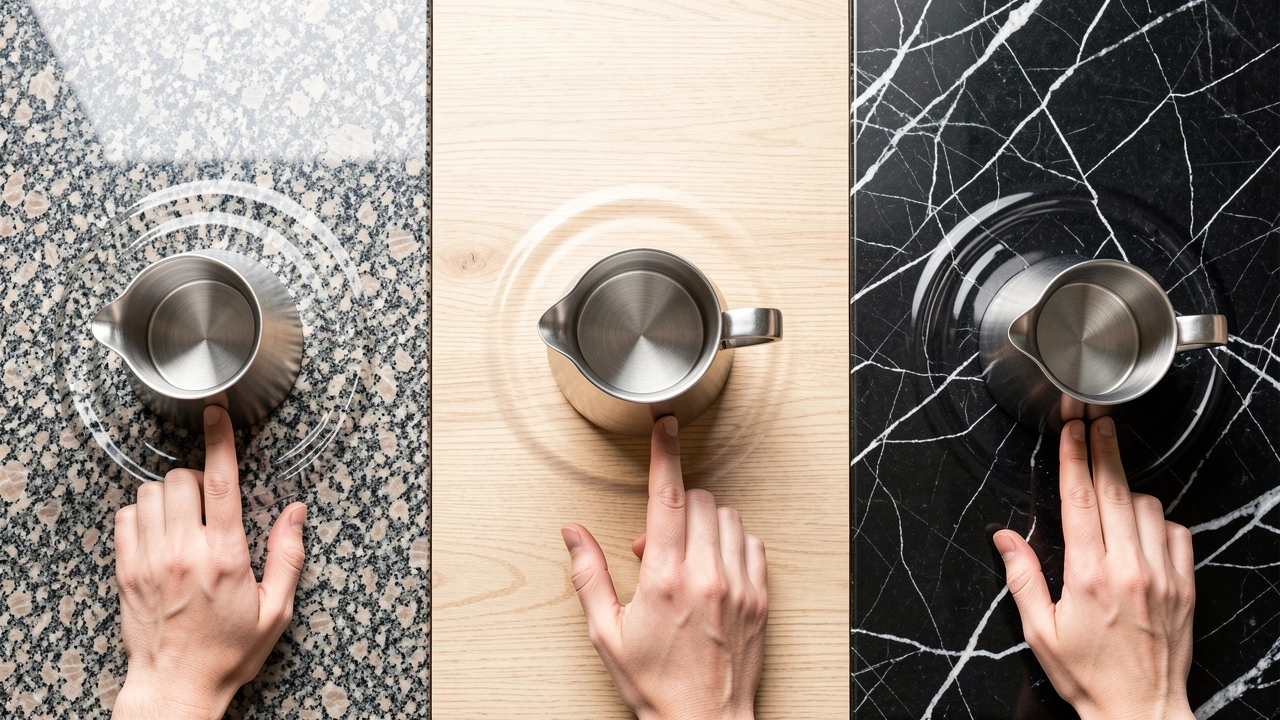
Here is a barista trade secret that most articles miss. The knock is also a tactile feedback loop.
The sound and feel of the impact tell the barista a lot about the milk condition and the pitcher weight.
On a hollow, plywood counter, the shock is absorbed. The tap sounds dull. The barista must use a sharper, slightly louder knock to get the same effect.
On a solid granite or quartz counter, the shock reflects back. A gentle tap does the job perfectly. I have worked in cafes with marble counters where a single light tap was all it took.
In another cafe with a cheap wooden counter, I had to increase the force noticeably.
Experienced baristas also listen to the sound to gauge how full the pitcher is. A full pitcher makes a lower, heavier sound. An almost empty pitcher makes a higher, lighter clink.
If the sound changes unexpectedly, it can signal that the milk is too hot or that the foam structure is compromised. This subtle feedback is part of why the knock becomes an instinctive habit.
Frequently Asked Questions
Can I use a rubber mallet or tamping mat to knock the pitcher?
No. You need the hard counter surface to create the sharp acceleration and resonance. A rubber mat or a tamping pad absorbs the force, and the bubbles will not collapse.
The impact needs to be direct and rigid.
Does knocking the pitcher affect the temperature of the milk?
No. The impact is too short to transfer any heat. The temperature of the milk is controlled entirely during the steaming phase when you intentionally introduce air and heat.
Why does my milk look grainy even after I knock it?
Grainy milk after knocking is a sign of over-aerated milk. You introduced too much air during the steaming phase.
The knock cannot fix damage caused by a bad steam wand tip position or too much time with the tip above the milk surface. Focus on your steaming technique first.
Do non-dairy milks need to be knocked?
Yes, but with care. Oat and soy milks have less protein, so the foam is more fragile. Use a single, very gentle tap. If the foam looks good after swirling, you can skip the knock entirely.
Barista blends are more forgiving, but the rule stays the same: less force, more attention.