Reina
Reina 
As an Amazon Associate, I may earn a small commission from qualifying purchases at no extra cost to you. This helps me create more valuable, tested content for you.
You’ve heard the conflicting advice: “Tamp as hard as you can” and “Pressure doesn’t matter.” You’ve felt the frustration when shots run fast or stall, even when you apply the same force.
I’ve been there too, pulling my hair out over 30 pounds of tamping versus 10 pounds, wondering if I was missing some secret.
After spending years testing at home and digging into the actual physics, I can give you a straightforward answer.
For a properly dialed‑in espresso shot—correct grind size and dose—tamping pressure has a negligible effect on extraction yield beyond a very low minimum threshold.
However, this statement comes with critical caveats that most advice ignores. The real magic isn’t in how hard you push down; it’s in what happens before and during that push.
The Minimum Threshold – The Only Number That Matters
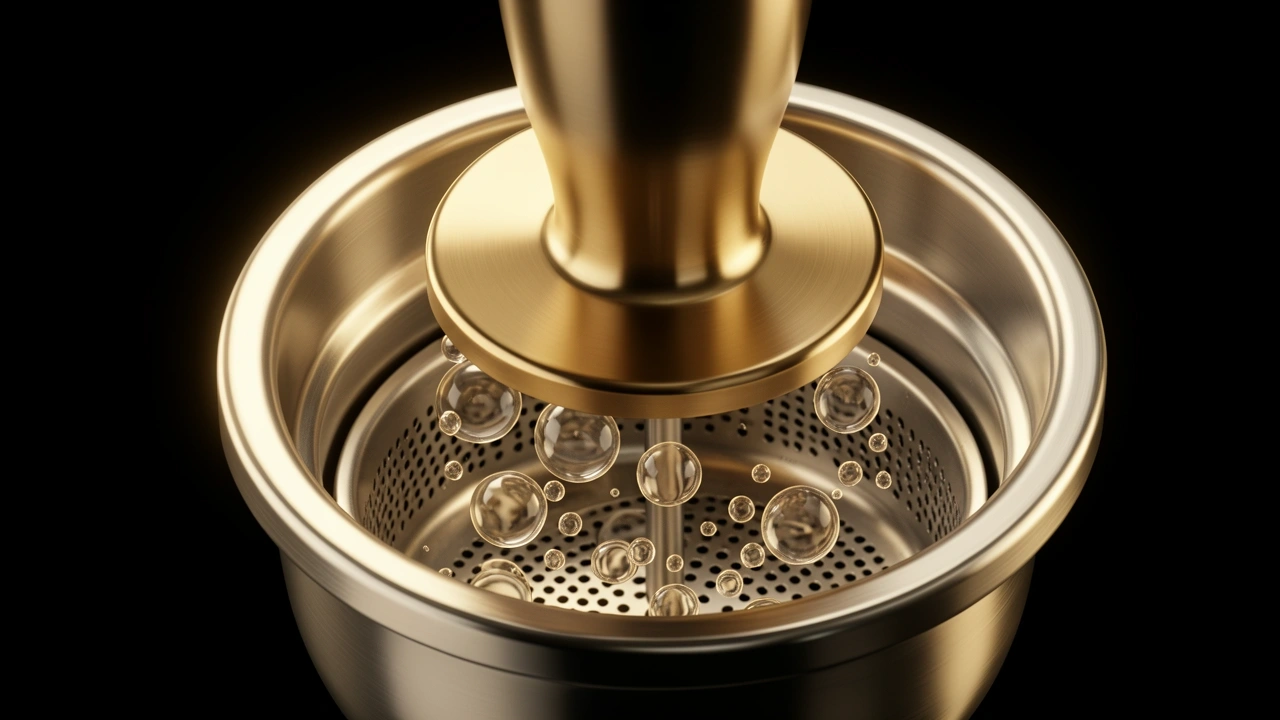
If pressure doesn’t matter, why tamp at all? The answer is a concept called minimum effective compaction.
This is the force required to remove the tiny air pockets trapped between coffee particles and create a uniform, solid surface.
Below this threshold, water finds easy channels, extraction is uneven, and your shot tastes sour or bitter.
Above it, the coffee bed is already at its maximum density—adding more force accomplishes nothing.
I learned this the hard way when I started using a spring‑loaded tamper. I set it to 15 pounds and got consistent shots. Then I tried 25 pounds and saw no change in extraction time.
The threshold for my basket was somewhere around 8 pounds. Most home baristas are already far above this without realizing it.
How do you find your threshold at home? Use a simple test: tamp as lightly as you can without the puck cracking—maybe 5 to 8 pounds of force. Pull a shot and note the time.
Then increase by 5 pounds and pull another. If the extraction time doesn’t change, you’re above the threshold.
Most baskets, especially modern precision baskets, reach full compaction at surprisingly low force.
Here’s the part most guides skip: the threshold isn’t a fixed number like 15 pounds.
It changes based on your basket design, the freshness of your coffee (fresh beans are more compressible), and how well your tamper fits the basket.
A loose‑fitting tamper may require slightly more force to seal the edges.
When Does Tamping Pressure Actually Ruin Your Shot?
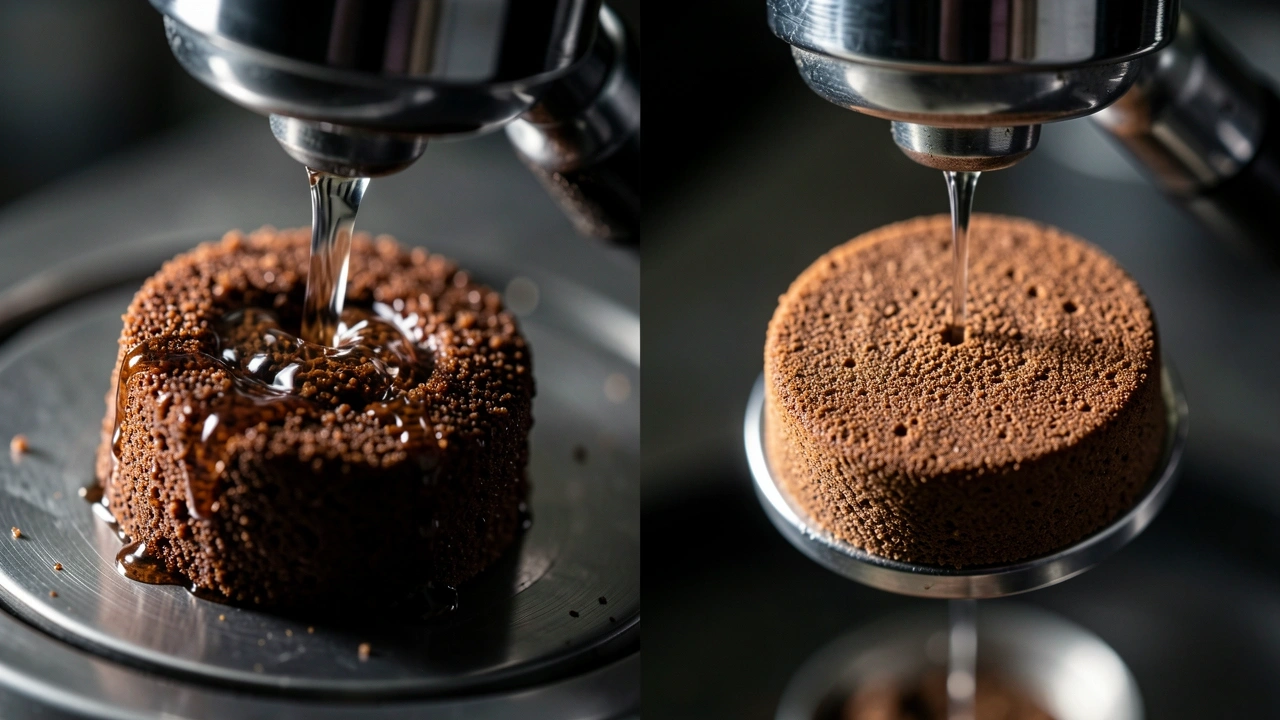
So if tamping harder doesn’t help, can it hurt? Yes—but only in specific scenarios. The first is when you combine very high tamping force with a very fine grind.
That can create a dense plug that stalls the machine or forces water to blow a channel through the weakest spot.
Over‑tamping a fine grind is like trying to push water through a clogged filter—it finds its own path, and it’s rarely even.
The second scenario is the real enemy: inconsistency. Going from 10 pounds on one shot to 30 pounds on the next creates variable puck density.
The lighter‑tamped puck will have lower resistance, so water flows faster through that shot. The heavier‑tamped puck may resist more, channeling as water battles through.
This variability is why your shots taste different even when you “tamp the same way.”
The Real Problem with Inconsistent Tamping Technique
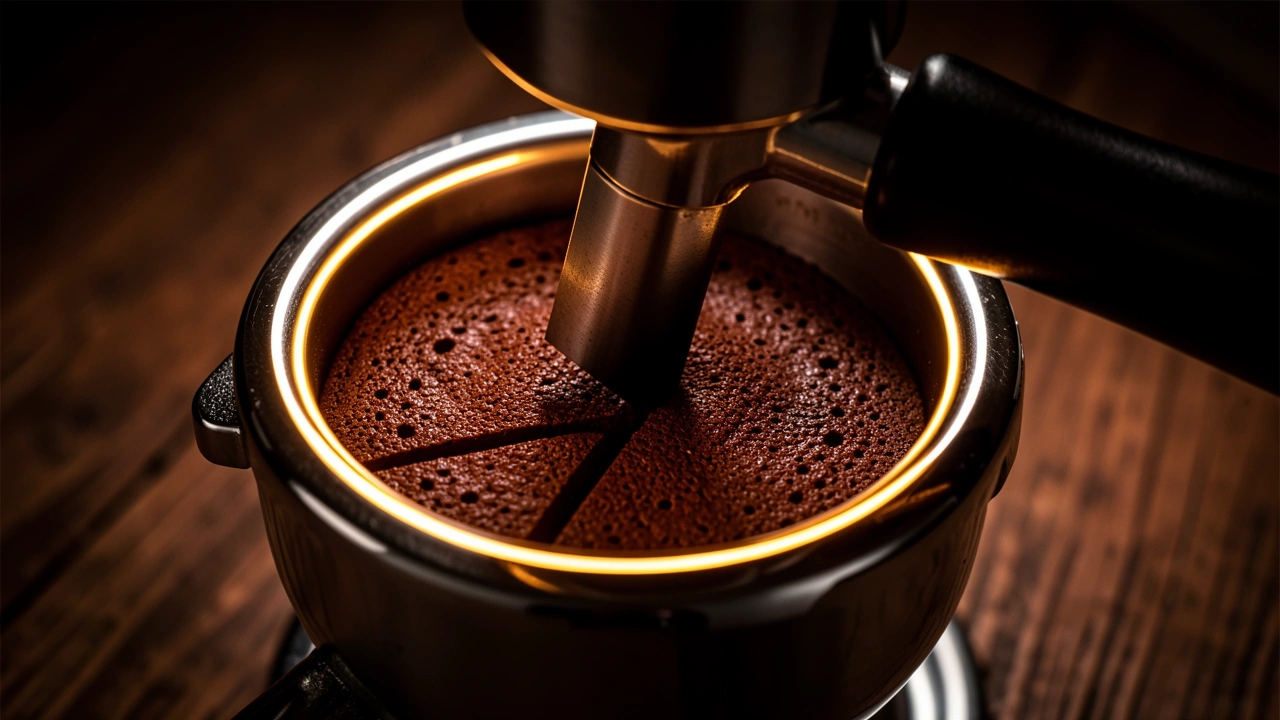
When I first tested my own technique, I assumed my pressure was consistent. I was wrong. I wasn’t changing the force much, but I was changing the angle.
An angled tamp introduces a wedge of variable density—one side of the puck is compressed more than the other.
Water rushes through the thin side and struggles on the thick side, causing channeling every time. This is the number one reason shots taste sour or bitter even when you “tamp hard enough.”
The fix is simpler than you think. Stop worrying about the number of pounds and focus on keeping the tamper level.
I use the “feel” method: rest your fingertips on the edge of the tamper where it meets the basket rim. When you press down, your fingers will tell you if the tamper tilts.
This is more valuable than any pressure gauge.
Tamping Pressure vs. Brew Pressure: The Misunderstood Relationship
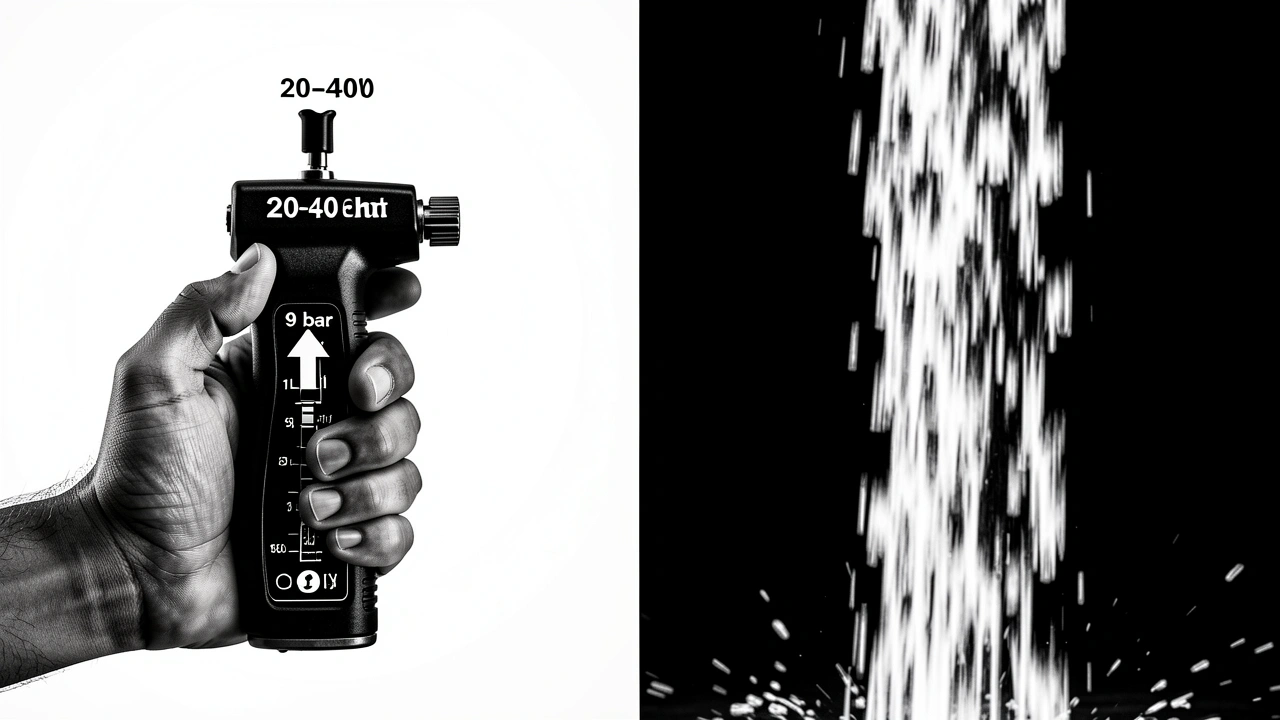
A common mistake is to think that tamping pressure adds significant resistance to water flow.
In reality, your espresso machine’s pump delivers 9 bars of pressure—that’s about 130 pounds per square inch pushing down on the puck. Your 20 or 30 pounds of tamping force is laughable in comparison.
Once the puck is uniformly compacted, the water sees the same resistance regardless of whether you used 10 or 40 pounds.
The real equation is simple: brew pressure (9 bar) plus grind resistance (provided by your grinder) determines extraction speed. Tamping only ensures that resistance is applied evenly.
If you try to fix a fast‑running shot by tamping harder, you’re masking a grind problem. Your grinder is too coarse.
The harder tamp might momentarily seal a channel, but the extraction is still uneven—you’ll taste both sour and bitter notes in the same cup. The only proper fix is to adjust your grinder finer.
I’ve seen people spend months swapping tampers and applying different forces, only to solve their problems when they bought a better grinder or learned to dial in correctly.
Never use tamping pressure to dial in shot time; change the grind. Keep your tamp consistent and let the grinder do the work.
The Myth of the Professional 30‑Pound Tamp
You’ve probably heard that professionals tamp at exactly 30 pounds.
This rule was created as a training heuristic—it gave baristas a repeatable target so they could build muscle memory in high‑volume cafes. It was never about superior extraction.
Studies from CoffeeGeek and Seven Miles show that 10 kilograms versus 30 kilograms of tamping force produce identical extraction curves. The key word is identical.
Your home setup doesn’t need that rule. A skilled manual tamp between 8 and 15 pounds, applied level and consistently, will produce better shots than a sloppy 30‑pound push.
Focus on the technique, not the number.
Frequently Asked Questions
Does tamping pressure matter differently for light vs. dark roasts?
Yes. Dark roasts are more brittle and produce more fines. These fines can clog the puck unevenly, making dark roasts more prone to channeling from variable tamping.
Light roasts are denser and more forgiving of slight pressure variation, but they are more sensitive to overall puck density.
In both cases, uniformity wins—keep your tamp level and pressure consistent.
What if I use a distribution tool (WDT)? Does tamping still matter?
A properly used WDT (Weiss Distribution Technique) tool eliminates air pockets before tamping. This means you can actually tamp lighter—closer to the minimum threshold—and still get excellent results.
The WDT tool does not replace tamping, but it makes the tamp’s job easier. You still need to compress the puck to create a solid surface, but the required force drops significantly.
Should I invest in a calibrated tamper like a spring‑loaded 15‑pound tamper?
A calibrated tamper’s primary benefit is consistency, not hitting a specific weight. If you struggle with uneven force across shots, a spring‑loaded tamper is a good solution.
It will not improve extraction over a skilled manual tamp, but it removes variability.
For most home users, a quality tamper that fits your basket well is a better investment than a spring‑loaded model.
I see a difference in my shot time when I tamp harder. Why does that contradict the science?
If you see a clear time difference when tamping harder, you likely have an uneven distribution or a coarse grind.
A harder tamp may temporarily seal a channel or compress a coarse bed, but it’s masking a larger problem. The extraction is still uneven, producing both sour and bitter flavors.
Fix the distribution and grind size first—once those are correct, changing tamp force will show negligible effect on time.