Reina
As an Amazon Associate, I earn from qualifying purchases.
I’ve installed a lot of cooktops in my time, and this is the question that comes up in nearly every kitchen remodel conversation.
People assume that because there’s no flame, there’s no combustion, and therefore no need to worry about air quality. That assumption is half right.
Let me give you the straight answer you came here for, then walk you through the details that actually matter for your home.
No, you’re not legally required to install ventilation over an electric cooktop in most jurisdictions. But if you want your kitchen to stay livable long-term, you should. The math isn’t even close.
Building codes exempt electric cooktops from the range-hood requirement that applies to gas. However, the practical reality of cooking—steam, aerosolized grease, and smoke—means you’ll regret skipping ventilation in ways that show up on your ceilings and in your lungs.
What the Building Code Actually Requires

Let’s start with the part that most articles get wrong or oversimplify.
The International Residential Code (IRC), which most US municipalities adopt as their baseline, requires a ventilation system for gas cooktops specifically because of combustion byproducts like carbon monoxide and nitrogen dioxide.
Electric cooktops don’t burn fuel, so they dodge that bullet entirely.
That said, there’s a hidden layer that trips people up.
Several jurisdictions, especially ones with heavy new-construction volume, have amended their local codes to require mechanical ventilation for all ranges regardless of fuel type.
These aren’t rare outliers, either. I’ve seen county-level amendments in California, Washington, and parts of the Northeast that treat every cooktop as needing an exhaust path.
The distinction that matters is new construction vs. existing homes.
If you’re building from scratch or doing a gut remodel that pulls permits, your inspector may require ventilation where an existing home would be grandfathered in without it.
- IRC baseline: Electric cooktops are exempt from mandatory range hoods.
- Local amendments: Some counties override the baseline for new builds. Check with your building department.
- The 400 CFM trigger: If you install a hood rated above 400 CFM, IRC M1503 requires a makeup air system to prevent backdrafting.
Here’s something else the code books won’t tell you: the enforcement reality. Inspectors generally don’t walk into existing homes and demand retrofits. Insurance companies don’t check either.
So if you’re renovating an older kitchen without adding a hood, nobody’s coming to knock on your door.
The question becomes whether you want to live with the consequences that nobody will stop you from creating.
Why Your Electric Cooktop Isn’t As Clean As You Think
The mental model most people carry is that electric cooking is “clean” because there’s no flame.
If you’ve ever owned an electric cooktop, you know that’s fiction the first time you sear a steak indoors.
The induction or radiant surface gets hot enough to vaporize cooking oils, and those vapors condense elsewhere—your cabinets, your walls, your ceiling. Or worse, your lungs.
Let me give you some concrete numbers that changed how I advise clients.
When you pan-sear a chicken breast, the cooking process releases measurable quantities of fine particulate matter (PM2.5) into the air.
That’s the same class of pollutant that triggers air quality warnings outdoors, and it happens on a smaller scale in your kitchen every time you cook.
Boiling pasta does something different: a pot of water at a rolling boil releases roughly a liter of steam into your kitchen every ten minutes. That humidity doesn’t just make the room feel stuffy.
It gets absorbed into your drywall, your wooden cabinets, and your ceiling paint, accelerating wear that shows up as peeling and discoloration years earlier than you’d expect.
Released into the air during a single seared steak session, measurable on indoor air quality monitors.
Vaporized from a boiling pot of pasta, adding humidity that settles into walls and ceilings.
How long cooking smells linger in an unvented kitchen before they fully dissipate.
There’s also a physics quirk that makes electric cooktops have a harder time clearing air than gas.
A gas flame creates a rising column of hot air that naturally carries smoke and steam upward and outward.
Electric surfaces, especially induction, produce less ambient heat, which means the air column above the pan is weaker. Steam and smoke hang lower and disperse more slowly.
This isn’t just a comfort issue—it means a higher concentration of airborne particles at your breathing level while you cook.
Induction and Radiant Cooktops Ventilate Differently
Most articles lump induction and radiant coil together as “electric,” which misses a key distinction that affects your ventilation choice.
These two technologies produce different kinds of effluent, and that matters for how you filter and exhaust it.
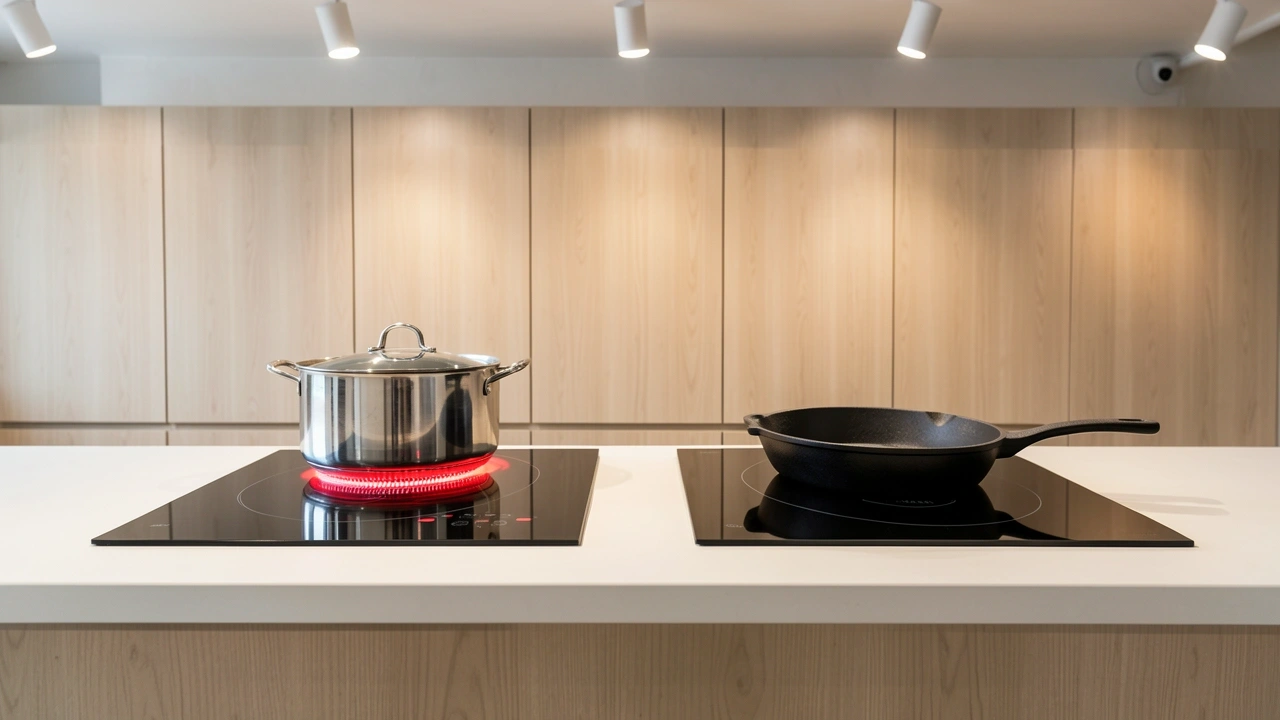
Radiant coil cooktops (the ones with glass surfaces that glow red) heat the pan indirectly and throw a substantial amount of ambient heat into the room.
Their cooking process is moisture-heavy—boiling, simmering, and steaming dominate. The effluent profile is steam-dominant and carries a fair amount of cooking odor.
Radiant cooktops benefit from ventilation that handles humidity well, even at lower CFM.
Induction cooktops operate differently. The electromagnetic field heats the pan directly, which means faster temperature changes than radiant or gas.
That speed has a ventilation consequence: when you sear a steak on induction, the pan reaches target temperature so quickly that the initial smoke burst is denser and more oil-laden than what you’d get from a cooktop that heats gradually.
This is oil-dominant smoke, comprised of fine particulate from heated fats. For induction, a higher CFM with a grease-optimized filter is the better match.
I’ll be straight with you: most homeowners don’t need to obsess over this distinction when buying a hood. A solid mid-range ducted hood with baffle filters handles both profiles fine.
But if you’re deciding between two hoods or trying to figure out whether you can get away with a budget ductless unit, knowing which effluent type you produce most helps you prioritize the right filter and CFM range.
Every Ventilation Option Ranked by Practicality
Your kitchen’s physical constraints determine your options more than your cooktop does. Ductwork that runs through an exterior wall opens doors that an interior island simply doesn’t have.
Here’s how the realistic options stack up, from the gold standard down to the bare minimum.
Ducted Range Hood
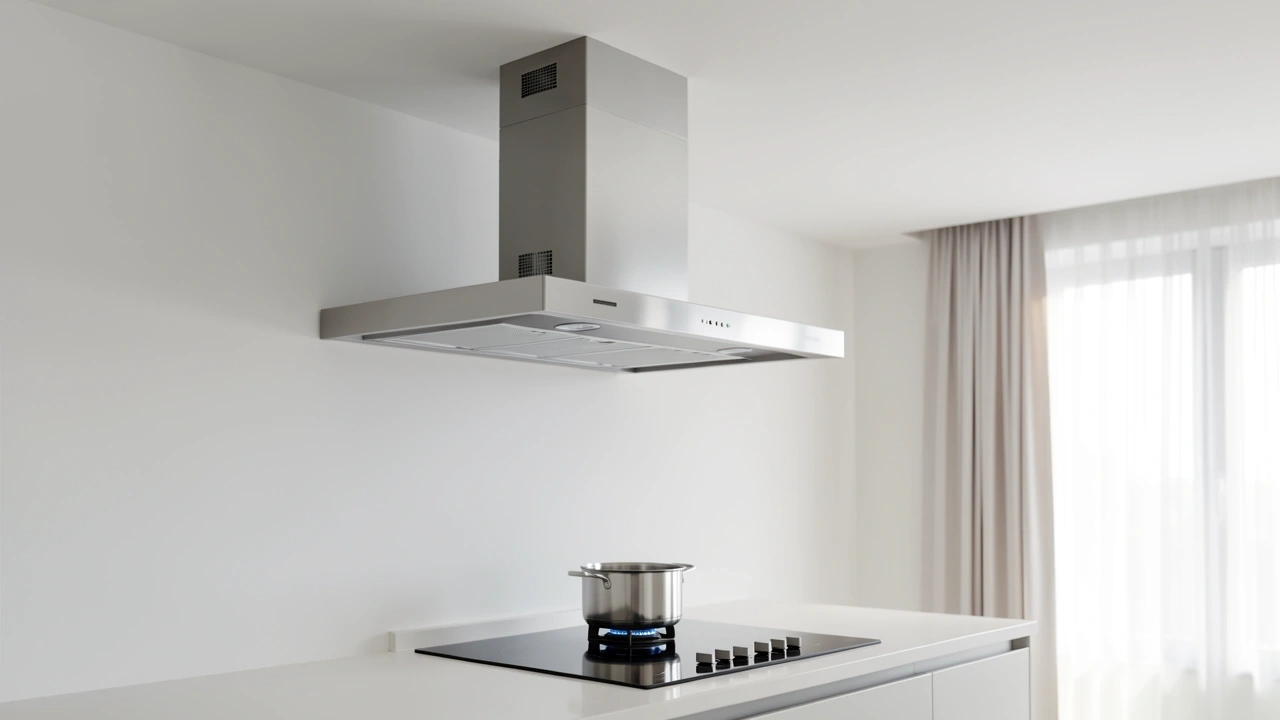
This is the gold standard because it physically removes air from your living space.
A ducted hood pulls smoke, steam, and grease-laden air up through a filter, then pushes it through ductwork to the outside. Nothing recirculates.
The downsides are the installation cost and the need for duct access. If you’re on an exterior wall or have the attic space to run ductwork, this is the option I push hardest for.
Sizing matters, but for most home electric cooktops, 300–400 CFM is plenty.
Ductless Recirculating Hood
The pragmatic workhorse. A ductless hood pulls air through a grease filter, then through a charcoal filter, and returns the cleaned air to the room.
It captures odors and a meaningful fraction of grease, which makes it dramatically better than nothing.
The catch is that charcoal filters have a finite lifespan—around 3 to 6 months of regular cooking—and they do nothing for ambient heat or humidity.
For apartments and kitchens without duct access, a quality ductless hood is the right call, but understand its ceiling: it reduces, it doesn’t eliminate.
Downdraft Ventilation
Downdraft systems pop up from behind the cooktop or the surface itself, pulling air sideways and downward through ductwork that runs under the floor.
They’re the classic solution for islands where an overhead hood would block sightlines. The honest assessment is that downdraft ventilation is less effective than overhead capture.
Smoke rises; fighting that physics with side suction works reasonably well during searing but leaves steam and odors less fully captured.
It’s a compromise that makes sense in specific layouts, and cooktops with built-in downdrafts are increasingly common.
Over-the-Range Microwave with Vent
The dual-function compromise. An over-the-range microwave with a built-in vent saves counter space and handles the need for a second appliance simultaneously.
They’re available in ducted and ductless configurations, and they’re generally less powerful than dedicated hoods.
The vent fan in a microwave unit typically tops out around 200–300 CFM, which handles moderate cooking loads but struggles with heavy searing sessions.
For a small kitchen where space is at a premium, this is a reasonable trade-off.
Window Fan or Nothing
The honest minimum-viable approach for renters and temporary spaces.
A high-quality window exhaust fan positioned near the cooktop pulls a surprising amount of smoke and steam outdoors, especially if you can create cross-flow by opening a window on the opposite side of the room.
It’s not a permanent solution, and it won’t capture grease before it settles on nearby surfaces.
But if you’re in a rental and the landlord won’t install a hood, swinging a window fan into place during high-heat cooking is far better than opening a window and hoping.
I’ve installed all of these and lived with most of them.
My honest ranking for a home that sees regular cooking: ducted hood if you can manage the installation, high-quality ductless if you can’t, downdraft only for specific island layouts, and window fan as a temporary stopgap.
The effectiveness gap between ducted and ductless isn’t small, but the gap between ductless and nothing is enormous.
How Much Exhaust Do You Actually Need?

CFM stands for cubic feet per minute, and it measures how much air a vent moves.
More isn’t automatically better—oversized vents can be noisy and create negative pressure that pulls conditioned air out of your home.
The goal is to match the CFM to your cooktop’s output and your cooking habits.
For electric cooktops, there’s a straightforward formula that gets you in the right range. Take your cooktop’s total wattage and divide by 100. A typical 3,000-watt induction cooktop lands at 300 CFM.
For induction specifically, multiply that number by 1.25 to account for the denser smoke plume from rapid searing. That brings the recommendation to about 375 CFM.
Radiant coil cooktops can stick with the straight wattage ÷ 100 calculation.
For radiant electric: Cooktop wattage ÷ 100 = minimum CFM
For induction: (Cooktop wattage ÷ 100) × 1.25 = minimum CFM
Worked example (3,000W induction): 3000 ÷ 100 = 30. 30 × 1.25 = 375 CFM recommended.
Two more installation details that people overlook. First, the hood’s width should match or exceed your cooktop’s width. A 30-inch cooktop gets a 30-inch hood at minimum.
Anything narrower leaves the outermost burners uncaptured.
Second, mounting height for electric cooktops runs 24 to 30 inches above the cooking surface—that’s lower than the 30 to 36 inches typically recommended for gas, because you don’t need to clear a flame and you want the capture zone closer to the source.
Once you cross 400 CFM, IRC M1503 kicks in and you must install a makeup air system to compensate for the volume of air being exhausted. This is a real code requirement, not a suggestion. For most home electric cooktops you’ll stay under the threshold, but if you’re installing a powerful hood for heavy-duty induction searing, budget for the makeup air solution and the permit it requires.
Four Ventilation Myths Too Many Homeowners Believe
I hear the same misconceptions from clients and in online forums, often from people who are confidently wrong. Let me clear up the four that cause the most trouble.
“Ventilation is only about smoke.”
Steam and humidity are major issues. They wreck cabinet finishes, peel ceiling paint, and drive up your air conditioner’s workload during summer cooking sessions.
Ventilation protects your home itself.
The grease film that settles on cabinets and ceilings over a year of unvented cooking was the single most common complaint I heard from homeowners who skipped ventilation.
“Ductless hoods are basically useless.”
With fresh charcoal filters, a ductless hood captures a meaningful fraction of grease and most cooking odors. It’s not ducted-quality, but it’s far from useless.
Ductless works if you respect the filters.
The charcoal filter is consumable, not permanent. Replace it every 3–6 months of regular cooking and the unit performs dramatically better than one with a clogged, exhausted filter.
“Induction means no ventilation needed.”
A widespread Reddit misconception. Induction has no combustion, true, but it reaches searing temperatures faster than any other cooktop, producing a dense oil smoke plume that hangs lower in the air.
Induction needs more CFM, not less.
The rapid heat spike produces a heavier smoke load per searing event than radiant or gas. The 1.25× CFM multiplier exists for this reason.
“Code doesn’t require it, so it’s optional everywhere.”
Not true once you factor in local amendments, the IRC M1503 makeup air requirement for high-CFM hoods, and new-construction permits that often mandate ventilation.
Code is a floor, not a recommendation ceiling.
Even where ventilation isn’t mandated, the cost of installing it later is triple the cost of doing it during a remodel. The issue is practical, not legal.
Match Your Kitchen to the Right Solution

Running through a set of practical questions is the fastest way to land on your answer. Here’s the framework I walk through with clients, and it translates directly to your situation.
Start by asking whether your cooktop sits on an exterior wall. If yes, a ducted hood is the obvious choice because the duct run is short and the installation cost is manageable.
If your cooktop is on an interior wall or an island, your options narrow: downdraft or a high-quality ductless unit with fresh charcoal filters.
Renters without agency over permanent alterations should think in terms of window fans and portable air purifiers rather than duct modifications.
And if you’re mid-remodel, the time to budget for ducted ventilation is now—while walls are open and before the drywall goes up.
Ducted hood. The duct run is short and installation is straightforward.
Downdraft or high-quality ductless. Weigh the trade-off between capture quality and layout.
Window fan plus a portable air purifier with a HEPA filter for the cooking area.
Ducted hood, even if you think you don’t need it. Future you will appreciate the clean walls.
The five-year cost of skipping ventilation becomes visible when you eventually need to refinish cabinets, repaint ceilings, or replace a warped cabinet door.
That cost typically dwarfs the price of a decent hood installed during the initial project. A $400 ducted hood is cheap insurance against a $2,000 cabinet refinishing bill later.
The Bottom Line
You’re not legally obligated to vent an electric cooktop in most places, and no inspector is going to fail you for skipping it in an existing home.
But the practical evidence says ventilation is worth it—not for code compliance, but for the longevity of your kitchen and the quality of your indoor air.
Any ventilation beats none, ducted beats ductless, and smart placement beats powerful hardware.
Match your solution to your actual layout, and you’ll cook in a kitchen that stays cleaner, smells fresher, and looks newer for years longer.
- Code: Electric cooktops are exempt from mandatory range hoods in most jurisdictions, but local amendments exist—check before new construction.
- Practical reality: Steam, aerosolized grease, and cooking odors are real regardless of fuel type. Unvented kitchens accumulate damage over time.
- Induction differs: Induction produces denser oil smoke during searing and needs higher CFM with grease-optimized filters than radiant electric.
- Minimum viable: Ducted hood if possible, quality ductless with fresh charcoal filters if not, window fan for renters.
- The formula: Wattage ÷ 100 for radiant, × 1.25 for induction to find your recommended CFM.
Frequently Asked Questions
Is a vent hood required by code for a cooktop in an island?
For electric cooktops, the code baseline doesn’t require ventilation in any configuration, island included. However, local amendments can override this for new construction or major remodels. A cooktop in an island with no overhead cabinet and no exterior wall access typically gets a downdraft unit or a ductless hood. If your jurisdiction requires ventilation and you can’t run ductwork, a ductless hood with a fresh charcoal filter usually satisfies the mechanical ventilation requirement without needing an exterior penetration.
Do codes require makeup air for high-CFM hoods above an electric cooktop?
Yes. IRC M1503 specifies that any exhaust system rated above 400 CFM must be paired with a makeup air system that compensates for the volume of air being pulled out of the house. This applies regardless of whether the cooktop is gas or electric. If your hood’s CFM rating exceeds 400, you need to address makeup air in the design. Most residential electric cooktops with typical hoods stay below this threshold, but high-output induction setups paired with high-end hoods can trigger it.
Can an over-the-range microwave actually handle my cooktop’s ventilation needs?
An over-the-range microwave with a built-in vent can handle moderate cooking loads, making it a practical space-saving compromise. Most of these units deliver 200–300 CFM, which suits boiling, simmering, and light frying. Heavy searing or frequent high-heat cooking will overwhelm them. If you cook aggressively, pair the microwave vent with a window fan or portable air purifier, or consider upgrading to a dedicated hood for your primary cooking area.
If I use induction, can I install a downdraft instead of a hood?
Yes, and manufacturers are making this easier with cooktops that have built-in downdraft units. The trade-off is effectiveness. Induction’s rapid heating produces dense oil smoke during searing, and downdraft systems capture less of it than overhead hoods because they work against the natural rise of hot air. If your layout forces a downdraft choice, position it as close to the cooktop surface as possible and run it at maximum CFM during high-heat cooking.
Is ventilation different if I have a built-in wall oven and a separate cooktop?
The cooktop is what drives ventilation requirements, not the oven. A separate wall oven produces heat at the unit’s exterior that dissipates into the surrounding cabinet, but it doesn’t generate effluent that needs exhaust the way a cooktop does. The ventilation system you install above your cooktop—whether it’s a hood, downdraft, or ductless unit—must be sized for the cooktop’s wattage and your cooking habits. The oven’s presence doesn’t change the CFM calculation.
If I skip ventilation and sell my home later, is this a liability?
Not in the code-enforcement sense, but it can become a negotiation point. Buyers who cook regularly understand how miserable an unvented kitchen gets during heavy cooking sessions, and they may factor the missing hood into their offer. A home inspection operates on minimum standards—the inspector won’t flag an electric cooktop without a vent because it’s not a violation. But a visible grease film on the cabinets above the cooktop tells a story that affects perceived value. Retrofitting a hood later costs more than installing it during a remodel, and some buyers know that.