Reina
Reina 
As an Amazon Associate, I may earn a small commission from qualifying purchases at no extra cost to you. This helps me create more valuable, tested content for you.
Yes, you can leave water in the espresso machine reservoir overnight without damaging the machine in a single night. That is the honest answer.
The longer, more useful answer is that this simple convenience quietly works against you in a few ways that most owners never think about.
The water itself does not “expire,” but the environment inside a warm espresso machine changes what that stagnant water does.
Over weeks and months, the habit of topping off the tank and leaving it full can cost you in scale buildup, seal wear, and a noticeable drop in how your coffee tastes.
I have owned espresso machines long enough to have made this mistake out of laziness and later paid for it with a descaling session I did not want to do.
The good news is that nothing about leaving water overnight is catastrophic. The better news is that with a small routine change, you get the convenience you want without the slow grind of damage.
The Three Hidden Risks of Stagnant Water in a Warm Machine
Most discussions about leaving water in a coffee machine settle on one worry: bacteria.
That is the surface-level concern, and it is worth taking seriously, but it is not the only thing happening inside that tank.
Three separate processes are at work whenever water sits still for eight hours or more, and each one affects your machine differently.
Bacterial Biofilms Form Faster Than You Expect
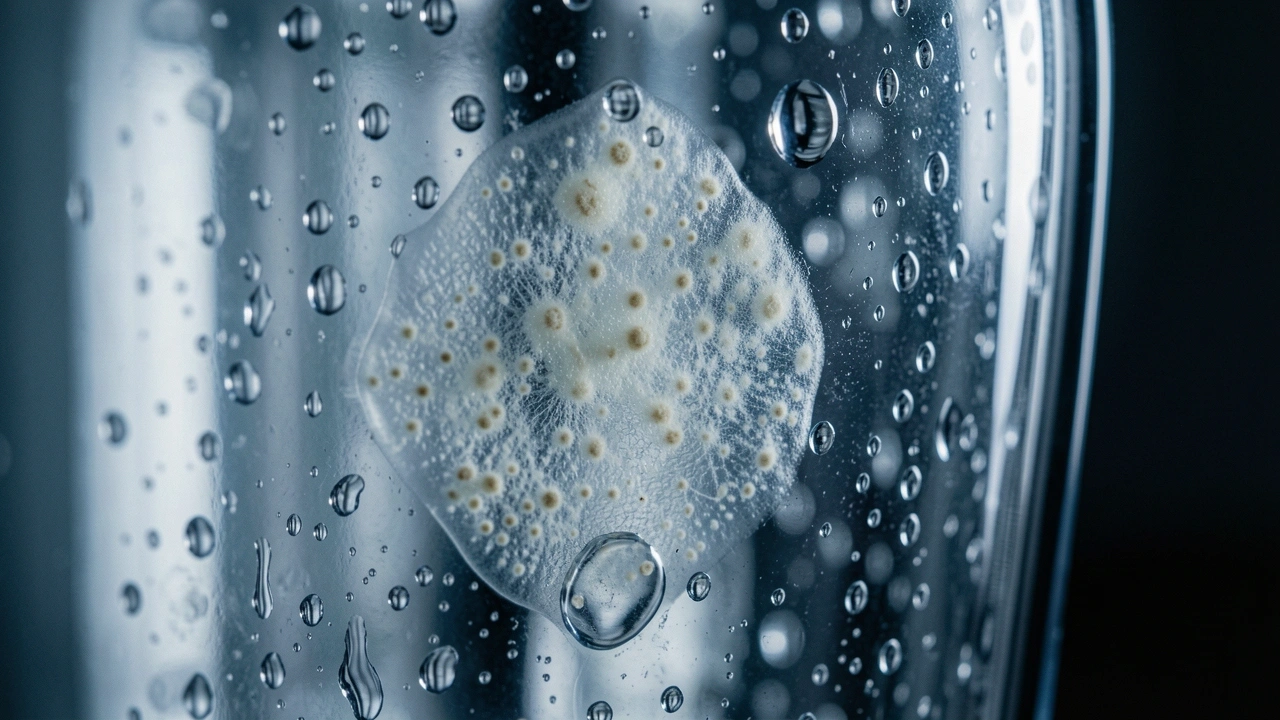
Water does not spoil like milk, but the tank is not a sterile container. Every time you refill the reservoir, you introduce microbes from your hands, the tap, and the air.
In the first 12 to 24 hours, those microbes begin organizing into a biofilm on the tank walls and the silicone gasket.
That slippery film you feel when you run a finger inside a neglected reservoir is not just slime — it is a bacterial colony that has anchored itself to the plastic.
If your water sits for a couple of days, that film can develop a musty smell that you will absolutely taste in your first cup.
I learned this the hard way with a machine I left untouched over a long weekend. The water looked perfectly clear, but the inside of the tank felt slick.
That film does not rinse away with a quick splash of tap water; it needs a soak and a scrub to reset the surface.
Stagnant Water Speeds Up Scale Nucleation
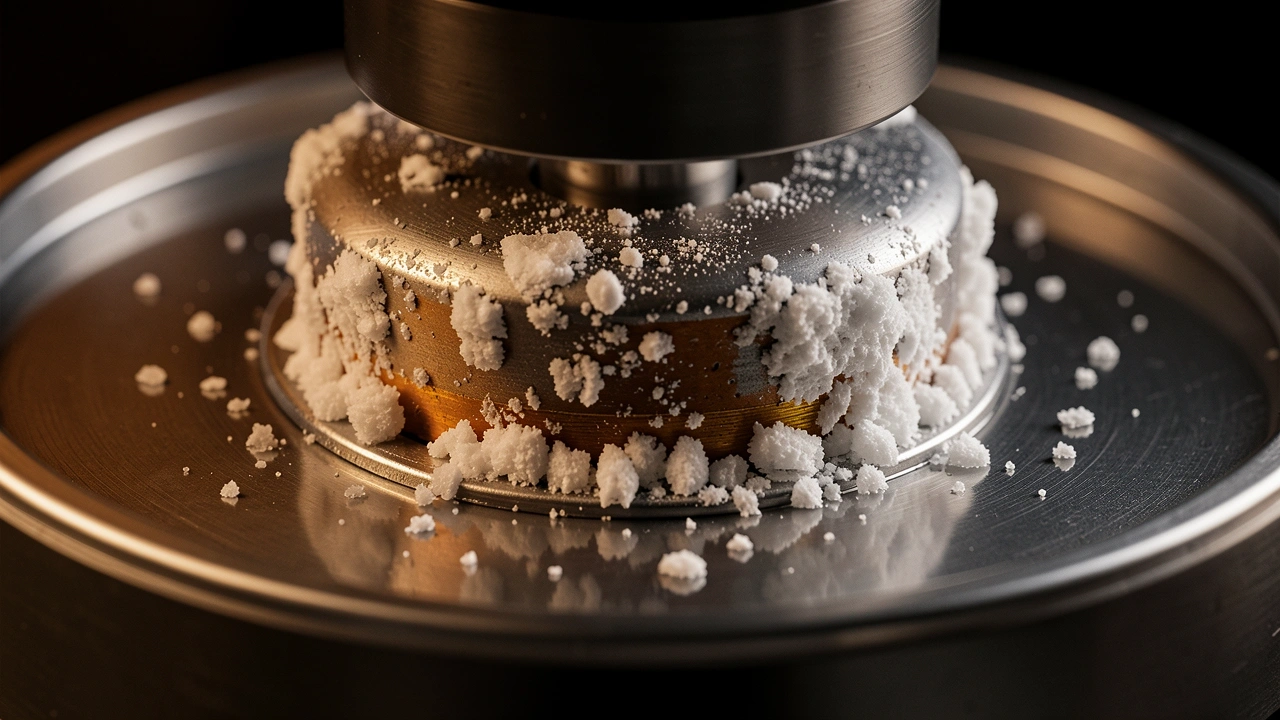
This is the hidden mechanical risk that almost nobody talks about. Scale does not only build up from hard water running through a machine.
It also builds up when minerals in standing water settle and crystallize.
The process is called nucleation, and it happens much faster in stagnant water than in flowing water because the dissolved minerals are not being swept through the system.
Instead, they deposit directly onto the heating element and the walls of the boiler.
In a warm machine, the water in the tank gets gently heated by the ambient temperature of the boiler. That warmth accelerates mineral precipitation.
Over weeks, a machine that is topped off and left full every night accumulates scale right where you do not want it — on the heating element, where it acts as an insulator and makes the machine work harder to reach temperature, and inside the boiler, where it narrows the flow passages.
When I opened up the boiler of an older machine that had lived its whole life with a full overnight tank, the layer of chalky white crust on the heating element was thick enough that the element had to work noticeably harder to heat the same amount of water.
Plastic Expansion Puts Stress on Seals and Fittings
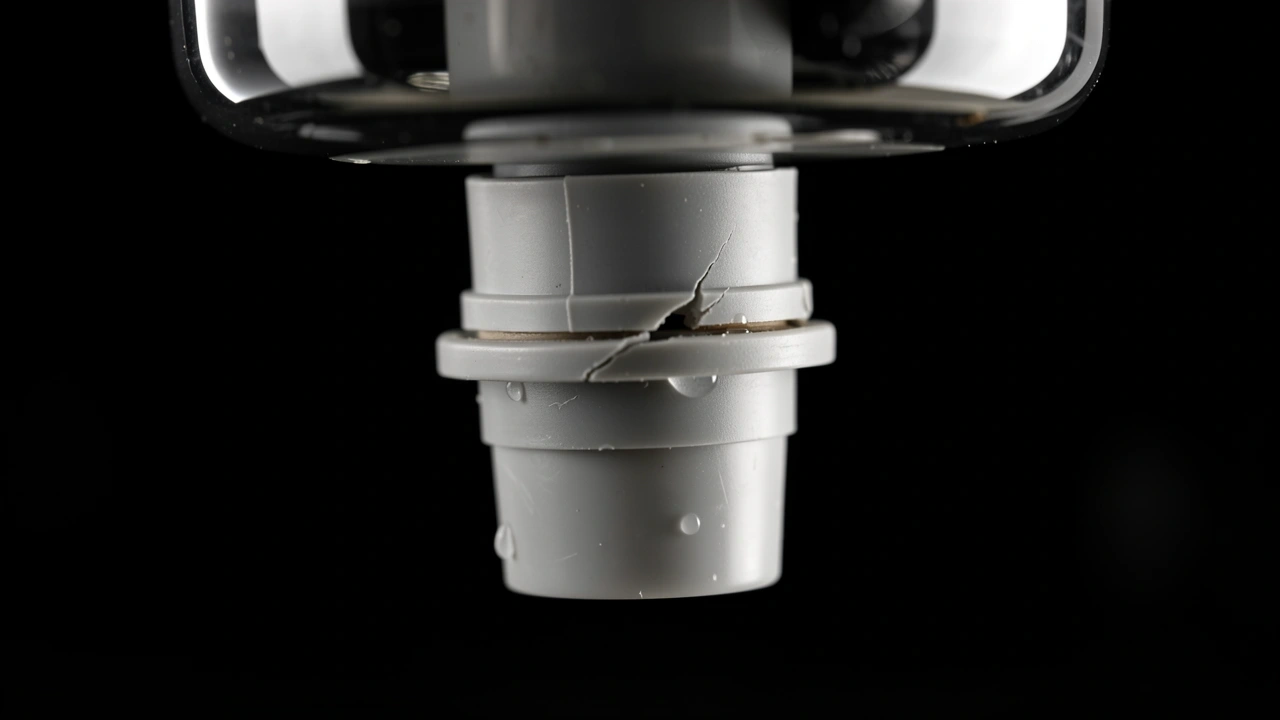
The reservoir is plastic, and the machine under it gets hot. That combination creates a daily heating and cooling cycle.
The plastic expands slightly when the machine runs and contracts when it cools down.
A tank that stays full overnight keeps constant pressure on the bottom seal and the nipple connection where the reservoir meets the machine base.
That steady pressure, combined with the expansion cycle, is exactly what causes the tiny silicone tears that lead to slow leaks.
There is a well-documented repair-community post on iFixit about a Keurig that emptied its entire reservoir onto the counter every night.
The root cause was a 2-millimeter tear in the silicone seal where the tank nipple inserts into the base. The owner had to take the machine apart, find the tear, and repair it by hand.
That tear did not happen in one night — it happened because a full tank pressed on that seal for months, coupling constant water weight with daily plastic movement.
Why Your Espresso Machine Type Changes the Answer
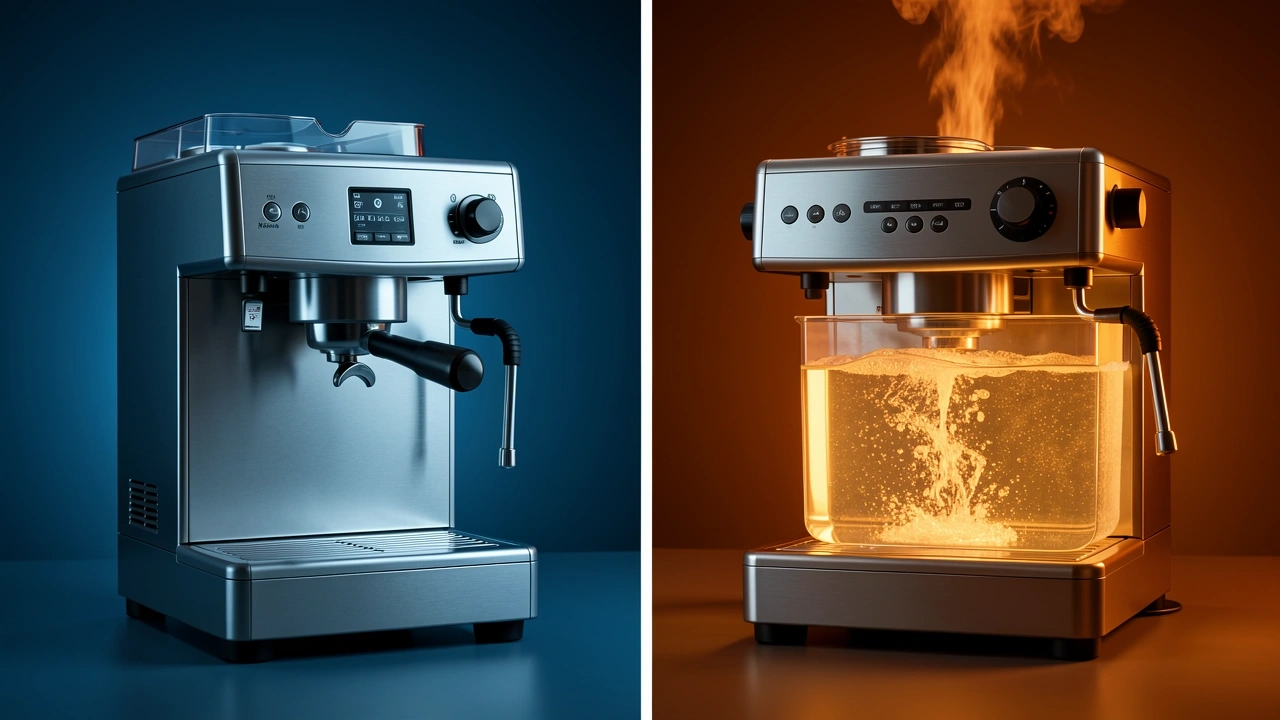
Not every machine exposes its reservoir water to the same conditions. Your specific architecture determines how much risk stagnant water actually carries.
| Machine Type | How the Reservoir Interacts | Main Overnight Risk |
|---|---|---|
| Single Boiler or Thermoblock | The reservoir feeds the boiler in controlled sips, so the tank water stays relatively cool and isolated from the heating element. | Biofilm growth and slow degradation of the tank seal from constant full-tank pressure. |
| Dual Boiler or Heat Exchanger | The tank has a direct connection to a brew boiler that stays hot continuously, which raises the temperature of the water in the reservoir itself. | Accelerated scale precipitation and off-gassing in the warmer water, plus a higher chance of stale water working its way into the group head. |
| Super-automatic | The reservoir is the sole water source for everything, usually with a direct line into a thermoblock that heats on demand. | Biofilm formation inside the internal tubing, since the small diameter lines give bacteria a large surface area to cling to. |
The key distinction is temperature. A single-boiler machine that is turned off overnight leaves its reservoir water at room temperature.
A dual boiler that stays on, or a machine that keeps its group head heated, will slowly warm the water sitting in the tank.
Warm stagnant water is a better environment for both bacteria and mineral precipitation.
If you run a machine that stays hot 24/7, you have more reason to drain the tank than someone who switches everything off at night.
The Flavor Science of Freshness: Why Morning Tap Water Tastes Better
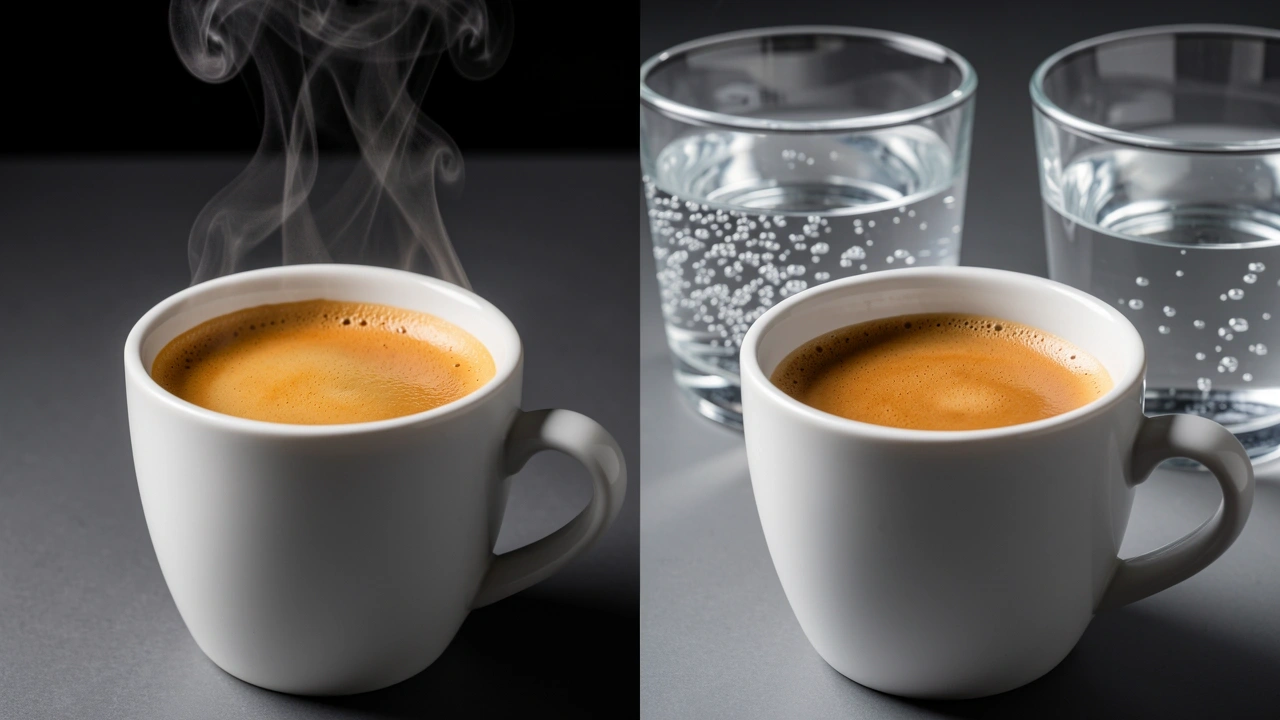
Even if you are not worried about scale or bacteria, consider the taste.
Fresh water picked up from the tap just before brewing has a high level of dissolved oxygen, and that oxygen plays a real role in coffee extraction.
It helps carry the volatile aromatic compounds out of ground coffee and into your cup.
Stagnant water that has sat in a plastic tank for eight hours has measurably lower dissolved oxygen because the gas slowly escapes through the water surface and into the air gap of the reservoir.
That is only half of the flavor story. The other half is what the water absorbs while it waits.
Plastic reservoirs release trace amounts of volatile organic compounds into the water they hold, especially when the tank is warm and the water has hours of contact time.
The result is water that tastes slightly flat and has a faint plastic note that most people cannot identify but can absolutely perceive in a clean pour-over or a straight espresso shot.
I did a side-by-side comparison once out of pure curiosity. I brewed one shot with water drawn directly from the tap and another shot with water that had sat in the reservoir overnight.
I could not tell the difference in the milk drinks, but in two straight espressos the difference was clear. The shot made with overnight water had a flatter aroma and a slightly duller finish.
It was not a dramatic difference, but it was enough to make me stop topping off the tank before bed.
There is also a practical trick that matters more if you leave water in the tank regularly.
The first water that hits the group head in the morning is the water that has been sitting inside the internal heat exchanger lines all night.
That line water has gone through the same oxygen loss and plastic contact as the tank water.
Running a two-second blank flush before you pull your shot purges that stale line water and replaces it with fresh water pulled from the tank.
If you are going to leave water in the reservoir, that blank flush is the single best habit you can add.
The “Half Tank” Rule and the Weekly Drain Cycle
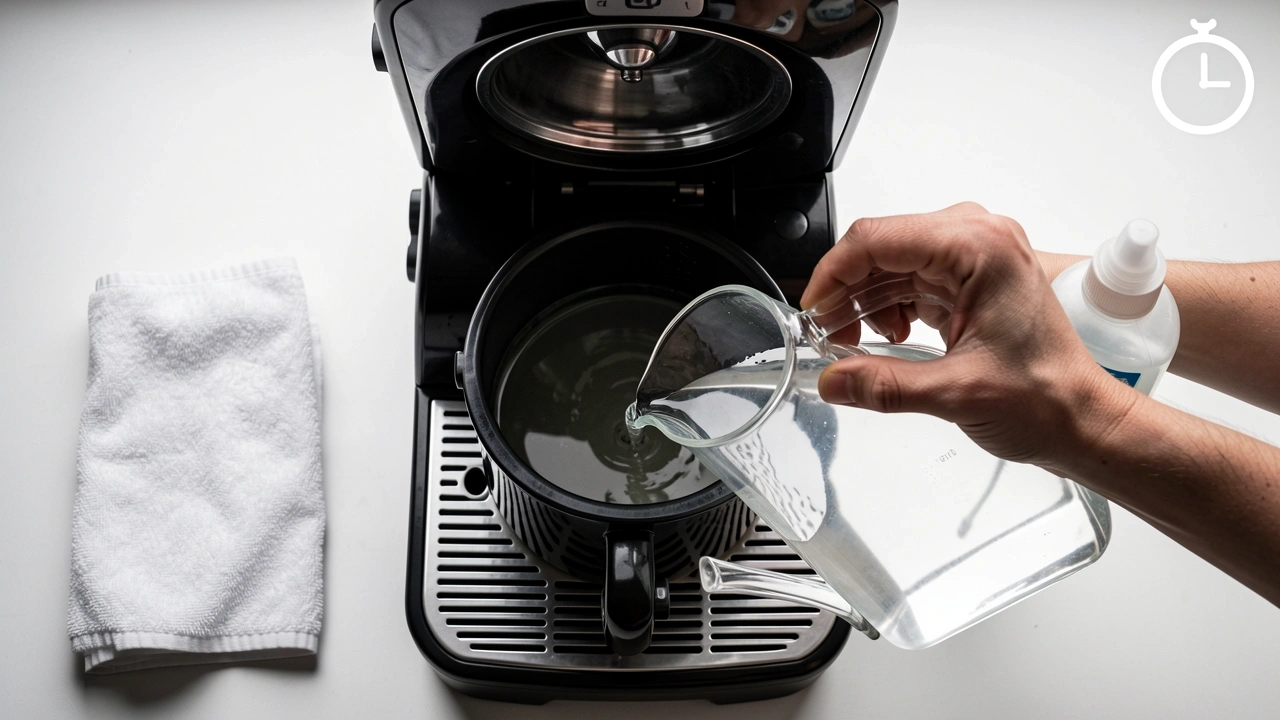
The practical takeaway is not that you should never leave water in the reservoir. That advice would be unrealistic, because most people do not want to fill the tank from scratch every single morning.
Instead, I use two simple practices that give most of the convenience with very little of the risk.
The first practice is the half tank rule. At the end of the day, I fill the reservoir only to the level I will need for tomorrow morning’s shot — roughly half a tank in my case.
A half-full tank still gives me a ready-to-go morning, but it dramatically reduces the static pressure on the bottom seal.
Less water also means less mineral content sitting in contact with the plastic, and a smaller amount of water means a shorter time for any off-gassing to build up.
If I know I will not touch the machine for more than a day, I empty the tank completely and leave the lid off.
The second practice is the weekly drain cycle. Once a week, I empty the tank completely and wash it with warm soapy water. I pay attention to the corners and the walls where the biofilm tends to form.
Then I dry it with a clean towel and let it air out for a few minutes before refilling. That one step resets the clock on biofilm buildup before any film has a chance to anchor itself to the surface.
It takes about three minutes and prevents the vast majority of bacterial growth, musty smells, and internal tubing slime.
While the tank is off, it is also the ideal time to check the bottom nipple and the silicone gasket. Run your finger over the gasket and look for any roughness, cracking, or tiny tears.
Catching that damage early is the difference between a quick part swap and the kind of leak that empties the whole reservoir onto your counter overnight.
How to Fix an Overnight Reservoir Mistake
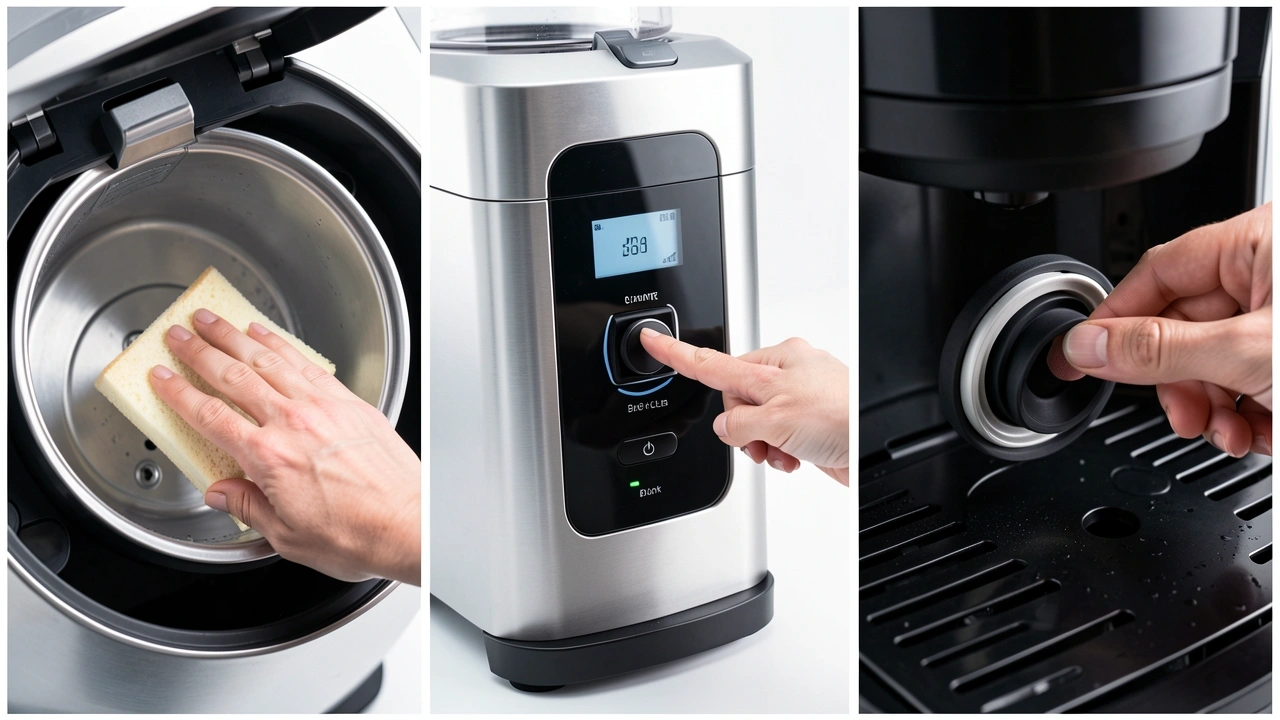
If you have already been leaving water in the tank for a while and things smell or taste off, do not panic. The damage from this habit is almost always slow and recoverable.
Here is the recovery sequence I use.
- Drain and scrub the reservoir. Empty it, wash it with warm water and a drop of dish soap, and dry it completely. If you feel a slippery film on the walls, that is biofilm — scrub it off with a soft sponge before it gets a chance to rebuild.
- Run several blank water cycles. Fill the tank with fresh water and run two or three full cycles of plain water through the machine without any coffee. This flushes stale water out of the internal lines, the heat exchanger, and the group head. If the water smells bad coming out, repeat until it does not.
- Descale only if you see scale. If the back of the tank, the group head, or the water outlet shows white chalky deposits, run a descaling cycle with a proper espresso machine descaler. Follow the manufacturer’s dilution instructions, not the aggressive “leave it overnight” approach that some old forums recommend. A long descaler soak can damage the same silicone seals you are trying to protect. A normal machine descaling cycle is enough for the kind of scale that forms from stagnant water.
- Taste-test the water. Fill the tank fresh, run a blank flush through the group head, and taste a small sip of the hot water that comes out. If it tastes clean and neutral, your lines are clear. If it still has a musty or plastic note, the issue is probably the tank itself, and it may be time to replace it with a factory part — replacement reservoirs are not expensive and are often the simplest long-term fix.
For the specific scenario where you left the tank full and found a puddle of water under the machine in the morning, do not assume the machine is ruined.
Check the bottom of the reservoir nipple and the silicone gasket in the base for a tiny tear. If the tear is small and recent, a fresh gasket will usually stop the leak entirely.
If the gasket looks fine, check the O-ring where the pump line connects to the machine base.
These parts are cheap, accessible, and are the first thing a repair technician will replace when a reservoir leaks.
Frequently Asked Questions
Does leaving water in the reservoir void my warranty?
Leaving water in the tank by itself typically does not void a warranty. Warranties are voided by damage, so the real question is whether your habit caused measurable damage inside the machine.
Severe scale buildup from repeatedly leaving the tank full in a warm machine can be classified as a lack of maintenance, and manufacturers can deny a claim on that basis.
Biofilm, by contrast, is unlikely to void anything because it is a natural result of normal use.
The safest approach is to follow the weekly drain cycle and document your maintenance routine if you ever need to make a claim.
Is distilled water safer to leave in the tank?
No. Distilled water is actually worse for a machine that holds water for long periods. With no dissolved minerals, distilled water aggressively pulls ions from whatever it touches.
While it sits in the reservoir, it leaches trace amounts of material from the plastic and, once it reaches a metal boiler, it can accelerate corrosion of the heating element and internal fittings.
That aggressive ion-leaching behavior makes distilled water more corrosive to machine internals than normal tap water, not less.
Use filtered or softened tap water instead, and keep the weekly drain habit.
I left water for a week. Is the machine ruined?
Almost certainly not. A week of stagnant water will grow a visible biofilm and likely produce a musty smell, but it will not destroy the machine’s internals.
Drain the tank, scrub it with warm soapy water, run several blank water cycles, and descale if you see white deposits.
The only time a week of sitting water becomes a serious issue is when mold visibly appears inside the tank and has a path into the group head.
If your first few flushes of water come out clear and odor-free, the machine is fine. If the water stays cloudy even after multiple flushes, contact a technician before brewing anything in it.
Should I leave the reservoir cap open or closed?
Leave it closed if dust or kitchen debris is a concern, because an open tank is an open invitation for airborne particles and the occasional curious bug.
That said, a fully sealed cap traps the volatile compounds that off-gas from the plastic and concentrates them in the water.
The best compromise is to leave the cap loosely placed on top so it blocks dust but still lets the tank breathe.
If you are testing whether your machine has a stale-water smell, close the cap overnight and then open it in the morning — the smell will hit you immediately if the tank needs cleaning.
Leaving water in the espresso machine reservoir overnight is not a habit that will break your machine tomorrow. It is a convenience that works against you in slow, invisible ways.
The machine stays clean, the seals stay intact, and the coffee tastes noticeably fresher with a half-full tank that you only ever fill to the level you will actually use.
That is a small price for skipping the regret of a first descaling session.