Reina
Reina 
As an Amazon Associate, I may earn a small commission from qualifying purchases at no extra cost to you. This helps me create more valuable, tested content for you.
I’ve been there: you pull what tastes like a decent shot, knock out the portafilter, and a muddy, soupy mess splatters everywhere.
It’s frustrating, but here’s the truth — a wet puck doesn’t automatically mean a bad shot. It does, however, signal a specific imbalance in your workflow or machine.
Over the years, I’ve learned that the single most effective first step is to verify headspace — the gap between the tamped coffee and the shower screen.
If that’s off, nothing else will fix the wet puck consistently. Let me walk you through the exact sequence I use to get to a clean, dry puck without chasing flavor-destroying extremes.
First, Check Your Machine’s Drainage (The Core Cause)
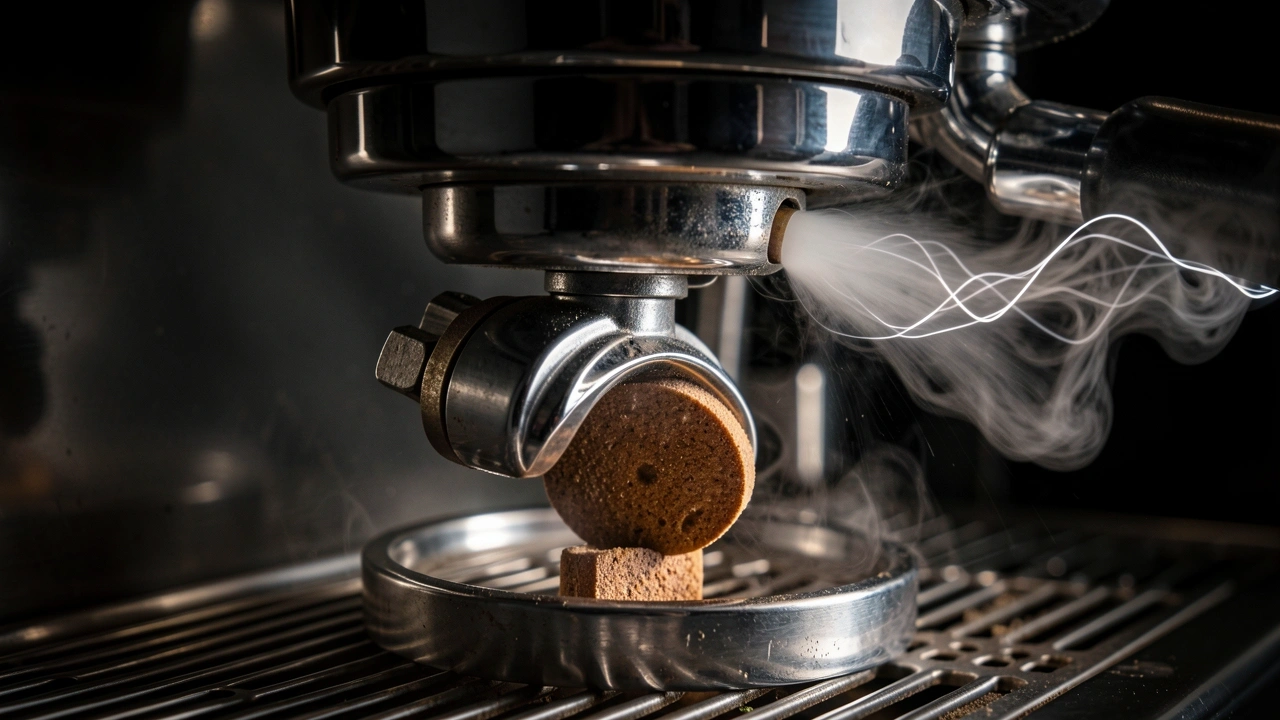
Before you touch your grinder or dose, understand what your machine is doing after the shot stops. Most modern semi-automatic espresso machines have a 3‑way solenoid valve.
After brewing, this valve opens to release pressure and suck residual water out of the group head and away from the puck.
If your machine has one, you should hear a distinct hissing sound a few seconds after you stop the pump.
Here’s the test I use: Lock in the portafilter with a spent puck (or just the basket), run a blank shot, and listen. If you hear the hiss, your valve is working.
In that case, a wet puck almost always means the dose is too low or the grind is too coarse — the valve has nothing to suck because there’s too much air above the puck.
If you don’t hear a hiss, your machine may lack a 3‑way valve (common in older entry-level machines), or the valve is clogged.
For the latter, a backflush with a cleaning tablet (like Cafiza) often restores function.
If the machine simply lacks the valve, you’ll need to use a different technique — we’ll cover that in the “Soak Flush” section.
The Dose and Headspace Fix (The 80% Solution)
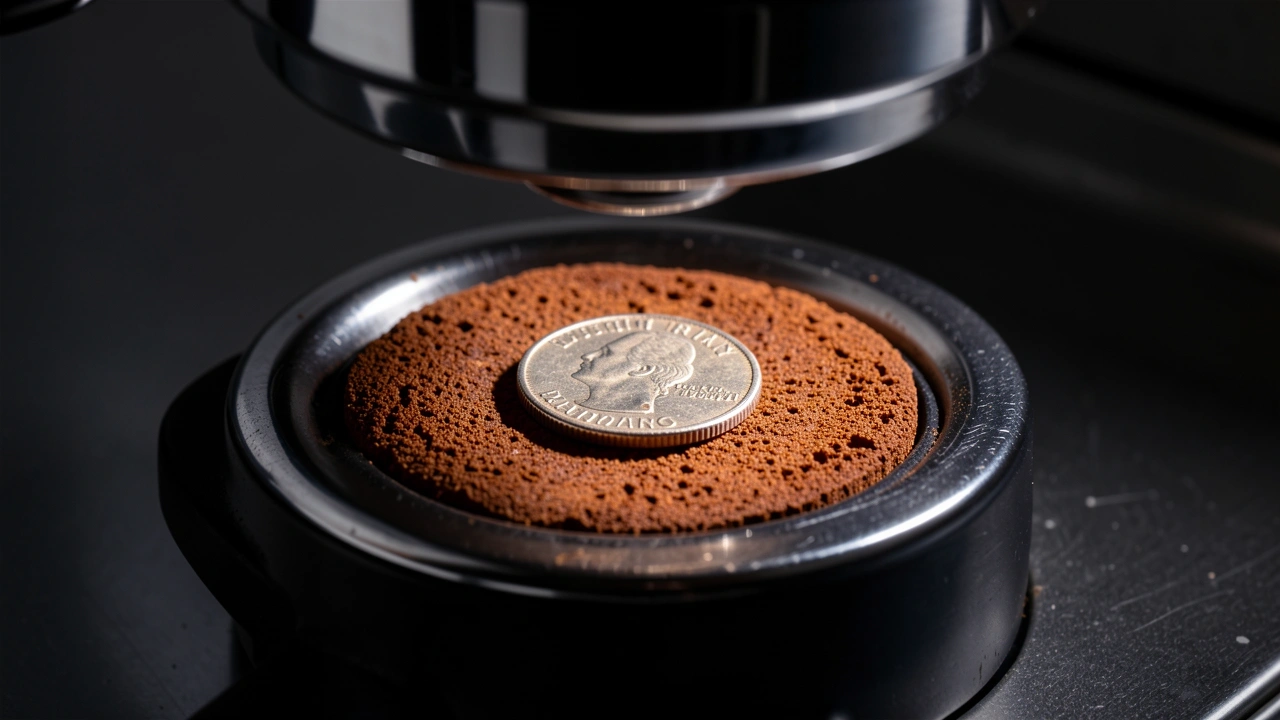
Nine times out of ten, a wet puck on a machine with a working 3‑way valve comes down to too much headspace.
The ideal gap after tamping is about the thickness of a coin (roughly 2 mm) between the coffee bed and the shower screen.
If there’s more space, water pools on top of the puck instead of being sucked away.