 Reina
Reina As an Amazon Associate, I may earn a small commission from qualifying purchases at no extra cost to you. This helps me create more valuable, tested content for you.
The short answer is yes, but only if your saucepan is made of a single type of metal like aluminum, stainless steel, or copper. Non-stick coatings, plastic handles, and mixed materials make recycling much harder. Most households cannot toss a saucepan into the curbside bin. You need to take it to a scrap metal recycler or use a brand take-back program.
Here is the honest truth: if you are standing in your kitchen right now holding a scratched non-stick saucepan, your options are limited. But if you have a solid metal pan, you can give it a second life. Let us walk through the exact steps so you know what to do.
Step 1: Identify What Your Saucepan Is Made Of
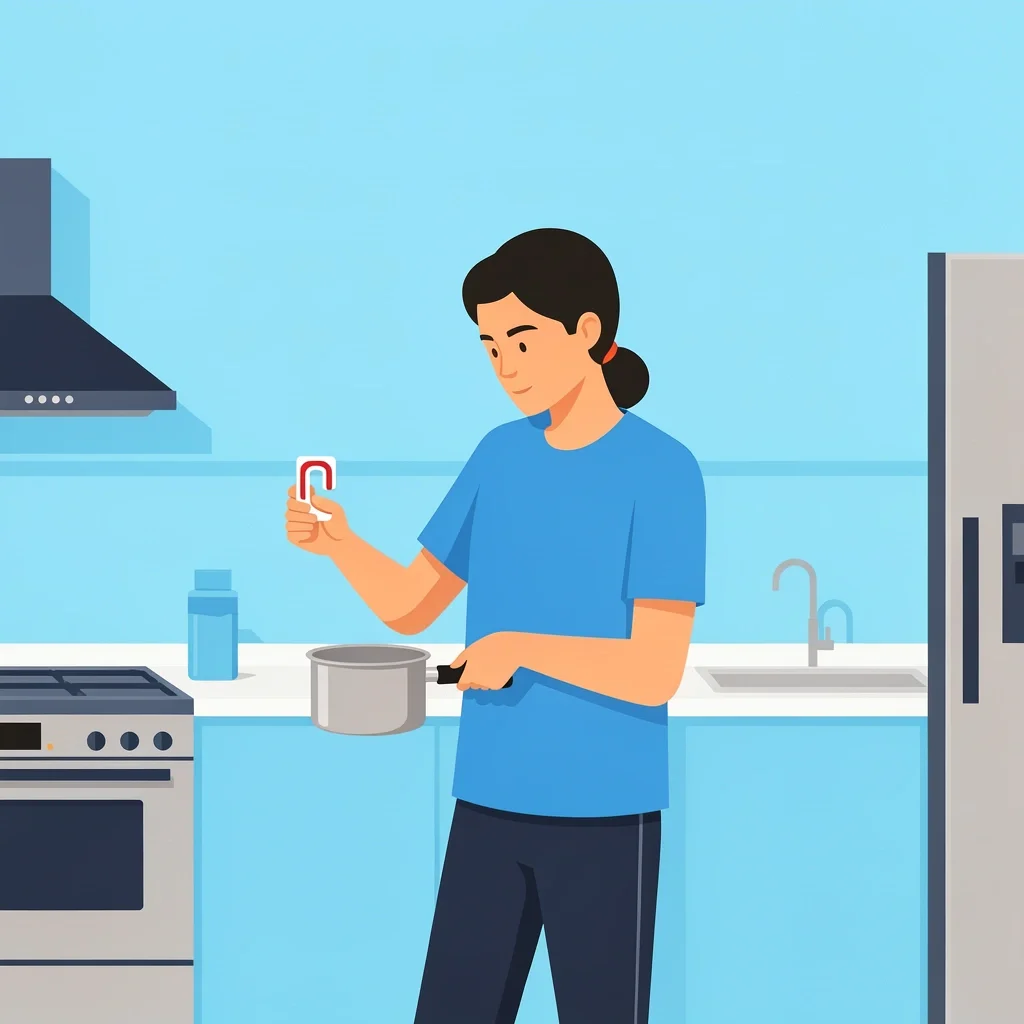
Before you do anything else, figure out the material. This one step decides everything that follows.
The Magnet Test
Grab a fridge magnet. Touch it to the bottom of your saucepan.
- Magnet sticks: Your pan is ferrous metal, usually stainless steel with a magnetic grade. This is recyclable.
- Magnet does not stick: Your pan is probably aluminum, copper, or non-magnetic stainless steel. Still recyclable.
Look for Stamps
Flip the saucepan over. Most manufacturers stamp the material on the bottom. Look for words like:
- “18/10” or “18/8”: Stainless steel with high nickel content.
- “Aluminum” or a number like “3004”: Pure aluminum or alloy.
- “Copper” or “Cu”: Copper pan.
- “Non-stick” or “PTFE”: Coated pan. Harder to recycle.
- “Enameled” or “Cast Iron”: Heavy, glossy, and not recyclable through standard scrap yards.
Visual Clues
- Non-stick: Dark, smooth, and slippery. Usually black or dark gray.
- Copper: Distinct reddish-orange color. Often has a steel or tin lining inside.
- Enameled cast iron: Heavy, thick, and glossy painted surface. Often white or colored inside.
- Glass or Pyrex: Clear or tinted, made of treated glass. Not recyclable with regular glass.
Step 2: Check Your Material Against the Recycling Guide

Once you know the material, use this table to see if recycling is possible.
| Material | Recyclable? | What to Do |
|---|---|---|
| Aluminum | Yes | Take to scrap metal yard. High value. Remove handles. |
| Stainless steel (magnetic) | Yes | Recyclable at most scrap yards. Call ahead to confirm. |
| Stainless steel (non-magnetic) | Yes | Same as magnetic. Some yards may pay less. |
| Copper | Yes | Highly recyclable. But the lining inside complicates it. Ask the yard. |
| Non-stick (PTFE/Teflon) | Rarely | Coating must be removed. Only brand take-back programs work. |
| Ceramic non-stick (PFAS-free) | Rarely | Newer technology. Few recyclers accept it. Check brand programs. |
| Enameled cast iron | No | Enamel is glass. It contaminates scrap metal. Trash or repurpose. |
| Glass or Pyrex | No | Do not put in glass bin. Trash or repurpose. |
Step 3: Remove the Handle and Other Non-Metal Parts
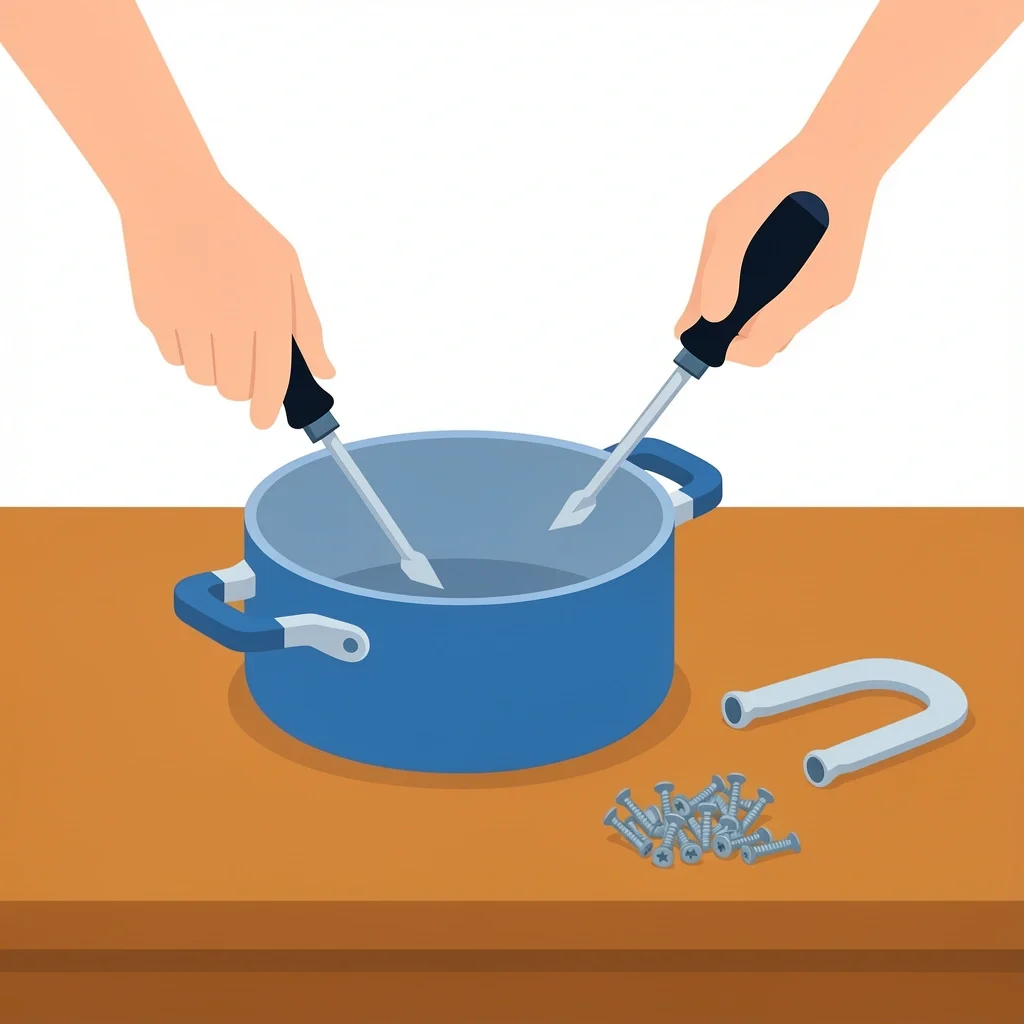
This is the most common reason a saucepan gets rejected at a scrap yard. Recyclers want “clean metal.” That means no plastic, wood, rubber, or silicone attached.
How to Remove Handles
Most saucepan handles are attached with screws, rivets, or epoxy.
- Screws: Use a screwdriver. Easy to remove. Keep the screws aside.
- Rivets: You may need to drill them out. If you can’t, the pan may not be recyclable.
- Epoxy: Not removable. The pan goes to trash.
- Metal handle: Leave it on. It is pure metal and can go with the pan.
What to Do with Removed Handles
- Plastic handles: Throw in general waste. Most are not recyclable.
- Wooden handles: Compost if untreated. Otherwise, trash.
- Silicone handles: Rarely recyclable. Check your local program.
- Metal handles: Recycle with the saucepan.
Step 4: Find a Scrap Metal Recycler Near You

You will not find a saucepan recycling bin at your grocery store. You need a scrap metal yard.
How to Search
- Use Earth911’s directory (earth911.com) and type “scrap metal.”
- Search Google for “scrap metal yard near me” or “metal recycling near me.”
- Call your local waste authority and ask where to drop off metal cookware.
Call Ahead Before You Go
Do not just show up. Ask these specific questions:
- Do you accept [your material: aluminum, stainless steel, copper]?
- Can you take a pan with a non-stick coating?
- Do you require the handle to be removed?
- Is there a minimum weight or fee?
What to Do If Your Saucepan Has a Non-Stick Coating
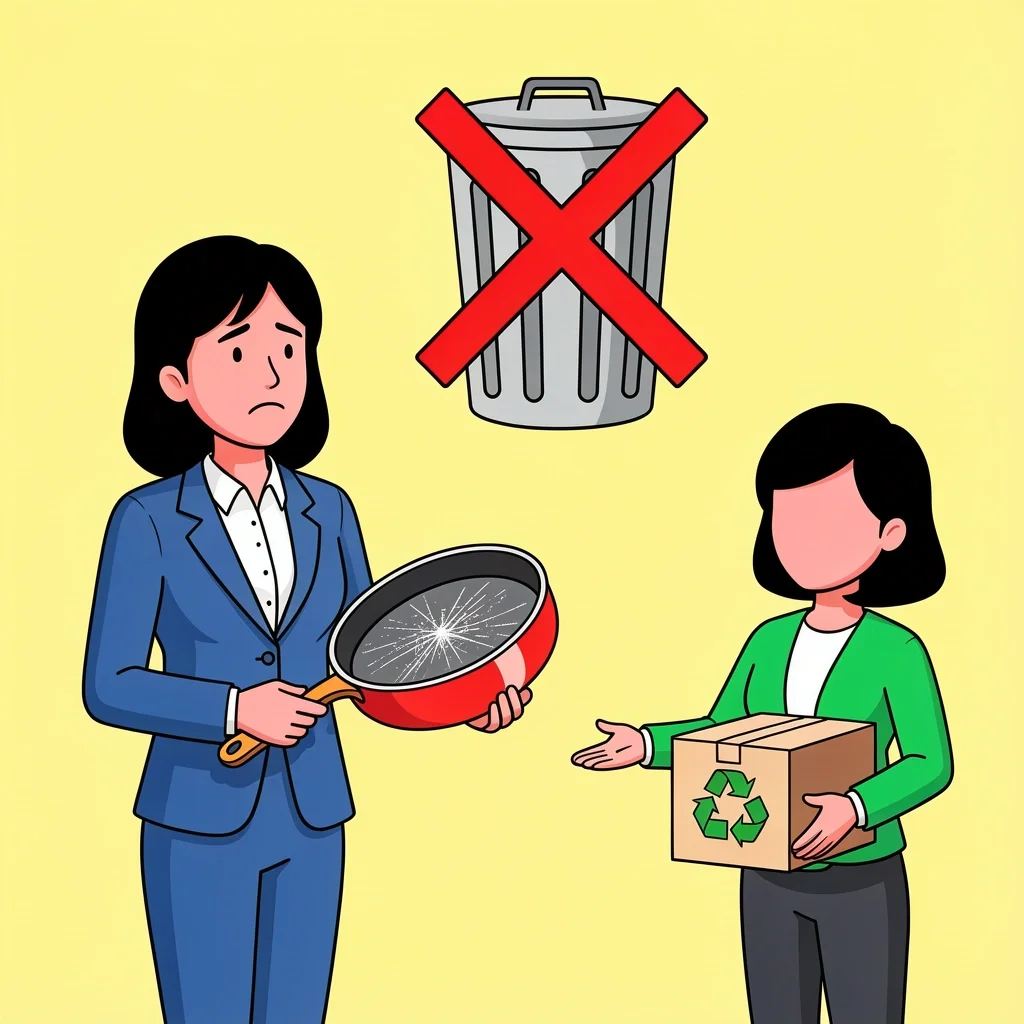
Non-stick saucepans are the trickiest. Standard scrap yards will not accept them because the coating cannot be separated from the metal at their facility.
Your Best Options
- Brand take-back programs: Some cookware companies will take back any brand and recycle it. Made In offers a program where they buff off the coating and recycle the metal. Our Place accepts its own ceramic non-stick products.
- Habitat for Humanity ReStores: Some locations accept cookware through programs like the one with Made In. Call your local store first.
- Specialty recycling facilities: Some e-waste or paint recycling centers handle coatings. Search for “paint disposal” or “hazardous waste facility” in your area.
When All Else Fails
If you cannot find a program, the scratched non-stick pan has to go in the trash. Do not donate it. Do not repurpose it for food. The coating is damaged and can leach chemicals into food.
When Recycling Is Not an Option
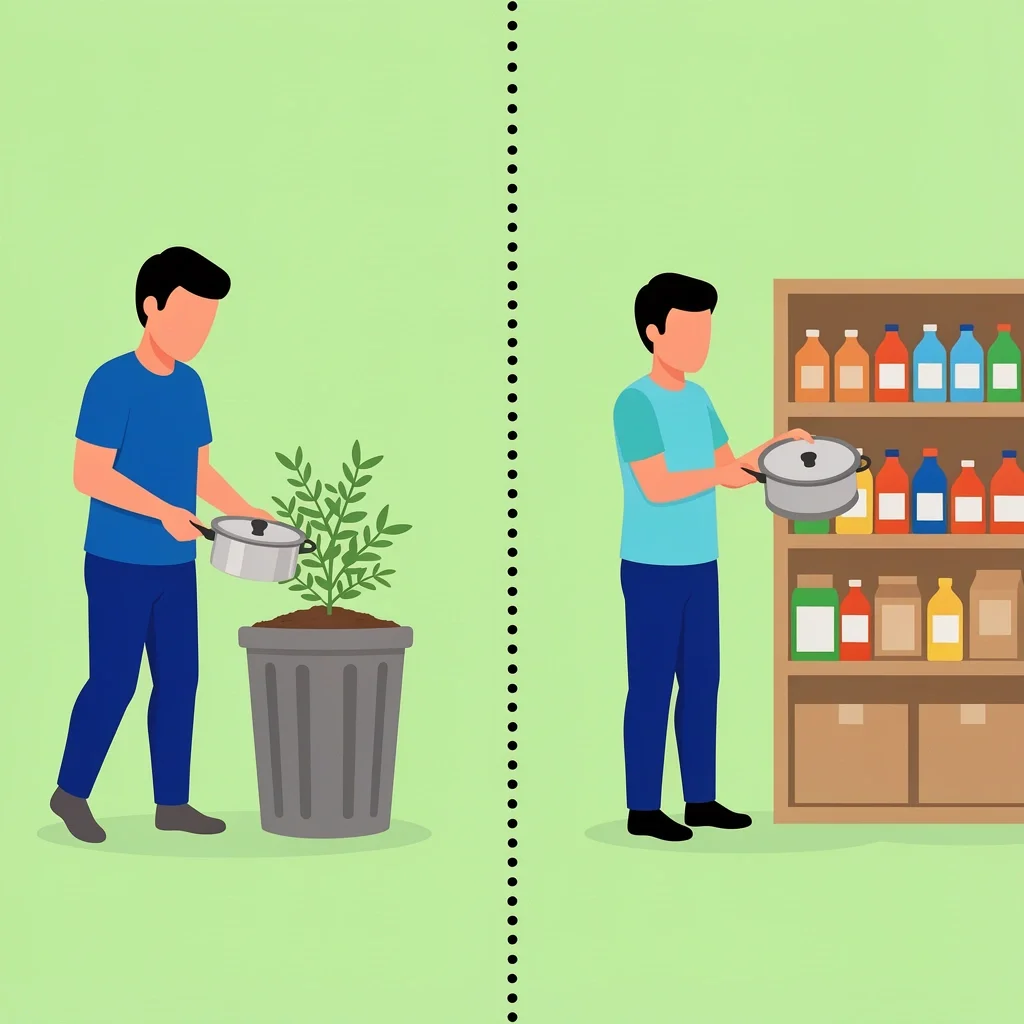
Sometimes you have to accept that a saucepan is not recyclable. Here are your alternatives.
Donate Gently Used Saucepans
If your saucepan is in good condition and does not have a scratched non-stick coating, donate it.
- Goodwill, Salvation Army, or local thrift stores.
- Habitat for Humanity ReStore.
- Freecycle or Buy Nothing groups. Post it online and someone will pick it up.
- Shelters or community kitchens. Call first to see if they accept used cookware.
Repurpose the Saucepan
Even damaged saucepans can live a second life outside the kitchen.
- Plant pot: Drill a few drainage holes in the bottom and use it for herbs or small plants.
- Bird bath: Place it on a sturdy base and fill with water.
- Utensil holder: Stand wooden spoons and spatulas inside.
- Candle or pencil holder: Use as a desk organizer.
Trash as a Last Resort
If you have a broken enameled cast iron pan, a glass saucepan, or a non-stick pan with no recycling option, the landfill is where it ends up. This is not ideal, but it is the honest reality. Always check for recycling first.
Location-Specific Tips
Recycling rules vary by country and even by city. Here is a quick guide for common locations.
United Kingdom
Metal saucepans are accepted at household waste recycling centres (HWRCs) under “scrap metal.” Check your council’s website. Non-stick saucepans are harder. Some HWRCs accept them, but many do not. Call ahead. For glass or enameled cast iron, it goes in general waste.
Canada (Ontario)
Blue Bin programs do not accept pots and pans. You must drop them off at a municipal depot or a scrap metal dealer. Non-stick pans are usually not accepted. Check with your local waste department. Some cities have special collection events for metal items.
Australia
Metal recycling is widely available at transfer stations. Check your local council’s website for drop-off points. Non-stick saucepans are a challenge. Some councils partner with TerraCycle for cookware recycling. Search your state’s waste directory.
Frequently Asked Questions
Can I put an old saucepan in the bin?
Yes, if it cannot be recycled. This includes non-stick pans with no take-back program, broken enameled cast iron, and glass saucepans. But always check for recycling options first.
What are 5 things that cannot be recycled?
Saucepans with non-stick coating are a common example. Other items include Pyrex (treated glass), ceramic mugs, plastic bags (in most curbside bins), and polystyrene foam. These items contaminate recycling streams.
Can a saucepan be recycled if it has a plastic lid?
The lid is separate from the saucepan. Check the lid’s material. If it is metal, recycle it with the pan. If it is plastic, look for a resin code (a number inside a triangle). Many plastic lids are not recyclable. The saucepan itself is not affected by the lid.
Can a saucepan be recycled in the UK?
Yes, metal saucepans can be taken to household waste recycling centres. Non-stick saucepans require a call ahead to confirm acceptance. Glass and enameled pans go to general waste.
What should I do with an old non-stick saucepan that is scratched?
Do not use it for cooking. Scratched non-stick can release chemicals into food. Do not donate it. Check for a brand take-back program. If none exists, put it in the trash.
Can I recycle a saucepan without removing the handle?
Most scrap yards require clean metal. If the handle is plastic, wood, or silicone, you must remove it. If it is metal, you can leave it on. If you cannot remove a plastic handle, the pan may be rejected and go to landfill.

