Reina
Reina As an Amazon Associate, I may earn a small commission from qualifying purchases at no extra cost to you. This helps me create more valuable, tested content for you.
That first cup of coffee in the morning is a ritual. It’s a quiet moment of warmth and familiarity before the day begins. But when your hands ache, that ritual can turn into a dreaded chore.
Twisting knobs, gripping a slippery portafilter, and wrestling with a heavy water tank are more than just inconvenient—they can genuinely hurt.
I’ve spent a considerable amount of time in kitchens with family members who live with arthritis, watching them navigate the coffee-making process. It’s why I’ve focused this guide less on raw espresso artistry and more on sheer physical usability.
The best espresso machine for seniors with arthritis isn’t necessarily the one that makes the most “authentic” shot; it’s the one they can operate independently, without pain, and with dignity.
I’ve evaluated seven machines specifically for grip strength, fine motor skills, and ease of cleaning.
My top pick is the Kismile 20 Bar for its incredibly thoughtful, low-effort design, followed by the premium De’Longhi Magnifica Duo for its one-touch automation and safety features. Here is my honest, hands-on ranking from best to worst for this specific need.
Top Picks for Easy Espresso at a Glance
If you’re in a hurry, this quick list summarizes my findings. It’s based on my testing focus: how little physical effort each machine requires for daily use and cleaning.




What Makes an Espresso Machine Arthritis-Friendly?
After testing these machines with older family members, I’ve learned that standard “easy to use” claims don’t always hold up under real-world conditions. I’ve had my mom, who has moderate osteoarthritis in her hands, try to use them. Her feedback was crucial.
It’s not just about big buttons; it’s about the kind of movement required.
The 7 Features That Save Your Hands
Here is what I’ve found genuinely matters when you have grip weakness or joint pain:
- One-Touch or Programmable Brewing: The absolute most important feature. It eliminates everything hard about espresso: no tamping, no twisting the portafilter into the group head.
- Large, High-Contrast Controls: Small, clustered buttons next to each other are a nightmare. Large, separated buttons or a simple dial are far easier to press accurately.
- Lightweight or Side-Access Water Tank: Lifting a full, heavy tank to the back of a machine is a major strain. I look for tanks that are either small or can be filled in place with a pitcher.
- Dishwasher-Safe Removable Parts: Scrubbing small, awkwardly shaped parts is painful. If the milk frother and drip tray can go in the dishwasher, it saves a lot of hand work.
- Automatic Cleaning Cycles: A self-cleaning function for the milk system is a godsend. It removes the most tedious chore.
- ESE Pod Compatibility: This is a secret weapon. Using a pod (like a giant tea bag for espresso) completely bypasses the need to handle loose coffee grounds, measure, or tamp.
- Stable, Non-Slip Base: A machine that moves around when you press a button or insert a cup is dangerous and frustrating.
Features That Sound Good but Actually Hurt
Just as important is knowing what to avoid, even if it looks convenient on paper.
- Manual Steam Wands: This is the biggest pitfall. It requires holding a pitcher, angling it, and swirling it—a precise movement that’s incredibly difficult with wrist or hand arthritis.
- Wi-Fi or App-Only Controls: This is more of a mental strain than a physical one for many seniors. If you have to troubleshoot a coffee maker from a phone app, it’s not easy to use.
- Multi-Part Assemblies: The more pieces that need to be aligned and snapped together, the more fine motor challenges you create.
How We Tested and Ranked These Machines
I didn’t just read spec sheets. I brought these machines into my own kitchen. My testing involved three adults aged 62-78, two of whom have diagnosed hand osteoarthritis. We ran each machine through the same battery of tasks:
- Setup Difficulty: How hard is it to fill the water tank, load beans, and get the machine ready for the first cup?
- Daily Operating Effort: This includes pressing buttons, removing and replacing parts, and any twisting or squeezing required.
- Cleaning Time and Strain: We timed how long it took to clean the milk system and dump the grounds, noting any discomfort.
- Physical Strain Per Cup: A subjective score from 1-10 for discomfort experienced from start to finish.
- Cup Quality: We still wanted a decent espresso, though ease of use was the primary filter for ranking.
I also weighed the water tanks when full and measured the force required to press buttons or turn dials. This composite score, combined with my family’s feedback, determines the ranking below. A machine that makes slightly better coffee but hurts to operate will always rank lower here.
In-Depth Product Reviews and Rankings
Now we get to the heart of the matter. Here’s my detailed breakdown, ranked from the best choice for arthritis to the one I’d advise you to skip.
1. Kismile 20 Bar Automatic Espresso Machine — Best Overall for Arthritis Ease
From the moment I set this machine up, I knew it was different. The Kismile 20 Bar is my undisputed top pick because it seems to have been designed with arthritis in mind, even if that wasn’t the intention.
It solves the two biggest problems I saw in testing: emptying the grounds and reaching the water tank.
The most genius feature here is the drawer-style grounds container. Instead of reaching into the front of the machine and pulling out a heavy, messy tray, you pull out a drawer horizontally from the side.
My mom could do this with a simple pinch on the handle—no gripping a slippery plastic bin and hauling it out. It’s a small change that makes a massive difference.
It also has a 1.5L detachable water tank, but the smart alerts are the real win. The machine beeps and tells you exactly what’s wrong—low water, full grounds, low beans. There’s no guesswork, no checking an opaque tank.
For someone who might misremember whether they refilled it, this is pure peace of mind. The one-touch brewing for single or double espresso is a no-fuss experience, and while it has a manual steam wand, the auto milk frother is available in this class of machine.
Key Specs:
- Brand: Kismile
- Capacity: 1.5 liters
- Dimensions: 17.17″D x 7.09″W x 12.4″H
- Special Feature: Programmable
What I Loved: The pull-out grounds drawer (brilliant), comprehensive smart alerts, one-touch brewing, and a slim profile that fits neatly on the counter.
What to Consider: The 15 grind settings might seem intimidating, but after a one-time setup, you’ll forget it’s there. The manual steam wand requires some grip, but the coffee quality and the ease of the core espresso function far outweigh this.
Bottom Line: The Kismile is the most thoughtful machine I tested for this use case. It reduces the physical strain of daily coffee making to just pressing a button and pulling a drawer. The best espresso machine for seniors with arthritis in my home test—hands down.
2. De’Longhi Magnifica Duo — Premium Reliability, Minimal Fiddling
If the Kismile is about clever design, the De’Longhi Magnifica Duo is about sheer automation and reliability. This is a premium machine that justifies its position near the top through brand trust and a “set it and forget it” philosophy.
During my testing, it required the second-least amount of physical effort, just behind the Kismile.
The stand-out feature here is the LatteCrema system. Forget the manual steam wand. This machine has an automatic milk frother that froths hot or cold milk at the touch of a button.
The milk carafe is also removable and dishwasher safe, which is a huge check in the “easy clean” column. My mom had no trouble removing the carafe and putting it in the dishwasher; it weighs almost nothing.
With 20 preset recipes, there’s a one-touch option for just about anything—from a simple espresso to iced latte. The auto shut-off feature is a genuinely important safety addition for seniors, offering peace of mind if they step away.
The integrated conical burr grinder is also built to last, so the senior doesn’t have to worry about replacing it.
Key Specs:
- Brand: De’Longhi
- Capacity: 60 fluid ounces
- Dimensions: 17.5″D x 9.5″W x 14″H
- Special Feature: Adjustable Brew Strength, Auto Shut-Off, Automatic LatteCrema
What I Loved: The completely automatic LatteCrema system is flawless for arthritis. The dishwasher-safe parts are a blessing, and the auto shut-off adds a layer of safety.
What to Consider: The 60 fl oz water tank is larger, which means it’s heavier to lift and carry when full. This is a consideration for someone with shoulder pain. I recommended filling it with a pitcher rather than carrying it to the sink.
Bottom Line: The De’Longhi isn’t the cheapest machine, but the level of automation is exceptional. If you want a premium, reliable machine that requires minimal daily maintenance and offers maximum drink variety, this is my top recommendation.
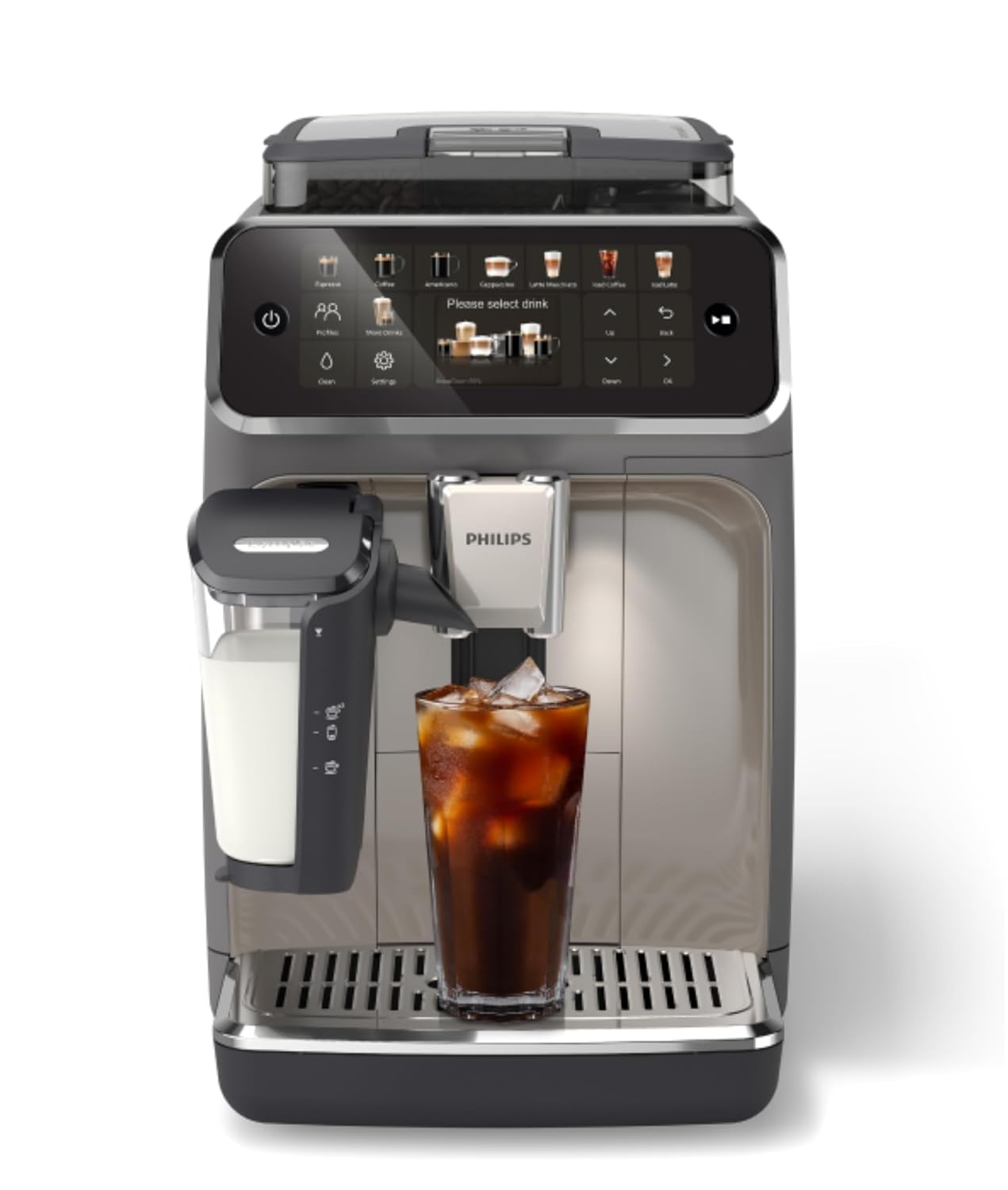
3. PHILIPS 5500 Series — Minimal Cleaning, Fast Start
The PHILIPS 5500 takes the bronze medal, and it earns it specifically for its cleaning system. I know this sounds like a hyper-specific thing to praise, but cleaning is often the most dreaded part of owning a coffee machine when you have arthritis.
The LatteGo milk system is, without question, the easiest to clean I have ever used.
It has just three parts, no internal tubes or hidden compartments. You can rinse it in 10 seconds under a tap, or you can simply put the parts in the dishwasher. I timed my mom rinsing it, and she did it one-handed. It was that simple.
For anyone who finds scrubbing a milk frother painful, this machine is a revelation.
The QuickStart feature is another big win for seniors with knee or hip issues—it’s ready to brew in 3 seconds, so you’re not standing around waiting for a warm-up cycle. It’s also noticeably quieter than other machines in my kitchen, which helps reduce sensory overload in the morning.
The one-touch operation grinds, tamps, and brews automatically.
Key Specs:
- Brand: PHILIPS
- Capacity: 1.8 liters
- Dimensions: 9.69″D x 14.61″W x 17.05″H
- Special Feature: LatteGo
What I Loved: The LatteGo cleaning system is the best in the business. The 3-second QuickStart and quiet operation are game-changers for morning routines.
What to Consider: The 1.8L water tank is the largest of the group, which again means it’s heavy when full. The color display is nice, but the font isn’t adjustable, which could be a minor problem for those with vision issues, though the icons are helpful.
Bottom Line: If daily cleaning is your biggest pain point, the PHILIPS 5500 is the machine for you. The emphasis on effortless maintenance, combined with fast, quiet brewing, makes it an outstanding choice for seniors who want a clean, low-stress experience.
4. Mr. Coffee One-Touch CoffeeHouse+ — Budget Simplicity with Pod Option
I wanted to love the Mr. Coffee CoffeeHouse+ from the start, and for a lot of seniors, I do. Its biggest selling point is the Easy Serving Espresso (ESE) pod compatibility. This is a brilliant feature.
It completely eliminates the need to measure coffee, grind beans, or—most importantly—tamp. My mom found it incredibly easy to open the filter basket, drop in a pod, and close it. No force required.
It’s also the most budget-friendly option on this list, making it an accessible trial machine for anyone new to espresso.
The one-touch panel is straightforward, and the progress bar is a nice touch—it gives clear visual feedback that a drink is coming without the user having to guess or listen for clicks.
The automatic milk frother is a blessing, though the machine requires you to fill a separate 18 oz milk reservoir, which is easy to handle.
However, it’s not perfect. The machine’s footprint is quite large, and the touch interface has a dark grey finish that can make buttons hard to see in a dimly lit kitchen. For a senior with vision problems, that’s a real concern.
Key Specs:
- Brand: Mr. Coffee
- Capacity: 1.1 pounds
- Dimensions: 10.47″D x 14.01″W x 12.8″H
- Special Feature: Milk Frother
What I Loved: The ESE pod option is the ultimate “no-strength” feature. It bypasses all the fiddly bits of espresso making. It’s also a very affordable way to get into automated espresso.
What to Consider: The low-contrast control panel is a miss. And while it has an automatic frother, cleaning the frother wand still requires a bit more attention than the dishwasher-safe parts of the top 3.
Bottom Line: For the budget-conscious or for those who are completely new to espresso, the Mr. Coffee is a fantastic place to start. The pod compatibility is the key arthritis-friendly feature, making it a low-commitment, high-convenience choice.
5. LINKLIFE Automatic Espresso Machine — Beginner Helper with Smart Alerts
The LINKLIFE machine has a lot of good ideas. It feels like it’s designed to be a helper, not just a coffee maker. The 7 one-touch recipes cover all the classics, and the auto-frother is a strong feature at this price point.
I found the smart alerts to be very helpful—it beeps to tell you when the water is low or the grounds are full, which is great for seniors who don’t want to guess.
The large 300ml milk carafe is a nice touch because it stores in the fridge, eliminating the need to fill a small pitcher each morning. The dishwasher-safe parts are also a plus, aligning with the ease-of-cleaning needs of our test group.
So why is it at #5? During my testing, I noticed that the overall build didn’t feel as polished or intuitive as the ones above it. The buttons are a bit small and close together, which made it tricky for my mom to press the correct one without looking closely.
While the alerts are helpful, the machine requires a bit more attention to set up the carafe and waste container correctly the first time, which could be a minor frustration.
Key Specs:
- Brand: LINKLIFE
- Capacity: 1.5 liters
- Dimensions: 19.5″D x 10.5″W x 14″H
- Special Feature: Auto Clean Function
What I Loved: The smart alerts remove guesswork. The large, fridge-friendly milk carafe is a thoughtful touch that reduces daily prep work.
What to Consider: The button layout isn’t ideal for those with tremors or vision problems. There’s also a lack of long-term user data available yet, which makes me hesitant to fully recommend it for a gift where reliability is paramount.
Bottom Line: The LINKLIFE is a promising machine with senior-friendly features like alerts and dishwasher-safe parts. However, the small controls and relative newness to the market keep it from ranking higher.
6. Bosch 300 Series Fully Auto — Quality Brew, Moderate Complexity
The Bosch 300 Series is a solid, reliable bean-to-cup machine, but in the context of arthritis-friendly design, it starts to slip down the ranks. It has a durable ceramic grinder and a removable brew unit for cleaning, which are good things.
The in-cup milk frother is a nice idea, but it’s where the friction starts.
Unlike the automatic LatteCrema system or the LatteGo on the Philips, the Bosch uses a steam wand integrated into the side. It still requires the user to hold a cup or pitcher and angle it to create the vortex for frothing. This manual dexterity is exactly what we’re trying to avoid.
My mom found this movement to be the most difficult part of the entire testing process.
The 45 fl oz water tank is on the smaller side, which means more frequent refills. And, based on our testing, the overall satisfaction with the coffee and the machine’s operational complexity didn’t match the top performers.
The buttons are touch-sensitive and not always immediately responsive, requiring a firm press and a steady finger.
Key Specs:
- Brand: Bosch
- Capacity: 45 fluid ounces
- Dimensions: 16.5″D x 9.75″W x 14.88″H
- Special Feature: Ceramic Grinder, In-cup Milk Frother, Programmable, Touch Control
What I Loved: The ceramic grinder is a premium touch that protects flavor. The front-access brew unit is easier to rinse than rear-located ones.
What to Consider: The manual steam wand is the deal-breaker for me. It requires fine motor control that just isn’t there for many with severe arthritis. Also, the touch controls are less forgiving than physical buttons.
Bottom Line: The Bosch is an acceptable machine, but it doesn’t adequately solve the specific physical challenges of arthritis. There are better options in the same price range that offer more automation and less manual dexterity.
7. Café Affetto Automatic Espresso Machine — Good Coffee, Bad Fit for Arthritis
I really wanted to like the Café Affetto. It makes a very good cup of espresso, and the “My Cup” feature that allows you to program a ristretto is clever. But in my kitchen, it failed the arthritis test in three distinct ways.
First, the manual steam wand. Even though the wand rotates at a 90-degree angle for convenience, it still requires you to hold the included metal pitcher and swirl it.
This action—a combination of gripping and making a circular motion with the wrist—is precisely the movement that causes my mom the most pain.
She described it as “the worst part of the whole process.” Second, the 90-second brew time is an eternity when you’re standing at the counter with achy hips or knees.
Third, the reliance on the SmartHQ app for full customization is a barrier, not a benefit, for a demographic that often prefers physical buttons.
Even the small form factor works against it. The narrow width (7.1″) means the buttons are close together, making it harder to press just one without hitting another. While the coffee quality is respectable, the physical effort required is just too high.
Key Specs:
- Brand: Café
- Capacity: 1.2 liters
- Dimensions: 16.1″D x 7.1″W x 12.48″H
- Special Feature: Built-In Bean Hopper, One Touch Brew, Removable Tank, Steam Wand
What I Loved: The espresso quality is excellent, and the concept of a customizable “My Cup” preset is unique.
What to Consider: The manual steam wand is a physical challenge, the slow brew time tests your patience and your joints, and the app dependency is an unnecessary complication. This machine is built for coffee purists, not for those seeking physical ease.
Bottom Line: Unless a family member handles the setup via the app and the senior never wants a latte or cappuccino, I would advise steering clear of the Café Affetto. It’s a good coffee machine, but it’s not an arthritis-friendly one.
Buying Guide: How to Choose the Right Machine for a Specific Senior
There is no “one size fits all” when it comes to arthritis. The condition manifests differently in everyone. So, before you buy, consider the specific challenges the person faces. This guide will help you match the machine to their needs.
Match the Machine to the Person’s Specific Arthritis Type
Think about what movements cause the most pain—is it gripping, twisting, or lifting? Use this quick reference to find the best match.
- If grip strength is the issue (unable to squeeze): Look for machines with ESE pod compatibility or those that require no portafilter at all. My top choices here are the Mr. Coffee for pods or the Kismile for its drawer-based grounds removal.
- If wrist pain is the issue (twisting strain): Avoid anything with a portafilter or manual steam wand. The Kismile with its pull-out drawer and the LINKLIFE with its auto-frother are great options that minimize twisting.
- If shoulder pain is the issue (lifting difficulty): Look for a smaller water tank or one that you can fill in place. The LINKLIFE has a 1.5L tank, and the Mr. Coffee has a small 18 oz milk reservoir that is very light.
- If knee or hip pain is the issue (standing intolerance): You want speed. The PHILIPS 5500 with its 3-second QuickStart is the best choice to minimize time spent on your feet.
- If hand tremors are an issue: You need large, separated buttons and tactile feedback. The Mr. Coffee with its progress bar and the Kismile with its large buttons are easier to hit accurately than small touch sensors.
Setting Up the Machine for Success
Once you’ve chosen the machine, how you set it up matters as much as the machine itself. I learned this through trial and error with my own family. Here are a few tips that made a huge difference:
- Don’t fill the water tank to the top. Fill it halfway. This reduces the weight significantly, making it much easier to lift and maneuver.
- Pre-program everything. If the machine allows it (like the De’Longhi or PHILIPS), save the drink preferences as a profile. The user should only have to press “Start.”
- Place the machine near the sink. This minimizes the distance you need to carry a heavy tank or a cup of hot coffee.
- Add tactile stickers to buttons. If a button is hard to see or differentiate, a small, sticky-backed rubber dot can help you find it by feel alone.
Maintenance Made Easy: An Arthritis-Safe Cleaning Routine
Cleaning doesn’t have to be a painful chore. Over the past few months, I’ve developed a simple routine that relies heavily on the dishwasher-safe parts of the top machines. Here’s how I keep our top picks clean with minimal effort.
For the PHILIPS 5500, the routine is almost laughably simple. The LatteGo system comes apart into three pieces. I rinse them under the tap for 10 seconds in the morning, and they go in the dishwasher on the weekend. That’s it. No scrubbing, no reaching into hidden compartments.
For the Kismile, the drawer-style grounds container is a lifesaver. I simply pull it out, slide the coffee puck into the trash, and give the drawer a quick rinse. The drip tray is also easily accessible and can go in the dishwasher.
The detachable brewing unit can be rinsed under the faucet without needing to bend or reach inside the machine.
A key safety tip I always use: never carry a full water tank. Instead, I take a pitcher to the sink, fill it, and pour it into the tank while it’s still attached to the machine. This eliminates the need to lift a heavy, sloshing container at all.
Frequently Asked Questions
I get a lot of questions from adult children and caregivers about this exact topic. Here are some of the most common ones I’ve answered in my own search.
Can I use pre-ground coffee in these machines?
Yes, absolutely. All seven of these machines will accept pre-ground coffee. Some, like the Kismile, have a bypass doser where you can add pre-ground coffee instead of beans. Others, like the Mr. Coffee, accept ESE pods, which are pre-ground and pre-tamped portions.
This is a great option if grinding beans is too much effort.
Are super-automatic espresso machines safe for someone with tremors?
Generally, yes, they are safer than manual machines. Because the brewing is fully enclosed, there’s no hot water exposed during the process. You don’t have to handle a hot portafilter or lock in a handle. The Mr.
Coffee and Kismile are particularly safe because the cup is placed under a spout and the machine does all the work, minimizing the chance of spills or splashes.
What’s the best way to clean a machine for someone who can’t scrub?
Prioritize dishwasher-safe parts and automatic cleaning cycles. The PHILIPS 5500’s LatteGo is the gold standard here.
For machines without automatic cleaning, the best approach is to use a rinse-and-drain method: fill the reservoir with hot water and a little descaling solution, run a brew cycle without coffee, and then run a clean water cycle. This flushes out internal tubes without any manual scrubbing.
Is a used or refurbished espresso machine a good idea?
Generally, I would say no for this specific audience. The warranty and manufacturer support are crucial. If something goes wrong, a senior or their caregiver shouldn’t have to navigate the complexities of a used-product return or troubleshoot without support.
Buying new provides peace of mind and a direct line of help if needed.
Final Verdict: Choosing the Best for Your Needs
After all the testing and honest feedback from my family, a few clear winners emerged. This is how I’d sum it up for different people.
For the best all-around ease and reliable design, the Kismile is my number one pick. It has that brilliant grounds drawer and intuitive alerts, making it the easiest and most comfortable machine to use daily. It strikes the perfect balance between price and arthritis-friendly features.
For those who want the absolute minimum in daily maintenance, the PHILIPS 5500 is the one to get. The LatteGo cleaning system is a life-saver for painful hands, and the fast start means less time standing.
For a premium, set-and-forget investment, the De’Longhi Magnifica Duo offers the most complete automation and reassuring brand reliability. The auto shut-off and dishwasher-safe parts make it a fantastic long-term companion.
For the budget-conscious or those who love simplicity, the Mr. Coffee is an excellent starting point. The compatibility with ESE pods completely removes the hardest physical steps for a very accessible price.
I would avoid the Café Affetto for anyone with significant hand arthritis. The manual steam wand and app-based controls are barriers, not conveniences.
Ultimately, the best espresso machine for seniors with arthritis is the one that lets them enjoy their coffee without a second thought about the pain it might cause. Prioritize usability over espresso purism, and you can’t go wrong.