Reina
As an Amazon Associate, I earn from qualifying purchases.
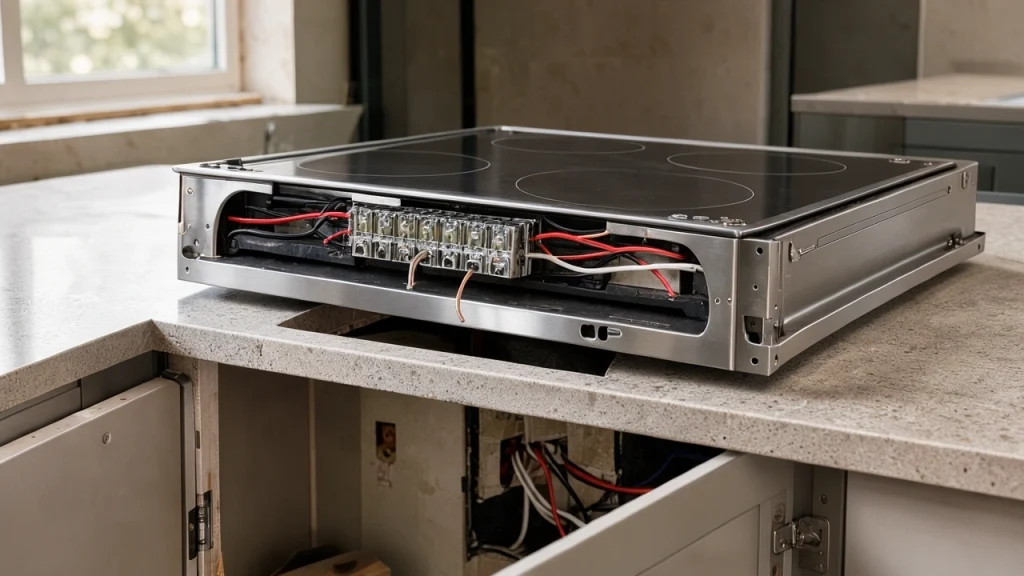
You’re standing behind an open cabinet door with a new cooktop sitting upside down on the counter, staring at a terminal block and wondering what actually needs to connect where.
If you’ve ever searched whether do electric cooktops need a neutral, you’ve probably seen ten different forum answers and walked away more confused than when you started.
Let me settle it plainly. A cooktop needs a neutral wire when it contains any 120-volt component — a clock, a digital display, a timer, or an electronic ignition system.
If the cooktop is a pure 240-volt resistive heating appliance with no electronics whatsoever, it does not need a neutral. That’s the entire answer in one breath.
Everything below is about how to figure out which category your specific model falls into, because that’s where people get stuck.
- You need a neutral if the cooktop has a clock, digital screen, timer, cooling fan, or 120V igniter.
- You don’t need a neutral if it’s a pure 240V resistive heating appliance with mechanical knobs and zero electronics.
- Golden rule: don’t trust the forums — check the data plate and terminal block on your exact unit before connecting anything.
First, Understand Why the Answer Depends on Your Model
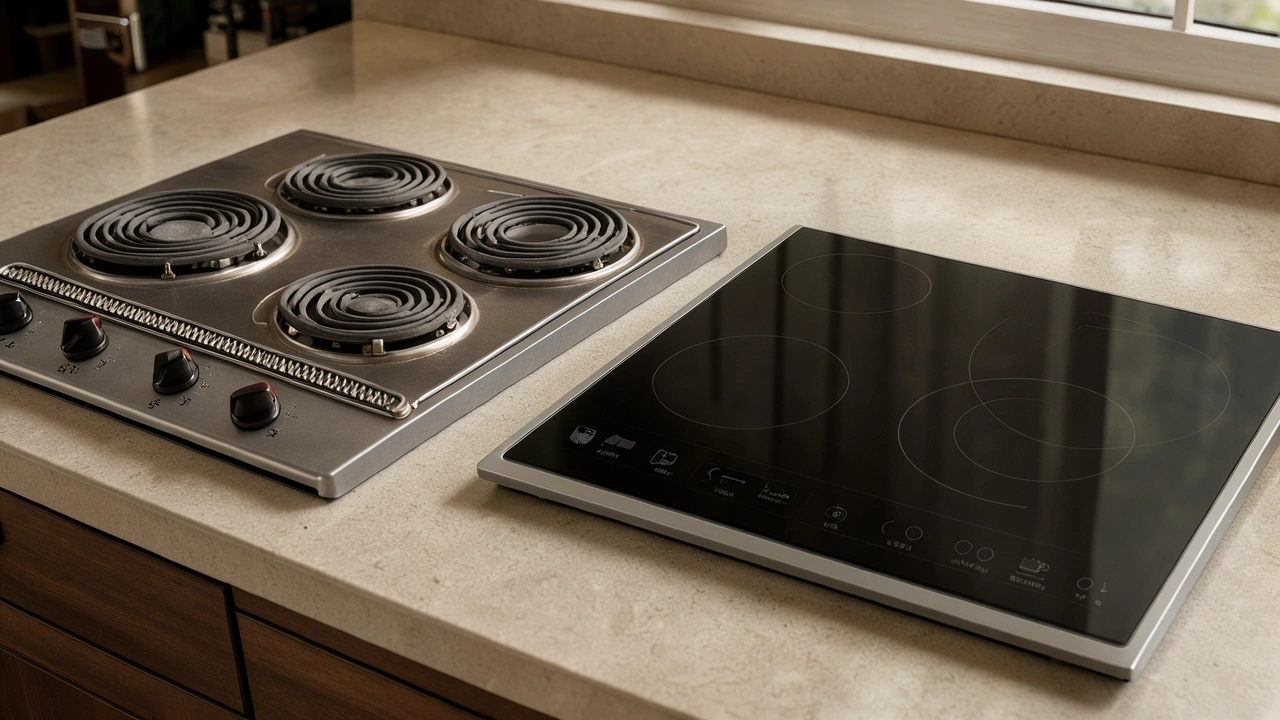
An electric cooktop is really two appliances sharing one chassis. The heating elements are 240-volt loads.
Inside a standard US split-phase panel, they connect across both hot legs — line one and line two — and the current flows between them without ever touching the neutral.
The resistance of the coils does the work, and no return path is needed beyond the two hots themselves.
That’s why a simple cooktop with nothing but burners and physical knobs can run happily with three wires.
The second system is what throws everyone off.
Any feature that runs on 120 volts — a clock, a touchscreen, an indicator light, a cooling fan, a spark igniter — needs the neutral to complete its circuit.
That’s because it draws power from a single hot leg, and the neutral is the path that carries that current back to the panel. Take away the neutral, and those components have no return path.
They either don’t work at all, or they find a ground path they were never meant to use.
Coils and radiant elements are 240V loads. They connect across both hot legs and never touch the neutral.
Displays, timers, touch controls, and cooling fans are 120V loads. They draw from one hot leg and need the neutral as their return path.
Spark igniters, interior lights, and auxiliary outlets also run at 120V. Without a neutral, they’re dead on arrival.
Once you see the pattern, the confusion evaporates.
Modern glass and induction cooktops almost always have digital control boards, which means they almost always have 120-volt loads and therefore almost always need a neutral.
Induction models are especially dependent on it because their control boards are complex and power-hungry.
Older coil-burner cooktops with mechanical switches often don’t have a single component that runs on 120 volts.
That’s why the answer seems to flip depending on who you ask — they’re describing different eras and different feature sets.
The Non-Electrician’s Checklist: Does YOUR Cooktop Need the White Wire?
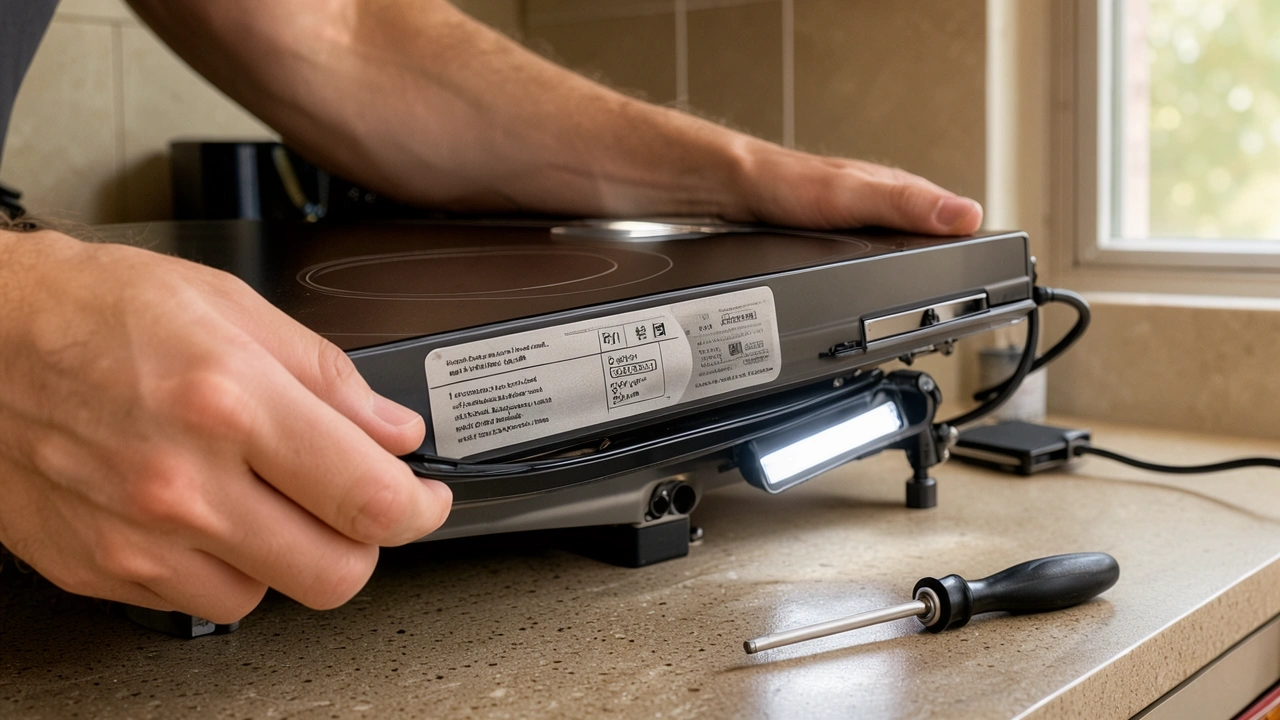
Enough theory — you want to know about the appliance sitting in your kitchen right now. There’s a reliable way to answer this in under five minutes, and none of it requires touching a live circuit.
Work through these three checks in order.
Look for a silver or white sticker under the glass lip or on the metal side panel. It lists model number, voltage, wattage, and sometimes the required connection type.
Open the junction box on the back of the cooktop. Four screws labeled L1, L2, N, and G mean it expects a neutral. Three screws — L1, L2, and ground only — mean it doesn’t.
Search your model number online and open the installation instructions. Look for the wiring section. It will explicitly say “3-wire connection” or “4-wire connection.”
Once you’ve confirmed which internal components your cooktop has, the physical wiring decision becomes obvious. If your unit has a neutral terminal, connect the white wire to it.
If it doesn’t have a neutral terminal, the white wire in your wall cable gets capped and tucked safely into the junction box. The diagnostic flow below walks through the exact logic.
Step 1: Open the wall junction box and look at the cable. Is there a white neutral wire?
If yes: Check the cooktop’s terminal block. Is there a terminal labeled N or Neutral?
If there is: Connect the white wire to it. That’s the correct installation.
If there isn’t: Cap the white wire with a wire nut, tuck it deep into the box, and connect only the hots and ground to the cooktop.
If there’s no white wire at all: Verify the cooktop is a pure 240V unit, then connect the two hots and the ground. Call an electrician if you’re unsure — a missing neutral in a wall box is unusual and worth investigating.
What to Do When the Wiring in Your Wall Doesn’t Match (3-Wire vs. 4-Wire)
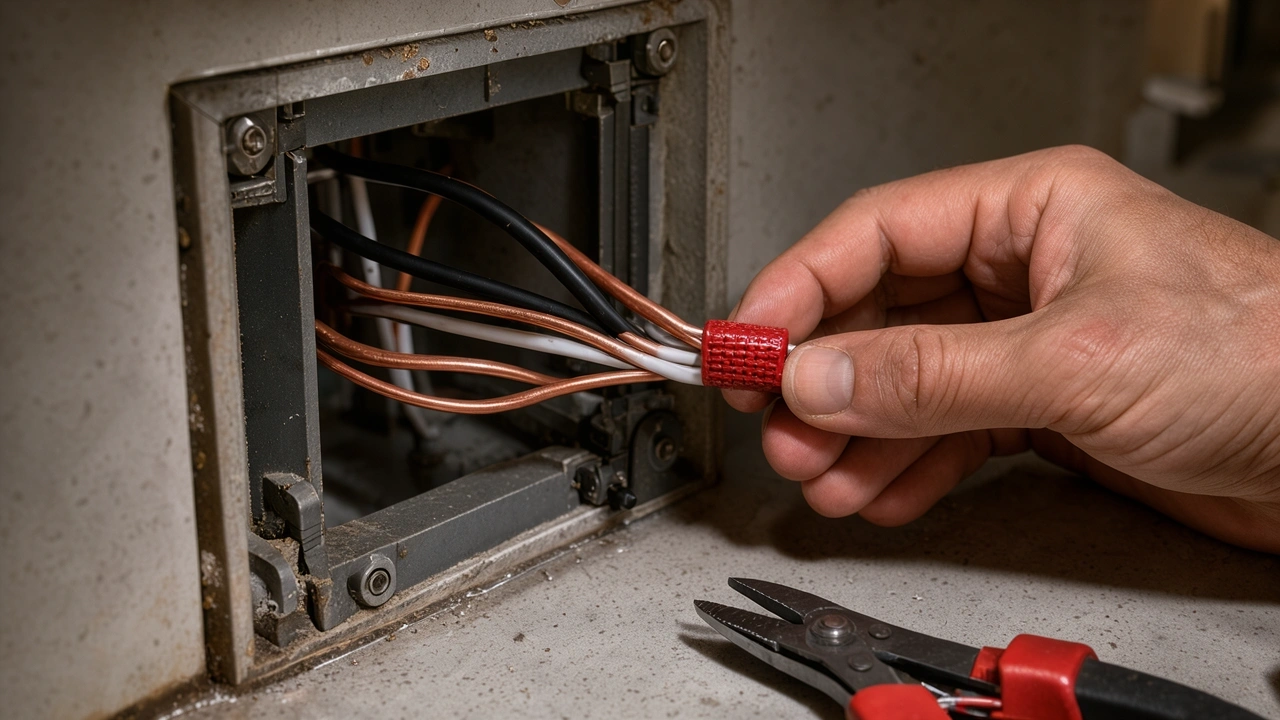
Here’s where the project actually stalls.
Your cooktop needs a neutral, but the cable in your wall is an older three-wire configuration with two hots and a neutral — and no separate grounding conductor.
Or you’ve got the opposite problem: a new 4-wire cable with a capped white wire and a cooktop that has no neutral terminal at all.
The three-wire setup is a relic of older code. Decades ago, ranges and cooktops were installed with two hots, a neutral, and the appliance frame bonded directly to that neutral.
It saved a conductor in the cable, and it functioned fine in practice — until it didn’t.
If that neutral connection loosened or broke, the metal chassis of the cooktop became the path for return current, which meant a live surface waiting to be touched.
The grandfather rule matters here. If your home’s circuit was installed legally under the older code, you’re allowed to keep it and install a cooktop that’s compatible with it.
But if you’re running a new circuit, or you’re moving the cooktop during a substantial renovation, local code requires a modern four-wire system with the neutral and ground separated.
That’s not a debatable preference; it’s the standard that inspectors enforce.
If you open a junction box and find the bare ground wire spliced directly to the neutral, stop. That’s a sign of an improperly wired three-wire connection where the frame is bonded to neutral. It might have passed inspection decades ago, but it turns the entire cooktop chassis into a shock hazard if the neutral opens. Have a licensed electrician evaluate it before connecting a new appliance.
What the Code Says About Your Cooktop Wiring (The NEC Rule, Simplified)

If you want the actual citation, it’s National Electrical Code article 250.140.
In plain language, it says the frame of a range or cooktop may be grounded to the neutral conductor only in existing installations. That’s the grandfather clause I mentioned.
For any new branch circuit, the code requires a separate equipment grounding conductor — the bare or green wire — so the neutral and the ground stay entirely independent from the appliance chassis onward.
The code got stricter for a reason that’s hard to argue with. When the neutral doubles as the frame ground, the unbalanced current from the cooktop’s 120-volt controls flows through the chassis.
All it takes is a loose connection at the terminal block, and the entire metal shell of the appliance becomes energized.
A dedicated ground wire gives a low-impedance path back to the panel that trips the breaker and prevents the whole situation.
The frame of a range or cooktop may use the neutral as its ground only in existing, grandfathered installations. New circuits demand a separate grounding conductor.
Existing 3-wire circuits remain legal. But if you replace the cable, add a new circuit, or open up walls for a full renovation, you must upgrade to a 4-wire run.
Even though the code sections sound dry, they map directly to the decision you’re making right now.
Your current circuit is either grandfathered or it isn’t, and that determines whether you’re legally allowed to connect the cooktop you own.
When in doubt, a licensed electrician can tell you in minutes which category you’re in.
The “10-Minute Rule”: if you’re moving the cooktop more than six feet from its original location, or the renovation has the walls open anyway, inspectors will treat it as a new installation. That means pulling a 4-wire cable while you have access. Doing it now saves a much bigger headache later.
The “Reddit Kitchen Table” Myths—Debunked
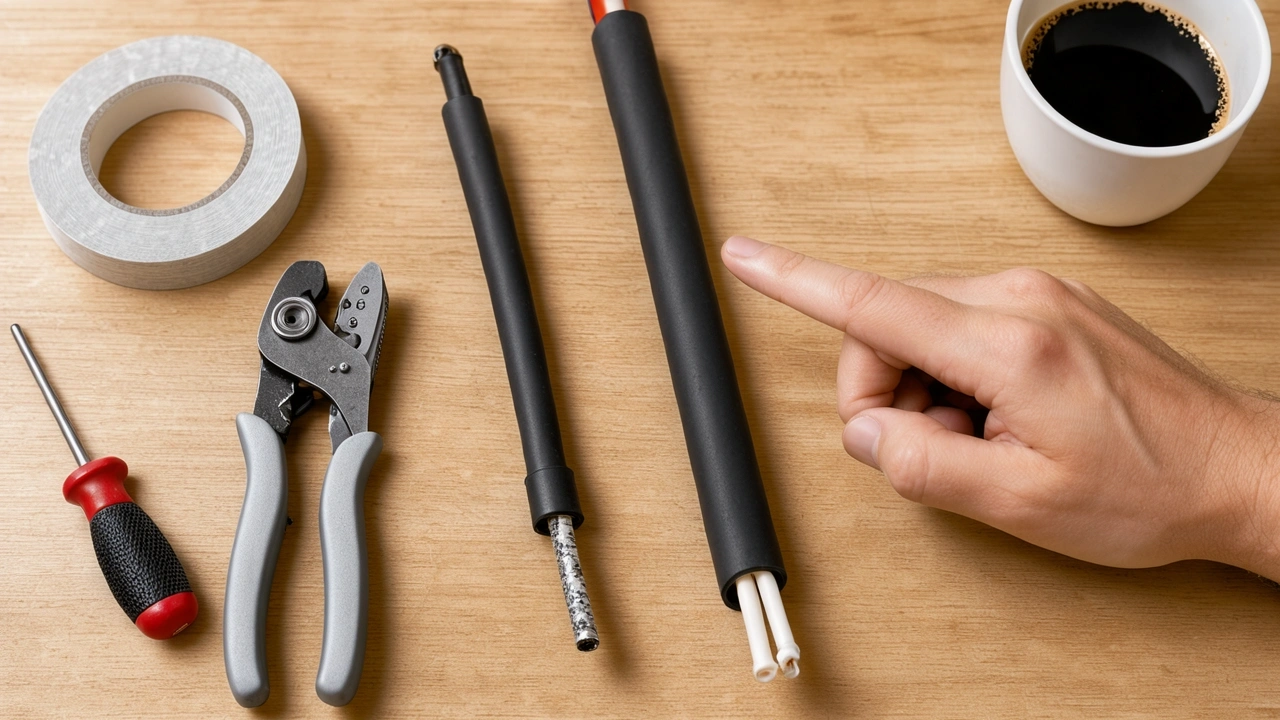
Every thread about cooktop wiring has the same three pieces of advice from well-meaning strangers online. Two of them are dangerously wrong, and one is incomplete in a way that causes real problems.
Let me take them apart.
“It’s balanced, so no current flows on the neutral — always safe to cap it.”
That logic only holds for a pure 240V resistive load. The moment your cooktop runs a clock, a fan, or a control board at 120V, current flows in both the hot leg and the neutral. Capping it kills those components — or worse, forces the current to find an unintended path.
“The ground wire can be used as a neutral.”
Code explicitly forbids using the bare ground conductor to carry operating current. The ground exists solely for fault conditions. Pressing it into service as a neutral creates exactly the kind of energized-frame hazard the modern code was written to eliminate.
“8/2 Romex works fine for any electric stove.”
8/2 cable has no neutral conductor at all. It’s acceptable only for verified 240V-only cooktops. If your unit has a clock, display, or igniter, you need 8/3 or 6/3 depending on the amp draw — otherwise those 120V components are dead the moment you energize the circuit.
The frustration with these myths is that they sound technically sophisticated.
When you’re standing in a hardware store trying to decide between 8/2 and 8/3, you want a clear rule, not a physics lecture.
The rule is straightforward: if the cooktop has any component that needs 120 volts, it needs a neutral; if it doesn’t, it needs only a ground.
Verify your model against its actual spec sheet, and you avoid the guessing game entirely.
Frequently Asked Questions
If my cooktop doesn’t use a neutral, do I cap it at the junction box on the wire side or the cooktop side?
Cap it on the wire side, at the wall. Secure the white wire with a wire nut, tuck it deep into the junction box, and leave it there. Don’t leave a loose white wire dangling near the cooktop’s terminal block where it could contact a hot terminal or the chassis.
Is the neutral required to trip a GFCI breaker?
Yes. A GFCI breaker compares current flowing through the hot and neutral conductors to detect leakage. Without a neutral connected, the breaker can’t perform that comparison, and it may fail its self-test or trip unexpectedly. If you’re installing a GFCI breaker for a cooktop circuit, the neutral must be connected on both the line side and the appliance side.
Can I wire a cooktop with a 3-wire cable if it has a neutral terminal?
Yes, but only in an existing installation that’s grandfathered under the old code. The neutral connects to its terminal, and the appliance frame gets bonded to the neutral as part of that configuration. If you’re putting in a new circuit, you must run a 4-wire cable with a separate ground — no exceptions.
Does a 240V cooktop without a neutral require a 2-pole breaker with a common trip?
Yes. A 240V-only cooktop connects to both hot legs through a 2-pole breaker, and the breaker must have a handle tie for a common trip. That ensures both poles disconnect together, so a single hot leg can’t stay live when the circuit is off. It’s a basic safety feature, and it’s required for any multi-wire or 240V branch circuit feeding an appliance.