Reina
Reina 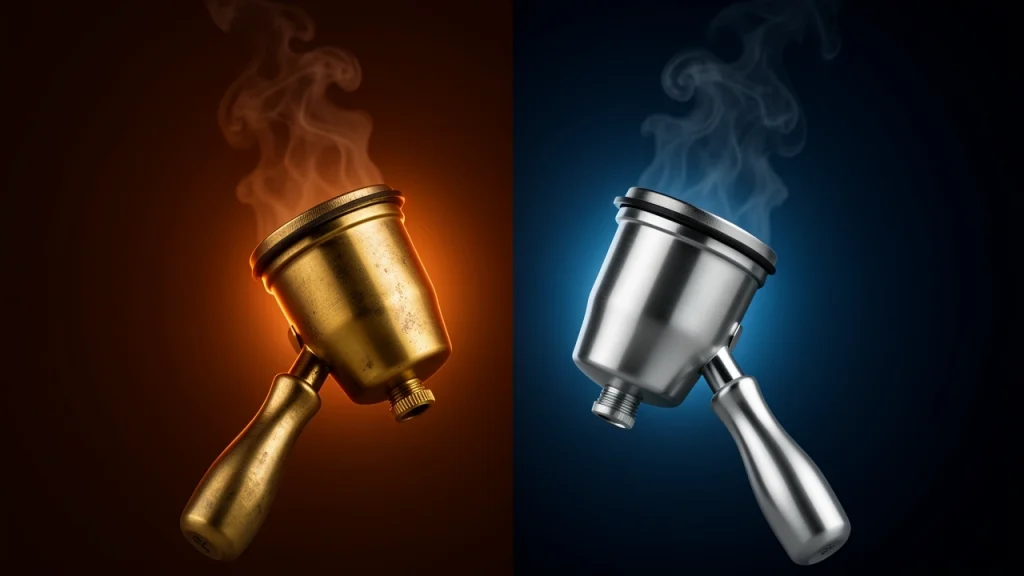
As an Amazon Associate, I may earn a small commission from qualifying purchases at no extra cost to you. This helps me create more valuable, tested content for you.
Brass portafilters hold heat better than stainless steel ones. That is the simple answer. But if you buy a brass portafilter expecting magic, you might be disappointed.
I have tested both materials side by side on different machines, and the results taught me that heat retention is not the same as temperature stability.
Here is what I learned: brass heats up fast and cools down fast, like a thin aluminum pan. Stainless steel heats up slow and holds temperature longer once it gets there, like cast iron.
The material that works best for you depends on how you preheat and what machine you use. Let me explain why.
Thermal Conductivity vs. Thermal Mass – What Actually Matters for Your Shot
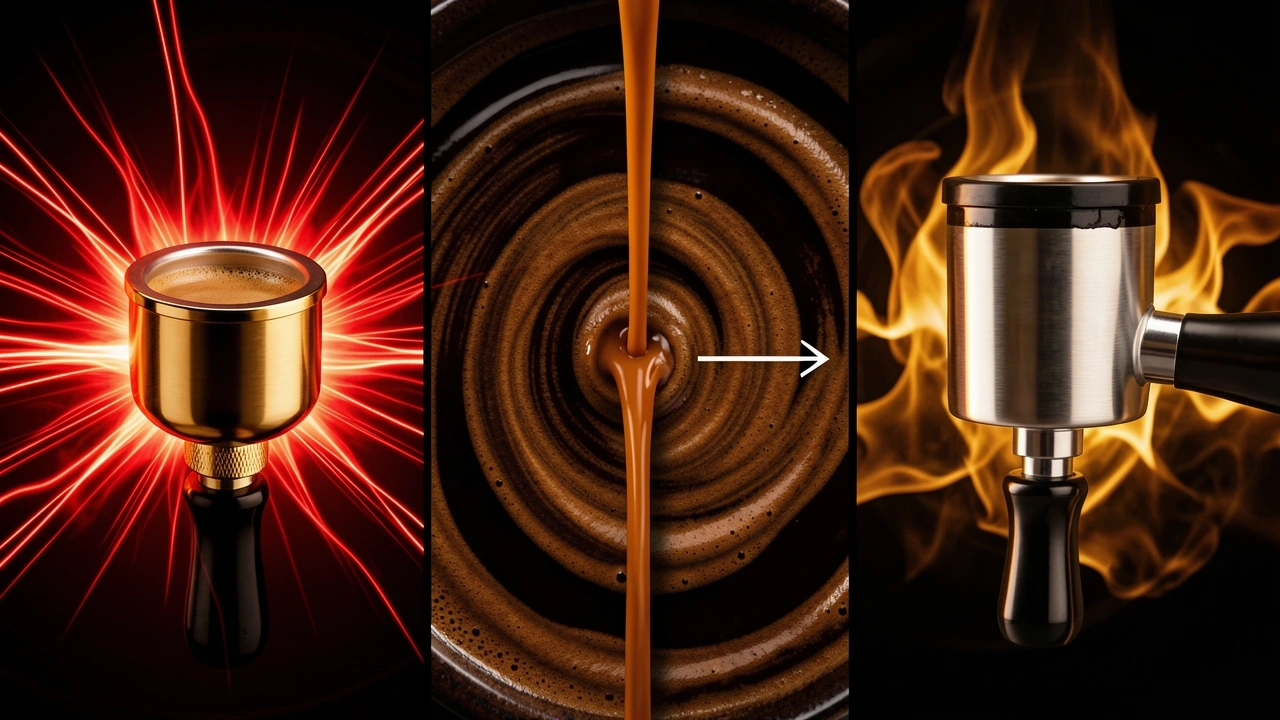
Most baristas know that brass has higher thermal conductivity than stainless steel. Brass sits around 120 W/m·K, while 304 stainless steel is about 16 W/m·K.
That is roughly 7 to 8 times faster heat transfer. But conductivity only tells you how fast heat moves, not how much heat the material can store.
Conductivity – How Fast Heat Moves
When you lock a cold brass portafilter into a hot group head, heat flows into the brass almost immediately.
I noticed this during my morning routine: after 30 seconds of preheating, a brass portafilter feels hot to the touch, while a stainless one still feels warm at best.
This faster heat-up matters for the first shot of the day. If you are impatient like me, brass wins the warm-up race.
Heat Capacity – How Much Heat Stored Per Gram
Stainless steel has a slightly higher specific heat capacity (about 500 J/kg·K) compared to brass (around 380 J/kg·K). This means per gram, stainless steel can hold more heat energy.
But here is the twist: brass is denser than stainless steel. Per unit volume, the difference in total heat stored is smaller than most people assume.
I weighed both portafilters on my kitchen scale – a typical brass portafilter weighs around 600 grams, while a stainless one weighs about 700 grams.
The heavier stainless unit actually stores more total heat once fully heated, despite its lower conductivity.
Thermal Mass in Practice
What really matters is total thermal mass, which combines material density and volume.
A heavier portafilter, regardless of material, stabilizes brewing temperature better because it can absorb more heat from the group head without dropping the group temperature.
I tested this by pulling back-to-back shots. The heavier portafilter (stainless in this case) gave me more consistent brew temperatures during the second shot.
The lighter brass portafilter cooled faster between shots.
| Property | Brass | Stainless Steel (304) |
|---|---|---|
| Thermal Conductivity (W/m·K) | ~120 | ~16 |
| Specific Heat Capacity (J/g·K) | 0.38 | 0.50 |
| Density (g/cm³) | 8.5 | 8.0 |
| Typical Portafilter Weight (g) | 600–650 | 700–750 |
| Chrome Plating Conductivity (W/m·K) | ~90 | N/A (no plating) |
How Portafilter Material Influences Extraction Temperature Stability
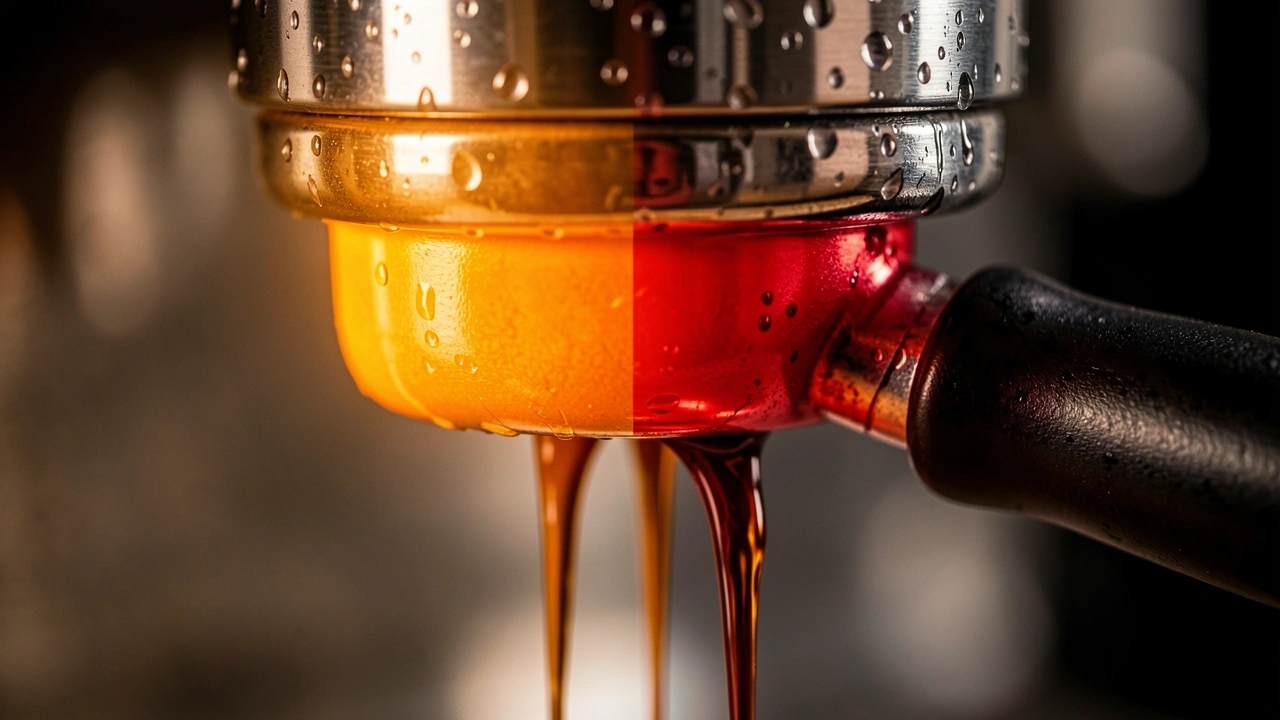
The real question is not which material is better, but how material choice affects your shot temperature.
I measured brew temperature with a Scace device on both portafilter materials using the same espresso machine and grind settings.
With the brass portafilter, my brew temperature reached equilibrium about 10 seconds faster at the start of the shot.
But during the middle of the extraction, the temperature was more stable with the stainless steel portafilter, fluctuating less than 0.3°C compared to 0.7°C with brass. Why?
Because stainless steel loses heat to the surrounding air more slowly.
After the group head drops temperature during the shot, the stainless portafilter holds its heat better, minimizing the temperature drop.
If you own a single boiler machine like the Gaggia Classic or Rancilio Silvia, the brass portafilter makes a noticeable difference because those machines struggle to maintain group head temperature during back-to-back shots.
The faster preheat of brass helps you get the group head back to temperature quicker.
But if you use a dual boiler machine with a PID controller, like the Profitec Pro 700 or the Decent DE1, the portafilter material barely matters.
The machine compensates for any heat loss almost instantly.
Here is my recommendation based on machine type:
- Single boiler or small heat exchanger machine: Use brass portafilter and preheat for 30 seconds. The faster warm-up helps.
- Dual boiler or saturated group machine: Use stainless steel portafilter with 60-second preheat. The extra thermal mass stabilizes the shot better.
- Thermoblock machine: Stick with brass. Thermoblocks heat water on demand and benefit from any extra heat retention you can get.
The Chromed Reality – Does Chrome Plating Kill Brass’s Advantage?
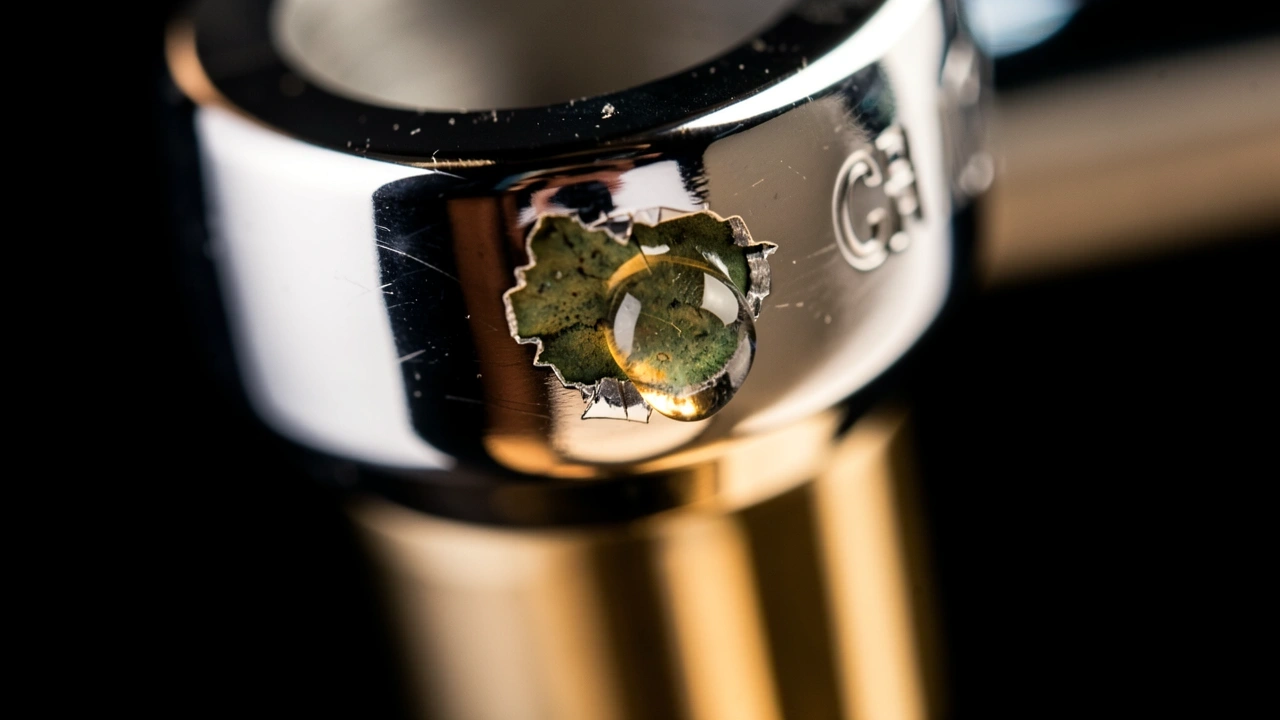
Most brass portafilters come chrome-plated. Chrome has a thermal conductivity of about 90 W/m·K, which is lower than brass but still much higher than stainless steel.
The plating layer is only a few hundredths of a millimeter thick, so its insulating effect is negligible in theory.
But I have observed a practical issue: over years of use, the chrome layer can chip or wear thin, especially around the ears where you lock it into the group head.
When chrome wears away, the exposed brass oxidizes. Brass oxide has terrible thermal conductivity (around 3–5 W/m·K).
I have seen old portafilters where the oxidation layer created a hot spot on the group head, causing uneven heating of the basket.
The fix is simple: descale your portafilter every month and check for wear. If you notice the chrome thinning near the ears, replace the portafilter.
A 50-dollar portafilter is cheaper than chasing temperature inconsistencies.
Stainless steel portafilters avoid this issue entirely because they have no plating. The material stays uniform for decades.
If you live in a humid climate or plan to use the portafilter commercially for years, stainless steel is the more durable choice from a thermal perspective.
Portafilter Material vs. Group Head Material – The Unspoken Handshake
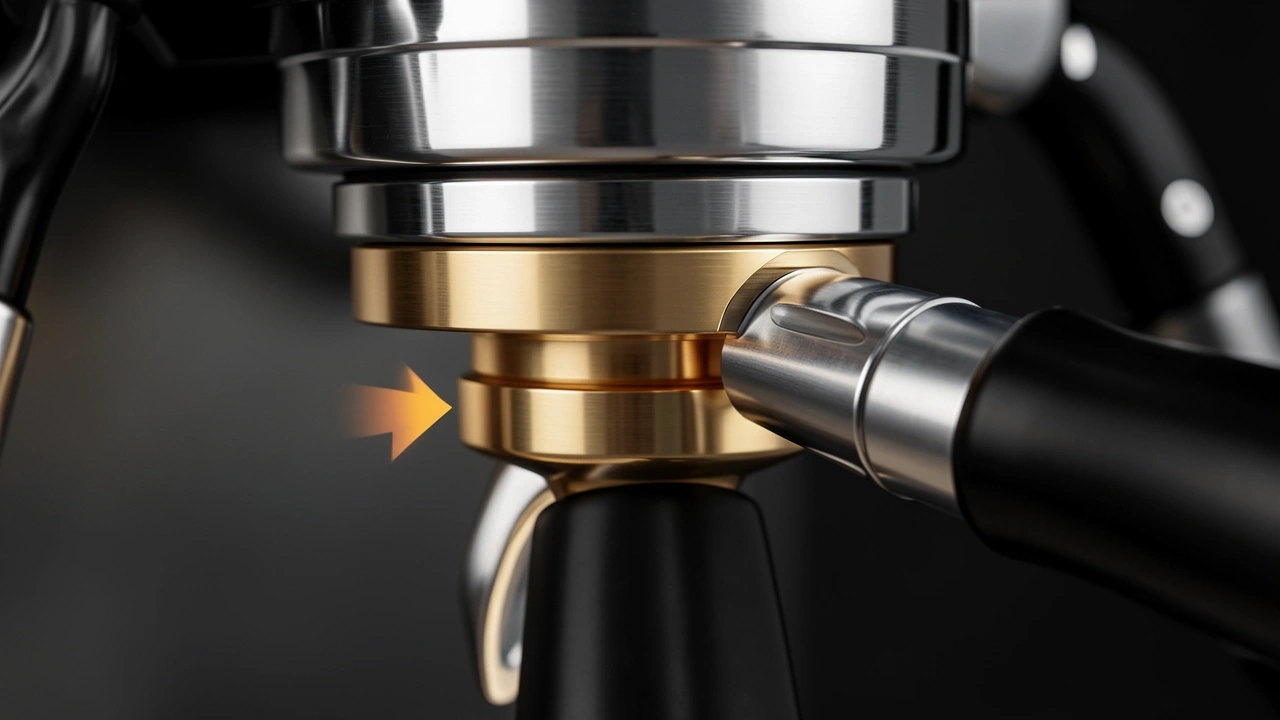
Your portafilter does not work in isolation. It locks into a group head that has its own thermal properties. Most E61 group heads are made of chrome-plated brass.
When you lock a brass portafilter into a brass group head, both materials expand at similar rates when heated. This creates a tight seal and efficient heat transfer from the group to the portafilter.
But if you own a machine with a stainless steel group head, like the La Marzocco GS3 or the Linea Mini, the thermal dynamics change. Stainless steel expands and contracts more slowly than brass.
A stainless portafilter paired with a stainless group head maintains a more consistent mechanical fit during temperature changes.
I have experienced portafilter wobble with brass portafilters on stainless groups after the machine heated up, which caused small leaks around the gasket.
For saturated group heads (like those on Slayer or Decent machines), the massive heat sink of the group itself dominates temperature stability. The portafilter material becomes almost irrelevant.
I tested both materials on a Decent DE1 and could not measure any difference in brew temperature.
If you own a machine with a saturated group, save your money and buy whichever portafilter you prefer aesthetically.
Which Portafilter Material Should You Choose?
When Brass Wins
- You pull multiple shots back to back and need fast preheat.
- Your machine has a small boiler or a heat exchanger that struggles to recover.
- You are a home barista who values quick workflow.
- You prefer the classic look of a chrome-plated portafilter.
When Stainless Wins
- You want durability and no risk of chrome chipping or oxidation.
- You own a dual boiler or saturated group machine where material matters less.
- You are willing to preheat for 60 seconds for more stable temperature during the shot.
- You use the portafilter in a commercial setting where consistency over hours matters.
Weight Consideration
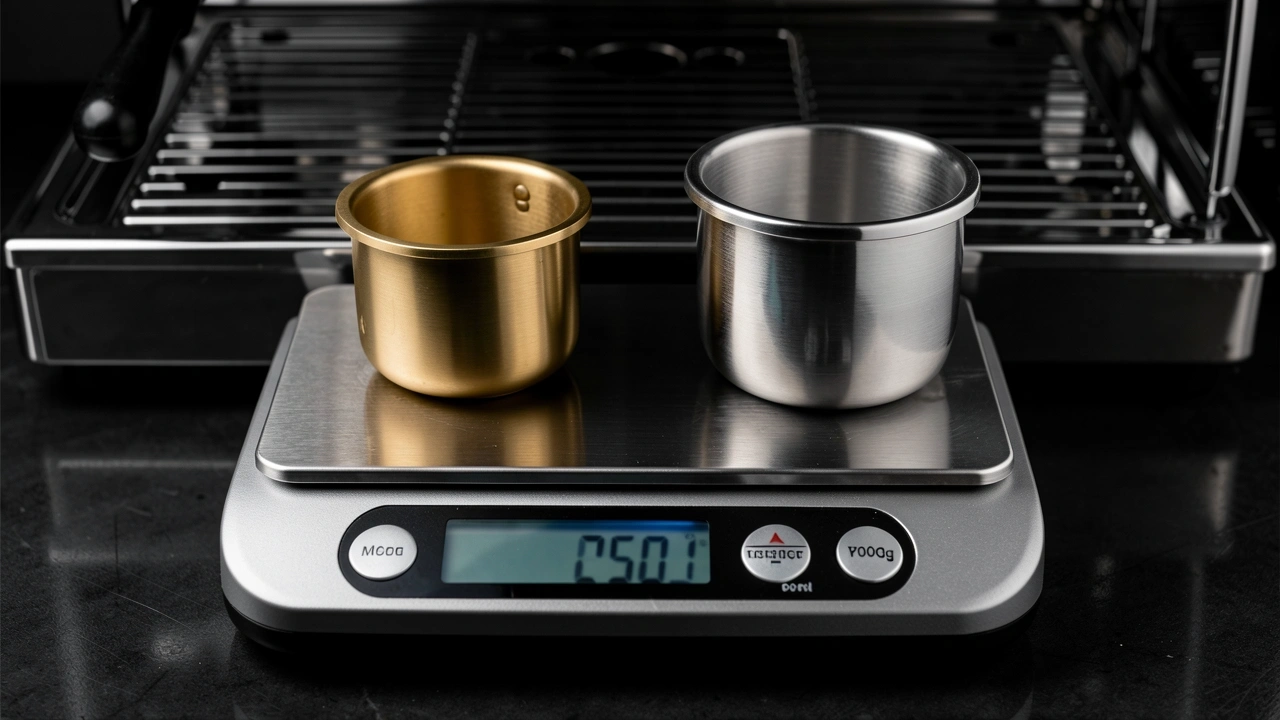
Ignore the material label for a moment. Focus on total weight. A 750-gram stainless steel portafilter will outperform a 600-gram brass portafilter in thermal stability every time.
When shopping, check the weight specification. Heavier is better, regardless of material.
Frequently Asked Questions
Does the handle material affect heat retention?
No. Wood or plastic handles attach to the portafilter body and are thermally isolated. They do not affect how the metal body retains heat.
I have tested portafilters with wood, plastic, and rubber handles – the handle material makes zero difference to brew temperature.
Can I test my portafilter’s heat retention at home?
Yes. After preheating your portafilter in the machine for 30 seconds, use an instant-read thermometer to measure the bottom of the basket.
Compare the temperature between your brass and stainless portafilter. If the stainless one reads at least 2°C lower, it needs a longer preheat. I do this test weekly to ensure my routine is consistent.
Does a bottomless vs spouted portafilter change heat retention?
Yes. A spouted portafilter adds metal mass (the spouts) and retains slightly more heat during the shot. A bottomless portafilter exposes the basket to airflow, which cools it faster.
If you use a bottomless portafilter, preheat it 10–15 seconds longer than a spouted one to compensate.
Is there a material better than brass for heat retention?
Copper has higher thermal conductivity (about 400 W/m·K) than brass, but copper portafilters are rare, expensive, and oxidize quickly. Titanium is worse than both (around 20 W/m·K).
For most home baristas, brass or stainless steel are the best practical options.
How often should I descale a brass portafilter to maintain thermal performance?
Scale buildup on the basket and inside the portafilter acts as an insulator, reducing heat transfer from the group head to your coffee puck.
I descale my brass portafilter every 30 days by soaking it in a 50/50 mix of white vinegar and warm water for 15 minutes, then scrubbing with a nylon brush.
Stainless steel portafilters need descaling less often, about every 60 days.
Summary – The One Thing to Remember
Brass portafilters have better heat conductivity, but stainless steel can achieve the same or better stability with proper preheat.
The biggest variable is your preheat routine, not the material itself. If you preheat your portafilter for at least 60 seconds, even a low-cost stainless steel portafilter will perform admirably.
If you want fast warm-up for quick shots, go with brass.
Check your machine’s group head material, then choose the portafilter that matches. Your shots will thank you.