Reina
Reina 
As an Amazon Associate, I may earn a small commission from qualifying purchases at no extra cost to you. This helps me create more valuable, tested content for you.
I’ve been making espresso at home for over a decade, and I’ve owned everything from a $300 starter machine to a prosumer model that cost four times as much.
The question I hear most from friends and readers is simple: how long does a home espresso machine typically last? The honest answer is 5 to 15 years, but that range tells you nothing without context.
A cheap super-automatic abused on hard water might die at year three. A lever machine babied with filtered water and fresh gaskets can still be pulling perfect shots at year twenty.
The real difference comes down to three things: the machine’s design, how you use it, and the small habits you build around it.
The Lifespan Range for Home Espresso Machines
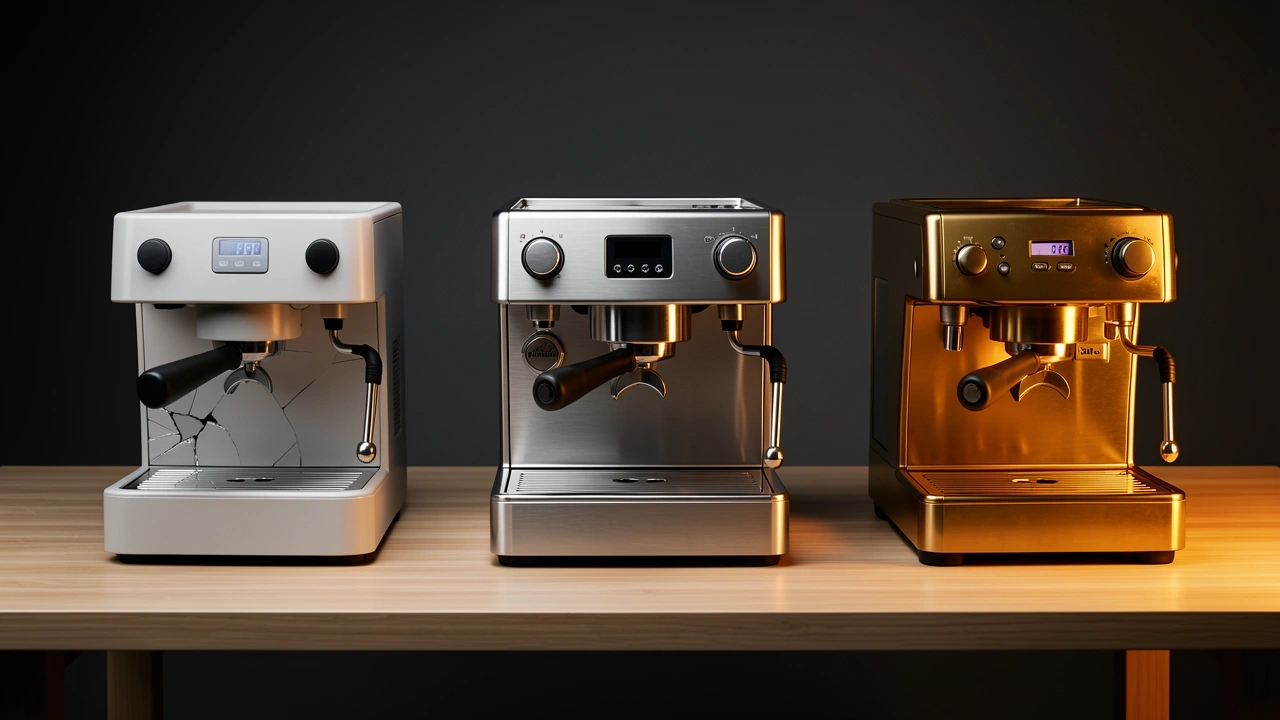
Let’s get the numbers out first. Based on my own experience and what I’ve seen from repair shops and owner forums, here’s what you can expect by machine type and price tier.
| Machine Type | Budget ($300–$600) | Mid-Range ($600–$1,200) | Prosumer ($1,200+) |
|---|---|---|---|
| Manual (lever) | 10–15 years | 15–20+ years | 20+ years |
| Semi-automatic | 5–7 years | 7–10 years | 10–15 years |
| Automatic (volumetric) | 4–6 years | 5–8 years | 8–12 years |
| Super-automatic | 3–5 years | 4–7 years | 6–10 years |
| Pod (Nespresso, etc.) | 4–7 years | 5–8 years | N/A |
These ranges assume normal home use (1–4 shots a day) with at least basic maintenance. Notice how price tier matters even within the same type.
A $500 semi-auto like a Breville Barista Express uses more plastic and a smaller thermocoil than a $1,500 Rancilio Silvia Pro with a brass group and stainless boiler.
That difference shows up directly in lifespan.
The Three Factors That Control Longevity
You can’t change the build quality after purchase, but you absolutely control the other two factors. Here’s what matters most.
Build Quality and Materials
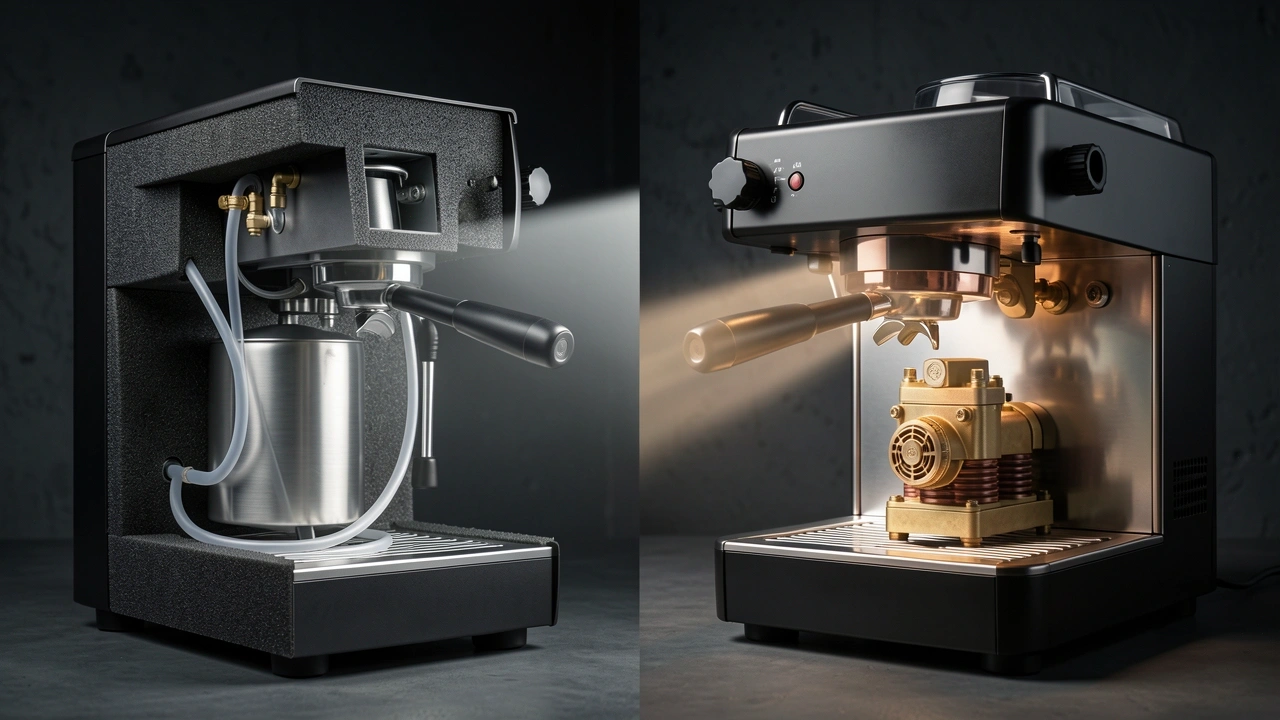
Lift the lid on a cheap machine and you’ll see plastic water lines, a stamped aluminum boiler, and a pump glued into a foam cradle.
Do the same on a prosumer machine and you’ll find brass fittings, a copper or stainless boiler, and a serviceable pump mounted on rubber dampers.
The difference isn’t just lifespan — it’s repairability. Brass and steel parts can be rebuilt; plastic cracks and gets thrown away.
I once kept a 12-year-old Gaggia Classic running by swapping the boiler gasket and pump for under $60. That same repair on a plastic-boiler machine would have been a full replacement.
Usage Intensity
A machine that pulls two shots a day at home wears out its pump and seals much slower than a machine running eight shots back-to-back for guests.
Heat cycles stress the boiler, and frequent heating and cooling loosens fittings over time. If you entertain often, your machine will age faster.
I advise people who host weekly brunches to budget for a pump replacement around year five — that’s normal wear, not a defect.
Maintenance Discipline
This is the factor you own completely. I’ve seen a neglected $1,200 machine die in three years from limescale-clogged lines while a well-cared-for $400 machine lasted a decade.
The most common killer is scale, not mechanical failure. If you live in a hard-water area and never descale, don’t expect more than 4–5 years from any machine.
Component Lifespan: The Pump, Gasket, Boiler, and Electronics
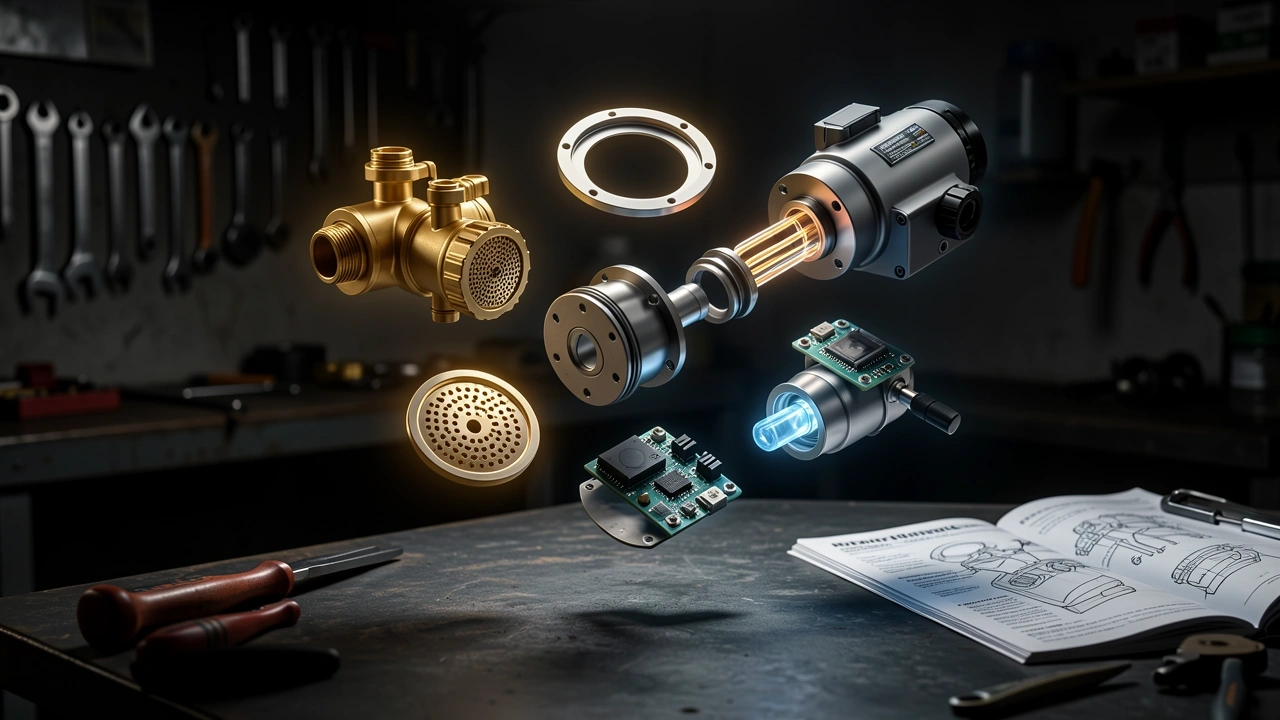
A machine’s overall life is made up of many part lives. Knowing which parts wear fastest helps you decide whether a problem is a cheap fix or the end of the road.
- Vibratory pump: 5–6 years of home use. When it starts making a high-pitched whine or loses pressure, it’s usually cheaper to replace than repair.
- Rotary pump: 10–15 years. Found on prosumer machines. Much quieter and more durable, but also more expensive to replace.
- Group head gasket: 1–2 years. This is a $5 rubber ring that seals the portafilter. If you see leakage or the portafilter feels loose, swap it immediately. I keep spares in my drawer.
- Shower screen: 2–3 years. Clogs with coffee oils over time. Replace it when backflushing no longer restores even water distribution.
- Boiler heating element: 10+ years on brass/steel boilers. Often outlasts the rest of the machine if scale is managed.
- Control board / electronics: 5–10 years. The wild card. A power surge or moisture leak can kill it instantly. Once the board goes on a modern machine, replacement cost often exceeds the value of the machine.
Here’s the practical takeaway: if your pump fails but the boiler and board are fine, a repair is worth doing.
If the electronics die and the machine is more than 7 years old, it’s usually time to shop for a replacement.
Three High-Impact Maintenance Habits That Actually Add Years
Skip the long checklists. Focus on these three actions and you’ll double your machine’s expected life.
1. Treat Your Water First
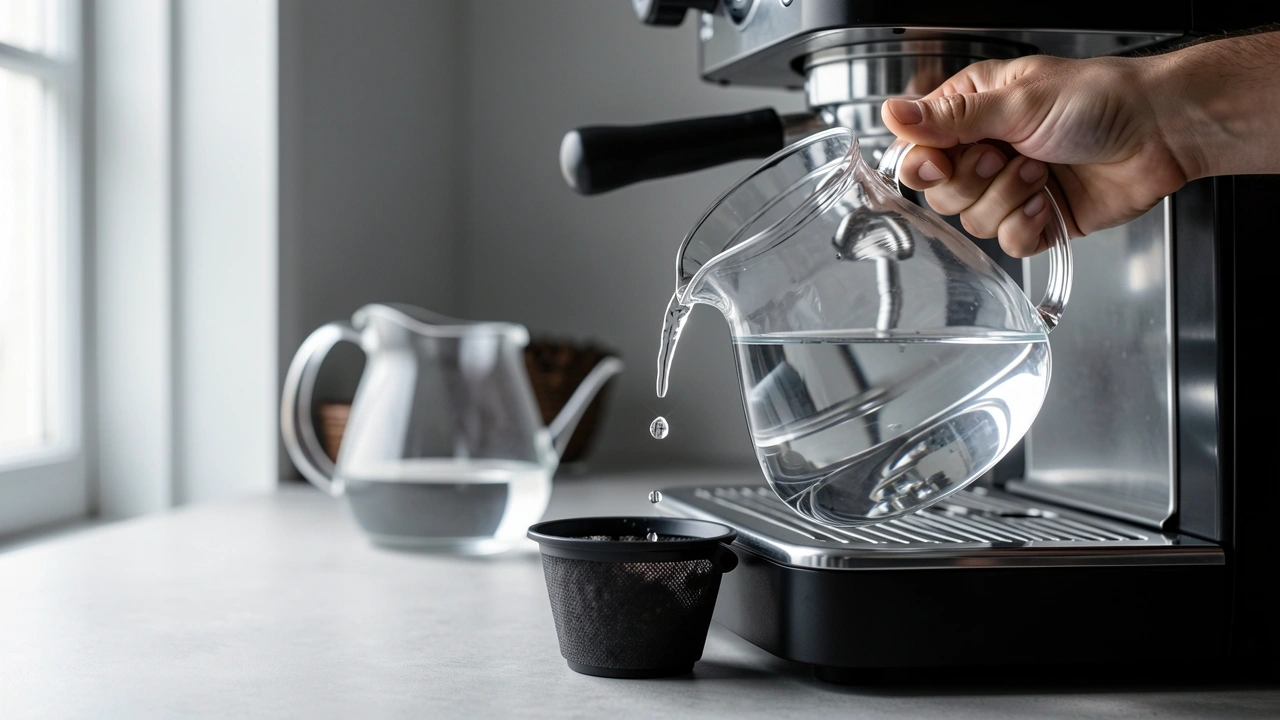
The number one cause of early death is limescale. A simple carbon filter pitcher (like a Brita) cuts mineral buildup dramatically.
If you have very hard water (over 150 ppm), use a softening cartridge designed for espresso machines. I switched to filtered water years ago and now go 12 months between descaling instead of 3 months.
My pump and boiler are still spotless.
2. Backflush Weekly, Descale Quarterly
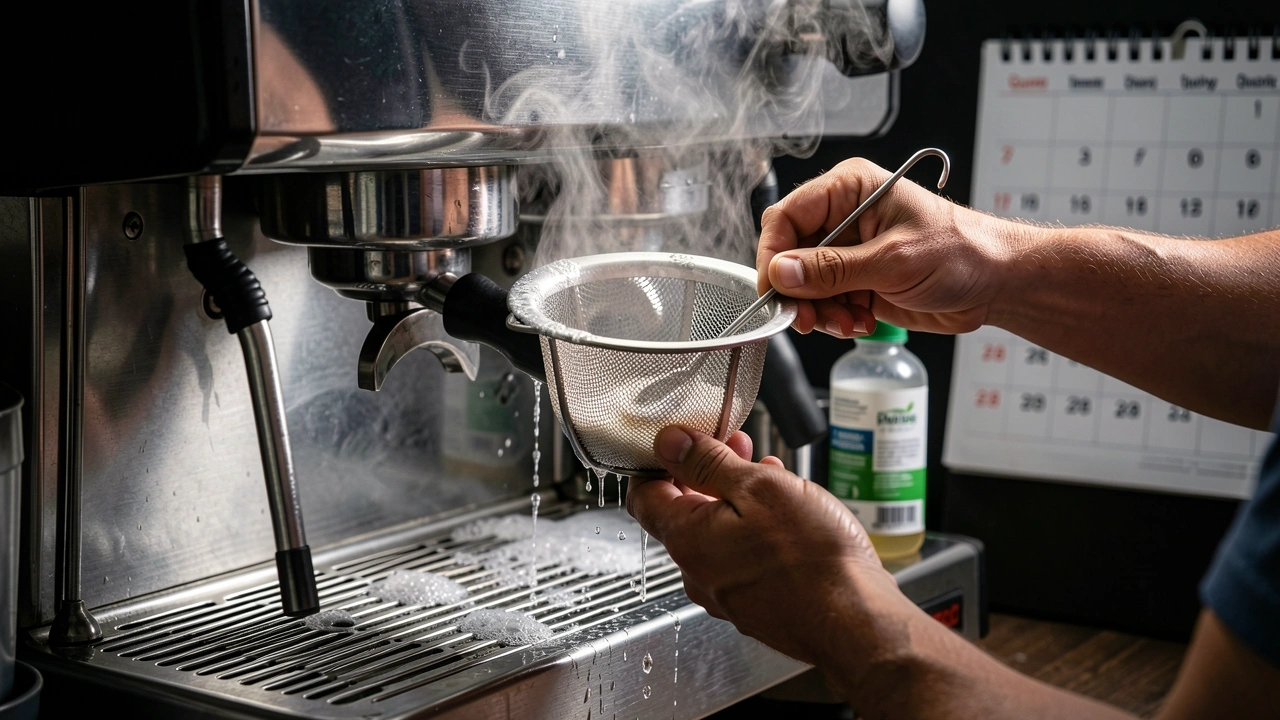
Backflushing with a blind basket and a bit of espresso cleaner removes coffee oils that harden into a sticky film on the group head.
That film can cause the solenoid valve to stick and the gasket to degrade faster. It takes 30 seconds.
Descaling every 2–3 months (or more often if you use hard water) keeps the boiler from forming a crust that insulates the heating element and causes premature failure.
3. Replace Wear Parts on a Schedule
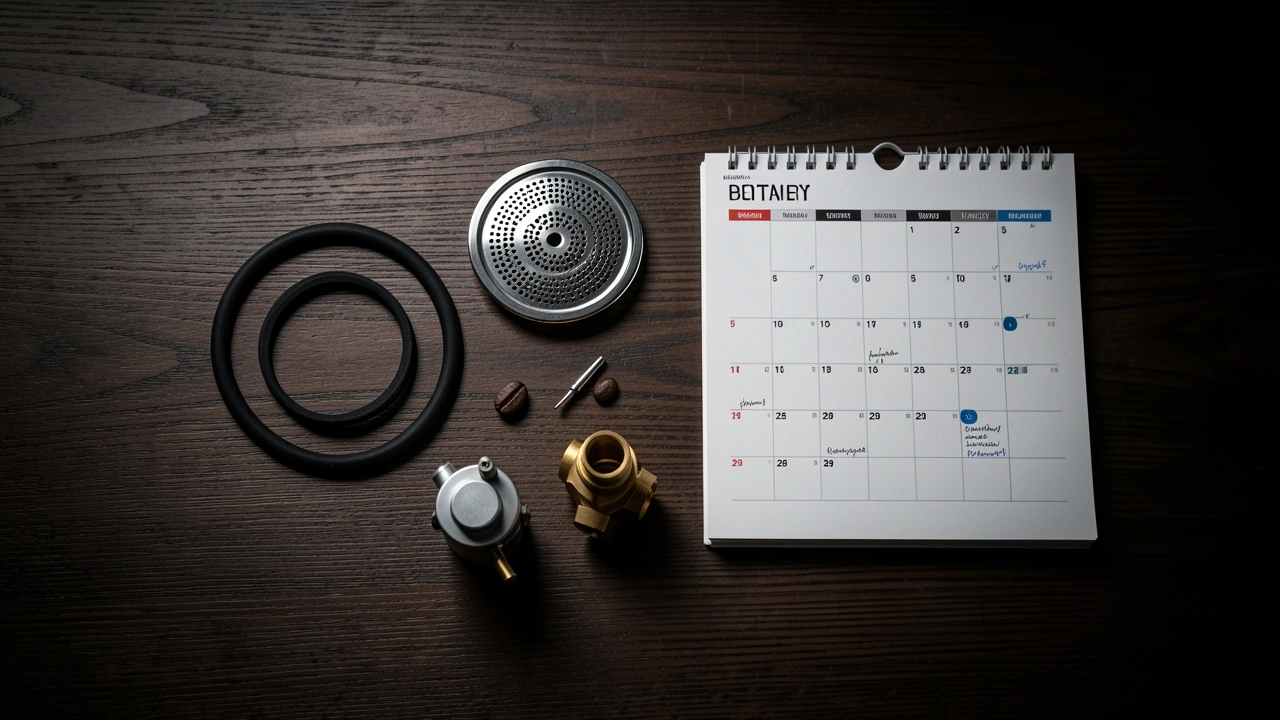
Don’t wait for leaks. I replace my group gasket every 12 months and my shower screen every 24 months. The cost is under $30 total.
A failed gasket can cause water to drip into the machine’s electronics, which is a much more expensive problem. Treat these parts like the oil in your car — cheap insurance.
The Repair-or-Replace Decision: A Simple Cost-Per-Year Test
When your machine starts acting up, run this quick calculation. Take the estimated repair cost (parts + labor if you’re not DIY) and compare it to 50% of what a comparable new machine would cost.
If the repair is under that threshold, fix it. If it’s over, replace it.
For example, a 6-year-old Breville Barista Express (original price $700) starts having pump issues. A new pump costs $50 and an hour of your time. That’s a no-brainer repair.
But if the control board dies and the repair quote is $350, that’s exactly 50% of a new replacement. I’d recommend replacing — especially because at 6 years, the grinder burrs and seals are also worn.
Now consider a 12-year-old Rancilio Silvia (original price $600) with a dead pump. A new pump is $80, and the machine still has plenty of life in its boiler and group.
Repairing it makes sense because the remaining component lifespans are strong. The cost per year of that repair, spread over the next 5–8 years, is tiny compared to buying a new $800 machine.
Always ask yourself: what else is likely to break next year? If multiple components are near end-of-life, it’s time to let go.
Buying for the Long Haul: What to Look for in a Durable Home Machine
If you’re shopping new and want maximum lifespan, these are the features I look for.
- Brass or stainless steel group head. Avoid machines with a plastic group — they crack under thermal stress.
- Stainless steel boiler. Copper is okay but corrodes with acidic descaling solutions. Stainless is best.
- Serviceable pump. A standard Ulka vibratory pump is easy to find. Avoid machines with a proprietary pump that’s glued in.
- Brands with proven repairability. Rancilio, Gaggia, ECM, and La Marzocco home models all have long parts availability. Breville is good for 5–7 years but not as well supported after that. I’ve seen 15-year-old Gaggias still get original parts.
- Separate grinder. An integrated grinder is convenient, but when it fails, it can take the whole machine down with it. I prefer a standalone grinder — it lets you upgrade either component independently.
My personal rule: if you want a machine to last 10+ years, spend at least $800 on a semi-automatic with a brass group and stainless boiler.
The upfront cost hurts, but the per-year cost ends up lower than replacing a $400 machine every 4 years.
Frequently Asked Questions
Does using a water softener really extend lifespan, or is it overkill?
It’s not overkill if your water is hard. I’ve seen machines on unfiltered tap water develop scale blockages within two years.
A basic carbon filter or a simple softening cartridge removes enough minerals to double the interval between descaling and protect the pump and boiler.
It’s the single cheapest longevity investment you can make.
How long do espresso machine pumps last in home use?
A vibratory pump typically lasts 5–6 years under daily use. You’ll know it’s failing when the machine becomes louder and brew pressure drops. Rotary pumps on prosumer machines can last 10–15 years.
Both types are replaceable — the cost is usually $30–$80 for the part.
Is it worth buying a used espresso machine if I want longevity?
Only if you can inspect it or buy from a trusted seller who maintained it. A used Gaggia Classic or Rancilio Silvia with records of good water treatment and regular descaling is a fantastic value.
Avoid used super-automatics and pod machines — their repair cost often exceeds their resale value.
How does a home machine’s lifespan compare to a commercial machine’s?
Commercial machines are built for 100+ shots a day and often last 10–15 years in a cafe. Home machines are lighter duty.
A well-maintained prosumer home machine can approach commercial longevity, but only if you give it the same care: daily backflushing, weekly cleaning, and professional service every few years.
Can I replace the boiler in my espresso machine, or is that usually a write-off?
On machines with a brass or stainless boiler, replacement is possible and usually costs $100–$200. It’s worth doing if the rest of the machine is in good shape.
On budget machines with an aluminum boiler, the cost of parts and labor often exceeds the machine’s value, so replacement makes more sense.
What’s the average lifespan of a Breville Dual Boiler vs. a Barista Express?
The Dual Boiler consistently reaches 8–12 years with proper care because of its stainless boilers and robust group.
The Barista Express (with integrated grinder) typically lasts 5–7 years before the grinder burrs or solenoid valve need attention.
The Dual Boiler is built to a higher standard, and the price reflects it.
Does running descale more often hurt the machine?
Yes, if you use harsh chemicals or do it too frequently. Over-descaling can corrode seals and metal surfaces.
Follow the manufacturer’s schedule — every 2–3 months for normal water, less often with filtered water.
Use a descaling solution specifically designed for espresso machines, not vinegar or citric acid, which can damage internal seals.