Reina
Reina 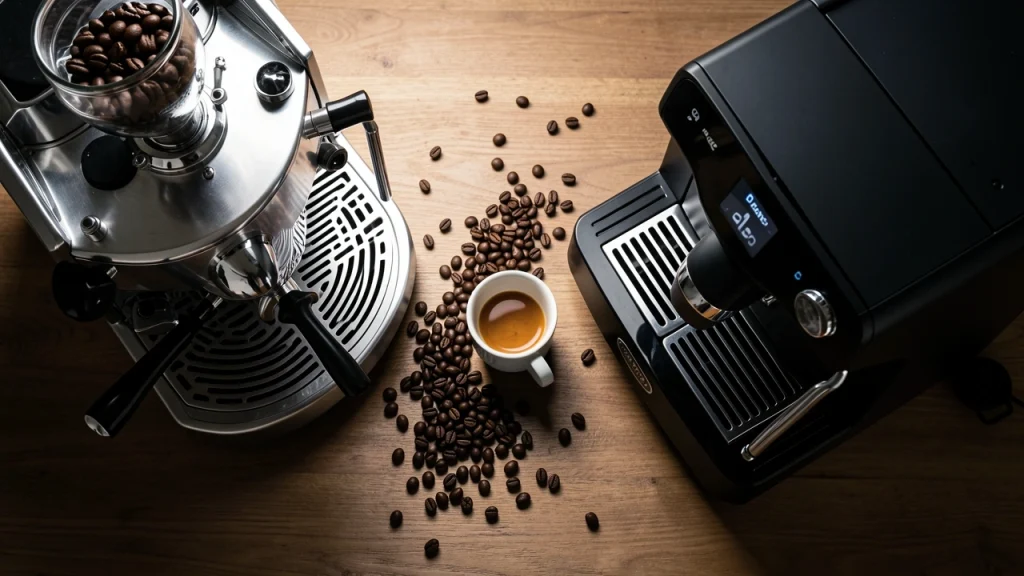
As an Amazon Associate, I may earn a small commission from qualifying purchases at no extra cost to you. This helps me create more valuable, tested content for you.
If you are reading this, you have already accepted that you want better espresso at home.
The real question is not which machine wins in a generic sense — it is which machine fits your specific pattern of living.
I have spent years behind both lever machines and push-button automatics, and I can tell you this: the best choice depends entirely on how much time, patience, and money you are willing to invest in the process.
Let me help you match your priorities to a machine without any fluff.
Stop Choosing by Name, Start Choosing by Goal
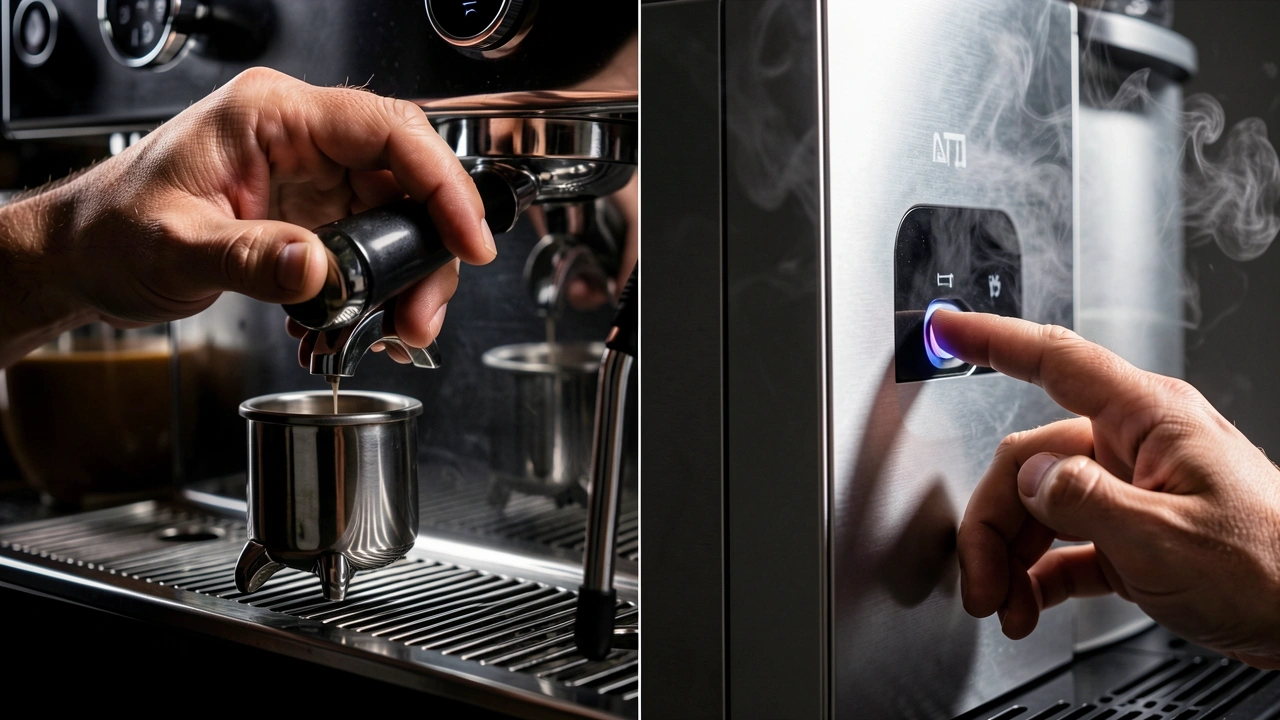
Forget the labels for a moment. Ask yourself one core question: Do you want to learn espresso, or do you want to drink espresso? This distinction decides everything.
- If you want to learn — understand grind size, tamp pressure, and how temperature affects extraction — start with a manual or semi-automatic machine. You will burn through a lot of coffee, but you will also develop a skill that lasts a lifetime.
- If you want to drink — have a consistent, cafe-quality shot every morning without fuss — an automatic or super-automatic machine is your match. You trade the learning curve for reliability.
In my own kitchen, I have both a manual lever machine (for weekend experiments) and a semi-auto with a decent grinder (for weekday mornings). Each serves a different goal.
You need to pick one primary goal to avoid frustration.
The Four Real Categories, Not Two
Most articles talk about “manual” versus “automatic” as if those are the only options. In reality, the spectrum has four distinct territories. Knowing them saves you from buying the wrong tool.
1. Manual (Lever) Machines
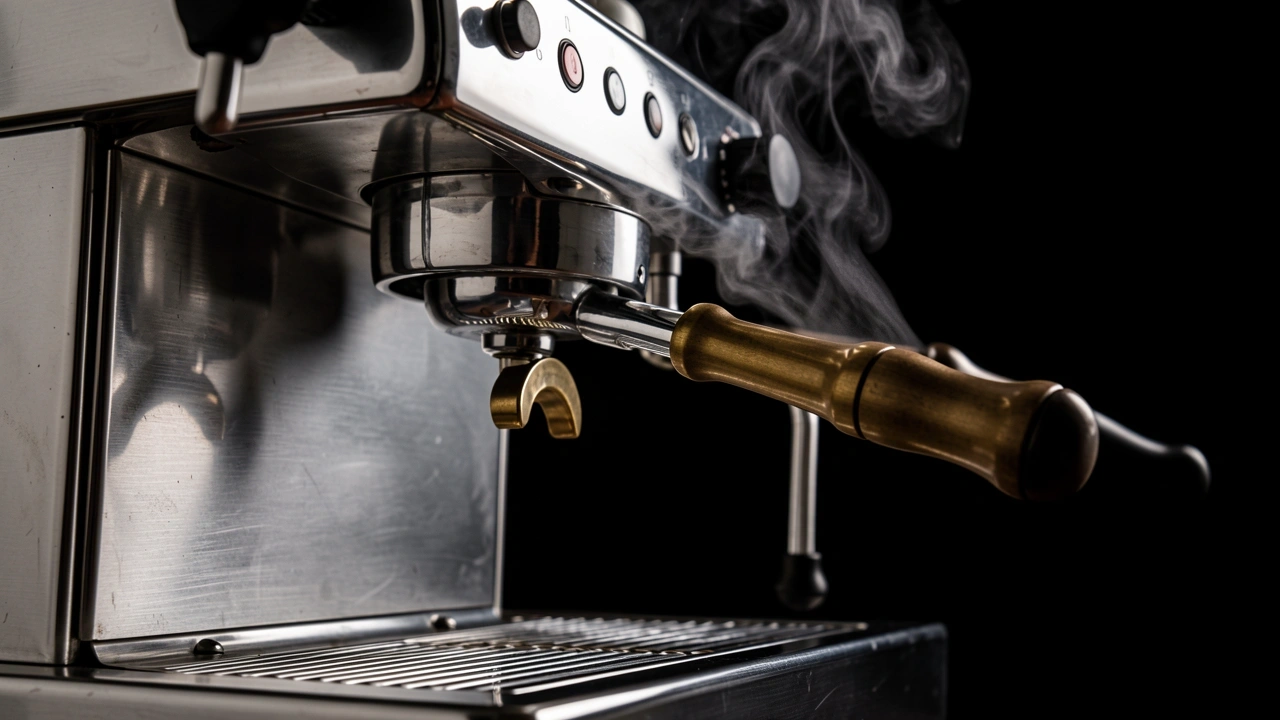
These use a lever to push water through the coffee. Some rely on your arm strength (direct lever), others on a spring (spring lever). There is no pump, no electronics besides heating.
Examples: La Pavoni, Flair, Cafelat Robot. These machines deliver incredible control — but you have to do the work.
A manual machine cannot steam milk well unless it has a separate boiler, which most do not.
2. Semi-Automatic Machines
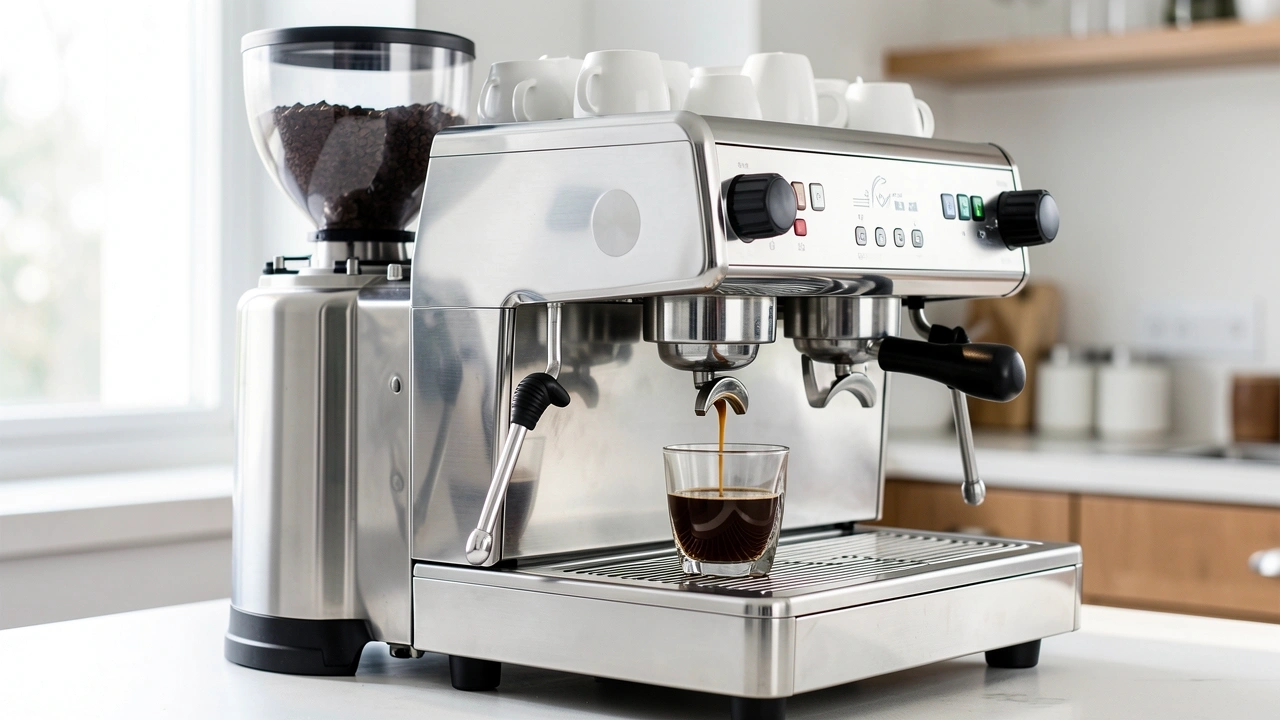
The most common home espresso machine. You fill the portafilter, lock it in, and flip a switch to start the pump. You stop it by turning the switch off. You control the shot time and volume manually.
Example: Gaggia Classic, Rancilio Silvia. These offer a balance of control and convenience, provided you also own a quality grinder.
3. Automatic (Volumetric) Machines
Same as semi-auto but with a button that pre-sets the water volume. You press once, the machine stops itself at the programmed dose. This removes the need to watch the shot.
Example: La Marzocco GS3 MP, many commercial models. In home use, this is less common but offers consistency if you dial in the settings once.
4. Super-Automatic Machines
Everything integrated: grinder, dosing, tamping, brewing, and often milk steaming. You press a button and get a finished drink. Examples: Jura, Breville Oracle, De’Longhi Dinamica.
The Oracle series is a hybrid — it uses a 58mm portafilter like a semi-auto but automates grinding and tamping. Super-autos are the most convenient but also the most expensive to maintain.
Three Questions That Decide for You
Instead of comparing features in a vacuum, run these three filters over your own situation.
Question 1: Do you have (or plan to buy) a quality grinder?
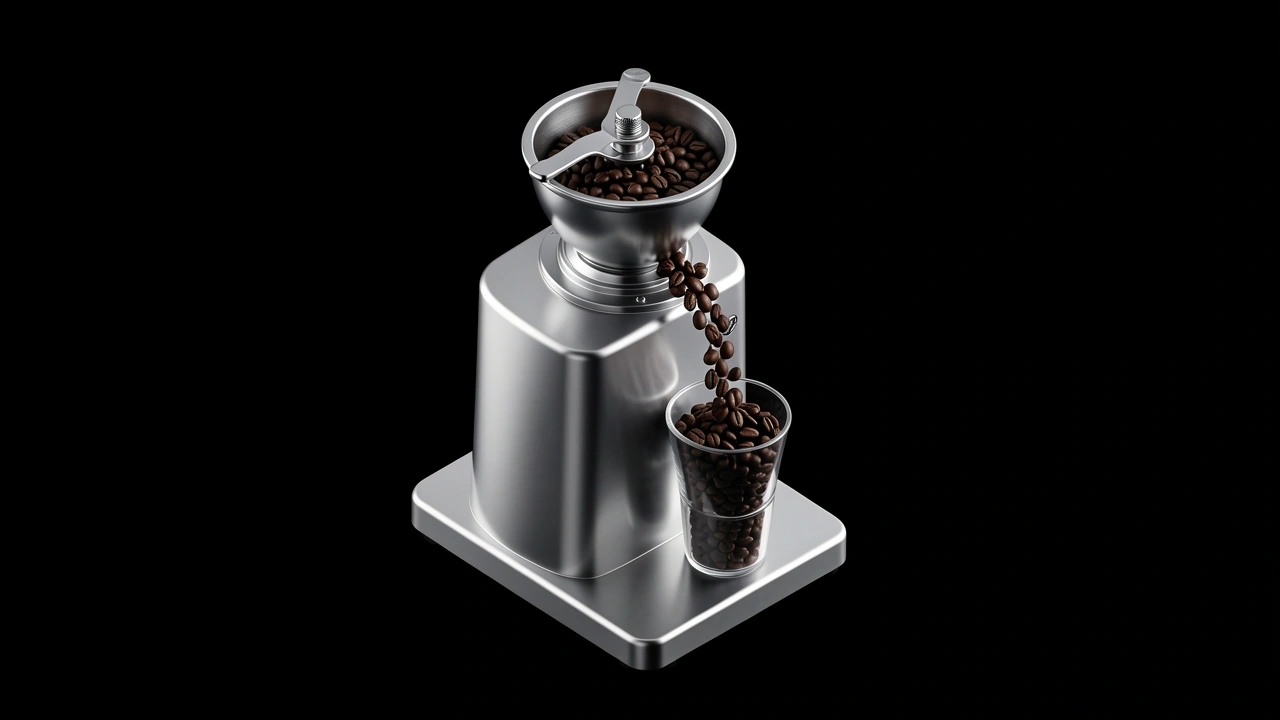
This is the single biggest hidden cost. You cannot make real espresso with a blade grinder or cheap burr grinder.
For manual and semi-auto machines, you need a grinder capable of fine, consistent adjustments — that usually costs $300 or more.
If your budget cannot stretch to a good grinder plus the machine, consider a super-automatic or a machine that uses pressurized baskets (like a De’Longhi Dedica).
Pressurized baskets fake the crema but will not deliver true espresso flavor. I have made this mistake: I bought a cheap semi-auto and used a blade grinder. The shots were sour and watery.
Do not repeat that.
Question 2: What is your acceptable failure rate?
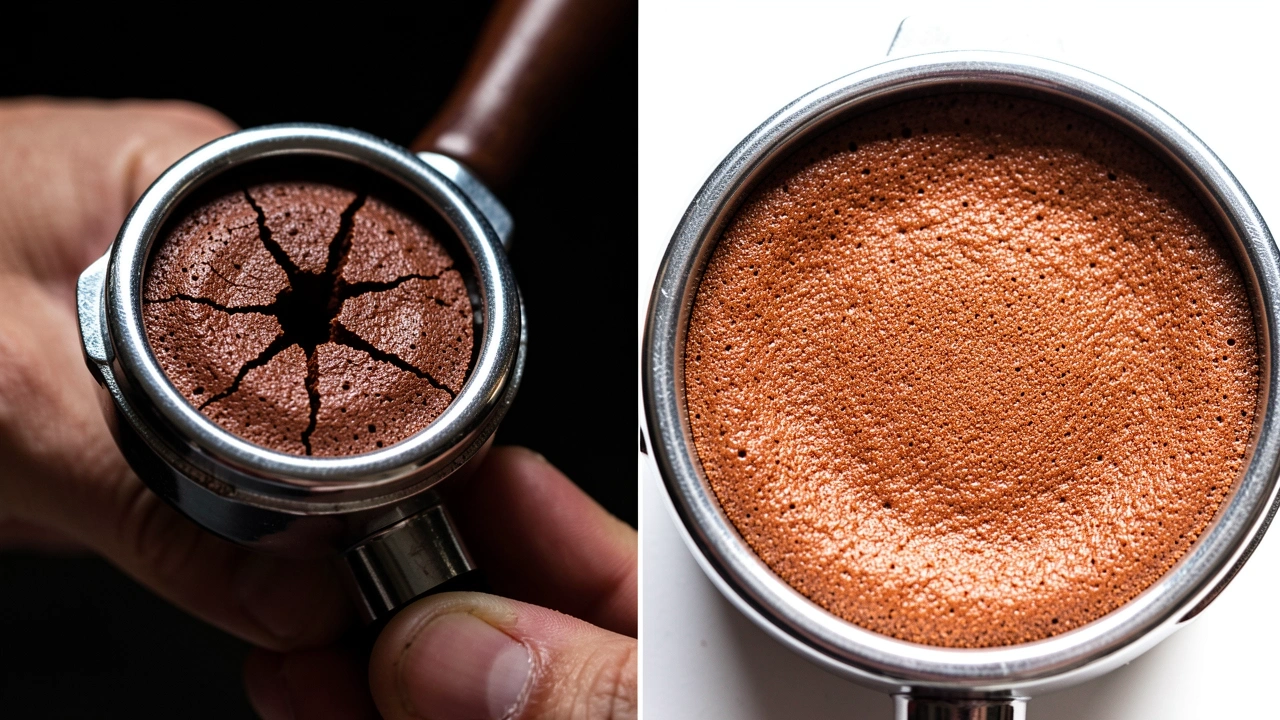
Manual machines have a high chance of producing bad shots for the first month or two. Even experienced baristas occasionally get channeling or under-extraction.
Automatic machines — especially super-autos — give you a very low failure rate. But when an automatic machine fails (clogged grinder, dead pump), you cannot easily fix the shot.
The trade-off: manual gives you the power to improve, automatic gives you predictability. I still remember the first time I pulled a perfect lever shot after weeks of trial — it was worth it.
But not everyone has that patience.
Question 3: How much maintenance can you handle?
Super-automatics require frequent cleaning cycles, descaling, and eventual grinder burr replacement. They have moving parts that break every 3 to 7 years.
Manual machines have virtually no electronics — only the boiler and heating element. A manual lever can last 20 years with basic grouphead cleaning. Semi-autos fall in between.
If you hate taking apart machines, stick with manual or semi-auto with minimal automation.
Beyond the Button – What You Actually Gain and Lose
Let me give you the unvarnished truth about shot quality and workflow.
Shot Quality Ceiling
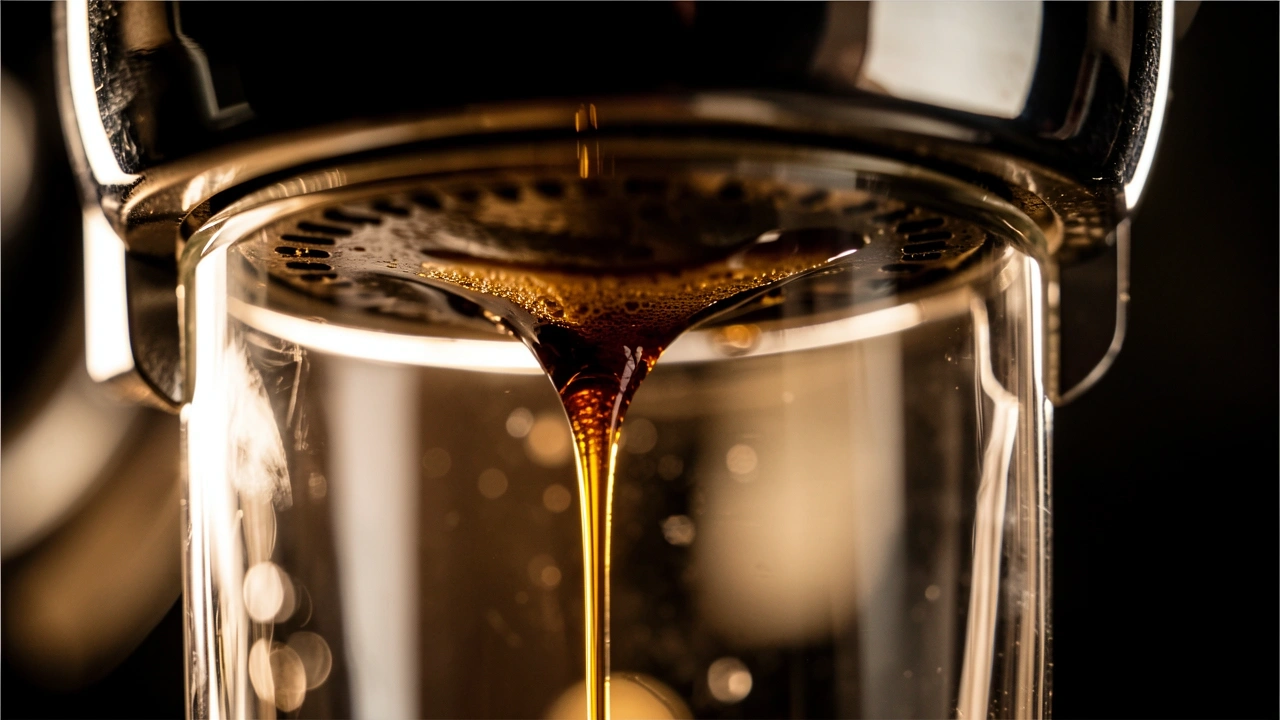
A talented person with a manual lever can produce shots that no automatic machine can match — silky texture, full body, nuanced flavors.
But the average automatic shot is more consistent than the average manual shot.
If you are the kind of person who wants to geek out over extraction yields and pressure profiles, go manual.
If you just want a decent latte every morning, do not pretend you will become a hobbyist — get an automatic.
Milk Steaming
Most manual levers cannot steam milk properly because they lack a powerful boiler. You will need a separate milk frother or a dual-boiler manual, which costs double.
Semi-autos often have a steam wand that requires practice. Super-autos with built-in steam wands (like the Breville Oracle) can produce cafe-quality microfoam without any skill.
For me, this was the deciding factor: I drink lattes, so I chose a semi-auto with a solid steam wand rather than a pure lever and a separate frother.
Space and Workflow
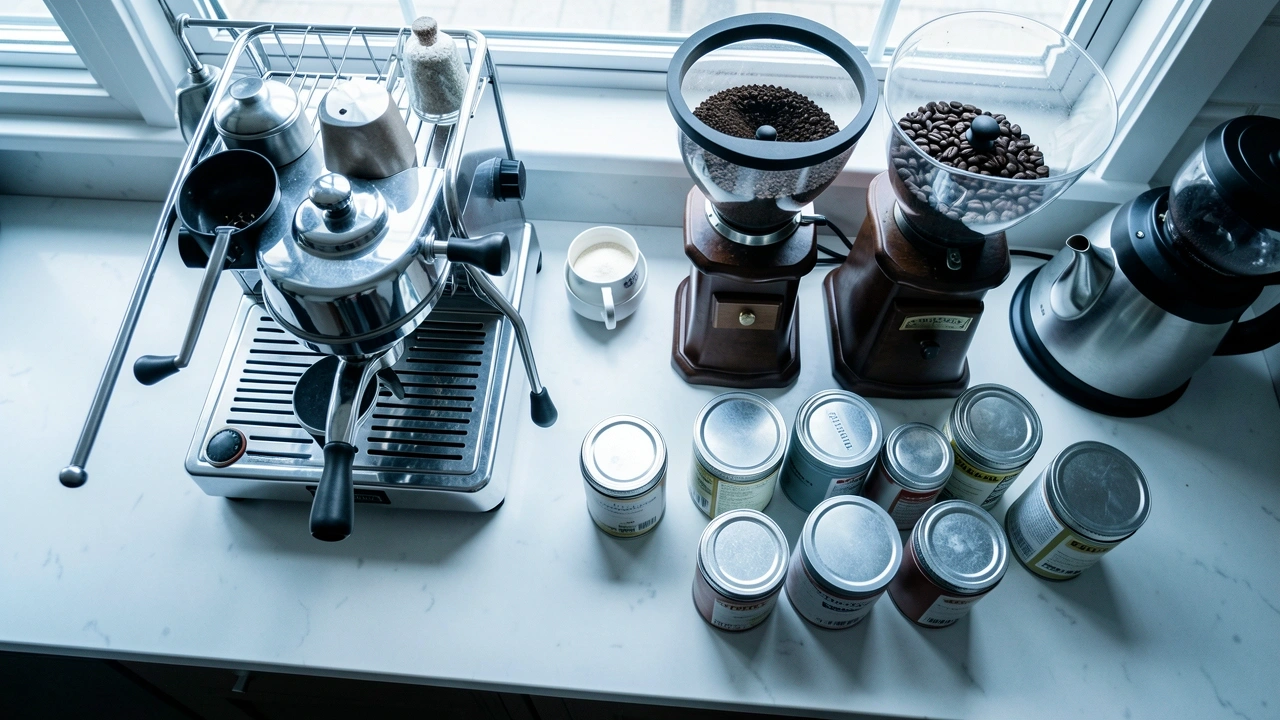
A manual setup (machine + grinder + separate steam device) takes up more counter space. A super-auto is all-in-one but physically larger. Measure your counter before buying.
I learned the hard way — my lever machine plus grinder left no room for a kettle.
The Wildcard: Semi-Automatic That Thinks for You
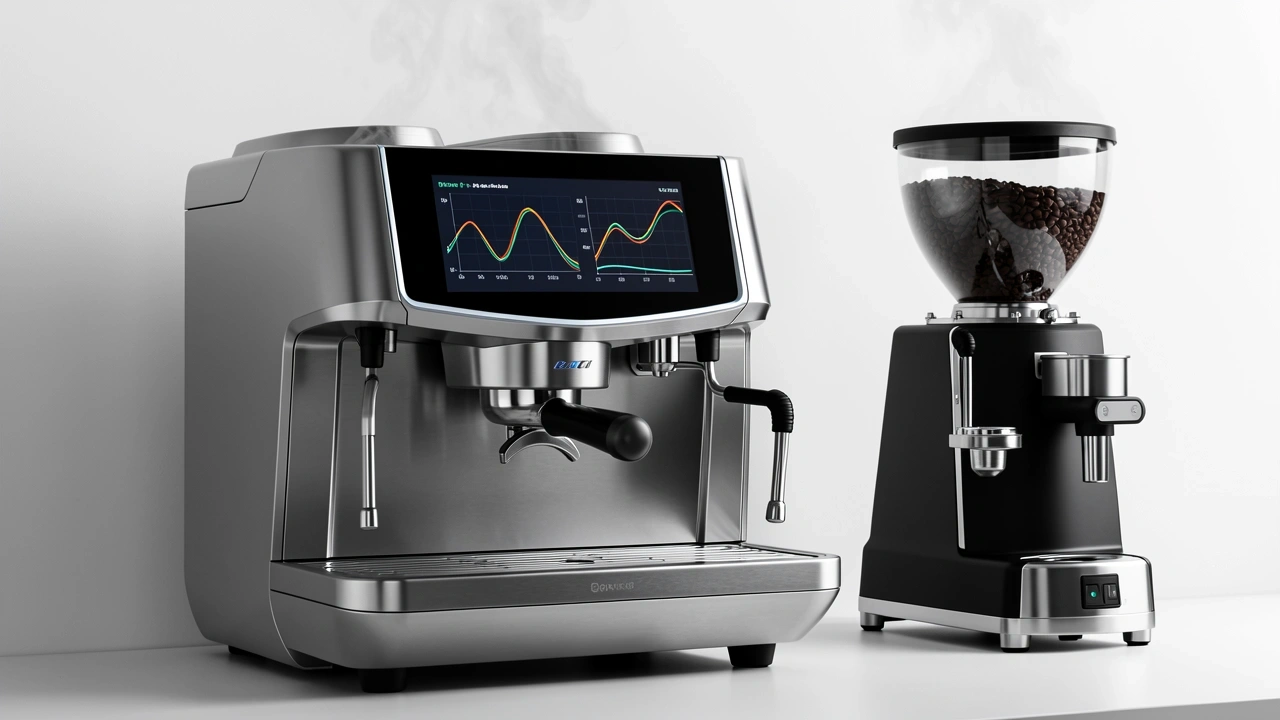
If you feel torn between control and convenience, look at hybrid machines like the Breville Oracle or Decent Espresso.
The Oracle grinds and tamps automatically but uses a standard portafilter, so you still engage with the process.
The Decent allows you to program pressure profiles — you get manual-style control with automatic consistency. These machines blur the categories and are perfect for the indecisive enthusiast.
They cost more, but they eliminate the most common bottlenecks: poor grinding and inconsistent tamping.
Myth vs Reality
- Myth: “Manual gives you total control.” Reality: It gives you the potential for control, but only if you also grind, dose, and temperature-surf correctly. Most users never master all three.
- Myth: “Automatic means worse espresso.” Reality: A high-end automatic (like the La Marzocco GS3 MP with volumetric control) produces shots identical to manual, provided you set it up properly. The difference is at the cheap end of the spectrum, where automatic machines use pressurized baskets that mask poor grind.
- Myth: “Super-autos waste less coffee.” Reality: They often use more coffee per shot because the indirect grinding path leaves grounds in the chute. Manual dosing is more efficient.
Frequently Asked Questions
Can I make espresso without a grinder?
Yes — but only with pressurized baskets on semi-autos or with super-automatic machines. The result will taste different from fresh-ground espresso.
It is acceptable for milk-based drinks, but not for straight shots.
Do super-automatic machines last long?
Typically 3 to 7 years before internal parts (grinder burrs, pump) fail. Manual machines last 10 to 20 years because they have no electronics.
Semi-autos fall in between, often 8 to 12 years if maintained well.
Can I steam milk on a manual lever machine?
Most pure manual levers do not have a boiler powerful enough to steam milk. You need a separate milk frother or a dual-boiler manual machine, which is expensive. Check the specs before buying.
Is a super-auto worth it for one person?
Only if you value speed over ritual. For a single user, a semi-auto with a good grinder is cheaper and produces better shots once you are comfortable. If you hate cleaning a portafilter, go super-auto.
I have used manual levers, semi-autos, and super-autos over the past decade. The right choice for you depends on how much hands-on work you want.
If you are still unsure, start with a used semi-auto and a good grinder — it is the most forgiving path to learning what you really value.