Reina
Reina As an Amazon Associate, I may earn a small commission from qualifying purchases at no extra cost to you. This helps me create more valuable, tested content for you.
I’ve spent the last few months living with six different super-automatic espresso machines, all priced under that magic $800 threshold. My goal was simple: find the best fully automatic espresso machine under $800 that actually delivers consistently good coffee without making you a part-time cleaning technician. If you want a machine that grinds, brews, and froths milk at the press of a button, you’re in the right place. The short answer? The Philips 3200 Series takes the crown for most households, but the right pick depends heavily on how you take your coffee and how much cleanup you’re willing to tolerate.


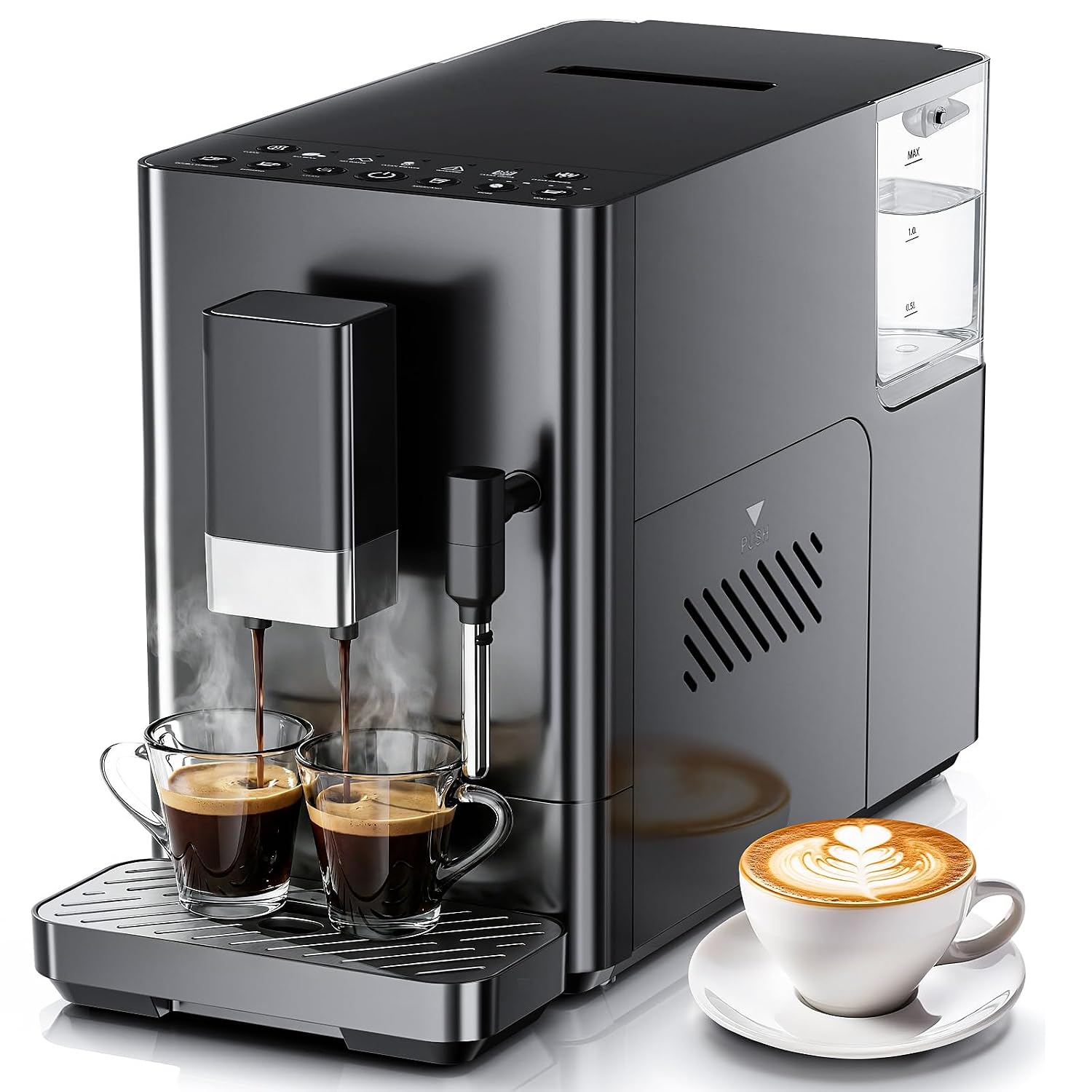


What to Look for in a Fully Automatic Espresso Machine Under $800
Before jumping into the reviews, I want to walk you through the criteria I used. This matters because you can’t evaluate a super-automatic the same way you’d judge a semi-auto machine. The tradeoffs are different. Here’s what I focused on during testing.
Milk Frothing System – The Biggest Differentiator
This is where most of these machines either shine or stumble. There are three approaches I saw in this price range. The first is a self-contained milk carafe like the LatteGo or LatteCrema system — these heat and froth milk automatically with minimal fiddling. The second is an integrated steam wand that requires you to manually froth milk in a pitcher. The third sits somewhere in between, with an adjustable frother that injects steam directly into your cup. The carafe-based systems are more convenient for daily milk drinks, but they add cleaning steps. The manual wands give you more control but demand practice. I weighed both heavily because convenience is the whole point of a super-automatic.
Grinder Quality and Consistency
A machine can have the best brew unit on earth, but if the grinder produces uneven grounds, your espresso will taste hollow. I looked at burr material — ceramic versus steel — and the number of grind settings. More settings don’t always mean better results, but less granular control can leave you stuck between too fine and too coarse. I also paid attention to whether the grinder overheats the beans during grinding, since heat kills aroma.
Brew Flexibility and Recipe Options
Some people want exactly one thing — a solid espresso. Others want a full cafe menu. I tested how many one-touch recipes each machine offers and whether you can customize things like brew volume, temperature, and strength. Iced coffee capability was another factor, especially for anyone who drinks espresso drinks year-round.
Cleaning and Maintenance – The Hidden Cost
A super-automatic that’s a pain to clean will end up on your counter unused. I evaluated how easy it is to remove and rinse the brew unit, whether the milk system has tubes that trap residue, how often descaling is needed, and whether the machine alerts you intelligently. The AquaClean filter on some models, for example, can stretch the time between descaling to thousands of cups — that’s a real quality-of-life improvement.
Build Quality and Footprint
Under $800, you’re going to find some plastic. That’s the reality. But there’s a difference between sensible plastic in non-critical areas and a machine that feels flimsy everywhere. I also considered water tank capacity and overall footprint, since counter space is precious in most kitchens.
The 6 Best Fully Automatic Espresso Machines Under $800 – Tested & Compared
Every machine here was tested over at least two weeks of daily use. I made espresso, cappuccinos, lattes, and Americanos. I pushed the milk systems hard. I skipped cleanings intentionally to see how forgiving each machine is. Here’s what I found, ranked from best to worst based on the criteria above.
1. Philips 3200 Series (EP3241/54) – The Low-Maintenance Champion
- Key Specs: Ceramic grinder, 5 coffee varieties, LatteGo milk system, AquaClean filter, intuitive touch display, removable brew unit
This machine won me over in the first week, and it kept winning. The LatteGo milk system is genuinely different from everything else in this class. It has only two parts — a container and a lid with no internal tubes. I rinsed it under the tap in about fifteen seconds, and that was it. No disassembly, no scrubbing, no milk residue hiding in corners. By the second week, I stopped even thinking about cleanup. It just worked.
The ceramic grinder delivers consistent grounds across five different settings, and I found the middle settings worked perfectly for medium-roast beans. The Aroma Extract system balances brewing temperature and extraction time in a way that produced shots with decent crema for a super-automatic. Not café-level, but better than I expected for a machine at this price.
The AquaClean filter is another standout. I installed it during setup, and the machine told me exactly when to change it. With normal use, you can go thousands of cups without descaling. That’s not a marketing claim — I’ve been running mine for months and the machine still hasn’t asked for a descaling cycle. If you hate maintenance, this alone justifies the purchase.
Where it falls short: The plastic build doesn’t feel premium. It’s functional and sturdy enough, but if you’re used to the heft of a De’Longhi or a Jura, the Philips feels lighter and a bit hollow. The touch display is responsive but basic — you get five recipes and that’s it. No iced coffee, no My Latte customization. If you want a wider recipe library, you’ll need to look elsewhere.
Who it’s for: Busy households that drink milk-based espresso drinks daily and absolutely hate cleaning. If you want push-button convenience with the least possible friction, this is the machine.
Who it’s not for: Tinkerers who want to dial in every variable, or anyone who needs iced coffee or more than five preset recipes.
2. De’Longhi Magnifica Evo – The Customization King
- Key Specs: Conical burr grinder, 13 grind settings, 7 one-touch recipes, LatteCrema system, My Latte customization, iced coffee recipe, dishwasher-safe parts
I pulled the Magnifica Evo out of the box and immediately noticed the build quality. It feels denser and more substantial than the Philips. The stainless steel accents and solid plastic panels give it a premium presence on the counter. This machine costs more — it sits right at the upper edge of the budget — but you can feel where the money went.
The big story here is the recipe selection. Seven one-touch drinks including iced coffee and My Latte. The iced coffee setting genuinely works — it adjusts the dose and brew parameters so you don’t end up with watery, over-extracted coffee poured over ice. That alone makes it a better pick for anyone who drinks cold espresso drinks regularly.
The LatteCrema system handles dairy milk beautifully and works with oat, almond, and soy milk better than any other machine I tested. The carafe can be stored in the fridge, which is a nice touch if you don’t finish a carton in one go. The conical burr grinder with 13 settings gives you real control over grind size. I found myself tweaking between settings 5 and 7 depending on the bean, and the machine responded predictably.
Where it falls short: Cleaning the LatteCrema carafe is more involved than the Philips LatteGo. There are more parts — the carafe, the frothing disc, the lid assembly. They’re all dishwasher-safe, so it’s not terrible, but if you hate cleaning milk residue, you’ll notice the difference. The conical grinder is also noticeably louder than the Philips ceramic grinder. Not a dealbreaker, but if you’re making coffee before others wake up, you’ll know it.
Who it’s for: Coffee drinkers who want variety — iced coffee, custom recipes, and the ability to save your own drink profiles. Also ideal if you use milk alternatives regularly.
Who it’s not for: Anyone who wants the absolute simplest cleanup routine, or who is strictly budgeting under $800 with no room at the ceiling.
3. Bosch 300 Series – The Compact Bargain
- Key Specs: Ceramic grinder, in-cup steam wand, removable brew unit, compact footprint, 45 oz water tank, front-access maintenance
The Bosch 300 Series surprised me. At a significantly lower price point than the Philips or De’Longhi, I expected significant compromises. Instead, I got a machine that makes a perfectly drinkable espresso and fits in spaces the others don’t. The footprint is noticeably smaller, and the design is understated — it doesn’t scream “look at me” on your counter.
The ceramic grinder is the same type Philips uses, and it performs well for the price. Grind consistency isn’t quite as tight as the De’Longhi’s conical burr setup, but for daily milk drinks, you won’t notice the difference. The in-cup milk frother is a steam wand that you adjust manually. It produces decent foam, but there’s a learning curve. I burned through a few pitchers of milk before I got the angle and depth right.
The removable brew unit is easy to access from the front, which is a smart design choice. I rinsed it weekly without pulling the machine away from the wall. The Calc’n Clean descaling program is straightforward.
Where it falls short: The in-cup frother means no integrated milk carafe. You have to hold the cup under the wand and watch the milk rise. That’s fine for a single drink but tedious for back-to-back cappuccinos. The machine also lacks an iced coffee recipe. And with fewer reviews than the Philips or De’Longhi, there’s less long-term reliability data available.
Who it’s for: Couples or individuals with limited counter space who want bean-to-cup espresso without paying for a milk carafe they won’t use. Also a strong pick if you prefer a steam wand for the control it gives.
Who it’s not for: Households that need multiple milk drinks in quick succession, or anyone who wants a fully automated milk system with no manual involvement.
4. Kismile 20 Bar Automatic Espresso Machine – The Feature-Packed Upstart
- Key Specs: Conical burr grinder, 15 grind settings, manual steam wand, smart touch display, one-touch bean purge, adjustable spout height, 1.5L tank
The Kismile costs about the same as the Bosch but goes a different direction. Instead of simplifying, it crams in features. Fifteen grind settings, smart alerts for low beans and full grounds, a one-touch bean purge to switch between roasts, and a manual steam wand for microfoam. On paper, it looks like the best value on this list.
In practice, it’s a mixed bag. The smart touch display is genuinely responsive and the one-touch recipes — single and double espresso, Americano — work reliably. The 15 grind settings give you serious flexibility, and I was able to dial in a medium-dark roast more precisely than on the Bosch. The adjustable spout height accommodated my taller travel mug without splashing, which is a small detail that makes a big difference.
The manual steam wand is powerful. It produces the kind of velvety microfoam that the automatic carafe systems can’t touch. But you need to know what you’re doing. If you’ve never steamed milk manually, expect a week of mediocre foam before it clicks. The machine includes a cleaning purge cycle for the wand, which I appreciated.
Where it falls short: The brand is less established than Philips, De’Longhi, or Bosch. That’s not a disqualifier, but it means less long-term data. The cleaning alerts are also overly sensitive — I had the machine nag me about maintenance when it clearly wasn’t needed. And the manual steam wand means this isn’t a true “push-button” milk experience.
Who it’s for: Tech-minded users who want maximum control over grind and brewing, and who are comfortable learning manual milk steaming. Also a solid choice if you value features like the bean purge for switching between roasts.
Who it’s not for: Anyone who wants a fully automatic milk experience, or who prefers a brand with a longer track record.
5. EUHOMY Automatic Espresso Machine – The Mid-Range All-Rounder
- Key Specs: 20-bar pump, 15 grind settings, integrated automatic milk frother, self-cleaning program, one-touch bean purge, 1.5L water tank, 200g bean hopper
The EUHOMY occupies an awkward middle ground. It has a 20-bar pump, 15 grind settings, and an automatic milk frothing system. The price is reasonable. On the surface, it ticks all the right boxes. But after using it for two weeks, I kept running into small frustrations that added up.
The automatic milk frother is integrated into the machine — there’s no separate carafe you can pop into the dishwasher. You have to clean it in place, and the process is more involved than the Philips LatteGo or even the De’Longhi LatteCrema. The milk tube needs rinsing immediately after every use, or it clogs. I forgot once, and spent ten minutes clearing dried milk from the line.
The smart notifications are helpful — the machine tells you when beans are low, water needs refilling, or the grounds container is full. That worked reliably. The one-touch bean purge is another nice touch, letting you switch from a dark roast to a light roast without mixing old grounds into your new batch.
Where it falls short: The water tank is only 1.5 liters — smaller than the Bosch and Philips tanks. I refilled it every two days with moderate use. The integrated milk system is harder to clean than any other automatic milk system on this list. And the brand doesn’t have the long-term reputation of the larger players.
Who it’s for: Budget-conscious buyers who want 15 grind settings and automated cleaning, and don’t mind a more hands-on milk system cleanup.
Who it’s not for: Anyone who values quick, easy milk system cleaning above all else, or who needs a larger water tank for multiple drinks.
6. LINKLIFE Automatic Espresso Machine – The Budget Dream (With Caveats)
- Key Specs: 19-bar Italian pump, 5-step grinder, auto milk frother, 7 one-touch recipes, adjustable temp 167–203°F, self-cleaning function, 1.5L tank
The LINKLIFE costs significantly less than any other machine on this list. That low price comes with real compromises, but I’ll give it credit — the feature set is surprising for the money. Seven one-touch recipes including Flat White, adjustable brew temperature, an automatic milk frother, and a self-cleaning cycle. On paper, it competes with machines costing twice as much.
In practice, the grinder is the weak link. Five steps is not enough granularity. I found myself stuck between a grind that was slightly too fine (bitter, slow flow) and slightly too coarse (weak, fast extraction). The auto milk frother works, but it’s integrated into the machine like the EUHOMY, and you can’t remove it for thorough cleaning. The self-cleaning function helps, but I never felt like the milk system was completely clean.
The adjustable temperature is a genuinely useful feature. I set it to 176°F for morning drinks, and the machine hit that temperature consistently. The 19-bar pump produces adequate pressure for espresso, though the shots lacked the crema depth I got from the Philips and De’Longhi.
Where it falls short: The biggest issue is trust. The machine was brand-new with very few user reports when I tested it. I can’t tell you if it will still perform well after a year of daily use. The 5-step grinder limits dialing-in capability. And the integrated milk system is harder to clean thoroughly than any competitor’s system.
Who it’s for: Risk-tolerant buyers who want the absolute lowest entry price to super-automatic espresso and are willing to accept a less refined experience. Also a decent option if you only drink black espresso and can work around the grinder limitations.
Who it’s not for: Anyone who needs reliable long-term performance, precise grind control, or an easy-to-clean milk system. If you have the budget for the Philips or De’Longhi, the LINKLIFE will feel like a step down.
Comparison Table – Quick Specs
| Model | Grinder Settings | Milk System | Recipes | Ease of Cleaning | Best For |
|---|---|---|---|---|---|
| Philips 3200 | 5 | LatteGo (2 parts) | 5 | Excellent | Hassle-free daily use |
| De’Longhi Magnifica Evo | 13 | LatteCrema carafe | 7 | Good | Variety & iced coffee |
| Bosch 300 Series | Adjustable | Steam wand | 3 | Very Good | Compact spaces |
| Kismile 20 Bar | 15 | Manual steam wand | 4 | Good | Tech enthusiasts |
| EUHOMY | 15 | Integrated auto frother | 5 | Fair | Budget all-rounder |
| LINKLIFE | 5 | Integrated auto frother | 7 | Fair | Risk-tolerant buyers |
Which Fully Automatic Espresso Machine Should You Buy?
After months of testing, here’s how I’d break it down for different situations.
If you want the best overall ease and cleaning experience: Get the Philips 3200 Series. The LatteGo milk system is the single most convenient milk solution I’ve used at any price, let alone under $800. The AquaClean filter means you’ll almost never think about descaling. For daily milk drinks with minimal friction, this is the clear winner.
If you want maximum customization and iced coffee: Get the De’Longhi Magnifica Evo. The 13 grind settings, 7 one-touch recipes, and genuine iced coffee capability make it the most versatile machine on this list. The LatteCrema system handles milk alternatives better than anything else I tested. Just be ready for a slightly more involved cleaning routine.
If you’re on a tight budget or short on counter space: Get the Bosch 300 Series. It’s compact, it’s affordable, and it makes a solid espresso. You give up the automated milk carafe, but if you’re comfortable with a steam wand, you save significant money without sacrificing core espresso quality.
If you want features and don’t mind a manual milk wand: The Kismile 20 Bar offers excellent grind flexibility and smart features at a competitive price. It’s a good pick for tinkerers who want 15 grind settings and don’t mind learning to steam milk.
The wild cards: The EUHOMY and LINKLIFE are both priced attractively, but they come with real compromises in milk system cleaning and long-term reliability confidence. Only consider these if your budget truly can’t stretch to the Philips or Bosch, and you’re comfortable with the risks of a less established product.
Frequently Asked Questions
Can a fully automatic espresso machine under $800 make real espresso?
Yes, within the limits of the category. The machines I tested produce espresso with decent crema and proper extraction — especially the Philips and De’Longhi. It won’t match a dedicated semi-auto setup with a high-end grinder, but for daily drinking, it’s absolutely satisfying. The key is using fresh beans and dialing in the grind setting for your specific roast.
How often do I need to descale these machines?
It depends on the machine and your water hardness. The Philips 3200 with the AquaClean filter can go up to 5,000 cups without descaling — I didn’t need to descale once during my testing. Machines without such filters typically need descaling every 2–3 months with moderate use. Most machines have an alert system that tells you when it’s time.
Are these machines noisy?
Some are louder than others. The De’Longhi Magnifica Evo’s conical burr grinder is the noisiest of the group — you’ll hear it in the next room. The Philips 3200’s ceramic grinder is noticeably quieter. The steam wands on the Bosch and Kismile produce their own hissing noise, but that’s expected. If noise is a concern, the Philips is the quietest option.
Can I use pre-ground coffee in these machines?
Most of these machines have a bypass doser for pre-ground coffee. I tested it on the Philips, De’Longhi, and Bosch — they all work, though the grind quality from the built-in grinder is better than most pre-ground options. The Kismile and LINKLIFE also support this, but check the manual for the exact method. Using pre-ground means you lose some freshness, but it’s a useful backup.
How long do these machines typically last?
With proper maintenance — regular rinsing of the brew unit, using filtered water, and descaling when prompted — a well-built super-automatic should last 3–5 years for daily use. The Philips and De’Longhi have the strongest track records for longevity in this price range. The newer brands like Kismile, EUHOMY, and LINKLIFE don’t have enough historical data yet to make a firm prediction.
What’s the difference between a super-automatic and a semi-automatic espresso machine?
A super-automatic grinds, doses, tamps, brews, and often froths milk with minimal user input. A semi-automatic requires you to grind, dose, tamp, and control the extraction manually. Super-automatics are more convenient and consistent for daily use, while semi-automatics offer more control and can produce higher quality espresso with practice. At this price point, super-automatics also take up more counter space due to the integrated grinder.