Reina
Reina 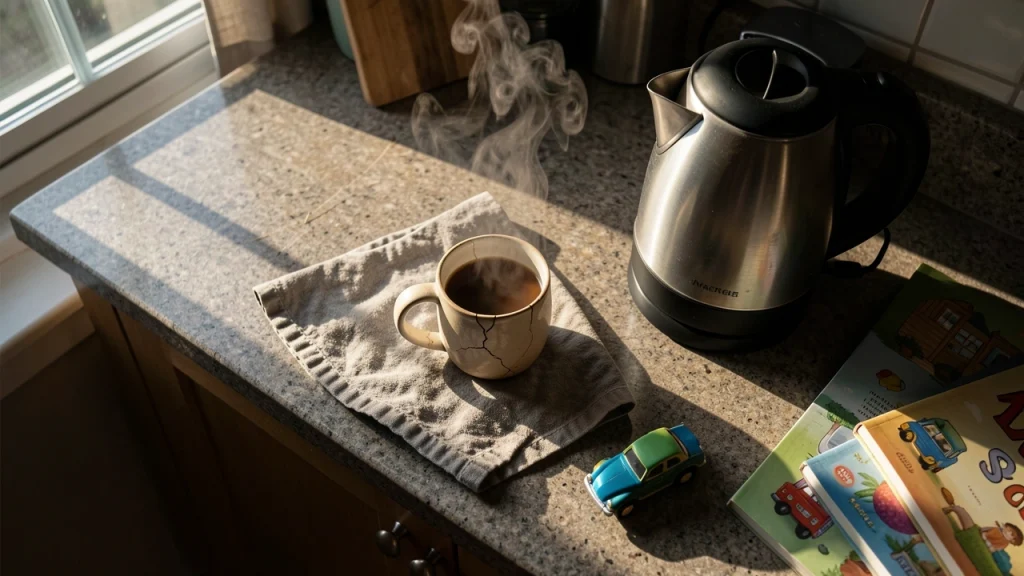
As an Amazon Associate, I may earn a small commission from qualifying purchases at no extra cost to you. This helps me create more valuable, tested content for you.
I remember mornings when I’d start the kettle, hear a crash from the living room, run to find my toddler pulling books off a shelf, come back to cold water, and start over.
The problem wasn’t that my brewing method took two minutes. The problem was that the two minutes never happened in one clean block.
If you’re a busy parent, the quickest morning coffee routine isn’t about finding the single fastest way to make coffee. It’s about matching your brew method to your actual morning chaos.
After three kids and countless cold cups, I’ve learned that the real speed comes from designing a system that survives interruptions, requires zero decision-making, and accounts for the fact that you might need two cups at once.
The first step is figuring out what “quickest” actually means for your morning
Most advice for parents assumes you want the same thing: a hot cup in under 60 seconds. But that’s not true for everyone.
Your constraint might be total clock time, or it might be the ability to walk away mid-brew. Before you pick a method, ask yourself which of these three problems you face most often.
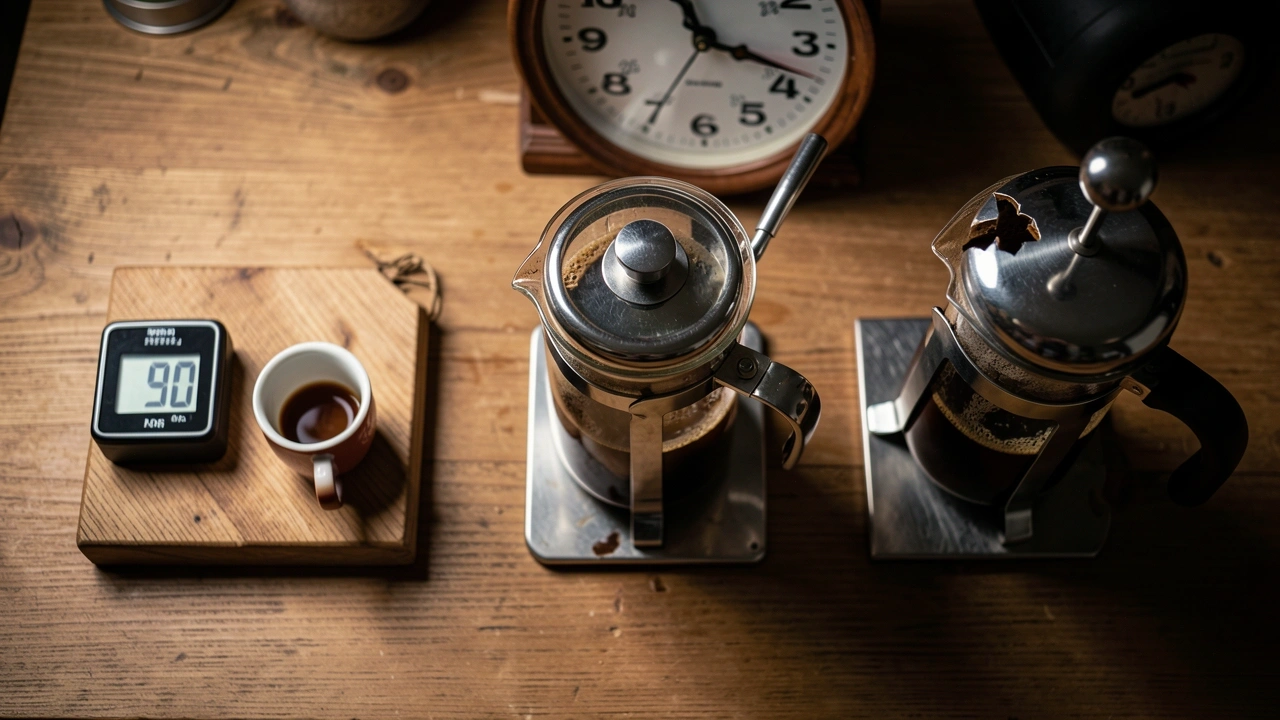
- Clock minutes are short. You have exactly 90 seconds between getting the kids settled and rushing out the door. You need coffee ready by the time you grab your keys.
- Active attention is limited. You can spare two minutes of hands-on time, but those two minutes must be uninterrupted. If the baby cries, you can’t be holding a pour-over kettle.
- Interruptions are guaranteed. You will start making coffee and then have to walk away for five minutes. Your system must tolerate a cold restart or keep the coffee hot while you’re gone.
Identify your dominant constraint. That determines which brew method you should pick.
Don’t listen to someone who swears by a French press if your toddler’s most active minutes overlap with your steeping time.
The clock-chaser’s solution: methods that reward impatience
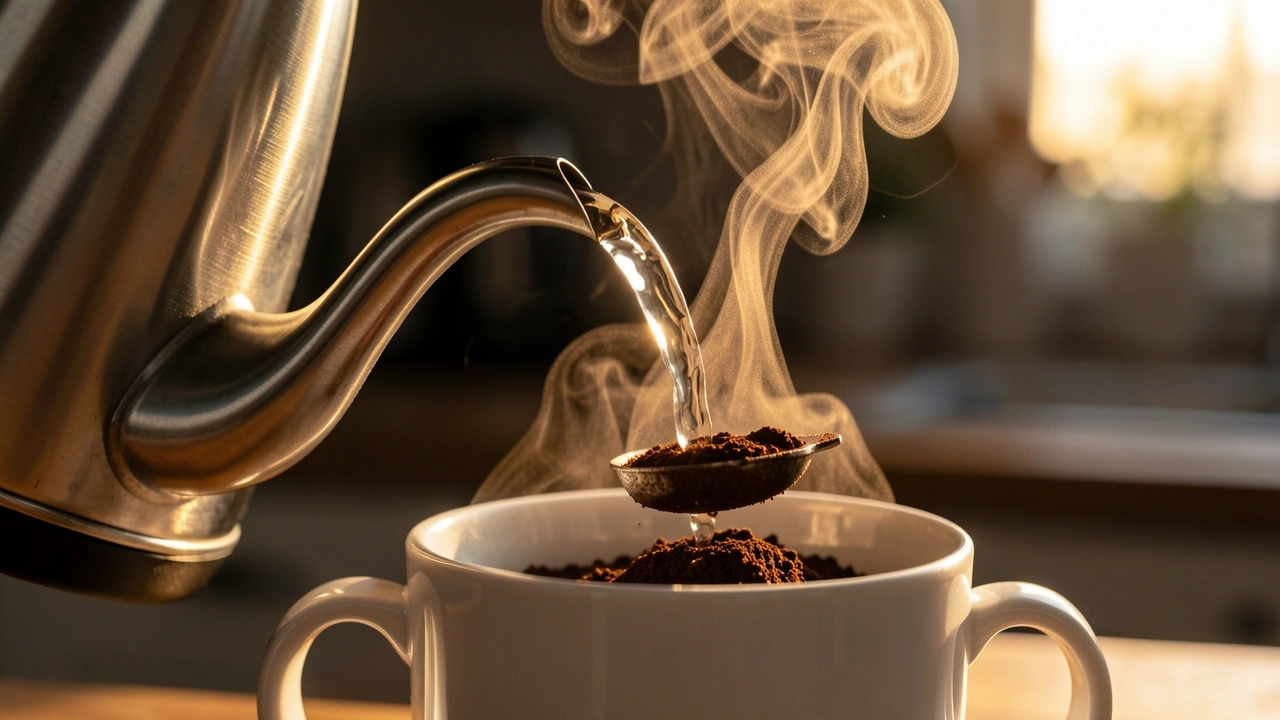
If your main problem is absolute speed—you need coffee in under 90 seconds from thought to sip—then you need methods that prioritize short brew cycles over everything else.
Here’s what I’ve found works.
Instant espresso powder (not classic instant coffee)
There’s a huge difference between the jar of instant coffee your grandma used and modern instant espresso powder.
Brands like Medaglia D’Oro or specialty third-wave instant packets dissolve instantly in hot water and produce a drink that tastes like a proper Americano.
The trick: boil water in an electric kettle (fill it the night before), pour over one teaspoon of powder, stir, and drink. Total time: 30 seconds. No cleanup.
High-pressure pod systems (Nespresso Original, not Keurig)
Keurig machines are fast, but they brew at lower pressure and temperature, which means the coffee often needs time to cool.
Nespresso Original machines pull a real espresso shot in 20 seconds at 190°F, and you can drink it immediately if you add a splash of cold milk or water from a fridge-bottle.
That cuts the “wait to drink” time significantly.
The pre-warmed mug shortcut

Nobody talks about this, but cold mugs steal heat from your coffee. If you pour hot coffee into a cold ceramic mug, you have to wait an extra 15–20 seconds for it to reach drinkable temperature.
Rinse your mug with hot tap water while your coffee brews, or leave a mug on top of the kettle while it heats. That small step shaves real time off the “can I drink this yet” wait.
The distraction-proof routine: systems that survive interruption
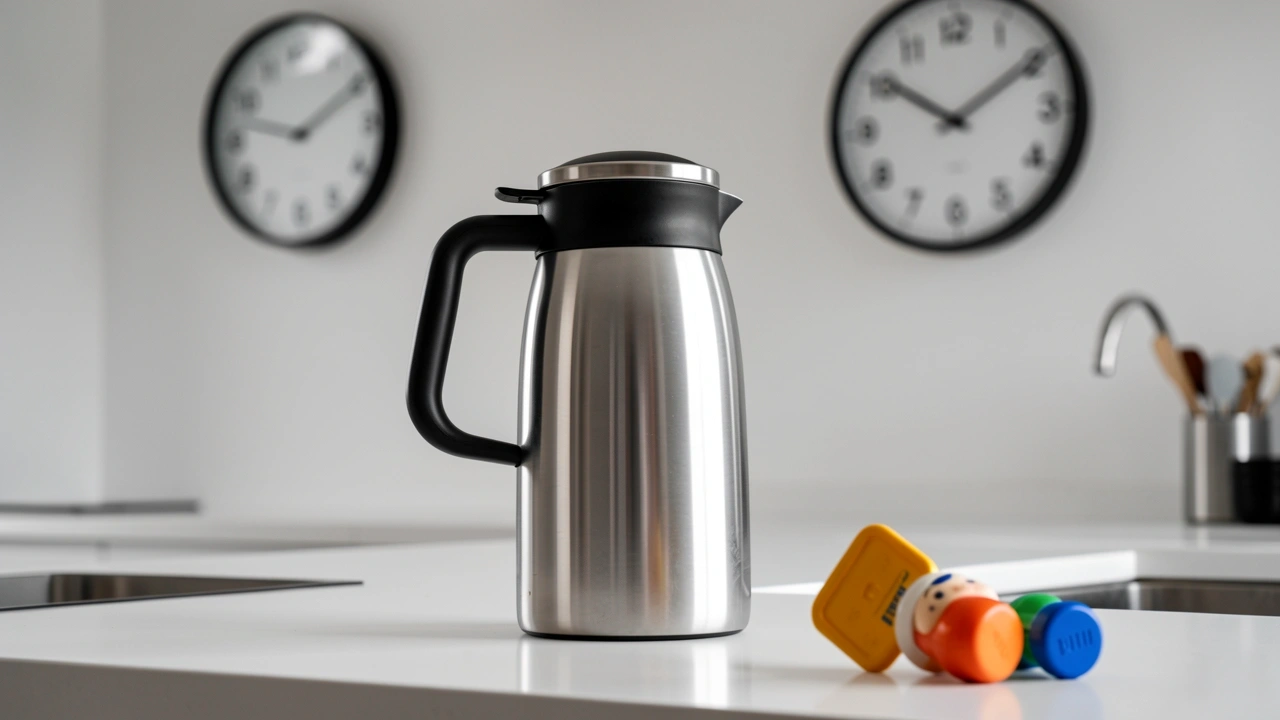
This is for parents who start brewing and then disappear for five minutes. I’ve been there: you press the button, the baby wakes up, you go soothe her, and when you come back the coffee is lukewarm.
You need a system that holds temperature without your attention.
Thermal carafe brewers
Instead of a drip machine with a glass carafe on a hot plate (which scorches coffee if left on), buy a brewer that dispenses into a vacuum-insulated stainless steel carafe.
Brands like Bonavita or Technivorm Moccamaster make models that brew directly into a thermal container. Your coffee stays hot for two hours with zero electricity.
You can brew, walk away for ten minutes, and come back to a perfectly hot cup.
French press with a fabric wrap
A French press is not fast in terms of brew time (four minutes), but it is interruption-proof because you can steep it and then ignore it.
The coffee stays hot inside the glass vessel for about 20 minutes if you wrap it in a towel or use a silicone sleeve. I use this on weekends when the chaos is unpredictable.
I add grounds and hot water, set a timer, and walk away. When I come back, I push the plunger and pour.
Dedicated electric kettle with keep-warm mode
This is my number one recommendation for interruption-prone parents. Fill the kettle at night. In the morning, turn it on.
It reaches boiling and then holds the water at that temperature for up to an hour. No matter what happens—diaper blowout, spilled cereal, lost shoe—the water stays hot.
You can return to your coffee setup and have water ready instantly. No reheating, no waiting.
The two-cup problem: speed optimization for dual-parent households
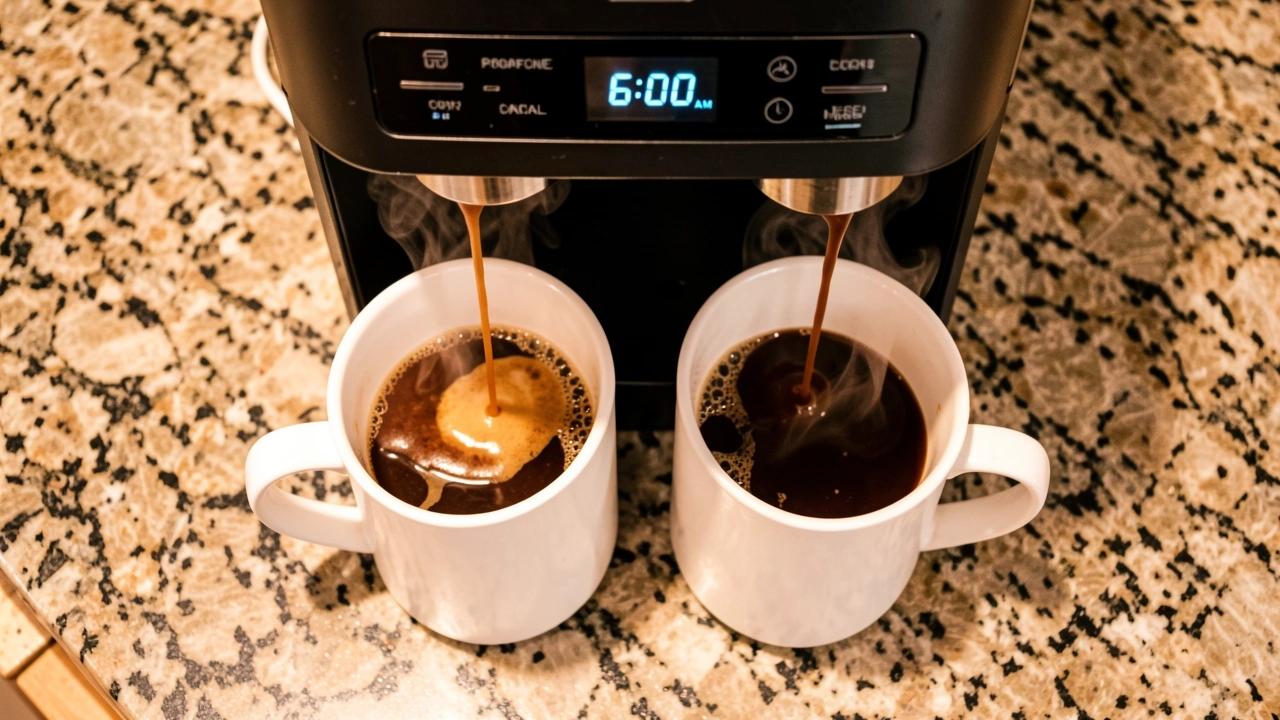
The math changes when you need coffee for two adults.
A single-serve method that takes 30 seconds per cup becomes 60 seconds total, but that only works if you can make both cups consecutively without interruption.
In reality, the second cup often gets delayed. Here’s what I’ve learned to aim for the fastest total throughput.
Programmable 12-cup drip machine
Set the timer the night before. Both parents’ coffee is ready at the same moment in the morning. You pour and go. This method costs the least attention and has the highest throughput.
If you buy a model with a thermal carafe, the coffee stays hot for 90 minutes without electricity, so even if you both drink at different times, it works.
Double-filtration pour-over station
If you want better taste still in under three minutes of total active time, use two pour-over drippers (like Hario V60 or Chemex) placed over two mugs.
Boil water in a gooseneck kettle that holds enough for both. Pour simultaneously, alternating between the two cones. It takes 2 minutes of hands-on time but produces two excellent cups.
I do this when I have a partner helping and we have a quiet window.
The single biggest mistake: micro-brewing for two
Don’t use an AeroPress twice in a row. It’s fast for one cup, but the cleanup and setup between cups doubles your active time.
For two cups, use a method that outputs both at once: drip machine, French press with large capacity, or double-pour-over. The total time from thought to both sipping is lower.
The temperature tolerance tradeoff
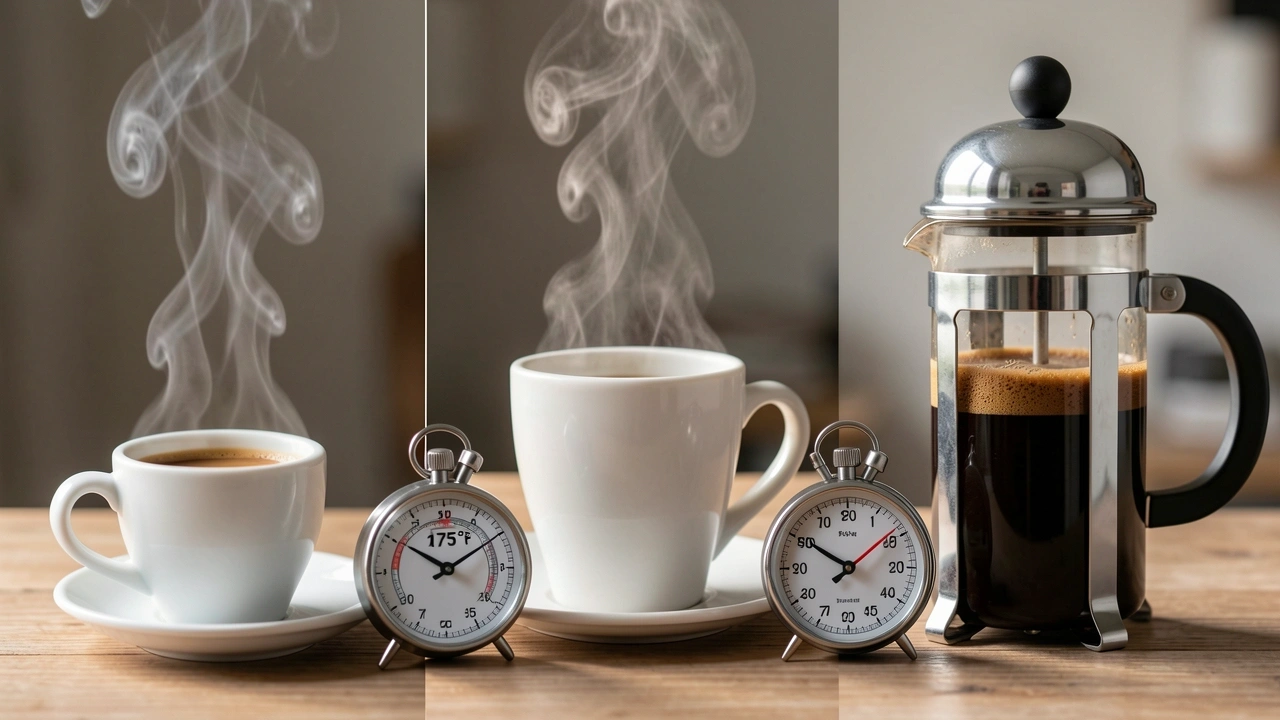
There’s an unspoken truth about fast coffee: the fastest brewing methods often deliver coffee that is either too hot to drink or too cold to enjoy.
As a parent, the time you spend waiting for coffee to cool is just as real as the brew time. Here’s a quick comparison based on my experience.
| Method | Brew time | Drink-ready time | Why |
|---|---|---|---|
| Instant espresso + hot water | 30 seconds | Immediate | Water at ~175°F mixed with cool powder yields ~160°F – sip-ready. |
| Nespresso (original) + cold splash | 20 seconds | Immediate | Shot at ~190°F cooled by fridge milk or water to ~150°F. |
| Drip coffee (glass carafe) | 4 minutes | +3–4 minutes | Coffee exits at ~200°F and must cool in a cold mug. |
| French press (large, thick-walled) | 4 minutes steep | +2 minutes | Glass retains heat; coffee cools slower but still needs time. |
| Thermal carafe drip | 4 minutes brew | +1 minute | The carafe holds heat, but you can pour immediately into a pre-warmed mug for faster drinking. |
For a busy parent, a 190°F coffee that must cool for four minutes is slower than a 160°F coffee that’s drinkable immediately. Choose your method with this in mind.
The real speed hack is removing every decision from the morning
I used to think speed was about seconds. Then I realized that on four hours of sleep, any decision cost me ten seconds of brain freeze. The fastest routine is the one that requires zero thinking.
Here’s my evening anchoring system that takes less than two minutes at night but saves five minutes of fumbling in the morning.
- Measure coffee beans and lock them into the grinder hopper. I use a small glass jar pre-filled with tomorrow’s dose.
- Fill the kettle to a marked water line that matches my desired number of cups. I use a permanent marker on the side.
- Place a mug upside-down on the coffee machine or beside the kettle. That signals “this is the morning mug.”
- Attach the travel mug lid to the thermos or carafe so I don’t have to find it while half-asleep.
- If I’m using a pod machine, I leave a pod in the chamber, lid open so I just need to close it and press the button.
This isn’t about saving 30 seconds of measuring. It’s about eliminating the need to think when your cognitive function is at its worst.
I also keep a backup plan: if everything goes wrong, I can microwave a mug of water for 60 seconds and stir in instant espresso powder. That’s my 60-second failover.
When your coffee plan meets a cracked mug and a crying baby

Every parent knows that no routine survives first contact with the morning. You will have mornings where the grinder jams, the kettle is empty, or the baby needs you before you even start.
I built a tiered contingency plan so I never face the day without caffeine.
Tier 1: minor disruption (you’re interrupted but can return quickly)
Keep a bottle of cold brew concentrate in the fridge. In the summer, pour it over ice. In the winter, add hot water from the tap (not boiling—cold brew is concentrated).
It takes ten seconds and delivers a drink that’s ready immediately.
Tier 2: major disruption (you’re called away for more than five minutes)
Store pre-made iced coffee in a glass bottle in the fridge. This is different from cold brew—it’s brewed double-strength and diluted with milk or water. Grab the bottle, pour, and go.
No waiting, no heating.
Tier 3: catastrophe (you’re out the door with a screaming child and no time)
Keep a few packets of third-wave instant coffee in your diaper bag or work bag. Brands like Swift Cup or Voila offer specialty-grade instant coffee that dissolves instantly in hot or even cold water.
If you’re at a gas station, use their hot water dispenser. If you’re at a friend’s house, use their microwave. It’s not ideal, but it’s coffee, and it’s ready in twenty seconds.
Frequently Asked Questions
Should I just skip coffee and take caffeine pills instead?
Caffeine pills deliver the stimulant within 30 minutes, but they don’t give you the ritual or the warmth. For many parents, the act of holding a hot mug and taking a slow sip is a mental reset.
Also, coffee contains antioxidants and is absorbed differently. I’ve tried pills; I felt alert but grumpy. Coffee wins for both alertness and mood.
If you absolutely cannot make coffee, a pill is better than nothing, but I’d still keep instant espresso as a bridge.
What’s the single purchase that makes the biggest speed impact for under $30?
An electric kettle with a keep-warm function. It costs around $25–$30. Boiling water accounts for 80% of the brew time in most methods.
With a keep-warm kettle, you fill it at night, press a button in the morning, and the water stays hot for up to an hour. That alone transforms any brew method into a one-minute process.
Don’t buy a fancy coffee machine first; buy a good kettle.
Can I brew coffee in less than 60 seconds without buying any equipment?
Yes, but you have to accept the taste trade-off. Heat a mug of water in the microwave for 60 seconds. Check that it’s hot (not boiling—around 175°F is fine).
Stir in one heaping teaspoon of instant espresso powder. Done. The result is a decent Americano.
The reason I don’t recommend this as a baseline is that the microwave can overheat water, creating a burnt flavor. If you’re careful, it works. I use this method in hotel rooms or when visiting family.
How do non-coffee-drinking parents stay alert?
If you don’t like coffee, consider matcha powder (whisked hot water) or a strong black tea like Assam or Irish Breakfast.
Both can be prepared in under a minute and contain caffeine with L-theanine, which gives a smoother alertness.
But this article is about coffee, so I’ll just say: the same interruption-proof principles apply to any hot drink.