Reina
Reina 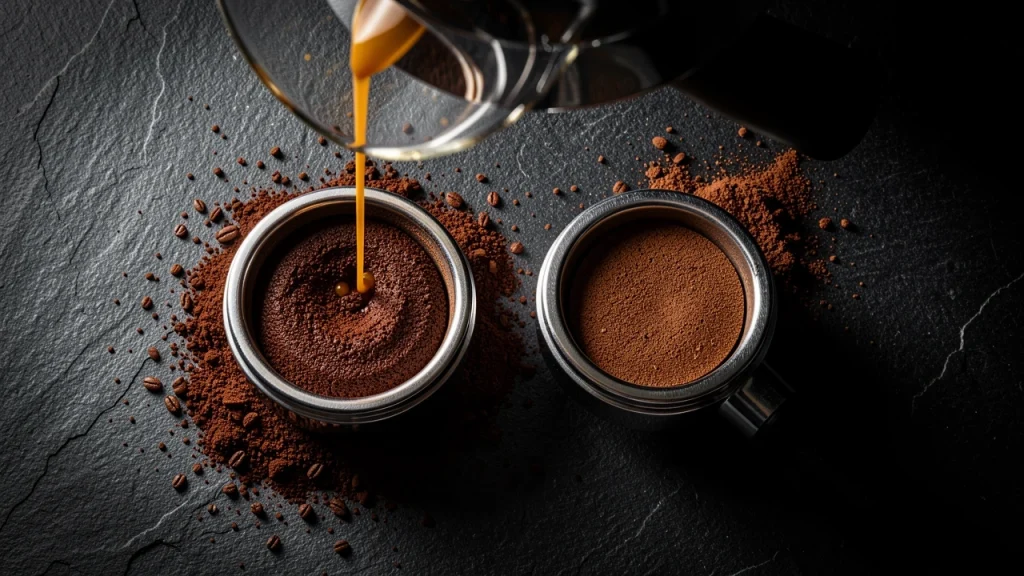
As an Amazon Associate, I may earn a small commission from qualifying purchases at no extra cost to you. This helps me create more valuable, tested content for you.
After years of pulling shots on both sizes, I can say this flat out: the diameter of your portafilter will not make or break your espresso.
The machine you own decides the size you use. The real difference in the cup comes from your grinder, your dose, and your consistency.
I have tested a Breville Barista Pro (54mm) alongside a Rocket R58 (58mm) with the same beans and the same grind setting. The shots were different, but not because of the diameter.
The 54mm basket is deeper, so the puck is thicker.
That changes water contact time a little, but the gap between a mediocre shot and a great one on either size is far wider than the gap between the two sizes themselves.
The Quick Verdict
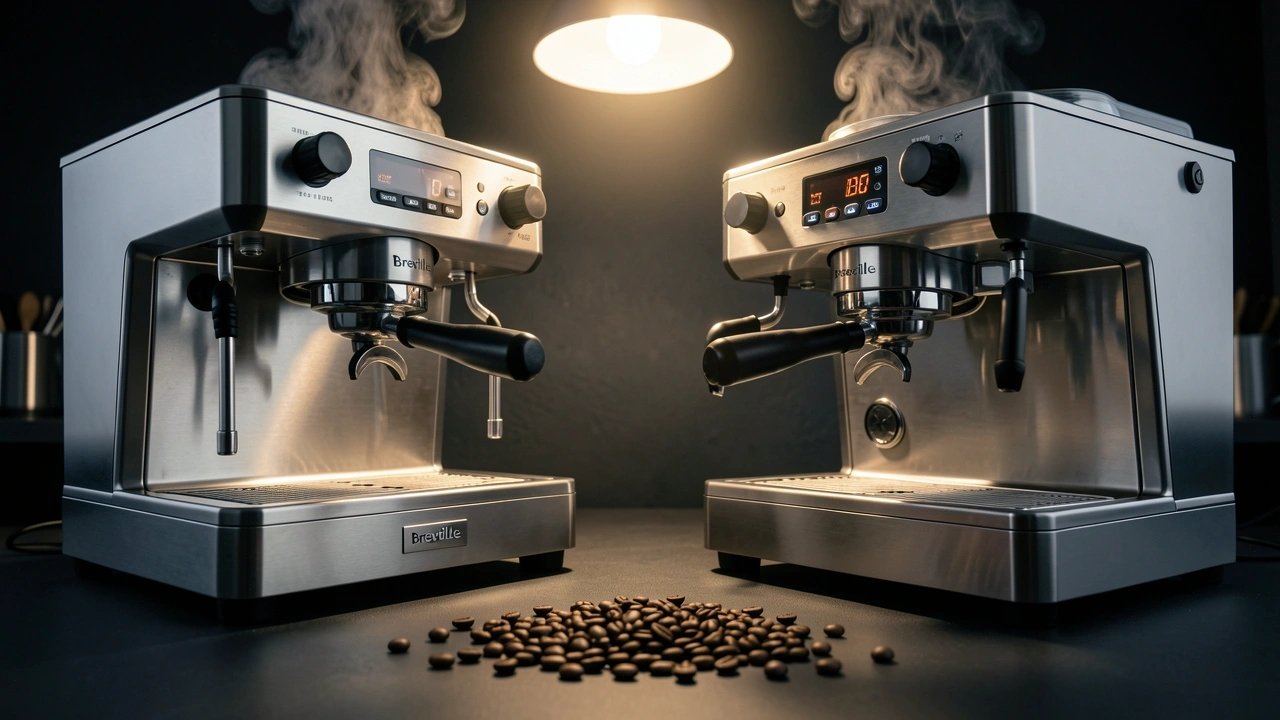
If you already own a machine, the portafilter size is locked in. Breville/Sage machines use 54mm. Most E61-group machines (like those from Rocket, ECM, Profitec) use 58mm.
There are exceptions—La Marzocco Linea Mini uses 54mm, and older Rancilio Silvias use 58mm. But the point is: do not buy a new machine just to switch portafilter sizes.
The money is better spent on a high-quality grinder.
The question “does size matter?” persists because of gear envy and marketing. A larger basket looks more professional. But in reality, both sizes can produce excellent espresso.
A 54mm machine with a great grinder will beat a 58mm machine with a cheap grinder every time.
Why This Question Keeps Coming Up
Walk into any coffee forum and you’ll see threads asking whether 58mm is “better” than 54mm.
The reason is simple: commercial machines almost always use 58mm, so home baristas assume that size is superior.
But that overlooks why commercial shops use 58mm in the first place: consistency across multiple baristas and high throughput, not better flavor.
Home users have different constraints. You make one or two drinks at a time. You can take time to distribute and tamp carefully.
Under these conditions, a 54mm basket isn’t a handicap—it’s just different.
How Diameter and Depth Shape Your Shot
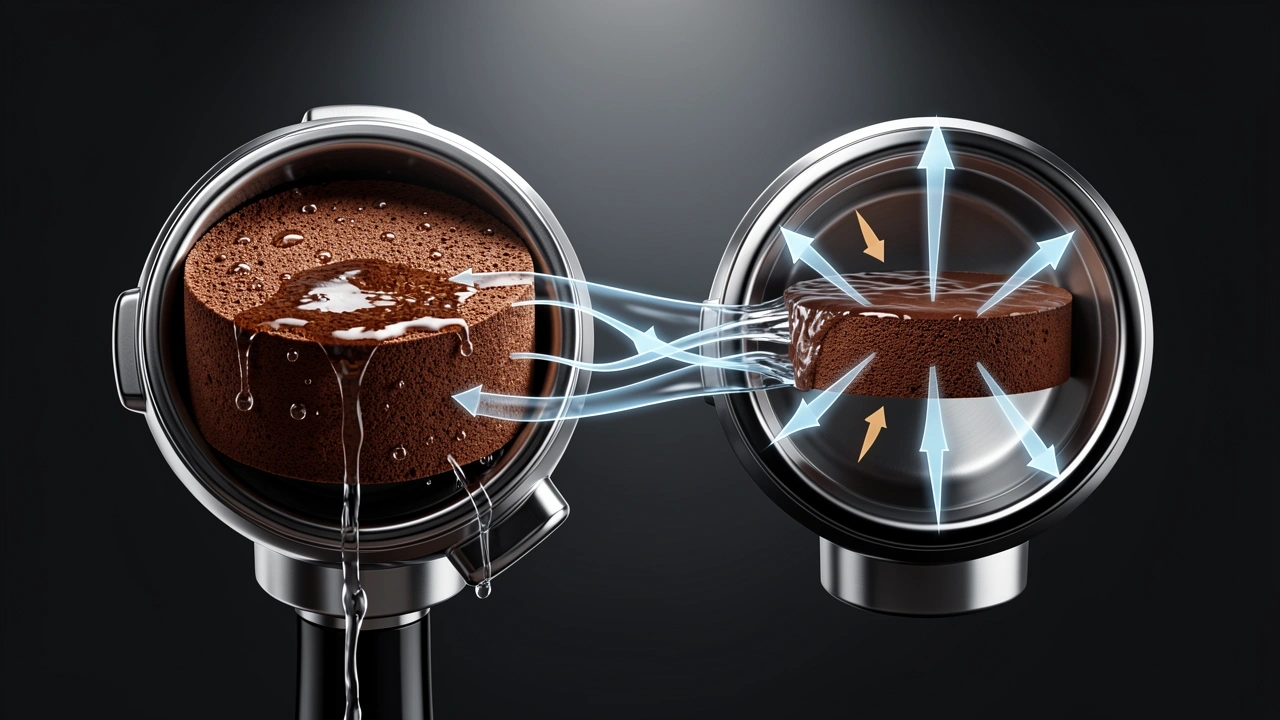
To understand the real difference, you have to look at puck geometry. A 54mm basket is narrower, so it has less surface area. To hold the same dose (say 18 grams), the basket must be deeper.
That means the coffee puck is thicker—more vertical distance for water to travel through.
A 58mm basket has a larger diameter, so the same 18 grams forms a thinner, wider puck. Water flows through it faster because there is less depth.
But the larger surface area also means the water hits more coffee at once, which can reduce channeling.
Here is the key insight: the depth difference changes how water pressure behaves.
In a thick puck (54mm), the water has to push through more coffee, which can increase contact time and potentially extract more flavor from the same grind size—if you adjust correctly.
But it also means that uneven distribution or a poor tamp will cause more issues because the water has to fight through a longer path.
Dalla Corte, a manufacturer that builds prosumer machines, actually prefers 54mm for this reason.
They argue that the extra depth creates a more balanced extraction with less pressure drop across the puck.
I’ve used a Dalla Corte Mina and found that it produces very sweet, clean shots, but that’s also because of its temperature stability and preinfusion—not just the diameter.
For home use, the practical takeaway is this: if you have a 54mm machine, pay extra attention to your distribution technique. The thicker puck punishes uneven dosing more severely.
If you have a 58mm machine, watch your dose height—too much coffee and the water will hit the shower screen before the puck, causing a mushy mess.
Real-world test: same bean, two sizes
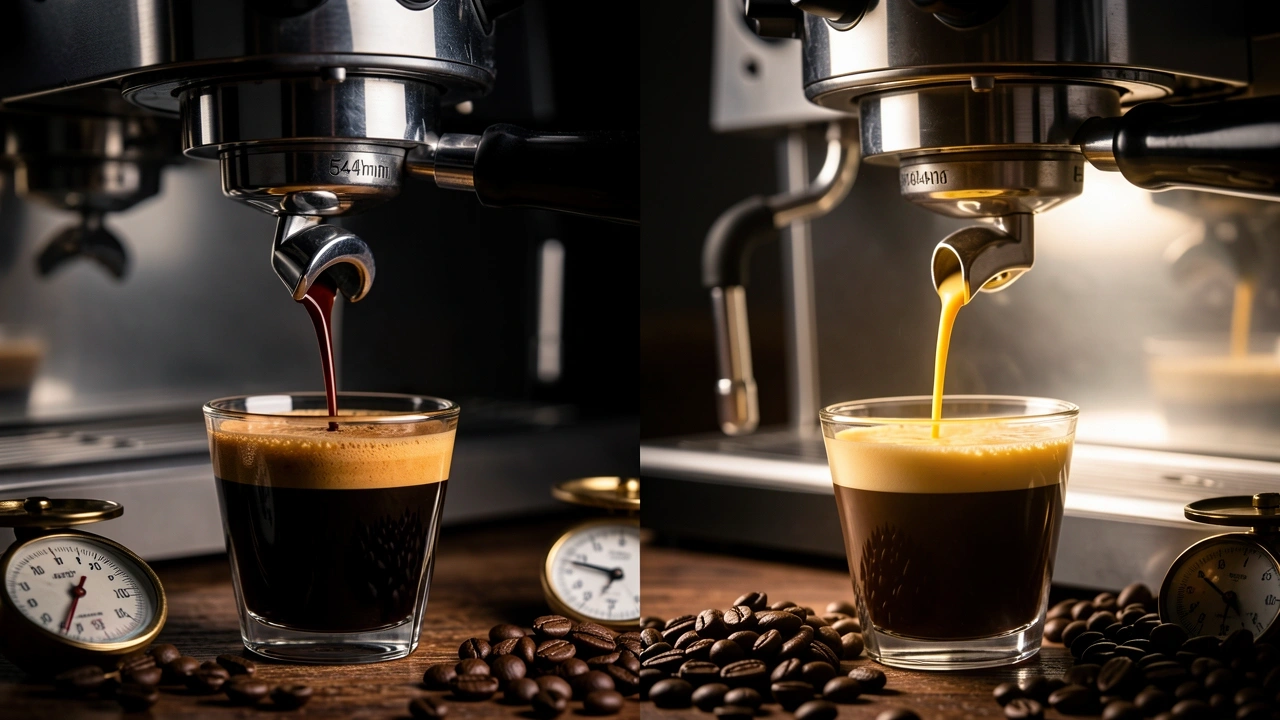
I ran a quick comparison with a natural Ethiopian coffee. I used the same grinder (a Eureka Mignon Specialita) and the same water temperature.
On the 54mm Breville, I dosed 18g and got a shot that ran 30 seconds to 36g yield. On the 58mm Rocket, same dose, same grind setting, the shot ran 28 seconds.
The 54mm shot had slightly more body and a little less clarity; the 58mm shot was brighter. Both were enjoyable.
The difference was far smaller than the variation I get from changing the roast freshness by a week.
Which Size Fits Your Home Setup?
Instead of obsessing over which size is “better,” assess your own situation. Here is a framework I use when people ask me whether they should upgrade from a 54mm machine to a 58mm one.
1. Check your machine brand and model
- 54mm common machines: Breville Barista Pro, Barista Express, Barista Touch Impress, Bambino Plus, La Marzocco Linea Mini, La Marzocco Micra, Dalla Corte Mina.
- 58mm common machines: Rancilio Silvia, Gaggia Classic Pro, E61 group machines (Rocket, ECM, Profitec, Bezzera), Nuova Simonelli Oscar II (has both options).
- Some machines use 51mm (De’Longhi Dedica) or 40–49mm (pressurized portafilters). If you have one of those, the diameter is even smaller and the basket is probably pressurized. That is a different discussion.
2. Evaluate your skill level
If you are a beginner, the size won’t matter at all. Focus on getting a decent grinder and learning how to dial in.
If you are advanced—comfortable with WDT, level tamping, and adjusting dose for yield—then you might notice subtle differences in how the shot behaves.
But even then, the limitations are usually your grinder, not the basket.
3. Consider future upgrades and accessories
58mm aftermarket parts are abundant and often cheaper. Precision baskets, tampers, dosing funnels, and bottomless portafilters are easier to find in 58mm.
The 54mm market has grown (especially because of Breville’s popularity), but premium options like VST or IMS baskets for 54mm cost about the same as 58mm.
The total cost of switching to 58mm—buying a new machine, new accessories, possibly new portafilters—rarely pays off in taste.
I have seen people spend $2,000 to “upgrade” from a Breville to a Profitec, only to struggle because they kept their old grinder.
Example: La Marzocco Linea Mini uses 54mm for a reason
La Marzocco’s home machine deliberately uses 54mm. Why? Because they wanted a smaller group head for temperature stability and a faster heat-up time.
The 54mm group on the Linea Mini is well-engineered—it doesn’t sacrifice shot quality. Anyone who tells you “58mm is always better” has not tasted a well-pulled shot from a Linea Mini.
Optimizing Your Current Portafilter Size
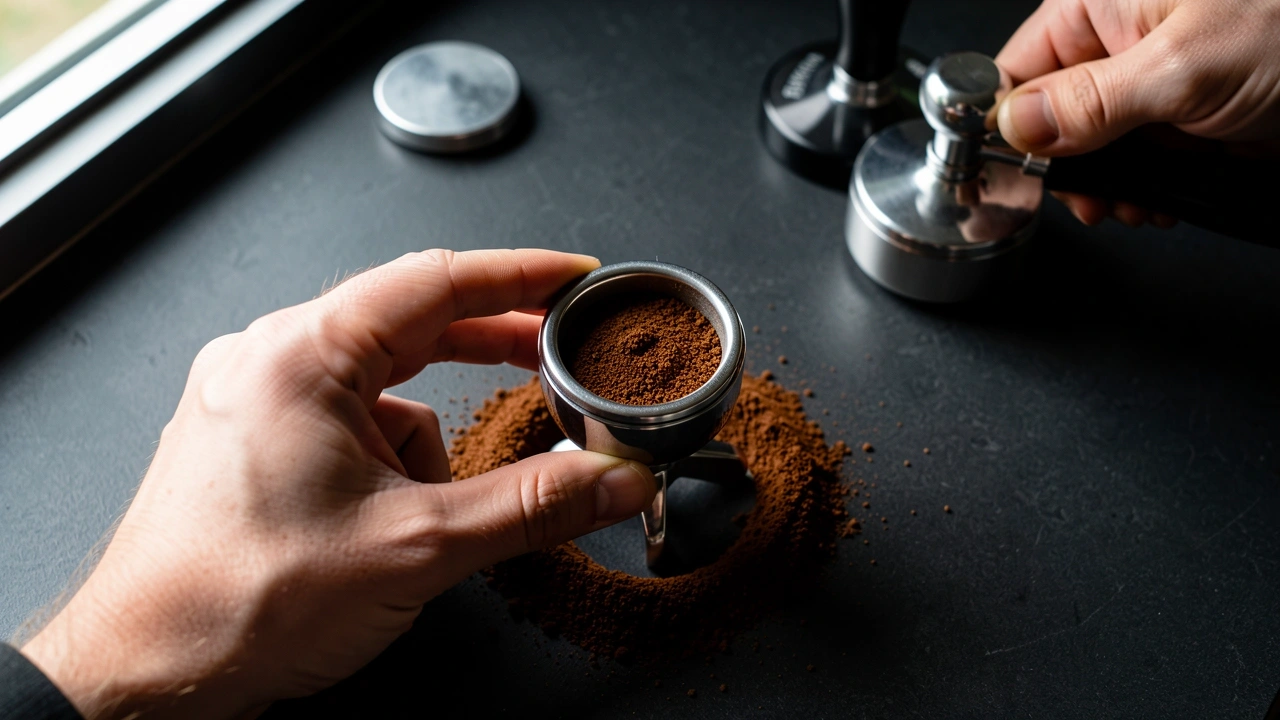
Instead of worrying about which size is superior, learn to get the best from what you have. Here are specific tips for each size.
For 54mm users
- Invest in a proper distribution tool or WDT. Because the puck is thicker, even small clumps cause uneven extraction. I use a simple paperclip WDT tool and it changed my consistency.
- Check your headroom. With 54mm, standard double baskets (18–20g) often leave the puck very close to the shower screen. If you see a dent in the dry puck after pulling, reduce your dose slightly.
- Consider a bottomless portafilter. It reveals channeling instantly. On a 54mm machine, a bottomless is especially useful because the thicker puck masks issues in the cup—you may think the shot tastes fine, but bottomless shows you the truth.
For 58mm users
- Don’t overdose. A 58mm basket can easily hold 20g or more, but many machines have limited headroom. Follow the manufacturer’s recommendation for your basket. I stick with 18g in a standard 58mm IMS basket.
- Experiment with depth. Some 58mm baskets are tapered or have different depths. If you switch baskets (e.g., from a stock to a precision basket), you may need to change dose by 1–2 grams.
- Use a level tamper. The larger surface area of a 58mm basket makes it easier to tamp crooked. A self-leveling tamper or a distribution tool helps.
Myths About Portafilter Size – Busted
Over the years, I have heard several myths repeated so often that they become accepted as fact. Here is the reality.
Myth 1: “58mm always gives more crema.” Crema depends on bean freshness, roast level, and coffee oils, not the diameter of the basket.
A stale coffee won’t produce good crema in either size. I have pulled shots with beautiful crema on a 54mm Breville using fresh, medium-roast beans.
Myth 2: “54mm is only for entry-level machines.” As mentioned, the La Marzocco Linea Mini and Dalla Corte Mina both use 54mm. These are professional-grade machines.
The size is a design choice, not a cost-cutting measure.
Myth 3: “Bigger basket means stronger coffee.” Strength comes from the coffee-to-water ratio, not the basket surface area.
You can make a strong 18g shot in a 54mm basket or a weak 18g shot in a 58mm basket—both will taste the same if your ratio is 1:2.
Myth 4: “58mm extraction is always more even.” It can be, but only if the basket is properly filled and the grind is consistent.
A poorly distributed 58mm basket will still channel. In fact, because the puck is thinner, channeling can happen faster and cause a gusher.
Frequently Asked Questions
Can I use a 58mm portafilter on a 54mm machine?
No, not directly. The group head is sized for a specific diameter. There are adapters for some machines, but they are rare and often compromise fit.
You are better off sticking with the correct size for your machine.
Does basket depth matter more than diameter?
For a given dose, yes. A deep basket (common in 54mm) creates a longer water path and can change flow rate. But the depth is tied to the diameter—you cannot change one without the other.
What matters most is matching your dose to the basket capacity.
What about 51mm or 49mm portafilters?
These are common in budget machines like De’Longhi Dedica (51mm) or some Saeco models (49mm). They are almost always used with pressurized baskets, which limit your ability to dial in.
If you own one, upgrading to a non-pressurized basket in that size can improve shots, but the accessories are harder to find.
Do bottomless portafilters work better on one size?
They work well on both. The benefit is the same: you see channeling and can improve your technique. On a 54mm machine, a bottomless helps you diagnose the thicker puck’s behavior.
On 58mm, it shows if you have distribution problems from the wider basket.
Should I upgrade my Breville 54mm machine to a 58mm machine?
Only if you are also upgrading your grinder and are chasing marginal gains. If your current machine makes espresso you enjoy, keep it.
Spend the money on a better grinder (e.g., a Eureka or DF64) instead. I have helped friends who upgraded from a Breville to a Rocket and kept the same grinder—they saw minimal improvement.
The ones who upgraded their grinder first noticed bigger changes.
How many grams does a 58mm basket hold?
Standard double baskets hold 18–22 grams. Precision baskets (like VST or IMS) have specific ratings: 15g, 18g, 20g, 22g.
The actual dose depends on coffee density (light roasts take more volume, dark roasts less). Always weigh your dose.