Reina
Reina 
As an Amazon Associate, I may earn a small commission from qualifying purchases at no extra cost to you. This helps me create more valuable, tested content for you.
I have been down this road myself. You set up your machine, hit the brew button, and wait. Then the water trickles out, tepid. Or worse, nothing at all. That moment of panic is real.
But the fix is often simpler than you think. The most common cause of a coffee machine that won’t heat water is a tripped thermal safety switch.
This happens because the boiler ran dry or scale built up on the heating element. Let me walk you through exactly what to check, in the order that gets you back to hot coffee fastest.
Before You Tear It Apart: The Dry Boiler Rule
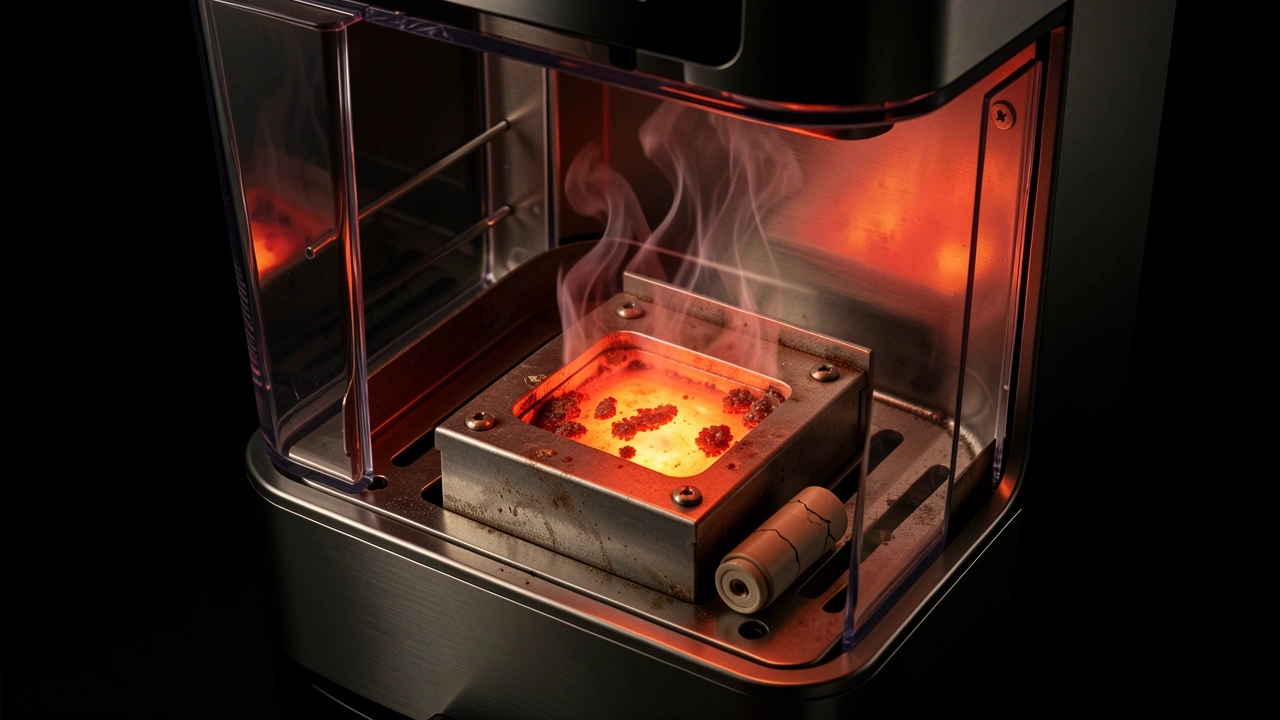
This is the number one reason for sudden death in a coffee maker. I have done this myself, and it is humiliating. You forget to fill the water tank, or you run a cleaning cycle and the tank runs empty.
When you hit the power button with no water in the boiler, the heating element gets red-hot in seconds. A small safety part called the thermal fuse blows. It is a one-time, non-resettable fuse.
Once it blows, the machine is bricked electrically. No lights, no pump, nothing.
Before you do anything else, stop. Is your water reservoir actually full? Not half full. Completely full. If it is, and the machine is dead (no lights, no sounds), the thermal fuse is blown.
Replacing that fuse is tricky on most modern machines because it is buried inside. But first, try an unplug for ten full minutes. Let the control board reboot.
Some machines have a software reset that clears a dry-boiler error. If it stays dead after ten minutes, the fuse is gone.
The Three Main Reasons Your Coffee Machine Water Is Cold
If your machine still lights up but the water comes out cold or barely warm, the problem is not a blown thermal fuse. It is one of these three things. Here is how to test each one without a multimeter.
Reason 1: The Thermal Fuse Is Blown (The Sudden Death Failure)
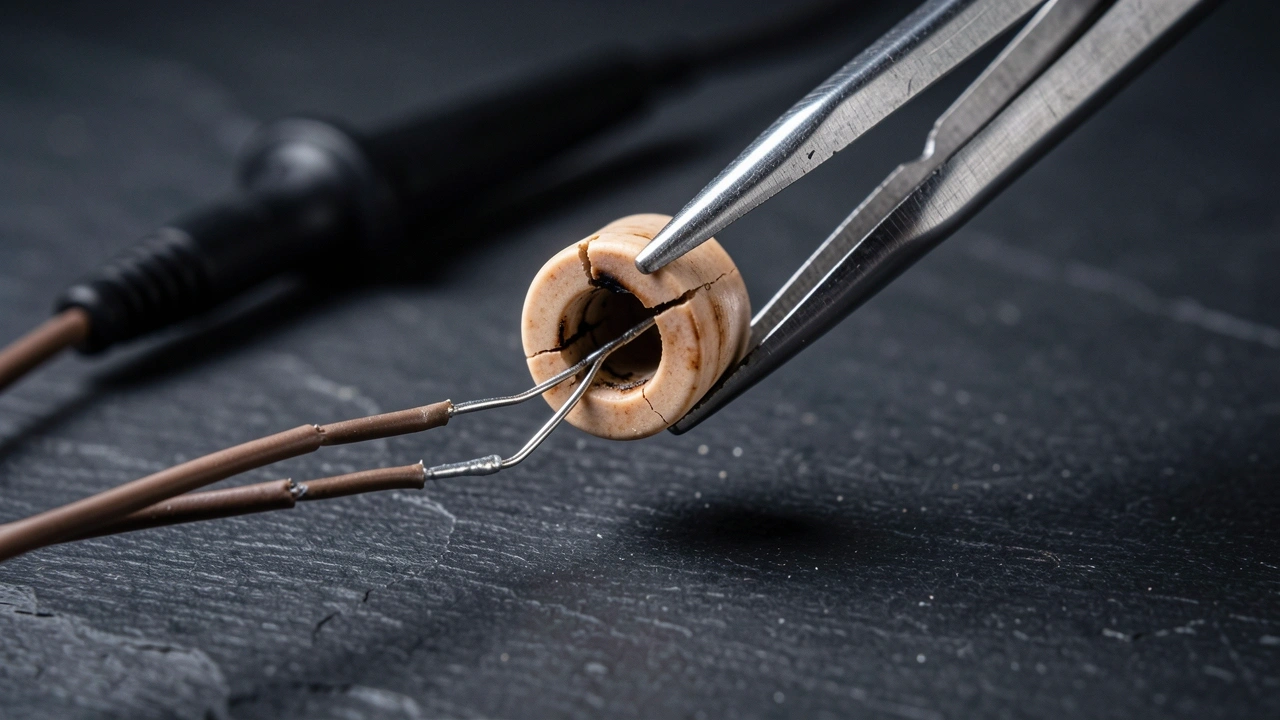
This is what I described above. The machine is completely dark. No buttons light. No pump sound. Nothing. The thermal fuse sits right on the heating element.
It is designed to melt at around 250°F (121°C) if the element dries out. Once it melts, the heating element is disconnected.
You cannot test this without physically getting inside and seeing the fuse barrel. If you own a multimeter, you can check for continuity across the fuse wires.
If the multimeter shows infinite resistance, the fuse is blown. The fix is to replace the fuse (solder in a new one).
If you do not do electronics, it is often cheaper to buy a new machine than to pay for labor. I know that is not what you want to hear, but it is the truth.
However, try the unplug trick first (ten minutes). Some coffee makers use a resetable thermal switch that you can reset by unplugging.
Reason 2: The Thermostat Sensor Drifted (The Lukewarm Water Failure)
This is a sneaky one. I once spent a full afternoon cleaning a machine, convinced the element was broken. The water came out hot but not hot enough.
The machine was turning on, pump worked, but the water was around 160°F, not 195°F. What happened was the NTC thermistor that reads the water temperature drifted over years.
The sensor told the control board: “Water is at 200°F, stop heating.” But the water was actually 150°F. So the machine stopped heating early.
Here is the test: brew a full cup of water (no coffee in the basket) and put an instant-read food thermometer into the stream. If it reads below 190°F, you need a new thermistor.
You can sometimes unplug the thermistor inside the machine, which forces the heater to run continuously (dangerous, but shows the heater works). A replacement thermistor costs about $15 online.
Look for the small, two-wire probe clamped to the boiler.
Reason 3: The Pump Is Silent (The No Flow Trap)
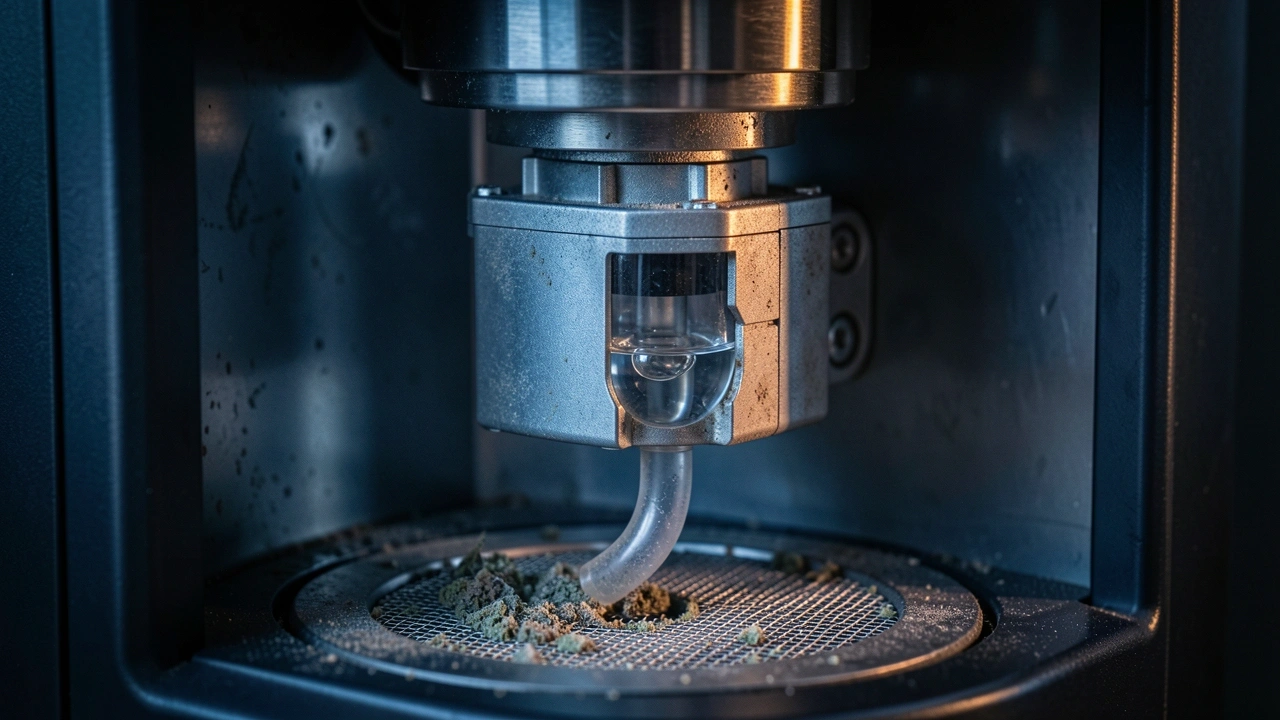
This one is a cruel trick. Your machine turns on. Buttons blink. But no water comes out. It might make a faint humming, but no flow. It seems like the heater is broken.
But actually, many machines have a safety interlock: if the pump does not push water, the heater is disabled on purpose. A silent pump almost never means the heater is bad.
It means the pump is stuck or an inlet is blocked. First, check the water outlet screen inside the reservoir. Flip the tank over and look at the bottom. That tiny plastic mesh.
Clean it with a toothpick. Also look for an airlock: after a cleaning cycle, sometimes air fills the pump and prevents flow. The fix: turn the machine upside down for a few seconds while plugged.
Then power on and brew. The slapping trick from the iFixit comments actually works because it dislodges stuck pump impellers or breaks the airlock. I have done it.
Slap the bottom hard three times and try again. It is not just luck; it jostles the mechanical pump.
The Descaling Paradox: Why Fixing Scale Can Kill Your Heating Element
This is the part nobody explains well. You think descaling will fix the problem. But I have seen descaling break a machine permanently. Here is the physics.
Calcium and mineral buildup form a thick, insulating layer on the heating element. This coating insulates the element, meaning the heat cannot transfer into the water fast enough.
So the element gets hotter and hotter. On the outside, the water is only lukewarm. But the element inside can reach temperatures high enough to melt the solder and blow the thermal fuse.
You try a descaling cycle, and the descaler dissolves the scale. When that happens, the fused metal separates, and the heater opens up like a broken wire.
The machine runs, you hear a pop, and it is dead. The symptom is this: machine runs, water flows but is lukewarm for a week, and then suddenly no water heat at all.
If this is happening to you, check if any burnt smell comes from the machine. If yes, the heating element is physically damaged. This is not a fixable problem for most home users.
The element is inside the boiler and not soldered to replace at a reasonable cost. You need a new machine. The lesson: descale your coffee maker before scale builds up to that point.
Descale once every three months, not after a year.
When the Machine Is Tricked: The False Heater Failure
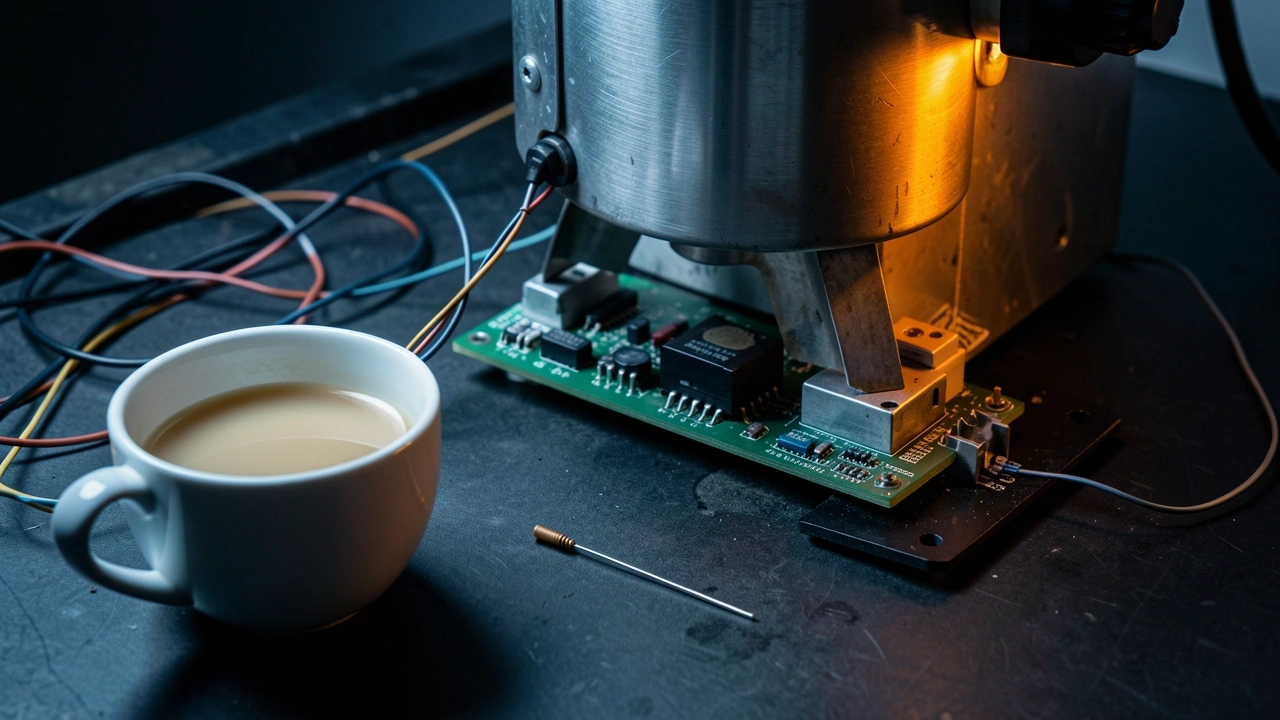
I already mentioned this under Reason 2, but it deserves its own heading because it is so invisible. Your machine might sound perfect—some present no signs of trouble.
The water flows, the brewing cycle is normal, but the final cup is cold. The machine believes it is hot enough. The NTC sensor drifts, and the machine stops sending power to the heater too early.
You can test this without any special tools. Brew an empty cup (no coffee) with the maker running. Let it go through the full cycle. Open the lid and lightly touch the water coming out.
If it is just barely warm, the thermistor is bad. I know someone who replaced a perfectly good heating element because of this, and I felt terrible. The thermistor is a cheap part.
You can buy a universal 10K ohm thermistor online for $5. Just match the part number. You can also unplug the machine, open the top, but not unplug the thermistor from the control board.
Then plug in and try to brew. The machine will go into a constant-full-power mode (the heater stays on until the boiler overheats). You will feel the boiler get hot fast. If it does, the element works.
Then you know the thermistor is to blame. But be careful: unplug it immediately; don’t let it run more than thirty seconds.
Frequently Asked Questions
Can I bypass the thermal fuse to test the heater?
Yes, but it is extremely dangerous. By bypassing the fuse, you remove the only protection against dry boil. If the heating element is dead, bypassing the fuse will not make water hot.
It will just put power to the element with no safety cutout. If you accidentally turn the machine on with an empty tank (no water), the element will melt exactly.
If you braise it correctly, do the test for a few seconds only, then reconnect the fuse. I do not recommend it. A better test is to check the resistance of the heating element directly.
If it reads near zero ohms, it likely works.
My machine works fine but stops heating after one cup. Why?
This is almost always a failing water level sensor or a stuck float. Many machines have a float switch inside the water reservoir or inside the boiler itself.
When the water level drops below the detection point, the heater is disabled. If the sensor is sticking (due to scale), it thinks the water is too low in the middle of a brew.
Then the heater fails off, and you get one hot cup then cold water. Clean the float sensor area with a wet descaler solution. Lift and drop the float manually to see if it moves freely.
Why does my machine heat water but not brew? The pump runs but no steam.
This is not a heating issue. The heater is working if water is hot. The problem is a clogged filter basket, a stuck check valve, or a damaged pump.
The pump pushes water into the boiler, but the check valve at the boiler exit is stuck, or the solenoid valve is not opening. Run the machine with no coffee basket and press the brew button.
If water trickles out from under the machine or the back cover, you have a leak. If no water comes out, the pump is bypassing power. Check the exhaust tube for kinks.
This is a separate repair, specific to your model.
Does a burnt plastic smell mean the heating element is fried?
Yes, that smell is not good. It usually means a gasket or a seal around the heating element has melted. This happens when water leaks into the electronics part.
The water can cause a short that overheats the element. You are smelling molten plastic or melted wire insulation. Unplug the machine immediately.
A tiny amount of burnt smell can sometimes be cleaned out. A strong acrid smell means the electrics are damaged. This machine is beyond safe use. Replace it rather than risk a fire.