Reina
Reina 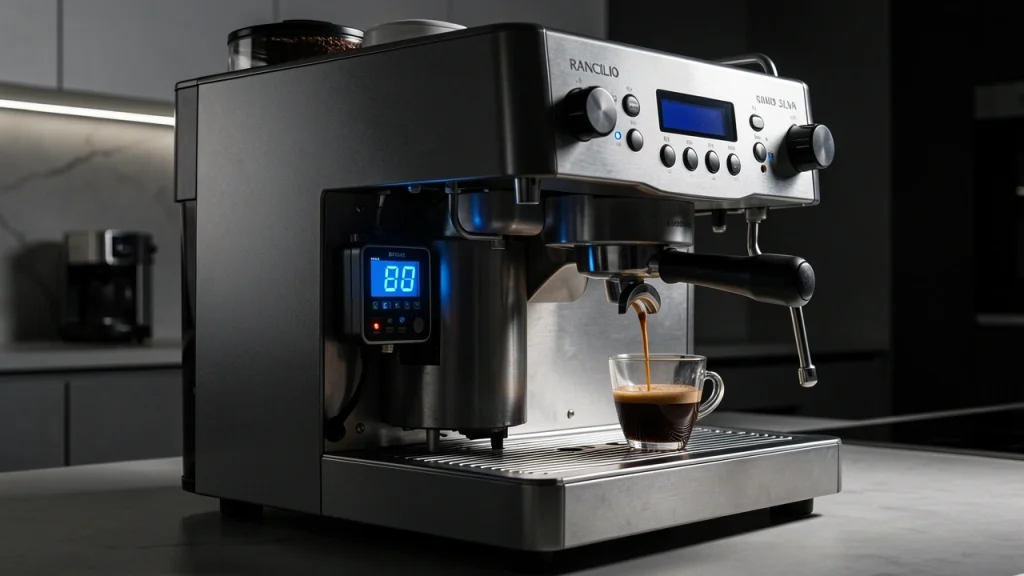
As an Amazon Associate, I may earn a small commission from qualifying purchases at no extra cost to you. This helps me create more valuable, tested content for you.
You pull a shot. The first few drops hit your cup tasting sharp and sour. By the time the stream thins to blonde, the flavor has turned that muddled, ashy bitterness.
You did everything right with the grind and tamp. The problem is not you. It is your espresso machine fighting itself.
Watching the temperature on a standard machine is like watching a wave. The heater fires until the boiler hits the target, then it shuts off. The temperature drifts down. The heater kicks back on.
The wave crests and falls. The shot you pull hits the wave at a different point every time.
PID—proportional-integral-derivative—controller smooths that wave into a flat line.
Whether you need it depends on three things: what machine you own, what coffee you drink, and how much you like guessing.
Why an Espresso Machine Is Fighting Itself Without a PID
In nearly every home espresso machine under a thousand dollars, temperature is controlled by a bimetal thermostat. This is older technology.
When it reaches temperature, it breaks the electrical circuit, the heater turns off as the temperature rises a few more degrees.
Then, as the boiler cools below a set point, the thermostat makes contact again and the heater restarts.
On a Rancilio Silvia – which I can use as an example because I own one – the standard thermostat setpoint is about 230°F inside the boiler, but the heater turns off when it hits that mark.
The spring delay on a Rancilio Silvia boilerplate can push it another 10°F past the standard boiler, even after power has been cut to the heating element.
This seesaw means the actual boiler temperature while I am pulling a shot can swing between 195°F and 220°F in the space of a minute.
Why does that swing matter? At 198°F, coffee extracts slowly, leaving behind acids that taste sour.
At 204°F the extraction rate speeds up – you get bitter compounds and harsh burnt flavors from overextracted coffee coffee grounds.
A shot that starts at 198 F and ends near the 205°F range is a two-flavor cup in the same volume of water. The first taste right, the second does not.
You have no shot-dose control of the wave, only the routine of the temperature-surfing process.
Temperature surfing is the workaround. You wait, you flush, you wait again. You put the shot into the machine at the exact moment the heater clicks off. It can help, but it is not reliable.
It compensates for a mechanical limitation.
The real fix is not a better thermostat. It is a system that predicts where the temperature is heading and adjusts charge before the change happens. That is what the PID does.
What a PID Controller Actually Does
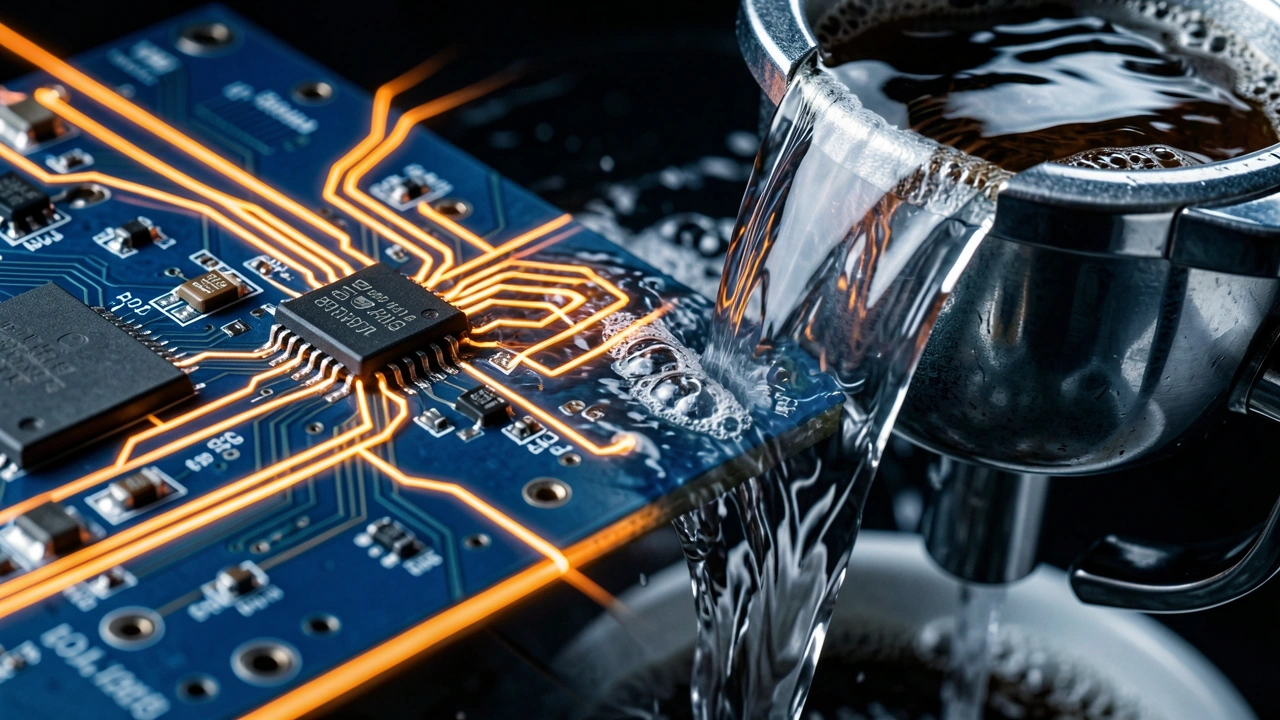
PID stands for proportional, integral, derivative. They are three mathematical rules the controller uses to keep temperature exactly where you want it.
Proportional. The PID measures how far away the boiler is from the temperature you set.
If the boiler is 50 degrees cold, the controller pushes maximum power for electricity to the element. As it gets closer, it reduces energy so it does not overshoot.
Integral. A proportional system alone can leave a small drift, a fraction of a degree from what you want.
The integral term watches for that slight gap over time and gives tiny corrections to eliminate it.
Derivative. This is where the PID predicts. If the temperature is rising quickly because you just pulled a shot, the controller sees the momentum and cuts incoming power a small amount to prevent slam.
The waterfall analogy is simple: a thermostat sees a problem after it happens and reacts slowly. The PID sees a problem about to happen and reacts before it does.
This all sounds more complex than it is in consumer use. In most machines the PID is on a small digital box. You press a button to set a number.
The box does the math and cycles your heater hundreds of times per second. That changes the extreme ten-degree swing into a measured two degrees variation.
How PID Changes the Taste of Coffee by Roast Type
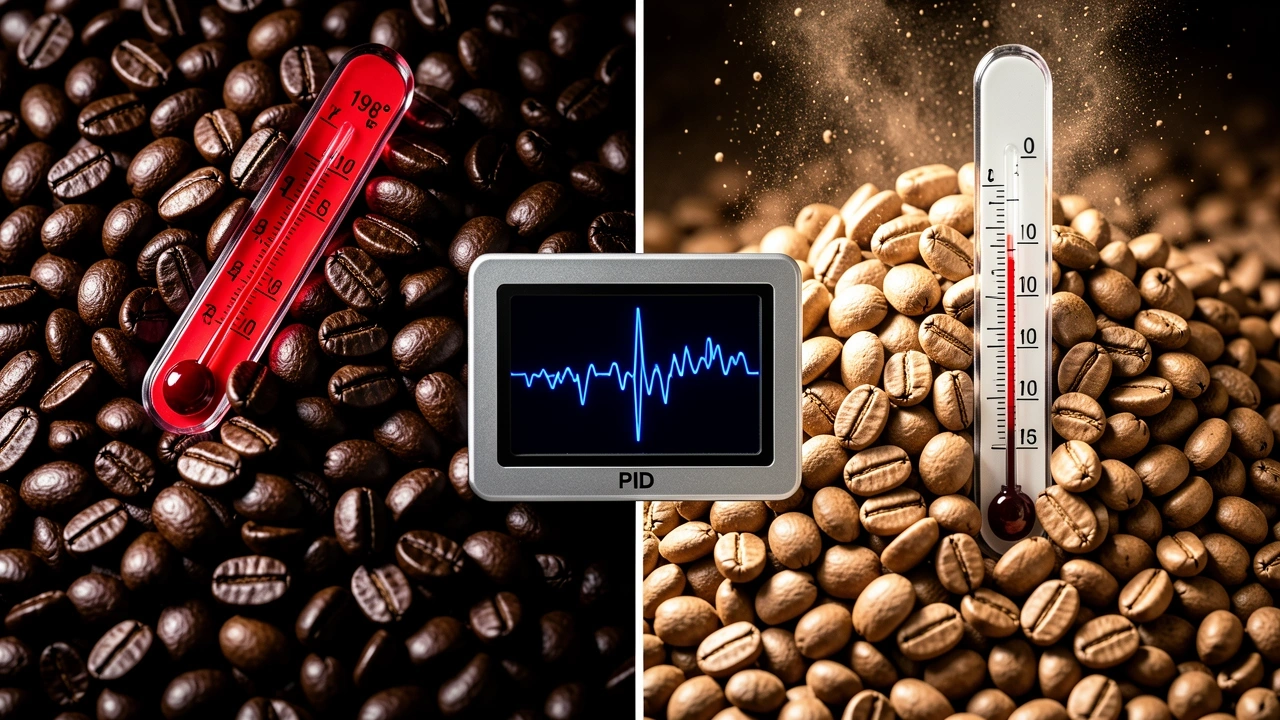
Different roast levels need different brew temperatures. Dark roasts – those beans with visible patches of oil on them – extract easily. They need cooler water, usually 195°F to 200°F.
A lower temperature keeps a balanced bitter-free shot. Light roasts are hard and dense. They need the 202°F to 206°F range to push enough extraction through the bean for flavor
Without PID, you cannot change the temperature without waiting for the boiler to stabilize at a new point. The thermostat does not give you a readout. You flush, wait, guess, correct the guess.
This is fine if you always drink one batch of beans, but the variation between a light Ethiopian bean and a dark Sumatran bean requires a different range.
PID gives you a direct ability to adjust. You press up or down based on what the roast needs. But the deeper truth is only important if you want to chase nuance.
A dark roast drinker who uses milk and syrups will not find a difference between 198F and 202F. The sweetener and milk mask it.
If you drink coffee black and single-origin, the variable of temperature matters much.
PID Does Not Work the Same on Every Machine Architecture
Single Boiler Machines: The Best Upgrade
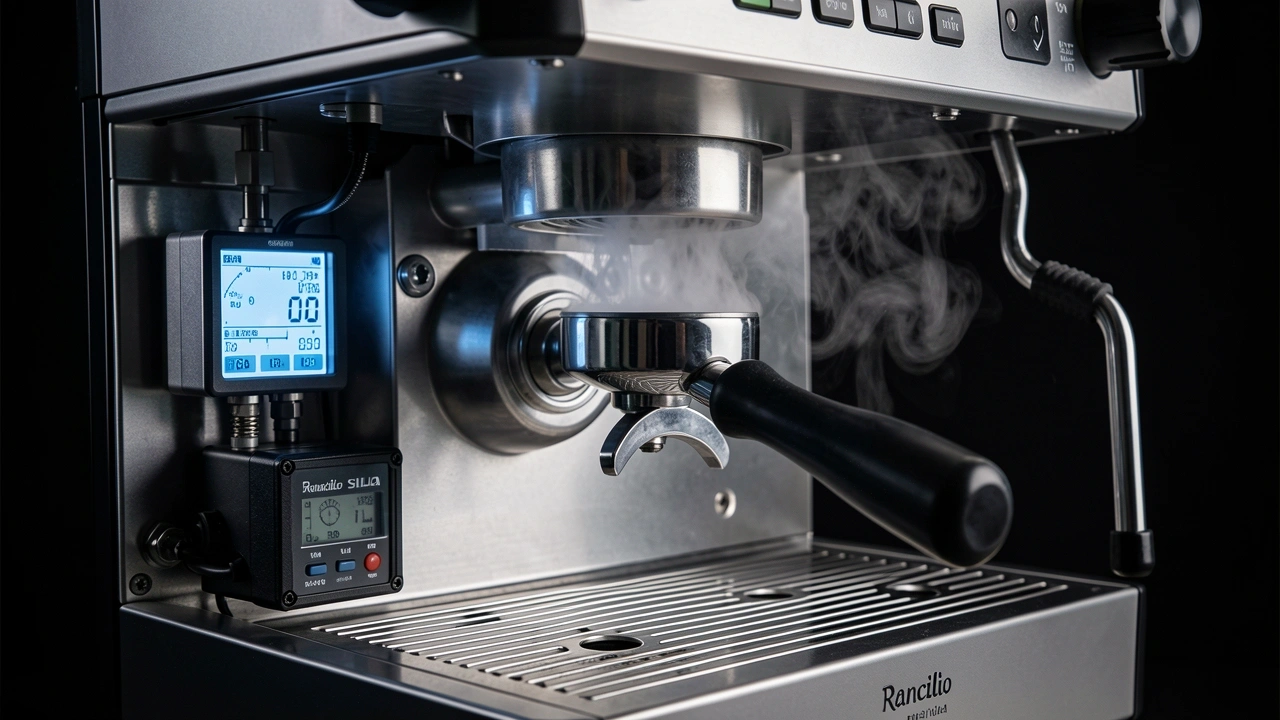
On machines like the Rancilio Silvia or Gaggia Classic, there is one boilerplate that does both the brewing and the steaming. The machine cannot do both at the same time.
All the time the steamer is turned on, the temperature rises to 260 degrees. To brew, the boilerplate must be returned to about 200F.
PID in a single boiler machine excels at holding the brew temperature rock-steady when you are in espresso here. It removed the need to wait for the exact moment to flush.
If your machine is in the boilerplate brew range, the PID holds it there with a standard deviation of about one degree. Steaming still requires the boilerplate temperature to rise though.
W PID does not make the change from brewing to steam any faster. It only stabilizes the set when you get there.
Heat Exchangers (HX) PID is more often a marginal benefit
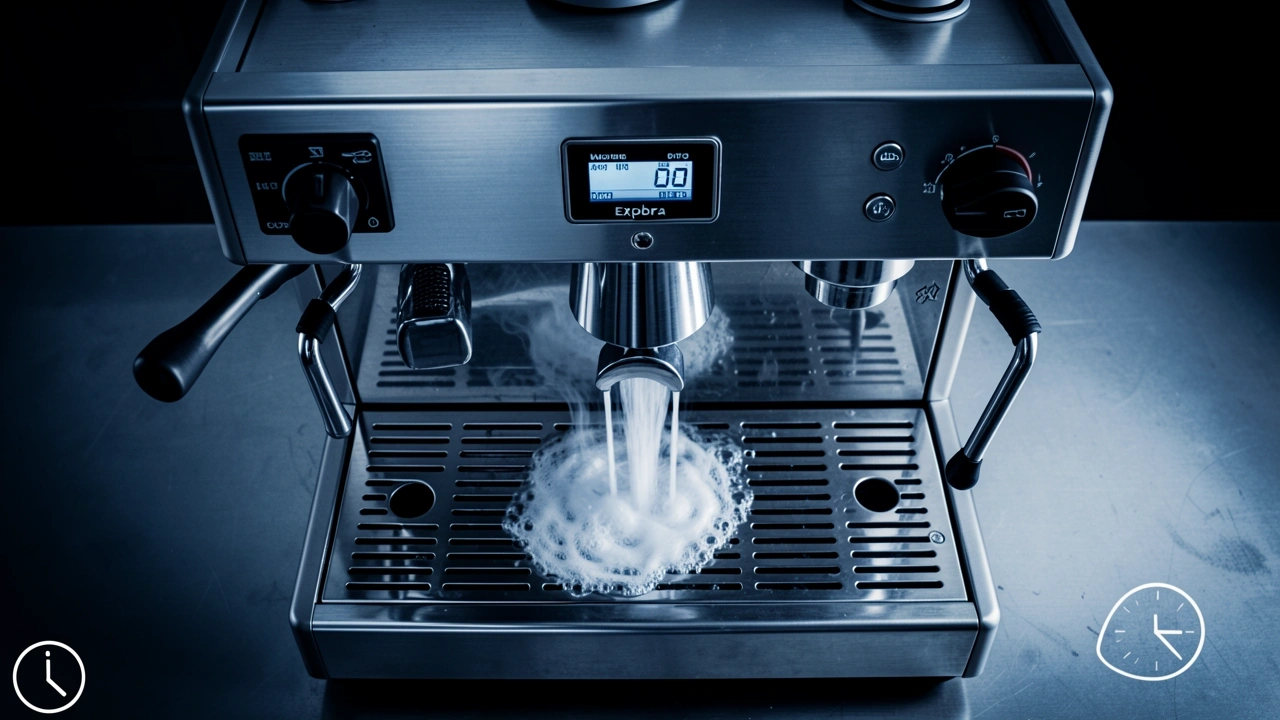
Heat exchanger machines are different. A steam boiler heats the water. When you brew, cold water from the tank passes through a copper tube inside the steam boiler.
It gets hot, but the brew water never stays in a dedicated boiler. It is essential at the group head.
Because of this, the PID on an HX machine does not directly control your brew temperature when water is flowing. The PID controls the steam boiler temperature and maintains stability there.
But the brew the water temperature is also controlled by flushing: you run water through the group head to cool the pauses of piping to the correct range for the shot.
Without proper flushing, the HX machine deliver far too hot water for extraction.
I own an Expobar, which is a heat exchange. Adding a PID was disappointing. It made the steam pressure more consistent, but I still had to flush and pause before brewing a shot.
The PID does not eliminate the gap between the steam boiler temperature and the brew group’s temperature. If you have a HX, buy the flush routine, not the PID.
An important exception: some modern HX machines, like the Leleth Mara X, use PID logic to automatically prioritize brew temperature over steam pressure.
It these machines do not wear the same flush pattern as classic HX models. But if you install a retro-fit PID on a standard HX system, the results remain unchanged.
Double Boilers PID is Standard Equipment
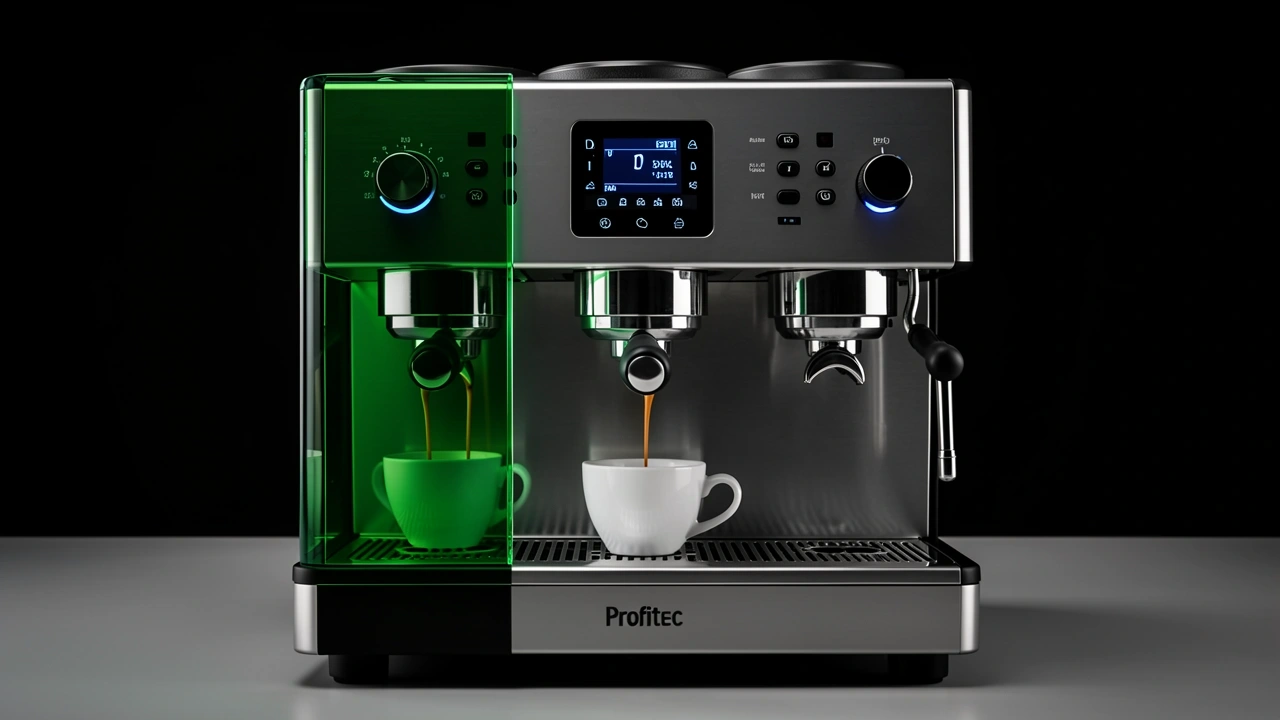
Double boiler machines include separate boilers for brew and steam. The brew boiler is small, usually 300-500 ml of water. The steam boiler sits at a higher temp for milk.
Because the PID only controls the brew boiler temperature there are minimal fluctuations.
In these aficionado machines like the Profitec Pro 700, the La Marzocco GS3, or the Rocket R58, the PID is built in from the factory. You will not find a high-end double boiler without PID.
Asking if you need it a double boiler is like asking if you need to set the temperature at this point. The main question will be whether you need double boiler or not. If you do, you have PID.
What PID Does Not Fix
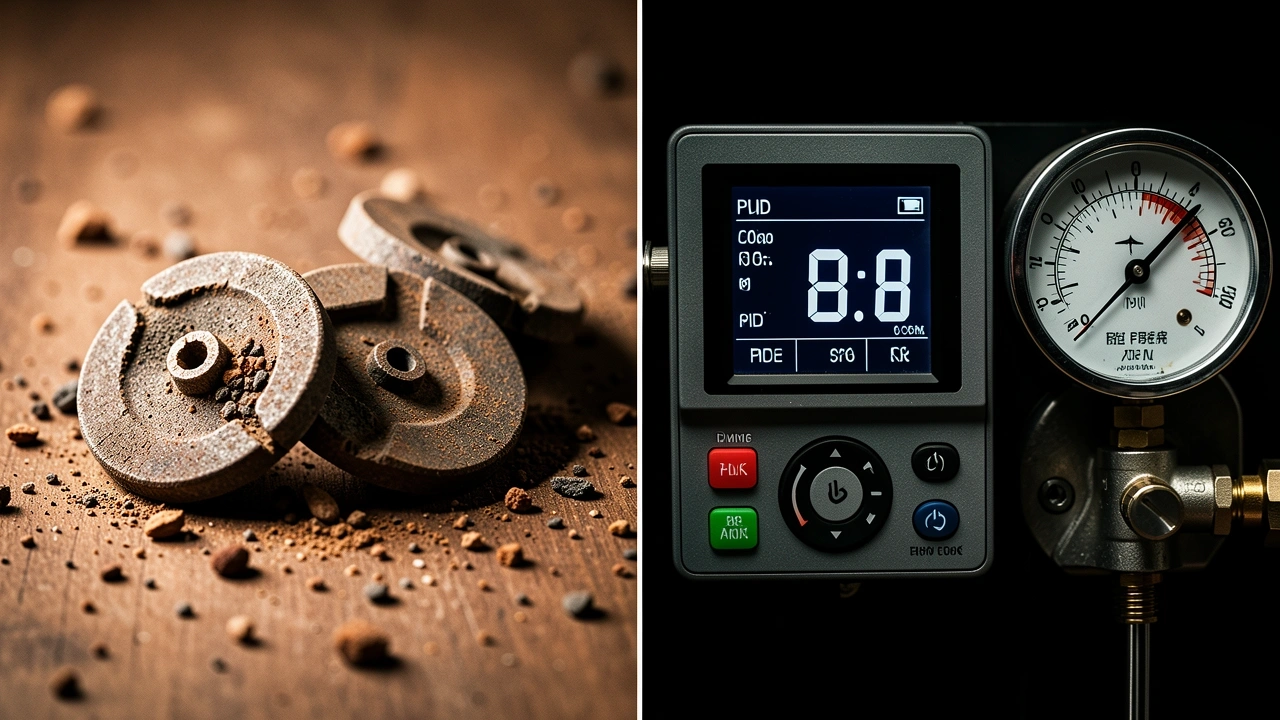
PIDs are not magic. They control heat but real-world extraction depends on many things outside their control.
A PID does not fix a poor grinder. If your burrs are inconsistent and create uneven particles of coffee, the water will flow through the thinner grounds faster.
This is channeling and temperature accuracy cannot conceal the uneven coffee extraction.
A better grinder in a modest machine without PID will yield better flavor than a fine espresso machine with PID and a cheap grinder.
W PID does not control brew pressure. It does not tighten the pump behavior. Pressure profiling—the ability to lower pressure at the start of the shot for lighter roasts—is a separate feature.
The pulley temperature does not fix workflow speed. A single boiler is still a single boiler. brew to steam is 90 seconds. The PID does not heat the water any faster.
And about the screen number: the PID screen reads the temperature via a thermocouple or thermistor on the boilerplate surface. The water at the group head louvers in the group itself.
That reading may be a or two offset from real brew temp. To verify truly correct temp, you need a Scace tool or a thermocouple in the portafilter. Many users assume the digital readout is perfect.
It is close, but the offset is there.
Do You Need a PID? Three Questions to Decide
What do you drink?
If you drink straight espresso shots or Americano, the nuanced temperature matters. You can taste the difference of a two-degree shift.
The PID is a clear benefit.If you consume milk drinks – cappuccino, macchiato, latte, the flavor differences shrink. Milk fat and sweetness covers small chemical differences.
You will not taste the improvement.
What machine do you use?
Single boiler owner: PID upgrade eliminates the temperant surf and makes morning shots reliable.
This is a genuine improvement if you drink straight or black.HX owner: Retrofit PID is a small but not just. The last it improves steam power usage control.
The brew routine still depends on flush practiceLever, or direct-to-boiler (?): If the machine has a simple boiler feed, PID is still useful, but the behavior is more like a single boiler.
Do you like tinkering or convenience?
If you dislike morning ceremony, PID gives you a simple workflow. You turn it on, wait ten minutes, pull shot.
If you love temperature surfing and adjusting the machine to match the bean, PID may be the equipment that makes the process less engaging. You sacrifice the fun of the hunt.
A final recommendation: For a home user with a single boiler who drinks espresso only and buys medium/light roasts, PID is worth the expense and the install process.
For the milk-focused user or HX owner on a budget, the money is better spent paying off the quality of your grinder.
Buying PID: Two Paths
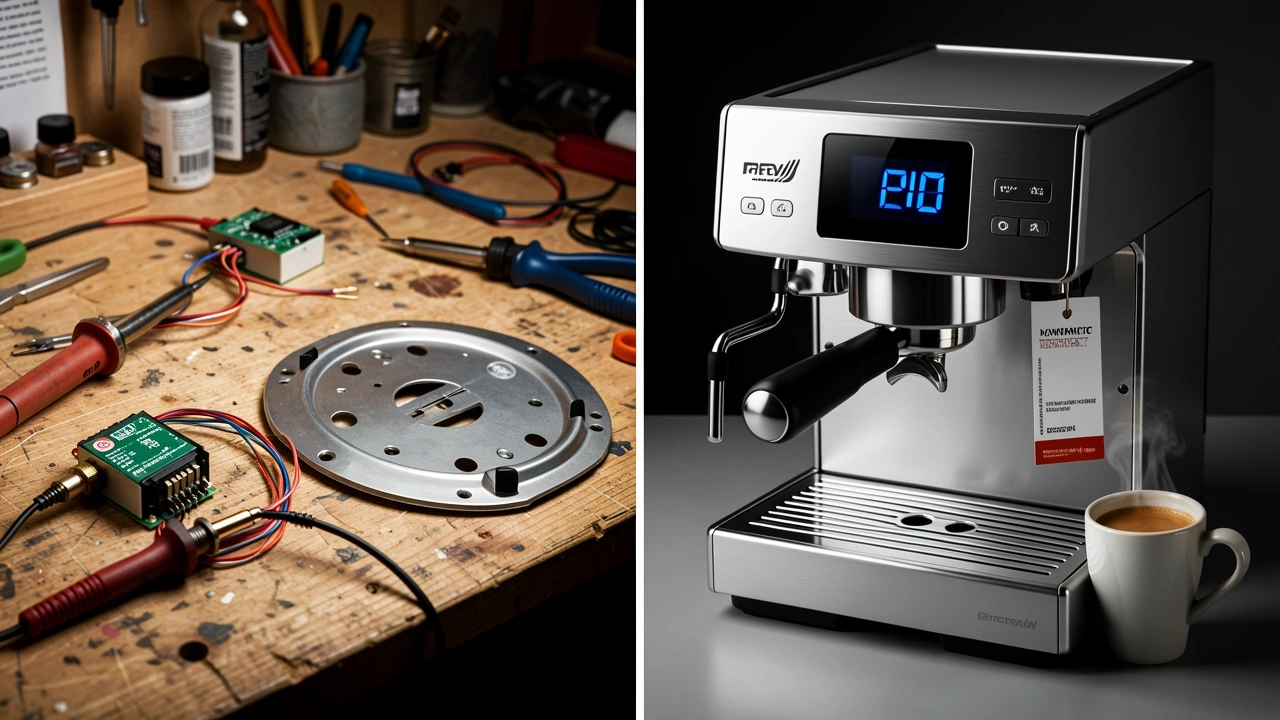
Retrofit done yourself
This is a DIY electrical project. You open machine base, remove the thermoswitch, install a sensing component on the boilerplate and a solid-state relay in the EL box for the heater.
It will void the warranty. You own the result.
Cost range: $90 to $150 wide for aftermarket PID kit (Auber, barebone XMT7100) (installation is your time).
Time needed: 2 to 5 hours for a very new electrician. Mistakes can cause electrical shock or destroy the board. Unless you are comfortable with power tools, do not attempt it.
A ready-for-use machine
| Machine example | Non-PID | PID variant |
|---|---|---|
| Rancilio Silvia Classic | Not available | Silvia Pro X (including PID) |
| Gaggia Classic Evo Pro | Standard | Added retrofit kits |
| Other machines at 800+ USD | mostly rare | Standard equipment |
Factory-installed PIDs are calibrated, warrantied, and protected if anything short-circuits. Many add a pre-infusion function and a shot timer too.
Grinder check
If your limited budget means you either buy a PID machine or a good grinder, buy the grinder. A consistent layer, even coffee dose, and regular tamp action matters more than a flat temperature curve.
I upgraded from an Eureca Mignon to a hi-end grinder before adding PID, and the improvement in the cup was obvious. The PID was helpful but small change. The grinder was a huge step.
Frequently Asked Questions about PID Controllers on Espresso Machines
W PID control changes the flow rate or the pressure
Not at all. They work in water temperature regulation. Flow control and pressure are handled by a separate pump valve mechanism or gear pump only in machines like the Leticia Bianca.
Review the machine for pressure control if you want to profile the flow.
What temps for different bean types?
Start from these: dark roasts 195-200°F. Medium roasts 200-202°F. Light roasts 203-206°F. Adjust one degree based on what your taste.
But follow the bean freshness: fresh local light roasts often need the high side.
Will a PID improve the steam strength of a single boiler?
Not directly. Steam quality comes from boilerplate volume, pressure, and the nozzle.
The PID will help the boiler keep a steady steam pressure throughout the cycle, but if the heater cannot produce enough pressure, a PID will not change the resulting steam.
Still, single boilers lay about 1 to 1.5 bar for steam, good enough for small pitchers.
Does a PID retrofit bring resale value?
Moderate. If the install is clean, it signals care. A buyer might pay 30-50% of the retrofit cost back. But a mess of wires or holee in the case swallows that value.
An example installation time?
For a proactive DIY: 2-3 hours for the install, plus an extra hour to learn the PID parameters and adjust any offset. If you have zero prior work, plan on 4 hours with the instruction guide.
A PID does not turn good coffee into great coffee. But it removes the question of temperature.
For the espresso user who wants stable morning shots and has a single boiler, it eliminates the most frustrating workflow. For the rest, the temperature is not the problem.
Look at the grinder, look at the beans, and then change the boiler control if the rest is consistent.