Reina
Reina 
As an Amazon Associate, I may earn a small commission from qualifying purchases at no extra cost to you. This helps me create more valuable, tested content for you.
After owning both a Nespresso machine for three years and a proper espresso machine for five, I can tell you this debate is not as simple as most articles make it.
The right choice depends on how many shots you drink daily, how sensitive your palate is, and how much time you want to spend making coffee.
Let me walk you through the real numbers and the real taste differences so you can decide without the marketing fluff.
The short version of what you need to know
Neither option is universally better.
If you drink two or more espresso-based drinks every day and care about the texture and flavor of straight espresso, a traditional espresso machine will save you money within the first two years and give you noticeably better shots.
If you drink one coffee a day, mostly in lattes with milk and syrup, or if you absolutely cannot stand another morning chore, Nespresso is a perfectly fine choice.
The quality gap shrinks dramatically when milk and sugar enter the picture.
Here is my simple decision framework. High volume plus taste focus points toward an espresso machine. Low volume plus convenience-first points toward Nespresso.
For everyone in between, consider how long you want to keep the machine and whether the learning curve sounds like a hobby or a hassle.
Breaking down the true cost of Nespresso vs espresso machines
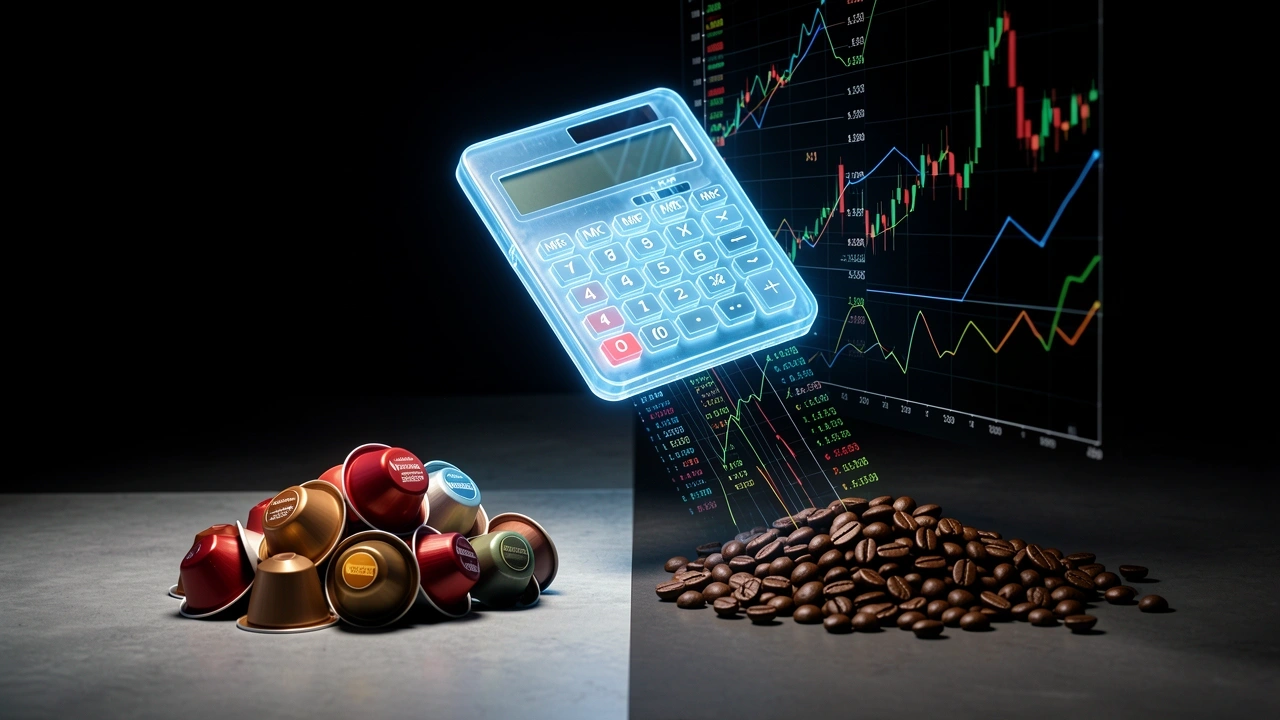
Most comparisons stop at per-shot math: 80 cents for a Nespresso capsule versus roughly 21 cents for a home-pulled shot. That makes Nespresso look expensive.
But the real story involves machine lifespan, hidden maintenance, and your daily consumption volume.
I ran the numbers for a three-year scenario based on my own usage of two shots per day, six days a week.
The trap of per-shot math
A capsule costs more per gram of coffee than whole beans, but the machine itself costs much less upfront. The trick is that Nespresso machines tend to fail after two to three years.
I had mine die just after the warranty expired. A decent espresso machine, if maintained properly, can last ten years or more.
So the upfront machine savings can vanish when you have to buy a replacement every couple of years.
The real numbers for a three-year scenario
For Nespresso, start with a machine and milk frother bundle at around $150. Two shots per day, six days a week, equals roughly 624 capsules per year. At $0.80 per capsule, that is $499 per year.
Over three years, capsules cost $1,497. Add one replacement machine at year two because the first one broke: another $150. Total: about $1,797.
I’m not including electricity or descaling tablets here because they are small for both systems.
For a traditional espresso machine, pick a mid-range model like a Breville Bambino or Gaggia Classic at $500 to $700. Add a separate grinder if not built-in, another $150 to $300. I use a $200 grinder.
Beans cost $16 for a 12-ounce bag of quality espresso roast, which gives me about 38 double shots. At two shots per day, that is roughly $8 per week or $416 per year.
Over three years, beans cost $1,248. Maintenance like descaling tablets and water filters adds about $30 per year, so $90 total.
Total for espresso: machine $700 plus grinder $200 plus beans $1,248 plus maintenance $90 equals $2,238.
Right away, Nespresso seems cheaper over three years: $1,797 vs $2,238. But remember, the espresso machine and grinder will still work for year four and beyond.
If I extend to five years, the Nespresso scenario requires a third machine (another $150), bringing its total to $1,947 plus the original $1,497 in capsules plus the third machine.
Actually, let me recalculate: first machine $150, second machine $150 at year two, plus five years of capsules at $499 per year = $2,495 total capsules.
Total Nespresso over five years = $150+$150+$2,495 = $2,795. For espresso, the machine and grinder are paid once, so five years of beans = $2,080 plus maintenance $150 plus upfront $900 = $3,130.
Still espresso appears more expensive, but wait — I drink two shots daily. If I drink only one shot per day, the numbers shift dramatically.
My point is that the break-even point depends heavily on how many shots you pull.
Where the numbers flip
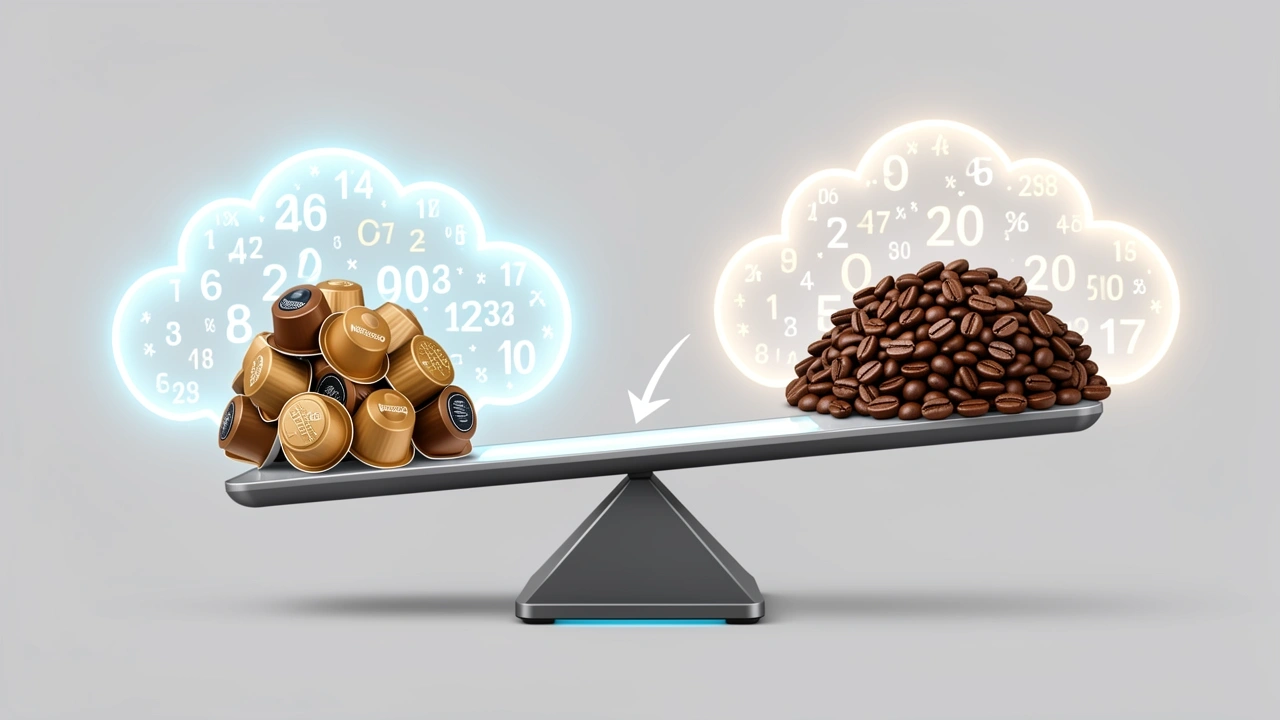
Here is the truth most articles overlook. If you drink three or more shots per day, or if you have two people in the household each drinking two shots, the espresso machine becomes cheaper very fast.
Let me show the break-even using my own numbers. At two shots daily, the annual capsule cost is $499. For espresso, annual bean cost for the same volume is $416. That is only an $83 difference.
But the upfront cost difference is $700 (machine plus grinder) vs $150 for Nespresso. That means it takes about 6.6 years just to recover the upfront premium from bean savings alone.
However, Nespresso machines often don’t last that long. If you have to buy two Nespresso machines over six years, you spend $300 on machines instead of $700 on one espresso machine that still works.
Then the bean savings start to matter. For a daily two-shot drinker, the break-even point is around four to five years. For a three-shot drinker, it drops to under three years.
For single-shot drinkers, Nespresso almost always wins on cost.
The per-capsule premium is smaller relative to the machine price difference, and the Nespresso unit will likely outlast the coffee consumption before you break even on a real espresso setup.
The hidden costs nobody mentions
Capsule prices keep creeping up. Nespresso has raised prices roughly 15% since 2020. Bean prices also fluctuate, but you can switch roasters or buy in bulk.
Another hidden factor: espresso machine resale value. A $700 machine in good condition can sell for $300 to $400 after a few years. Nespresso machines have essentially no resale value.
Also, if you buy cheap off-brand capsules to save money, the taste gap widens further because the coffee quality varies.
Taste comparison — Why the answer is more complicated than you think
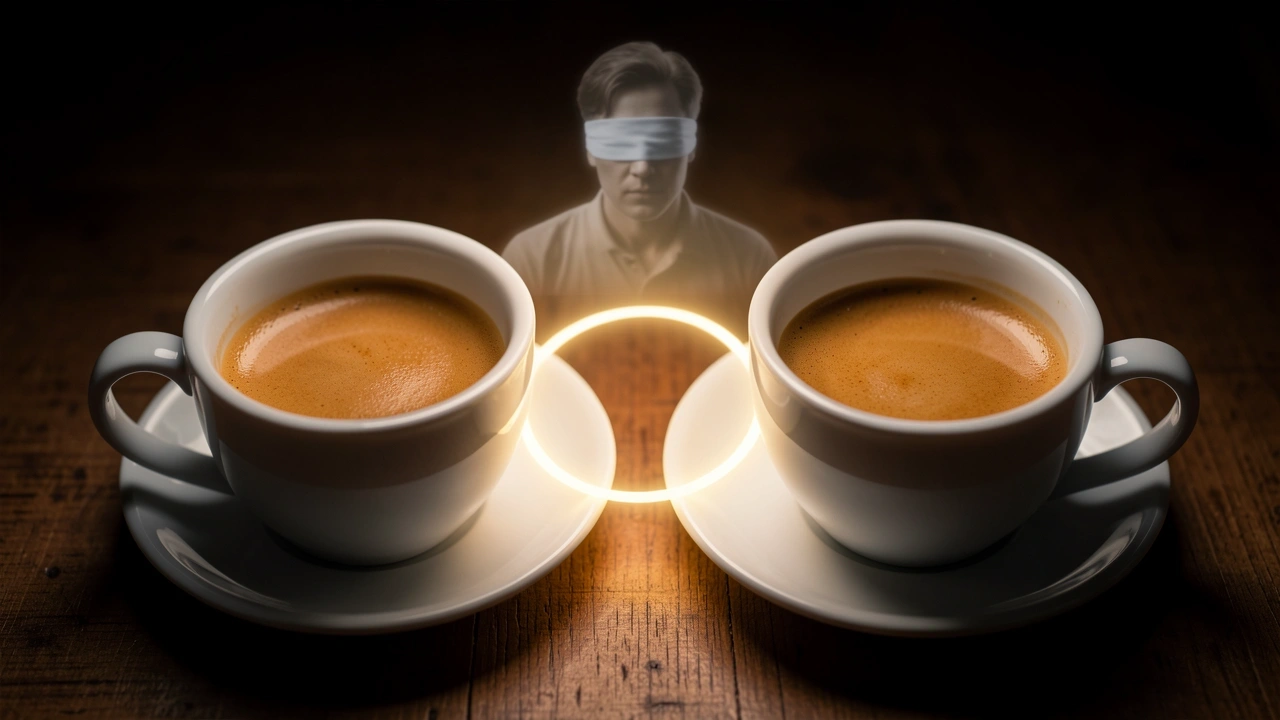
I used to believe that real espresso always tastes better, period. Then I did a blind test with friends using a $600 espresso machine and a Nespresso Original line machine pulling a ristretto capsule.
Half the people could not reliably tell which was which in a straight shot. And in milk drinks, almost nobody could identify the source.
So the taste difference exists, but it is not as huge as coffee snobs claim.
What real espresso actually means
True espresso relies on 9 bars of pressure, a 25 to 30 second extraction, and a 1:2 ratio of coffee to water. Most home machines under $1,000 do not deliver consistent 9 bars.
Machines like the Breville Bambino Plus use a thermocoil and a pressurized basket that mimics espresso but does not extract the same way as a commercial machine.
An espresso purist might actually prefer a well-pulled Nespresso ristretto over a badly extracted shot from a cheap espresso machine. I have seen that happen.
The three taste dimensions where Nespresso loses
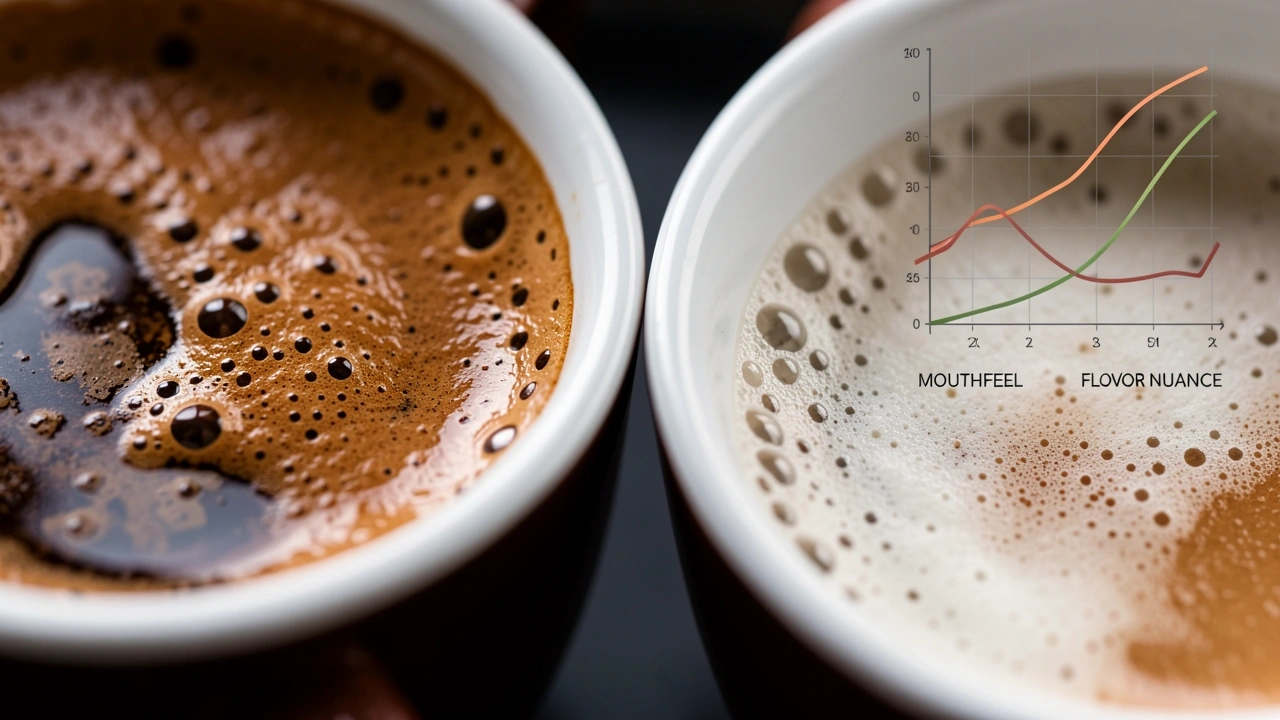
Crema quality is the first difference. Nespresso capsules produce a thin, bubbly foam that comes from dissolved gases in the pre-ground coffee.
Real espresso crema is a dense emulsion of oils and carbon dioxide. It sticks to the cup and has a smoother mouthfeel.
Second, mouthfeel itself is thinner with Nespresso because the coffee is ground weeks or months before you brew it. Volatile oils that give body degrade over time.
Third, you cannot adjust extraction to highlight origin characteristics. A light roast Ethiopian bean brewed at the right temperature and grind size will taste fruity and bright.
With a capsule, you get a uniform flavor profile regardless of origin. You lose that nuance.
The one taste dimension where Nespresso wins
Consistency. Every capsule tastes exactly the same. No bad shots, no dialing-in failures, no stale beans from a bag left open.
For someone who drinks coffee as a routine, not a ritual, that reliability is valuable.
I personally miss the variance of fresh beans, but I understand why many people prefer knowing exactly what they will get every morning.
When you won’t notice the difference
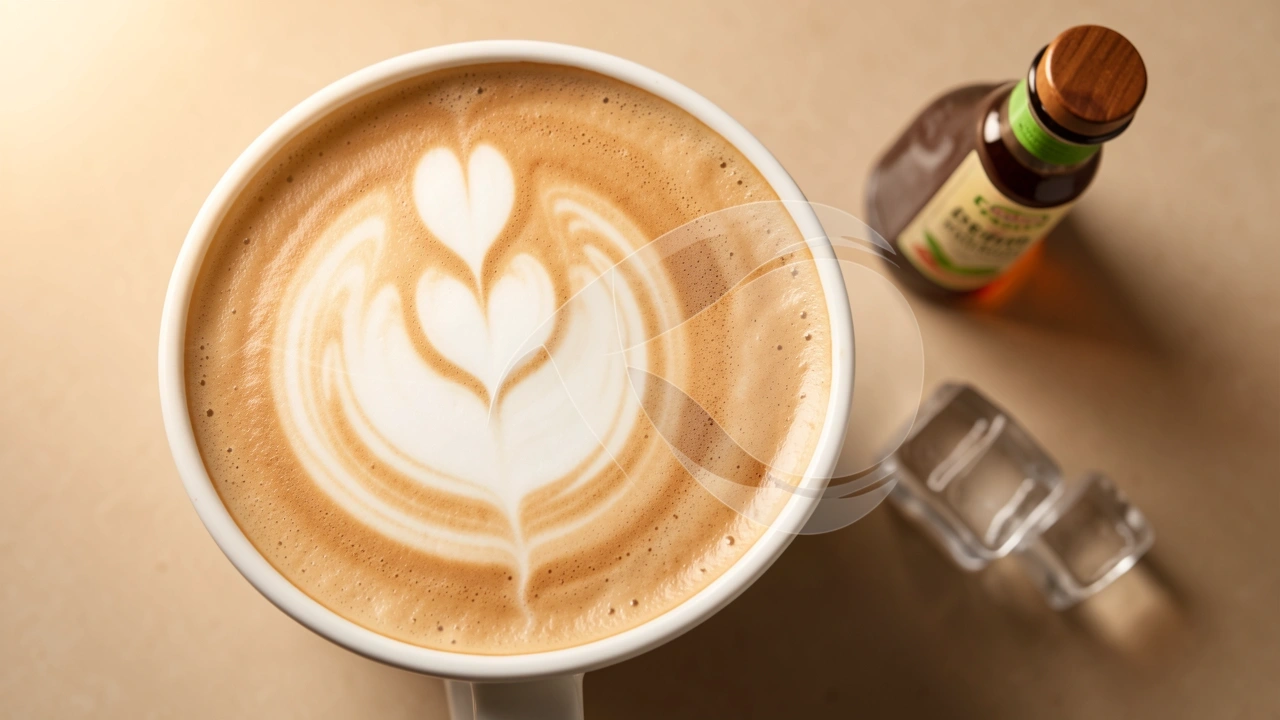
In a latte with six ounces of milk, the coffee flavor is significantly muted. Add a flavored syrup or sugar, and the difference disappears entirely.
Iced coffee drinks where dilution happens also mask subtle notes.
If you only drink dark roasted coffee, Nespresso’s darker capsules like Napoli or Kazaar come close enough that most people would struggle to tell the difference.
The moment you add enough milk or sweetener, the capsule coffee gets the job done just fine.
The real-world tradeoff — Skill, time, and cleanup
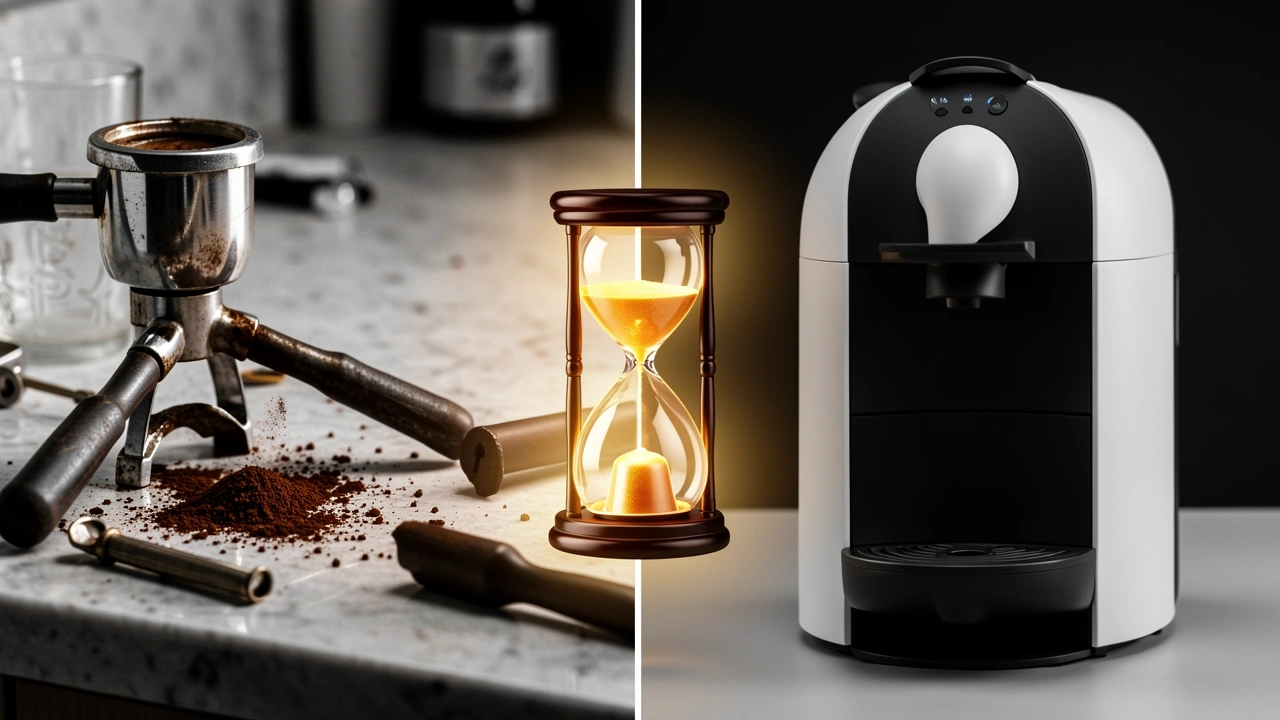
This is the part that cost and taste comparisons almost never address. The effort required to make espresso at home is real, and for many people it is the deciding factor.
The espresso machine workflow, honest version
My morning routine with a semi-automatic machine: turn on the machine to warm up, about 30 seconds. Grind and dose the beans, about 60 seconds. Tamp and lock the portafilter, 30 seconds.
Pull the shot, 30 seconds. Steam milk, 90 seconds. Clean the portafilter, wipe the steam wand, rinse the drip tray, two minutes. Total time from start to finish is about five to six minutes.
And that is after I got good at it. When I first started, I had to throw away at least ten practice shots before I made something drinkable.
It took probably 50 shots before I could hit good consistency. There is a real learning curve.
The Nespresso workflow
With my old Nespresso, I would fill the water tank once a week. In the morning, I inserted a capsule, pressed the button, and had a shot in 30 seconds.
If I wanted steamed milk, the Aeroccino took another 60 seconds. Total time: about two minutes. Cleaning meant emptying the capsule bin every week and descaling every few months.
No dialing-in, no tamping, no wet coffee grounds to deal with. That convenience cannot be overstated for a busy morning.
Who should pick which
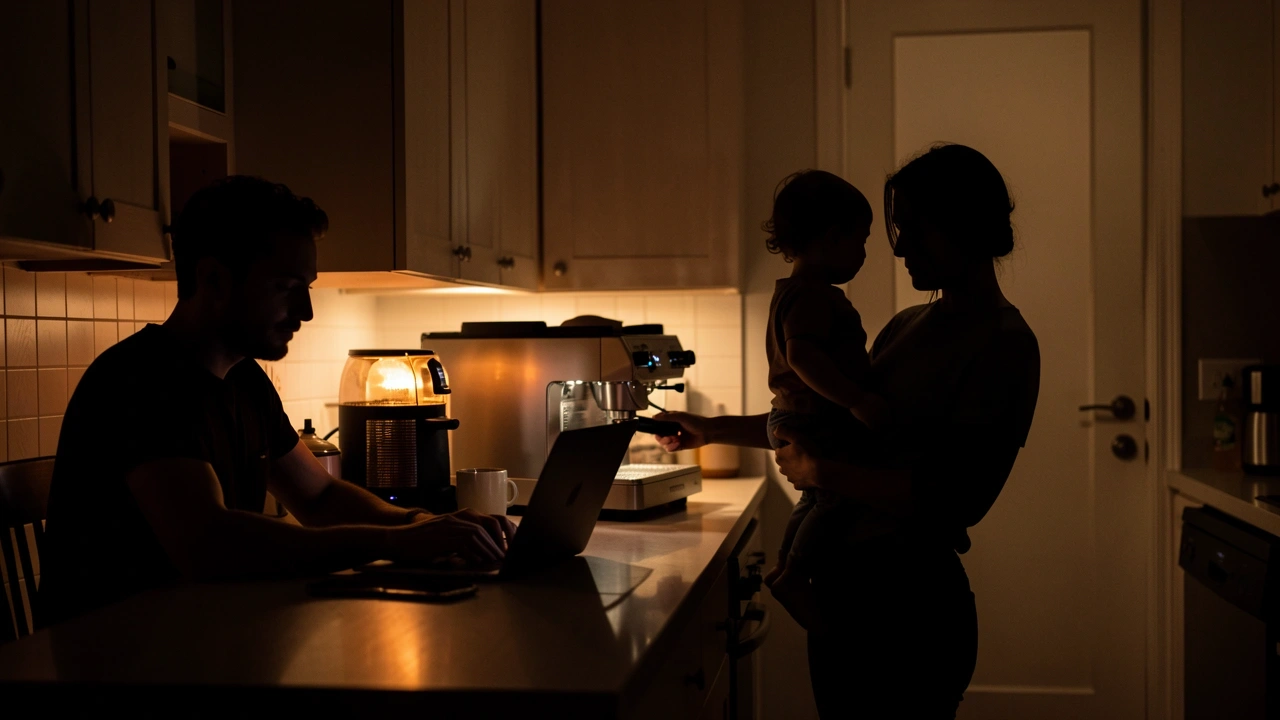
An espresso machine fits people who work from home, enjoy the process as a hobby, or have someone else in the house who also drinks espresso.
It also suits weekend ritualists who take time to enjoy the craft.
Nespresso fits parents of young children, people with chaotic morning schedules, office break rooms, and anyone who drinks one coffee a day and does not want another chore.
I have seen too many friends buy an expensive espresso machine, use it for two weeks, and then let it gather dust because the morning hassle was not worth it.
The environmental factor — Waste, recycling, and bean sourcing
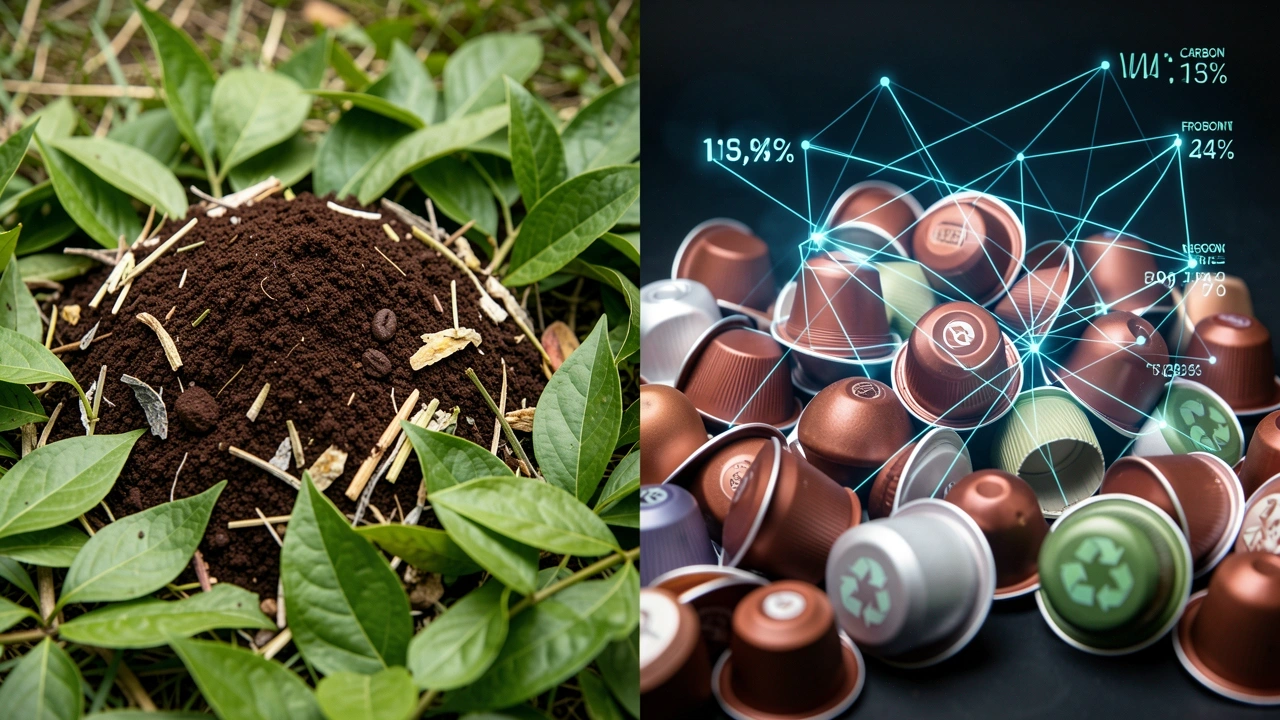
Both systems have an environmental impact, but they differ significantly.
Nespresso’s recycling reality
Nespresso capsules are aluminum, which is recyclable in theory. In practice, about 70% of capsules end up in landfills because users do not participate in the recycling program.
You have to separate the foil from the grounds or use Nespresso’s mail-in bags. The Vertuo capsules are harder to recycle because they are made of a mix of plastic and aluminum.
Even with perfect recycling, manufacturing and transporting individual capsules has a higher carbon footprint than buying whole beans in bulk.
Espresso machine waste footprint
Coffee grounds from an espresso machine are compostable, which is a clear environmental advantage.
However, you have the water used for cleaning, electricity to heat the machine (Nespresso heats faster, so less energy per shot), and plastic packaging from bean bags unless you buy from a local roaster who uses compostable packaging.
The grinder also consumes electricity. Overall, for an eco-conscious user who buys locally roasted beans in bulk or reusable containers, a traditional espresso machine is cleaner.
But for someone who would otherwise buy a Starbucks latte in a single-use plastic cup every day, Nespresso is actually the greener alternative because the cup and lid waste is far worse.
The honest verdict

If you compost your coffee grounds and buy beans from a roaster who uses minimal packaging, the espresso machine wins on waste.
If you do not compost and you buy capsules that end up in the trash, neither is great.
The absolute best move for the environment is a manual espresso machine with beans bought in reusable containers from a local shop.
Frequently Asked Questions
Can you make real crema with Nespresso capsules?
The foam from Nespresso Original line capsules comes from dissolved gases released during extraction. It is thin and bubbly, and it dissipates quickly.
Vertuo capsules use a centrifuge to create thicker foam, but the texture is different from true crema made from emulsified oils.
Neither matches the dense, persistent crema of a fresh-pulled shot from a proper espresso machine.
Does Nespresso taste better in certain milk drinks?
Yes. In a latte with more than six ounces of milk, or in any drink with flavored syrup, the difference between Nespresso and real espresso becomes very hard to detect.
I have run blind tests where even experienced baristas could not tell pod espresso from fresh espresso in a sweetened 12-ounce iced latte.
If you mostly drink milk-based coffee, Nespresso is perfectly adequate for your taste buds.
How many shots per day justify buying an espresso machine?
Based on my cost analysis, two or more shots per day for a single person, or three or more across household members, makes the espresso machine financially worthwhile within a few years.
For a single shot per day, the cost savings never really materialize, and the time investment feels excessive for most people.
Is there a Nespresso capsule that tastes closest to real espresso?
For the Original line, Napoli and Kazaar are the darkest and most intense, with a heavy body and bitterness that mimics traditional espresso. For Vertuo, Diavolitto or Intenso come closest.
None of them match the complexity of freshly ground beans, but if you like dark, roasty flavors, these are your best bets.
Do cheaper espresso machines under $400 beat Nespresso?
Generally, no. Machines under $300 often lack proper pressure and temperature stability, and many use pressurized baskets that produce a faux crema similar to Nespresso.
The Breville Bambino at around $350 is the minimum threshold where you can get true espresso extraction. Even then, you need a separate grinder.
If you are not willing to spend that much, Nespresso will likely give you a better experience for less money.