Reina
Reina 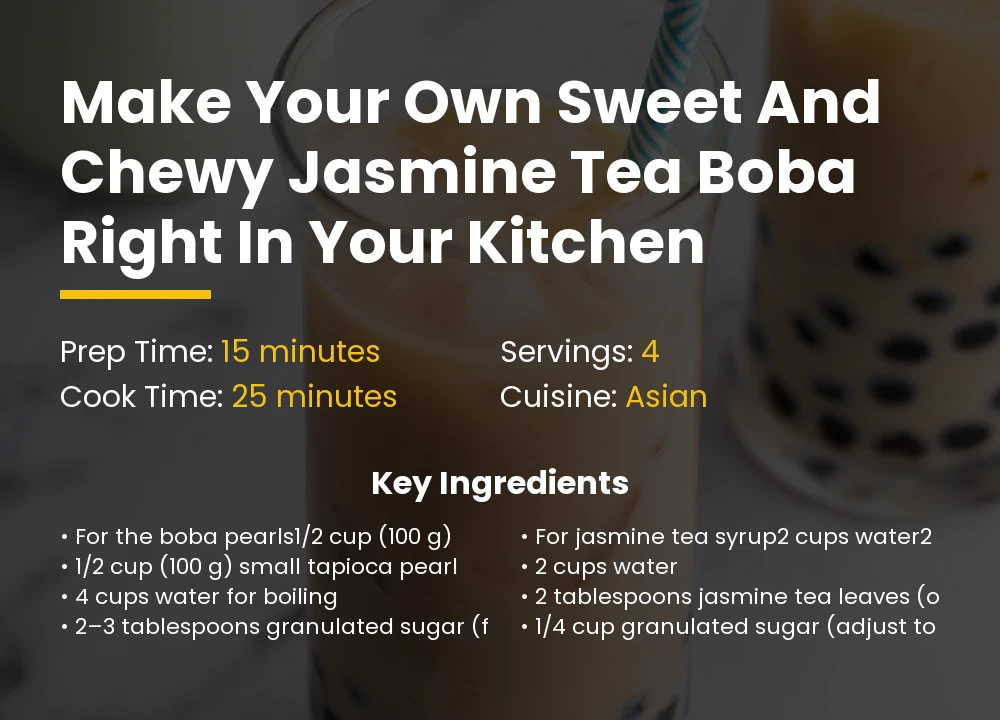
As an Amazon Associate, I may earn a small commission from qualifying purchases at no extra cost to you. This helps me create more valuable, tested content for you.
Making jasmine tea boba at home isn’t magic; it’s a precise, repeatable process. I tested countless batches to dial in chew without mush and to keep the jasmine aroma bright after mixing with tea. This works when you treat the pearls and the tea as two small experiments you run on the same stove: cook the pearls properly, then infuse a crisp jasmine syrup that coats them just enough to cling. You’ll see the pearls take on a glossy sheen, and the tea becomes a balanced, lightly sweet sip with irresistible chew. The approach scales, adapts to what you have, and still tastes like a cozy, shop-bought favorite—without the wait.
Jasmine Tea Boba Recipe: Details and Steps
Recipe Details
- Prep Time: 15 minutes
- Cook Time: 25 minutes
- Servings: 4
- Course: Dessert
- Cuisine: Asian
- Diet: Vegetarian, Dairy-free, Gluten-free
Ingredients
- For the boba pearls
- 1/2 cup (100 g) small tapioca pearls (white or black)
- 4 cups water for boiling
- 2–3 tablespoons granulated sugar (for cooking or tossing after)
- For jasmine tea syrup
- 2 cups water
- 2 tablespoons jasmine tea leaves (or 2 tea bags)
- 1/4 cup granulated sugar (adjust to taste)
- For serving and tea
- 4 cups brewed jasmine tea, cooled
- Ice
- Optional: dairy or non-dairy milk to make a milky jasmine tea
- Optional: extra sugar or honey to taste
Instructions
- Bring a large pot of water to a vigorous boil. Add tapioca pearls and stir to prevent sticking. Maintain a steady boil, then lower to a lively simmer.
- Cook the pearls until they’re tender with a pleasant chew, usually 12–18 minutes depending on pearl size. Taste a pearl for texture; you want a bouncy center—not chalky.
- Drain the pearls and give them a quick rinse with warm water. Return them to a warm bowl and toss with 1–2 tablespoons sugar to keep them from sticking and to lightly sweeten them.
- Meanwhile, make the jasmine tea syrup. In a small saucepan, bring 2 cups water to a boil. Add jasmine leaves or tea bags and steep 5–7 minutes. Strain, return the liquid to the pan, and stir in sugar until dissolved. Let the syrup cool to warm or room temperature.
- Coat the pearls: while the syrup is warm (not scalding), transfer the drained pearls to a bowl and pour a portion of the warm jasmine syrup over them. Toss gently to coat and let stand 5–10 minutes to absorb flavor and take on a glossy finish.
- To serve, place 1–2 tablespoons of the pearls into each glass. Pour in the cooled jasmine tea (over ice), and add milk if you like a creamy, milk-tea vibe. Taste and adjust sweetness if needed.
- Storage note: leftovers keep best in a jar with a little extra syrup in the fridge for up to 2–3 days. Reheat or toss in syrup before serving again for best texture.
Nutrition
- Calories: ~120–150 per serving (1/3 cup cooked pearls with syrup)
- Carbohydrates: ~28–34 g
- Sugars: ~12–18 g
- Protein: 0 g
- Fat: 0 g
Cooking Method
Stovetop simmer and boil. You’ll boil the pearls, simmer them to achieve chew, and simmer a jasmine tea syrup to coat the pearls before serving with cooled tea and ice.
Tools Needed
- Large pot with lid
- Fine-mesh strainer
- Slotted spoon
- Measuring cups and spoons
- Heatproof bowl for pearls
- Small saucepan for syrup
- Glasses for serving
- Jar with lid for storing syrup
Pro Tips and Troubleshooting for Perfect Jasmine Tea Boba
These notes come from real trial and error. This section is where the practical grit lives.
- Prevention for split or crystallized syrup: keep syrup warm but not boiling when coating pearls. If it crystallizes, reheat with a splash of water and stir until smooth.
- Texture fixes: if pearls are too hard, extend the simmer by a minute or two and test again. If they’re mushy, cut the time by 2–3 minutes on the next batch and drain earlier.
- Flavor reliability: use genuine jasmine tea for the strongest aroma. If you must substitute, a lightly floral green tea can work as a fallback, but you’ll lose some classic perfume.
- Availability tweaks: if tapioca pearls aren’t available, you can try pearl sago as a last resort, but the texture will differ—the chew won’t be exact.
- Make-ahead rhythm: align pearl cooking with your tea brew so you can plate warm pearls over cooled tea. This keeps the texture balanced and the aroma lively.
Smart Substitutions and Dietary Variations
- Sugar swaps: substitute 1:1 with maple syrup or honey for a different sweetness profile. Note that syrups can alter texture slightly, so taste as you go.
- Floral variation: if jasmine is unavailable, a tiny hint of orange blossom or rose water can give a similar aroma, but don’t overdo it or the scent overpowers the tea.
- Milk options: dairy or non-dairy milk works for a milky-tea version; adjust sweetness since milk sweetness varies from dairy-free options.
- Diet-friendly: this recipe is naturally vegetarian, dairy-free, and gluten-free. It’s also vegan if you skip any dairy additions to the served tea.
- Texture note: brown sugar yields deeper color and a tad more molasses taste; adjust quantities to balance sweetness and color.
Storage Guide and Reheating Instructions
- Store cooked pearls in their syrup in an airtight container in the fridge for up to 2–3 days. Reheat gently or bring to room temp before serving to restore chewiness.
- Keep jasmine syrup separately chilled; rewarm to coat pearls if you’re preparing a large batch.
- Avoid freezing pearls—the texture is unlikely to recover after thawing; best to cook fresh pearls as needed.
Best Serving Ideas and Pairings
Serve a glass over ice with extra pearls for a textural contrast, or layer a splash of non-dairy milk into the base for a creamy bubble tea variation. Pair with light fruit desserts, or a small plate of crunchy cookies to balance the chewy bite with something crisp. If you enjoy extra aroma, garnish with a tiny jasmine blossom or a citrus zest twist for a bright finish.
Frequently Asked Questions
Can I substitute brown sugar for white sugar in the syrup?
Yes. Brown sugar adds depth and a hint of molasses. Start with the same amount and taste, then adjust to your preference.
Can I make jasmine tea boba without tapioca pearls?
Pearl substitutes like pearl sago or rice pearls can work, but the texture will differ. Stick with tapioca pearls for a classic chew.
How long will the boba stay chewy?
In syrup and refrigerated, about 2–3 days. After that, chew starts to fade. If serving later, remap by reheating gently and tossing with a fresh spoonful of syrup.
Should I cool the pearls before mixing with tea?
Warm pearls coat more evenly with syrup and stay softer. If you’re serving immediately, you can mix with warm syrup and proceed to assemble in glasses with cooled tea.
Is this recipe kid-friendly?
Yes, with mindful portioning and reduced sweetness if desired. Be mindful of sugar intake, especially for younger children.
Can I freeze or reuse the syrup?
Storage in the fridge is best for syrup. Freezing tends to change texture; reuse within a few days for best flavor.