 Reina
Reina As an Amazon Associate, I may earn a small commission from qualifying purchases at no extra cost to you. This helps me create more valuable, tested content for you.
I’ve spent enough time in both home and professional kitchens to know that this question can start a real argument. You search online and get conflicting answers: some say a saucepan is a pot because it has tall sides. Others say it’s a pan because it has one long handle. The truth is messier, and more useful, than either side admits.
A saucepan is a purpose-built hybrid. It takes the tall walls of a pot and the single handle of a pan, and it combines them for a specific job: making sauces and cooking small batches of liquid-based food. Whether it behaves like a pot or a pan depends on what you’re doing with it. Once you understand that, you stop worrying about labels and start cooking better.
The Traditional Divide — How Pots and Pans Are Defined
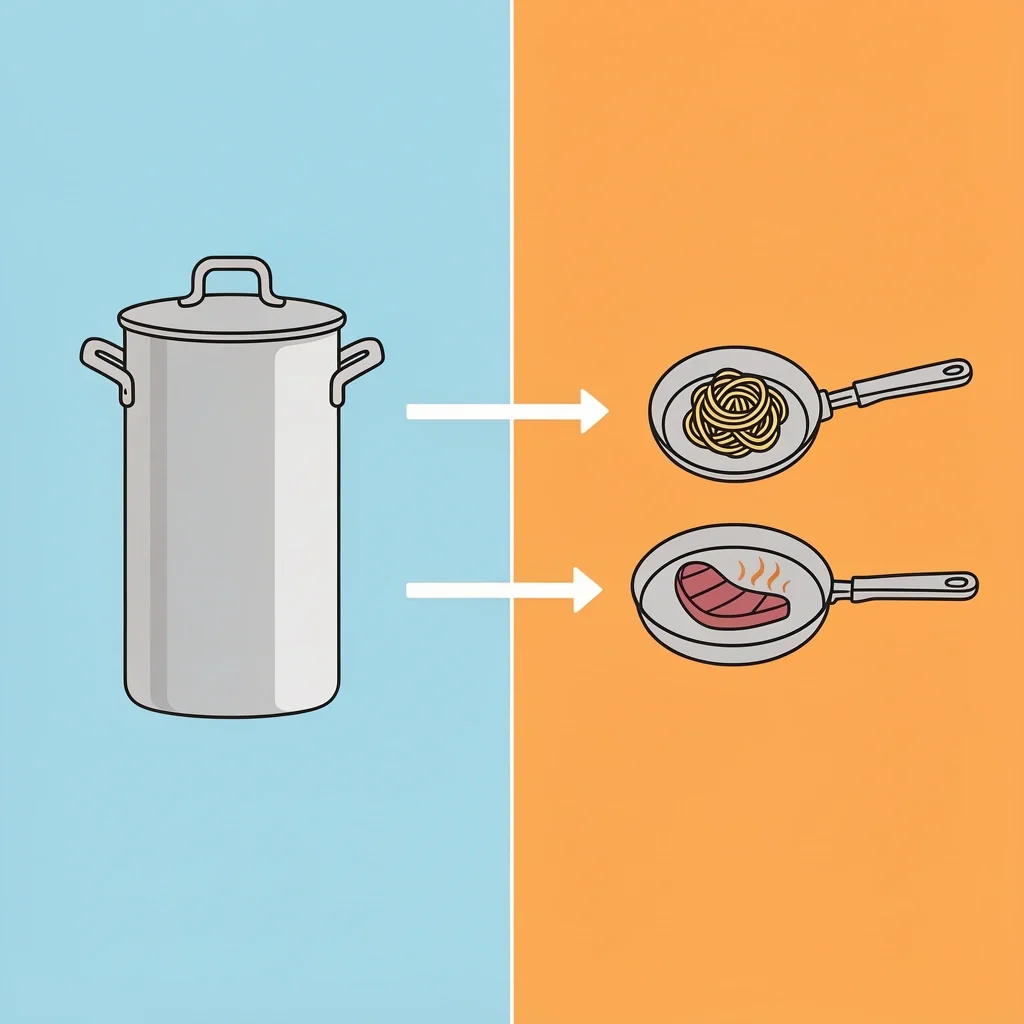
To understand why saucepans cause confusion, you first need a clear picture of what a pot and a pan are in the traditional sense.
A pot has tall sides, a wide base in proportion to its height, and usually two loop handles on either side. The tall sides hold enough liquid to submerge ingredients completely. You use a pot for boiling pasta, simmering stock, or cooking beans — anything where the main cooking medium is liquid and the food is fully covered.
A pan has short, sloped or straight sides and one long handle. The low sides expose more of the food’s surface to direct heat, which encourages browning and evaporation. You use a pan for searing meat, sautéing vegetables, or reducing a sauce — anything where the cooking surface transfers heat directly to the food.
The rule of thumb that most cookware guides give is simple: two handles = pot, one handle = pan. That rule works for a stock pot or a skillet, but it breaks down immediately with a saucepan. A saucepan has one handle, which says “pan,” but its sides are nearly as tall as a small pot, which says “pot.” That is where the confusion starts.
What Makes a Saucepan Confusing — Three Contradictory Design Features
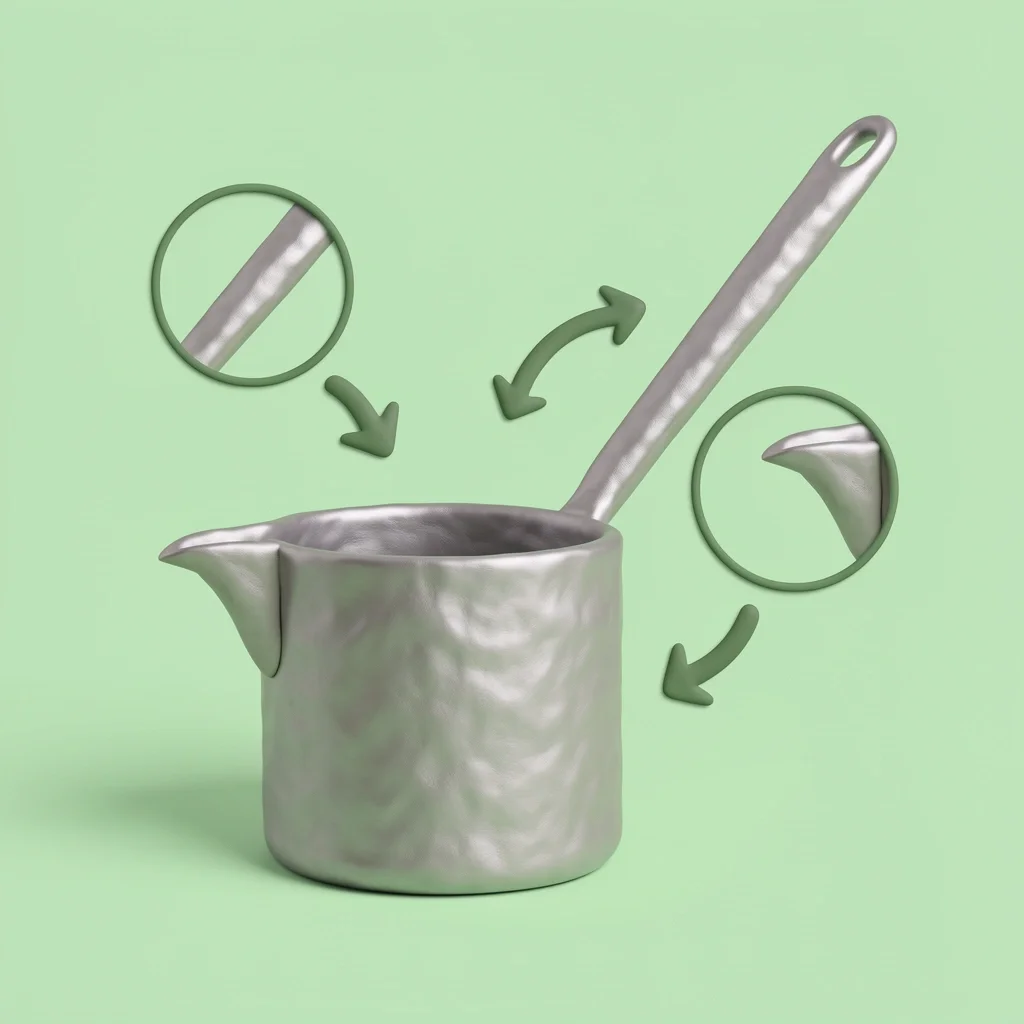
A saucepan’s design is a deliberate compromise. Every feature exists to solve a specific problem, but those features contradict the simple pot-versus-pan classification.
1. Tall sides with a single long handle
A pot gets two handles because when it is full of hot liquid, you need both hands to lift it safely. A saucepan often has only one long handle, plus sometimes a small helper handle on the opposite side. Why? Because the saucepan is meant to be used with one hand while the other hand whisks or stirs. The single handle gives you freedom of movement, which is essential when you are reducing a sauce and need to keep it moving. But when the saucepan is full of soup or pasta water, that single handle becomes a liability — you cannot safely lift a heavy, full pot with one hand. This is the first clue that a saucepan is not a pure pot.
2. Narrow base for reduction with high walls for liquid retention
A classic saucepan has a smaller diameter base than a pot of the same volume. The narrow base concentrates heat in a smaller area, which speeds up evaporation — that is exactly what you want when reducing a sauce. But the high walls trap steam and splatter, keeping the liquid inside. A pan for reduction would have low, flared sides to maximize evaporation. A pot for simmering would have a wide, even base. The saucepan splits the difference.
3. Lid-included design with a pouring lip
Most saucepans come with a tight-fitting lid, which is a pot convention — pots need lids to keep heat and moisture in. But saucepans also often have a pouring lip on one side, which is a pan convention. That lip lets you pour sauce neatly without dribbling. A lid traps steam for simmering; the lip lets you pour out the results. The contradiction is built into the metal.
These three features exist because a saucepan is designed for a specific technique: you start with a hot pan base to sear aromatics, then add liquid, reduce heat, cover to simmer, and finally remove the lid and whisk to finish. It is a sequence that requires both pot behavior and pan behavior in a single vessel.
The Evolution of Confusion — Why Cookware Terminology Is Messy
A big reason this question is so hard to answer cleanly is that our cookware naming comes from different traditions that don’t line up neatly.
French culinary terminology calls a saucepan a casserole, which in English means a completely different thing (a baking dish). In French, a faitout is a large pot, and a poêle is a frying pan. A saucepan doesn’t have a direct French equivalent — it sits somewhere between a casserole and a small marmite.
English domestic naming borrowed the word “saucepan” from the idea of a pan used for sauce, so the word itself suggests pan. But American commercial kitchens started labeling anything with tall sides and a lid as a “pot,” and anything with a long handle as a “pan,” regardless of shape. That created a system where a 2-quart saucepan is called a saucepan, but a 6-quart version is called a sauce pot — even though they are the same shape.
The terminology is not logical. It is historical. And that is why you can find two identical pieces of cookware in different stores, one labeled “saucepan” and the other “small pot.” The confusion is built into the industry.
The Capacity Spectrum — Where Saucepan Becomes Sauce Pot
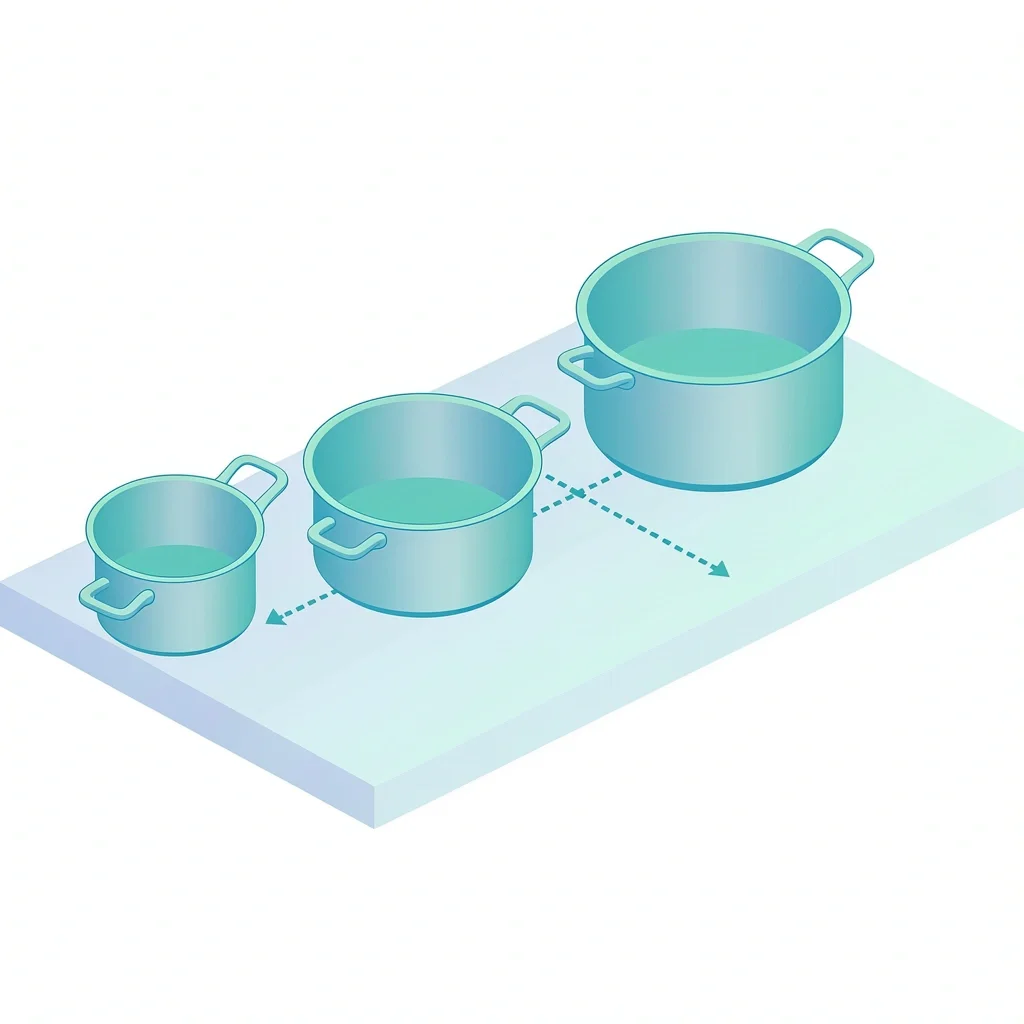
One of the most practical ways to resolve the confusion is by looking at size. The shape stays the same, but the volume changes how the piece behaves.
Saucepans typically range from 1 quart to 4 quarts. At the lower end, a 1- or 2-quart saucepan is clearly a pan for sauce — you can lift it with one hand, and the depth is enough for a single serving of rice or a small batch of gravy.
Around the 4-quart mark, something shifts. The height-to-width ratio changes because the walls have to get taller to hold more volume. A 4-quart saucepan is heavy when full, and the single handle starts to feel inadequate. Many manufacturers add a helper handle at this size. At 4 quarts and above, most industry professionals begin calling it a sauce pot, even though the shape is identical.
Here is a simple rule I have found useful: If you need two hands to lift it safely when full, it is functionally a pot, no matter what the label says. A 1.5-quart saucepan is a pan. A 5-quart sauce pot is a pot. The 3-quart size is the true hybrid — you can treat it as either depending on the task.
When Your Saucepan Acts as a Pot
Use your saucepan as a pot whenever the primary goal is to submerge ingredients in liquid and cook them evenly from all sides. In these situations, the tall sides and lid are the important features.
Boiling pasta for two servings — A 3-quart saucepan holds enough water to cook pasta for one or two people. The tall sides keep the water from boiling over easily, and the lid helps bring it to a boil faster. You are treating it exactly like a small stock pot.
Simmering soup or broth for a small household — A 2- or 3-quart saucepan is perfect for a single portion of soup. The lid traps heat and moisture, and the even heat from the base keeps the liquid at a gentle simmer. I use my 3-quart saucepan for a quick lentil soup more often than I use my stock pot.
Cooking rice or grains in measured liquid — Rice cooking depends on precise water ratios and even, covered heat. A saucepan’s tall sides and lid make it ideal for a cup of basmati or quinoa. The narrow base also helps concentrate the heat so the bottom layer doesn’t scorch.
Blanching vegetables — A saltwater boil for green beans or broccoli is a liquid-submersion job. A saucepan with 2 to 3 quarts of water boils quickly and gives you enough depth to blanch a handful of vegetables without overcrowding.
In all these cases, the liquid covers the food completely. The saucepan is performing the core function of a pot. You should not worry about the single handle — keep the heat low, and use a towel or hot pad when pouring.
When Your Saucepan Acts as a Pan
There is an equally important set of tasks where the saucepan behaves like a pan. These techniques rely on the direct contact of the base with the heat source and on the ability to stir and whisk freely.
Reducing stock or wine for sauce — This is the saucepan’s original purpose. The narrow base concentrates heat, causing rapid evaporation. The single handle gives you the freedom to swirl the pan constantly, which distributes the reduction evenly and prevents scorching. I have made dozens of pan sauces in a saucepan — you deglaze with wine, let it reduce by half, then whisk in butter. That technique is pure pan behavior.
Whisking béchamel or velouté — A béchamel requires constant stirring to prevent lumps. A saucepan’s single handle lets you hold the pan steady with one hand while whisking with the other. The tall sides keep the sauce from splashing out as you whisk vigorously. You could not do this easily with a two-handled pot.
Toasting spices or nuts before adding liquid — Dry-toasting cumin seeds or pine nuts in a saucepan works because the base heats quickly and evenly. The tall sides contain the jumping seeds. Once toasted, you add liquid and continue in the same vessel. It is a classic pan technique followed by a pot technique in one pot.
Cooking a roux — Melting butter and whisking in flour requires constant attention and direct heat contact. A saucepan’s flat base evenly browns the roux. The single handle makes it easy to lift and tilt the pan to incorporate every bit of flour. A pot’s two handles would get in the way.
In these scenarios, the cooking liquid does not cover the food. The heat transfers primarily through the base, and the saucepan’s geometry supports stirring and evaporation.
How Material Changes the Classification
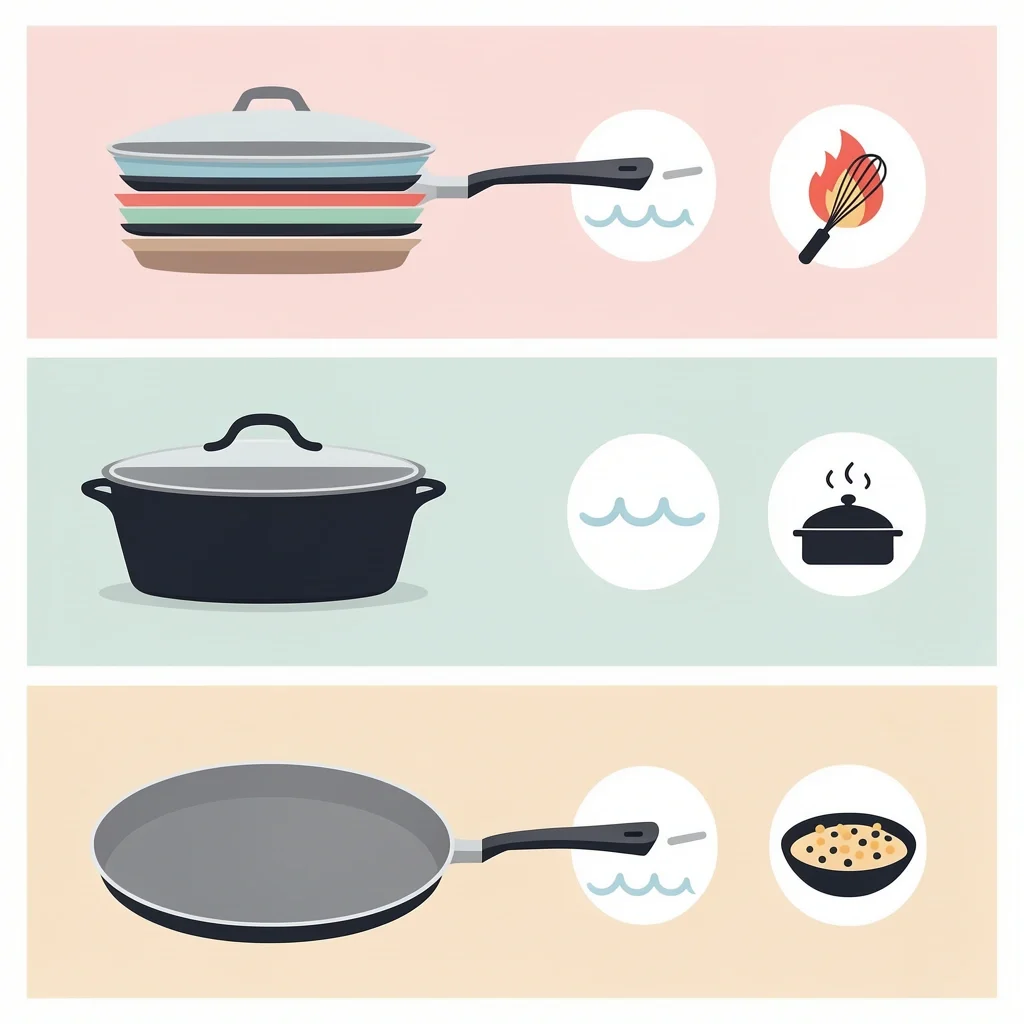
This is a gap that most articles miss. The construction of your saucepan affects whether it can perform pan-like tasks or whether it is best kept to pot-like duties.
Tri-ply or copper-core saucepans — These have layers of aluminum or copper sandwiched between stainless steel. They heat evenly across the base and up the sides. That even heat distribution allows you to sear aromatics, brown meat, and make a roux without hot spots. A tri-ply saucepan can genuinely replace a frying pan for small sautéing jobs. Because the heat is consistent, you can use it as a pan with confidence.
Disc-bottom or thin stainless steel saucepans — These have a thick aluminum disc welded to the bottom, but the sides are thin single-layer steel. The heat stays in the base; the sides stay cooler. This design works well for simmering soups and boiling pasta — pot tasks — because the liquid distributes heat upward. But if you try to use it as a pan for searing, the sides will not be hot enough, and the base may scorch in the center. Keep these saucepans for liquid cooking only.
Enameled cast iron saucepans — These are heavy, retain heat beautifully, and distribute it evenly. They behave most like traditional pots because the mass holds a steady temperature. They are excellent for long simmers and braising small cuts of meat. But they are less suitable as a pan for quick reductions because they take longer to heat up and cool down. You can still whisk a sauce in one, but you do not get the quick temperature control of a thin stainless saucepan.
Nonstick saucepans — Nonstick coatings limit the maximum safe heat. These saucepans are best for pot tasks like cooking oatmeal, rice, or delicate custards. Do not try to sear or brown in a nonstick saucepan — the coating will degrade and you will not get good browning anyway.
If you want a single saucepan that can truly act as both a pot and a pan, buy a tri-ply stainless model in the 3-quart size. That combination of material and volume gives you the most versatility.
The Verdict — Is a Saucepan a Pot?
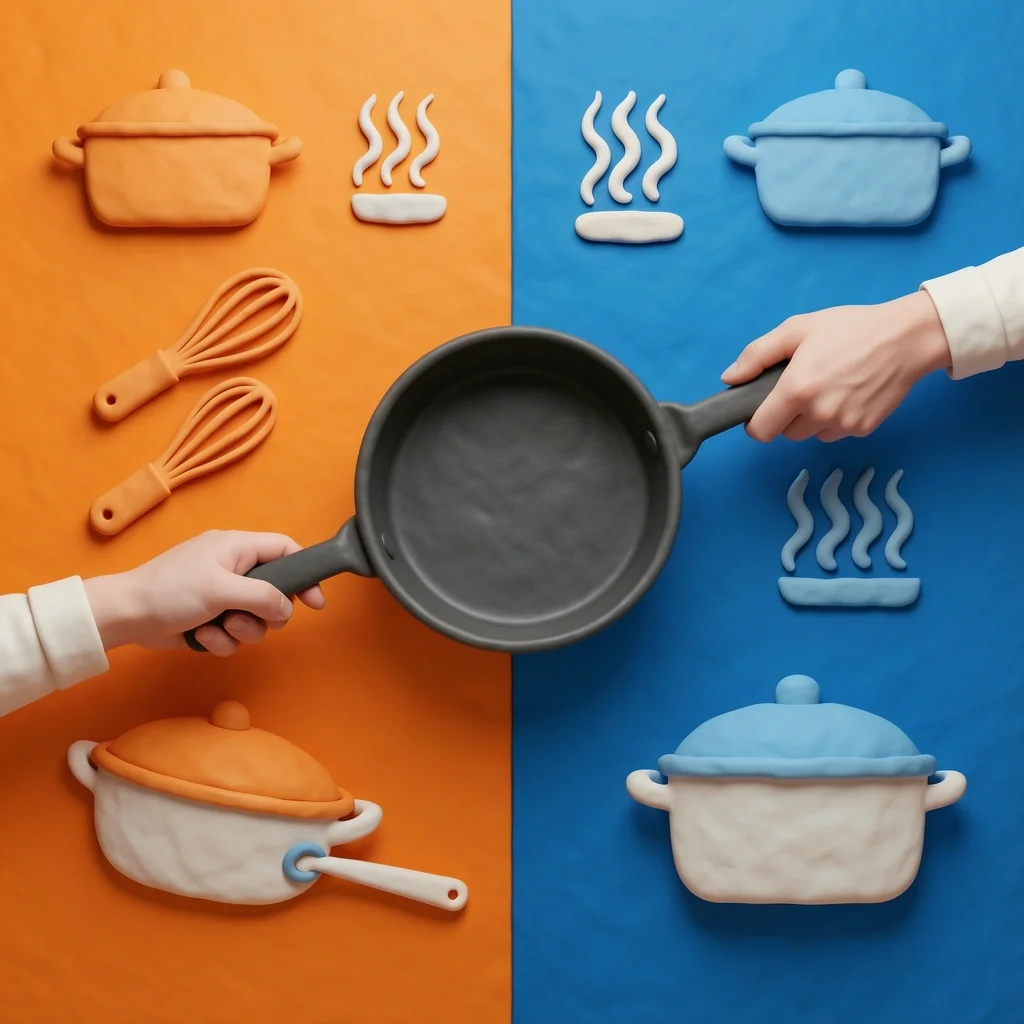
After all this, the answer is clear: A saucepan is a pot for some tasks and a pan for others, but in its essence, it is a specialized hybrid designed for a specific set of cooking techniques — primarily sauce-making and small-batch liquid cooking.
The most useful way to think about it: if you are trying to cover ingredients with liquid and cook them evenly, treat it as a pot. Use the lid, keep the heat moderate, and be careful when lifting it. If you are trying to concentrate or stir liquid to change its consistency — or if you are browning something before adding liquid — treat it as a pan. Use the single handle to tilt and whisk, and keep the heat higher.
This is not a cop-out answer. It is the reality of how cookware is designed. A chef does not ask “Is this a pot or a pan?” when reaching for a saucepan. They ask “What am I trying to do?” and the saucepan provides the answer by adapting.
The next time someone tells you a saucepan is definitely a pot or definitely a pan, you can explain that both are wrong and both are right. And then you can show them by making a perfect béchamel in the same pan you used to boil the pasta.
Frequently Asked Questions
Can a saucepan replace a small pot?
Yes, for any job that requires 4 quarts or less of liquid. A 3-quart saucepan works perfectly for soups, stews, boiling pasta for two, and cooking grains. For anything larger, you need a proper stock pot or sauce pot with two handles for safe lifting.
At what size does a saucepan become a sauce pot?
At 4 quarts, most manufacturers switch the name to “sauce pot.” The shape is nearly identical, but the larger size adds a helper handle or two loop handles. In practice, any saucepan over 3 quarts begins to behave more like a pot because of the weight.
Is a saucepan the same as a saucier?
No. A saucier has curved, sloped sides and a rounded base. This shape allows a whisk to reach every part of the pan without getting stuck in corners. A saucepan has straight, vertical sides. Use a saucier for creamy sauces that need constant stirring. Use a saucepan for tasks that require boiling or reducing with a lid.
Why do some saucepans have two handles?
Manufacturers add a helper handle (a small loop on the opposite side) to saucepans above 3 quarts. This gives you a second grip for safe lifting when the pan is full. A saucepan with two full loop handles is essentially a sauce pot, not a true saucepan.
Can you use a saucepan for searing meat?
Yes, if the saucepan is made of tri-ply stainless steel or cast iron. The flat base can get hot enough for a good sear on a single chicken breast or small steak. But the tall sides trap steam, which can prevent the browning from developing as well as a wide, open skillet would. For better results, pat the meat dry and leave the lid off.
What is the best saucepan size for a beginner?
A 3-quart tri-ply stainless saucepan. It is large enough to cook for one or two people, small enough to handle easily, and the material lets you use it as both a pot and a pan. You will reach for it more than any other piece of cookware.

