Reina
Reina 
As an Amazon Associate, I may earn a small commission from qualifying purchases at no extra cost to you. This helps me create more valuable, tested content for you.
I remember the moment I was ready to drop a thousand dollars on my first espresso setup.
I had read the reviews, seen the shiny machines, and convinced myself that spending big would guarantee great coffee from day one.
But after years of teaching friends and watching beginners make the same mistakes, I can tell you the real answer is more complicated than a simple yes or no.
A $1000 espresso machine setup can be absolutely worth it — if you understand what that money actually buys. If you think the machine alone does the work, you will waste your money.
If you plan for the whole ecosystem — grinder, accessories, learning curve, and maintenance — you will end up with a system that serves you for years and saves you money compared to café drinks.
The key is knowing where the value really lies.
The $1,000 Breakdown — Where Your Money Actually Goes
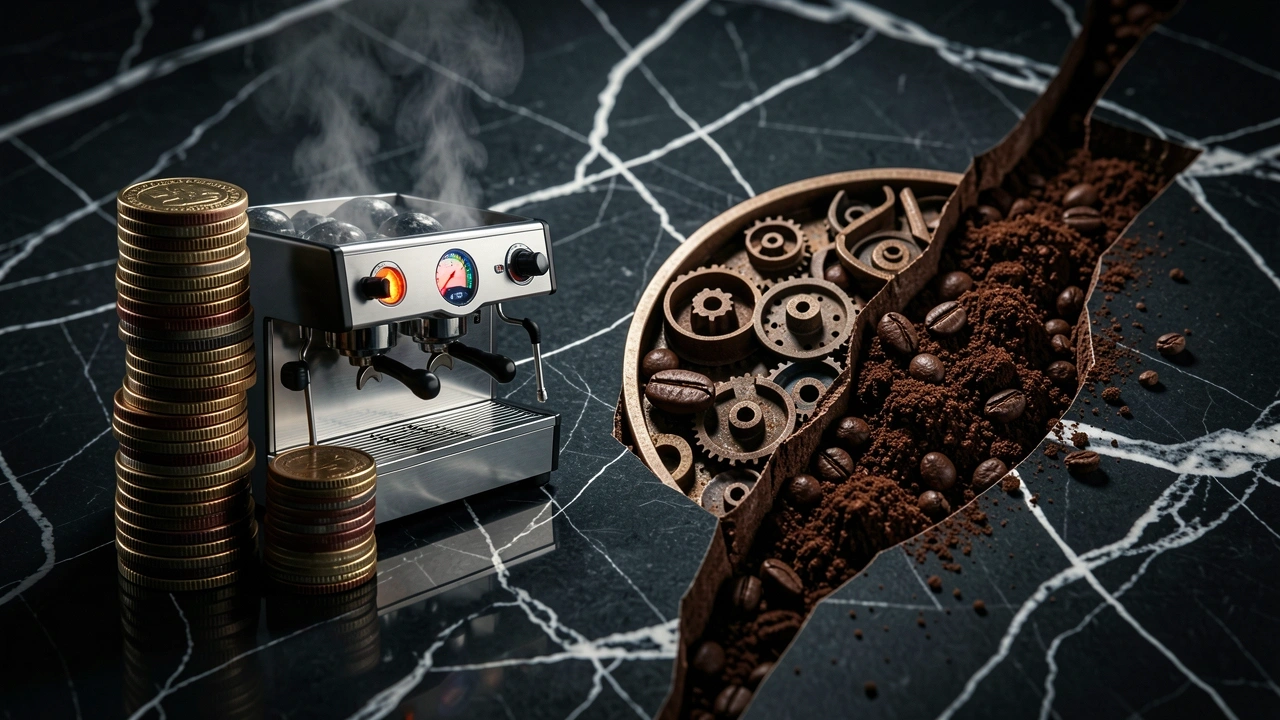
Most beginners walk into this thinking they should spend $800 on a machine and $200 on a grinder. That is a recipe for frustration.
I have seen it happen dozens of times: someone buys a beautiful Profitec Go or a Gaggia Classic Pro, pairs it with a cheap blade grinder, and wonders why their espresso tastes sour and watery.
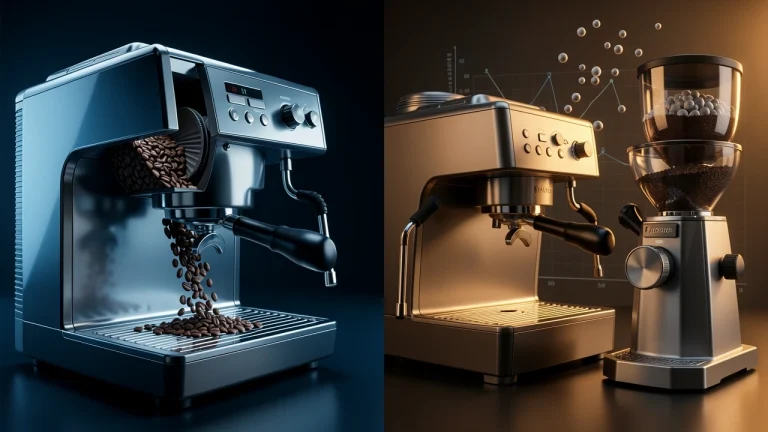
The grinder is the heart of your setup, not the machine.
Here is what the real cost structure looks like for a $1000 total budget:
| Scenario | Machine | Grinder | Accessories | Total | Expected Quality |
|---|---|---|---|---|---|
| Budget beginner | $400 Gaggia Classic Pro | $200 Baratza ESP | $100 | $700 | Good, with practice |
| Balanced beginner | $500 Breville Bambino Plus | $300 DF54 | $150 | $950 | Very good, consistent |
| Grinder-first approach | $400 Gaggia Classic Pro | $450 DF64 | $150 | $1,000 | Excellent, upgradable |
| Machine-first mistake | $800 Profitec Go | $100 blade grinder | $100 | $1,000 | Poor, frustrating |
The lesson is clear: spend more on your grinder than on your machine if you want great shots. A $400 machine with a $400 grinder will outperform an $800 machine with a $100 grinder every single time.
I made the mistake of buying a machine-first setup and regretted it for six months until I upgraded the grinder.
The Ecosystem You Can’t Ignore
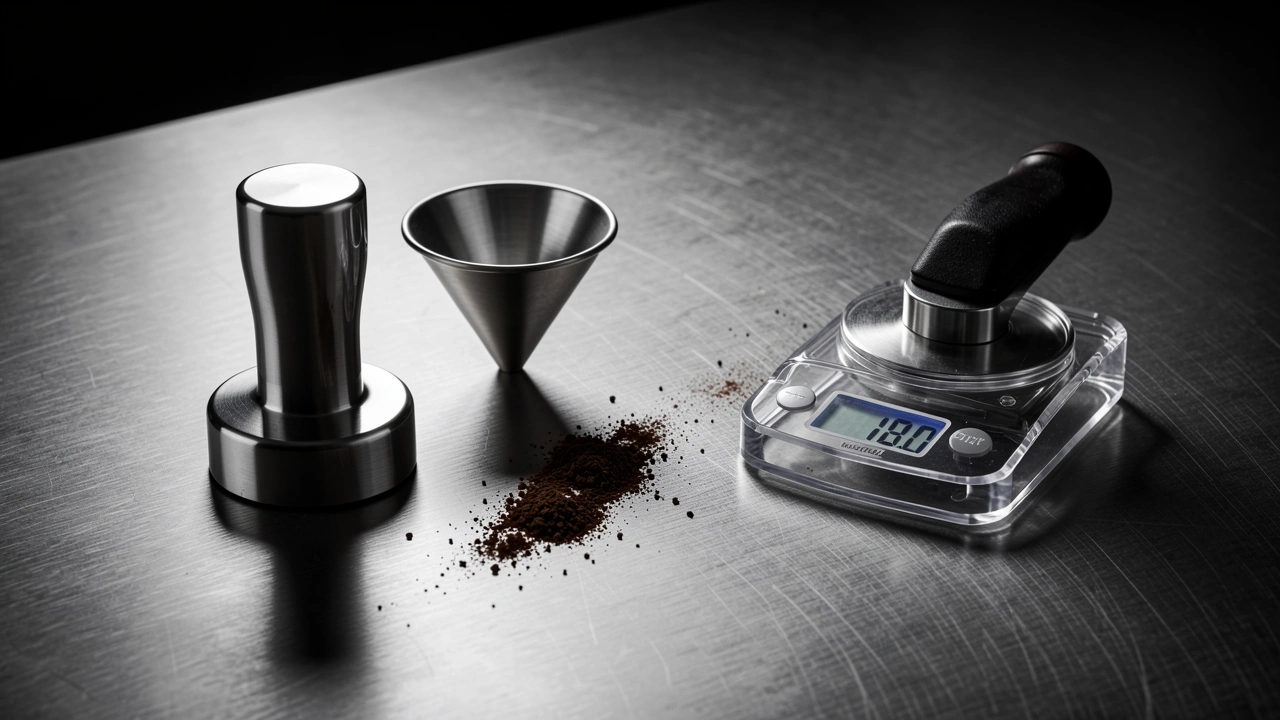
Beyond the machine and grinder, you need accessories that actually work. The plastic tamper that comes with most machines is unusable — it is too small and light to create an even puck.
I have bought three tampers before finding one that worked well. Budget at least $100 for a decent tamper, a distribution tool, a dosing funnel, and a scale that measures to 0.1 grams.
A steam pitcher, knock box, and cleaning supplies add another $50 to $100. That is the minimum to get consistent results.
What Beginners Actually Spend Before Pulling Their First Great Shot
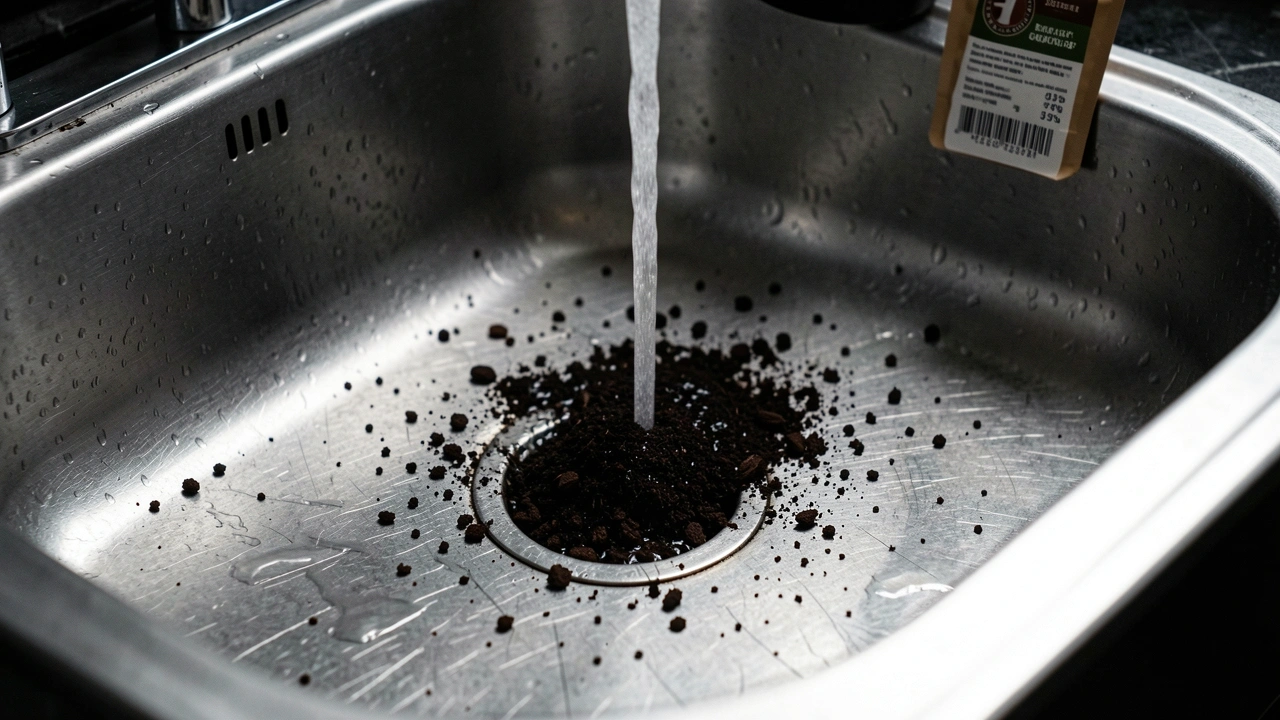
Nobody tells you about the hidden costs of learning. I spent my first two weeks pulling shots that tasted like battery acid or burnt rubber.
I went through two pounds of $20 coffee before I pulled a single drinkable shot. That is $40 down the drain. Most beginners waste one to two pounds of beans while dialing in. That is a real cost.
- Coffee waste: 1–2 pounds of beans at $15–25 each. Expect to throw away $30–50.
- Accessory upgrades: The stock tamper is useless. You may buy two or three tampers before finding one you like. Budget $50–100.
- Water quality: Hard water damages machines quickly. A simple filter or distilled water with minerals costs $20–50.
- Maintenance: Descaling solution, backflush detergent, group head brushes, replacement seals. Around $50–100 per year.
- The upgrade itch: Many beginners buy a $500 setup, then upgrade within a year. That path costs $500 plus another $1000 — total $1500 instead of $1000.
When I add it all up, the first-year cost of a $1000 setup is actually closer to $1100 or $1150. That is the real number you should plan for.
If you cannot stomach that, consider a cheaper starter setup.
What $1,000 Gets You — and What It Doesn’t
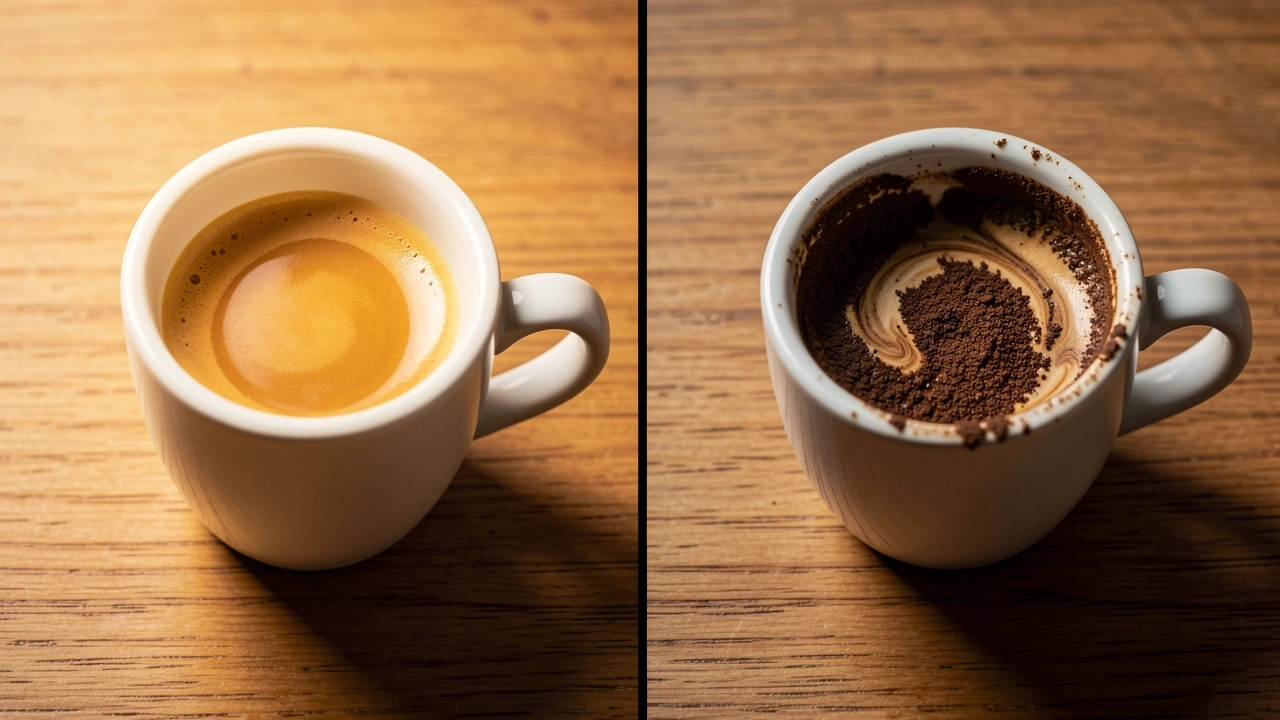
To decide if this investment is right, you need to understand the capability tiers. I have used machines in each range, and here is what I have seen.
Tier 1: Under $500 — The Dip-Your-Toe Zone
Machines like the Delonghi Dedica or Breville Bambino (non-Plus) cost $300 to $500. Paired with a $150 grinder, you can make drinkable espresso for milk drinks.
But straight espresso will be inconsistent. The steam wand is weak. You will hit a quality ceiling within three to six months if you care about great coffee.
This is for people who are curious and not sure they want a hobby.
Tier 2: $500 to $800 — The Serious Hobbyist Threshold
This is where things get interesting. A Breville Bambino Plus with a Baratza ESP or a Gaggia Classic Pro with a Sette 30 will produce genuinely good shots.
You get PID temperature stability or thermojet heating, decent steam, and the ability to pull balanced espresso. The grinder is the bottleneck, not the machine.
I used a Bambino Plus for 18 months and only upgraded because I wanted a higher ceiling for single-origin beans. Most people would be happy here for years.
Tier 3: $1,000 to $1,500 — The One-and-Done Sweet Spot
A Profitec Go with a DF64 grinder, or a Breville Barista Touch Pro, gives you commercial-grade build quality, precise temperature control, and a grinder that will not need upgrading.
I have been using a setup in this range for two years. I never feel limited by the equipment. The value is not in better shots alone — it is in skipping the upgrade treadmill.
You buy once and forget about gear.
A $1000 setup is not about a more expensive machine. It is about a system that grows with you without forcing you to buy a second machine in six months. That is the real value.
The Learning Curve — What “Beginner-Friendly” Actually Means
I have read reviews calling machines “beginner-friendly” and then watched beginners give up after a week. The term is misleading.
A beginner-friendly machine does not mean no learning curve — it means fewer variables to manage. A $1000 setup with a good grinder reduces the number of things that can go wrong.
But you still have to learn.
Week 1: The Frustration Phase
Your first shots will be sour or bitter. You will struggle to hit the 25–30 second window. You will wonder if you made a mistake.
The advantage of a $1000 setup is that temperature stays stable and grinder particles are consistent. That means when something goes wrong, you know it is your technique, not the machine.
That actually makes it easier to fix problems.
Weeks 2–4: The Competence Phase
You learn to read the stream — how it looks, how the crema forms. You develop a puck prep routine that works every time. You start pulling shots that are drinkable.
The $1000 advantage here is speed: you reach this phase faster because you are not fighting inconsistent temperature or a bad grinder.
Months 2–3: The Dialing-In Phase
Now you learn to adjust grind size by taste, not just timing. You understand how different beans respond to different parameters.
You start to taste specific notes — fruit, chocolate, nuttiness — instead of generic coffee flavor. The $1000 setup lets you highlight those characteristics. A cheaper setup might mask them.
If you are not willing to spend two to four weeks practicing mornings, then a $500 super-automatic machine that does everything for you is a better investment.
The $1000 semi-automatic setup demands your attention. That is part of the trade-off.
The Financial Case for a $1,000 Setup
Let me do the math that helped me justify the purchase to myself. It is honest because it includes all costs.
- Year 1: Setup $1,000 + wasted coffee and maintenance $150 = $1,150 total. If you drink two shots per day, that is 730 shots. Cost per shot: $1,150 ÷ 730 = about $1.58 per shot. But that includes equipment.
- Year 2 and beyond: Only coffee, water, and maintenance cost about $475 per year (at $20 per pound, 20g per shot, two shots per day). That is $0.65 per shot.
- Compare to cafés: Two lattes per day at $5.50 each cost $4,015 per year. Year 1 savings after equipment: $4,015 – $1,575 = $2,440 saved. Year 2+ savings: $4,015 – $475 = $3,540 saved.
- Break-even: At two drinks per day, you break even in about seven to eight months. At one drink per day, it takes 14 to 16 months.
But this math assumes you would otherwise buy café drinks. If you would drink drip coffee at $0.30 per cup, the economics change — you are investing for quality, not savings.
That is a different decision.
The Decision Framework — Three Questions to Ask Yourself
After helping dozens of friends decide, I have found that three questions filter out the people who will love a $1000 setup from those who will regret it.
Question 1: Do you actually enjoy the process?
If the idea of weighing, grinding, tamping, timing, and adjusting feels therapeutic or engaging, then a $1000 semi-automatic setup will bring you joy. I love the morning ritual.
If you just want coffee without thought, buy a $500 super-automatic or a high-quality drip machine. Do not convince yourself you will learn to love the process — you either do or you do not.
Question 2: How do you drink your coffee?
Straight espresso or Americanos? Machine quality matters enormously — budget higher. Milk drinks? Steam wand performance is critical, but you can compromise on shot quality. Iced coffee or cold brew?
Do not buy an espresso machine at all. The way you drink determines which parts of the setup deserve your money.
Question 3: What is your relationship with money and gear?
If you are the type who buys the best once and uses it for ten years, a $1000 setup is the right move.
If you like to start cheap and upgrade as you learn, start with $500 and a good grinder, then upgrade the machine later.
If you want perfection without effort, $1000 will not get you there — you need $2000 or a super-automatic. Be honest with yourself.
My recommended path for most beginners: spend $400 to $500 on a machine and $300 to $400 on a grinder. That puts you at $700 to $900 total, leaving room for accessories.
You get a system that grows with you without overspending before you know if you love the hobby.
Frequently Asked Questions
Can I start with a $300 machine and upgrade later?
Yes, but choose wisely. The Breville Bambino (around $300) is a capable starter that holds resale value.
Avoid ultra-cheap machines from unknown brands — they use pressurized baskets that mask poor grinder quality and prevent you from learning proper technique.
You will waste more money on those than you save. I have seen people buy a $150 machine, hate it, and sell it for $50. That is a $100 loss that could have gone toward a better starter.
Is a super-automatic machine better for beginners?
If your priority is convenience over quality, yes. Super-automatics like Jura, Philips, or De’Longhi Dinamica grind, tamp, brew, and froth automatically.
They produce acceptable espresso but cannot match the quality ceiling of a semi-automatic. At $800 to $1500, you are paying for automation, not shot quality.
I recommend a super-automatic only if you value speed and consistency over the ability to tweak every variable.
Do I really need a separate grinder, or can I use the built-in one?
The built-in grinders on most machines under $1000 are adequate at best. They produce inconsistent particle sizes, causing channeling and uneven extraction.
A $200 to $300 separate grinder — even a hand grinder — will improve your shots more than upgrading from a $500 machine to a $1000 machine.
I learned this the hard way when I used a built-in grinder for six months. The moment I switched to a dedicated espresso grinder, my shots went from hit-or-miss to consistently good.
What if I don’t like espresso after buying the setup?
Good question with an uncomfortable answer: you will lose 50 to 70 percent of the value reselling used equipment. Machines hold decent resale, but grinders and accessories are harder to move.
That is why the “try before you commit” approach — buying a $300 setup first — has merit if you are uncertain. Alternatively, buy a used machine and grinder so your downside is smaller.
I have seen many beginners sell their entire setup after three months. That risk is real.
How long will a $1,000 setup last?
With proper maintenance, five to ten years. The grinder will need burr replacement every two to three years for heavy use (about $50 to $100).
The machine will need seal replacement every two to three years ($20 to $50). Descale monthly if using hard water. The main failure point is the pump, which costs $50 to $100 to replace.
I have a friend who has used a Gaggia Classic for eight years with only routine maintenance. That is the kind of lifespan you can expect from a well-built setup.