Reina
Reina 
As an Amazon Associate, I may earn a small commission from qualifying purchases at no extra cost to you. This helps me create more valuable, tested content for you.
If you’re tired of curdled almond milk or thin, watery oat milk foam, the fix is almost always temperature. For oat milk, aim for 60-65°C (140-149°F).
For almond milk, stop a few degrees lower at 55-60°C (131-140°F). I learned these ranges the hard way—by ruining countless lattes with scorched, separated milk.
Once I started measuring precisely, my foam went from bubbly mess to silky microfoam that pours like paint.
Why Oat and Almond Milk Need Different Temperature Targets
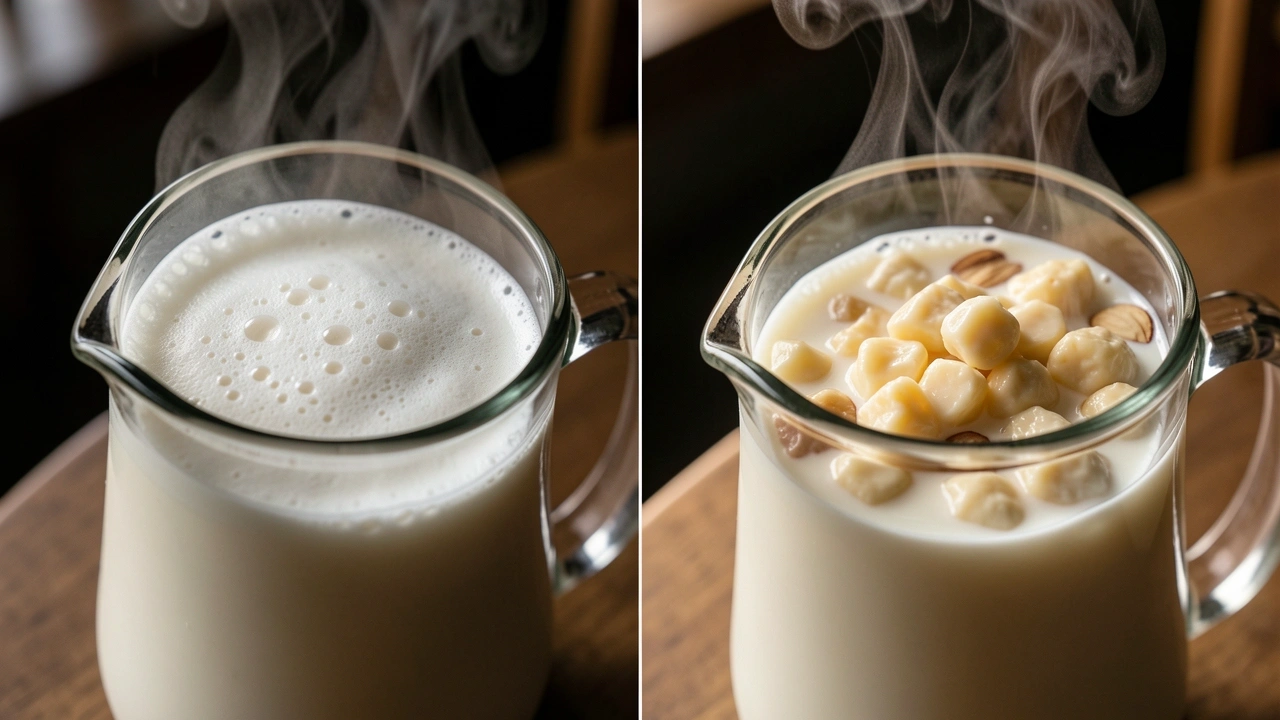
The difference comes down to what each milk is made of. Oat milk is mostly water with starches and a little protein from beta-glucan.
Those starches thicken when heated, which helps stabilize foam, but the protein is fragile.
Above 65°C, oat milk proteins start to denature and the texture turns slimy—I’ve had batches that looked like glue.
Almond milk is even trickier. It has very low protein (sometimes less than 1%) and a high fat content. The fat emulsifies with water, but the tiny amount of protein denatures quickly.
That’s why almond milk separates into watery liquid and curd-like chunks if you go past 60°C.
Barista-edition almond milks add stabilizers like gums, which raise the heat tolerance slightly, but 60°C is still the hard ceiling for most brands.
How I Steam Each Milk for Consistent Results
I use a thermometer religiously, but I also rely on sound and touch. Here’s my exact process for both milks.
Steaming Oat Milk at 60-65°C
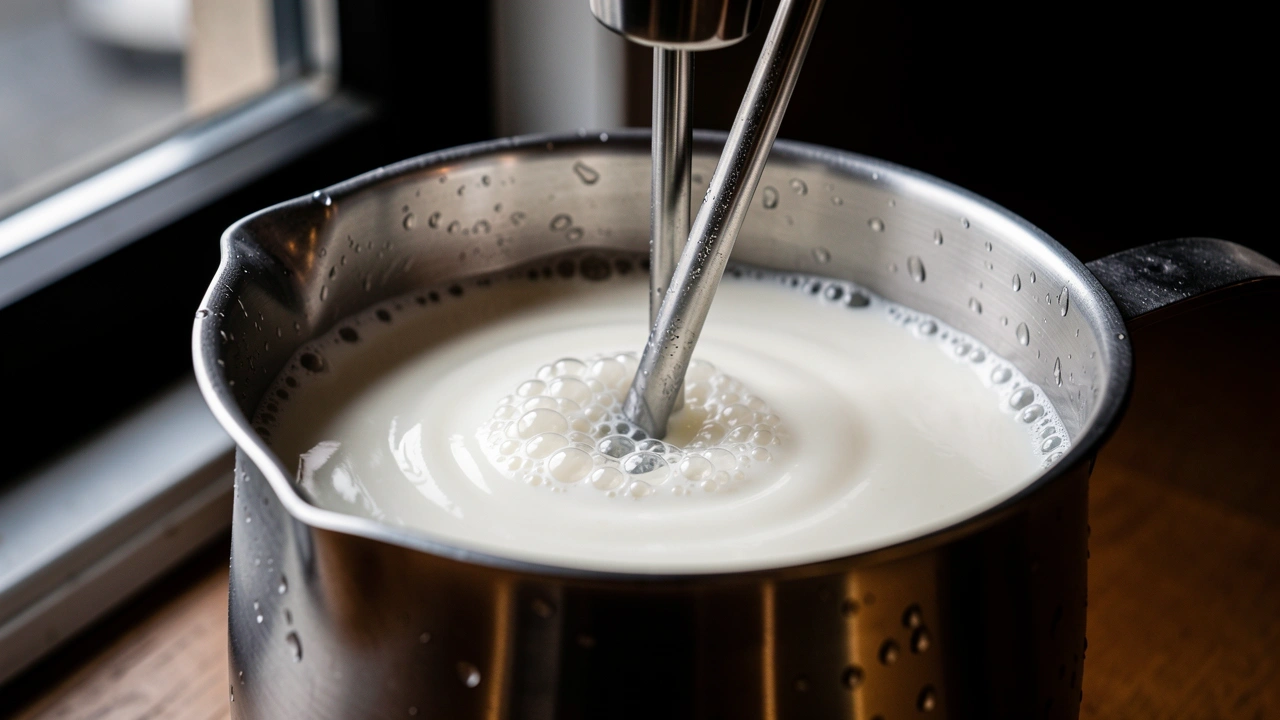
Start with cold milk straight from the fridge. Submerge the steam wand just below the surface and open the valve fully. You want a gentle hiss, not a loud ripping noise.
Stretch the milk for about 3-5 seconds—count it out. Then sink the tip to create a vortex and heat until the pitcher feels warm but not hot.
When you can hold the pitcher for exactly 3 seconds without burning your hand, that’s roughly 63°C. Perfect spot.
The foam should look like wet paint with tiny, glossy bubbles. If you see large bubbles or hear a screeching sound, you’ve gone too far.
Overheated oat milk gets a slimy mouthfeel and the foam collapses within a minute.
Steaming Almond Milk at 55-60°C
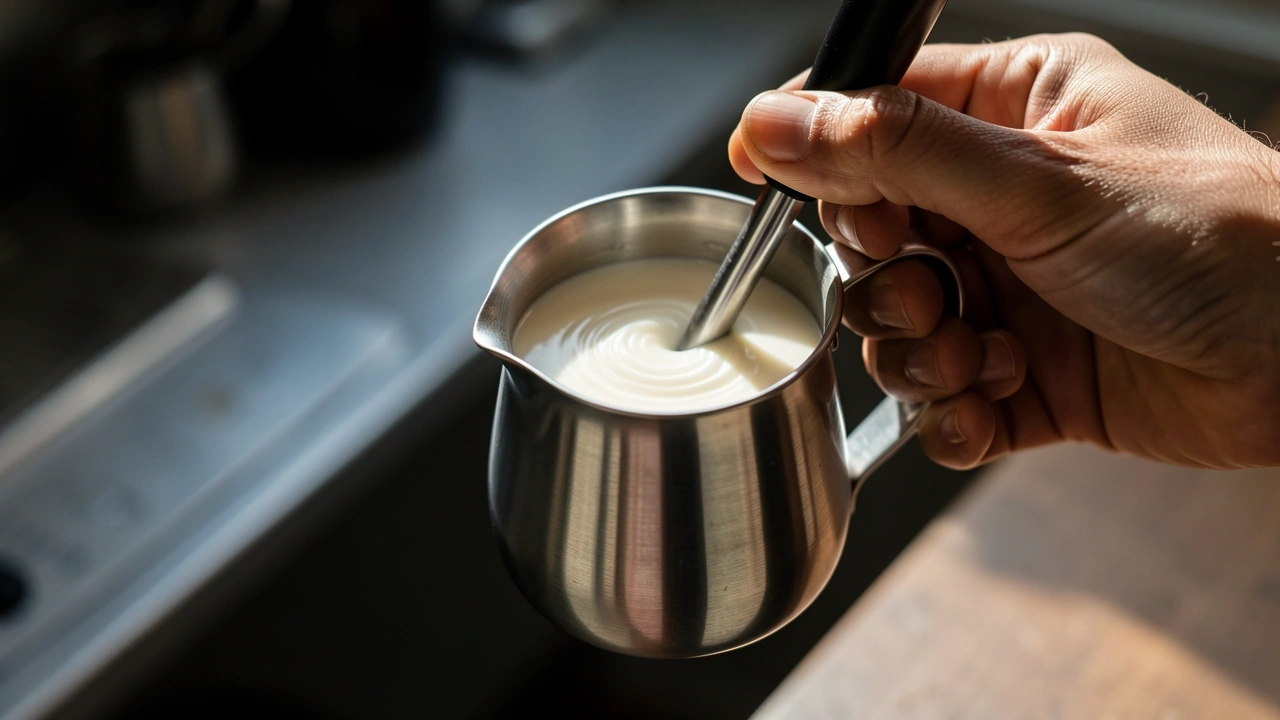
Almond milk needs a lighter touch. Stretch for only 2 seconds—any more air and the foam gets too bubbly and separates. Then heat while swirling the pitcher.
The target temperature is reached when the pitcher is warm to the touch but you can hold it indefinitely. That’s about 57°C. Stop the steam wand immediately.
If you wait until the pitcher feels hot, you’ve already passed 60°C and the milk will split.
One trick I use: listen for the pitch change. As almond milk heats, the steam wand grows quieter. When it drops to a low, steady hum, stop. That sound happens right around 58°C for most steam wands.
What Happens at the Wrong Temperatures
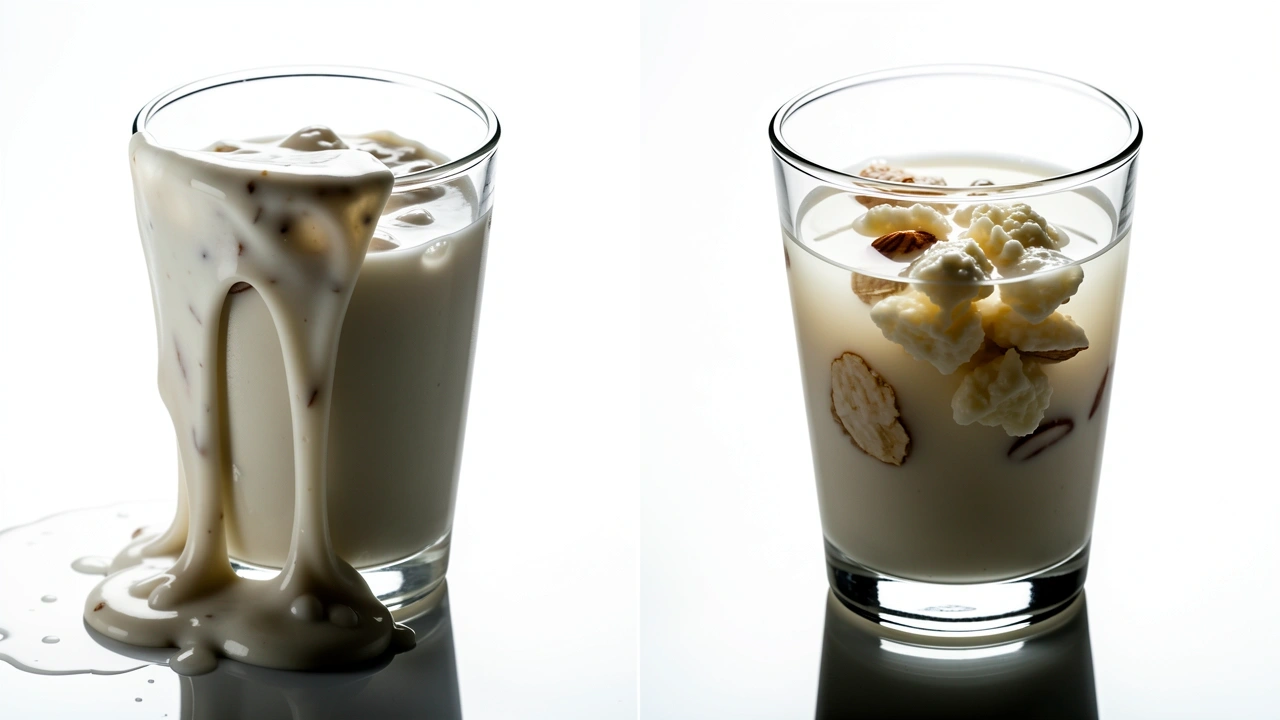
Knowing the consequences helps you recognize problems fast:
- Oat milk below 55°C: Foam is thin and watery. No body, no latte art.
- Oat milk above 68°C: Turns slimy, tastes cooked. The foam deflates immediately.
- Almond milk below 50°C: Bubbles are large and unstable. Milk stays thin.
- Almond milk above 62°C: Separates into curds and liquid. Unsalvageable.
I’ve had almond milk curdle at exactly 63°C more times than I’d like to admit. Once it splits, no amount of swirling will fix it. Pour it out and start over with a fresh batch at a lower temperature.
How to Know the Temperature Without a Thermometer
Not everyone owns a barista thermometer. I didn’t for my first year at home. Here are three methods that work.
- Hand test: When the pitcher bottom feels warm but you can hold it comfortably for a full 5 seconds, you’re around 55°C. When it becomes too hot to hold for more than 3 seconds, that’s 65°C. This is surprisingly accurate once you practice a few times.
- Sound cues: The steam wand makes a high-pitched hiss when the milk is cold. As it heats, the pitch drops to a low roar. For almond milk, stop when the roar starts. For oat milk, you have a few more seconds of roar before the pitch changes again to a gurgle.
- Visual check: Look at the foam surface. Perfect microfoam has no visible bubbles larger than a pinhead. If you see bubbles the size of peas, the milk is either too cold or you aerated too aggressively.
Temperature Comparison by Brand
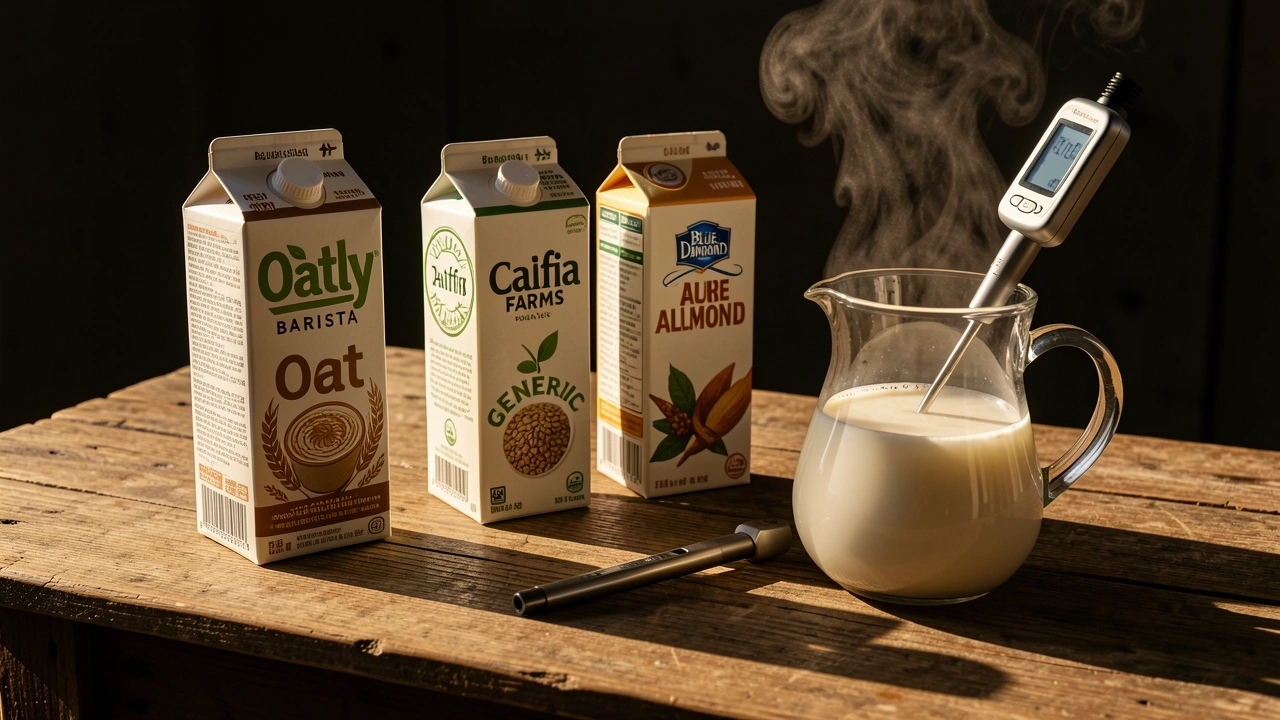
Not all oat and almond milks behave identically. Barista editions tolerate slightly higher heat because they contain added emulsifiers and stabilizers. Here’s a quick guide based on what I’ve tested:
| Brand | Type | Ideal Temp | Notes |
|---|---|---|---|
| Oatly Barista Edition | Oat | 62-65°C | Very stable, excellent foam |
| Califia Farms Barista Blend | Oat | 60-64°C | Slightly thinner; stop at 62°C for best texture |
| Generic store oat milk | Oat | 58-62°C | Lower protein; don’t push past 63°C |
| Califia Farms Barista Almond | Almond | 55-58°C | Good stability; 60°C leads to separation |
| Blue Diamond Almond Breeze | Almond | 53-56°C | Very delicate; keep it under 57°C |
Troubleshooting Common Problems
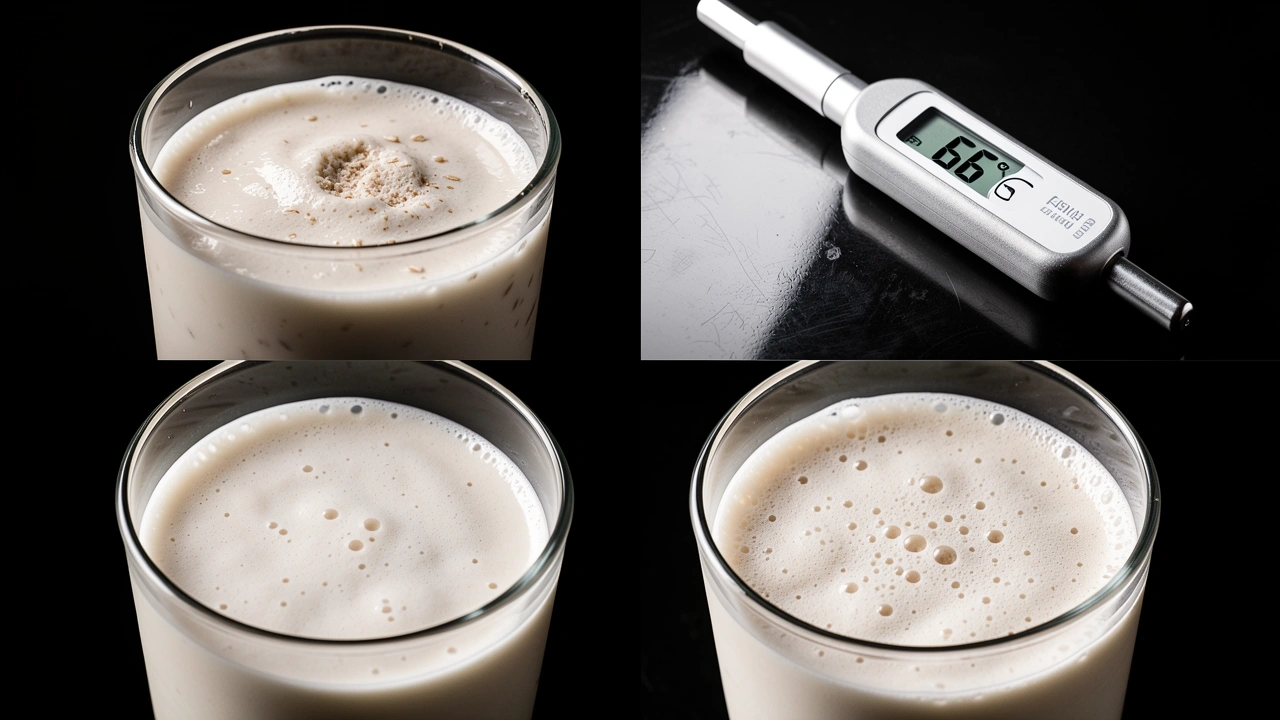
Even with the right temperature, things can go wrong. Here’s what I’ve learned to fix.
Problem: Oat milk looks grainy or slimy
You steamed past 66°C. The starches broke down and the protein denatured. Next time, pull the pitcher off the steam wand 5 seconds earlier.
Also check if your milk is ultra-pasteurized—some brands are more heat-sensitive.
Problem: Almond milk separates despite correct temperature
The coffee itself might be too acidic. Dark roasts are less acidic and pair better with almond milk.
Or your almond milk is old—freshness matters. Use a barista blend and keep it refrigerated after opening.
Problem: Foam disappears within 30 seconds
The milk wasn’t stretched enough, or the temperature was too low. For oat milk, ensure you stretch for at least 3 seconds.
For almond milk, stretch only 2 seconds but make sure the vortex is strong enough to incorporate the air.
Pouring Latte Art with These Milks

Temperature directly affects how the foam pours. Oat milk held at 62°C produces thick, creamy lines that work beautifully for tulips and rosettas.
I pour immediately after steaming—waiting even 10 seconds lets the foam settle too much. Almond milk at 56°C gives very thin foam that requires a fast, controlled pour.
I use it mainly for simple hearts because the foam loses definition quickly.
If you want to practice latte art with alternative milks, start with oat milk at 63°C. It forgives minor technique mistakes and holds shape longer. Almond milk is advanced—master oat first.
Frequently Asked Questions
Can I steam oat milk or almond milk for cold foam at a different temperature?
Yes. For cold foam, oat milk works best at 50-55°C (steam briefly and then cool). Almond milk cold foam is difficult—I’d recommend using a frother instead of a steam wand.
The lower temperature reduces foam stability but creates a lighter texture for cold brew.
Why does my almond milk separate even at 55°C?
Check the freshness of your almond milk. Old batches lose emulsion quickly. Also, use a barista blend designed for heat.
Regular almond milk often contains less than 2% almonds—the rest is water and sugar, which separates easily. Pour the milk into the espresso slowly to avoid acidity shock.
Is it safe to steam oat milk past 65°C?
Safer than almond milk, but not recommended. The texture becomes slimy and the foam collapses. Some barista blends can handle 67-68°C, but you lose the silky mouthfeel.
Stick to 60-65°C for best results.
Do I need to preheat the pitcher for alternative milks?
No. Start with a cold pitcher and cold milk. That gives you more time to stretch and control the temperature. A warm pitcher accelerates heating and reduces the window for perfect foam.