Reina
Reina 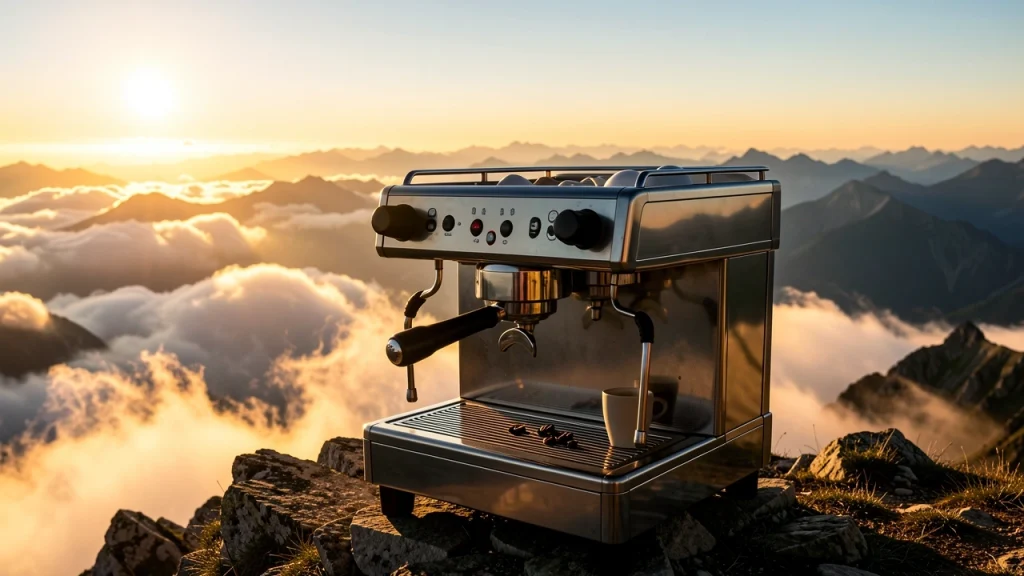
As an Amazon Associate, I may earn a small commission from qualifying purchases at no extra cost to you. This helps me create more valuable, tested content for you.
Yes. But not in the way most articles tell you. Most of what you read online focuses entirely on the altitude where the coffee bean was grown. That matters.
But if you live at 6000 feet, your espresso machine behaves differently than it does at sea level. And that changes everything.
I learned this the hard way. I moved from a city at 500 feet to a mountain town at 7200 feet. The same beans, the same grinder, the same machine. My first shot was a disaster.
Not because I forgot something. Because the rules changed. Here is what I found out.
The two kinds of altitude that matter for espresso
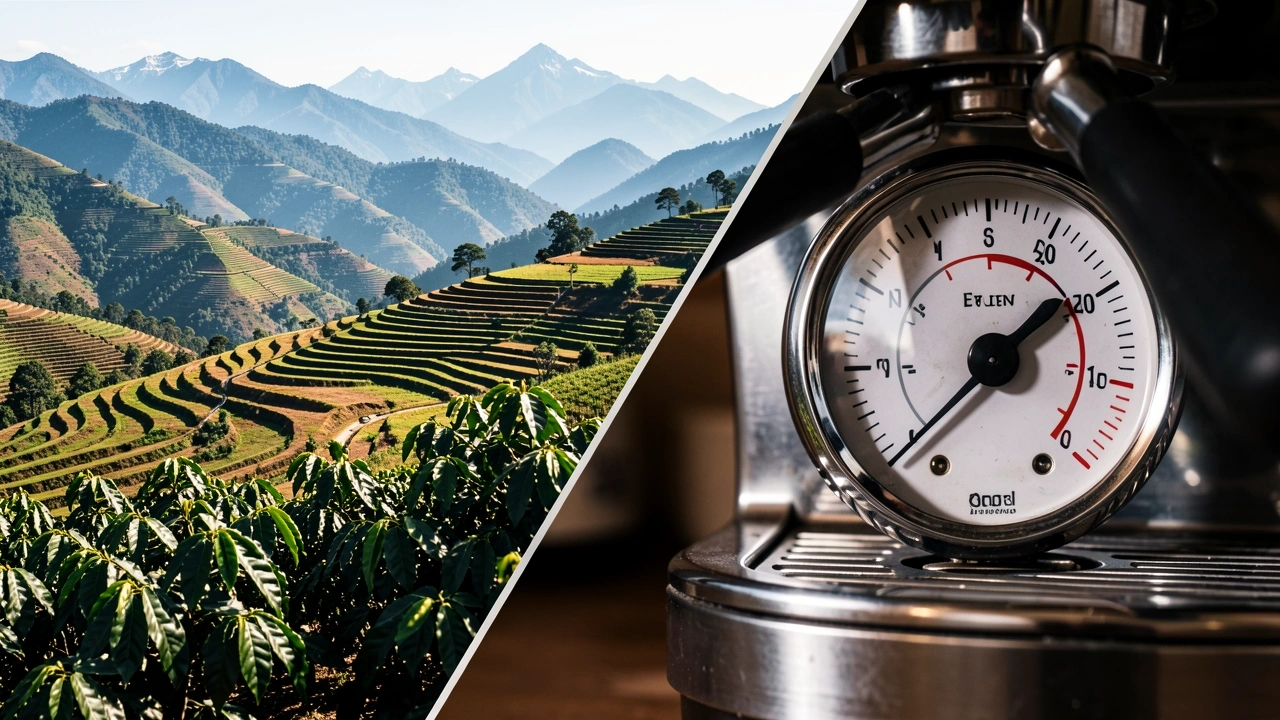
Altitude affects your espresso in two separate ways. You need to understand both to dial in properly.
Bean altitude is the elevation where the coffee plant grew. Higher grown beans are denser. They need a finer grind and higher brew temperature to extract properly.
This part is well documented. But it is only half the story.
Brew altitude is the elevation where you pull the shot. At higher elevations, the boiling point of water drops.
Your machine can still heat water to its set temperature, but the pressure inside the boiler changes. The result is less thermal stability and a different extraction dynamic.
Your espresso machine does not know it is at 7000 feet. You have to compensate.
Bean altitude: why high grown coffee needs different treatment
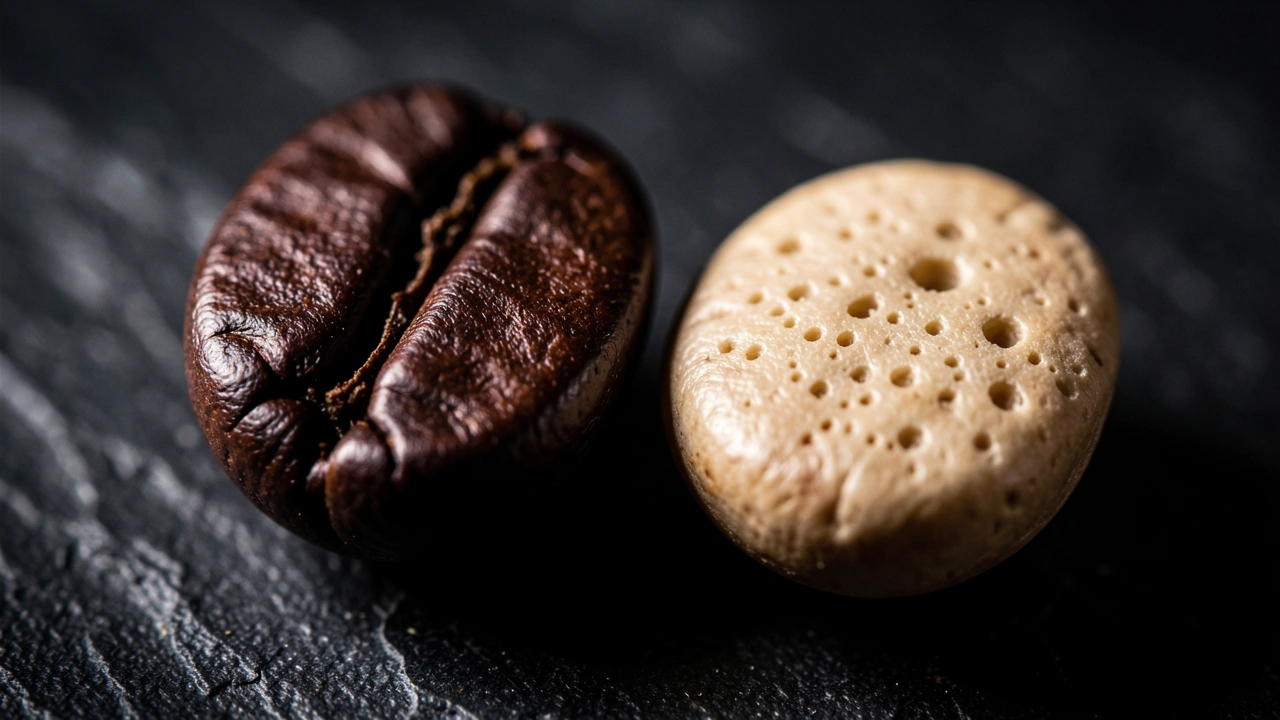
When coffee grows at higher elevations, the plant struggles more. Cooler temperatures, less oxygen, and more intense sunlight make the bean develop slowly.
This creates a denser bean with more complex sugars and acids. The density is the key.
A dense bean resists water penetration. This means extraction happens more slowly. To compensate, you grind finer and sometimes increase brew temperature by one or two degrees Celsius.
If you do not adjust, the shot will taste sour and thin. The water simply cannot reach the flavors inside the bean.
Here is a practical example I have used dozens of times. A washed Ethiopian bean grown at 1900 meters versus a Brazilian bean grown at 900 meters.
With the Ethiopian, I start my grind at least one full step finer on my grinder compared to the Brazilian. I also set my brew temperature to 94 degrees instead of 91.
If I do not make these changes, the shot stalls or runs fast with no body.
Brew altitude: what happens to your machine at high elevation
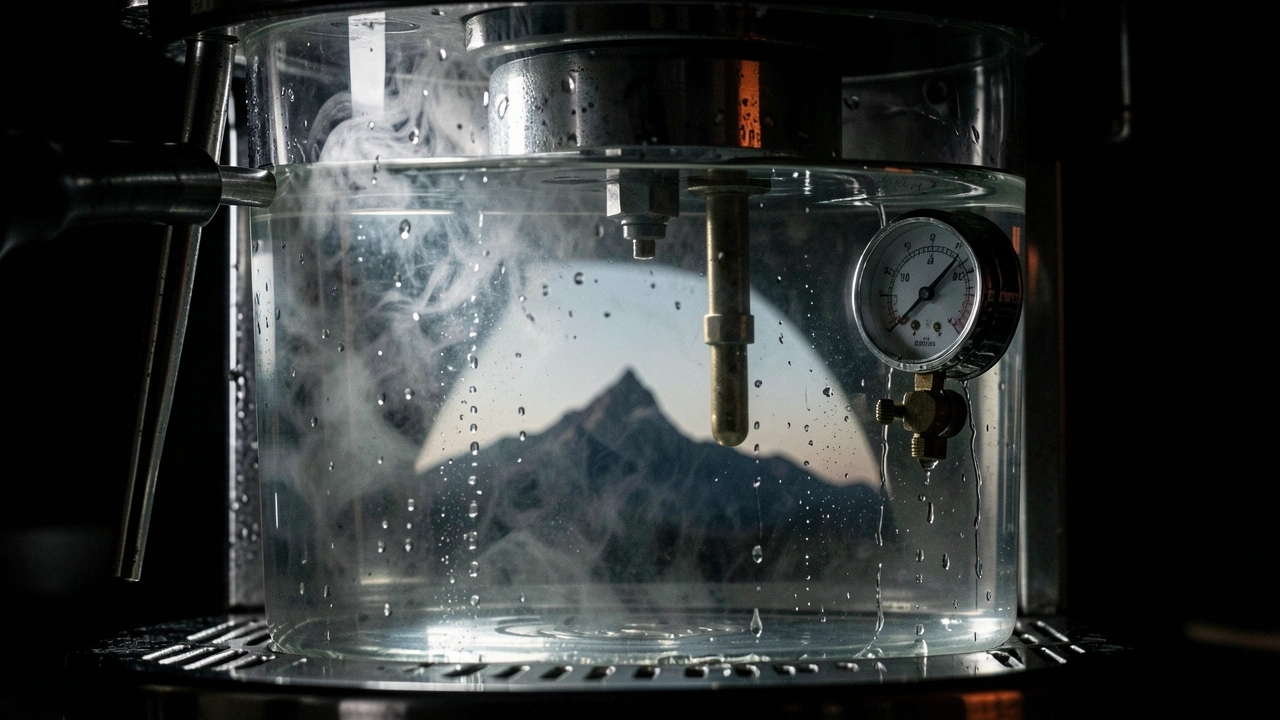
This is where most online guides drop the ball. They tell you to adjust grind and temperature for bean altitude, then stop.
They forget that at 5000 feet, water boils at around 203 degrees Fahrenheit instead of 212. Your espresso machine uses boiler pressure to push water through the puck.
Lower atmospheric pressure changes how the machine regulates temperature and steam pressure.
In my experience, the most noticeable effect is on steam power. At high altitude, my dual boiler machine produces less steam pressure. Milk steaming takes longer.
But more importantly, the brew temperature can drift. The machine’s PID controller struggles to maintain a stable temperature because the boiling point is lower and the thermal dynamics have shifted.
If your machine has a pressure gauge, you might notice the boiler pressure reading drops slightly at altitude. This is normal. But it changes how pre-infusion works.
At lower pressure, water enters the puck more softly. This can be a good thing if you know how to use it.
But if you rely on standard dilution, the shot may seem watery or underextracted even with a fine grind.
How to adjust your machine for high brew altitude
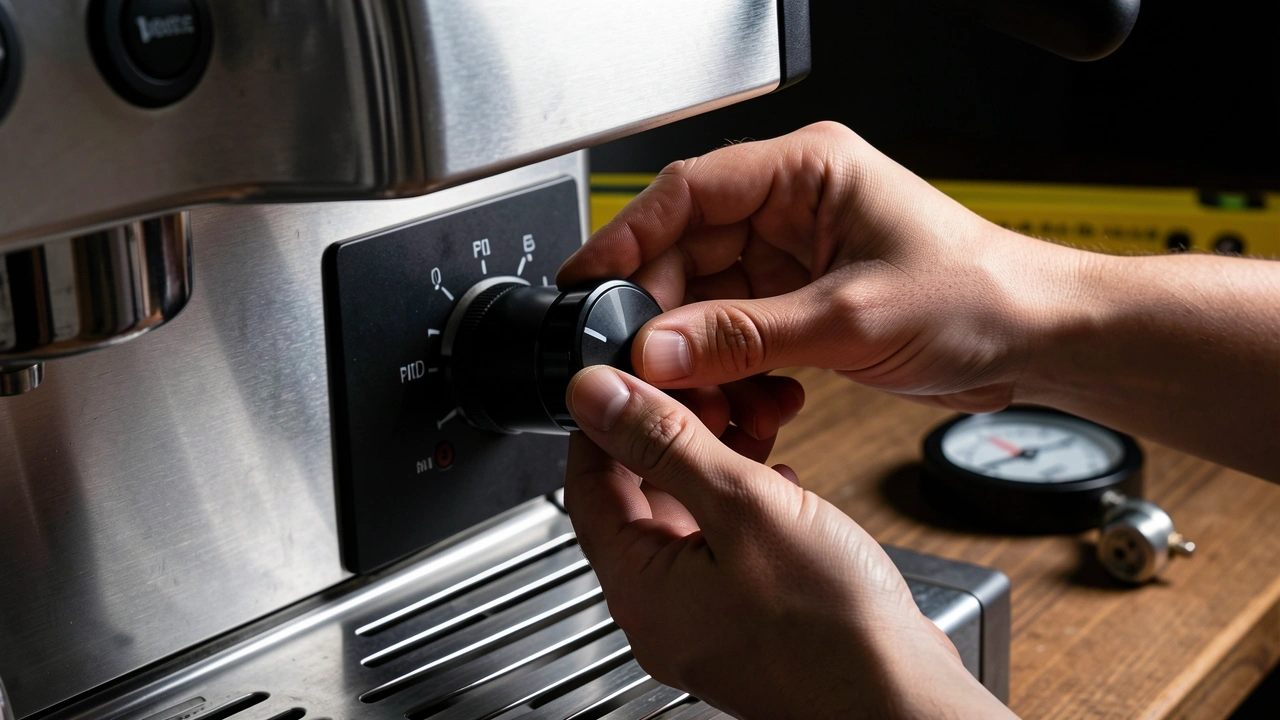
If you live above 4000 feet, here is what I recommend based on my own testing.
- Check your brew temperature offset. Many PID machines let you set an offset for the temperature reading. At altitude, you may need to increase the offset by 1 degree to account for the lower boiling point. Experiment starting one degree higher.
- Adjust the over pressure valve if you can. Some machines let you tweak the OPV to maintain proper pump pressure. At elevation, the pump has to work harder because atmospheric pressure is lower. If your machine has an adjustable OPV, set it to 9 bar at the group head after the machine has warmed up fully.
- Use a gentle pre-infusion. At high altitude, water flows into the puck more easily because the ambient pressure is lower. This can cause channeling. A low pressure pre-infusion of 3 to 5 seconds helps the puck saturate evenly before full pressure hits.
- Monitor your shot times carefully. The same grind setting that gave you a 28 second shot at sea level might give you a 22 second shot at 7000 feet. Do not panic. Adjust finer by one click and re-test. The relationship between grind and time shifts with altitude.
I once did a back to back test with the same bean. At sea level, 17 grams in, 34 grams out in 26 seconds tasted balanced.
At 7200 feet, with the same grind and temperature, the shot ran in 18 seconds and tasted sour.
I had to grind finer by two steps and increase temperature by one degree to get back to a similar flavor profile.
What about both variables at once
If you are using high grown beans at high brew altitude, you are dealing with a double challenge. The bean is dense and resistant. The machine is running at a thermal disadvantage.
You have to compensate in both directions.
My rule of thumb is straightforward. Start with the standard dial in for the bean altitude, then add one more fine adjustment and one more temperature bump for the brew altitude.
So if you normally use a medium fine grind for a 1500 meter bean at sea level, increase to fine for the same bean at 5000 feet. And instead of 93 degrees, try 94 or 94.5.
This is not perfect for every situation. But it gives you a starting point that is much closer than guessing.
Myth vs reality about altitude and espresso
| Myth | Reality |
|---|---|
| You need a special espresso machine for high altitude. | Any decent machine works. You just need to understand its limits and adjust settings. |
| Bean altitude is all that matters. | Brew altitude changes how your machine performs. Both matter equally. |
| Higher temperature always helps at altitude. | Only up to a point. Too high temperature can cause bitter, overextracted shots. Small increments work best. |
| Grinding coarser fixes brew altitude problems. | Usually the opposite. You need a finer grind to maintain proper resistance at high altitude. |
Advanced tips for high altitude dial in
Once you have the basics down, you can fine tune further.
Pre-infusion pressure. If your machine allows flow profiling, use a long, gentle pre-infusion at low pressure.
I have found that 4 to 5 seconds at 2 to 3 bar helps stabilize the puck at high altitude. This prevents channeling and improves extraction consistency.
Yield adjustments. High grown beans at high brew altitude sometimes taste better with a slightly higher yield. Instead of a 1:2 ratio, try 1:2.2 or 1:2.5.
This compensates for the slower solubility of the dense bean and the lower thermal stability of the machine.
Water in the machine. At high altitude, water temperature in the boiler can be less stable during the shot. Let your machine warm up for at least 30 minutes before pulling.
Some machines need 45 minutes at height to stabilize fully.
Steam issues. If you struggle with milk texture at high altitude, consider purging the steam wand for a few seconds before steaming. This clears cooler water from the lines and gives you drier steam.
Frequently Asked Questions
Is high altitude brewing only an issue for light roasts?
No. Light roasts are affected more because they are denser and harder to extract. But dark roasts also change at high brew altitude.
The machine’s thermal behavior affects all roasts, though the impact is less dramatic with dark roasts.
Do I need to recalibrate my machines over pressure valve for my elevation?
If your machine has an adjustable OPV, it is a good idea to check and set it to 9 bar at the group head after warm up at your specific altitude. Many machines leave the factory set for sea level.
At high altitude, the pump may need a slight adjustment to maintain proper pressure.
Can I simply use a coarser grind to fix brew altitude issues?
No. Coarser grind reduces resistance, which makes the shot run faster. At high altitude, you want a finer grind to compensate for the lower ambient pressure. Coarser grind usually makes things worse.
How does humidity at high altitude affect dial in beyond temperature?
High altitude often means low humidity. Dry air causes coffee beans to degas faster and lose freshness more quickly. This means you may need to grind finer as the beans age.
You might also notice a wider range of shot times day to day because the bean moisture level changes faster. Store your beans in a sealed container with a one way valve to slow this process.
Will a dual boiler machine handle high altitude better than a single boiler?
Generally yes. Dual boiler machines have separate boilers for brew and steam. The thermal stability of a dedicated brew boiler is better at high altitude because it is not affected by steam draws.
A heat exchanger machine can also work well, but single boiler machines often struggle to maintain stable brew temperature at elevation.