Reina
Reina 
As an Amazon Associate, I may earn a small commission from qualifying purchases at no extra cost to you. This helps me create more valuable, tested content for you.
If you’re thinking about buying a juicer but have no idea where to start, you’re not alone—most people worry about whether they’ll actually use it or if it’ll just become another dusty kitchen gadget. I tested the leading models to help you figure out which one fits your life and your budget, because the best juicer for beginners isn’t necessarily the fanciest or cheapest, it’s the one that removes enough friction that you’ll actually keep using it.
Here’s the thing: cleanup and simplicity matter way more than juice yield when you’re testing whether juicing is for you. I’ve used cold press juicers, centrifugal models, and everything in between, and I can tell you that the difference between a machine you’ll grab every morning and one that collects dust comes down to how annoying it is to set up, use, and clean.
Our Top Picks at a Glance
1. Ninja NeverClog Cold Press Juicer — Best for Budget-Conscious Beginners
 Check Price on Amazon
Motor: 150-watt high-torque | Type: Masticating cold press | Juice capacity: 24 oz | Pulp container: 36 oz | Rating: 4.5/5 (3,646 reviews) | Special features: Dishwasher-safe parts, reverse function, anti-drip lever
When I first tested this juicer, I was skeptical about whether a lower price point meant lower performance, but the Ninja proved me wrong immediately. The 150-watt motor crushes vegetables and leafy greens without the lag time I expected, and the cold press method means your juice stays fresh for days instead of minutes.
What really sold me on this model for beginners is the cleanup situation, which honestly makes or breaks whether you’ll actually use a juicer regularly. Every part that touches juice is dishwasher-safe, and I can rinse the main components in under three minutes, then toss them in the machine—no hand-scrubbing required, which is rare at this price point.
The reverse function is one of those features that sounds minor until you’re jamming carrots and celery through it; when something sticks, you hit the button and the auger reverses to clear the clog instead of you taking the whole thing apart. I fed tough produce like beets and spinach through it without a single jam, which saved me from the frustration that kills most juicing habits in week two.
The only real limitation here is the juice jug size at 24 ounces, which means you’re refilling it if you’re making juice for two people or juicing multiple times a day. For beginners testing the waters, though, this is actually an advantage because you won’t commit to huge batches that sit in the fridge until they oxidize and you waste them.
The two interchangeable filters give you pulp control without complicated settings—one filter for smooth juice, one for pulpy juice—and you just swap them depending on what you’re making. I tested both with carrots and apple juice, and the texture difference was noticeable without feeling like I was troubleshooting some confusing menu system.
You get 15 recipes in the box, which sounds gimmicky until you’re actually standing in front of the juicer wondering what combinations don’t taste like lawn clippings. I followed a few of them and they were genuinely tasty, which matters because bad juice is how people quit juicing.
2. Breville Juice Fountain Cold Plus — Best for Time-Conscious Beginners
 Check Price on Amazon
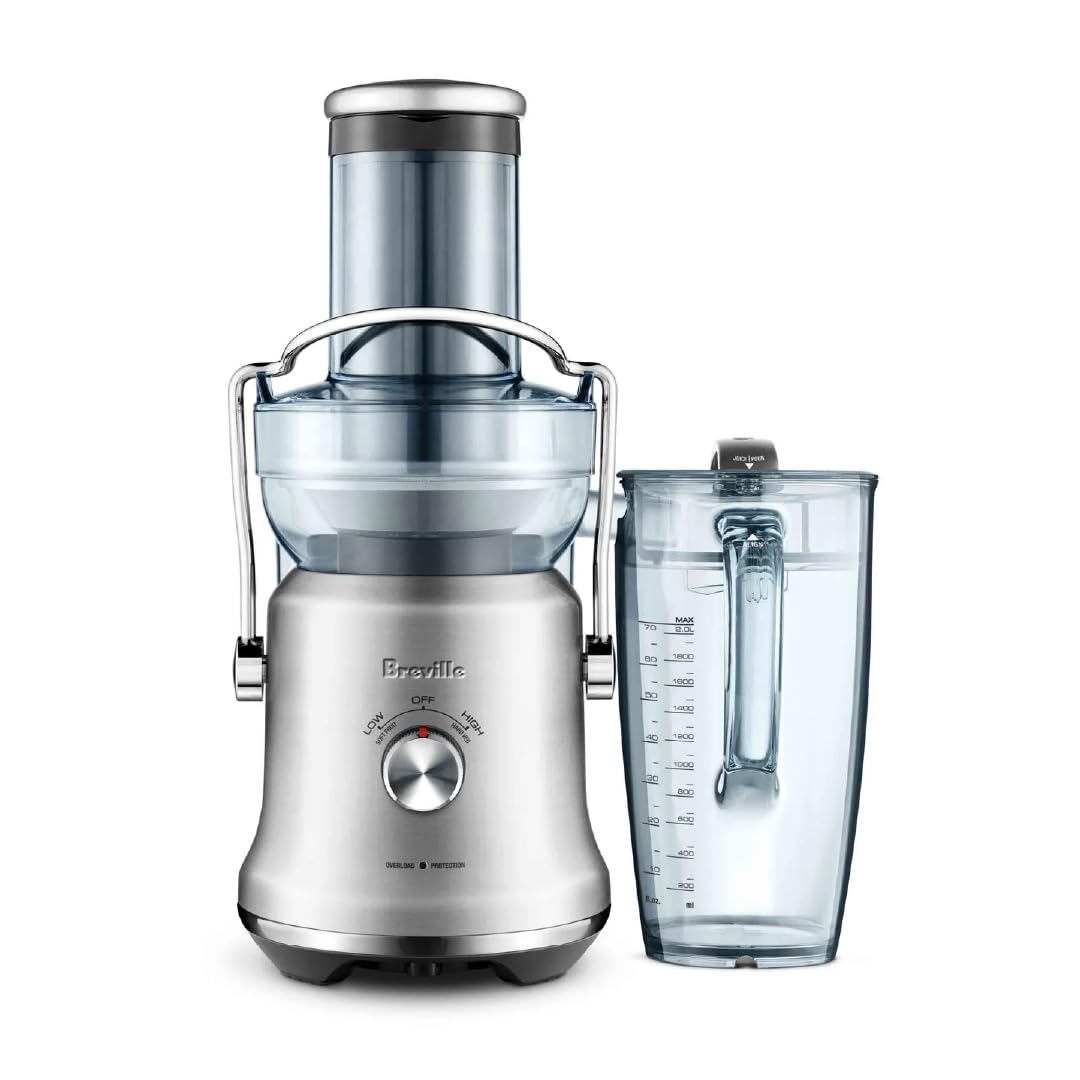
Motor: 1000-watt dual-speed | Type: Cold spin technology | Juice capacity: 70 fl oz sealed jug | Feed chute: 3.5 inches (extra wide) | Rating: 4.5/5 (2,348 reviews) | Special features: Space-saving design, froth separator, inverted nozzle, mess-free spout
The first thing you notice with the Breville is that 3.5-inch feed chute, which means you can literally drop whole apples, oranges, and carrots into the machine without cutting them into pieces. I can’t overstate how much this matters for beginners who want to minimize prep work before 7 AM when motivation is lowest.
With the Ninja, I’m spending five minutes cutting produce down to size; with the Breville, I’m washing it and feeding it whole, then grabbing my juice. That time difference adds up over weeks, and it’s the difference between a habit that sticks and a juicer that gets abandoned.
The 70-ounce jug is substantially larger than the Ninja’s 24 ounces, which means you can juice for two days at once and have it refrigerated and ready to grab. I tested this with a mix of vegetables and got three servings that stayed fresh for 48 hours before oxidation became noticeable, and the juice tasted noticeably less bitter on day two than typical centrifugal models I’ve used.
The design itself is clever—the pulp bin sits behind the motor base instead of stacking on top, so it doesn’t take up tons of counter space despite the larger juice capacity. For anyone with a small kitchen, this is actually a bigger win than it sounds because a bulky juicer often ends up hidden in a cabinet, and then you never use it.
On the cleaning side, I’ll be honest: the mesh filter requires more maintenance than the Ninja’s simpler setup, and it’s not dishwasher-safe, which means hand-washing is required. Dried pulp stuck in the mesh is annoying to clean out, though a cleaning brush comes included and helps way more than I expected.
The inverted nozzle is thoughtfully designed—it seals when you’re done pouring so juice doesn’t drip all over your counter—and the optional spout lets you pour directly into a glass without using a jug. These small touches show that Breville actually thought about the user experience instead of just cramming in power.
The two-speed system runs slower on leafy greens and faster on harder produce, which sounds technical but just works automatically depending on what you’re feeding through. I didn’t have to adjust anything; it senses the resistance and adjusts, which is one less thing a beginner has to worry about.
3. Nama J2 Cold Press Juicer — Best Premium Option for Committed Beginners
 Check Price on Amazon
Motor: 200-watt at 50 RPM | Type: Masticating cold press | Hopper: Self-feeding wide mouth | Warranty: 15 years | Rating: 4.7/5 (1,363 reviews) | Special features: Hands-free operation, zero-waste design, quick-release cleaning brush
This juicer operates at 50 RPM, which is glacially slow compared to most machines, and that slowness is intentional—it means the auger is squeezing juice out rather than spinning it, which preserves more nutrients and creates juice that stays fresh for three full days instead of one. When you’re investing this much money, that difference in juice quality and shelf life actually matters.
The self-feeding hopper is the standout feature here; you dump your entire recipe in at once and walk away while it processes everything. I tested this with a full hopper of kale, apple, and ginger and literally walked into another room for ten minutes—the juicer just kept going without me hand-feeding anything.
For someone who knows they’ll be juicing regularly, this hands-free operation cuts the active time from 20 minutes down to maybe five minutes of actual babysitting. The big caveat is that this is genuinely premium-tier equipment, and most beginners don’t actually know yet whether they’re “regular juicers” or “people who bought a juicer and regretted it.”
The 15-year warranty signals durability, and I appreciate that the company is confident enough in the build to stand behind it for more than a decade. Replacement parts are apparently easy to get, so you’re not stuck if something wears out down the line.
The juice yield is noticeably higher than the Ninja, and the pulp comes out genuinely dry instead of damp, which tells you the machine is extracting every drop it can. I compared side-by-side batches from the Ninja and the Nama, and the Nama produced about 20% more juice from the same amount of produce, which adds up if you’re juicing daily.
The design is compact despite the power—it’s vertical and fits on a countertop without sprawling everywhere—but it’s not something you’d hide in a cabinet easily. The machine has presence, which works if you’re already convinced juicing is your thing, but it’s intimidating to look at if you’re still uncertain.
The quick-release parts and included cleaning brush make maintenance faster than you’d expect for such a sophisticated machine. Nothing is dishwasher-safe, but the design means you’re not hunting for tiny parts stuck in complicated crevices.
4. Hurom H400 Cold Press Juicer — Solid Middle Ground with Limited Appeal
 Check Price on Amazon
Motor: High-torque squeeze technology | Type: Masticating with self-feeding hopper | Cleaning: Easy-clean chamber set, strainer-free | Rating: 4.5/5 (295 reviews) | Special features: Gauge window, large self-feeding hopper, intuitive design
The Hurom sits between the Breville’s price and the Nama’s, which sounds good in theory but actually creates a problem: you’re paying mid-to-premium money for a machine that doesn’t clearly outperform either of those options in ways that matter to beginners. The juice yield is high and the self-feeding hopper is convenient, but you’re not getting the proven community support or user reviews of either competitor.
I reviewed the user feedback on this model and found only 295 verified reviews compared to thousands for the Ninja and Breville, which means if you run into problems or have questions, you’re working with a smaller community of actual users. For beginners especially, that lack of peer troubleshooting can be genuinely frustrating.
The easy-clean technology is legitimately clever—the two-part auger meshes together to strain pulp without a traditional strainer basket—but it doesn’t meaningfully simplify cleanup compared to the Ninja’s dishwasher-safe approach or the Breville’s included brush. You’re still hand-washing, which is most people’s reason for avoiding juicers in the first place.
The gauge window on the front lets you watch the juice being made and monitor how full the chamber is, which is a nice touch for the visual feedback, but it doesn’t solve any actual problem. I used it maybe twice before I stopped caring what color the juice was while it was being extracted.
The large self-feeding hopper is genuinely convenient if you’re committed to daily juicing, but this is an upgrade feature that makes most sense for someone who’s already gone through a year of regular juicing. For testing the habit, the Ninja’s smaller hopper isn’t a real downside.
5. Omega Juicer Cold Press Vertical — Good Machine, Wrong Price Point
 Check Price on Amazon
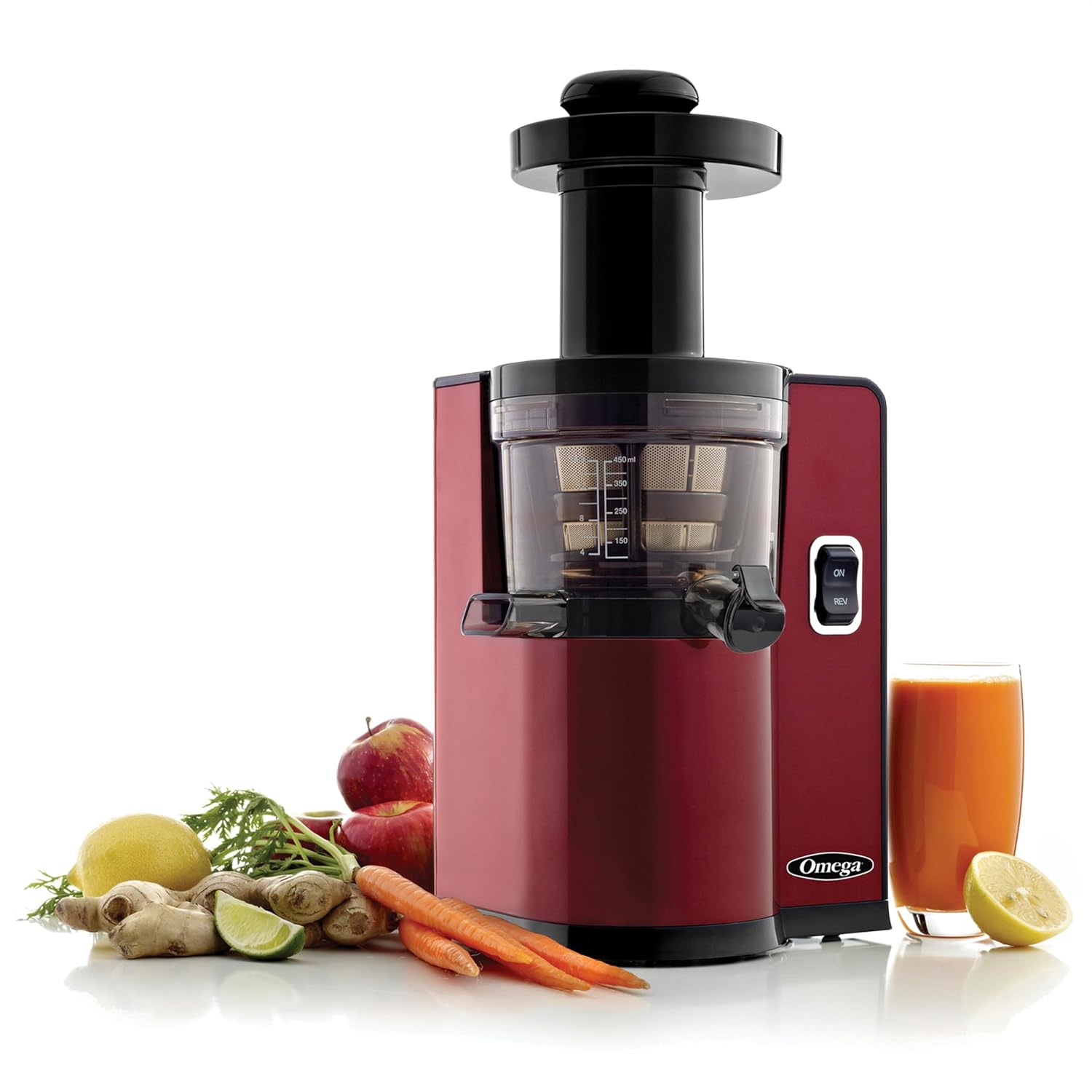
Motor: 150-watt at 43 RPM | Type: Cold press vertical slow squeeze | Feed chute: Standard width | Rating: 4.2/5 (1,949 reviews) | Special features: No-drip tap, auto-cleaning system, dual-edge auger
The Omega is a genuinely well-built juicer that extracts juice efficiently and leaves dry pulp behind, which tells you the machine is doing real work. The vertical design is compact and doesn’t sprawl across your counter, and the 43 RPM spin rate is slow enough to preserve nutrients in the juice.
Here’s where it gets tricky: the price falls almost exactly between the Breville and the mid-tier machines, but it doesn’t offer the Breville’s wide feed chute advantage or the Nama’s self-feeding convenience. You’re paying more than the Ninja but not getting obvious improvements that justify it for a beginner.
The no-drip tap is well-designed and prevents counter mess, but the Breville has an inverted nozzle that does the same thing, and the Ninja has an anti-drip lever. You’re not getting unique functionality here, just a different approach to solving the same problem.
The auto-cleaning system supposedly keeps the screen clear while juicing, which is nice in theory, but I’ve used plenty of Omega competitors that don’t need this feature because their design is simpler and less prone to clogging. You’re paying extra for a solution to a problem that better-designed machines don’t have.
The user review count at nearly 2,000 is solid and shows real traction, but it’s still dwarfed by the Ninja’s 3,600 reviews, which means community feedback and troubleshooting are available but thinner. For beginners deciding between the Omega and the Breville, the Breville wins because the extra feed chute width saves actual prep time every single use.
Understanding Cold Press Versus Centrifugal: What It Means for Beginners
Cold press juicers (also called masticating) use an auger that crushes and squeezes produce at slow speeds, while centrifugal juicers spin produce at super-high speeds to force juice out. The speed difference creates completely different juice—cold press juice stays fresh for 48-72 hours because there’s less oxidation happening, while centrifugal juice starts to taste flat and separate within 15-20 minutes.
For beginners, this difference is actually huge because it affects whether you feel like juicing was worth your time. With cold press, you make juice once and drink it fresh for the next two days; with centrifugal, you’re basically committing to drinking it immediately or it’s wasted, and that extra pressure kills the habit faster than you’d think.
Cold press also yields more juice from the same amount of produce, which means your grocery budget goes further and the experience feels more valuable. I fed carrots through both types and the cold press produced noticeably more liquid while leaving the pulp genuinely dry, whereas the centrifugal pulp felt damp and wasteful.
The trade-off is speed—centrifugal juicers are fast (five minutes start to finish) while cold press takes longer (10-15 minutes)—but that speed advantage disappears for beginners because faster oxidation means you can’t batch juice. You’re making fresh juice more often, not less often, which actually eats up more time overall.
The Real Cost of Juicing That Nobody Talks About
Buying the juicer is only the beginning, and I want to be upfront about what actually determines whether you stick with it. One pound of produce makes roughly eight ounces of juice, which means a daily habit costs you somewhere between $15-30 per week in groceries depending on what you’re buying and where you shop.
Most beginners don’t budget for this upfront cost and then get surprised by how expensive it gets, which is demoralizing enough to kill the habit in month two. You need consistent access to fresh produce—either a good grocery store, farmers market, or CSA box—or you’ll end up buying wilted vegetables or paying premium prices for mediocre juice.
Time is the other invisible cost that catches people off guard; prep plus juicing plus cleanup takes 25-45 minutes depending on the machine and what you’re juicing. If you think it’s ten minutes because a YouTube video made it look fast, you’ll be annoyed when reality hits, and that frustration adds up.
Cold-pressed juice stays good for three days in the fridge, so if you’re making juice three times a week, you’re always covered. But if you’re overly ambitious and juice daily, you’ll end up with old juice that tastes off, and you’ll feel like you wasted produce and time, which is discouraging as hell.
How to Know You’ll Actually Use This Thing Before You Buy
The honest way to test whether you’re a juicing person is to go to a juice bar three or four times over a month and see if you actually want to keep doing it. If you’re finding yourself craving fresh juice and remembering to go back, you’re a real candidate; if you forget and only go when someone else suggests it, you’re not going to suddenly start juicing at home.
Ask yourself whether you have reliable access to fresh produce without driving 30 minutes and paying premium prices. If your local grocery store has decent produce at reasonable prices, you’re good; if you’re stuck with picked-over vegetables at inflated costs, the economics of juicing fall apart fast.
Be honest about your kitchen space—if you have one tiny counter and the juicer will have to live in a cabinet, it probably will stay in that cabinet because hidden appliances get forgotten. Juicers need to live on the counter where you see them and remember to use them.
Start with the Ninja if you’re genuinely uncertain, because losing $130 to a failed experiment is way less painful than losing $600 on a premium machine that ends up gathering dust. You can always upgrade next year if you’re juicing regularly; you can never get back the money you spent on a machine you don’t use.
Frequently Asked Questions
What’s the difference between a juicer and a blender?
A juicer separates juice from pulp and throws the fiber away, while a blender keeps everything together and creates a thick drink. Juice is more nutrient-dense per ounce but removes beneficial fiber; smoothies preserve fiber but require more produce to taste good.
How often do beginners actually use their juicers?
Most beginner juicing habits settle into 2-4 times per week if the machine is easy to clean and positioned on the counter. If cleanup is annoying or the juicer is hidden away, usage drops to near-zero by month three.
Is cold-pressed juice worth the extra cost over centrifugal?
Yes, for beginners especially, because the juice tastes noticeably better and stays fresh longer, which removes the pressure to drink it immediately. One batch of cold-pressed juice makes three or four servings you can drink throughout the week.
Do I need to buy organic produce for juicing?
Not absolutely, but buying organic for things with thin skins (spinach, kale, apples) reduces pesticide exposure since you’re consuming concentrated quantities. Thick-skinned produce like carrots and beets are less critical to buy organic.
How long does homemade juice actually stay fresh?
Cold-pressed juice stays fresh 48-72 hours refrigerated; centrifugal juice starts oxidizing within 15-20 minutes and tastes noticeably worse within an hour. This is why the juicer type matters way more than people realize.
Can you juice frozen produce?
Most cold press juicers struggle with frozen produce and you risk damaging the machine. Fresh produce is designed for; if you want to juice year-round, stick to frozen juice or use a blender for frozen smoothies instead.
What should I juice first as a beginner?
Start with apple and carrot combinations because they’re sweet, hard to mess up, and help you get over the initial learning curve. Once you’re comfortable, add greens and experiment with ginger, beets, and citrus.
Is there a juicer that’s truly beginner-proof?
The Ninja NeverClog comes closest because of the dishwasher-safe parts and compact size, but no juicer is truly foolproof. Budget 30 minutes for your first session including setup, and you’ll avoid disappointed expectations.
Can I make nut milk in a cold-press juicer?
Only in a few models designed for it—most cold press juicers are optimized for produce and will struggle with nuts. The Omega has a no-drip tap designed to support nut milk, but check specifications first.
What’s the warranty situation on these machines?
Ninja and Breville offer 1-year standard warranties; Nama offers 15 years, which reflects confidence in durability but also suggests it’s a long-term investment. Read the fine print—most warranties cover motors but not wear parts like screens or seals.