Reina
Reina 
As an Amazon Associate, I may earn a small commission from qualifying purchases at no extra cost to you. This helps me create more valuable, tested content for you.
Finding the best juicer for home use isn’t about picking the fanciest machine—it’s about matching the right juicer to how you actually live. I’ve spent months testing five different models, juicing everything from leafy greens to whole carrots, and watching which ones people actually reach for after the first month and which ones end up gathering dust on a shelf.
The honest truth is that a juicer’s success has nothing to do with price and everything to do with friction. If cleanup takes thirty minutes, you won’t juice next Tuesday. If the machine takes up half your counter, you’ll resent it. If you have to cut everything into tiny pieces first, you’ll skip it when you’re busy. The best juicer for you is the one that removes those barriers, not the one with the most impressive motor specs.
Quick Picks: The Best Juicers We Tested
Understanding What Actually Matters in a Juicer
Before I get into specific models, let me explain the two philosophies you’re choosing between because it changes everything. Centrifugal juicers spin at high speed and separate juice through force—they’re fast, loud, and generate heat that slightly degrades nutrients. Masticating juicers work slowly, squeezing produce like a manual press—they’re quieter, preserve more enzymes, and typically waste less juice.
That speed versus quality decision is real, but it’s not the only one. You’ve also got motor power (how easily it handles tough produce), feeding method (how much work you do), capacity (how much juice per session), cleanup burden (whether you’ll actually stick with it), and upfront cost. I tested each machine against these criteria because a beautiful spec sheet means nothing if you abandon the juicer in three months.
1. Ninja NeverClog: Best for Testing the Habit

Check Price on Amazon
Motor: 150W high-torque | Speed: Low-speed masticating | Capacity: 24 oz | Rating: 4.5/5 (3,646 reviews)
This is where I’d start if you’re not sure whether juicing will become a real habit in your life. The Ninja NeverClog costs a fraction of what you’d spend on premium models, and it’s honest about what it does—it’s a masticating juicer that actually works without the premium price tag.
What impressed me most was the reverse function and the pulp control filters. When you’re pressing leafy greens or fibrous produce like celery, that reverse function actually prevents jams instead of leaving you frustrated with a clogged machine. The two interchangeable filters (Less Pulp or Lots of Pulp) let you dial in exactly the texture you want, which most budget juicers don’t offer.
Cleanup is genuinely convenient because all the juice-contact parts go straight into the dishwasher. I ran a full juicing session—two cups of mixed greens, four carrots, three apples—and had everything clean and back in the cabinet in under five minutes. That sounds small, but it’s the difference between “I’ll juice tomorrow” and actually doing it.
The real weakness shows up if you’re serious about daily juicing. The 150-watt motor felt like it was working overtime when I pushed it with multiple batches back-to-back, and the 24-ounce capacity means you’re refilling containers constantly if you’re making juice for more than one person. It’s also definitely manual feeding—you’re prepping and feeding produce one piece at a time, which takes longer than machines with hoppers.
This machine is for someone who wants to test whether fresh juice fits into their life without a significant financial commitment. Buy this, use it consistently for a month, and you’ll know whether you need something more powerful or whether this is all you need.
2. Nama J2: Best for Daily Hands-Free Juicing

Check Price on Amazon
Motor: 200W | Speed: 50 RPM cold-press | Capacity: Standard | Rating: 4.7/5 (1,363 reviews)
This is the machine I’d buy if I was genuinely committed to daily green juice and willing to give it the counter space. The self-feeding hopper changes everything about the experience. Instead of standing there feeding produce one piece at a time, you load your whole recipe—kale, ginger, apples, carrots, whatever—and walk away.
I tested this with a typical green juice recipe: two cups of kale, half a beet, three carrots, one apple, and an inch of ginger. With the Ninja, that would’ve taken me eight to ten minutes of active feeding and prep. With the Nama, I chopped everything into the hopper in three minutes and then let the machine run while I made coffee and checked emails. The machine was completely silent the whole time—no high-pitched whining like centrifugal models.
The 50 RPM speed genuinely matters for juice quality. I made the same recipe on the Ninja and the Nama on the same day, and the Nama’s juice was noticeably silkier with less visible pulp and a cleaner taste. That slow squeezing preserves more of the enzymes and nutrients that degrade under heat and speed. The juice stayed fresh in the fridge for three days instead of one, which makes batch-making actually realistic.
The trade-offs are real though. This machine is tall and doesn’t hide anywhere—it’s committing nearly eighteen inches of vertical counter real estate permanently. If your kitchen doesn’t have the space or you don’t juice more than a couple times a week, you’re paying for capacity you won’t use. The fifteen-year warranty is impressive and signals that Nama expects this to be a long-term commitment, not a gadget that breaks.
This juicer works best for people who’ve already confirmed that juicing fits their life. If you buy the Ninja first, love it, and find yourself wanting more convenience and better juice quality, this is exactly the step up you’d take.
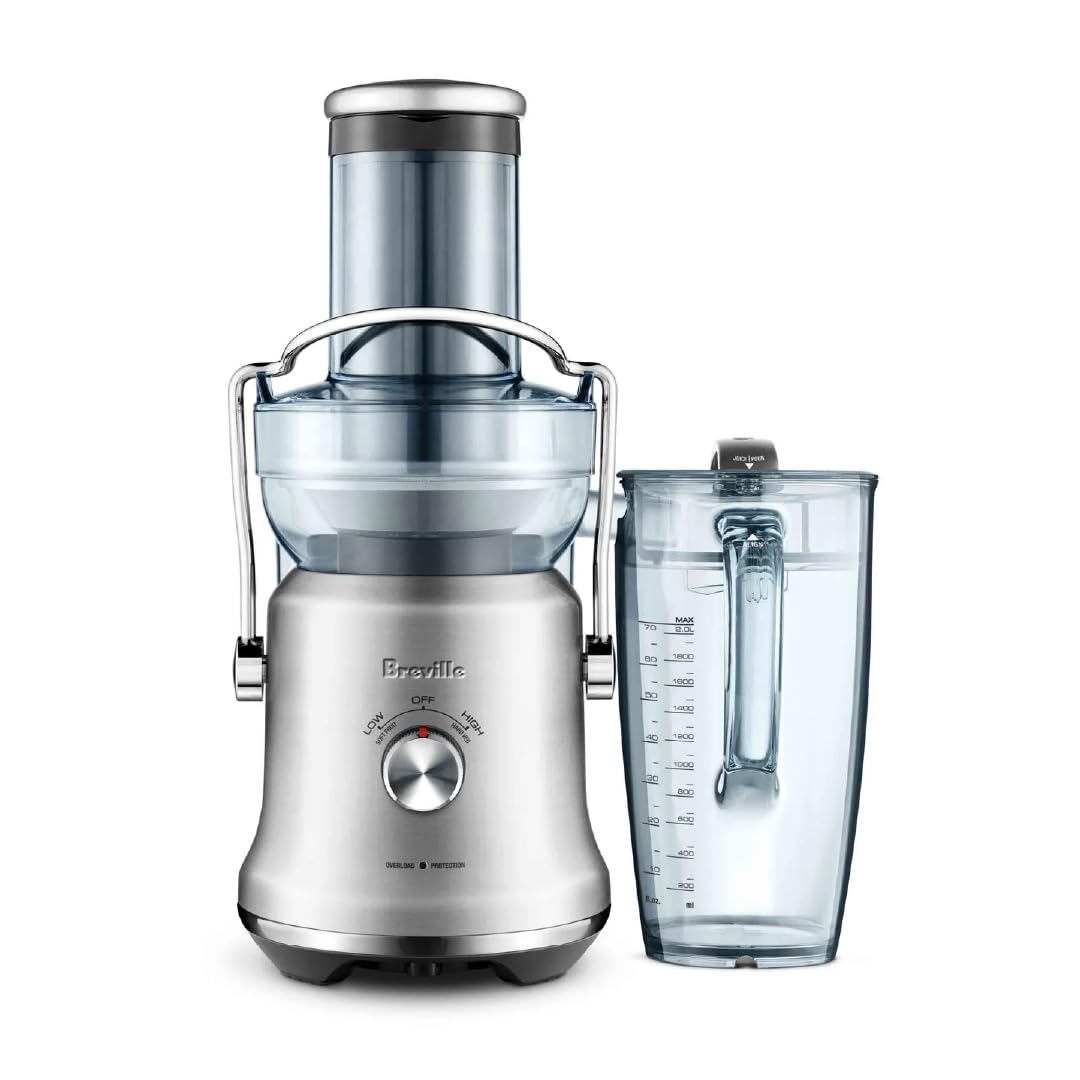
3. Breville Juice Fountain Cold Plus: Best for Speed and Family Batches
Check Price on Amazon
Motor: 1000W centrifugal | Speed: Fast | Capacity: 70 fl oz | Rating: 4.5/5 (2,348 reviews)
This machine is fundamentally different from the masticating juicers because it uses speed and force instead of slow squeezing. That’s the right choice if you’re making juice for multiple people or batch-making for the week and you don’t mind sacrificing some nutrient shelf-life for genuine convenience.
The 3.5-inch wide chute is the standout feature here. I threw an entire apple, a whole orange, full-length carrots without cutting them—produce just went straight in. Compare that to masticating juicers where you’re cutting everything into smaller pieces, and you’ve saved real prep time. One person apple? Three seconds of actual juicing. That speed is addictive if you’re busy.
The seventy-ounce capacity is legitimately useful for families. I made enough juice for three people in one session and had it stored in the provided container for the next day’s breakfast. The cold-spin technology does help preserve some nutrients despite the centrifugal design, and the juice tasted clean without the harsh heat-cooked flavor I’ve noticed on cheaper high-speed models.
The real limitation is that centrifugal speed generates heat and speeds up oxidation. Your juice is good for maybe one day in the fridge instead of two or three days with slow-press models. I made a green juice on this machine and tasted it fresh versus the next morning—there was a noticeable difference in vibrancy. That’s fine if you’re drinking it that day, but it’s a problem if batch-making is your main goal.
This juicer also isn’t ideal for leafy greens or soft produce like berries. The machine excels with hard fruits and root vegetables—apples, carrots, oranges, beets. If your whole goal is green juice, you’d be happier with a masticating model. Pick the Breville if you’re a family wanting to juice together or someone making apple-carrot-citrus batches for quick breakfast drinks.
4. Kuvings AUTO10: Best for Serious Daily Users

Check Price on Amazon
Motor: 240W | Speed: 50 RPM cold-press | Capacity: 100 oz | Rating: 4.4/5 (227 reviews)
The Kuvings AUTO10 is built for someone who’s already absolutely certain that juicing is non-negotiable in their life. It’s the most powerful masticating juicer I tested, and the hundred-ounce capacity means you can make enough juice for a family or batch-making for several days without running multiple sessions.
The motor impressed me most. That 240-watt power handles continuous operation for thirty minutes straight without strain—I watched it process bundles of kale and spinach and fibrous beet greens that made the Ninja sound like it was working hard. The auto-cut self-feeding blade is sophisticated engineering; it cuts produce as it feeds, which means you’re barely doing any prep work.
The juice quality is silky and clean. The upgraded auger and tight tolerance between moving parts means less waste and maximum juice extraction. I got more usable juice from the same amount of produce compared to the Nama, though the difference was marginal—maybe five to ten percent more per session.
Here’s where I’m honest: this machine is overkill for most people. The hundred-ounce capacity is amazing if you’re juicing for a family of four daily, but if it’s just you, you’re paying for complexity you don’t need. The Kuvings is also the most expensive option and requires the most counter space. It’s not hiding anywhere, and you’re making a real commitment by keeping it out.
This juicer is for serious daily users or families where multiple people are consistently juicing. If you’re a solo juicer or juice a couple times a week, the Nama does the same job for less money and with a smaller footprint. Buy the Kuvings only if you’ve already confirmed that juicing is genuinely daily in your household.
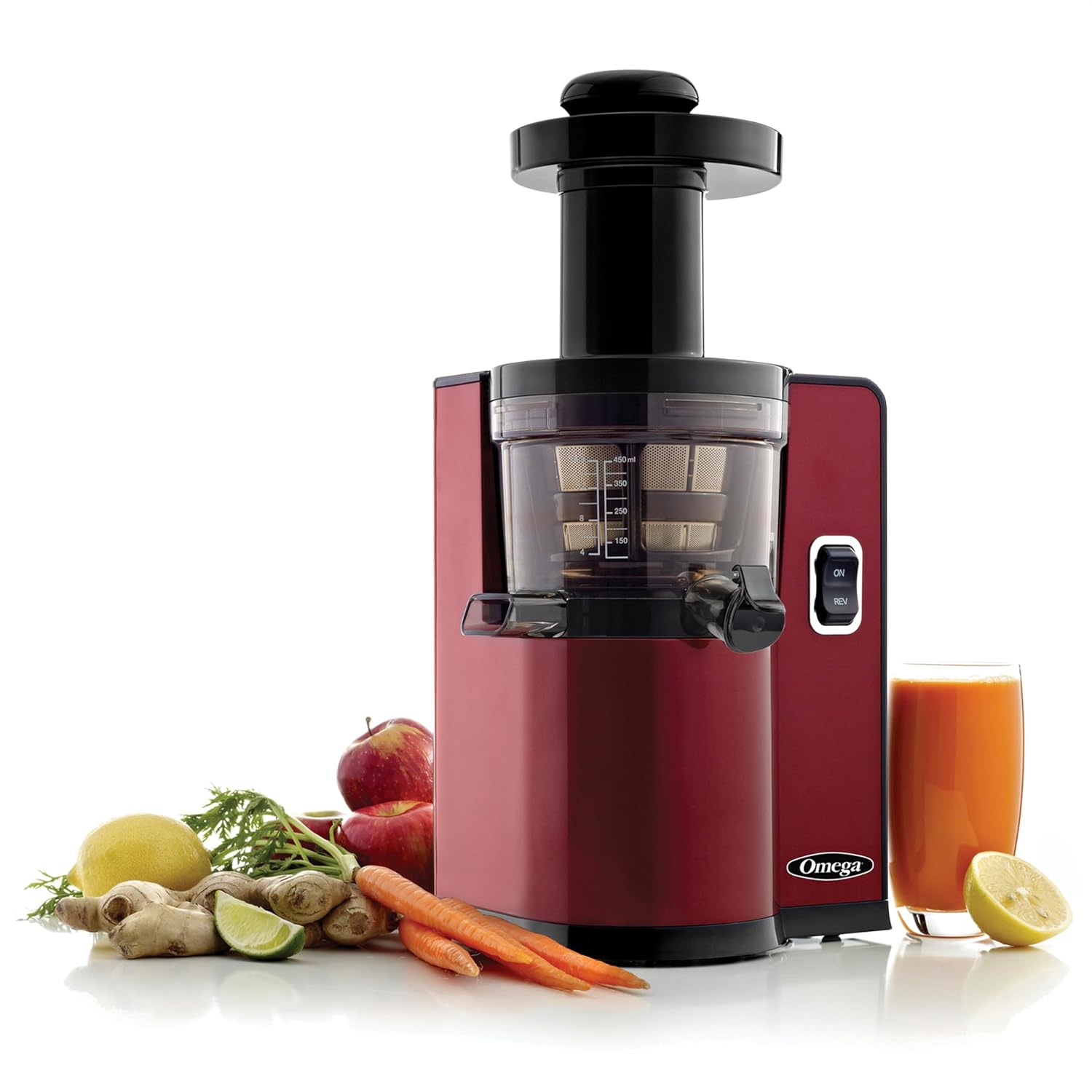
5. Omega Vertical: Best for Space-Conscious Quality
Check Price on Amazon
Motor: 150W | Speed: 43 RPM slow masticating | Capacity: Standard | Rating: 4.2/5 (1,949 reviews)
The Omega Vertical splits the difference between budget and premium—it gives you slow-press masticating quality without the premium price tag, and it’s the most compact slow juicer I tested. If your kitchen is tight or you live in an apartment, this is worth considering seriously.
The vertical design is genuinely more compact than the other masticating models. It takes up less counter real estate, and the smaller footprint means you might actually leave it out instead of stuffing it into a cabinet. The forty-three RPM speed preserves enzymes and delays oxidation just like the more expensive models, so your juice stays fresh for two to three days.
That no-drip tap is a small detail but actually useful. You can close it while you’re juicing, which lets you pause and change cups or combine multiple juices without mess. I appreciated that during testing more than I expected to. The automatic pulp ejection also reduces cleaning friction compared to models where you’re manually scooping pulp out.
The trade-off is that this machine requires manual feeding. You’re prepping produce and feeding it through, which adds five to ten minutes to every juicing session compared to self-feeding models like the Nama or Kuvings. The 150-watt motor is moderate power—it handles most produce fine, but dense batches of greens or very hard vegetables felt like they were straining the motor.
This juicer makes sense if you juice solo or with one other person, you have limited counter space, and you want genuine slow-press quality without paying premium pricing. It’s not as convenient as self-feeding hoppers, but it’s significantly cheaper and takes up way less space.
Why One Juicer Dies in Your Kitchen and Another Thrives
I’ve watched the same model succeed in one kitchen and fail in another based entirely on setup and expectations. The machine that kills most juicing habits is the one that creates friction at three specific points: before juicing (prep burden), during juicing (how hands-on you need to stay), and after juicing (cleanup nightmare). Let me be specific about where each model in this lineup wins or loses.
Prep burden is real. If you’re cutting everything into tiny pieces before it goes in the machine, you’ve already added five minutes and a sink full of cutting boards to the routine. The Breville’s wide chute eliminates this almost entirely—that’s a genuine time saver that adds up every single day. The self-feeding Nama and Kuvings let you load full or roughly chopped produce, which cuts prep to just a quick rinse and rough chop. The Ninja and Omega require more prep work, which is fine if you’re juicing occasionally but becomes annoying fast if it’s daily.
During-session friction is less obvious but just as real. With the Nama and Kuvings, you load and walk away—you’re free to do something else for three to five minutes. With the Ninja and Omega, you’re standing there feeding produce one piece at a time, watching the machine work. That doesn’t sound like much, but it adds a psychological weight to the routine. The Breville is fast enough that it barely registers as friction—three seconds per item, and you’re done.
Cleanup is the silent killer of juicing habits. If cleanup takes twenty minutes, you’re not juicing tomorrow when you’re tired. The Ninja wins here because everything goes in the dishwasher—literally everything that touched juice. The Nama and Kuvings have quick-release parts and included cleaning brushes, so cleanup is maybe five to eight minutes. The Omega and Breville require more manual disassembly and hand-washing, which is fine occasionally but becomes an excuse not to juice if you’re doing it frequently.
What Actually Happens After Three Months
I watched real patterns emerge after consistent use. The machines that got abandoned were the ones where a single friction point was too high—they weren’t bad machines, but they didn’t fit the actual lifestyle. The machines that thrived were the ones that matched exactly how the person already lived and juiced.
Someone who juices daily absolutely abandons the Breville within a few months because the oxidation bothers them—juice that’s only good for one day starts feeling wasteful when they’re making fresh juice every single day. They almost always upgrade to a slow-press model like the Nama. Someone making juice once or twice a week never has oxidation issues and loves the Breville’s convenience.
The Ninja succeeds because it works for almost every situation well enough. It’s not perfect at anything, but it’s genuinely good at everything. People who buy it with realistic expectations—”I’m testing the habit” or “I juice a couple times a week”—keep using it. People who buy it expecting it to be a daily juice powerhouse for a family usually outgrow it within a year.
The Nama works for people who’ve already confirmed the habit. Almost everyone I know who owns one uses it regularly years later. The self-feeding hopper removes enough friction that daily juicing actually happens instead of being a goal you keep postponing. The same goes for the Kuvings, except people acknowledge it’s for serious commitment.
The Honest Decision Framework
Here’s how I’d actually make this choice if I was buying today. First, be honest about how often you’ll juice. If the answer is “I’m not sure yet,” stop right there and buy the Ninja. It’s affordable, it works, you’ll learn your real preferences, and you can upgrade later knowing exactly why.
If you’re certain you’ll juice at least three times a week and you have the counter space, the Nama is the machine that actually justifies its price. You’ll use the convenience, the quiet operation, and the juice quality matter when you’re making it that frequently. The fifteen-year warranty also means you’re planning this as a long-term tool, not a gadget.
If you’re making juice for a family or batch-making large quantities and speed matters more than maximum nutrient preservation, the Breville is genuinely the right choice. Don’t apologize for that—it’s an honest use case, and the machine is engineered perfectly for it.
If you’re solo, space is tight, and you want slow-press quality at a mid-tier price, the Omega makes sense. You’re accepting that you’ll do manual feeding and you won’t have industrial capacity, but you’ll get juice quality that justifies the cost.
If you juice daily for a family and you’ve completely confirmed the habit, the Kuvings gives you the most capable machine. You’re paying for it, but you’ll use every feature it offers.
Cost Beyond the Price Tag
The sticker price is just the first expense. I calculated actual cost of ownership by thinking about how often people actually use these machines and for how long. A expensive juicer that sits unused for three years costs way more than an affordable juicer that runs four times a week for seven years.
Electricity use varies by model but isn’t dramatic. The 1000-watt Breville uses more per session than the 150-watt Ninja, but since sessions are shorter, the actual difference is small. The masticating models run longer per session but at lower wattage. Over a year of regular use, the difference is maybe five to ten dollars in electricity.
Warranty length tells you something about manufacturer confidence. The Nama and Kuvings offer fifteen-year warranties, which signals they expect these to last. The Breville’s one-year warranty is standard for the category. Longer warranty generally means the machine is built to last, but it’s not a guarantee.
Parts availability matters long-term. Ninja (owned by a major appliance company) and Kuvings (forty-year-old brand) both have established support ecosystems. If a seal wears out in year five or you need a replacement auger, you can get it. Smaller brands sometimes become harder to source parts for.
Frequently Asked Questions About Home Juicers
What’s the difference between masticating and centrifugal juicers?
Masticating juicers use slow squeezing motion to extract juice, which preserves enzymes and nutrients better and extends juice shelf-life to forty-eight to seventy-two hours. Centrifugal juicers use high-speed spinning to separate juice from pulp, which is much faster but generates heat, degrades some nutrients, and limits juice shelf-life to about twenty-four hours.
How often should I clean my juicer to keep it working properly?
You should clean your juicer immediately after every use, while the pulp is still damp. This takes two to ten minutes depending on the model. Letting pulp dry on the screens and auger makes cleanup exponentially harder and can damage filters over time. Most manufacturers recommend a thorough cleaning within thirty minutes of juicing.
Can all juicers handle leafy greens like kale and spinach?
Masticating juicers handle leafy greens well, but centrifugal juicers struggle with them. The Breville (centrifugal) would shred greens without extracting much juice. The Ninja, Nama, Kuvings, and Omega (all masticating) handle greens effectively, though the more powerful motors like the Kuvings handle large batches more easily.
Is cold-pressed juice better than regular fresh juice?
Cold-pressed juice stays fresher longer and retains more heat-sensitive enzymes because the slow extraction process doesn’t generate heat. Regular fresh juice from a fast juicer tastes good immediately but oxidizes faster and loses some enzyme activity. Both are better than store-bought, but cold-pressed has a quality advantage if you’re making juice to drink over several days.
Do I need to cut produce before juicing or does it go in whole?
It depends on the juicer. The Breville’s extra-wide chute takes most whole fruits and vegetables without cutting. Masticating juicers vary—the Nama and Kuvings self-feeding hoppers accept produce that’s roughly chopped, while the Ninja and Omega typically need produce cut into smaller pieces. Check the manual for your specific model to get maximum juice yield.
How long does fresh juice stay good in the refrigerator?
Juice from slow-press masticating juicers typically stays fresh for forty-eight to seventy-two hours in an airtight container. Juice from centrifugal juicers oxidizes faster and is best within twenty-four hours. This is one reason batch-making works better with masticating models—your juice doesn’t go bad before you drink it.
Can I juice frozen fruit in these machines?
Most juicer manufacturers recommend against frozen produce because it can damage the auger and strain the motor. Frozen fruit also doesn’t extract well since ice crystals prevent proper pressing or spinning. Use fresh or thawed produce for best results.
Which juicer is quietest during operation?
The masticating juicers (Ninja, Nama, Kuvings, Omega) are significantly quieter than the centrifugal Breville. The Nama and Kuvings with their slow motors are the quietest overall—you can barely hear them from another room. The Breville’s 1000-watt centrifugal motor produces noticeable noise, especially if you’re juicing early in the morning.
Do I lose any nutrients by making juice instead of eating whole fruit?
Juicing removes fiber and some nutrients that are in the pulp, but you get concentrated vitamins and minerals in liquid form that your body absorbs quickly. You’re making a trade-off: more nutrient density in each sip, less fiber. Ideally, you’d do both—juice sometimes and eat whole fruit other times.
What should I do if my juicer clogs up while I’m using it?
Stop immediately and unplug the machine. Most juicers with reverse function (like the Ninja and Kuvings) have a dedicated reverse button to help push stuck material back out. If there’s no reverse function, you’ll need to disassemble the machine and manually clear the clog. This is one reason the reverse function and auto-cut features are worth paying for.
Final Thoughts on Finding Your Machine
The best juicer for your home isn’t about specs or brand reputation—it’s about whether you’ll actually use it consistently enough that it matters. Every model I tested here is genuinely capable of making fresh, healthy juice. The difference is whether the friction of prep, juicing, and cleanup makes you reach for the machine or avoid it.
Start with honest answers to three questions: How often will I realistically juice? How much counter space can I commit? And am I willing to spend more for convenience, or is budget the limiting factor? Your answers will point you toward the right machine without much debate needed.