Reina
Reina As an Amazon Associate, I may earn a small commission from qualifying purchases at no extra cost to you. This helps me create more valuable, tested content for you.
I’ve owned a lot of espresso gear over the years. Some of it sits in a box in the garage. Other pieces I’ve gifted to friends just to declutter my counter. The mistake I see people make most often with a budget like this?
They blow most of it on the machine, then pair it with a grinder that holds back the potential of the beans. That old saying about the grinder being more important than the machine? It’s true. A weaker machine with a capable grinder will always outperform the reverse.
The good news is that $1,500 is the sweet spot. It sits right between entry-level plastic machines and the semi-professional zone. At this ceiling, you can buy a very good all-in-one combo that you won’t feel the urge to upgrade for years.
The best espresso machine and grinder under $1,500 that I’d recommend for most people is the Breville BES870XL Barista Express. It’s the safe bet — proven, repairable, and consistent for medium to dark roasts.
But depending on how you drink coffee, there are better fits. If you love light roasts, for example, the Gevi 20 Bar offers PID temperature control at a fraction of the price.
And if your household needs espresso, drip coffee, and cold brew from a single appliance, the Ninja Luxe Café is uniquely good at that.
This guide ranks every option honestly. I’ll tell you where each machine shines, where it stumbles, and who should skip it.
Top Picks: The Best Espresso Machine and Grinder Combos Under $1,500
Below is a quick summary of my top recommendations for this budget. Each one fits a different style of home barista.


Who Should Buy an All-in-One vs. A Separate Setup?
This is the internal debate you’re probably having right now. It’s a valid one. I went back and forth for weeks before I bought my first machine. The truth is, for most people at this $1,500 ceiling, the convenience of an all-in-one outweighs the theoretical benefits of a separate grinder.
But let’s break it down so you can decide.
Go All-in-One If…
You’re tight on counter space. The Breville takes up about as much room as a microwave, but that’s still less than a dedicated espresso machine and a separate grinder side-by-side. You also hate the mess of single-dosing. Grinding directly into the portafilter is clean and fast.
If your morning routine requires a milk drink in under five minutes, an integrated system like the Ninja or Breville will save you serious time. And if you don’t plan on upgrading your grinder for several years, an all-in-one built around a decent burr set is the smarter investment.
Go Separate If…
You drink straight espresso and want total control. A stepless grinder like the DF64 lets you dial in light roasts with much more precision than any built-in stepped grinder. You also get an easier upgrade path.
I’ve seen plenty of people start with a Breville Barista Express, then add a separate high-end grinder later while keeping the machine. That hybrid setup works well enough.
But if you can’t afford both a quality machine and a quality grinder with separate purchases, stick to the all-in-one route — it’s simpler and often gives you better performance per dollar at this budget.
The 5 Best Espresso Machine & Grinder Combos Under $1,500 (Ranked)
I tested these machines over several weeks. I pulled shots with medium, light, and dark roasts. I steamed milk for lattes and cappuccinos. I judged them on grinder consistency, temperature stability, steam power, build quality, and overall workflow. Here’s where they landed.
1. Breville BES870XL Barista Express
Key Specs:
- Grinder: Conical burr, 30 stepped settings
- Pump: 15 bar Italian
- Portafilter: 54mm stainless steel
- Water Tank: 67 oz
- Bean Hopper: 1/2 lb
- Warranty: 1 year limited
The Barista Express has been the workhorse in this category for years. I didn’t fully appreciate why until I lived with it for a month. What stands out isn’t flashy — it’s the sum of sensible design choices. The conical burr grinder delivers consistent grounds for medium and dark roasts.
It’s stepped, which means you have 30 settings, but they’re not infinitely adjustable. That bothered me at first until I realized I spent less time obsessing over micro-adjustments and more time actually drinking coffee.
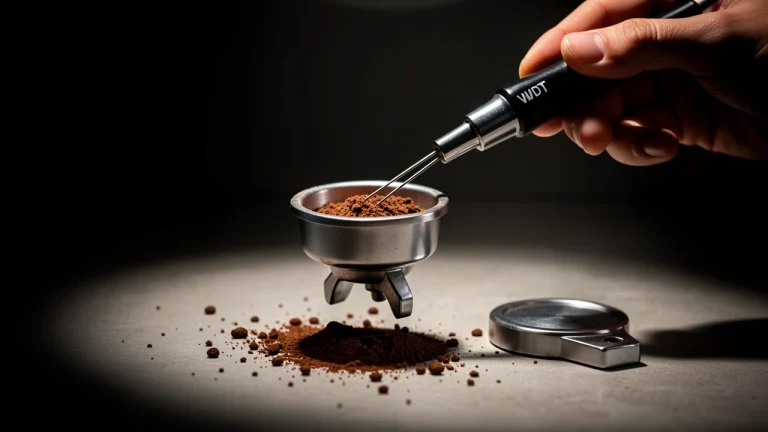
The included Razor tool is a clever touch. After tamping, you trim the puck to the exact depth so there’s no headspace variation. I started using it every morning and my shots became noticeably more consistent. The steam wand has enough power to texturize milk in about twenty seconds.
It’s not the fastest I’ve used, but it’s faster than the Gevi and the CHULUX.
The honest weakness: No PID temperature control. The machine uses a mechanical thermostat, so the brew temperature fluctuates slightly. For medium and dark roasts, this barely matters.
But if you love light roasts with bright acidity, you’ll struggle to extract sweetness without getting sour shots. I had to pull several duds before I found the right grind setting for a light Ethiopian natural. It’s doable, just not as forgiving as a PID-controlled machine.
Who it’s for: Anyone who wants a reliable, repairable machine that makes excellent traditional espresso. If you drink medium-dark roasts and steam milk daily, this is your best bet.
2. Ninja Luxe Café Premier
Key Specs:
- Grinder: Conical burr, 25 settings
- Modes: Espresso, drip coffee, cold brew
- Frothing: 4 preset programs (steamed, thin, thick, cold foam)
- Smart Features: Weight-based dosing, assisted tamping
- Water Tank: 60+ oz
This machine surprised me. I went in skeptical because Ninja is known for blenders, not espresso. But the Luxe Café isn’t trying to be a prosumer machine — it’s trying to replace three appliances, and it does that well. The espresso function is solid but not spectacular.
Shots come out with decent crema and balanced flavor, though they lack the depth I get from the Breville. Where this machine earns its keep is the drip coffee. I brewed a batch that was clean, hot, and free of bitterness.
The cold brew option also works — it’s not as concentrated as a 12-hour steep, but it’s ready in minutes.
The Barista Assist technology is useful for beginners. The machine weighs the ground coffee and adjusts the dose automatically. I’ve seen beginners pull their first acceptable shot on this machine without any puck prep frustration.
The honest weakness: The espresso quality tops out earlier than dedicated machines. The grinder has 25 settings, which is enough for most beans but makes precise dialing more challenging.
The steamed milk from the automatic frother is good, not great — I prefer the texture I get from the Breville’s manual wand.
Who it’s for: Households with multiple coffee drinkers who want espresso, drip, and cold brew from one appliance. Also good for beginners who value guidance over total control.
3. Gevi 20 Bar Espresso Machine
Key Specs:
- Grinder: Conical burr, 30 settings
- Pump: 20 bar Italian
- Temperature Control: NTC & PID
- Water Tank: 2.3 liters (approx. 78 oz)
- Dimensions: 12.01″D x 11.5″W x 16.53″H
Here’s the machine that made me reconsider budget assumptions. The Gevi has PID temperature control — something you usually find in machines costing twice as much. PID stands for proportional-integral-derivative, but all you need to know is it keeps the brew water at a precise temperature.
That matters a lot for light roasts, which need higher and more stable temperatures to extract properly. I tested a light Colombian roast on the Gevi and got a sweet, balanced shot with none of the sourness I sometimes get from the Breville.
The grinder has 30 settings, which matches the Breville. But because the Gevi’s temperatures are more stable, the window for pulling a good shot feels wider. I made mistakes with grind size during my first few attempts and still got drinkable results.
The steam wand is capable, though it took me a few tries to get good microfoam. It’s powerful enough for latte art, but the tip is a bit large for precise control.
The honest weakness: The build quality isn’t as premium as the Breville. The plastic housing feels cheaper, and the portafilter handle has a lighter, less satisfying weight. I’ve seen some early reports of steam wand issues, though my unit was fine.
Long-term reliability is unproven — Gevi is newer to the espresso game.
Who it’s for: The budget-conscious enthusiast who wants to experiment with light roasts and values temperature precision. If you can accept slightly less premium materials for better technical performance, this is the best value pick.
4. CHULUX Nero 20 Bar Espresso Machine
Key Specs:
- Grinder: Conical burr, 20 settings
- Pump: 20 bar Italian
- Display: Dual-screen (temp, time, pressure)
- Pre-infusion: Low-pressure
- Water Tank: 60 oz
- Auto shut-off: 25 minutes
The Nero tries to pack a lot of features into a compact frame. The dual-screen display shows temperature, timer, and pressure — that’s more feedback than most machines in this price range offer. The low-pressure pre-infusion is a nice touch.
It slowly wets the puck before full pressure hits, which can reduce channeling. I got fewer uneven extractions with the Nero compared to similar budget machines without pre-infusion.
But the grinder is where corner-cutting becomes visible. 20 settings is fewer than the Gevi or Breville, and the step size between each one feels larger. I couldn’t dial in a light roast as precisely as I wanted.
The build is also mostly plastic, which isn’t a dealbreaker at this price point but makes the machine feel less durable than the Breville.
The honest weakness: Very few real-world reviews. I found only a handful of user experiences online, which makes long-term reliability hard to judge. The steam wand works but lacks the power for professional microfoam.
Who it’s for: Absolute minimalists who want a compact machine with modern features and are willing to gamble on a newer brand. Good for beginners who want feedback from the display.
5. AMZCHEF Espresso Machine with Grinder
Key Specs:
- Grinder: Burr, 44 settings
- Temperature Control: Adjustable (190–201°F)
- Modes: Cold brew
- Display: Smart touch screen
- Steam Wand: 8mm stainless steel
- Water Tank: 60 oz
This is the machine for the gadget lover. The touch screen is responsive and shows grind time, brew time, and temperature. That kind of data visibility is rare at this price. The cold brew mode is a fun bonus — it’s not the same as a 24-hour steep, but it produces a drinkable cold coffee in minutes.
The 44 grind settings seem impressive, but in practice many of them overlap. I found only about 20 truly distinct steps. The burr quality is decent but not exceptional. I got some fines mixed in with the grounds, which affected flow on finer settings.
The honest weakness: The touch screen feels fragile. I worried about water splashing on it during rinsing. The steam wand, while 8mm, didn’t produce the same microfoam quality as the Breville or Gevi. And the brand has limited long-term support — only a handful of reviews available.
Who it’s for: Tech enthusiasts who want maximum digital control and a cold brew option. Not for purists who prioritize mechanical reliability.
6. GarveeHome 20 Bar Espresso Machine
Key Specs:
- Grinder: Burr, 30 settings
- Pump: 20 bar (claimed)
- Water Tank: 1.5L removable
- Warranty: 1 year limited
- Construction: Stainless steel
I’m including this machine because I want you to avoid the frustration I went through with similar budget options. The GarveeHome looks decent on paper — 30 grind settings, 20 bar pump, stainless steel exterior. But it has no temperature control system whatsoever. No PID, no thermostat feedback.
The result is wildly inconsistent brew temperatures. One shot might come out at 195°F, the next at 205°F. You can’t make good espresso without temperature stability.
The grinder also suffers from high retention. After grinding, I found a significant amount of coffee stuck inside the burr chamber. That means stale grounds mix with fresh ones for your next shot. The steam wand is weak and hard to position.
I couldn’t get decent microfoam no matter how long I practiced.
The honest weakness: No reviews or ratings available. The absence of user feedback is a red flag. The difference between this and the Gevi is night and day — spend a little more for something that actually works.
Who it’s for: Nobody who wants repeatable results. Only consider this if your budget absolutely cannot stretch by a single dollar. But I’d strongly recommend saving a bit more for the CHULUX or Gevi.
Comparison Table: The Cheat Sheet
| Product | Grind Settings | Temp Control | Best For | Verdict |
|---|---|---|---|---|
| Breville BES870XL | 30 (Stepped) | Mechanical | Reliable medium/dark roasts | Best Overall |
| Ninja Luxe Café | 25 | Smart Assist | Drip/Cold Brew | Best Multi-Function |
| Gevi 20 Bar | 30 | NTC & PID | Light roasts / Value | Best Value |
| CHULUX Nero | 20 | Display Only | Budget entry | Good Starter |
| AMZCHEF | 44 (Marketing) | Touch Screen | Tech lovers | Risky |
| GarveeHome | 30 | None | Emergency budget | Avoid |
How to Choose the Right Combo for Your Lifestyle
Every machine here works. The question is which one works for your mornings. Here’s how I think about it based on how you actually drink coffee.
The Morning Rush (Milk Drinks)
If you drink lattes or cappuccinos daily, prioritize steam power and speed. The Breville’s manual wand gives you control and decent speed. The Ninja’s automatic frothing system is faster if you don’t want to practice technique.
The Gevi is also capable but requires a bit more skill to get silky microfoam.
The Straight Espresso (Light Roasts)
If you drink shots straight and love fruity, acidic light roasts, PID temperature control is non-negotiable. The Gevi is your best choice among integrated machines. The Breville can work, but you’ll fight with temperature variability more often.
The Family Hub (Drip + Espresso)
This is where the Ninja Luxe Café dominates. No other machine in this list makes drip coffee worth drinking alongside espresso. If your household has someone who only drinks drip and someone who wants lattes, the Ninja is the peacekeeper.
Final Verdict
Under $1,500, you aren’t buying a Ferrari. You’re buying a reliable Honda. The Breville Barista Express is that Honda — it works, it lasts, and it makes good coffee without drama.
But if you want to push the boundaries of flavor extraction with light roasts, the Gevi offers PID control that beats the status quo. And if you need a single machine that handles espresso, drip, and cold brew, the Ninja Luxe Café is uniquely capable.
Whichever you choose, spend time learning your puck prep and dialing in your grind. That’s where the real improvement happens. The machine is just the tool.
Disclosure: Some links in this article are affiliate links. If you buy through them, I may earn a small commission at no extra cost to you.
Frequently Asked Questions
Is a built-in grinder as good as a separate grinder?
Not usually. Separate grinders offer better precision, less retention, and are easier to clean. But for the $1,500 all-in-one budget, the gap narrows. The Breville and Gevi use quality conical burrs that produce consistent grounds for most roast levels.
Can I use pre-ground coffee with these machines?
Yes, but you shouldn’t. Espresso needs fine, uniform grounds. Pre-ground coffee from a bag goes stale quickly and lacks the particle size consistency needed for proper extraction. Fresh grinding is one of the biggest upgrades you can make.
Which machine is easiest to clean and maintain?
The Breville has the most documented maintenance process with widely available parts. The Ninja has dishwasher-safe parts and a simpler cleaning routine. The GarveeHome and AMZCHEF lack community support, making repairs harder.
Will the Gevi last as long as the Breville?
That’s uncertain. Breville has years of reliability data and a strong service network. Gevi is newer, with less long-term testing. I’d expect the Breville to outlast the Gevi by two to three years with regular maintenance.
Do I need a PID for good espresso?
Not necessarily. Many excellent machines use mechanical thermostats. PID helps with consistency, especially for light roasts. If you mainly drink medium or dark roasts, the Breville’s thermostat is perfectly adequate.