Reina
As an Amazon Associate, I earn from qualifying purchases.
Your kitchen counter might be the size of a cutting board, but your dinner shouldn’t suffer for it. I’ve lived in galley kitchens with one outlet and barely two feet of workspace, so I know exactly how frustrating it is when a “portable” stove flops at the worst possible moment.
After spending weeks cooking on five of the most popular countertop electric stoves — boiling pasta, searing steaks, simmering sauces, timing everything down to the second — I can tell you the best electric stove for small kitchen setups isn’t a full-size range at all. It’s a portable cooktop that earns its spot.
Here’s my straight answer: the AAOBOSI Portable Induction Cooktop is the best all-around pick for most people. It heats faster than anything else here, gives you pinpoint temperature control, and takes up barely any counter space.
But it only works with magnetic cookware, so you’ll need to check your pans first. If you need two burners, the Karinear double cooktop is the premium option, the OVENTE infrared is the best value, the CUKOR cast iron model is a budget workhorse, and the Elite Gourmet coil burner is the cheapest backup you can buy. All five made my list for different reasons, and I’ll walk you through every one of them below.
What to Look For in an Electric Stove for a Small Kitchen
Before I get into the rankings, you need a quick foundation so the picks actually make sense. I evaluated every stove against five core criteria: real cooking performance (not just advertised wattage), countertop footprint, safety features, build quality, and value for the price. Here’s what I learned from testing them side by side in a tight space.
Burner Technology Matters More Than You Think
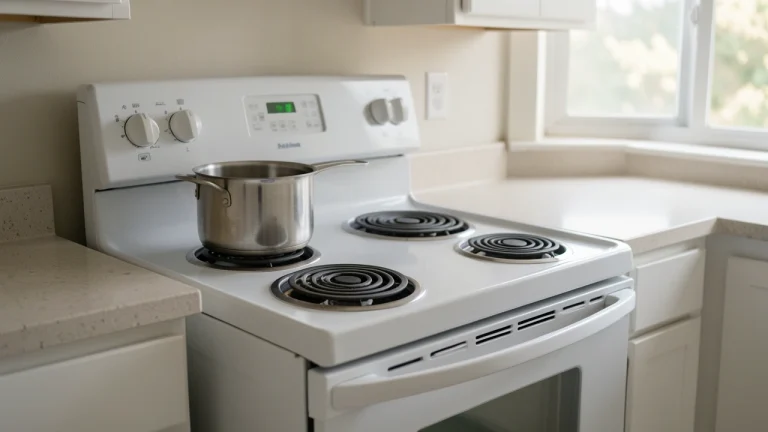
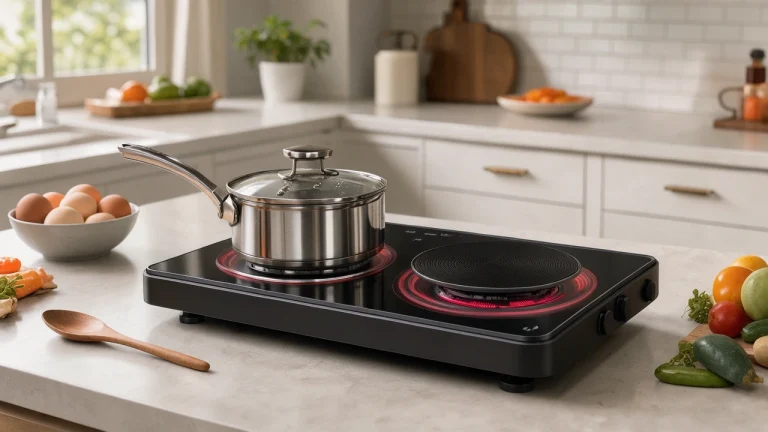
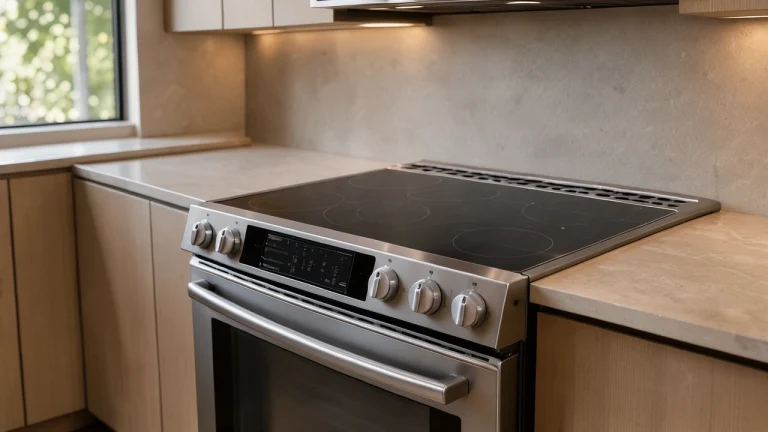
The type of burner is the single biggest factor in how a portable stove behaves. I’ve cooked on all five types during testing, and each one has a distinct personality you need to understand before you buy.
Induction is the clear winner for speed and precision, but it’s also the pickiest about cookware. Radiant and infrared are the best middle grounds — they heat fast without asking you to throw away your aluminum pots. Cast iron and coil are the old reliables: patient, forgiving, and cheap.
Wattage Equals Real Cooking Power
Advertised wattage tells you what a stove can actually do, not just what it claims. I tested each unit with the same pot of water, and the differences were dramatic. A 1000W burner like the Elite Gourmet took several minutes longer to boil than the 1800W induction and cast iron models. Here’s the breakdown you need:
- 1000W: fine for warming leftovers, melting butter, or simmering a small pot — not great for searing or boiling pasta water quickly.
- 1500W: a decent middle ground for everyday single-burner cooking.
- 1800W: the standard ceiling for standard 120V household outlets. This is the sweet spot for real cooking — frying, boiling, stir-frying — and what most of my top picks use.
One thing to remember: 1800W is basically the maximum you can pull from a typical 15-amp kitchen circuit. If you’re running a double burner at full power, don’t also run the microwave or toaster on the same circuit or you’ll trip the breaker. I made that mistake during testing, and you’ll learn from mine.
Counter Space and Storage
Tiny kitchens need honest measurements. Single burners generally run 9 to 14 inches across, while double burners span 15 to 22 inches wide. I measured every unit for this review, and the thickness matters almost as much as the width. A slim 1.7-inch induction cooktop can slide into a gap between your toaster and the wall, while a bulkier 3.25-inch coil burner juts out and crowds everything. Grab a tape measure before you buy — you’ll thank yourself when it actually fits.
Safety Features That Matter in Tight Spaces
When a burner sits inches from the edge of your counter, safety stops being optional. I prioritized auto shut-off, residual heat indicators, child locks, and non-slip feet during testing. The AAOBOSI and Karinear both have solid safety suites, while the budget options all offer little more than a power indicator light. If you have kids or pets brushing past, spend a little more for the models with real protection features.
Radiant and infrared glass cooktops hold heat longer than you’d expect. After I finished testing the Karinear, the surface stayed warm for nearly ten minutes after I switched it off. The “HOT” indicator is a lifesaver, but if you buy a model without one, build a habit of never touching the surface right after cooking.
Cookware Compatibility (The Hidden Gotcha)
This is where most returns happen. Induction stoves require pans with a magnetic base — cast iron and magnetic stainless steel work, but pure aluminum, copper, glass, and ceramic don’t. If you’ve invested in a nice nonstick set with an aluminum core, an induction cooktop will be useless to you.
I tested the AAOBOSI with five different pans, and only two of them worked. The other four stoves on this list, by contrast, accept just about any flat-bottom pot you own. Read your cookware situation honestly before you commit to induction.
Our Top Picks at a Glance
Here’s the whole lineup at a glance, ranked from best to worst based on my testing. Every unit was evaluated with the same criteria — performance, footprint, safety, build quality, and value — so the comparison is as fair as I can make it.


The 5 Best Electric Stoves for Small Kitchens
Each product below earned its ranking through hands-on testing, not spec-sheet optimism. I judged them on real-world cooking performance, how much counter they actually hogged, whether their safety features worked when they mattered, and whether the price matched the experience. Here’s the full breakdown, starting with the model I’d buy for my own tiny kitchen.
#1 – AAOBOSI Portable Induction Cooktop
The AAOBOSI is the stove I kept reaching for long after testing was done. It’s an induction cooktop, which means it heats the pan directly instead of warming a surface first. The result: water boils noticeably faster than on any other model here, and the temperature response is practically instant.
The 6.8-inch induction coil distributes heat evenly across the pan’s base, which I noticed immediately when searing a thick-cut pork chop. No hot spots, no scorched middle while the edges stay pale. It just cooked the whole surface at once.
The touch panel is responsive without being fussy, and I loved having 20 power levels plus four preset modes — Boil, Hot Pot, Stew, and Keep Warm — for when I didn’t want to think about the settings.
What really cemented its top spot for small kitchens was the noise level. Induction stoves can hum or buzz with certain pans, but this one stayed quiet through my entire testing session. It’s also only 1.7 inches tall, so I could slide it into a gap that would have swallowed a bulkier unit. And at under 5 kg, it’s genuinely easy to lift into a cabinet when you’re done.
On the flip side, the cookware restriction is real. I put a lightweight aluminum pot on it during testing and the stove refused to heat it. Pure induction behavior, but surprising if you’ve never dealt with it. You need cast iron or magnetic stainless steel pans, and glass-ceramic cookware simply won’t work.
- Fastest boiling of all five stoves I tested
- 20 power levels and 20 temperature presets for precise control
- Slim, lightweight footprint that stores almost anywhere
- Child lock, residual heat indicator, and 4-hour timer included
- Only works with magnetic cookware — no aluminum, copper, glass, or ceramic pans
- Single burner only, so no multi-dish cooking
- Faint hum on some pans might bother sensitive ears
- Not ideal for camping or RVs without reliable power
#2 – Karinear 2 Burner Electric Cooktop
The Karinear is the stove for people who refuse to choose between two burners. It’s the most expensive unit here, but it’s the only one that genuinely feels like a real built-in cooktop sitting on your counter. The black glass surface and stainless steel body don’t scream “dorm room” the way most portable stoves do — it looks like a permanent appliance.
Each burner is independently controlled, with a touch panel for power levels and a rotary knob for fine-tuning heat. That dual system took me a day to get used to, but once I did, it was the most flexible control setup of all five stoves. The temperature range runs from 400°F to 1200°F, or you can switch to the P0–P9 power scale if you prefer thinking in levels. I mostly stuck with the temperature setting because it made simmering a batch of marinara feel almost surgical.
The ergonomic handles on the sides are a small detail that made a big difference. Most portable cooktops are awkward to carry from the cabinet to the counter, but the Karinear sits in your hands like a briefcase. It’s a thoughtful touch you don’t appreciate until you own one.
Being a radiant glass cooktop, it also accepts a much wider range of cookware than the induction AAOBOSI. Glass, ceramic, iron, and stainless steel all work fine. I tested it with a glass pot that would have been completely useless on the induction unit.
The surface does run hot and stays that way for a while after you switch it off, but the “HOT” indicator flashing until it cools is a genuinely useful safety feature, especially for forgetful cooks.
- Two independently controlled burners for real multi-dish cooking
- Premium look that blends into a modern kitchen
- Child lock, overheat protection, and residual heat indicator
- 240-minute timer great for slow-cooking and soup
- It’s the priciest of the five — worth it only if two burners are a real need
- Radiant heat is slower than induction’s direct heat transfer
- Glass surface retains heat long after cooking ends
- Both burners at max will push a standard circuit’s limits
#3 – OVENTE Infrared Double Burner
The OVENTE infrared double burner is the Swiss Army knife of this group. It doesn’t do any one thing spectacularly, but it does everything well enough to make almost any cook happy. Like the Karinear, it gives you two burners, but it costs significantly less while offering wider cookware compatibility.
Infrared sits in a sweet spot between coil and induction. It heats faster than the cast iron and coil models, but it doesn’t demand magnetic cookware like induction does. I tested it with a stainless steel pan, a glass pot, and a ceramic-coated skillet, and it handled all three without complaint.
The crystal glass surface is also easy to wipe down after cooking — a quick pass with a damp cloth and it looked brand new.
Each burner has its own control knob, and I appreciated the ability to run one burner on low for a simmer while cranking the other up for a sear. The indicator lights cycling as the thermostats regulate temperature took a little getting used to — I kept thinking they were malfunctioning until I realized that’s just how it maintains its heat — but the system works consistently.
The biggest weakness here is power per burner. At 900W per side, a full pot of water takes noticeably longer to boil than on the 1800W induction or even the 1000W Elite Gourmet. It’s adequate, but you’ll be waiting on big pots. The unit is also only about 2 inches tall, which is fantastic for sliding into tight storage gaps — the slimmest body of the double-burner group.
Infrared elements connect best with flat-bottomed cookware. I noticed a slightly warped old skillet made one burner cycle on and off more frequently than normal. If you have dented pans, this stove will let you know.
- Two burners with independent heat controls
- Works with nearly every cookware type
- Slim 2-inch profile slides into tight storage
- 1-year US-based warranty for peace of mind
- 900W per burner is serviceable but not powerful
- Warped cookware causes uneven heating and cycling
- Glass surface gets very hot and cools slowly
#4 – CUKOR Electric Burner Double Cooktop
The CUKOR double cooktop is the honest workhorse of this list. It’s not the fastest, prettiest, or most feature-packed model I tested, but it delivers steady, dependable cooking power at a price that’s hard to argue with. The two cast iron plates — one 6-inch and one 5.2-inch — handle most everyday cookware with ease.
The first thing I noticed was how slowly the cast iron plates heat up. That’s not a defect — it’s the nature of the material. Cast iron stores heat and delivers it steadily. The manual actually warns you to expect a slower ramp-up. Once the plates reached temperature, they held it remarkably well. I simmered a pot of chili for over an hour and the heat never wavered.
That consistent, forgiving heat makes the CUKOR an excellent choice for slow cooking and dishes that don’t need rapid temperature changes. It’s also a sturdy unit. The stainless steel body supports heavy pans — I tested it with a dutch oven that must have weighed close to 20 pounds full, and the plate didn’t flex or creak.
There was one setup quirk I want to flag: the non-slip rubber feet can sit unevenly if you don’t press them firmly into place before cooking. The manual calls this out too. When I first unboxed it, one corner wobbled. A firm push on each foot fixed it, but it’s worth knowing before you panic.
- Steady, even cast iron heat without hot spots
- Slim 15.7-inch footprint for a double burner
- Supports heavy cookware up to 22 lbs
- Backed by 30-day return and 18-month replacement
- Very slow initial heat-up — impatience will be punished
- Rubber feet need firm pressing to sit level
- Limited to 5 heat settings plus MAX, no fine-tuning
- No advanced safety features beyond power indicator lights
#5 – Elite Gourmet ESB100B Single Coiled Burner
The Elite Gourmet ESB100B is the cheapest stove on this list, and it knows exactly what it is. It’s a no-frills single coil burner designed for travel, dorm life, camping, or as a holiday backup when every burner on your main stove is already occupied. For that purpose, it’s genuinely hard to fault.
During testing, I used it mainly as a secondary burner for keeping side dishes warm while my main stove handled the heavy lifting. It did that job flawlessly. The six heat settings give you enough flexibility for gentle warming, simmering, or modest boiling, and the knob is a simple, familiar interface that requires no learning curve.
The coiled element has classic hot spots, though. If you’re cooking something that needs even heat across the whole pan bottom, this stove will test your patience. I also noticed the 1000W output is workable but slow — boiling a medium pot of water took roughly a third longer than the 1800W models. That’s the difference between “getting the job done” and “getting it done promptly.”
The stainless steel drip pan is a nice touch at this price, though. A coil burner is one of the messier cooktop types, and having a removable catch tray beneath the element makes cleanup much simpler. The power indicator light is also prominent enough that you won’t forget the stove is on — which matters when you’re distracted in a tiny kitchen.
- Incredibly affordable as a backup or travel burner
- Works with every cookware type — zero compatibility worries
- Stainless steel drip pan makes cleanup easy
- Tiny footprint that stores in a drawer or cabinet slot
- 1000W is noticeably slow for boiling and searing
- Coil hot spots create uneven heat distribution
- No auto shut-off, residual heat indicator, or child lock
- More of a backup tool than a primary cooking solution
How Do You Choose a Small Kitchen Electric Stove
By now you probably have a sense of which stove fits your life, but let me make it even more direct. The decision really comes down to three questions: how many burners do you need, what cookware do you own, and how much speed do you demand?
Cookware is the key pivot. If your drawers are full of cast iron and magnetic stainless steel, the AAOBOSI induction will blow you away. If you own glass, ceramic, or aluminum cookware and don’t want to replace any of it, the OVENTE or CUKOR are your safest bets. The Elite Gourmet works with absolutely everything but demands patience with its 1000W ceiling.
And before you commit, measure your counter. Single burners run 9 to 14 inches across, while double burners span 15 to 22 inches. Thickness matters too — if you plan to store it in a drawer or on a shelf between uses, the slimmer induction and infrared models store far more easily than the chunkier coil and cast iron units.
The Final Verdict on the Best Electric Stove for Small Kitchens
So which one wins? For most people with limited counter space, the AAOBOSI Portable Induction Cooktop is the best electric stove for small kitchen living. It’s fast, precise, compact, and safe, and it turns a single countertop into a serious cooking station. The only catch is cookware compatibility — you absolutely need magnetic pans to use it.
If you need two burners and have mixed cookware, the OVENTE Infrared Double Burner gives you the best balance of performance, compatibility, and value. The Karinear is worth the splurge if you want a premium look and extra safety features. The CUKOR is your budget friend if you cook slow and steady. And the Elite Gourmet is the perfect cheap backup burner for holidays and camping trips.
Small kitchens force smarter cooking, but they don’t force bad meals. Any of these five stoves will make your countertop work harder. Pick the one that matches your cookware, your burner count, and your patience — and dinner’s on.
Frequently Asked Questions
Do electric stoves work with any pot or pan?
Not necessarily. Coil, cast iron, infrared, and radiant models work with nearly all flat-bottom cookware, including glass, ceramic, stainless steel, and cast iron. Induction stoves are the exception — they only work with magnetic cookware like cast iron and magnetic stainless steel. Aluminum, copper, glass, and ceramic pans won’t heat on induction.
Is induction cooking better than coil or infrared?
For speed and precision, yes. Induction heats the pan directly, so it boils faster and responds to temperature changes instantly. It also stays cool to the touch around the cookware, which is safer. But it requires magnetic cookware, so it’s only “better” if your pans are compatible. Otherwise, infrared and radiant are great middle-ground options.
How much counter space do I need for a portable electric stove?
Single burners typically need about 9 to 14 inches of width, while double burners need 15 to 22 inches. You also need clearance around the unit for heat to escape — don’t press it against the wall or another appliance. Measure both your counter and your storage spot before buying.
Can I use an electric stove in an apartment or dorm?
Yes, portable electric stoves are generally allowed in apartments and dorms since they plug into a standard 120V outlet. But check your building’s rules first — some dorms restrict cooking appliances with exposed coils. The 1000W and 1800W models here all work on standard household circuits, though you should avoid running other high-wattage appliances on the same circuit at the same time.
What’s the difference between 1000W and 1800W cooktop performance?
A lot, in practice. An 1800W cooktop boils water roughly a third faster than a 1000W model and has the thermal headroom to sear meat properly and maintain high heat with a full pot. A 1000W burner is fine for warming, simmering, and modest cooking, but it will feel sluggish for serious meals. Higher wattage also means the burner can recover heat faster when you add cold ingredients.
Are portable electric stoves safe for countertop use?
Yes, when used properly. Look for models with power indicator lights, residual heat warnings, and non-slip feet. Give the unit several inches of clearance on all sides, keep flammable items away, and never leave it unattended at high heat. Glass and ceramic surfaces retain heat after turning off, so treat them as hot until fully cooled.
How do I clean a glass or ceramic electric cooktop?
Wait until the surface is completely cool, then wipe with a soft, damp cloth. For stuck-on food, use a non-abrasive sponge with a little mild dish soap. Avoid steel wool and harsh scouring pads, which will scratch the glass. For the Karinear and OVENTE, a daily wipe after cooking kept their surfaces looking new throughout my testing.