Reina
As an Amazon Associate, I earn from qualifying purchases.
It’s a pricing paradox that only really hits you when you’re deep into a kitchen remodel.
You can walk into any big-box home store and buy a perfectly capable 30-inch range for around five hundred dollars.
But start pricing out a standalone cooktop and a wall oven as separate appliances, and the entry point jumps to fifteen hundred or more — before delivery, wiring, or cabinet work even enters the picture.
It feels like a rip-off at first glance, but it isn’t arbitrary.
So why are cooktops more expensive than ranges when they’re doing less work?
Because the separate route stacks three different economic forces on top of each other, and each one pushes the price up in a way that the range’s enormous volume market never has to absorb.
- Low production volume: Ranges sell by the millions; cooktops and wall ovens sell to a remodeling niche, so each unit carries more fixed cost.
- Genuine engineering complexity: A thin cooktop slab and a self-contained front-vented oven are harder to design well than a shared chassis.
- Premium market positioning: Separate units are sold to homeowners already spending five figures on a kitchen, not to price-sensitive range shoppers.
- Hidden installation costs: Two 240V circuits, a custom cabinet enclosure, and a countertop cutout make the real-world gap even larger than the sticker prices suggest.
The rest of this article walks through each of those forces in turn, so you can look at an appliance quote and actually understand where every dollar is coming from.
The Price Premium Comes Down to Three Forces
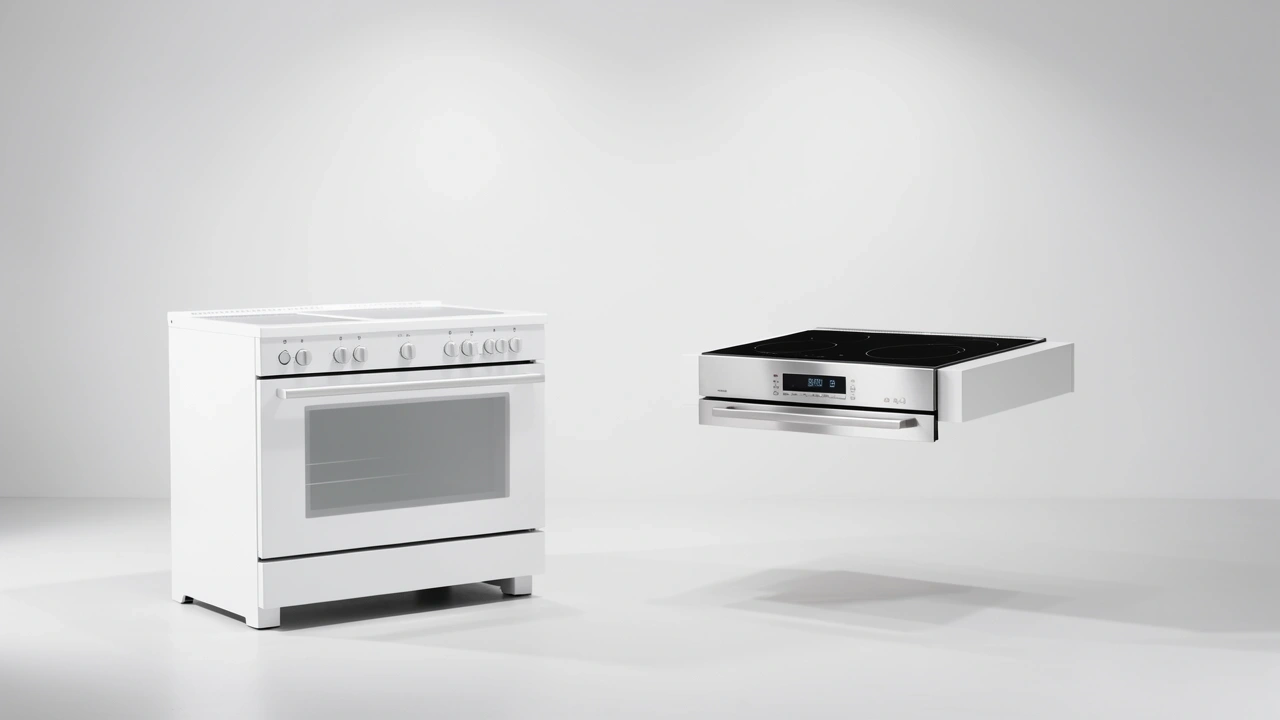
No single factor explains the gap. If it were only about manufacturing, the premium would be easy to accept. If it were only about marketing, you could shop around and find a deal that sidesteps it.
The reality is that all three forces stack on top of one another, which is exactly why the price difference is as large as it is.
Ranges are a mass-market commodity. Cooktops and wall ovens are a specialty purchase, and low volume means higher per-unit cost.
Separate units are genuinely more complex to design and manufacture than a range that shares one chassis, one control system, and one vent path.
Cooktops and wall ovens are marketed as premium kitchen upgrades to remodelers, not as budget replacements to landlords.
Let me unpack each one, starting with the force that shapes everything else.
Volume Economics Work Against Cooktops and Wall Ovens
Ranges are the default cooking appliance in American kitchens.
Production home builders install them by the thousands, landlords spec them for rental properties, and replacement buyers grab them off the showroom floor without a second thought.
That enormous volume lets manufacturers amortize tooling costs, research and development, safety certification, and national advertising across millions of units.
The per-unit overhead shrinks to almost nothing.
Cooktops and wall ovens serve a much smaller slice of that market. Almost everyone who buys them is in the middle of a renovation, a custom build, or a deliberate upgrade of an existing kitchen.
When you spread the same fixed costs over far fewer units, the cost per unit climbs noticeably. That’s basic economies of scale, and it’s the single biggest structural reason for the price gap.
There’s also less retail competition working in your favor.
Walk into an appliance store and you’ll see aisles of ranges fighting for your attention — dozens of brands, hundreds of models, all competing on price and features to win the same slot in your kitchen.
That kind of shelf-level competition keeps range pricing brutally honest. Cooktops and wall ovens occupy a fraction of the floor space, with fewer models and weaker price pressure at every tier.
The default for builders, landlords, and replacements in every price tier.
A remodeling niche with far fewer units to carry the fixed costs.
A basic range costs a few hundred dollars. Entry cooktop plus wall oven starts far higher.
Volume alone gets you part of the way, but it doesn’t explain why the engineering itself costs more. That’s the next layer.
Separate Units Are More Complex to Engineer Than a Range
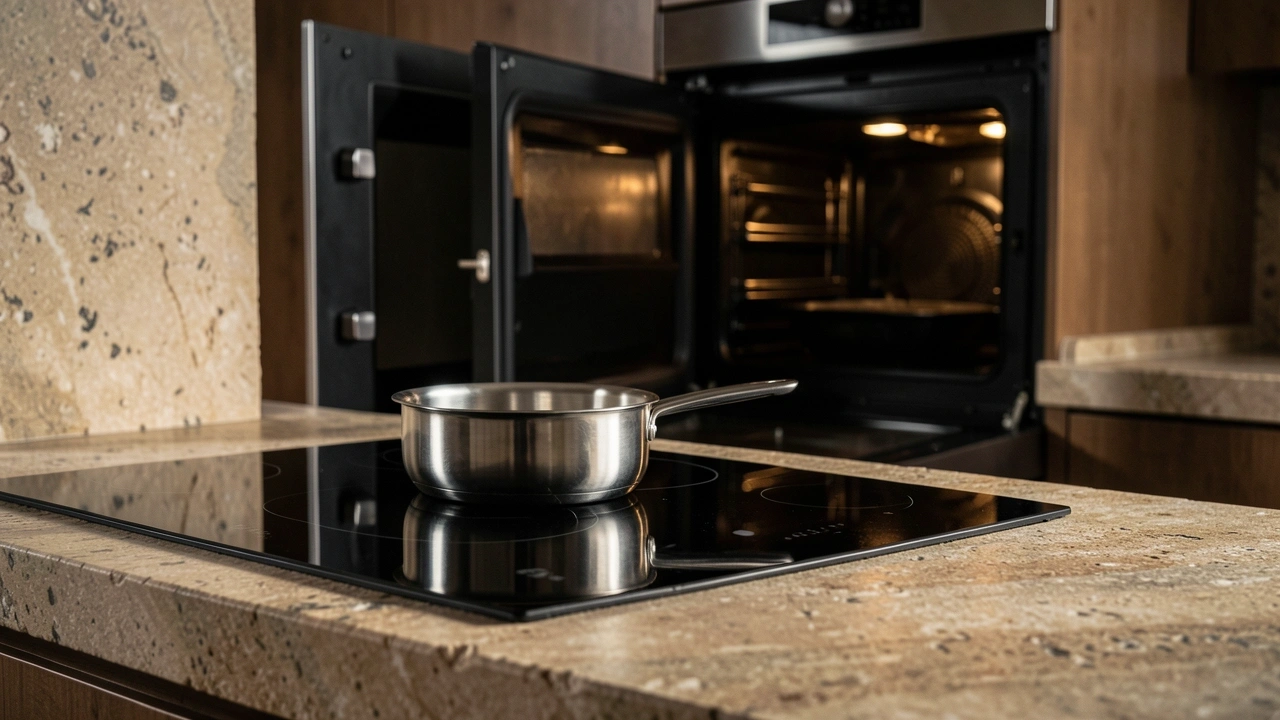
This is the part most pricing discussions skip entirely, and it’s worth understanding because it explains why the premium isn’t just artificial.
A range is a single chassis with a cooktop mounted on top and an oven cavity below.
The structure overlaps, the control systems are shared, and the oven vents its heat upward through the cooktop surface.
It’s a genuinely efficient design that minimizes material, wiring, and insulation.
A standalone cooktop has to solve a harder problem.
All of the heating elements, control boards, and electronics must fit inside a thin slab recessed into a countertop, with no oven cavity underneath to hide components or absorb excess heat.
That’s a serious thermal management challenge, especially for induction models — the coils generate significant heat that has to be moved away with fans and heatsinks in a footprint barely thicker than a stack of pancakes.
The precision glass-ceramic surface adds another layer of cost, since it has to survive high thermal stress while staying perfectly flat.
Wall ovens carry their own engineering burden. Because they’re installed inside combustible cabinetry with no cooktop above to vent through, they have to be fully self-contained and front-vented.
Every BTU of heat must be managed within the enclosed cavity and pushed out the front through a carefully designed airflow path.
That demands heavier insulation, tighter door seals, and more precise airflow engineering than a range oven, which can simply dump excess heat upward through the burners.
Shared chassis, single control system, heat vents upward through the cooktop.
Thin slab design, constrained thermal management, precision glass surface.
Fully insulated box, front-vented airflow, built to live inside cabinetry.
So the manufacturing cost is real.
But there’s a third force that has nothing to do with bolts and insulation — and it’s the one that explains why the price keeps climbing even after the engineering is paid for.
Cooktops and Wall Ovens Are Sold as Luxury Kitchen Upgrades
Range buyers are the most price-sensitive segment in the entire appliance industry.
Landlords, property managers, tract home builders, and people replacing a dead stove on a Tuesday night all shop on price above everything else.
That relentless pressure keeps range pricing extremely competitive all the way up the feature curve.
Separate cooktops and wall ovens have almost the opposite buyer profile.
The typical purchaser is already committed to a kitchen remodel — they’re spending tens of thousands on cabinets, countertops, flooring, and labor.
In that context, an extra thousand dollars for a beautiful induction cooktop barely registers against the overall budget. The purchase is emotional, design-driven, and far less price-sensitive.
Manufacturers know exactly who they’re selling to, and they position accordingly.
Separate units get the premium finishes, flagship features, and cutting-edge technology, because the market segment will absorb it.
That doesn’t mean the quality is a sham — many high-end cooktops and wall ovens are genuinely better than their range counterparts.
It simply means the price is set by the market segment, not purely by the cost of production.
“They cost more because the quality is dramatically better.” The quality can be excellent, but the price is driven primarily by low volume and a less price-sensitive buyer.
“A range is always the budget option.” Not true once you climb the tiers. A fully loaded professional range costs more than a mid-tier cooktop and wall oven combo.
There’s one more layer that has nothing to do with how the appliances are built or marketed.
It’s the layer that surprises most buyers, and it can add more to your final bill than the appliances themselves.
Installation and Cabinetry Add a Hidden Premium to the Separate Route
The sticker prices tell only half the story.
The installed cost is where the separate route really pulls ahead, and it’s information most homeowners only discover after they’ve already committed to the design and paid the deposit.
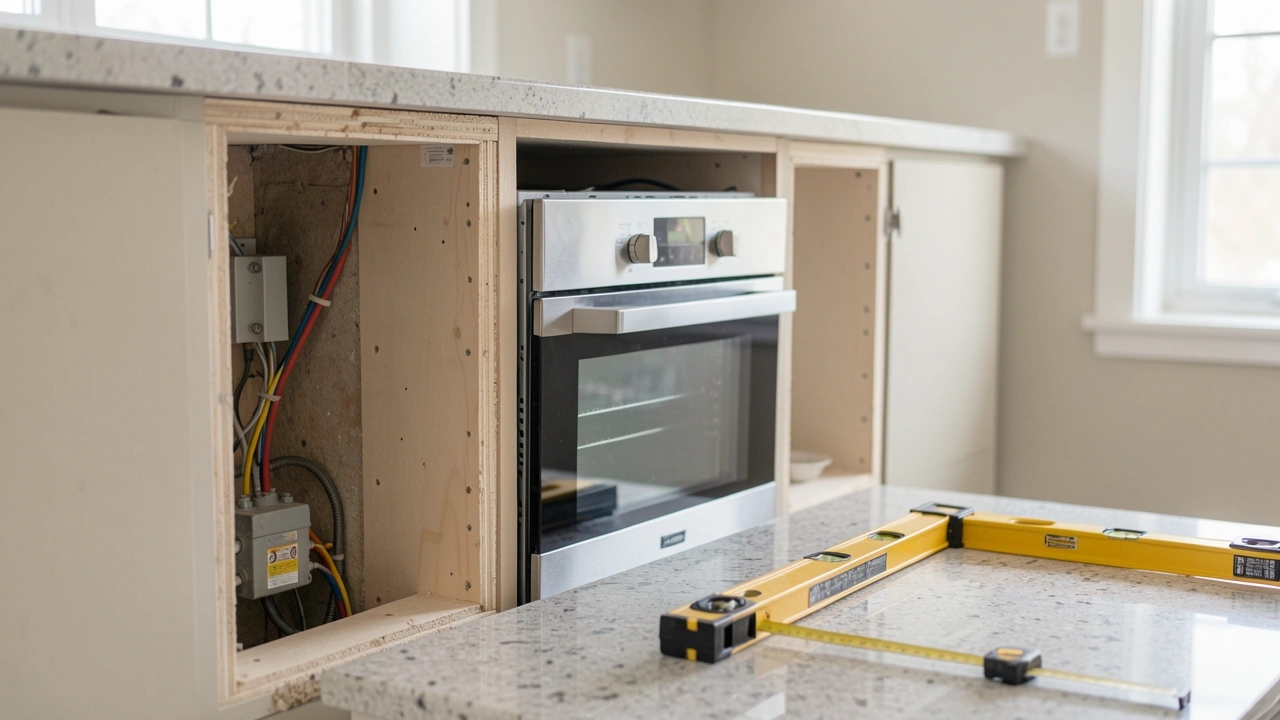
A range drops into a 30-inch gap in your existing cabinetry, plugs into a single 240V outlet, and it’s done.
The separate route needs two dedicated 240V circuits — one for the cooktop and one for the wall oven.
Unless your kitchen was pre-wired for both during the build, that means an electrician visit, potentially a new breaker, and possibly a panel upgrade.
Then there’s the enclosure: a wall oven can’t sit on the floor or slide into a standard open cabinet slot. It needs a purpose-built cabinet box with proper ventilation clearances.
If you’re doing a full remodel, that cabinet gets absorbed into the overall kitchen budget. If you’re not remodeling, it’s a custom fabrication job with a painful line item of its own.
You don’t need me to tell you that’s a massive swing.
The question is whether the separate route is ever worth it, and the honest answer is that it depends entirely on your kitchen layout and the way you cook.
When the Extra Cost of a Cooktop and Wall Oven Is Actually Justified
There are legitimate scenarios where the premium is money well spent, and a single range simply can’t deliver the same result.
The key is recognizing which camp you fall into before you let the design phase steamroll your budget.
A cooktop in an island creates a social cooking space and keeps sight lines open. Two wall ovens let you roast a turkey and bake sides at different temperatures simultaneously — impossible with a single range.
A wall oven sits at waist height, so no more bending to check a roast or haul a heavy casserole out of a low range cavity. That’s a meaningful upgrade for older cooks, anyone with back problems, or households where a shorter family member does most of the cooking.
If you’re just swapping out a dead range in an otherwise untouched kitchen, the separate route will cost you far more than it returns. The premium rarely pays off in this scenario, especially since existing cabinets and wiring won’t be set up for it.
There’s also the dual-fuel angle: a gas cooktop paired with an electric or induction wall oven gives you responsive flame control on top and precise dry heat below.
No single range offers that combination, so if you’re serious enough about cooking to want both, the separate route is the only path there.
How to Compare Real-World Costs Without Overpaying
Once you know where the premium comes from, you can shop like someone who understands the game. The first rule is to never compare sticker prices alone and call it a day.
Get firm installation quotes for both configurations before you make a single decision — the electrical and cabinetry work can swing the total by thousands.
Feature matching matters just as much as price matching.
A basic coil range at four hundred dollars isn’t the real alternative to a mid-tier induction cooktop; it’s the budget outlier in a different category.
The honest comparison is between similarly equipped options — say, a slide-in induction range versus an induction cooktop plus a convection wall oven. In that matchup, the gap closes significantly.
- Get an installed-cost quote for both setups before you commit to a layout.
- Match features, not price tiers — compare induction to induction, convection to convection.
- Shop package deals — retailers frequently bundle cooktop and wall oven pairs.
- Ask about combined installation — some contractors discount when wiring both units in one visit.
- Assume the range is always the bargain — premium pro-style ranges can outprice a mid-tier separate setup.
- Ignore the cabinet buildout cost for the wall oven — it’s often the largest hidden line item.
- Settle for one electrical quote — prices vary widely, and a second opinion can save hundreds.
- Forget open-box options — display models of cooktops and wall ovens often get steep markdowns.
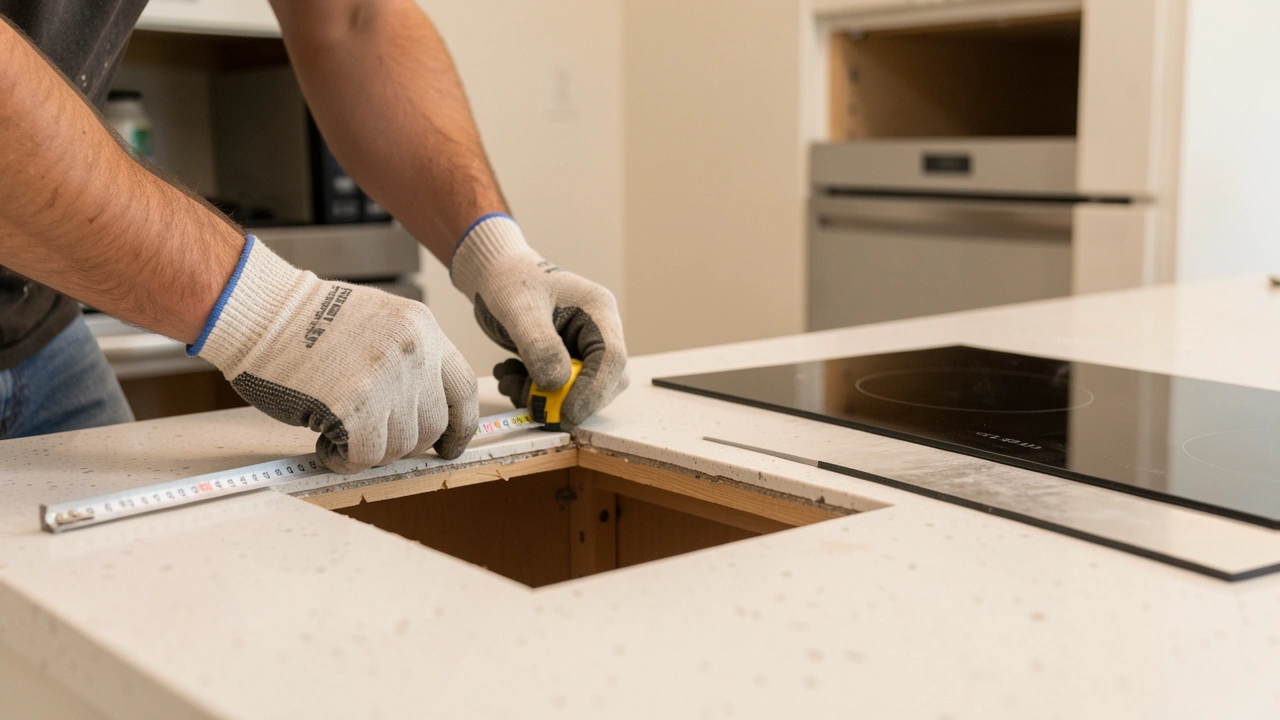
One more practical tip: if you’re leaning toward the separate route, check whether your countertop fabricator bundles the cooktop cutout into their quote or charges it as an add-on.
That single line item has been known to surprise homeowners by a few hundred dollars at the final invoice.
Frequently Asked Questions
Do cooktops and wall ovens use the same electrical outlet as ranges?
No. A range uses a single 240V outlet. A cooktop and a wall oven each require their own dedicated 240V circuit, which means two connections instead of one. If your kitchen wasn’t pre-wired for a separate configuration, you’ll need an electrician to run a second circuit before anything can be installed.
Is a wall oven more energy-efficient than a range oven?
Generally, yes. Wall ovens have smaller, better-insulated cavities and don’t waste heat warming the space above the cooktop the way a range oven does. You’ll typically see modest energy savings on top of the ergonomic benefits, though not enough to offset the purchase price premium on its own.
Can you mix brands between a cooktop and a wall oven?
Yes. Unlike a range, the two units don’t need to match visually or mechanically. The only hard requirements are matching cutout dimensions and a finish that works together. Many serious cooks deliberately pair a gas or induction cooktop from one brand with a wall oven from another that has better baking performance.
Does a cooktop-and-wall-oven setup add resale value to a home?
In the luxury market, it can — built-in appliances signal a custom kitchen and support a higher asking price. In a mid-range home, you generally won’t recoup the premium at resale. Buyers in that segment tend to see a good range as equally functional, and they won’t pay extra for the separate configuration.
Are there budget-friendly cooktop and wall oven options?
Yes, entry-level models exist from every major brand, and they’re more affordable than they were a decade ago. But because of the electrical work, cabinet enclosure, and countertop cutout required, the total installed cost still typically exceeds a comparable range. The sticker price isn’t the real cost, and that’s true at every tier.
The cooktop-and-wall-oven premium isn’t a scam, and it isn’t arbitrary.
It’s the predictable result of a smaller market, harder engineering, luxury positioning, and installation complexity that nobody warns you about upfront.
But that doesn’t mean the premium is never worth paying — it means you need to know which side of the line you’re on before you spend.
If an island cooktop or a waist-height oven genuinely improves how you cook and live, the separate route earns its keep. If you’re simply replacing an old range, the math rarely works in your favor.
Arm yourself with the installed-cost numbers, and the right choice becomes obvious.