Reina
Reina 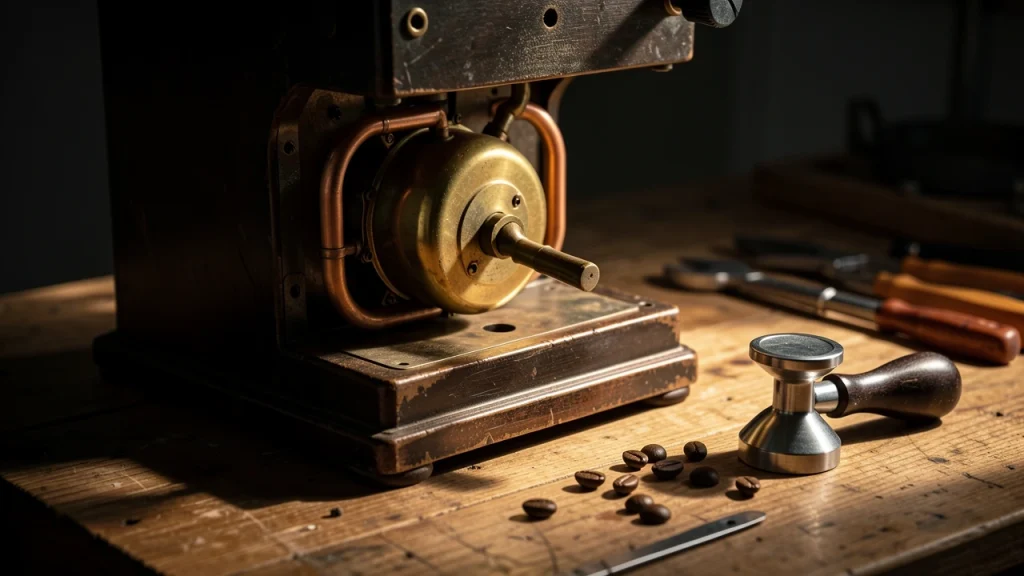
As an Amazon Associate, I may earn a small commission from qualifying purchases at no extra cost to you. This helps me create more valuable, tested content for you.
Yes, it can be — but only under specific conditions.
If your total budget sits under $300, you’re willing to learn basic maintenance, and you target proven and repairable models like a Gaggia Classic or a Rancilio Silvia, a used espresso machine is often the smartest first purchase you can make.
If you just want coffee without a project, a new entry-level machine is the safer path. I’ve taken both routes myself, and here’s exactly what separates a real steal from a money pit.
My first machine was a used Gaggia Classic. I paid $220 for it from a home barista who was upgrading to a dual boiler.
It leaked slightly for the first week, needed a new group gasket that cost me $10, and after two years I sold it for $180 when I upgraded.
That is the best-case scenario for buying used, and it happens more often than you’d think when you pick the right machine.
But there’s a darker side. I’ve watched friends buy used machines that looked flawless on the surface and then sink another $200 into repairs within a month.
The difference between those two outcomes isn’t luck. It comes down to specific checks you can run before you hand over any money.
Why the Used Market Is So Tempting for a First Machine
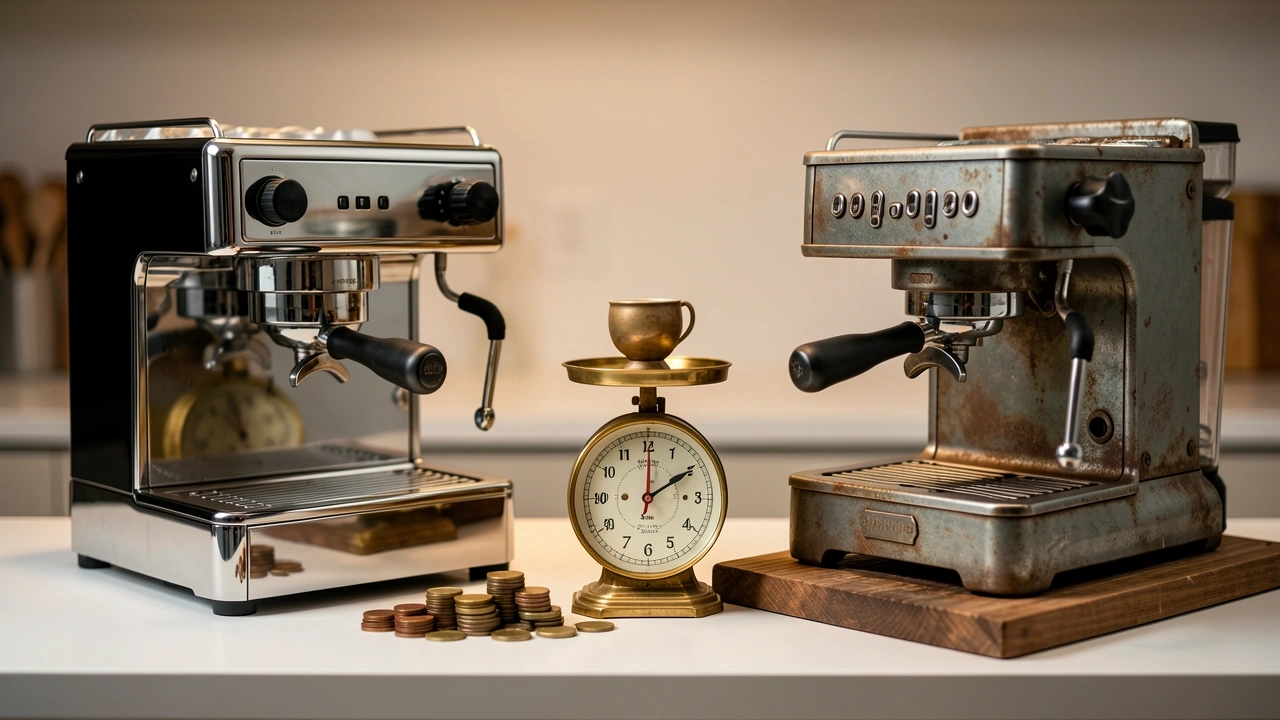
The basic math is simple. Espresso machines lose value the moment they leave the store. A machine that cost $500 new can be yours for $220 a few years later, often with plenty of life left.
That price drop unlocks an entire tier of machine you could never afford brand new.
Take the Gaggia Classic. New, it runs around $450. Used, you’ll find them at $200 to $300 without much hunting.
Now compare that to a new entry-level machine at the same price point, like a De’Longhi Dedica at about $280.
The used Gaggia gives you a 58mm portafilter, standard non-pressurized baskets, a brew pressure valve you can adjust, and a boiler that any repair shop understands.
The Dedica has a 51mm portafilter, mostly plastic internals, and a design that leans toward replacement rather than repair.
That gap matters more than any spec sheet suggests. When I pulled my first shots on the used Gaggia, I was learning on the same format that commercial machines use.
Every basket, tamper, and portafilter I bought for it carried over to every machine I’ve owned since. A friend who started on a Dedica had to relearn everything when she upgraded.
There’s also a resale angle that nobody talks about enough. Well-maintained used machines from the popular Italian models hold their value remarkably well.
I bought that Gaggia for $220 and sold it for $180 two years later. That’s $40 in depreciation, which is less than a week of café lattes.
Buy a new budget machine, discover espresso isn’t your hobby, and you’ll lose 40 to 60 percent of what you paid the moment the box opens.
The Risks Nobody Tells You About Before You Buy
The reason used espresso machines are cheap isn’t always because the seller is generous. Sometimes they’re selling because the machine has expensive problems they’d rather not deal with.
What makes this tricky is that most of those problems stay invisible from the outside until the machine is under load.
Scale Build-Up Hides Inside the Boiler
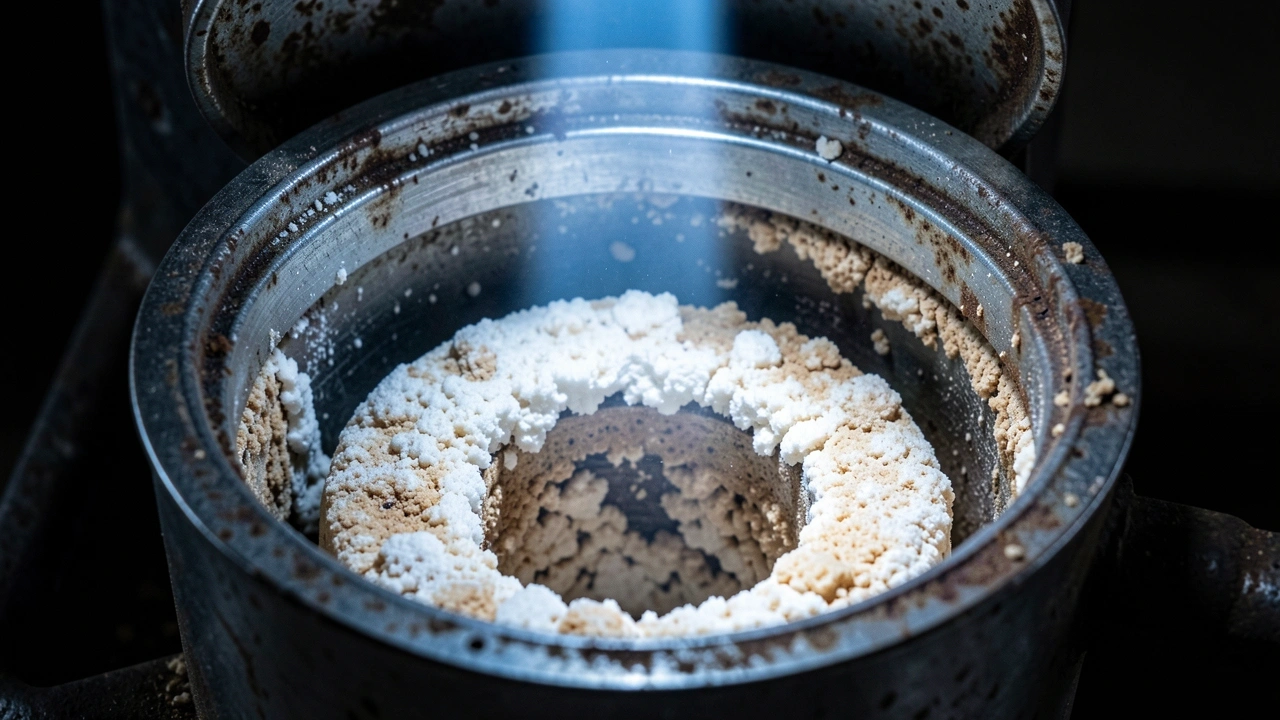
Scale is the silent killer in home espresso. If the previous owner used hard tap water and never descaled, calcium deposits coat the heating element and the internal walls of the boiler.
The early symptoms are subtle: the machine takes longer to heat up, the brew temperature swings more than it should, and you hear louder boiling sounds.
Left unchecked, scale acts as insulation that makes the heating element overheat and eventually burn out. Replacing a boiler or heating element runs $100 to $200 in parts alone.
You can’t see inside a boiler without opening the machine.
But you can look for white or gray flakes in the water that comes out of the group head, and you should always ask the seller about their descaling routine.
If they don’t know what descaling means, that’s your cue to walk away.
The Pump Could Be Nearing the End of Its Life
The vibration pump is the small device that pushes water through your coffee at pressure. It has a lifespan measured in cycles, not years.
A machine from a busy household that pulls ten shots a day will hit that limit quickly.
The symptoms include a weak and pulsing flow, trouble reaching brew pressure, and a grinding or rattling sound that wasn’t there when the machine was new.
A replacement pump costs $40 to $80 plus an hour of your time to install.
The Three-Way Valve Gets Clogged
Most modern machines have a three-way solenoid valve that releases pressure in the group head after brewing finishes. Coffee oils and scale residue clog it over time.
When that happens, the machine hisses, the portafilter sneezes coffee when you unlock it, and your pucks come out soupy.
Cleaning or replacing the valve is a moderately technical job, and the parts run $30 to $100.
Missing Accessories Add Up Fast
Used machines often show up without the essentials: portafilter, baskets, blind filter, steam wand tip, or drip tray. Replacing those piece by piece can add $50 to $150 to your total.
A 58mm portafilter runs $25 to $40, a set of baskets is $15 to $30, and the original steam wand tip for older models can be surprisingly hard to source.
You Become the Warranty Department
When you buy new, you get a manufacturer warranty, a return window, and a support team that answers the phone. When you buy used, you get none of that.
If the machine dies on day two, the seller might offer a refund — or might not. If you can’t fix it yourself, a local repair technician charges $80 to $150 per hour, and most shops have a $100 minimum.
That reality reshapes the entire cost equation, which is why the inspection step matters so much.
How to Inspect a Used Espresso Machine Before You Pay
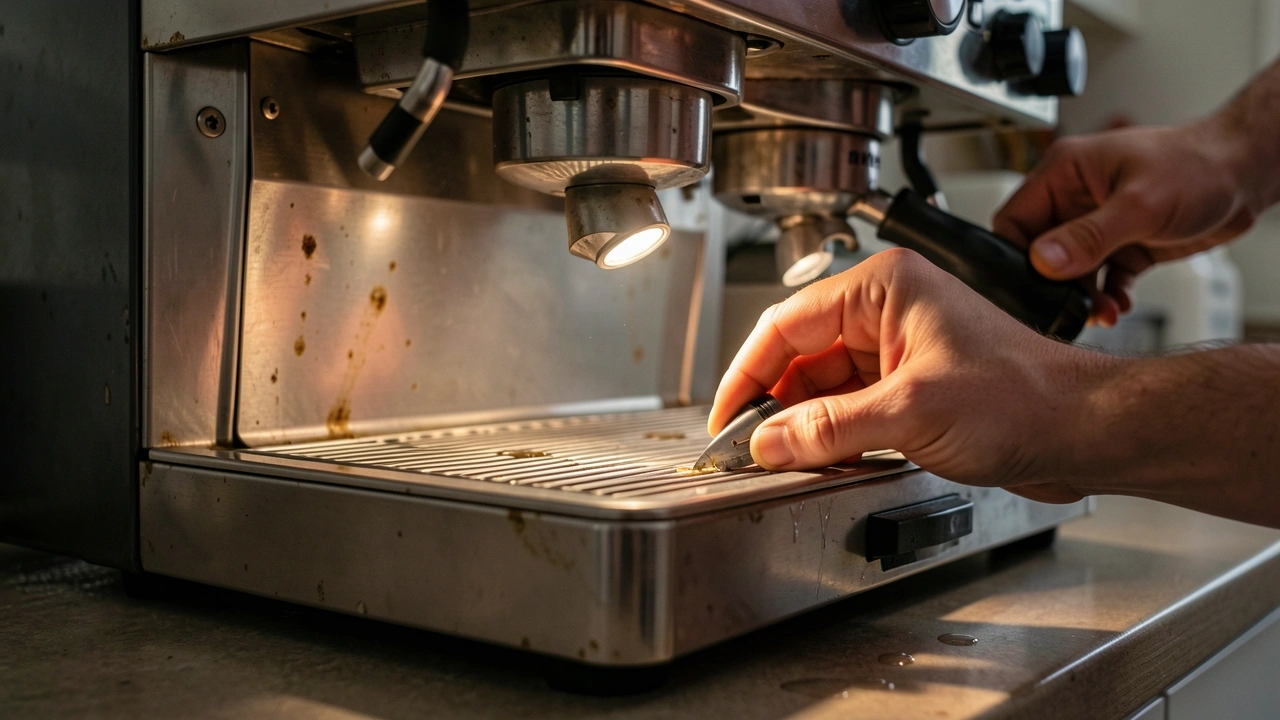
None of these risks mean you should avoid the used market. They mean you need to inspect before you buy.
Here’s the checklist I run through whether I’m standing in a seller’s kitchen or watching a video they sent me.
- Ask about water and maintenance history. What water did they use — tap, filtered, or bottled? When did they last descale? How often do they backflush? A seller who answers these questions without hesitation is a green flag. One who goes quiet is a warning.
- Pull the drip tray and look underneath. Rust on the drip tray or the chassis beneath it tells you the machine has lived in a damp environment. Coffee oils caked around the group head suggest the cleaning routine was optional. Neither is an automatic deal-breaker, but both should lower your offer.
- Run water through the group head. Turn the machine on, let it fully heat up, and run water for about ten seconds with no portafilter locked in. The stream should be steady and even. Spitting, pulsing, or water that comes out in weak drips points to pump or scale problems.
- Listen to the pump. A healthy vibration pump makes a consistent, rhythmic hum. A grinding, struggling, or intermittently loud pump is a strong sign it’s about to fail.
- Test the steam wand. Open the steam valve for ten seconds once the machine is hot. Steam should come out strong and dry within a few seconds. Weak or wet steam often means scale inside the boiler or a partially blocked wand.
- Ask for a video demo if you can’t see it in person. Have the seller record a full cycle: water through the group, steam test, and a real shot if they have coffee ready. If they refuse or get evasive, move on to the next listing.
- Confirm what’s included. Does it come with the portafilter, baskets, blind filter, and drip tray? Are the baskets non-pressurized or the original pressurized ones? A machine listed without a portafilter will cost you extra before you can pull a single shot.
- Buy through a platform with buyer protection. eBay, Facebook Marketplace with checkout, and the r/coffeeswap subreddit all give you recourse if the deal goes wrong. Cash sales with no paper trail protect only the seller.
I once bought a Gaggia Classic from a seller who insisted it just needed a descale. I plugged it in at his house, ran water through the group, and watched it pulse weakly.
I offered $120 instead of the $250 asking price. The new pump cost me $45 and one evening of work. That’s what the checklist does — it turns a gamble into a negotiation.
The Hidden Costs That Decide What You Actually Spend
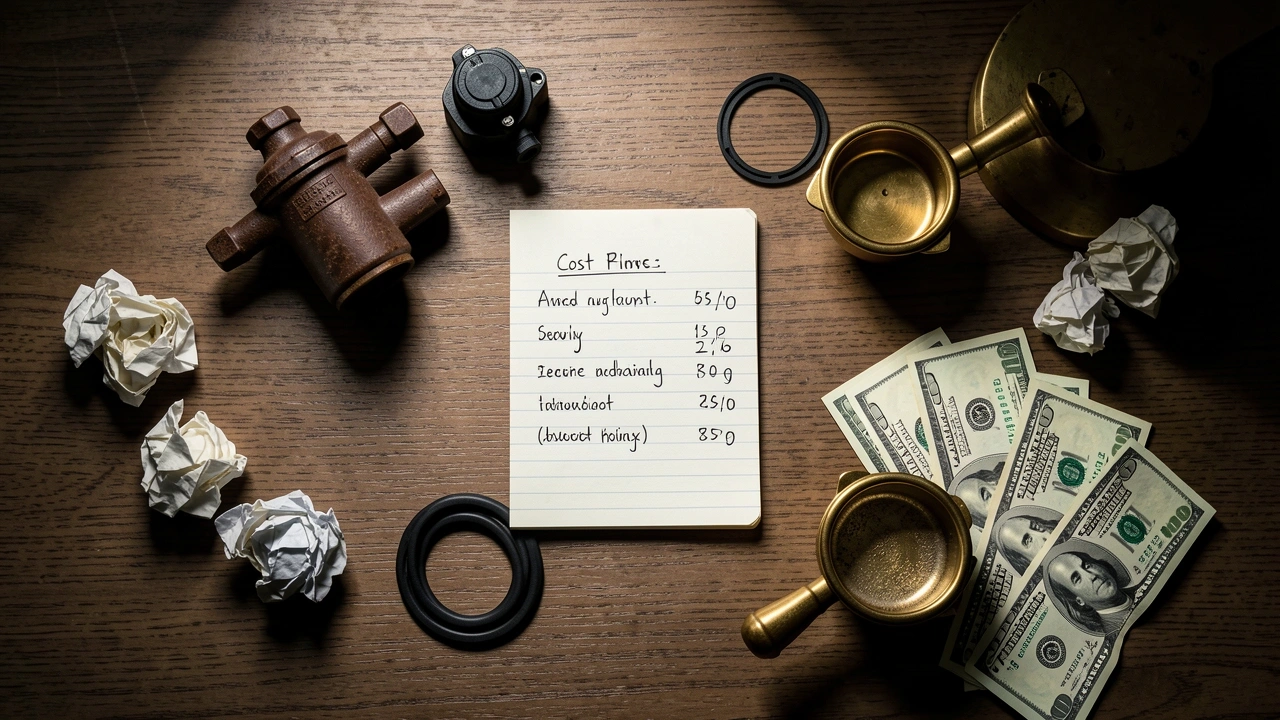
The machine is only half the setup, and this is exactly where most beginners trip. You cannot make espresso with a machine alone.
You also need a grinder that grinds fine enough and adjusts in small increments. The cheapest espresso-capable grinders start around $100 for a good hand grinder and $200 for a decent electric one.
That single fact can flip the used equation completely. If you buy a used machine for $250 and then discover you need a $200 grinder plus $60 in accessories, you’re suddenly at $510 with no warranty.
A new Breville Bambino costs $300, comes with a full warranty, and when paired with the same $200 grinder, lands around $500.
| Setup Path | Machine | Grinder | Repairs & Accessories | Total |
|---|---|---|---|---|
| Well-maintained used Gaggia Classic | $250 | $120 (hand grinder) | $60 repairs + $50 accessories | $480 |
| New Breville Bambino | $300 | $120 (hand grinder) | $40 accessories | $460 |
| Used machine with hidden damage | $250 | $120 (hand grinder) | $200 repairs + $50 accessories | $620 |
The numbers move in used’s favor when you already own a grinder, or when the machine you found has clear maintenance records.
The worst-case row in the table isn’t hypothetical — it’s what happened to a friend who bought a used De’Longhi that just needed a small fix. It needed a pump, a deep descale, and fresh gaskets.
That’s how a $250 deal became a $620 setup with no warranty and a steep learning curve.
My rule of thumb: set aside 20 to 30 percent of the purchase price for repairs and replacement parts before you buy. If that buffer pushes your total past the cost of a comparable new machine, buy new.
The buffer is not optional. Almost every used machine needs at least a descale and fresh gaskets within the first few months.
Which Used Machines Are Worth It and Which Are Traps
Not all used espresso machines are created equal. Some are practically immortal. Others are ticking time bombs with pretty stainless steel covers.
Here’s how the market breaks down from someone who’s owned and serviced many of these machines.
Beginner-Friendly Used Machines
Gaggia Classic — any version. This is the default recommendation in the espresso community for good reason.
It has a simple, repairable layout, an enormous aftermarket for parts, and a community that has documented every possible repair step by step. You’ll pay $200 to $300 used.
The machine gets criticism as a new purchase for beginners because its out-of-the-box temperature stability is mediocre — that’s a fair point. But the used market changes the story entirely.
Since the design has been around for decades, parts are everywhere, repair videos exist for every fault, and the community will walk you through any fix you’re unsure about.
Rancilio Silvia. Built like a tank with commercial-grade components, and just as well documented as the Gaggia.
It’s a step up in price — usually $350 to $500 used — and it demands a bit more patience in daily use because it’s a single boiler that takes time to switch between brewing and steaming.
But it’s genuinely a buy-it-for-life machine. I’ve seen twenty-year-old Silvias still pulling excellent shots with nothing more than basic maintenance.
Breville Bambino. If you find a used Bambino under $200, it’s a solid deal.
It heats up in about three seconds, brews consistently, and takes up less counter space than the Italian machines.
The catch is that Breville’s internal parts are harder to source, so repairs cost more when something breaks. Treat it as a disposable bargain rather than a long-term investment.
Used Machines to Avoid
Super-automatics. Bean-to-cup machines with built-in grinders are a repair nightmare.
Their internal brew units, chutes, and sensors fail in ways that are almost impossible to diagnose or fix at home.
A used super-automatic at any price is a gamble you’ll likely lose, and the repair quote will often exceed what you paid.
Complex heat exchanger or dual boiler machines from obscure brands. A used E61 machine — the classic chrome-covered group head style found on prosumer equipment — at $600 sounds like a steal until you need a $250 part that takes four weeks to ship from Italy.
Stick to brands with established parts supply: Gaggia, Rancilio, Breville, Lelit, and a few others with North American and European distribution networks.
Machines with proprietary portafilter sizes. If the machine uses an unusual portafilter format, you’ll struggle to find baskets, tampers, and accessories.
Most of the ecosystem revolves around 58mm and 54mm sizes. Anything else means paying premium prices for niche gear.
Anything that has sat unused for months. Seals and gaskets dry out and crack when a machine sits idle.
A machine that’s been in a garage for a year is far riskier than one that’s been used weekly, even if the garage machine looks cleaner.
| Model | Typical Used Price | Repairability | Good First Machine? |
|---|---|---|---|
| Gaggia Classic | $200–300 | Excellent — huge parts market | Yes |
| Rancilio Silvia | $350–500 | Excellent — commercial-grade parts | Yes, with patience |
| Breville Bambino | $150–250 | Moderate — parts are hard to source | Yes, as a bargain |
| Breville Dual Boiler (older models) | $400–700 | Moderate — known solenoid wear | No |
| Super-automatic (any brand) | $100–300 | Poor — complex internals | No |
Should You Buy Used? Run This Quick Self-Check
You’ve now seen the upside, the risks, and the inspection routine. Here’s how to make the final call for your specific situation.
Answer these four questions honestly, and the right path becomes obvious.
What is my real total budget? Not just for the machine — for the machine plus grinder plus accessories plus a repair buffer.
If the total sits under $300, used is almost your only path to real espresso, because a new machine and grinder will blow past that number.
If your budget is $400 to $600, a new entry-level machine plus a good hand grinder becomes competitive, and it comes with a warranty.
Am I comfortable with basic machine maintenance? A used espresso machine is a relationship, not a one-time transaction. You will descale it, replace gaskets, and possibly swap a pump.
If the thought of opening the machine makes you uncomfortable, buy new and enjoy the warranty.
Do I enjoy learning by doing? Buying used teaches you how espresso machines actually work, and that knowledge carries into every future upgrade.
But if you want to press a button and drink good coffee while you wake up, the learning curve of maintenance combined with extraction will feel like a chore.
What do I mostly drink? If your daily order is a latte or cappuccino, a used single-boiler like the Gaggia Classic means waiting for the boiler to switch between brewing and steaming temperatures.
That wait is two to three minutes per drink. A new Breville Bambino switches modes far faster. If you drink straight espresso or Americanos, the used route is friendlier and the wait barely matters.
One simple rule covers most cases: if your total budget for machine, grinder, and accessories exceeds $400, buy new.
If it doesn’t, or if you genuinely enjoy tinkering, buy used — but stick to the proven models and run the inspection checklist first.
Frequently Asked Questions
Can I test a used espresso machine before buying?
Yes, always ask. A good seller will happily show you the machine running, either in person or through a live video call. That’s your chance to check the pump sound, the steam power, and the brew flow.
A seller who refuses to demo the machine is a seller you should walk away from.
How much should I budget for repairs on a used espresso machine?
Set aside 20 to 30 percent of the purchase price. A descale and new gaskets cost $30 to $60. A pump replacement runs $40 to $80 in parts. A clogged solenoid valve costs $30 to $100 to fix.
If you’re buying a machine at a deep discount because it needs a little work, double that estimate.
Do used espresso machines lose value quickly?
No. Well-maintained machines from popular models like the Gaggia Classic and Rancilio Silvia hold value remarkably well because demand stays steady and parts remain available.
I bought my first Gaggia for $220 and sold it for $180 two years later. Budget new machines, on the other hand, can lose half their value the moment the box opens.
Is it safe to buy a used espresso machine online without seeing it?
It’s risky but manageable.
Buy through platforms with buyer protection like eBay or Facebook Marketplace’s checkout, and always request a video demo that shows the machine running a full cycle with water flowing and steam coming out.
Avoid direct bank transfers or wiring money to strangers — those deals usually end badly.
What if I don’t know how to descale a machine?
Then lean toward buying new. Learning espresso extraction and learning machine maintenance at the same time is a steep curve that pushes many beginners out of the hobby entirely.
The best first setup is the one that gets you good coffee with minimal frustration. For a total beginner who doesn’t want a project, a new machine with a warranty is the safer starting point.