Reina
Reina 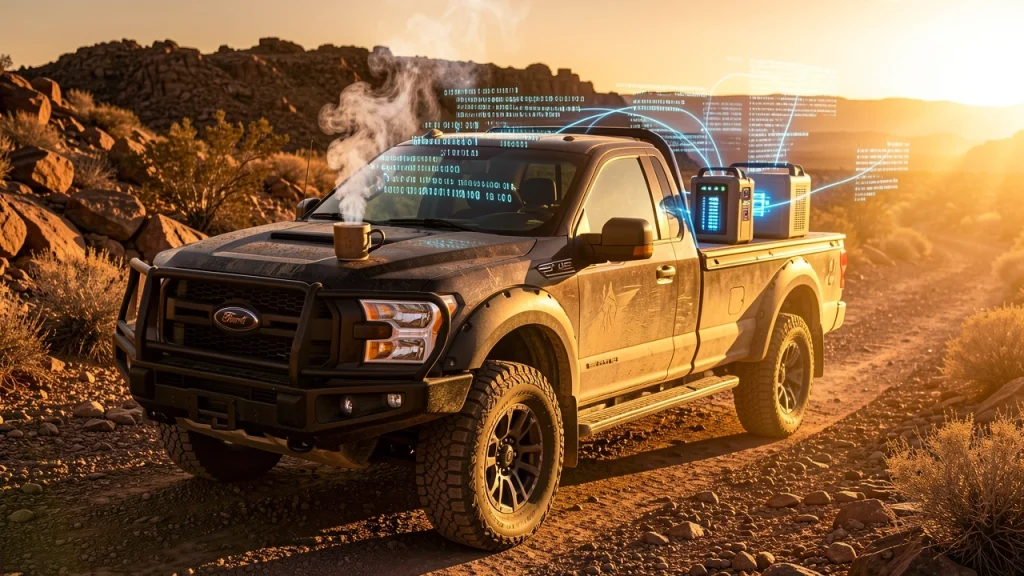
As an Amazon Associate, I may earn a small commission from qualifying purchases at no extra cost to you. This helps me create more valuable, tested content for you.
There’s no single best way to power a coffee machine when you’re camping or off-roading. The right choice depends on your coffee machine type, trip length, and budget.
After years of testing setups in my own rig and helping friends wire their overlanding builds, I’ve learned that the smartest approach is to match your power source to your machine’s surge wattage and your daily power budget.
Get that wrong, and you’ll end up with a dead battery or a lukewarm cup. Here’s exactly how to figure it out.
First, Know Your Coffee Machine’s Power Appetite
Most people overlook the difference between running wattage and surge wattage.
A standard drip coffee maker might run at 800 watts, but when you first turn it on, the heating element draws a surge that can hit 1200 watts for a few seconds.
If your inverter or power station cannot handle that surge, it will shut down or trip. A Nespresso machine pulls a steady 1200 to 1500 watts with no surge because it heats water on demand.
Pod machines are actually harder on power systems because they run at full load the entire time.
Here is a quick formula to figure out what your battery will see: Watts ÷ Volts = Amps. For example, a 1200-watt coffee maker running on a 12-volt system draws 100 amps. That’s a lot.
A typical 100Ah deep-cycle battery can only deliver about 50 amp-hours of usable power (to avoid deep discharge damage).
So that one cup of coffee eats 20–25% of your battery capacity, depending on how long the machine runs.
Before you buy anything, check the label on your coffee machine or look up the spec sheet. Note both the running watts and the surge watts.
If you cannot find surge watts, assume it is 1.5 times the running watts for drip machines.
The Three Core Power Strategies and When Each Fails
Manual / No-Electric
This is the simplest approach: AeroPress, French press, pour-over, or percolator. Zero electricity needed. I have used an AeroPress Go for years in my truck camper.
It makes a single cup in about two minutes, cleanup is a quick pop of the puck, and it takes up less space than a loaf of bread.
The downside is obvious: if you crave espresso-based drinks or need to brew for multiple people, manual methods are slow and messy.
Also, you need a stove or kettle to boil water, which adds fuel weight and time.
When it fails: when you are in a hurry, want a latte, or are camping in wet conditions where starting a stove is a pain. Also, if you have a group of four or more, manual brewing becomes a chore.
Vehicle’s Own Electrical System
Using an inverter plugged into your vehicle’s 12V socket (cigarette lighter) or connected directly to the starter battery can work for a single cup, but only if you are careful.
Most 12V sockets are rated for 10–15 amps, which is about 120–180 watts. A 1200-watt coffee maker will blow the fuse instantly.
You need to hardwire an inverter with a capacity of at least 1500 watts to the battery, using 4 AWG or thicker wire. Even then, the engine must be running to keep the alternator charging.
If you turn off the engine and brew, you risk draining the starter battery to the point where you cannot start the vehicle.
I learned this the hard way on a winter trip in Utah. I plugged a 700-watt drip machine into a 1200-watt inverter connected to my truck’s starting battery. I let the engine idle while it brewed.
After the second cup, the inverter started beeping low voltage. The battery was below 11 volts. I had to jump-start with a portable pack. Never again.
When it fails: any trip longer than a single morning, or if you want more than one cup, or if you park in cold weather where battery capacity is reduced.
Also, off-road vibration can cause poor connections, leading to voltage drops that make the inverter shut off.
Dedicated Power Source
This is the reliable path for multi-day trips or serious off-roading.
You have three options: a portable power station (like a Jackery or EcoFlow), a DIY battery bank with a separate inverter, or a fuel generator.
Portable power stations are the easiest. I have used an EcoFlow River 2 Pro (768Wh, 800W inverter, 1600W surge) for weekend trips.
It can run a 600W drip machine for about two brews before needing a recharge. The key is to check the continuous and surge rating. Many power stations advertise 300W but cannot handle a 1000W surge.
For a Nespresso, you need at least a 1500W inverter rating. The River 2 Pro handles my drip machine fine, but I cannot run a pod machine with it.
DIY battery banks give you more capacity for less money. I built a 200Ah LiFePO4 battery with a 2000W pure sine wave inverter.
It runs a full-size drip machine and a small fridge for three days without solar. The trade-off is weight, wiring complexity, and the need to secure the battery against tipping on rough trails.
Fuel generators (propane or gas) are the most powerful and least expensive per watt. A 2000W inverter generator from Honda or Yamaha will run any coffee machine and recharge batteries.
But they are noisy, require fuel storage, and cannot be used inside a tent or vehicle. I only use mine when I am base camping with a big group and need to run a fridge and microwave too.
When each fails: power stations fail when you underestimate your daily consumption. DIY banks fail if you wire them wrong or use undersized cables.
Generators fail when you need quiet early mornings or when you run out of fuel.
Off-Roading Reality Check – What Your Coffee Machine WON’T Survive
Off-roading introduces three problems that most articles ignore: vibration, voltage spikes, and dust. I have seen ceramic heaters crack in a drip machine after a day of rough trail driving.
The element is fragile when hot. If you leave the coffee maker on the counter while driving, the vibration can also loosen internal connections.
I now soft-mount my coffee maker with a silicone mat and strap it down with a bungee cord.
Voltage spikes from the alternator on bumpy roads can cause a high-quality inverter to shut down or a cheap one to let through dirty power that damages the coffee maker’s electronics.
Always use a pure sine wave inverter for any coffee machine with a digital control board. Modified sine wave can cause humming, overheating, or failure.
I burned out a $40 coffee maker in one trip because I used a modified sine inverter.
Dust is another killer. Campground dust coats the cooling vents of the coffee machine, causing it to overheat and shut off mid-brew.
I keep my coffee maker in a dust-proof case when not in use, and I wipe the vents clean before each use.
If you are in a sandy area, consider a machine with a sealed heating element, like a French press or AeroPress, instead.
Build Your Own Power Budget – The Decision Matrix
To help you pick the right setup, I have created a table that cross-references trip length, coffee machine type, and power source. This is based on my own testing and real-world use.
| Trip Length | Coffee Machine Type | Recommended Power Source | Approx. Cost | Notes |
|---|---|---|---|---|
| 1 day / single cup | Manual (AeroPress, French press) | None (stove only) | $30–$50 | Lightest, no power needed |
| 1 day / 2 cups drip | Drip machine (600W) | Vehicle inverter + engine running | $100–$200 | Risk of dead battery if engine off |
| Weekend (2–3 days) | Drip machine (800W) | 300Wh portable power station (600W inverter) | $300–$500 | Enough for 2–3 cups per day, no solar needed |
| Weekend (2–3 days) | Pod machine (1200W) | 500Wh power station with 1500W inverter | $600–$900 | Pod machines drain battery fast; limit to 2 cups per day |
| Week-long (7 days) | Drip machine (800W) | 100Ah LiFePO4 battery + 1000W inverter + 100W solar panel | $800–$1200 | Solar keeps battery topped off; requires installation |
| Week-long (7 days) | Any electric machine | 2000W generator (propane or gas) | $500–$1000 | Noisy, but can also power fridge and lights |
| Extended off-grid (2+ weeks) | Manual or low-wattage (e.g., AeroPress) | 200Ah LiFePO4 + 300W solar + small inverter for kettle | $1500–$2500 | Most reliable; avoids high power draw |
Use this table as a starting point. If you want two cups of drip coffee per day for a weekend, a 300Wh power station with a 600W inverter is enough.
If you insist on a Nespresso, you need at least 500Wh and a 1500W inverter, and you will only get about 3–4 cups before the battery is dead.
Installation and Safety Guidelines for Off-Road Rigs
If you decide to wire a permanent setup, follow these rules to avoid fires or dead batteries.
- Wire gauge: For a 1500W inverter on a 12V system, use 4 AWG or thicker copper wire. Undersized wire heats up and can melt. I used 2 AWG for my 2000W inverter.
- Fuse or circuit breaker: Install a fuse within 12 inches of the battery positive terminal. A 200A fuse is typical for a 1500W inverter.
- Battery ventilation: Lead-acid batteries release explosive hydrogen gas. Place them in a vented compartment, not inside the living area. LiFePO4 batteries are safer and do not vent gas, but still need to be secured from movement.
- Low-voltage cutoff: Use an inverter that shuts off at 11.5V or 12.0V to protect your battery from deep discharge. I fried a $200 AGM battery by running it down to 10.5V once.
- Securing the coffee maker: Strap it down with a cargo net or bungee cords. On a rocky trail, a coffee maker can become a projectile. I use a soft canvas bag that fits the machine snugly.
Frequently Asked Questions
Can I run a Keurig off my truck’s 12V outlet?
Almost certainly not. Most Keurig machines draw 1200–1500 watts, which is 100–125 amps at 12V. The typical 12V socket is rated for 10–15 amps. You would blow the fuse instantly.
You need a hardwired inverter and a battery capable of delivering that current.
What’s the best coffee maker for a dual-battery system?
A low-wattage drip machine under 600W works well. I recommend the Bonavita 8-Cup (around 600W) or any manual brewer. Avoid pod machines unless you have a large battery bank (200Ah+).
How do I know if my generator is big enough for a coffee machine and a small fridge?
Add the running watts of both appliances. A typical fridge uses 50–100W running, 200W surge. A coffee machine uses 800–1200W. Total running watts: 900–1300W.
A 2000W generator is safe for both, even with surge. A 1000W generator might work if you start the coffee maker after the fridge compressor kicks off.
Is it safe to use an extension cord from my power station to the coffee maker inside the tent?
Only if the cord is rated for outdoor use and heavy enough gauge (12 AWG or thicker for 1200W). Never use a thin indoor extension cord—it can overheat and cause a fire.
Keep the power station outside the tent to avoid carbon monoxide or battery fumes.
What do I do if my coffee maker keeps shutting off due to low voltage while off-roading?
That means your battery voltage is dropping below the inverter’s cutoff threshold. Check your battery connections for corrosion or loose wires.
If the battery is healthy, you may need a larger capacity bank or a higher voltage cutoff setting.
On rough trails, the alternator output can be unstable; a DC-DC charger between the alternator and your house battery can smooth out the voltage.