 Reina
Reina As an Amazon Associate, I may earn a small commission from qualifying purchases at no extra cost to you. This helps me create more valuable, tested content for you.
The short answer is yes – most stainless steel pots are oven safe. The stainless steel itself can handle temperatures well above what your home oven can reach. But the real answer depends on a few things you need to check before you slide that pot in.
I have spent years cooking with stainless steel, and I have ruined a pot or two by assuming it was oven safe when it wasn’t. The handle melted off. The lid cracked. The bottom warped. All of those mistakes taught me what to look for. Here is what you need to know to avoid the same problems.
Yes, Most Stainless Steel Pots Are Oven Safe – But Not All
Stainless steel that is used for cookware – usually 18/10 or 304 grade – is extremely heat resistant. It can handle oven temperatures from 500°F all the way up to 600°F or even higher. The material itself will not melt, warp easily, or release anything harmful.
But a pot is more than just the metal body. It has a handle, a lid, and sometimes a nonstick coating. It may have a disc on the bottom that is built differently than the rest of the pot. Each of those parts can have a much lower temperature limit. That is where the “yes, but” comes in.
If your pot has a stainless steel handle that is fully welded or riveted with stainless steel rivets, and the lid is also stainless steel, and the pot is fully clad (not disc-bottom), then it is almost certainly safe up to 500°F or 600°F. But if any of those parts are different – plastic handle, glass lid, disc-bottom construction – you need to check the limits.
Understanding Stainless Steel Pot Construction
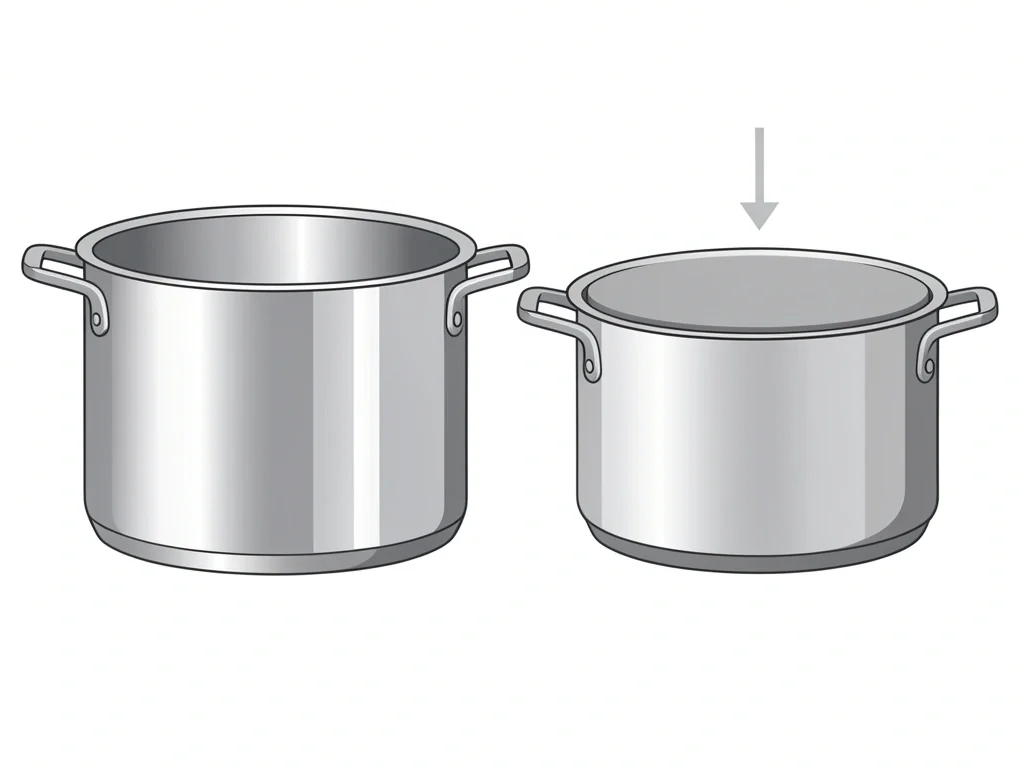
Not all stainless steel pots are built the same way. The construction affects how much heat the pot can take without damage.
Fully Clad (Multi-Ply) Pots
These are made from multiple layers of metal that extend all the way up the sides of the pot. A common example is a 3-ply pot with stainless steel on the inside and outside and an aluminum core. The entire pot – base and walls – is the same thickness and material structure. This kind of pot is designed to handle high heat evenly. It resists warping and can go in the oven up to 500°F to 600°F without problems. Most high-end brands like All-Clad, Viking, and Made In use fully clad construction.
Disc-Bottom Pots
A disc-bottom pot has a thick disc of aluminum or copper bonded only to the base. The sides are a single thin layer of stainless steel. This is a cheaper way to build pots. The disc can expand and contract at a different rate than the body, especially at high heat. Over 400°F to 450°F, the disc may start to separate or warp. Some manufacturers say disc-bottom pots are safe only to 350°F. Always check the bottom for a stamped temperature rating.
If you see a visible seam or a raised edge around the base of the pot, it is almost certainly disc-bottom. Treat it with caution in the oven.
How to Tell If Your Stainless Steel Pot Is Oven Safe Without a Manual
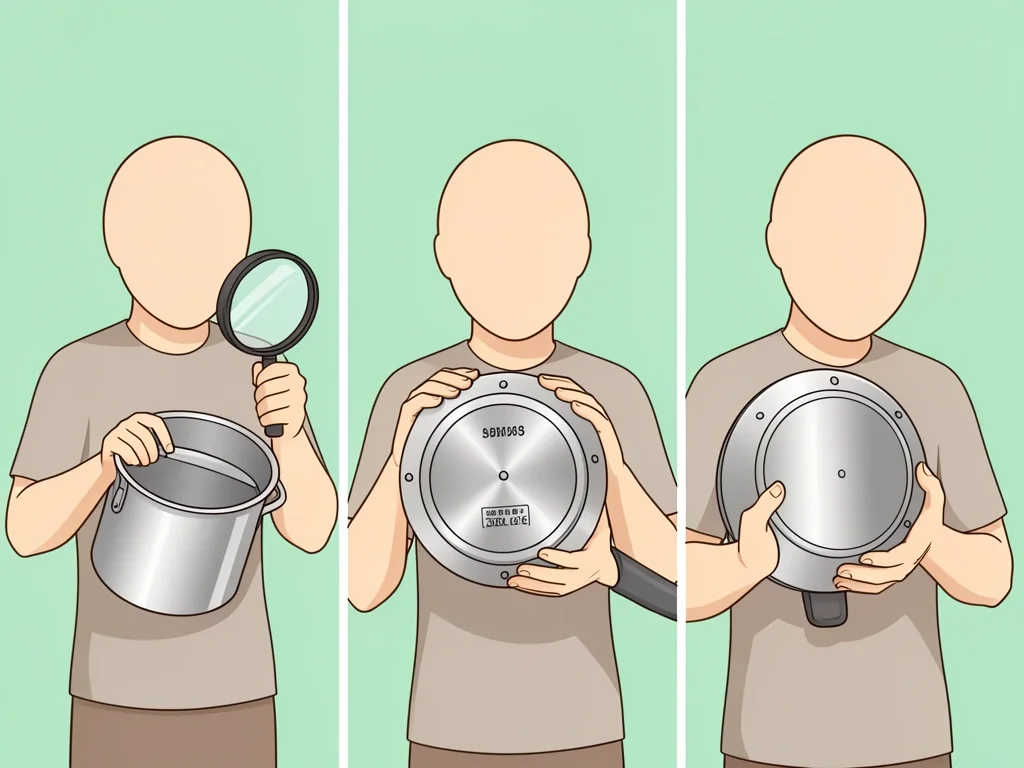
Most people do not keep the product manual that came with their pot. Here is how you can inspect your pot right now.
- Check the handle material. If the handle is solid stainless steel and feels heavy, it is likely oven safe. If it is plastic, rubber, silicone, or bakelite, do not put it in the oven. Even silicone-grip handles often have a plastic core that can melt at 400°F or above. Some metal handles are hollow and can get too hot, but they are still safe in terms of melting.
- Look for an “oven safe” stamp. Flip the pot over and look at the bottom. Many manufacturers stamp a maximum temperature or the words “Oven Safe” there. If it says nothing, do not assume it is safe.
- Examine the base. Look for a visible disc. If you can see a separate layer at the bottom, especially with a different color, it is disc-bottom. Check if there is a temperature rating etched into the disc.
- Inspect the rivets. If the handle is attached with rivets, see if they appear to be stainless steel. Aluminum rivets look duller and can weaken at high heat. Steel rivets are stronger.
- Test the lid. Glass lids are usually safe only up to 350°F to 400°F. Stainless steel lids can handle the same heat as the pot. If you plan to use the lid in the oven, know its limit.
- If nothing is marked, default to 350°F. That is the safe zone for almost any pot, regardless of construction. If you need higher heat, check the manufacturer website or contact customer service.
Temperature Limits: When Stainless Steel Pots Become Unsafe
Here is a clear breakdown of typical limits. Always follow the lowest rating among the pot body, handle, lid, and any coating.
| Pot Type | Typical Oven Limit |
|---|---|
| Fully clad stainless steel (no nonstick) | 500°F – 600°F |
| Disc-bottom stainless steel | 350°F – 450°F |
| Stainless steel with nonstick interior | 350°F – 400°F (coating degrades faster) |
| Broiler use (full stainless steel handle) | 500°F (some brands limit to 500°F) |
| Glass lid on a stainless pot | 350°F – 400°F |
If you exceed the limit, several things can happen. The handle can melt or burn. The lid can crack. The bottom can warp, making the pot rock on your stove. The nonstick coating can start to peel or release fumes. In extreme cases, the disc can separate and the pot becomes unstable.
Common Myths About Stainless Steel Pots in the Oven

I hear a lot of wrong advice about stainless steel and ovens. Let me clear up a few.
Myth: Stainless steel always warps in the oven. Not true. Fully clad pots from good brands resist warping because the layers expand together. Thin, cheap disc-bottom pots are the ones that warp. If you have a quality pot, it will hold its shape.
Myth: If a pot is oven safe, it is also broiler safe. Broiler heat is direct and intense. Many pots that are fine at 400°F in a standard oven can get too hot under the broiler. For broiler use, you need a pot that is fully stainless steel (handle included) and rated for at least 500°F. Even then, keep the pot a few inches away from the heating element.
Myth: You cannot put a stainless steel pot with a glass lid in the oven. You can, but the lid limits the temperature. The pot may be good to 500°F, but the glass lid is only good to 350°F. So you can put the whole thing in at 350°F. If you need higher heat, remove the lid.
Myth: If the handle is metal, it is always oven safe. Not necessarily. Some metal handles have plastic or silicone inserts. Some are attached with plastic screws. And some hollow metal handles can get dangerously hot, though they won’t melt. Always check the full handle assembly.
Brand-Specific Oven Safety for Stainless Steel Pots
Different brands have different ratings. Here is what I have found for the most common ones:
- All-Clad: All fully clad stainless steel lines (D3, D5, D7) are oven safe up to 600°F. The handles are stainless steel. Glass lids are safe to 350°F. Nonstick stainless steel lines are lower – around 400°F.
- Cuisinart: Most multi-clad stainless pots are oven safe up to 500°F. Check the handle. Some Cuisinart pots have silicone grips that limit them to 350°F. The Multiclad Pro line is fully clad and safe to 500°F.
- Calphalon: Stainless steel lines like Tri-Ply and Premier are oven safe to 450°F to 500°F. Their nonstick stainless steel models should not go in the oven above 400°F.
- KitchenAid: Forged stainless steel pots are oven safe to 450°F. Disc-bottom models may be lower – check for a stamp.
- Viking: Fully clad stainless steel is oven safe up to 600°F (including broiler). Nonstick lined stainless is limited to 400°F.
- Made In and Misen: Both use fully clad construction and are rated to 500°F. Handles are stainless steel.
- Tramontina: Their tri-ply clad stainless line is oven safe to 500°F. Disc-bottom lines are usually 350°F to 400°F.
If your brand is not listed, search online for ” [brand name] stainless steel oven safe temperature ” – you will find the manufacturer’s page.
Best Practices for Using Stainless Steel Pots in the Oven
Follow these simple rules to keep your pots in good shape and stay safe.
- Preheat gradually. Do not put a cold pot into a hot oven. Let it come to room temperature or warm up slowly on the stove first. This prevents thermal shock that can warp metal or crack glass.
- Always use oven mitts. Metal handles get extremely hot. Even if the handle stays on, you can still burn yourself.
- Never put a hot pot into cold water. That sudden temperature drop is one of the fastest ways to warp a stainless steel pot. Let it cool on the counter or in the sink with warm water that gradually cools.
- For broiler use, keep space. Place the pot at least 2 inches away from the broiler element to avoid hot spots that could damage the handle or coating.
- Remove glass lids before broiling. Glass can shatter under direct high heat.
- Follow the lowest temperature limit. If the pot says 500°F but the lid says 350°F, the maximum safe oven temperature is 350°F when the lid is on.
Frequently Asked Questions
Can I put an empty stainless steel pot in the oven?
It is not a good idea. An empty pot can overheat quickly and warp. The metal needs food or liquid to absorb and distribute the heat evenly. If you must preheat the pot in the oven, add at least some oil or water.
Is it safe to put a stainless steel pot with plastic handles into the oven?
No, never. Plastic, bakelite, or rubber handles will melt or burn at oven temperatures. Even low heat around 300°F can soften some plastics. Always remove the pot or use one with all-metal handles.
What is the difference between oven-safe and broiler-safe for stainless steel?
Oven safe means the pot can handle the even, ambient heat of a standard oven. Broiler safe means it can handle the intense, direct radiant heat from above. Many pots that are oven safe at 400°F are not safe under a broiler. Only pots with all-stainless steel handles and no nonstick coating are generally broiler safe, and even then, many manufacturers limit broiler use to 500°F.
Can I put a stainless steel mixing bowl in the oven?
Some stainless steel mixing bowls are oven safe, but not all. Thin bowls can warp. Check for a temperature stamp. If it is a cheap, lightweight bowl, do not use it in the oven. Heavier gauge bowls from restaurant supply stores are usually fine up to 400°F or so, but they rarely have handles that stay cool.
Why does my stainless steel pot have a lower oven limit than the material can handle?
Because the limit is set by the weakest part. That could be a silicone handle, a glass lid, a nonstick coating, or even the glue used to attach the disc. The manufacturer rates the pot based on all its components, not just the stainless steel body.

