 Reina
Reina As an Amazon Associate, I may earn a small commission from qualifying purchases at no extra cost to you. This helps me create more valuable, tested content for you.
You’ve just finished cooking and now face the pile of pots. The dishwasher is calling your name. But before you toss that saucepan in, you need to know if it’s safe.
The short answer: It depends entirely on the material and construction of your pan. Some saucepans handle the dishwasher just fine. Others will warp, rust, or lose their coating. And many are technically safe but will look worse and wear out faster.
This guide breaks down exactly what happens to each material, how to check your pan without the manual, and what to do if you see damage afterward. No fluff, just the real details that matter when you’re standing at the dishwasher with a crusty pot.
How to Identify if Your Saucepan is Dishwasher Safe
If you lost the manual or the dishwasher safe symbol wore off, you can still figure it out. Here’s how.
Look for the Dishwasher Safe Symbol
Most cookware has a small icon somewhere on the pan—usually on the underside of the base, the bottom of the handle, or inside the lid rim. The standard symbol looks like a plate or bowl with water droplets above it. Sometimes it’s a plate inside a dishwasher rack. No symbol means the manufacturer either didn’t test it or recommends hand washing.
The Magnet Test for Stainless Steel Saucepans
Stainless steel saucepans often have an aluminum or copper core sandwiched between layers of steel for better heat distribution. That core makes the pan less dishwasher friendly because the dishwasher can attack the exposed metal at the rim or through microscopic gaps.
Take a refrigerator magnet and stick it to the side of your pan. If the magnet holds firmly, the pan has a thick stainless steel body (more magnetic) and likely a thin or no core. Those are more tolerant of the dishwasher. If the magnet barely sticks or doesn’t stick at all, the pan has a high proportion of non-magnetic metals like aluminum or copper in the construction. Those are more likely to discolor, pit, or warp in the dishwasher.
Check the Handle Attachment
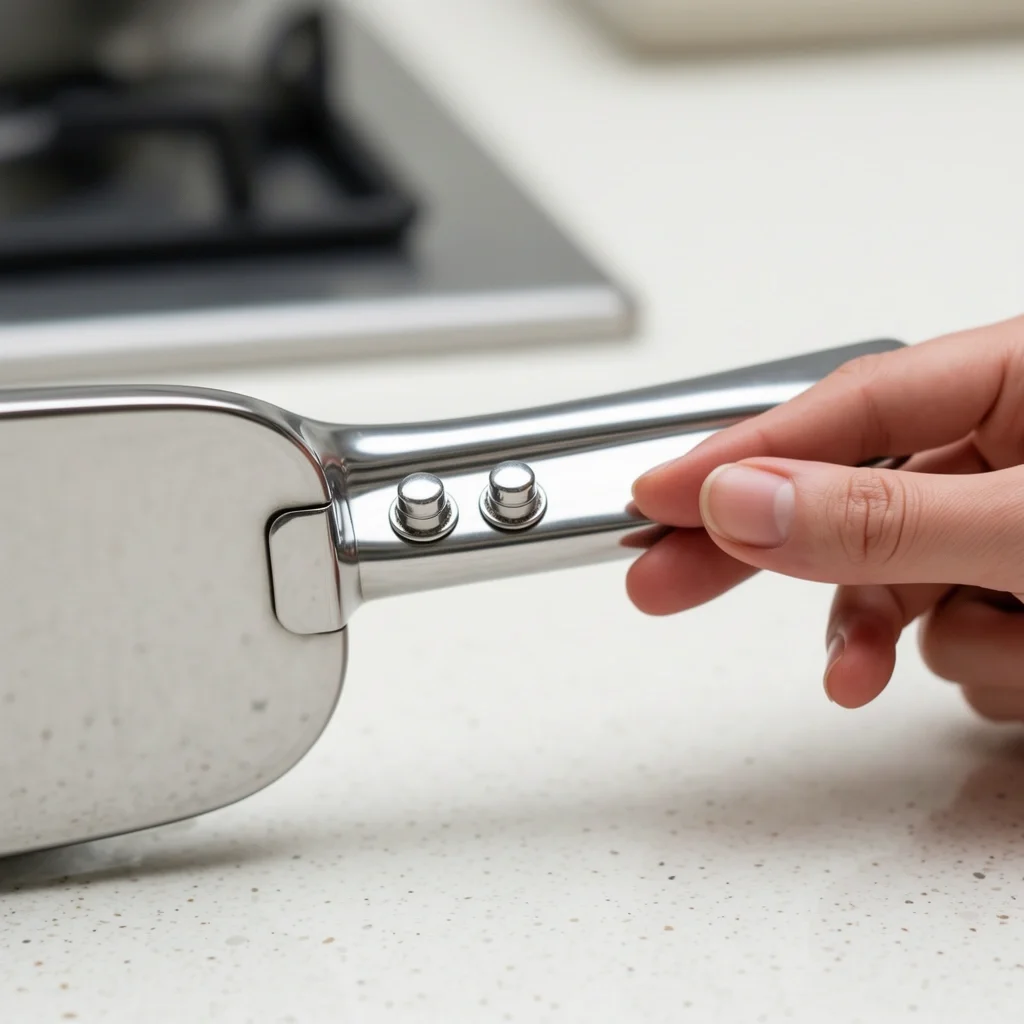
Riveted handles are the most common on saucepans. The rivets themselves are usually stainless steel, but over time the knocking inside the dishwasher can loosen them. Welded or stamped handles (where the handle is part of the same piece of metal as the pan) are much safer because there’s no joint to wiggle loose. If your pan has a plastic, wood, or silicone handle, treat it as not dishwasher safe unless the handle is specifically rated for high heat (look for a “PP” or “polypropylene” marking).
What Happens to Each Saucepan Material in the Dishwasher
Every material reacts differently to the combination of hot water, harsh detergents, and mechanical spraying in a dishwasher. Here’s the reality for each one.
| Material | Dishwasher Safe? | What Happens |
|---|---|---|
| Stainless steel | Generally yes, with caveats | Surface etching from chlorides in detergent, rainbow discoloration from heat, possible pitting if detergent residue lingers. Clad bases (aluminum core) may show gray discoloration at the rim. |
| Non-stick (PTFE/Teflon) | Not recommended | Coating breaks down gradually. You’ll see tiny flakes, loss of non-stick performance, and your pan will absorb detergent odors (lemon-scented eggs, anyone?). Hand washing extends life from 1–2 years to 3–5 years. |
| Cast iron | No | Dishwasher soap strips the seasoning instantly. The pan will rust within one cycle. Re-seasoning afterward is possible but takes hours, and the pan may never be as non-stick again. |
| Aluminum (uncoated) | Maybe, but expect damage | Oxidizes to a dull gray. Alkaline detergents cause pitting. Discoloration is permanent. Polishing can restore shine but not the exact original finish. |
| Copper | No | Rapid tarnishing. Copper reacts with detergents and turns dark or greenish. Aesthetically ruined, though still usable. Never put copper-bottom pans in the dishwasher even if the interior is stainless. |
| Ceramic coated | Partial yes | Coating can become brittle and scratch. Non-stick properties fade faster. Most brands say dishwasher safe but recommend hand washing for longevity. |
Brand-Specific Guide to Dishwasher Safety
You searched for a specific brand—here’s what you need to know about the most common ones.
Tefal (also T-fal)
Tefal’s non-stick saucepans use a proprietary coating that is more resistant to dishwasher detergent than many competitors. However, the company’s official position is that dishwashing voids the warranty. In practice, occasional dishwasher use will cause faster coating wear, but the pan won’t fall apart. For Tefal stainless steel lines, the rules for stainless steel above apply.
Essteele
Essteele stainless steel saucepans are built with a full aluminum core (induction compatible). They are technically dishwasher safe, but you will likely see interior staining and a slight gray tint at the rim after repeated cycles. The welds are strong; handles won’t loosen. But if you want the mirror finish to last, hand wash.
Salter
Salter sells both non-stick and stainless steel saucepans at budget prices. Their non-stick pans are less durable than Tefal’s; dishwashing will accelerate coating wear significantly. Their stainless lines are safe but prone to water spots and rainbow discoloration.
Tower
Tower saucepans often have ceramic non-stick coatings. The brand says they are dishwasher safe, but users report that the coating loses its slippery feel after about six months with regular dishwashing. If you hand wash, it lasts closer to two years.
HexClad
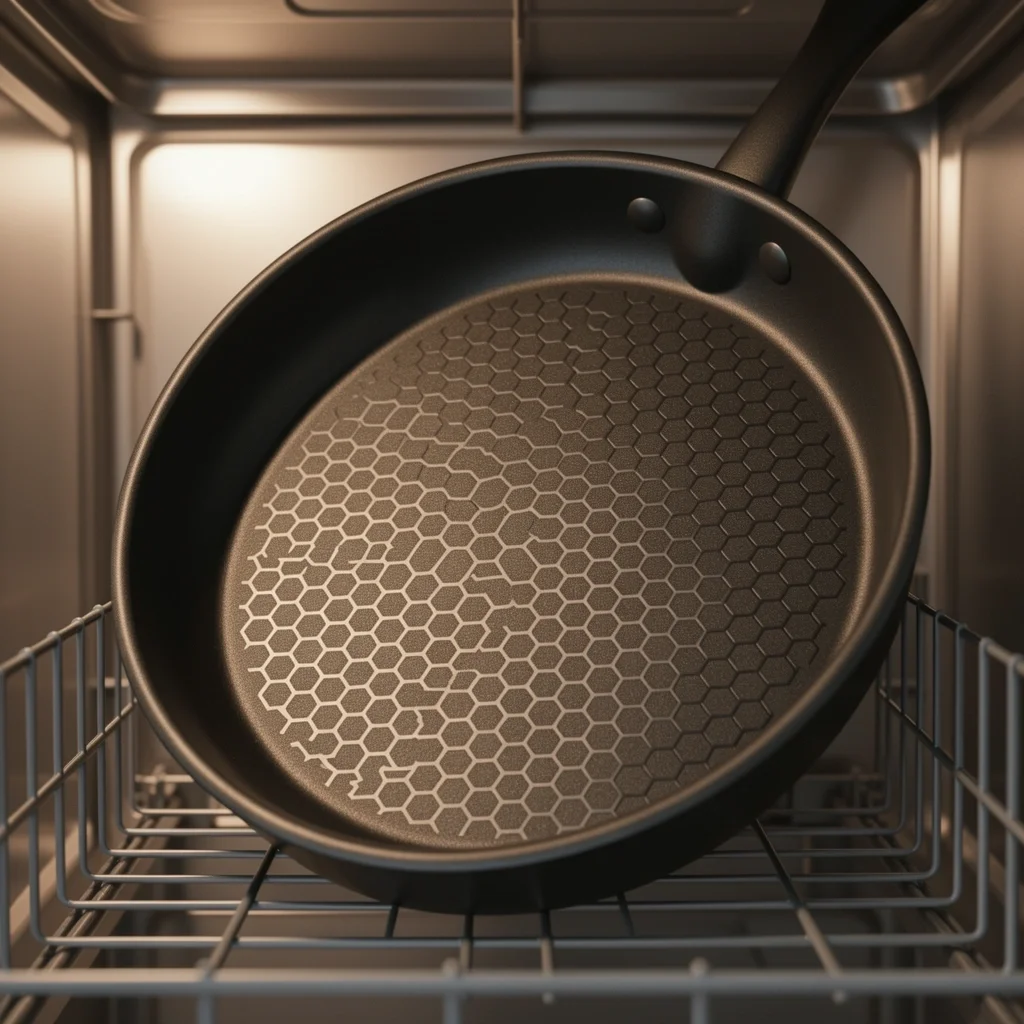
HexClad pans use a hybrid surface (stainless steel with a non-stick pattern). The company explicitly states they are dishwasher safe. In tests, the pans hold up well because the stainless steel grid protects the non-stick layer from direct detergent attack. Still, hand washing reduces long-term wear.
Carote
Carote’s granite (ceramic) non-stick saucepans are popular. The manufacturer says dishwasher safe, but the coating is thin. Many users on Reddit report that after a year of regular dishwashing, the coating begins to peel. Hand washing is strongly recommended.
Ninja
Ninja makes both non-stick and stainless steel cookware. Their non-stick lines (like the Foodi NeverStick) claim to be dishwasher safe. The coating is more durable than average, but detergent still wears it down over time. Their stainless steel pots are safe with the usual caveats.
ProCook
ProCook offers a range of materials. Their stainless steel saucepans are high-quality and generally dishwasher safe, but the brand themselves say hand washing preserves the aesthetic. Their non-stick lines are not recommended for the dishwasher.
Crock-Pot (slow cooker inserts)
If you’re asking about the stoneware insert: yes, it’s dishwasher safe. But the metal base (with the heating element) is not—it must be wiped clean only. Never submerge the base.
How to Load Saucepans to Minimize Damage
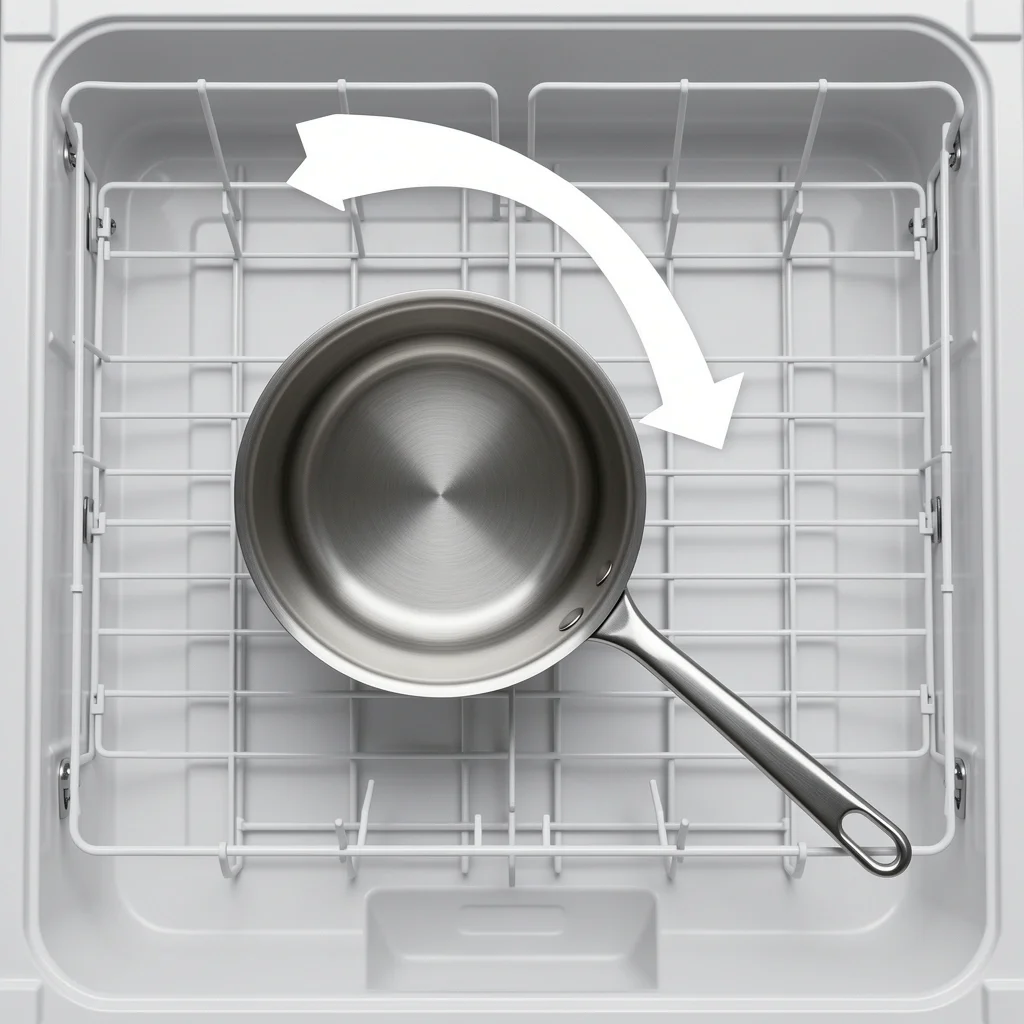
If you decide to put a saucepan in the dishwasher anyway, you can reduce the harm with these loading tricks.
- Top rack only. The bottom rack’s heat is higher and can warp thin pan bases and damage handles. Put your saucepans on the top rack, angled so water drains out.
- Tilt them downward. Saucepans with tall sides trap water on the bottom. Angle the pan so the open side faces down or to the side. This prevents pooling and reduces water spots.
- Separate from flatware. Forks and knives can scratch non-stick and ceramic coatings. Keep saucepans in their own section or place them face down with nothing stacked on top.
- Avoid nesting. Don’t stack two saucepans inside each other. The bottom of the top pan will scratch the inner surface of the bottom pan. If you must place them close, put a soft silicone mat between them.
- Use a gentle cycle. If your dishwasher has a “pots & pans” or “light” cycle, use it. Skip the heated dry cycle—open the door and let them air dry instead. The extra heat speeds up coating damage and warping.
Detergent Selection and Water Temperature
Not all dishwasher detergents are equal when it comes to cookware. The chemistry matters.
Powder detergent is the gentlest option for saucepans. It contains fewer bleaching agents and chlorides than gel or tablet forms. Chlorides attack the protective chromium oxide layer on stainless steel, causing pitting and rust over time.
Liquid detergent is also milder than tablets. It dissolves quickly and leaves less residue.
Tablet or pod detergents often include extra bleach and rinse aids that are aggressive on non-stick and copper. If you’re washing non-stick pans, avoid tablets with a “glass” or “shine” booster.
Water temperature: Lower temperatures (50°C–55°C) reduce chemical reactions with metals and coatings. High temperatures (65°C+) accelerate hydrolysis of non-stick molecules and increase etching on stainless. Run your dishwasher at the lowest temperature setting that still cleans effectively.
Rinse aid: Necessary for glass lids to prevent spots, but it can leave a greasy film on non-stick surfaces. Use rinse aid only on the top rack where glass lids sit, or skip it entirely and hand dry lids.
How to Restore a Saucepan Damaged by the Dishwasher
Sometimes the damage is cosmetic, sometimes it’s functional. Here’s what you can fix and what you can’t.
Stainless Steel: Rainbow Discoloration and Water Spots
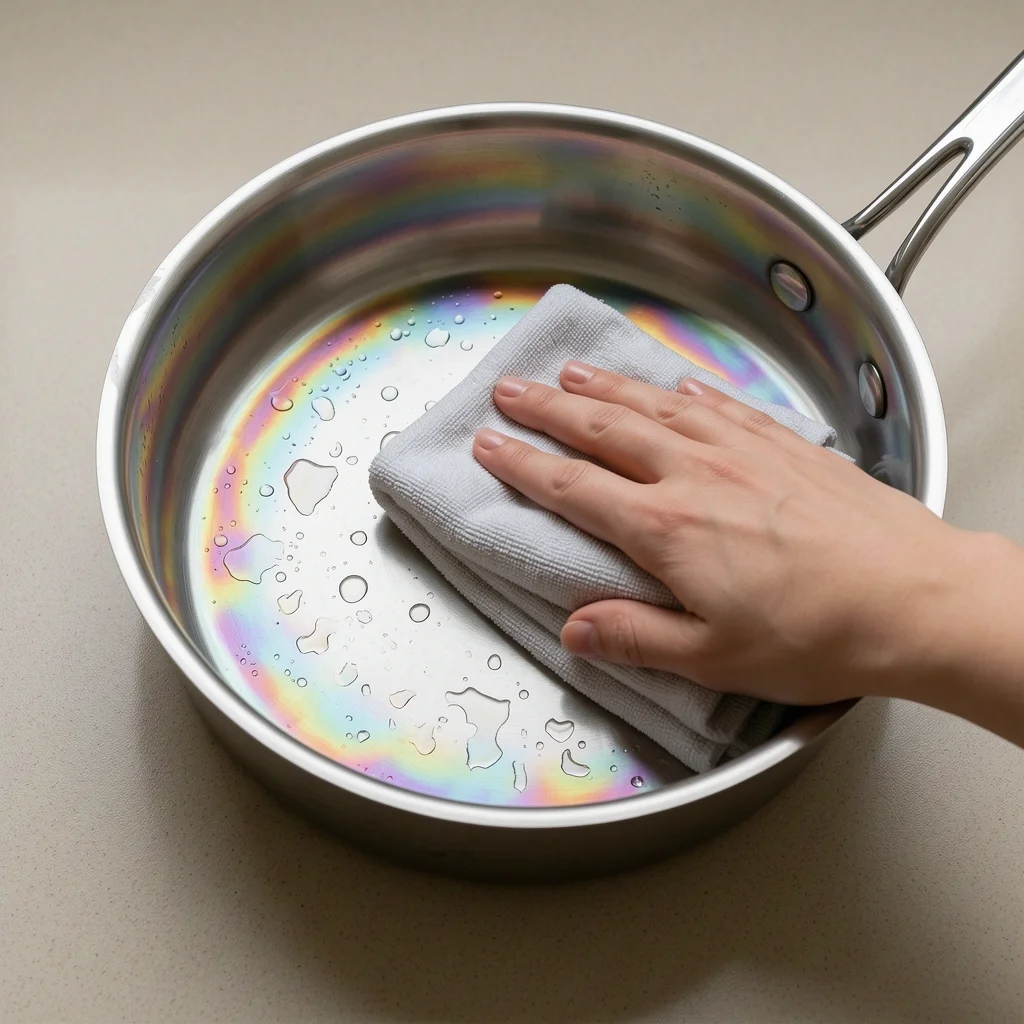
Fill your pan with equal parts water and white vinegar. Bring to a boil for 5 minutes, then let it cool. Scrub with a non-abrasive sponge and mild dish soap. For stubborn rainbow marks, use Bar Keepers Friend (a mild acid cleaner) and a damp cloth. Rinse thoroughly. This removes the colored oxide layer. It will return if you continue dishwashing, but the pan is not damaged.
Stainless Steel: Pitting (Small Dark Dots)
Pitting is permanent. It happens when detergent chlorides eat into the metal. No home remedy can fill the pits. However, the pan is still safe to use. The pits can trap food residue, so scrub extra well. To prevent further pitting, switch to powder detergent and reduce water temperature.
Non-Stick: Loss of Release and Flakes
Once the coating starts flaking or sticking, you cannot restore it. Any home fix (like seasoning) is temporary. The health and safety risk from ingesting flakes is debated, but most experts recommend replacing the pan once the non-stick surface is compromised. To extend life, switch to hand washing immediately.
Aluminum: Graying and Pitting
Gray discoloration from oxidation can be buffed with a stainless steel wool pad (00 grade) or an aluminum cleaner like Brillo. Use gentle circular motion. Pitting is permanent. If you dislike the dull look, the pan still works, but each dishwasher cycle will make it worse.
Ceramic Coating: Light Scratches
Very fine scratches can be smoothed with a fine-grit sanding sponge (800–1000 grit). Wet the sponge and lightly rub in circles. Rinse well. This will restore some slipperiness, but the coating will be thinner. Deep scratches or chips mean replacement is needed.
Frequently Asked Questions
Is it okay to put saucepans in the dishwasher every day?
For stainless steel saucepans without plastic parts, daily dishwasher use is okay but will shorten the finish’s lifespan. For non-stick, cast iron, copper, and aluminum, daily dishwashing will cause noticeable damage within months.
How do I know if my pan is dishwasher safe if there’s no symbol?
Check the manufacturer’s website by model number. If you can’t find it, use the magnet test and handle attachment check described above. When in doubt, hand wash—it never hurts.
Why shouldn’t you put stainless steel pans in the dishwasher?
It’s not that you can’t—it’s that the detergent can cause etching, rainbow discoloration, and pitting. Over time, the pan loses its shiny finish. It’s still usable, but looks worse. Also, if your pan has an aluminum core, the rim may discolor.
Which pans are not dishwasher safe at all?
Cast iron, uncoated copper, wood-handled pans, and any pan with a plastic handle not rated for high heat (PVC handles melt). Also avoid non-stick pans if you want them to last more than a year.
Can I put a saucepan with a plastic handle in the dishwasher?
Only if the plastic is labeled PP (polypropylene) or similar high-heat plastic. Many plastic handles are not heat resistant—they can warp or crack on the bottom rack. If you’re unsure, hand wash.
Why do my stainless steel saucepans have rainbow marks after dishwashing?
That’s caused by heat and mineral deposits from the dishwasher. It’s a thin oxide layer, not permanent damage. You can remove it with vinegar or Bar Keepers Friend as described above.
How often should I replace a non-stick saucepan if I occasionally dishwasher it?
With occasional dishwashing (once a week), expect to replace it after 12–18 months. With hand washing only, the same pan can last 3–5 years.
Are ceramic-coated saucepans dishwasher safe?
Most brands say yes, but the coating loses its non-stick properties faster. Hand washing is better for longevity.
Should I put the saucepan lid in the dishwasher?
Yes, but remove any rubber gaskets first. Glass lids are fine on the top rack. Metal-rimmed glass lids may trap water—you can drill a small drainage hole in the rim to prevent pooling.
Does dishwasher salt or rinse aid affect saucepan materials?
Salt (sodium chloride) is corrosive to stainless steel. If your dishwasher uses salt for water softening, make sure the salt compartment is sealed properly and no salt enters the wash chamber. Rinse aid can leave a film on non-stick surfaces; use sparingly.
Can I use a dishwasher pod or tablet for my saucepans?
You can, but tablets often contain extra bleaching agents that are harder on coatings. Powder or liquid detergent is gentler. If you use tablets, choose one without chlorine or “glass protector” additives for non-stick pans.
What if my saucepan has a copper bottom?
Never put copper-bottom pans in the dishwasher. Copper tarnishes quickly and reacts with detergents. The interior stainless steel may be safe, but the copper exterior will discolor and pit. Hand wash those bottoms only.

