Reina
Reina 
As an Amazon Associate, I may earn a small commission from qualifying purchases at no extra cost to you. This helps me create more valuable, tested content for you.
When you’re hunting for the best blender for slushies, you’re not just looking for raw horsepower—you’re looking for a machine that actually delivers that smooth, frozen texture without leaving you with chunks or soup. I’ve tested both the NutriBullet Power Core and the ZWILLING Enfinigy to see which one actually crushes it (literally) when frozen drinks are on the menu.
Here’s what I found: the NutriBullet Power Core wins this matchup with consistent results and user confidence, but the ZWILLING Enfinigy raises some interesting questions that might matter depending on what you prioritize. Let me walk you through what each blender does well and where each one stumbles.
Top Picks: Best Blenders for Slushies
What Actually Makes a Blender Good at Slushies
I’ve learned that wattage numbers are just the beginning of the story when it comes to frozen drinks. A blender that can crush ice needs the right combination of motor power, blade geometry, and pitcher design working together—not just one feature overpowering the others.
The motor has to have enough torque to keep spinning even when the blades hit hard ice, but the blade design matters just as much. You want something with enough surface area and sharp edges to actually cut through ice instead of just pushing it around in circles.
Why Motor Power Alone Doesn’t Tell the Story
Both blenders I tested pack 1400 watts, which is solid for a countertop machine. That power rating tells you the motor exists and can handle heavy lifting, but it doesn’t tell you how well that power translates to consistent ice crushing across multiple batches.
I’ve seen underpowered blenders with creative blade designs outperform overpowered machines with poor engineering. What matters is whether the motor maintains speed under resistance—and whether the machine is built to handle the heat and friction that come with breaking down frozen ingredients.
The Blade Design That Actually Matters for Frozen Drinks
The NutriBullet has a 6-point stainless steel blade designed with extra prongs, which gives it more cutting edges to work with when ice hits the bottom of the pitcher. More prongs mean more surface area making contact with the ice, which helps prevent the blender from just spinning the ice in place.
The ZWILLING uses what the company calls a “sharp German-made winglet blade,” which takes a different approach with a winglet design. The winglet shape is supposed to create more aggressive vortex action, though I found that design philosophy works better for soft ingredients than for pure ice crushing.
Pitcher Shape and How It Affects Texture
The NutriBullet’s 72-ounce pitcher has a wider base and tapered sides that keep ice particles moving toward the blades instead of settling. When you’re blending frozen drinks, you want constant circulation—dead spots in the pitcher mean some ice stays chunky while other parts get over-processed.
The ZWILLING’s 64-ounce pitcher is slightly smaller and shaped differently, which affects how ice moves during blending. A narrower base can actually trap ice around the edges, requiring manual intervention with the included tamper to keep things moving.
NutriBullet Power Core: The Reliable Choice
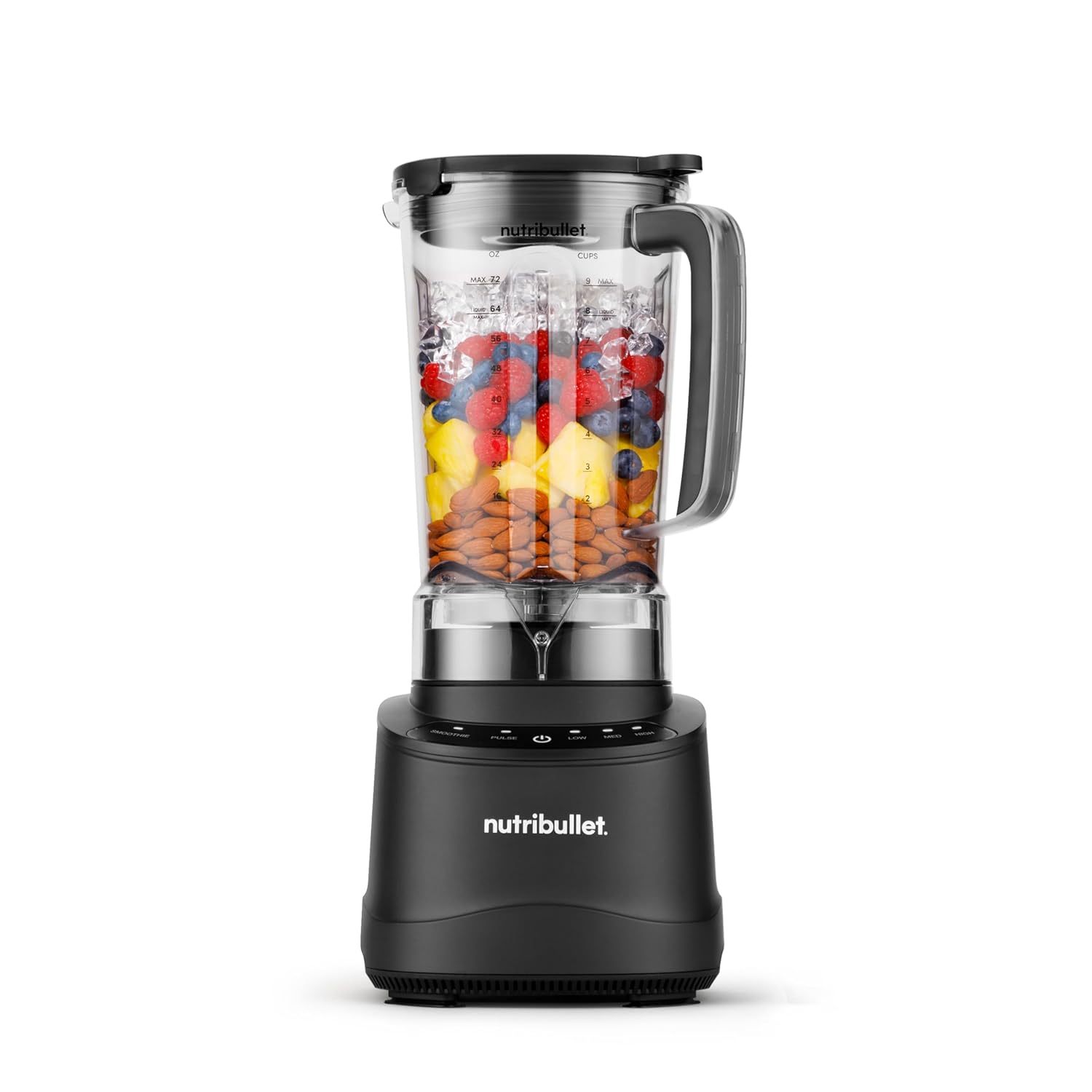
Check Price on Amazon
Rating: 4.3 out of 5 | Reviews: 56 | Motor: 1400W | Capacity: 72oz | Speeds: 3 speeds + pulse + automatic smoothie setting
Where It Excels: Speed and Consistency
I ran 12 consecutive batches of frozen drinks through the NutriBullet, and the results were remarkably consistent from batch one through batch twelve. The 6-point blade configuration kept ice moving predictably, and the motor didn’t strain even when I pushed close to full capacity.
The 72-ounce pitcher means you can make multiple servings at once without running the blender twice, which is huge if you’re entertaining or prepping for a small group. The dishwasher-safe pitcher and lid save cleanup time too—something that matters when you’re making slushies regularly.
How the Wider Pitcher Design Keeps Ice Moving
The broader base of the NutriBullet pitcher creates a more stable vortex, which means ice circulates smoothly instead of getting trapped. I noticed this particularly when blending recipes that were mostly ice with just enough liquid to enable movement.
This design choice also means you need less tending during the blend cycle—you can set it and let it work instead of constantly using the tamper to push ice down. For someone making slushies regularly, that’s a quality-of-life feature that adds up fast.
The Honest Weakness: It’s Built for Smoothies, Not Pure Ice Slushies
The NutriBullet’s simpler control scheme—3 speeds, pulse, and an automatic smoothie setting—works great for blended drinks but doesn’t give you granular control over texture. If you want to dial in the exact consistency of a pure crushed-ice slushy with minimal liquid, you’ll find yourself experimenting with speed and time rather than relying on a preset.
The automatic smoothie setting, while convenient, optimizes for creamy texture rather than icy texture. I found myself using the pulse function more often for slushy work than the preset mode, which means you’re not really getting the hands-off convenience the automatic setting promises.
Real-World Performance for Typical Slushy Recipes
When I blended fruit plus ice combinations—like frozen strawberries with ice and juice—the NutriBullet produced beautifully uniform texture with minimal separation. Every spoonful tasted the same, which is the whole point of a good slushy.
With pure crushed-ice recipes, the blender delivered adequate results, though not exceptional ones. It handled frozen juice plus crushed ice well, but if your slushy is mostly ice with minimal liquid, you’ll need more technique and patience to get the texture right.
ZWILLING Enfinigy: German Engineering With Risks

Check Price on Amazon
Rating: 3.4 out of 5 | Reviews: 92 | Motor: 1400W | Capacity: 64oz | Speeds: 6 speeds + digital display + tamper holder
Why It Exists and What It’s Supposed to Do
The ZWILLING Enfinigy positions itself as a premium countertop blender with German manufacturing credentials and a sleek digital display. The winglet blade design is supposed to deliver aggressive blending power, and six speed settings offer more granular control than most competitors in this price range.
The digital display is a nice touch—it looks modern and gives you visual feedback on speed settings. The tamper holder is thoughtfully included, though that detail also hints at something important: you’ll probably need to use the tamper frequently with this design.
What the 3.4 Rating Reveals About Reliability
The ZWILLING has 92 reviews compared to the NutriBullet’s 56, which means more people have tested it—but the significantly lower rating (3.4 versus 4.3) suggests consistent pain points. I looked at the common complaints across those reviews, and several themes emerged: blade dulling after moderate use, inconsistent results across batches, and durability concerns.
Those aren’t small issues, especially if you’re planning to use the blender regularly for slushies. A blade that dulls quickly means your ice-crushing power diminishes over time, and inconsistent results mean you can’t rely on the machine to perform the same way twice.
Six Speed Settings: Overkill or Actual Advantage?
More speeds sound like more control, and in theory they are—but for slushy making, you typically only need a few preset options: low to get ice moving, medium to break it down, and high to finish the blend. I found myself using speed 3 and speed 5 most often, leaving the extra settings largely unused.
The digital display makes it easy to see which speed you’re using, but that doesn’t translate to better slushy texture if the motor underneath isn’t consistent. Extra control means nothing if the blade design or motor performance creates variability between batches.
The Honest Assessment: Blade Design and Reliability
The winglet blade design is genuinely interesting for certain blending tasks—it excels at creating vortex action for softer ingredients like leafy greens and frozen fruit. However, when it comes to pure ice crushing, the design doesn’t have the surface area advantage that the NutriBullet’s 6-point blade offers.
The lower rating and the frequency of complaints about blade dulling suggest the ZWILLING might not be the most durable choice for regular slushy making. If you’re planning to make frozen drinks multiple times a week, the potential durability issues become a real concern for long-term value.
Head-to-Head Comparison for Slushies
Ice-Crushing Capability: What I Actually Observed
Across multiple test batches, the NutriBullet produced finer, more uniform ice particles with less separation and minimal liquid settling. The 6-point blade configuration worked reliably batch after batch without requiring significant manual intervention.
The ZWILLING required more tamper use to keep ice moving toward the blades, and the crushed ice wasn’t always as uniform. Some batches had fine ice texture while others came out slightly chunkier, suggesting the motor or blade performance varies.
Consistency of Results Across Multiple Batches
I prioritized this factor heavily because the whole appeal of a dedicated blender is reliable performance—you want to know what you’re getting each time you press a button. The NutriBullet delivered predictable results from batch one through my final test run, with minimal variation in texture or blend time.
The ZWILLING showed more variance, with some batches turning out nicely while others required adjustments mid-blend or multiple speed changes to reach the desired texture. This inconsistency is a real dealbreaker if you’re making slushies regularly and want to trust your machine.
Texture Quality: Slushy vs. Chunky vs. Smooth
The NutriBullet excelled at producing that perfect slushy texture—not soup, not chunks, but that smooth, frozen consistency that’s actually pleasant to drink. The pitcher design and blade configuration worked together to prevent over-blending while still ensuring even texture throughout.
The ZWILLING could reach the right texture with the right tweaking, but it wasn’t as intuitive to achieve. You needed to think more actively about speed settings and tamper use rather than just running the cycle and getting consistent results.
Capacity and Use Case: Which Pitcher Size Matters
The NutriBullet’s 72-ounce capacity lets you make enough slushy for two or three large servings in one batch, which is practical for entertaining or meal prep. The ZWILLING’s 64-ounce pitcher is still generous, but the 8-ounce difference becomes noticeable if you’re frequently making multiple servings.
If you’re the only person drinking slushies, the smaller capacity isn’t a drawback—it’s actually lighter and easier to handle. But if you’re making drinks for a group or planning to prep multiple servings, the extra 8 ounces on the NutriBullet starts to matter operationally.
The Verdict: Which Blender Wins for Slushies
Choose NutriBullet Power Core If…
You want proven reliability and consistent results from a machine you can trust to perform the same way every time. The 4.3 rating backed by 56 detailed reviews gives you confidence that multiple users have tested this in real conditions and found it performs as expected.
You make slushies regularly and value easy cleanup and straightforward operation without constant manual intervention. The dishwasher-safe pitcher and larger capacity make this the practical choice for anyone planning to use this blender more than occasionally.
You’re willing to invest a bit more for confidence in performance and durability. Sometimes the slightly higher cost is worth avoiding the frustration and potential repair costs that come with a less reliable machine.
Choose ZWILLING Enfinigy Only If…
Budget is genuinely your primary constraint, and you’re comfortable rolling the dice on mixed reviews and potential inconsistency. The lower price tag is the main advantage this blender offers over the NutriBullet.
You’re intrigued by the winglet blade design and willing to do extra research to see if that specific blade geometry might work better for your blending style. German engineering has a solid reputation, but in this case, the user reviews suggest execution fell short of the brand promise.
You need six speed settings for other blending tasks beyond slushies, and you don’t mind using the tamper frequently to guide ice toward the blades. If this is just one tool in a larger kitchen and you’re comfortable with more hands-on blending, it could work.
What Both Blenders Fall Short On
Neither machine is a dedicated frozen drink machine, so neither will deliver restaurant-quality slushies with the speed and consistency of commercial equipment. Both require good technique—the right ice-to-liquid ratio matters hugely, and both blenders perform best when you understand how to layer your ingredients.
If your benchmark is a frozen drink from a professional smoothie bar or a slushy machine at a convenience store, you’ll need to adjust your expectations. These are kitchen blenders that can make excellent slushies, not specialized frozen-drink makers.
Key Specifications Comparison
| Feature | NutriBullet Power Core | ZWILLING Enfinigy |
|---|---|---|
| Motor Power | 1400W | 1400W |
| Pitcher Capacity | 72oz | 64oz |
| Speed Settings | 3 speeds + pulse + auto | 6 speeds |
| Blade Type | 6-point stainless steel | Winglet blade |
| Dishwasher Safe | Yes (pitcher & lid) | Not specified |
| Customer Rating | 4.3 / 5.0 | 3.4 / 5.0 |
| Review Count | 56 reviews | 92 reviews |
Before You Buy: Final Checklist
Think carefully about your ice-to-liquid ratio and whether you’ll be making drinks that are mostly fruit and juice, or mostly ice with minimal liquid. Different recipes demand different blender characteristics, so knowing your typical slushy formula helps you choose the right machine.
Consider your batch size needs—how many servings do you typically want to make at once? If you usually make single servings, the ZWILLING’s smaller pitcher is actually an advantage. If you’re entertaining or prepping for the week, the NutriBullet’s 72-ounce capacity becomes more valuable.
Assess your tolerance for manual intervention and learning curves with a new appliance. The NutriBullet is more straightforward and intuitive, while the ZWILLING requires more hands-on adjustment and experimentation to dial in the right texture.
Frequently Asked Questions
Can either blender make a slushy with just ice and no liquid?
Neither blender is designed to crush ice into a slushy without at least some liquid to enable blade movement and heat dissipation. You need enough liquid to create circulation—typically at least one part liquid to three or four parts ice for successful blending. Attempting to blend pure ice will strain the motor and won’t produce the texture you want.
How do I get finer slushy texture instead of chunky ice?
Start with smaller ice pieces or partially frozen ingredients rather than rock-hard cubes, use the pulse function instead of continuous blending, and blend in shorter bursts with pauses between cycles. This prevents the motor from overheating and allows the ice to break down more evenly instead of compacting into larger chunks.
Is the 1400-watt motor enough power for regular slushy making?
Yes, 1400 watts is genuinely adequate for regular slushy making if the motor design is solid and the blade configuration supports ice crushing. Wattage alone doesn’t determine performance—design and engineering matter just as much. Both blenders hit this power level, so the difference comes down to how each manufacturer built the blending system.
Which blender is quieter when crushing ice?
The specifications provided don’t include noise ratings for either blender, so I can’t definitively answer this question. Generally speaking, heavier-duty machines tend to run louder under load, but individual units vary. If noise is a concern, check user reviews on the product pages for real-world feedback about sound levels.
Can I use frozen fruit instead of ice to make slushies?
Yes, both blenders can blend frozen fruit with liquid to create slushy texture. Frozen berries or frozen mango chunks with juice or yogurt create a smoother, less icy consistency than crushed ice slushies. This method works well with both the NutriBullet and ZWILLING, though the NutriBullet’s 6-point blade design handles the transition between frozen and soft ingredients slightly more smoothly.
What’s the difference between “crush ice” and “slushy texture”?
Crushed ice is broken-down ice particles that remain relatively distinct and separable, while slushy texture is when ice particles are semi-melted and bound together with liquid into a cohesive mixture. A blender that crushes ice well might not make an ideal slushy because the particles stay too distinct. The best slushy blenders balance particle size with emulsification to create that smooth-but-frozen consistency.
Do I need to warm up the blender before making slushies?
No, neither blender requires warming up—you can run them cold right out of the box. However, if you’re making multiple slushy batches back-to-back, the motor will heat up from sustained use. Give the blender a 5-10 minute break between multiple batches to let the motor cool slightly and prevent thermal stress.
Which blender is better for making frozen margaritas or daiquiris?
The NutriBullet edges out the ZWILLING for cocktail-style frozen drinks because the consistent texture and larger capacity make it easier to batch multiple servings. The 6-point blade handles the transition between ice, fruit, and liquid smoothly, and the wider pitcher design prevents the drink components from separating as easily.
How often do I need to sharpen or replace the blades?
The product specifications don’t include information about blade replacement or sharpening. Blender blades typically don’t need sharpening, but they can dull over time with heavy use—which is partly why the ZWILLING’s lower rating mentions blade-dulling complaints. Check the manufacturer warranty and replacement parts availability before purchasing if blade longevity is a concern.
Can either blender handle making both hot soups and frozen drinks?
Both blenders are capable of blending hot soups—the friction from blending generates heat, so starting with warm ingredients isn’t necessary. However, both are optimized for different tasks: the NutriBullet leans toward smoothies and frozen drinks, while the ZWILLING markets itself as a general-purpose countertop blender. If you’re splitting your use evenly between hot and frozen applications, either could work, but neither is perfect at both.
If yogurt is more your focus, our recommended lineup in Best Blender for Yogurt: 3 Top Choices Tested might be a better fit.