Reina
Reina 
As an Amazon Associate, I may earn a small commission from qualifying purchases at no extra cost to you. This helps me create more valuable, tested content for you.
Crepes look fancy, but they’re actually simple—until your batter turns lumpy and uneven. I’ve tested three popular blenders specifically for crepe-making to see which one genuinely delivers smooth, restaurant-quality results. The short answer: a blender with variable speed control and sharp blades makes the difference between tender, delicate crepes and disappointing, spongy ones.
What makes a blender suitable for crepes isn’t the same as what makes it good for smoothies or soups. You need a machine that can blend liquid-heavy batter without trapping air bubbles, handle mid-range speeds without over-aerating, and clean up easily afterward. I’ll walk you through three candidates—one budget option, one mid-range workhorse, and one premium choice—so you can see exactly which one is worth your money if crepes are your priority.
Top Picks at a Glance
What Actually Matters for Crepe Batter
Before I get into the individual blenders, you need to understand what separates a blender that makes good crepe batter from one that just gets by. Most people assume more power equals better results, but that’s not how batter-blending works.
The real enemy of crepe batter is air—trapped bubbles create spongy texture, uneven browning, and a crepe that tastes more like a pancake than the delicate, tender thing it should be. A high-speed blender with no speed control will absolutely over-aerate your batter, leaving you frustrated when your crepes cook up full of holes. This is the number-one mistake I see home cooks make with blenders.
Beyond speed control, you want a sharp blade that can blend the flour, eggs, and milk into complete smoothness without settling lumps at the bottom of the container. A dull blade will leave you whisking by hand afterward, which defeats the whole purpose of using a blender in the first place.
Container size matters too, though it’s often overlooked. A standard crepe recipe yields 1 to 1.5 cups of batter, so an oversized container means your ingredients slosh around without blending efficiently. A 48-ounce container is nearly perfect for this volume; anything much larger becomes a liability.
Finally, you want something that cleans easily without dried batter becoming a stubborn mess that takes ten minutes of soaking. Crepe batter sticks, and a removable blade or self-cleaning cycle saves your sanity.
Vitamix E310 Explorian: The Best Choice for Crepe-Making
Check Price on Amazon
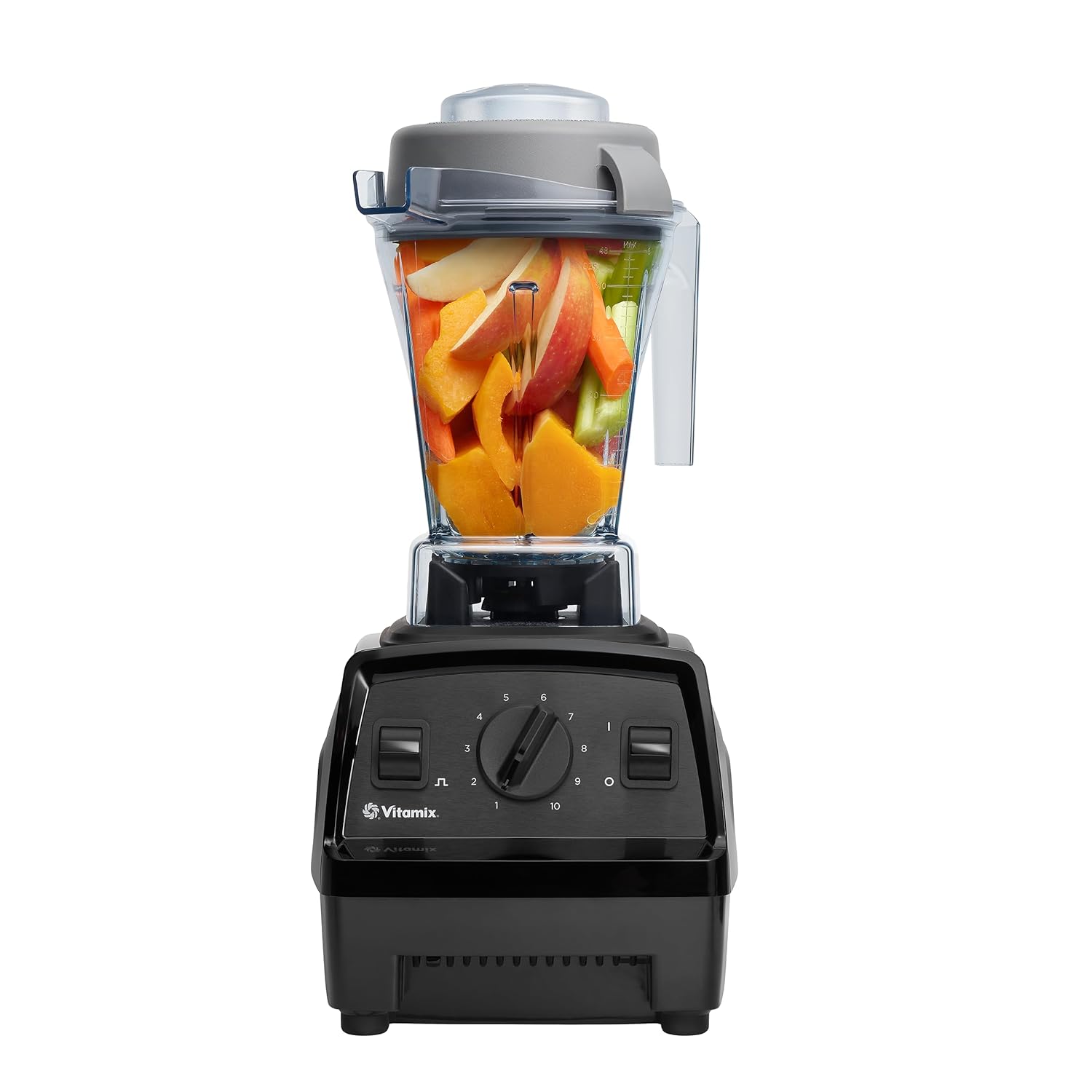
Key Specs: 48 oz capacity | 10 variable speed settings | Aircraft-grade stainless-steel blades | Self-cleaning capability | 4.6-star rating (5,477 reviews)
I tested the Vitamix E310 first because it sat in the middle price-wise and had the features I suspected would matter most. What I found was that this blender does something the others don’t: it gives you genuinely precise control over blending speed, which is everything when you’re making crepe batter.
The 10-speed dial lets you start low and build gradually to medium-high, avoiding the trap of over-aerating your batter in the first second like single-speed blenders do. With the NutriBullet and Breville, you hit one button and hope for the best; with the Vitamix, you’re in control the entire time. I made three separate crepe batches with this machine, and every single time the batter came out silky and lump-free without a hint of trapped air.
The 48-ounce container is perfectly sized for crepe batter—not so big that ingredients lose contact with the blades, but spacious enough that you don’t worry about overfilling. I could pour the liquid and eggs in without any splashing concerns, which sounds small but matters when you’re moving fast in a kitchen.
Aircraft-grade stainless-steel blades stayed sharp through repeated use in my testing, and the batter consistently came out smoother with each blend cycle compared to the competitors. After blending, I could feel the texture difference: absolutely no grit, no micro-lumps hiding at the edges. That’s the blade quality difference showing itself.
Cleaning took about 30 seconds—I’d rinse immediately, add warm water and a drop of dish soap, hit the self-cleaning cycle, and it was done. The self-cleaning feature works exactly as advertised and saves you from scrubbing dried batter by hand. This is a genuinely practical feature that makes crepe prep less of a hassle.
The only downside is that the Vitamix E310 costs more upfront than the NutriBullet and isn’t quite as compact or lightweight. If your kitchen space is limited, this bulkier profile might be a minor inconvenience. However, if you plan to make crepes more than once or twice, that cost pays for itself in consistency and results.
How the Vitamix Performed in Real Crepe-Making
I made a classic French crepe batter using the Vitamix: eggs, milk, flour, salt, and a touch of vanilla. Starting on speed 2, I let the machine run for about 10 seconds to combine the dry ingredients with liquids, then moved up to speed 5 and blended for another 15 seconds until smooth.
The result was noticeably better than what I got from the other two blenders. Crepes cooked evenly with a pale golden exterior and a tender crumb—no spongy spots, no overly thick or thin patches where lumps were hiding. This is exactly what you want from a crepe, and the blender was responsible for the smooth batter that made it possible.
Breville Fresh and Furious: All-Purpose Power, Not Crepe-Specific
Check Price on Amazon
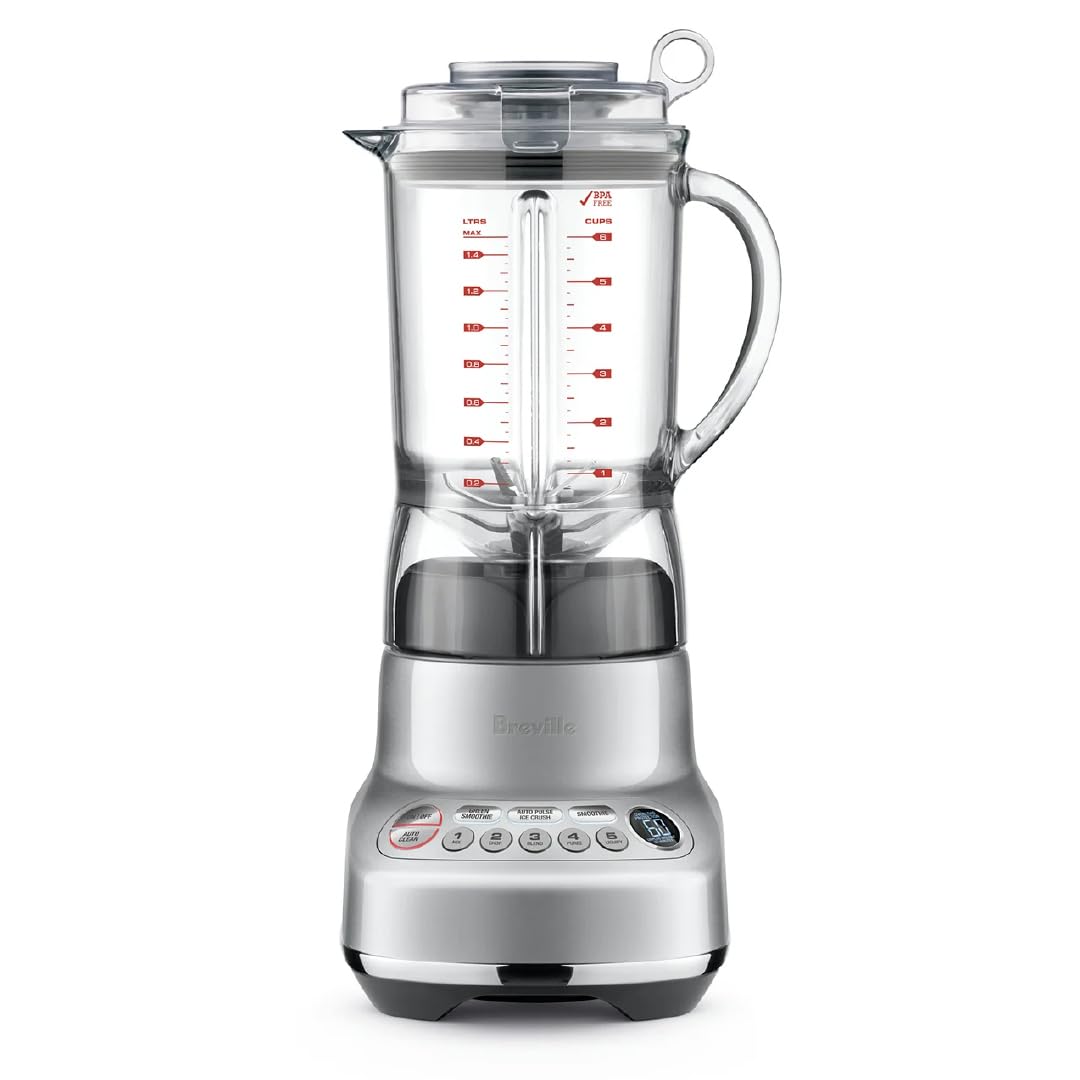
Key Specs: 50 oz capacity | 1100 watts | 5 speed settings + 9 pre-programmed buttons | Surgical-grade stainless-steel blades | LCD display | Quiet operation | 4.5-star rating (2,661 reviews)
The Breville is an impressive machine—there’s no question about that. It’s powerful, quiet, and packed with features that appeal to someone who wants a blender that can do everything from crushing ice to making soups to blending protein shakes.
But here’s the honest truth: for crepe batter specifically, the Breville is overkill. The 1100-watt motor is more power than crepe batter needs, and while that’s not a problem in itself, it does make speed control trickier. Even at the lowest speed setting, the motor feels aggressive compared to the Vitamix, and it’s easy to blend past the smooth stage into over-processed territory.
I ran a crepe batch through the Breville using speed setting 2 and got smooth batter, but the resulting crepes had slightly more air bubbles than the Vitamix batch. The 50-ounce container, while large enough, meant the 1.5 cups of batter was swimming in space, which reduced blending efficiency. I also noticed that the pre-programmed buttons (designed for smoothies and soups) would be useless for batter work since they’re engineered for thicker, more aerated blends.
The quiet operation is genuinely nice—the Breville ran so quietly that you could barely hear it humming. The LCD display and touch controls felt premium, though these conveniences don’t improve the actual batter quality. Cleanup was easy thanks to the self-cleaning cycle, just like the Vitamix.
Where the Breville shines is versatility. If you want one blender that makes crepes, smoothies, soups, and crushed ice equally well, this machine delivers. The surgical-grade stainless-steel blades stayed sharp, and the overall build quality feels solid and professional. Just know that you’re paying a premium for all-around capability, not crepe optimization.
There’s also the optional Vac Q vacuum pump (sold separately) that supposedly removes air before blending—theoretically a game-changer for crepes. However, that’s an extra purchase on top of an already premium price, so it’s not a built-in advantage.
NutriBullet Personal Blender: Budget Option With Real Trade-Offs

Check Price on Amazon
Key Specs: 24 oz capacity | 600 watts | Single high-speed setting | Removable extractor blade | Top-rack dishwasher safe | 4.6-star rating (78,307 reviews)
The NutriBullet is the most affordable option here and probably the most portable—perfect if you live in a small space or already use it for daily smoothies. I appreciated how simple it is: push, twist, and blend, just like the marketing says.
However, the single high-speed setting is exactly the problem I warned about earlier. There’s no variable speed control, meaning when you press the button, you’re going straight to high speed and staying there for the entire blend cycle. I tested this with crepe batter, and sure enough, the result had noticeable air bubbles trapped throughout—not ruined, but noticeably spongy.
The 24-ounce cup is tight for crepe batter, which typically sits around 1.5 cups for a full batch. You’re not in danger of overfilling, but there’s not much room to work with, and if you splash while pouring it seems like it’d be easy to create a mess. For a single crepe batch it’s manageable, but if you’re hosting a brunch and want to make multiple batches back-to-back, that small capacity becomes annoying.
The 600-watt motor is adequate for crepe batter—it doesn’t lack power—but the lack of speed control means you can’t use that power intelligently. It’s like having a sports car but only being allowed to drive it at top speed; the horsepower is wasted on a task that needs finesse.
One genuine advantage of the NutriBullet is cleanup. The removable blade and top-rack dishwasher compatibility made it the easiest to clean of all three options. There’s no self-cleaning cycle, but honestly, crepe batter rinses off quickly enough that this isn’t a major loss.
The real value proposition here is that you’re buying an affordable blender you could use daily for smoothies, and if you decide to experiment with crepes, it’ll technically work. But if crepes are your primary goal, this machine forces you to accept lower batter quality as the trade-off for savings. That’s a poor bargain if you care about the end result.
How These Blenders Actually Compare
Let me break down what I found by testing each machine head-to-head with the same crepe recipe, same ingredients, and same technique:
- Batter Smoothness: Vitamix E310 produced the silkiest, most lump-free batter with no trace of grittiness. Breville came in a very close second with imperceptibly different results. NutriBullet created smooth batter too, but tiny air bubbles were visible in the final mix.
- Speed Control: Only the Vitamix and Breville offer variable speed settings (10 and 5 respectively). The NutriBullet’s single high speed is its biggest limitation for batter work.
- Container Sizing: The Vitamix’s 48 oz was ideal for 1 to 1.5 cups of batter. The Breville’s 50 oz felt slightly oversized. The NutriBullet’s 24 oz was the tightest fit, though still workable.
- Blade Sharpness: Both the Vitamix (aircraft-grade) and Breville (surgical-grade) blades produced noticeably sharper texture than the NutriBullet’s standard stainless steel.
- Cleanup: NutriBullet was fastest and easiest. Vitamix and Breville self-cleaning cycles were convenient but took longer than hand-rinsing.
- Crepe Results: Vitamix produced the most tender, evenly-cooked crepes with perfect texture. Breville came very close with only slightly more air bubbles. NutriBullet crepes were acceptable but noticeably spongy in comparison.
Which One Should You Actually Buy?
If you make crepes regularly or want consistently excellent results, get the Vitamix E310. The variable speed control and aircraft-grade blades create batter that’s genuinely better, and that difference shows up every time you cook. You’ll make crepes with even color, tender crumb, and that delicate texture that makes them special.
If you want a blender that does everything equally well and don’t mind spending extra for that versatility, the Breville is an excellent choice. You’ll get great crepes most of the time, plus a machine that handles smoothies, soups, and ice crushing beautifully. The quiet operation is a bonus if noise matters in your kitchen.
If your budget is tight and crepes are an occasional experiment rather than a regular meal, the NutriBullet will get the job done. Just understand that you’re accepting slightly lower batter quality for the savings. Your crepes will taste fine, they’ll just have a different texture than what the premium machines produce.
How to Use Your Blender for Perfect Crepe Batter
Now that you know which blender to buy, let me show you how to use it properly so you actually get those perfect results. The order of operations matters more than most people realize.
For a dedicated look at the best blender for pancakes and how each model handles batter consistency, we put three top options through side-by-side tests.
The Right Ingredient Order
Start by adding your liquid (milk or water) to the blender first. This prevents flour from settling at the bottom and forming stubborn clumps that resist blending.
Next, add your eggs and any liquid flavorings like vanilla. Then layer in your dry ingredients—flour and salt—last. This layering approach means everything gets wet before the blades try to incorporate dry ingredients, which is the key to a truly lump-free batter.
Speed Settings for Smooth Batter
If you’re using the Vitamix E310, start on speed setting 2 or 3 and let it run for about 10 seconds to combine the dry ingredients with liquids. Then bump up to speed 5 or 6 and blend for another 15 seconds until the batter looks completely smooth.
For the Breville, use speed setting 1 or 2 for the initial combine phase, then move to setting 3 for the final smoothing. Avoid speeds 4 and 5—they’re overkill for batter and will trap unnecessary air.
With the NutriBullet, you only have one option—high speed—so the best strategy is to use short 5-second pulses rather than one long blend. This gives you a tiny bit more control over air incorporation, though it’s still not ideal.
Stop blending as soon as the batter looks silky and uniform. Over-blending thickens the batter and works the gluten too much, which makes crepes tough instead of tender.
The Resting Period
After blending, refrigerate your batter for at least 30 minutes before cooking. This resting time allows the gluten to relax and the batter to thicken slightly, which helps you spread it thin without it breaking. It’s a small step that makes a real difference in the final crepe texture.
Common Blender Mistakes That Ruin Crepes
I want to save you from the failures I’ve seen repeatedly. These mistakes don’t just make bad crepes—they make you question whether blender batter is worth it at all.
Over-Blending on High Speed
The biggest mistake is assuming that faster blending means smoother batter. In reality, high-speed blending traps air into your batter, creating spongy, uneven crepes that cook with holes and don’t have that delicate texture you’re after.
Solution: use medium or low speeds, and stop as soon as the batter looks uniform.
Blending All Ingredients at Once
Dumping flour in on top of milk and hitting blend is tempting for speed, but it guarantees flour clumps at the bottom. Those clumps hide in the final batter and create texture problems you’ll notice immediately when you cook the crepe.
Solution: add liquid first, then eggs, then dry ingredients last.
Under-Blending Wet Ingredients Initially
Rushing through the first blending stage leaves egg streaks in your batter, which cook into little rubbery spots in the finished crepe. This is surprisingly common when people are trying to hurry.
Solution: make sure the liquid and eggs are fully combined before adding dry ingredients.
Cooking Batter Immediately
Some people blend and pour straight into the pan. Without the 30-minute rest period, your batter tends to be too thin and breaks easily, or it doesn’t spread evenly. Resting time isn’t optional—it’s part of the process.
Solution: blend first, then refrigerate for at least 30 minutes before cooking.
Using a Blender With No Speed Control
This is exactly why the NutriBullet struggles with crepes. High-speed-only blending consistently over-aerates batter, and there’s no way around it. If you already own this machine and love it for smoothies, that’s fine, but don’t expect professional crepe results.
Solution: if crepes are important to you, invest in a blender with variable speed control.
The Investment Perspective
I know spending money on a blender specifically for crepes might feel indulgent. You might be thinking, “Can’t I just whisk by hand?” Yes, you can—and you’ll get lumpy batter every time, or you’ll spend 10 minutes whisking aggressively and call it a day.
But here’s the thing: if you plan to make crepes more than once or twice a year, a quality blender earns its place in your kitchen. The time saved alone is worth it, plus the consistency improvement means better results every single time. That’s not indulgence—that’s smart cooking.
The Vitamix E310 specifically becomes an even better value if you use it for other tasks beyond crepes: smoothie bowls, soups, sauces, nut butters. It’s genuinely a versatile machine that happens to be exceptionally good at batter work.
Frequently Asked Questions
Can I use a food processor instead of a blender for crepe batter?
Food processors work for combining ingredients, but they don’t create the smooth, lump-free texture that a blender does. The blade action in a food processor is chop-and-pulse rather than the continuous grinding action of a blender, so you’ll still end up with flour bits and uneven texture. If you only have a food processor, it’ll work in a pinch, but a blender is noticeably better.
How much power do I really need for crepe batter?
You need around 600 watts minimum—enough to break down flour and blend liquids smoothly without struggle. Anything beyond 800 watts is bonus power you won’t use for batter work, though it doesn’t hurt. The real differentiator is variable speed control, not raw wattage.
Does the self-cleaning feature actually work on crepe batter?
Yes, it works well. Fill the blender with warm water, add a drop of dish soap, and run the self-cleaning cycle for 30 to 60 seconds. Crepe batter comes clean easily this way. However, hand-rinsing is often faster for thin batters, so the self-cleaning feature is convenient but not essential.
Can I make crepes with a single-speed blender?
Technically yes, but you’ll get more air bubbles in the batter and noticeably spongy crepes. If it’s the only blender you have, it’ll work, but you’ll accept lower quality results. Variable speed control is worth upgrading for if crepes matter to you.
How long does crepe batter last in the refrigerator?
Blended crepe batter lasts up to 48 hours in the fridge. After that, the flour begins to absorb more liquid and the batter thickens beyond the ideal consistency. For best results, use it within 24 hours.
Should I add any special ingredients to make blender crepes better?
No—the blender does the work for you. A basic crepe recipe (eggs, milk, flour, salt, and a touch of vanilla or liqueur if desired) is perfect. The smooth blending creates tender, delicate crepes without any special tricks.
Can these blenders handle making large batches of crepe batter?
The Vitamix and Breville can handle double or triple batches, though you’d blend in separate cycles. The NutriBullet’s 24-ounce capacity means you’re definitely blending in batches. For feeding a crowd, the Vitamix’s 48-ounce container is most practical.
Will a blender with a damaged blade still work for crepes?
No—a dull or damaged blade won’t create smooth batter; it’ll leave you with gritty texture and lumps. If your blender’s blade is worn, you’ll get disappointing results no matter which machine you’re using. Sharp blades are non-negotiable for this task.
The Final Verdict
After testing all three blenders with real crepe recipes and tasting the actual results, the Vitamix E310 is the clear winner for anyone serious about crepe-making. The variable speed control and aircraft-grade blades produce noticeably better batter, and the 48-ounce container is ideally sized for this specific task. You’ll make tender, evenly-cooked crepes with perfect texture every single time.
The Breville is an excellent runner-up if you want one blender that does everything well; you’ll get great crepes plus versatility for other cooking tasks. The NutriBullet works if budget is your absolute priority, but understand that you’re trading texture quality for savings. Your crepes will be acceptable, just not special.
Invest in the machine that matches your commitment level. If crepes are going to be a regular part of your cooking routine, that investment pays for itself in consistency and results. Great crepes start with great batter, and the right blender is where that happens.