
The first time I encountered yerba santa was on a hike through the coastal chaparral of California. A distinct, resinous fragrance hung in the air, and a local guide pointed to a shrub with sticky, aromatic leaves. Years later, that memory inspired me to explore its traditional use as a tea. This recipe is the result of that exploration, a simple method to unlock the plant’s unique properties.
You can prepare a cup of yerba santa tea by steeping one tablespoon of dried leaves in one cup of freshly boiled water for 10 to 15 minutes. Strain the liquid and add honey if desired for its lightly sweet taste. This basic preparation forms the core of a practice with deep roots in wellness.
My own experience with this herbal infusion has been one of quiet discovery. The process of gathering the leaves, boiling the water, and waiting for the brew to develop its character is a mindful ritual. I will guide you through not just the steps, but the entire context surrounding this remarkable plant.
How to Make yerba santa tea recipe
This section provides the precise formula for creating a standard cup of yerba santa tea. The measurements and timings are based on my repeated testing to achieve a balanced flavor and potency.
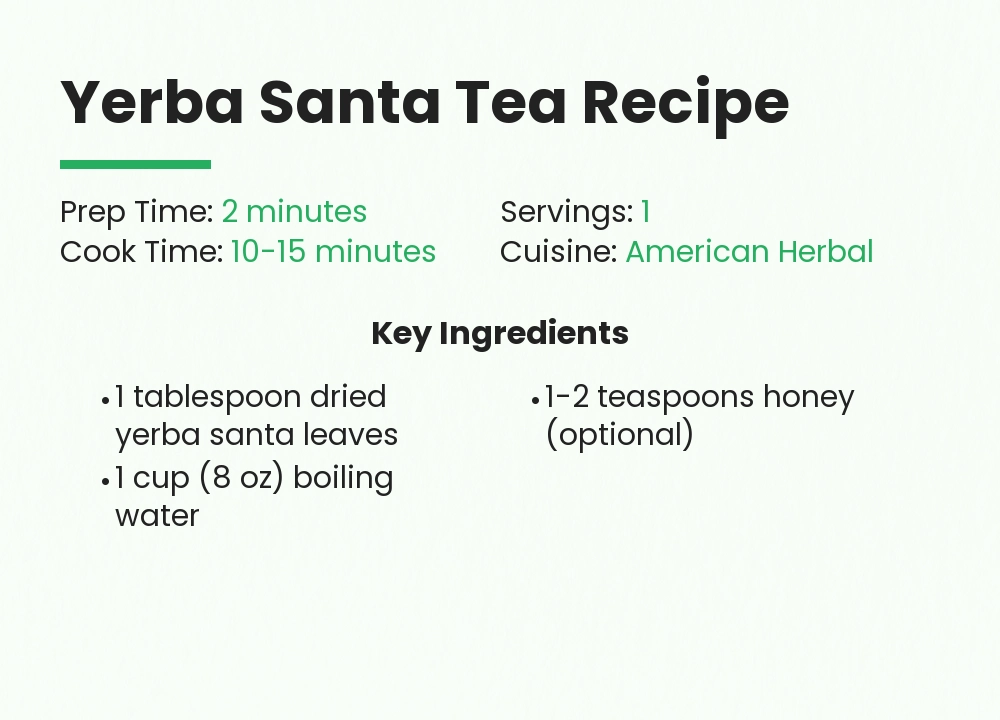
Recipe Details
- Prep Time: 2 minutes
- Cook Time: 10-15 minutes
- Servings: 1
- Course: Beverage
- Cuisine: American Herbal
- Diet: Vegan, Gluten-Free
Ingredients
- 1 tablespoon dried yerba santa leaves
- 1 cup (8 oz) boiling water
- 1-2 teaspoons honey (optional)
Instructions
- Bring one cup of fresh, cold water to a rolling boil in a kettle or pot.
- Place one tablespoon of dried yerba santa leaves into a teapot or mug.
- Pour the boiling water directly over the leaves, ensuring they are fully submerged.
- Cover the vessel to trap the volatile oils and steam. Allow it to steep for 10 to 15 minutes.
- Strain the liquid into a cup to remove the plant material. Stir in honey if you prefer a sweeter profile.
Nutrition
- Calories: 5 kcal
- Protein: 0 g
- Fat: 0 g
- Carbohydrates: 1 g
- Sugar: 0 g (without honey)
- Fiber: 0 g
- Sodium: 0 mg
- Cholesterol: 0 mg
Cooking Method
The preparation of yerba santa tea uses an infusion method. This technique involves extracting flavors and compounds from plant material using hot water. The key is a sustained steep in water that has just reached a boil. This heat helps release the resinous components and aromatic oils locked within the leaves.
Tools Needed
- A kettle or small pot for boiling water
- A teapot or heat-resistant mug with a lid
- A fine mesh strainer or tea infuser
- A measuring spoon
The Plant Behind the Brew
To fully appreciate this infusion, it helps to understand its source. Yerba santa, scientifically known as Eriodictyon californicum, is a perennial shrub native to the southwestern United States, particularly California. Its common name translates from Spanish as “holy herb,” a testament to its historical reverence.
Botanical Profile and Sourcing
The plant features lance-shaped leaves that are dark green on top and a paler, hairy texture underneath. These leaves are coated in a sticky resin, which is responsible for the distinctive aroma and many of its properties. When you handle dried leaves, you will notice this resinous quality immediately.
You can often find dried yerba santa leaves from reputable herbal suppliers, both online and in stores specializing in botanicals. Ensure the source practices sustainable wildcrafting or cultivation. The leaves should be whole or roughly cut, retaining their color and fragrance, not powdered into dust.
A Fragrance of the Forest
The aroma of the dry leaves is complex and evocative. It carries notes of pine, mint, and a slight balsamic quality. Some people detect hints of basil or sage. When steeped in hot water, the scent intensifies, filling the room with a fragrance reminiscent of a coastal forest after rain.
This olfactory experience is a core part of the tea’s appeal. The volatile compounds that create this scent, such as camphor and pinene, are also part of what makes the plant historically significant for respiratory comfort.
Historical and Cultural Roots
The use of this plant predates modern herbalism by centuries. Many Native California tribes, including the Chumash and Miwok, have long held yerba santa as an important part of their materia medica. They utilized it for a wide range of conditions, from respiratory complaints to minor wounds.
From Indigenous Remedy to Pharmacopoeia
Its reputation was so well-established that yerba santa was listed in the U.S. Pharmacopoeia from 1894 to 1916 as an official remedy for bronchitis and asthma. This formal recognition bridged traditional indigenous knowledge with the emerging field of western medicine at the time.
Beyond internal use, the leaves were sometimes burned as an incense or used in ceremonial contexts. The plant was considered a blood purifier and a general tonic for well-being. This historical context adds a rich layer of meaning to the simple act of brewing a cup.
Nutritional and Biochemical Composition
As a dietician, I analyze the components that contribute to a food’s effect on the body. Yerba santa tea is not a significant source of macronutrients like protein or carbohydrates. Its value lies in its profile of secondary plant compounds.
Key Active Constituents
The plant contains a range of flavonoids, including eriodictyol, which contributes to its bitter principles. Tannins are present, providing a slight astringency to the brew. The sticky resin on the leaves contains volatile oils like camphor, limonene, and pinene.
It is important to note that this herbal tea contains no caffeine. This makes it a suitable option for any time of day, whether as a morning beverage or an evening drink before rest. The lack of stimulants is a key differentiator from teas made from Camellia sinensis.
How the Components Interact
The combination of these compounds is believed to produce the plant’s noted effects. The flavonoids and volatile oils may act as mild expectorants, helping to loosen congestion. The slight bitterness can stimulate digestive processes. The overall action is gentle and supportive rather than aggressive.
Health Applications and Considerations
My purpose here is to provide information based on historical use and phytochemistry, not to diagnose or treat. Always consult with a physician for any health condition. The traditional uses of yerba santa are wide-ranging and offer insight into its potential applications.
Respiratory System Support
The most documented traditional use is for respiratory comfort. The warm tea, with its aromatic steam, has been used to address coughs, bronchitis, and congestion. The act of drinking a hot liquid can be soothing to the throat, while the volatile oils may help open nasal passages.
Some people find that adding a spoonful of honey enhances this effect, as honey itself has demulcent properties that can coat and soothe irritated mucous membranes. This creates a synergistic combination for throat irritation.
Digestive and Other Uses
Historically, the herb was also employed as a digestive aid. Its bitter notes can stimulate the production of saliva and gastric juices, which may support the initial stages of digestion. There are also accounts of its use as a poultice for bruises or minor skin irritations.
Modern users should approach these applications with realistic expectations. This is a gentle herbal support, not a pharmaceutical intervention. Its benefits are best experienced as part of a consistent, holistic practice.
Customizing Your Infusion
The basic recipe is a starting point. You can easily adapt it to suit your taste preferences or specific needs. Herbal blending is a creative process, and yerba santa pairs well with several other botanicals.
Flavor Variations and Additives
If the flavor is too robust for your palate, you can dilute the brew with more hot water after steeping. For a different character, try adding a slice of fresh ginger or a cinnamon stick during the steep. A small amount of dried orange peel can introduce a citrus note that complements the resinous base.
For a cold preparation, you can steep a stronger concentration, then pour it over ice. This iced version can be refreshing on a warm afternoon, though the flavor profile will be different from the hot tea.
Creating Synergistic Blends
Yerba santa can be part of a more complex herbal mixture. You might blend it with other respiratory-supportive herbs like mullein or thyme. For a calming evening blend, a small amount of holy basil (tulsi) or chamomile can be added.
A common traditional preparation is a syrup. To make a simple syrup, you would simmer 1 part of a strong tea infusion with 2 parts honey until slightly thickened. This syrup can be taken by the spoonful or added to other beverages.
Practical Guidance for Best Results
Through trial and error, I have identified several factors that can elevate your tea-making experience. Paying attention to these details ensures you extract the full potential from the leaves.
Water Quality and Temperature
Always start with fresh, cold water. Water that has been previously boiled can taste flat and may not extract the flavors as effectively. Bring the water to a full, rolling boil. The high temperature is necessary to properly dissolve the resins in the leaves.
If you are at a high altitude, water boils at a lower temperature. You may need to extend the steeping time by a few minutes to achieve the same level of extraction.
Steeping Time and Vessel Choice
The recommended 10 to 15 minute steep is longer than for many other herbal teas. This extended time is crucial for yerba santa. The resins and deeper flavors need time to migrate into the water. A shorter steep will produce a weaker, less complex cup.
Using a vessel with a lid is non-negotiable. Covering the tea traps the steam and volatile aromatic compounds that would otherwise evaporate. This results in a more fragrant and potent infusion. A French press works exceptionally well for this purpose.
Storage and Longevity
Proper storage preserves the quality of your dried yerba santa leaves. Store them in an airtight container, away from direct light, heat, and moisture. A glass jar in a cool, dark cupboard is ideal.
Correctly stored, the dried leaves should retain their potency and aroma for about 9 to 12 months. Over time, the color may fade and the fragrance will diminish, indicating a loss of vitality. It is best to purchase in quantities you will use within a year.
Frequently Asked Questions
What does yerba santa tea taste like?
The flavor is unique and robust. It is mildly bitter with a pronounced resinous, balsamic character. Notes of pine, mint, and a slight earthiness are common. The aftertaste is often described as clean and slightly sweet, which is why it’s sometimes called “the holy herb that kisses.”
Can I use fresh yerba santa leaves instead of dried?
Yes, you can use fresh leaves, but the measurement will differ. Fresh leaves contain more moisture, so you would need approximately 5 fresh leaves to replace one tablespoon of dried material. The flavor profile of fresh leaf tea can be brighter and slightly less intense.
Is yerba santa tea safe for everyone?
While generally regarded as safe, individuals who are pregnant, nursing, or have pre-existing medical conditions should consult a healthcare provider before use. There is a caution for those with known allergies to plants in the Boraginaceae family. Start with a small amount to assess your personal tolerance.
How often can I drink this tea?
For general enjoyment, one to two cups per day is a common practice. If you are using it for specific wellness support, it is best to use it intermittently, perhaps for a few weeks at a time, rather than as a constant daily beverage over many months. Listen to your body’s response.
What is the difference between yerba santa and cascara sagrada?
They are completely different plants with different uses. Yerba santa (Eriodictyon californicum) is primarily used for respiratory support. Cascara sagrada (Rhamnus purshiana) is a tree whose bark is used as a strong laxative. It is critical not to confuse them.
Can I make a large batch and store it?
You can prepare a larger quantity of the tea and store it in the refrigerator for up to 48 hours. The flavor and potency may decrease slightly upon reheating. For the best experience, brew it fresh each time to enjoy the full aroma and active constituents.
Does it interact with any medications?
There is limited scientific data on drug interactions. Due to its historical use as a blood cleanser and its effects on certain metabolic pathways, it is prudent to speak with a physician or pharmacist if you are taking prescription medications, especially for chronic conditions.