
My grandmother first introduced me to wojapi during a summer visit, simmering berries into a thick, fragrant sauce that filled her kitchen. That memory inspired me to adapt this traditional Native American recipe into a versatile barbecue sauce you can use for grilling, dipping, or glazing.
Wojapi is a berry-based sauce with roots in Indigenous cultures, often served as a sweet accompaniment. By blending it with barbecue elements, we create a balanced condiment that enhances meats, vegetables, and even desserts. This recipe combines historical methods with modern kitchen techniques for reliable results.
You will find this guide covers everything from selecting berries to adjusting flavors for dietary needs. Whether you are new to cooking or an experienced chef, this sauce adds a unique touch to meals. Let us start with the core recipe to build your foundation.
How to Make Wojapi BBQ Sauce Recipe
This section provides the complete recipe with precise measurements and steps. Follow these instructions for a consistent texture and flavor every time. The process involves simmering berries with complementary ingredients to develop depth.
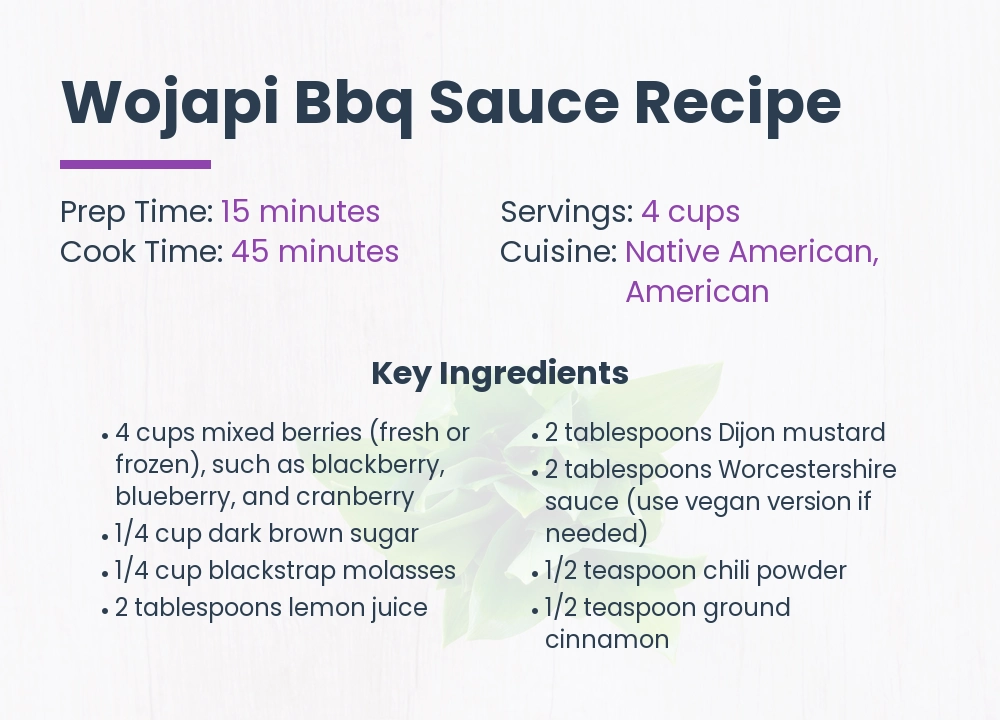
Recipe Details
- Prep Time: 15 minutes
- Cook Time: 45 minutes
- Servings: 4 cups
- Course: Condiment, Sauce
- Cuisine: Native American, American
- Diet: Gluten-Free, Vegan Option
Ingredients
- 4 cups mixed berries (fresh or frozen), such as blackberry, blueberry, and cranberry
- 1/4 cup dark brown sugar
- 1/4 cup blackstrap molasses
- 2 tablespoons lemon juice
- 2 tablespoons balsamic vinegar
- 2 tablespoons Dijon mustard
- 2 tablespoons Worcestershire sauce (use vegan version if needed)
- 1/2 teaspoon chili powder
- 1/2 teaspoon ground cinnamon
- 1/4 teaspoon cayenne pepper
- 1/4 teaspoon black pepper
- 1 clove garlic, minced
- 1/2 cup water
Instructions
- Combine the mixed berries and water in a medium saucepan over medium heat. Bring to a gentle simmer, stirring occasionally to prevent sticking.
- Reduce heat to low and cook for 20 minutes, until the berries break down and release their juices. Use a wooden spoon to mash them for a chunky texture or leave as is for a rustic feel.
- Add the dark brown sugar, blackstrap molasses, lemon juice, balsamic vinegar, Dijon mustard, Worcestershire sauce, chili powder, cinnamon, cayenne pepper, black pepper, and minced garlic. Stir thoroughly to combine all ingredients.
- Simmer the mixture on low heat for another 25 minutes, stirring every 5 minutes to avoid burning. The sauce will thicken as it reduces.
- For a smoother consistency, transfer the sauce to a blender and pulse until desired texture is achieved. Alternatively, keep it chunky for a more traditional wojapi style.
- Allow the sauce to cool completely before transferring to an airtight container. Store in the refrigerator for up to two weeks or freeze for longer preservation.
Nutrition
- Calories: 45 kcal
- Protein: 0.5 g
- Fat: 0.2 g
- Carbohydrates: 11 g
- Sugar: 8 g
- Fiber: 1.5 g
- Sodium: 85 mg
- Cholesterol: 0 mg
Cooking Method
This sauce uses a stovetop simmering method to concentrate flavors and achieve a thick texture. Constant low heat helps the berries release pectin, which naturally thickens the mixture without added starches. Stirring regularly prevents scorching and ensures even cooking.
Tools Needed
- Medium saucepan with lid
- Wooden spoon or spatula
- Blender or immersion blender (optional, for smooth sauce)
- Measuring cups and spoons
- Airtight containers for storage
Understanding Wojapi and Its Origins
Wojapi has been a staple in Native American communities for generations, originally made with wild berries like chokecherries or serviceberries. It served as a nutritious sauce for breads, meats, and stews, often prepared during gatherings and ceremonies.
This recipe honors that history by incorporating barbecue influences, which became popular in American cuisine. The fusion creates a sauce that bridges traditional and contemporary flavors. You can appreciate its versatility in modern dishes while respecting its roots.
Restaurants like Tocabe in Denver have helped revive interest in Native American foods, including wojapi. By making this at home, you participate in preserving cultural heritage. Each ingredient choice can reflect regional variations and personal taste.
Historical Significance
Indigenous tribes across North America developed wojapi as a way to preserve berries through drying or cooking. It was often shared in communal settings, symbolizing hospitality and resourcefulness. The sauce’s simplicity allowed it to adapt to available ingredients.
In some cultures, wojapi was used in medicinal preparations due to the antioxidants in berries. Today, we recognize its health benefits alongside its culinary uses. Understanding this background enriches the cooking experience and connects you to broader food traditions.
Modern Adaptations
Contemporary versions of wojapi might include sweeteners like molasses or spices such as cinnamon, which were not always part of traditional recipes. These additions make the sauce more accessible while maintaining its core identity. Our barbecue twist introduces elements like Worcestershire sauce for umami depth.
You can experiment with different berries or sweeteners to suit your palate. The key is to balance sweetness with acidity, as seen in this recipe. This approach keeps the sauce relevant for today’s kitchens without losing its essence.
Ingredient Analysis and Selection
Each component in this sauce contributes to flavor, texture, and nutrition. Choosing high-quality ingredients ensures the best outcome. Let us break down the primary elements and their roles.
Berries: The Foundation
Berries provide the base flavor, natural sweetness, and vibrant color. Mixed berries like blackberries, blueberries, and cranberries offer a complex taste profile. Blackberries add tartness, blueberries contribute mild sweetness, and cranberries introduce a sharp note.
Fresh berries yield a brighter flavor, but frozen berries work well and are often more economical. If using frozen, there is no need to thaw them first; they will cook down similarly. Avoid berries with added sugars or syrups to control the sauce’s sweetness.
Berry Varieties and Their Impacts
Chokecherries, though less common, are traditional and provide a distinct, slightly astringent taste. If available, use them for authenticity. For a sweeter sauce, increase the proportion of blueberries or add cherries. Tart berries like cranberries balance well with molasses and spices.
Experiment with seasonal berries to customize the sauce. Raspberries or strawberries can be included, but note that they may make the sauce thinner due to higher water content. Adjust cooking time accordingly to achieve the desired thickness.
Sweeteners: Molasses and Brown Sugar
Dark brown sugar adds a caramel-like sweetness and moisture, while blackstrap molasses contributes iron, calcium, and a robust flavor. Together, they create a deep, rich sweetness that complements the berries without overpowering them.
Molasses also helps thicken the sauce and enhances its glossy appearance. If you prefer a lighter taste, reduce the molasses and increase brown sugar. For a vegan version, ensure the sugar is processed without bone char.
Acidic Components: Lemon Juice and Vinegar
Lemon juice brightens the berry flavors and adds vitamin C, which can help preserve the sauce. Balsamic vinegar introduces a subtle tang and complexity, balancing the sweetness. These acids also act as natural preservatives, extending the sauce’s shelf life.
If balsamic vinegar is too strong, apple cider vinegar can be substituted for a milder acidity. The key is to maintain a pH that supports flavor development and safety. Always taste and adjust to your preference.
Spices and Flavor Enhancers
Cinnamon and chili powder provide warmth and depth, while cayenne pepper adds a hint of heat that contrasts with the sweetness. Black pepper and garlic contribute savory notes, making the sauce suitable for grilled meats and vegetables.
Dijon mustard emulsifies the ingredients and adds a sharp tang. Worcestershire sauce offers umami, but for a vegan alternative, use tamari or coconut aminos. Adjust spice levels based on your tolerance; start with less cayenne if serving to children.
Nutritional Benefits and Health Considerations
This sauce is rich in antioxidants from berries, which support immune function and reduce inflammation. The fiber content aids digestion, while vitamins like C and K are present in significant amounts. Using natural sweeteners minimizes refined sugar intake compared to commercial sauces.
Berries are low in calories and high in phytochemicals, making this a heart-healthy choice. Molasses adds minerals like iron and magnesium, beneficial for energy production. The sauce is naturally gluten-free and can be adapted for various diets.
Antioxidant Properties
Anthocyanins in berries give the sauce its color and provide antioxidant benefits, which may protect against oxidative stress. Regular consumption of berry-based foods has been linked to improved cognitive function and cardiovascular health. This makes wojapi a nutritious addition to meals.
Cooking berries can enhance the bioavailability of some antioxidants, though it may reduce vitamin C levels. The addition of lemon juice helps compensate for this loss. Overall, the sauce retains most of its nutritional value through gentle simmering.
Balancing Sweetness for Health
To reduce sugar content, you can decrease the brown sugar and molasses by half and add a natural sweetener like agave or stevia. Alternatively, rely on the natural sweetness of ripe berries. This adjustment makes the sauce suitable for low-sugar or diabetic diets.
Monitor sodium levels by using low-sodium Worcestershire sauce or reducing added salt. The spices and acids provide enough flavor to compensate. These modifications allow you to enjoy the sauce without compromising health goals.
Dietary Adaptations and Substitutions
This recipe is flexible and can accommodate common dietary restrictions. Below are practical swaps to ensure everyone can enjoy it. Always check labels for hidden ingredients like gluten in sauces.
Gluten-Free Version
Use certified gluten-free Worcestershire sauce and Dijon mustard. Most other ingredients are naturally gluten-free, but verify spices for cross-contamination. This adaptation makes the sauce safe for celiac disease or gluten sensitivity.
Vegan and Dairy-Free Options
Replace Worcestershire sauce with a vegan alternative, as traditional versions contain anchovies. Ensure the sugar is vegan-friendly. The sauce is inherently dairy-free, so no further changes are needed. It pairs well with plant-based proteins like tofu or tempeh.
Low-Sugar and Keto Adjustments
Substitute brown sugar and molasses with erythritol or monk fruit sweetener. Reduce the amount of sweetener by half and rely on berries for natural sweetness. Be mindful that the sauce may be tarter, so adjust spices to balance the flavor.
For keto diets, use low-carb berries like blackberries and raspberries in higher proportions. Avoid high-sugar fruits like cherries. Simmer longer to concentrate flavors without adding carbs.
Avoiding Common Mistakes
Many home cooks encounter issues like a runny sauce or burnt flavors. Here is how to prevent these problems and achieve perfect results. These tips are based on years of testing and feedback.
Do not rush the simmering process; low heat allows flavors to meld and the sauce to thicken naturally. If the sauce is too thin, cook it longer uncovered. If too thick, add a tablespoon of water at a time until desired consistency.
Avoid using aluminum pots, as berries can react and impart a metallic taste. Stainless steel or enameled cast iron are better choices. Always taste the sauce before storing and adjust seasonings as needed.
When blending hot sauce, be cautious of steam buildup. Allow it to cool slightly or blend in small batches. This prevents accidents and ensures a smooth texture. For chunky sauce, skip blending altogether.
Serving Suggestions and Pairings
Wojapi BBQ sauce is versatile and can elevate various dishes. Use it as a glaze, dip, or marinade. Its sweet and savory profile complements both meat and vegetable-based meals.
With Meats and Proteins
Brush the sauce over chicken thighs or beef steaks during the last 10 minutes of grilling. It caramelizes beautifully, creating a glossy finish. For burgers, mix it into the meat or use as a topping for a juicy, flavorful patty.
Bison or venison pair well with the berry notes, balancing their gaminess. Slow-cook meats in the sauce for a fall-apart texture. This method works well in a crock pot for easy dinner preparation.
Vegetarian and Vegan Dishes
Drizzle the sauce over grilled portobello mushrooms or vegetable skewers. It adds depth to tofu or seitan dishes. Use it as a dressing for grain bowls or as a dip for bread and cheese boards.
For a unique twist, serve it with baked cheesecake or as a berry glaze for desserts. The sauce’s versatility makes it a good multi-use condiment for any meal. Experiment with pairings to discover your favorites.
Occasions and Presentations
This sauce is ideal for backyard barbecues, family dinners, or potlucks. Make it ahead to simplify meal planning. Store in decorative jars for gifts or party favors. Its vibrant color enhances table settings and sparks conversation.
Storage and Preservation Techniques
Proper storage extends the sauce’s usability and maintains quality. Cool it completely before transferring to airtight containers. Glass jars with tight lids are best for refrigerator storage.
In the fridge, the sauce lasts up to two weeks. For longer storage, freeze it in portion-sized containers for up to six months. Thaw in the refrigerator overnight before use. Avoid repeated thawing and refreezing to prevent texture changes.
Canning is an option for shelf-stable preservation. Process jars in a water bath for 10 minutes, ensuring seals are tight. This method is suitable for experienced home canners and follows safe canning practices.
The Science of Sauce Thickening
Berries contain pectin, a natural thickener that activates when heated and cooled. Simmering breaks down cell walls, releasing pectin and creating a gel-like consistency. Acids like lemon juice enhance this process.
Sugar and molasses contribute to thickening by binding water molecules. This reduction in free water increases viscosity. Understanding these principles helps you adjust the sauce without relying on artificial thickeners.
Frequently Asked Questions
What is wojapi?
Wojapi is a traditional Native American berry sauce, often sweet and used as a condiment or dip. It has been adapted into barbecue versions for modern palates.
How do you make wojapi?
Simmer berries with water, then add sweeteners, acids, and spices. Cook until thickened, and blend if desired for smoothness.
Can I use frozen berries?
Yes, frozen berries work well and do not require thawing. They may release more liquid, so adjust cooking time for thickness.
What should I serve with wojapi?
Pair it with grilled chicken, burgers, bison, or vegetarian dishes. It also complements breads and desserts like cheesecake.
How long does wojapi last?
Refrigerated, it lasts up to two weeks. Frozen, it can be stored for six months in airtight containers.
Is wojapi spicy?
This recipe includes mild heat from cayenne, but you can omit it for a kid-friendly version. Adjust spices to taste.
Can I make wojapi in a slow cooker?
Yes, combine ingredients in a crock pot and cook on low for 4-6 hours. Stir occasionally to prevent sticking.
What are the health benefits?
Berries provide antioxidants and fiber, while molasses adds minerals. It is a healthier alternative to store-bought sauces.
How can I adjust the thickness?
Simmer longer for a thicker sauce or add water to thin it. Blending can also change the texture to smooth or chunky.
Is wojapi suitable for kids?
Yes, reduce or omit spices like cayenne for a milder flavor. Serve it with familiar foods like chicken tenders or as a dip for fruit.