
Recreating a sauce with this level of heat and flavor at home presents a unique culinary challenge. Many attempts fall short, either lacking the signature burn or the complex flavor that follows. This guide provides a method developed through testing to achieve that specific Wingstop Atomic Sauce profile in your own kitchen.
My first encounter with this sauce was during a gathering where a friend insisted I try it. The initial taste was a direct, sharp heat that built steadily. What stayed with me was not just the intensity, but the flavor that emerged after the initial wave. This experience led me to deconstruct the sauce, focusing on balancing extreme heat with other culinary elements.
This article details that process. You will find the complete recipe for a homemade version of this sauce. We will also examine its nutritional aspects and explore methods for adjusting the heat level to your preference.
How to Make wingstop atomic Sauce recipe
This section provides the complete procedure for preparing the sauce. Read through all instructions and the ingredient notes before you begin. Proper preparation ensures a smooth cooking process and a consistent final product.
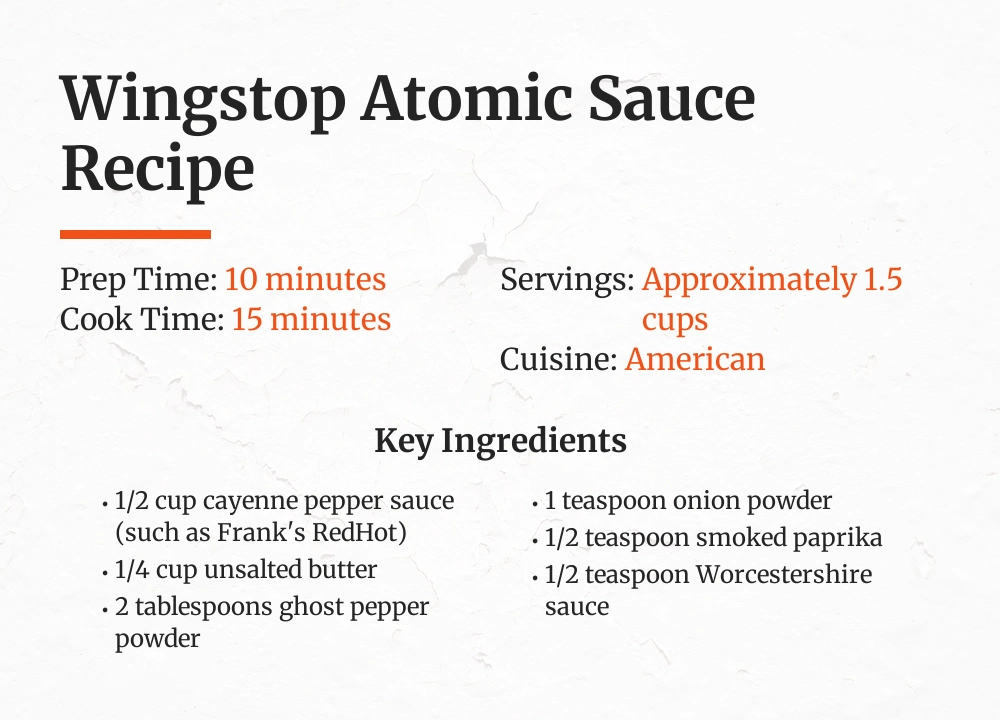
Recipe Details
- Prep Time: 10 minutes
- Cook Time: 15 minutes
- Servings: Approximately 1.5 cups
- Course: Condiment, Appetizer
- Cuisine: American
- Diet: Vegetarian, Gluten-Free
Ingredients
- 1/2 cup cayenne pepper sauce (such as Frank’s RedHot)
- 1/4 cup unsalted butter
- 2 tablespoons ghost pepper powder
- 1 tablespoon white vinegar
- 1 teaspoon garlic powder
- 1 teaspoon onion powder
- 1/2 teaspoon smoked paprika
- 1/2 teaspoon Worcestershire sauce
- 1/4 teaspoon ground cumin
- 1/4 teaspoon salt
Instructions
- Melt the unsalted butter in a saucepan over low heat.
- Add the cayenne pepper sauce, white vinegar, and Worcestershire sauce to the melted butter, stirring to combine.
- Whisk in the ghost pepper powder, garlic powder, onion powder, smoked paprika, ground cumin, and salt until the mixture is smooth.
- Increase the heat to medium-low and allow the sauce to simmer for 8-10 minutes, stirring frequently. Do not let it reach a boil.
- After simmering, remove the saucepan from the heat and let the sauce cool for 10 minutes. It will thicken slightly as it cools.
- Transfer the sauce to a clean glass jar or bottle once it has reached a safe handling temperature.
Nutrition
- Calories: 25 kcal
- Protein: 0.3 g
- Fat: 2.3 g
- Carbohydrates: 1.1 g
- Sugar: 0.5 g
- Fiber: 0.4 g
- Sodium: 320 mg
- Cholesterol: 6 mg
Cooking Method
The sauce is prepared using a stovetop simmering method. This technique allows the ingredients to meld together. The gentle heat helps the fats and liquids emulsify, creating a cohesive sauce rather than a separated mixture.
Simmering also softens the sharp edges of the raw spices and garlic powder. It integrates their flavors into the liquid base. This process is important for developing a unified flavor profile.
Tools Needed
- Small to medium saucepan
- Whisk
- Measuring cups and spoons
- Glass jar or bottle for storage
- Heat-resistant spatula
Ingredient Analysis and Selection
Each component in this sauce has a specific role. Understanding these roles allows for informed substitutions and adjustments. The balance between heat carriers and flavor modifiers is what defines this condiment.
Cayenne Pepper Sauce
This sauce serves as the primary liquid base and provides the first layer of heat. Brands like Frank’s RedHot use aged cayenne peppers, which offer a sharp, tangy heat. The vinegar content in the sauce contributes acidity and acts as a natural preservative.
The consistency of a prepared cayenne pepper sauce is thinner than a paste. This makes it an ideal foundation for a wing sauce that needs to coat evenly. Using a pre-made sauce saves time compared to rehydrating and pureeing dried peppers.
Ghost Pepper Powder
Ghost pepper, or Bhut Jolokia, is the source of the intense, lingering heat characteristic of the Atomic flavor. Its Scoville rating is significantly higher than that of cayenne pepper. The powder form integrates smoothly into the liquid mixture without adding unwanted texture.
This ingredient requires careful handling. Direct contact with skin or inhalation of the powder can cause irritation. Using gloves during measurement is a recommended safety precaution. The amount can be adjusted, but even a small quantity has a substantial impact.
Unsalted Butter
Butter is a crucial element for texture and flavor modulation. The fat in butter coats the palate and can slightly temper the perception of immediate heat. This allows other flavors to become noticeable. It also contributes to a richer, glossier sauce that clings to wings.
Using unsalted butter provides control over the final sodium content. The salt in the recipe can then be adjusted independently. The emulsification of butter and the vinegar-based sauces creates a stable, unified consistency.
Vinegar and Worcestershire Sauce
White vinegar adds a clean, sharp acidity that brightens the overall flavor profile. It cuts through the richness of the butter and the oiliness of the pepper compounds. This ingredient enhances the tanginess inherited from the cayenne pepper sauce.
Worcestershire sauce introduces a layer of umami and complexity. Its fermented anchovies and tamarind provide a savory depth that supports the primary heat notes. The small quantity used is enough to add background flavor without becoming individually identifiable.
Garlic and Onion Powder
These dried, powdered forms provide a consistent, mellow allium flavor. Using powders instead of fresh garlic or onion ensures a smooth sauce texture. They rehydrate in the liquid during simmering, releasing their essential oils and flavors.
The powders contribute a savory foundation that makes the heat seem more integrated. Fresh alternatives would require fine mincing and a longer cooking time to mellow their raw bite. The powdered version offers convenience and reliability for this application.
Nutritional Information
From a dietary perspective, this sauce is a concentrated source of flavor and heat. The primary nutritional considerations are its sodium and fat content. A single tablespoon provides a significant amount of flavor for a relatively small caloric intake.
The capsaicin from the peppers is the most notable bioactive compound. This substance is responsible for the burning sensation. Research suggests capsaicin may have a temporary effect on metabolic rate.
The sauce contains minimal protein or complex carbohydrates. Its nutritional role is as a condiment, used to enhance the main components of a meal like chicken wings or vegetables. It is not a significant source of vitamins or minerals.
Caloric Density and Portion Awareness
The calories in this preparation come predominantly from the butter. Using a fat-based ingredient is necessary for texture and flavor carry. Being mindful of the portion size used on wings or other foods helps manage overall caloric intake.
For those monitoring sodium, the amount can be reduced by starting with a low-sodium cayenne pepper sauce. You can also omit the additional salt. The other spices and the heat from the peppers will still provide ample flavor.
Capsaicin and Physiological Response
Capsaicin binds to receptors in the mouth that typically detect heat. This triggers a pain response, which the brain interprets as a burning sensation. The body may respond to this perceived heat by increasing circulation and releasing endorphins.
Regular consumption of capsaicin-containing foods can lead to a degree of tolerance over time. This means the same amount of spice may be perceived as less intense. Tolerance varies greatly between individuals based on genetics and exposure.
Adjusting the Recipe for Different Needs
The intensity of this sauce can be modified to suit different tolerance levels. The following adaptations provide options for varying the heat and dietary profile.
Reducing the Heat Level
For a less intense version, begin by reducing the ghost pepper powder by half. You can replace it with an equal amount of additional cayenne pepper sauce or a milder chili powder. This maintains the pepper flavor while lowering the Scoville rating substantially.
Another method is to increase the amount of butter slightly. The added fat will coat the palate more, reducing the immediate impact of the capsaicin. Adding a teaspoon of brown sugar or honey can also provide a slight sweetness that counterbalances heat.
Dietary Modifications
A vegan version can be made by substituting the butter with a plant-based alternative. Look for a brand that melts and emulsifies well. Coconut oil is another option, though it will impart a slight coconut flavor.
Ensure the Worcestershire sauce is a vegan variety, as traditional versions contain fish. Most major brands offer an anchovy-free alternative. The rest of the ingredients are naturally plant-based.
For a dairy-free preparation, use a high-heat oil like avocado oil instead of butter. The sauce will be sharper and less rich, but the primary heat character will remain. You may need to whisk more vigorously to achieve a good emulsion.
The Development of Extreme Heat Sauces
Sauces designed specifically for their intense heat are a relatively modern phenomenon in mainstream cuisine. The pursuit of hotter peppers and more potent extracts has grown alongside competitive eating and culinary challenges.
Wingstop’s Atomic sauce sits within this category of condiments that use super-hot peppers. These sauces moved beyond the habanero, which was once considered the upper limit of practical heat for most consumers. The use of ghost pepper represents a shift in public tolerance and interest.
These sauces are often part of a menu’s challenge or extreme offering. They serve as a benchmark for heat seekers. The commercial success of such products indicates a growing market for experienced heat.
Preparation Techniques and Common Errors
Success with this recipe depends on technique as much as ingredients. Avoiding these common mistakes will lead to a better texture and flavor.
Managing the Heat During Cooking
Using too high a heat is a frequent error. Boiling the sauce can cause the butter to separate from the other liquids, resulting in an oily texture. A steady, low simmer is sufficient to combine the flavors without breaking the emulsion.
If the sauce does separate, you can often bring it back by removing it from the heat. Whisk in a small splash of warm water. Alternatively, transferring the sauce to a blender and pulsing it briefly can re-emulsify the ingredients.
Ingredient Measurement and Safety
Precisely measuring the ghost pepper powder is important for consistency and safety. Using a volume measurement like a tablespoon is more accurate than estimating. Do not taste the sauce directly from the spoon during cooking, especially after the ghost pepper has been added.
Always wash your hands, utensils, and countertops thoroughly after handling ghost pepper powder. Avoid touching your face, especially your eyes. Consider wearing disposable gloves during the measuring and mixing stages.
Serving and Storage Recommendations
This sauce is most commonly used as a coating for chicken wings. Toss freshly cooked, hot wings in a bowl with the sauce until they are evenly coated. The residual heat from the wings helps the sauce adhere properly.
It can also be used as a dipping sauce for sturdy foods like french fries, onion rings, or pizza crust. The thickness of the sauce makes it suitable for dipping without being too runny. Start with a small amount to gauge your heat tolerance.
Food Pairings to Balance Heat
When serving extremely spicy food, it is helpful to offer accompaniments that can provide relief. A cool, creamy dip like ranch or blue cheese dressing is a classic pairing. The fat and coolness can soothe the burning sensation.
Starchy sides like plain bread, celery sticks, or potato salad can also help. They act as a neutral base that dilutes the capsaicin in the mouth. A sweet beverage like a milk-based shake or lemonade is often more effective than water at combating heat.
Storage and Shelf Life
Store the cooled sauce in a sealed glass container in the refrigerator. The high vinegar content and cooking process give it a good shelf life. Properly stored, it should remain safe to consume for up to three weeks.
The sauce may thicken when chilled. You can gently reheat it in a saucepan over low heat or in short bursts in the microwave. Stir it well before use to reincorporate any ingredients that may have settled.
Frequently Asked Questions
What is the primary source of heat in this sauce?
The intense heat comes predominantly from the ghost pepper powder. This ingredient has a Scoville rating that far exceeds that of the cayenne pepper sauce base. The combination creates a multi-layered heat experience.
Can I use fresh ghost peppers instead of powder?
Yes, you can substitute one or two fresh ghost peppers for the powder. Remove the stems and seeds, then finely mince the peppers. Sauté them in the melted butter for a minute before adding the other ingredients to help release their oils.
How can I make the sauce thicker?
For a thicker, glazier consistency, you can add a small amount of a starch slurry. Mix one teaspoon of cornstarch with one tablespoon of cold water. Whisk this into the simmering sauce and cook for an additional minute until thickened.
Is this sauce significantly spicier than Wingstop’s Mango Habanero?
Yes, the Atomic sauce is positioned as the hottest offering on their menu. The Mango Habanero sauce derives its heat from habanero peppers, which are less potent than ghost peppers. The Atomic sauce provides a more intense and enduring burning sensation.
What should I do if the sauce is too spicy after making it?
You can temper the finished sauce by stirring in more melted butter or a neutral oil. Adding a small amount of an acidic liquid like more vinegar or even a squeeze of lime juice can also help balance the perception of heat by engaging other taste senses.
Can this sauce be frozen for long-term storage?
Freezing is not recommended for this type of emulsion sauce. The thawing process can cause the butter and other liquids to separate permanently. The texture often becomes grainy or oily after freezing and reheating.
Are there any health concerns with consuming such a spicy sauce?
For most people, consuming spicy foods in moderation is safe. However, individuals with certain digestive conditions, such as IBS or acid reflux, may experience discomfort. It is also advisable to avoid touching your eyes after handling the sauce or its ingredients.