
You might have heard about a simple tea from Costa Rica that promises more than just refreshment. I first encountered this beverage while studying traditional diets in Central America, where locals sipped it to aid digestion and boost energy. It combines fresh pineapple, ginger, lemongrass, and honey into a warm or iced drink. This recipe is not only easy to make but also packed with natural benefits that support overall wellness.
In this article, I will guide you through every step of preparing this tea, drawing from my hands-on experience as a dietician and culinary historian. We will explore its ingredients, health advantages, and cultural roots. By the end, you will have a complete understanding of how to incorporate this drink into your daily routine for potential weight management and vitality.
How to Make the Costa Rican Tea Recipe
This section provides a detailed, step-by-step guide to crafting the tea. I have tested this method multiple times to ensure consistent results. Follow these instructions closely for a perfect batch every time.
Recipe Details
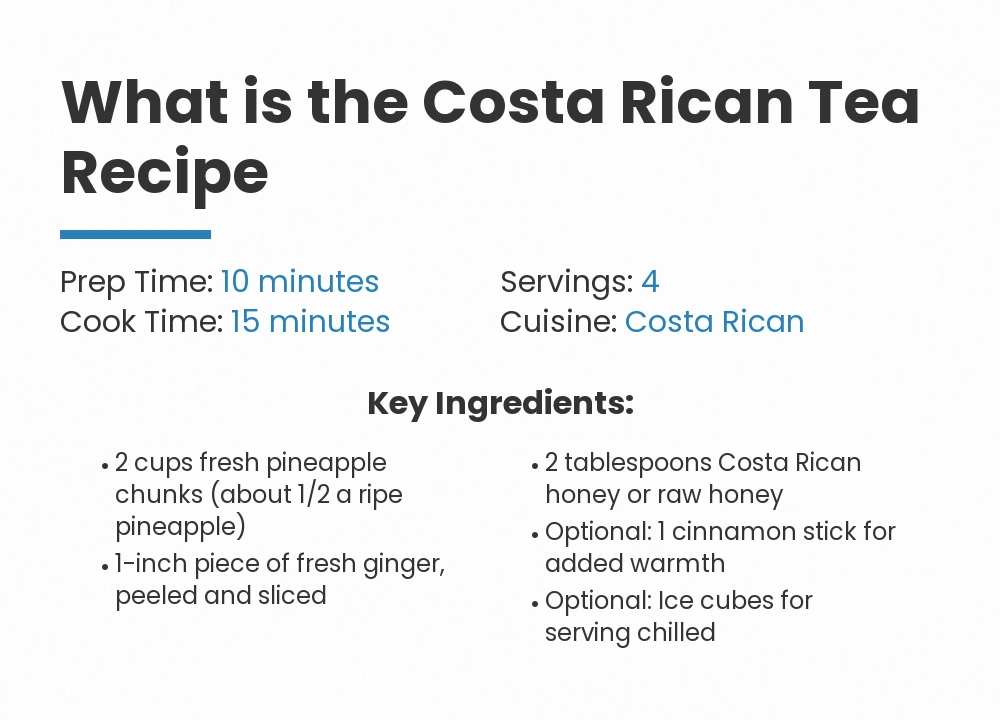
- Prep Time: 10 minutes
- Cook Time: 15 minutes
- Servings: 4
- Course: Beverage
- Cuisine: Costa Rican
- Diet: Vegan-friendly, Gluten-free
Ingredients
- 2 cups fresh pineapple chunks (about 1/2 a ripe pineapple)
- 1-inch piece of fresh ginger, peeled and sliced
- 2 stalks lemongrass, bruised and chopped
- 4 cups cold water
- 2 tablespoons Costa Rican honey or raw honey
- Optional: 1 cinnamon stick for added warmth
- Optional: Ice cubes for serving chilled
Instructions
- Begin by preparing the pineapple. Cut a ripe pineapple into chunks, ensuring they are uniform for even brewing.
- Peel the ginger and slice it thinly to release its aromatic oils during cooking.
- Bruise the lemongrass stalks by gently crushing them with the back of a knife. This step enhances flavor extraction.
- In a medium saucepan, combine the cold water, pineapple chunks, ginger slices, and lemongrass. If using cinnamon, add it now.
- Place the saucepan over medium heat and bring the mixture to a gentle boil. Reduce the heat and let it simmer for 10-15 minutes.
- After simmering, remove the pan from heat and stir in the honey until fully dissolved. Allow it to steep for an additional 5 minutes.
- Strain the tea through a fine-mesh sieve into a pitcher or serving bottles. Discard the solid ingredients.
- Serve immediately warm, or let it cool to room temperature before chilling in the refrigerator for an iced version.
Nutrition
- Calories: 45 kcal
- Protein: 0.5 g
- Fat: 0.1 g
- Carbohydrates: 12 g
- Sugar: 9 g
- Fiber: 1 g
- Sodium: 5 mg
- Cholesterol: 0 mg
Cooking Method
This tea uses a simple simmering technique to extract flavors and nutrients from the ingredients. Simmering helps break down fibrous components like pineapple and ginger, releasing their juices and beneficial compounds into the water. Avoid boiling vigorously, as it can destroy delicate enzymes and volatile oils.
Tools Needed
- Medium saucepan with lid
- Cutting board and sharp knife
- Measuring cups and spoons
- Fine-mesh sieve or strainer
- Pitcher or glass bottles for storage
- Optional: Mortar and pestle for bruising lemongrass
Ingredient Analysis
Each component in this tea plays a specific role in both flavor and function. Understanding their attributes will help you appreciate why this combination is so effective. Let’s break down the primary ingredients.
Pineapple: A Natural Digestive Aid
Pineapple contributes a sweet, citrusy note to the tea. It contains bromelain, an enzyme that aids protein digestion and reduces inflammation. Bromelain enzymes help break down food in the stomach, potentially easing bloating. The fruit’s high water content and fiber also support hydration and gut health.
When selecting pineapple, choose one that feels heavy for its size with a sweet aroma at the base. Fresh chunks are preferable to canned versions, which often have added sugars. In Costa Rica, pineapples are a staple fruit, grown in tropical regions and used in various traditional remedies.
Ginger: Soothing and Anti-Inflammatory
Ginger adds a spicy warmth to the beverage. Its active compounds, like gingerol, have anti-inflammatory and antioxidant properties. These can help soothe nausea, improve circulation, and support metabolic function. Ginger also enhances the tea’s thermogenic effect, which may aid calorie burning.
For the best results, use fresh ginger root rather than powdered forms. Fresh ginger has a brighter flavor and higher concentration of beneficial oils. Store it in a cool, dry place to maintain its potency.
Lemongrass: Refreshing and Cleansing
Lemongrass imparts a light, herbal aroma and subtle citrus undertones. It is rich in antioxidants like citral, which has cleansing properties and can promote detoxification. Lemongrass also acts as a mild diuretic, helping to reduce water retention.
Bruising the stalks before use is crucial to release their essential oils. This step maximizes flavor and health benefits. In Central American cultures, lemongrass is commonly used in teas for its calming effects and ability to support digestive balance.
Honey: Natural Energy and Immunity
Honey serves as a natural sweetener with antimicrobial qualities. Costa Rican honey, in particular, is known for its floral notes and purity. It provides a quick energy boost without the sharp blood sugar spikes associated with refined sugars. Honey also contains trace enzymes and antioxidants that support immune function.
If you prefer a vegan alternative, maple syrup or agave nectar can be substituted. However, raw honey retains more nutrients compared to processed varieties. Always add honey after heating to preserve its enzymatic activity.
Nutritional Breakdown
This tea is low in calories and rich in bioactive compounds. The combination of pineapple’s bromelain, ginger’s gingerol, and lemongrass’s citral creates a synergistic effect. Bromelain aids in protein digestion, which can reduce belly fat accumulation over time. Ginger boosts thermogenesis, increasing the body’s energy expenditure.
The beverage’s high water content promotes hydration, essential for metabolic processes. Fiber from pineapple supports satiety, helping control calorie intake. Antioxidants in the ingredients combat oxidative stress, which is linked to weight gain and inflammation.
Regular consumption may assist in weight management by improving digestion and reducing bloating. However, it should complement a balanced diet and exercise routine for best results. The tea is not a magic solution but a supportive element in a healthy lifestyle.
Dietary Adaptations
This recipe can be modified to suit various dietary needs without compromising flavor or benefits. Here are practical swaps for common preferences.
Vegan Version
Replace honey with maple syrup or agave nectar. Use the same quantity to maintain sweetness. Ensure all ingredients are plant-based, which they naturally are in this recipe.
Low-Sugar Adaptation
Omit honey entirely or use a sugar-free sweetener like stevia. Pineapple provides natural sugars, so reducing added sweeteners can lower overall carbohydrate content.
Gluten-Free and Dairy-Free
The base recipe is inherently gluten-free and dairy-free. No changes are needed, but always verify that optional additives like cinnamon are pure and uncontaminated.
Enhanced Variations
For an extra metabolic boost, add a pinch of cayenne pepper. Cayenne contains capsaicin, which may increase calorie burn. Alternatively, include a chunk of apple for additional fiber and a subtle tartness.
Cultural and Historical Context
This tea has roots in Costa Rican tradition, where it is often enjoyed as a daily wellness drink. In Central America, beverages made from local fruits and herbs are common for their medicinal properties. Costa Rica’s rich biodiversity provides ingredients like pineapple and lemongrass that are integral to their culinary heritage.
Historically, such teas were used by indigenous communities to address digestive issues and boost energy during long days. The recipe has been passed down through generations, often prepared in batches for family use. It reflects a holistic approach to health, combining nutrition with natural remedies.
Today, it remains popular in Costa Rican households, especially in the afternoon as a refreshing pick-me-up. Its simplicity and effectiveness have gained global attention, particularly among those interested in weight loss and natural health practices.
Common Mistakes and Expert Tips
Avoid these pitfalls to ensure your tea turns out perfectly. Based on my trials, here are key tips for success.
Overcooking the Ingredients
Simmering too long can make the tea bitter and reduce nutrient levels. Keep the cook time to 15 minutes maximum. This preserves the delicate flavors and enzymes.
Using Low-Quality Honey
Processed honey may contain additives that dilute benefits. Opt for raw, local honey or Costa Rican varieties for authentic taste and health properties.
Skipping the Bruising Step for Lemongrass
Failing to bruise lemongrass results in a weaker flavor. Gently crush the stalks to release their aromatic oils fully.
Storage Guidelines
Store the tea in a sealed bottle in the refrigerator for up to 3 days. For longer freshness, avoid adding ice until serving. Always use clean, dry containers to prevent contamination.
Serving, Pairing, and Storage
This tea is versatile and can be enjoyed in multiple ways. Serve it warm in the morning for an energy boost or chilled in the afternoon for refreshment. It pairs well with light meals like salads or fruit plates, complementing without overpowering.
For a complete experience, consider serving it with traditional Costa Rican foods such as gallo pinto or fresh tropical fruits. The tea’s bright, citrusy notes balance richer dishes. When storing, keep it in glass bottles to maintain flavor and avoid plastic odors.
If you make a large batch, divide it into smaller portions for easy access. You can also freeze it in ice cube trays for a quick addition to water or other beverages. Always shake well before serving if separation occurs.
The Science Behind the Recipe
The effectiveness of this tea lies in the biochemical interactions of its ingredients. Bromelain from pineapple acts as a proteolytic enzyme, breaking down proteins and reducing inflammation. Gingerol in ginger stimulates blood flow and increases thermogenesis, which can elevate metabolic rate.
Lemongrass contains compounds that support liver function and detoxification. Honey provides prebiotics that feed beneficial gut bacteria, enhancing digestion. Together, these elements create a beverage that supports weight management through improved digestion, reduced bloating, and slight calorie control.
Studies suggest that regular intake of such natural blends can contribute to long-term health benefits, including better blood sugar balance and anti-inflammatory effects. However, individual results may vary based on diet and lifestyle factors.
Frequently Asked Questions
What is the Costa Rican tea recipe?
The Costa Rican tea recipe is a traditional beverage made by simmering fresh pineapple, ginger, lemongrass, and honey in water. It is known for its digestive and energizing properties, often consumed for wellness and weight management.
Why is the Costa Rican tea recipe important?
This tea is important because it leverages natural ingredients with proven health benefits. It aids digestion, reduces inflammation, and provides a low-calorie alternative to sugary drinks, supporting overall metabolic health.
How does the Costa Rican tea recipe work for weight loss?
It works by combining enzymes like bromelain and compounds like gingerol to improve digestion and boost metabolism. The tea promotes satiety, reduces bloating, and increases energy expenditure, which can contribute to weight loss over time.
Can I make this tea without pineapple?
Yes, but pineapple is key for bromelain and flavor. Substitute with apple chunks for a similar texture, though the digestive benefits may be reduced. Apple adds fiber and a mild sweetness.
Is this tea safe for children?
Generally, yes, but reduce or omit ginger for young children to avoid overwhelming their palate. Ensure honey is pasteurized if serving to infants under one year old due to botulism risk.
How often should I drink this tea for best results?
For optimal benefits, consume one to two servings daily, preferably before meals. Consistency is important, but balance it with a varied diet and adequate water intake.
Can I use frozen pineapple instead of fresh?
Yes, frozen pineapple works well and may even have retained nutrients due to quick freezing. Thaw it slightly before use to ensure even simmering.
What are the side effects of drinking this tea?
Side effects are rare but may include mild stomach upset if consumed in excess due to ginger’s potency. Those with pineapple allergies should avoid it or consult a healthcare provider.