
Midweek dinners often feel like a race against the clock, with hungry family members and limited time. I developed this Wednesday sauce recipe to transform those chaotic evenings into moments of connection over a satisfying meal. It is a simple, robust tomato-based sauce that comes together quickly, using pantry staples and minimal effort.
You might have tried various spaghetti sauces that demand hours of simmering or complex ingredient lists. This version prioritizes efficiency without sacrificing depth of flavor, making it a reliable choice for any busy night. In my own kitchen, this sauce has become a Wednesday tradition, evoking memories of my grandmother’s quick fixes during hectic times.
Let me guide you through creating this dish, which balances nutrition, taste, and convenience. By the end, you will have a thorough understanding of how to make it, adapt it, and appreciate its role in family cooking.
How to Make wednesday Sauce recipe
This section provides the complete recipe for you to follow step by step. I have tested this method repeatedly to ensure consistent results, whether you are cooking for a small family or a larger group.
Recipe Details
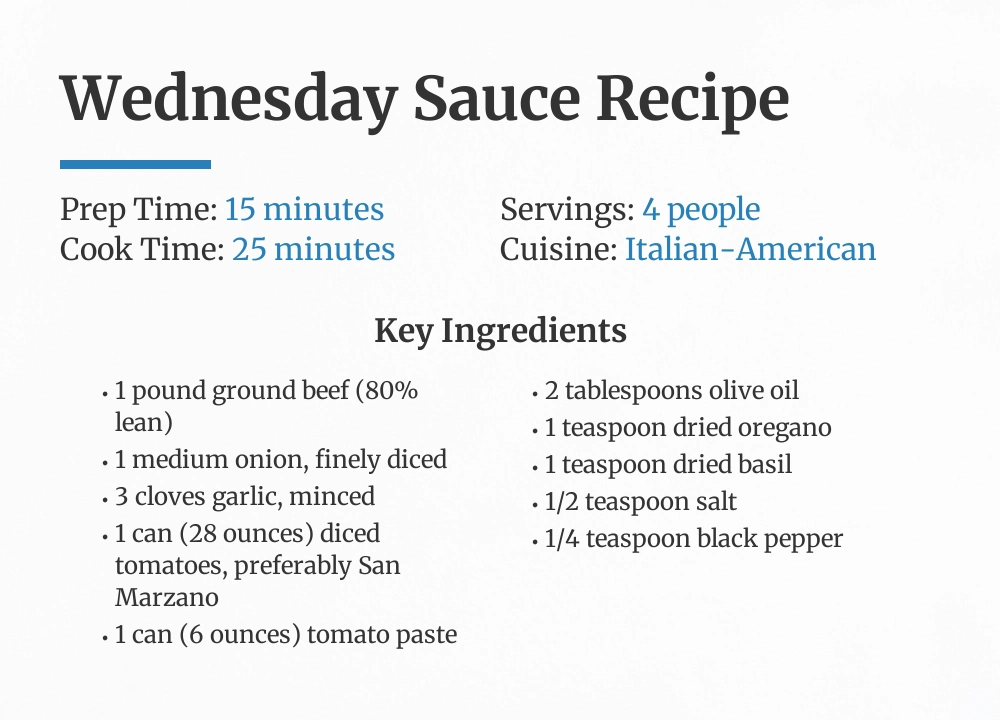
- Prep Time: 15 minutes
- Cook Time: 25 minutes
- Servings: 4 people
- Course: Main Course
- Cuisine: Italian-American
- Diet: Omnivore
Ingredients
- 1 pound ground beef (80% lean)
- 1 medium onion, finely diced
- 3 cloves garlic, minced
- 1 can (28 ounces) diced tomatoes, preferably San Marzano
- 1 can (6 ounces) tomato paste
- 2 tablespoons olive oil
- 1 teaspoon dried oregano
- 1 teaspoon dried basil
- 1/2 teaspoon salt
- 1/4 teaspoon black pepper
- 1/2 cup water or beef broth
- Optional: 1 teaspoon sugar to balance acidity
Instructions
- Heat the olive oil in a large skillet over medium heat. A wider cooking surface helps with even browning.
- Add the diced onion and cook for 3-4 minutes until translucent. Stir in the minced garlic and cook for another minute until fragrant.
- Increase the heat to medium-high and add the ground beef. Break it apart with a spoon and cook until browned, about 5-7 minutes. Drain any excess fat if desired.
- Reduce the heat to medium. Stir in the tomato paste and cook for 1-2 minutes to deepen its flavor.
- Add the diced tomatoes, dried oregano, dried basil, salt, and pepper. Pour in the water or broth to adjust consistency.
- Bring the mixture to a simmer, then lower the heat. Cover and let it cook for 15-20 minutes, stirring occasionally.
- If a smoother texture is preferred, use a blender or immersion blender to puree the sauce briefly. Serve immediately over cooked spaghetti.
Nutrition
- Calories: 280 kcal
- Protein: 18 g
- Fat: 15 g
- Carbohydrates: 12 g
- Sugar: 8 g
- Fiber: 3 g
- Sodium: 480 mg
- Cholesterol: 55 mg
Cooking Method
This sauce uses a stovetop simmering technique that develops flavors quickly. Browning the meat first creates a fond in the pan, which deglazes with tomatoes for a rich base. Simmering melds the ingredients without requiring all-day cooking.
Tools Needed
- Large skillet or saucepan
- Wooden spoon or spatula
- Measuring spoons and cups
- Blender or immersion blender for smoothing
- Colander for draining pasta
The Background of This Weeknight Sauce
This recipe draws from Italian-American traditions where families needed hearty meals on busy evenings. It is not a deep historical dish but a practical adaptation. In many households, Wednesday became a pivot point in the week, calling for something reliable and comforting.
My version was inspired by the Schill family spaghetti sauce, which emphasized simplicity and quality ingredients. Over time, I refined it to suit modern nutritional guidelines and time constraints. This approach ensures you get a dish that feels homemade without the lengthy preparation.
Understanding its roots helps appreciate why it works so well for dinners. It embodies the idea that good food does not have to be complicated.
Examining the Key Components
Each ingredient in this sauce plays a specific role in flavor and nutrition. Let us break them down to see why they are essential.
Tomatoes
Tomatoes form the foundation of the sauce. I recommend using canned diced tomatoes, such as San Marzano varieties, for their sweet, low-acid profile and consistent quality. They are harvested at peak ripeness and canned quickly, preserving nutrients like lycopene.
Fresh tomatoes can be used if they are in season, but they may require longer cooking to break down. The type of tomato affects the sauce’s texture and sweetness, so choose based on your preference for chunkiness or smoothness.
Ground Beef
Ground beef adds protein and richness to the sauce. An 80% lean blend provides enough fat for flavor without making the dish greasy. When you brown the beef, it develops Maillard reaction compounds that enhance umami notes.
For a leaner option, use ground turkey or chicken. The cooking process remains similar, but you might need a touch more oil to prevent sticking.
Aromatics and Herbs
Onions and garlic are sautéed to create a savory base. Onions contribute natural sugars that caramelize, while garlic adds pungent depth. Dried herbs like oregano and basil are used for convenience and stability.
Their essential oils infuse the sauce during simmering. If you have fresh herbs, add them at the end for a brighter flavor. This layering of aromatics is key to a well-rounded taste.
Nutritional Insights
From a dietary perspective, this sauce offers a balanced mix of macronutrients. The ground beef provides high-quality protein and iron, which are crucial for muscle maintenance and oxygen transport in the body.
Tomatoes are rich in vitamins C and K, as well as antioxidants like lycopene. Cooking tomatoes increases lycopene bioavailability, making it easier for your body to absorb. The fiber from vegetables supports digestive health.
Using minimal added sugars and controlling salt helps manage calorie intake and sodium levels. This makes the sauce suitable for those monitoring blood pressure or weight.
Adapting for Dietary Needs
Many families have diverse dietary requirements, so this recipe is highly adaptable. Here are some practical swaps to accommodate different needs.
Vegan and Vegetarian Options
Replace ground beef with lentils or crumbled tofu. Lentils provide a similar texture and are high in fiber and protein. Use vegetable broth instead of water to enhance flavor without animal products.
Ensure the tomato products are certified vegan, as some brands might include additives derived from animals. This version retains the heartiness while aligning with plant-based diets.
Gluten-Free and Low-Carb Variations
The sauce itself is naturally gluten-free. Serve it over gluten-free pasta or zucchini noodles for a complete meal. To reduce carbohydrates, increase the proportion of meat and tomatoes while skipping any added sugar.
For a thicker consistency without extra carbs, simmer longer to evaporate more liquid. These adjustments make it friendly for gluten sensitivities or low-carb eating plans.
Reducing Sodium and Fat
To lower sodium, use no-salt-added tomatoes and reduce or omit added salt. Herbs and spices can compensate for flavor. For less fat, choose leaner meat or drain excess fat after browning.
Olive oil can be used sparingly, or substituted with cooking spray. These changes help align the recipe with heart-healthy guidelines.
Avoiding Common Errors
Even simple recipes can have pitfalls. Here are mistakes I have seen and how to prevent them for perfect results every time.
Overcrowding the pan when browning meat leads to steaming instead of searing. Use a skillet large enough to spread the beef in a single layer. This ensures proper browning and flavor development.
Adding tomatoes too early can interrupt the Maillard reaction. Let the meat brown fully before incorporating other ingredients. Also, avoid boiling the sauce vigorously, as it can make tomatoes bitter.
Not tasting as you go is another oversight. Adjust seasoning gradually, especially salt and herbs, to match your preference. Remember, you can always add more but cannot take it out.
Serving and Preservation Tips
This sauce pairs wonderfully with al dente spaghetti, but it is versatile enough for other pasta shapes or as a base for casseroles. Serve it with a side salad and garlic bread for a complete dinner experience.
To store leftovers, let the sauce cool to room temperature before transferring to an airtight container. It keeps in the refrigerator for up to 4 days or in the freezer for 3 months.
Reheat gently on the stovetop, adding a splash of water if it thickens too much. Proper storage maintains flavor and food safety.
The Science Behind Flavor Development
Simmering the sauce allows for chemical reactions that enhance taste. The heat breaks down tomato cell walls, releasing pectin and creating a thicker consistency. Maillard reactions from browning meat produce complex flavor compounds.
Acids in tomatoes mellow over time, reducing sharpness. Understanding these processes helps you control the outcome, whether you prefer a bright, fresh sauce or a deeper, cooked-down version.
Frequently Asked Questions
What is the origin of the name “Wednesday sauce”?
It refers to a tradition of preparing a quick, reliable sauce for midweek dinners when time is limited. The name emphasizes its role in easing the burden of busy nights.
Can I make this sauce without a blender?
Yes, the sauce can be left chunky or mashed with a spoon for a smoother texture. A blender is optional and mainly for those who prefer a uniform consistency.
How can I increase the protein content?
Add more ground beef or incorporate beans like cannellini. These additions boost protein without significantly altering the cooking process.
Is it possible to use fresh tomatoes instead of canned?
Yes, but blanch and peel fresh tomatoes first to remove skins. They may require longer cooking to achieve a similar texture and concentration of flavor.
What are the best pasta types to serve with this sauce?
Spaghetti is classic, but penne or fusilli work well as they hold the sauce effectively. Choose based on your texture preference and what you have available.
How do I prevent the sauce from becoming too acidic?
Adding a small amount of sugar or grated carrot can balance acidity. Using San Marzano tomatoes, which are naturally less acidic, also helps.
Can I prepare this sauce in advance?
Absolutely, it often tastes better the next day as flavors meld. Store it properly and reheat before serving for an effortless meal.
What are some common substitutions for ground beef?
Ground turkey, chicken, pork, or plant-based crumbles are excellent alternatives. Adjust cooking times slightly based on the meat’s fat content and texture.
How can I make the sauce thicker?
Simmer uncovered to reduce liquid, or add a tablespoon of tomato paste. Avoid using flour if you prefer a gluten-free option.
Is this sauce suitable for children?
Yes, its mild flavor and smooth texture are generally kid-friendly. You can reduce spices or hide vegetables by blending them into the sauce.