
The first time I had a vodka press was at a quiet bar in Chicago. The summer heat was oppressive, and the usual heavy drinks felt unappealing. The bartender suggested something light and effervescent, describing it as a spritzer with a better personality. After one sip, I understood its quiet appeal.
A vodka press combines vodka, lemon-lime soda, and club soda over ice. It is a highball drink known for its crisp, clean finish and low sugar content. This guide provides the complete method for making it, along with a deep analysis of its components and variations.
You will learn not just the steps, but the science and history behind this refreshing beverage. We will cover everything from selecting your spirits to tailoring the drink to specific dietary needs.
What is a Vodka Press?
The name “press” in bartending terminology refers to a drink that is lengthened or diluted with a non-alcoholic mixer, often a combination of a sweet and a neutral bubbly component. In this case, the press is the mix of lemon-lime soda and club soda.
This combination is crucial. The lemon-lime soda provides a subtle sweetness and citrus flavor, while the club soda adds volume and crispness without any sweetness. The result is a beverage that is far less cloying than a drink made with only soda pop.
It sits in the family of highball cocktails, which are simple mixed drinks built right in the glass. Its simplicity is its greatest strength, making it an excellent choice for home bartenders.
You can think of it as a more sophisticated cousin to a vodka soda, with just a hint of citrus brightness to lift the entire experience.
The History of the Highball and the Press
To understand the vodka press, we must look at the highball cocktail. The term “highball” originally referred to a tall glass and the drinks served within it, typically a spirit mixed with a larger proportion of a non-alcoholic carbonated beverage.
These drinks became immensely popular during the mid-20th century for their ease of preparation and refreshing qualities. The vodka press is a modern evolution within this category.
It borrows the template of classic drinks like the Gin Rickey, which uses gin, lime juice, and carbonated water. The press simplifies the citrus element by using a pre-made lemon-lime soda, making it even more accessible.
Its rise in popularity aligns with a growing preference for lighter, less sweet cocktails. It is a drink that respects the base spirit while making it highly sessionable.
How to Make a Vodka Press Cocktail
This section provides the complete, actionable recipe. Follow these steps for a perfectly balanced drink every time.
Recipe Details
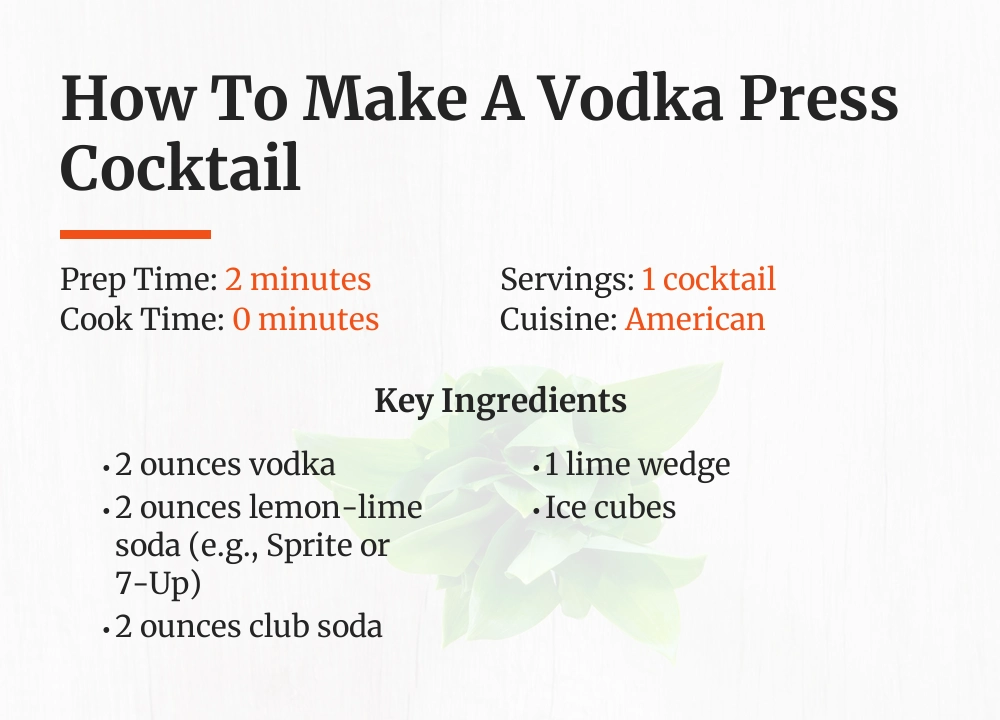
- Prep Time: 2 minutes
- Cook Time: 0 minutes
- Servings: 1 cocktail
- Course: Beverage
- Cuisine: American
- Diet: Gluten-Free, Vegetarian
Ingredients
- 2 ounces vodka
- 2 ounces lemon-lime soda (e.g., Sprite or 7-Up)
- 2 ounces club soda
- 1 lime wedge
- Ice cubes
Instructions
- Fill a highball or rocks glass to the top with fresh ice cubes.
- Pour the 2 ounces of vodka directly over the ice.
- Add the 2 ounces of lemon-lime soda next.
- Top the glass with the 2 ounces of club soda.
- Take a fresh lime wedge, give it a slight squeeze over the drink to express the oils, and then drop it into the glass as a garnish.
- Use a long spoon or cocktail stirrer to gently lift the ingredients from the bottom once or twice. Avoid vigorous stirring, which will flatten the carbonation too quickly.
Nutrition
- Calories: 140 kcal
- Protein: 0 g
- Fat: 0 g
- Carbohydrates: 5 g
- Sugar: 5 g
- Fiber: 0 g
- Sodium: 25 mg
- Cholesterol: 0 mg
Cooking Method
This drink uses the “build” method. All ingredients are assembled directly in the serving glass. No shaking or complex techniques are required. The key is the order of addition to preserve carbonation and ensure proper mixing.
Tools Needed
- Jigger or small measuring cup
- Highball glass or rocks glass
- Long bar spoon or stirring stick
Ingredient Analysis and Selection
The quality of a simple drink hinges entirely on the quality of its components. Here is a detailed breakdown of each ingredient and how your choices impact the final result.
Vodka
Vodka is a neutral spirit, but not all vodkas are created equal. The base ingredient—whether wheat, potato, or corn—imparts subtle textural and flavor notes.
Wheat-based vodkas often have a soft, creamy mouthfeel. Potato vodkas can be earthier and more substantial on the palate. Corn-based versions might offer a touch of sweetness.
For a vodka press, a clean, mid-range wheat or rye vodka is an excellent choice. Since the mixers are light, a harsh or poorly distilled spirit will be noticeable. You do not need an ultra-premium bottle, but avoid the very bottom shelf.
Brands like Tito’s Handmade Vodka or Absolut provide a reliable, smooth base that integrates well without dominating the other elements.
Lemon-Lime Soda
This ingredient provides the drink’s primary sweetness and citrus flavor. The choice here significantly affects the sugar content and overall taste profile.
Standard options like Sprite or 7-Up use high-fructose corn syrup and natural flavors. They offer a consistent, familiar citrus taste.
For a cleaner flavor, seek out brands that use cane sugar. Alternatively, using a diet or zero-sugar lemon-lime soda will drastically reduce the carbohydrate and calorie count.
The key attribute to consider is sweetness level. Taste your soda on its own. If it is very sweet, you may want to adjust the ratio, using slightly more club soda to balance it.
Club Soda
Club soda is carbonated water with added minerals, such as sodium bicarbonate and potassium sulfate. These minerals give it a slightly salty or “sharp” taste that enhances the perception of freshness.
Its role is to dilute the strength of the alcohol and the sweetness of the lemon-lime soda, creating a harmonious and drinkable beverage. The carbonation contributes to the light, effervescent mouthfeel.
Always use fresh, chilled club soda. A flat or stale bottle will result in a lifeless drink. The bubbles are a non-negotiable component of the experience.
Lime Wedge
The lime wedge is more than a decoration. It is a functional garnish. When you express the oils from the peel over the drink, you release aromatic compounds called terpenes.
These oils carry the bright, floral essence of the lime without the sharp acidity of the juice. This aroma is the first thing you smell when you bring the glass to your lips, enhancing the flavor perception.
Using a fresh, room-temperature lime is best for expressing oils. A cold, hard lime from the refrigerator will yield less aromatic oil.
Nutritional Science of a Lighter Cocktail
From a dietary perspective, the vodka press stands out as a sensible choice among mixed drinks. Its nutritional profile is relatively straightforward and can be easily modified.
The primary source of calories is the alcohol and the sugar in the lemon-lime soda. Vodka contains about 70 calories per ounce, derived entirely from the ethanol itself.
The club soda contributes no calories, and the lime wedge adds a negligible amount. This makes the drink inherently low in carbohydrates and fat, provided you are mindful of the sweetened component.
By switching to a diet lemon-lime soda, you can reduce the total calories to approximately 100 calories per drink, all from the vodka. This makes it comparable to a straight vodka soda in terms of caloric impact.
The drink’s high water content from the sodas also helps with hydration, partially offsetting the diuretic effect of the alcohol.
Variations on the Classic Recipe
The basic structure of the vodka press is a perfect canvas for experimentation. Here are several popular and delicious twists on the original.
Grapefruit Vodka Press
This is a highly popular variation. Replace half or all of the lemon-lime soda with fresh grapefruit juice. The result is a tangy, slightly bitter, and incredibly refreshing drink.
Use real, freshly squeezed grapefruit juice for the best flavor, though a high-quality bottled pure juice will work. The pink hue of the drink is also visually appealing.
The nutritional profile changes, as grapefruit juice contains natural sugars and vitamins. It adds about 10-15 more calories per ounce compared to lemon-lime soda but provides vitamin C.
Cranberry Splash Press
For a touch of tartness and a beautiful red color, add a splash of cranberry juice cocktail. Add one ounce of cranberry juice after the vodka, then proceed with the lemon-lime and club sodas.
This version introduces more fruit flavor and a different kind of sweetness. Using a 100% juice cranberry blend will yield a less sweet, more tart result than a standard cranberry cocktail.
Herbal and Botanical Twists
Infuse your vodka press with herbal notes. Before building the drink, gently muddle a few fresh basil or mint leaves in the bottom of the glass.
Add a thin slice of cucumber to the ice for a spa-like freshness. A small piece of fresh ginger muddled with the lime can add a spicy, warming kick that contrasts with the cool soda.
These additions contribute minimal calories but significantly expand the aromatic and flavor complexity of the drink.
Common Mistakes and Expert Tips
Avoiding a few simple errors will elevate your vodka press from good to exceptional.
Using Stale or Warm Ingredients
Carbonation is the soul of this drink. Always ensure your club soda and lemon-lime soda are freshly opened and well-chilled. Store them in the refrigerator, not in a pantry.
Warm soda will melt the ice quickly and go flat almost instantly, resulting in a watery, unsatisfying beverage.
Incorrect Build Order
The order of operations matters. Adding the spirits first allows them to integrate with the ice and begin chilling and diluting slightly.
Pouring the club soda last helps to mix the ingredients gently with its effervescence, minimizing the need for stirring, which degrades carbonation.
Over-stirring the Drink
Stirring a carbonated drink aggressively is a common error. You only need one or two gentle lifts with a bar spoon to combine the layers.
The goal is integration, not homogenization. You want to preserve as many tiny bubbles as possible for that crisp, refreshing mouthfeel.
Skipping the Garnish
Do not omit the lime wedge. The expressed oils make a measurable difference in the aroma and taste. It is a functional step, not just for appearance.
Serving, Pairing, and Storage
Understanding how to serve and what to serve with your cocktail completes the experience.
Glassware and Presentation
A highball glass is the traditional vessel, as its tall shape showcases the bubbles and allows for plenty of ice. A sturdy rocks glass is a perfectly acceptable alternative for a shorter drink.
Always use a fresh, clean glass. If you want to get technical, you can even chill the glass in the freezer for 10-15 minutes before building the drink.
Food Pairings
The clean, crisp nature of a vodka press makes it a versatile partner for food. It cuts through richness and cleanses the palate effectively.
It pairs wonderfully with light appetizers like shrimp cocktail, bruschetta, or a fresh garden salad. For a main course, it complements grilled chicken or fish with lemon and herbs.
Spicy foods, such as Thai or Mexican cuisine, are also excellent matches, as the effervescence and citrus help cool the palate.
Storage and Make-Ahead
Cocktails of this nature are not suitable for storage or making ahead. They are designed to be consumed immediately after preparation.
The carbonation will be lost if left to sit, and the ice will dilute the drink. Always prepare a vodka press just before serving.
Similar Cocktails to Explore
If you enjoy the vodka press, you will likely appreciate these other drinks from the same family.
Vodka Soda
The simplest relative. It is just vodka and club soda over ice, often with a lime wedge. It is the ultimate low-calorie, no-sugar option.
Gin Rickey
A classic highball that uses gin, fresh lime juice, and club soda. It is less sweet and more botanical than a vodka press, highlighting the character of the gin.
Tequila and Soda
Substitute vodka with blanco tequila. The agave notes of the tequila work beautifully with the citrus and bubbles, creating a drink with a different complexity.
Frequently Asked Questions
What is the difference between a vodka press and a vodka soda?
A vodka soda contains only vodka and club soda. A vodka press includes an additional component of lemon-lime soda, which provides a subtle sweetness and citrus flavor that a plain vodka soda lacks.
Can I make a vodka press without lemon-lime soda?
Yes, though it becomes a different drink. You can mimic the effect by using club soda with a squeeze of fresh lemon and lime juice and a small amount of simple syrup for sweetness. This allows you to control the sugar level precisely.
Is a vodka press a strong drink?
It is not considered a particularly strong cocktail. With two ounces of vodka diluted by four ounces of soda and ice, it has a moderate alcohol content. It is often described as a “sessionable” drink, meaning you can enjoy more than one without the alcohol becoming overwhelming.
What is the best vodka for a vodka press?
A smooth, mid-priced vodka is ideal. You do not need a top-shelf spirit, as the mixers are light. Look for a brand known for its clean, neutral profile, such as Tito’s, Absolut, or Ketel One.
Can I use flavored vodka in a press?
Absolutely. Citrus-flavored vodkas, like citron or lemon, enhance the existing notes. Grapefruit vodka is perfect for a grapefruit press variation. Even berry or cucumber-flavored vodkas can create interesting and delicious new versions of the drink.
How many calories are in a typical vodka press?
A standard vodka press made with regular lemon-lime soda contains approximately 140-160 calories. Using a diet lemon-lime soda reduces the calorie count to about 100 calories, as the only caloric ingredient is the vodka itself.
Why is my vodka press flat?
Flat drinks are usually caused by using soda that is not fresh or over-stirring the cocktail after it is built. Always use a newly opened, chilled bottle of soda and stir minimally to preserve carbonation.