
The rain tapped a steady rhythm against the windowpane, a sound that always takes me back to my grandmother’s kitchen. She had a remedy for every gray day, a specific brew for every season. This particular recipe was her autumn standard, a drink that filled the entire house with its scent.
Vanilla cinnamon milk tea is a simple combination of black tea, warm spices, and creamy milk. It is a beverage that offers both comfort and a gentle energy lift. My version builds upon that memory, refined through my work in nutrition and culinary history to create a balanced, deeply satisfying drink.
You will find the complete recipe below, designed for clarity and success. We will then explore every facet of this drink, from selecting your tea leaves to understanding its effects on your body.
How to Make Vanilla Cinnamon Milk Tea
This section provides the foundational recipe. Follow these steps for a consistently excellent result. The subsequent parts of this article will give you the knowledge to customize and master this beverage.
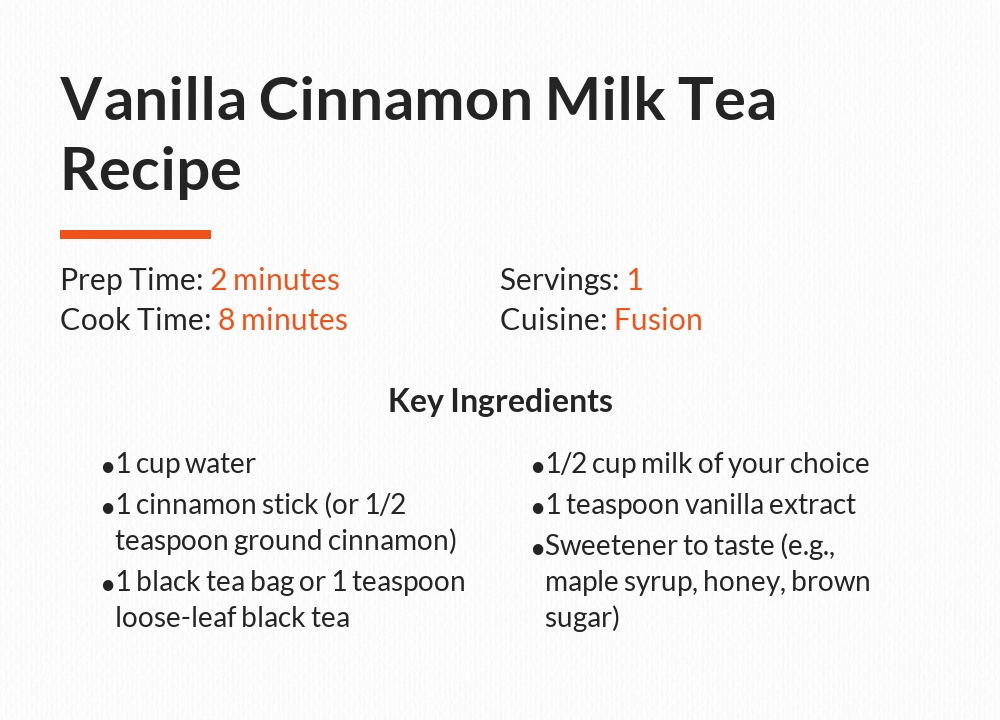
Recipe Details
- Prep Time: 2 minutes
- Cook Time: 8 minutes
- Servings: 1
- Course: Beverage
- Cuisine: Fusion
- Diet: Vegetarian
Ingredients
- 1 cup water
- 1 cinnamon stick (or 1/2 teaspoon ground cinnamon)
- 1 black tea bag or 1 teaspoon loose-leaf black tea
- 1/2 cup milk of your choice
- 1 teaspoon vanilla extract
- Sweetener to taste (e.g., maple syrup, honey, brown sugar)
Instructions
- Pour the water into a small saucepan and add the cinnamon stick.
- Place the saucepan over medium-high heat and bring the water to a boil.
- Once boiling, reduce the heat to low, cover, and let the cinnamon simmer for 5 minutes to infuse the water.
- Remove the saucepan from the heat. Add the black tea bag or loose-leaf tea.
- Cover and let the tea steep for 3-5 minutes, depending on how strong you prefer your tea.
- Remove the tea bag or strain out the loose leaves. Discard the cinnamon stick or leave it in for garnish.
- Return the infused tea to the saucepan over low heat. Stir in the milk and vanilla extract.
- Warm the mixture gently until it is hot but not boiling. Add your chosen sweetener and stir until dissolved.
- Pour into a warm mug and serve immediately.
Nutrition
- Calories: 80 kcal
- Protein: 4 g
- Fat: 2.5 g
- Carbohydrates: 10 g
- Sugar: 9 g
- Fiber: 0 g
- Sodium: 50 mg
- Cholesterol: 10 mg
Note: Nutritional values are approximate and can vary significantly based on the type of milk and sweetener used.
Cooking Method
The primary method used here is infusion. We gently heat the cinnamon in water to extract its oils and flavor compounds. Steeping the tea after removing from heat prevents bitterness from tannins over-extracting. Finally, we combine and gently reheat to integrate the milk without curdling it.
Tools Needed
- Small saucepan
- Measuring cups and spoons
- Strainer (if using loose-leaf tea)
- Mug
Selecting Your Core Ingredients
The quality and characteristics of your ingredients directly shape the final drink. Understanding your options allows for precise customization.
Choosing Your Tea Base
Black tea provides the structural foundation for this recipe. Its robust character stands up to the spices and milk without being overwhelmed. Not all black teas are the same.
A strong Assam tea from India will give you a malty, full-bodied base. Ceylon tea from Sri Lanka offers a brighter, more citrusy note. An English Breakfast blend is a reliable and accessible choice for its balanced profile.
For a decaffeinated version, seek out a decaf black tea brand that uses the Swiss Water Process. This method removes caffeine without chemical solvents, preserving the tea’s authentic flavor.
The Nature of Cinnamon
That warm, sweet, and slightly woody flavor comes from cinnamaldehyde, the primary compound in cinnamon bark. The two main types you will encounter are Ceylon and Cassia.
Ceylon cinnamon, often called “true cinnamon,” has a lighter, more complex flavor. Cassia cinnamon is more common and has a stronger, spicier kick. For this recipe, either works, but Cassia is more traditional for its potent warmth.
Using a whole cinnamon stick for infusion provides a subtler, more nuanced flavor than ground cinnamon. Ground cinnamon can make the drink slightly gritty if not strained thoroughly.
Milk and Creamer Options
The milk you choose defines the texture and richness. Whole dairy milk creates a classic, creamy mouthfeel. For a lighter version, 2% or skim milk works well.
Plant-based milks have become excellent alternatives. Oat milk is famous for its natural sweetness and creamy consistency that mimics dairy. Almond milk offers a light, nutty background.
Coconut milk, particularly the canned, full-fat version, can make an extra creamy drink with a distinct tropical note. Cashew milk is another rich, neutral-flavored option. Each alternative will slightly alter the final flavor profile.
Understanding Vanilla
Vanilla extract is convenient and effective, but its quality varies immensely. Look for pure vanilla extract rather than artificial imitation vanilla for a superior, nuanced aroma.
For a truly exceptional experience, use a real vanilla bean. Split a 1-inch piece of a vanilla bean pod lengthwise and scrape the seeds into the milk as it warms. The tiny black specks are a sign of quality and provide an intense, aromatic delight.
The Nutritional Perspective
As a dietician, I look beyond the flavor to the functional components of this beverage. When prepared mindfully, it can be part of a healthy pattern of eating.
Breaking Down the Components
Black tea is a rich source of polyphenols, a category of antioxidants. These compounds help combat oxidative stress in the body. The addition of cinnamon contributes its own set of antioxidants and has been studied for its potential role in supporting healthy blood sugar levels.
The milk, whether dairy or plant-based, provides protein and fat. This macronutrient combination can promote a feeling of fullness and may help slow the absorption of the tea’s natural caffeine, preventing a sharp energy spike and subsequent crash.
Managing Sweetness
The sugar content is the most variable and impactful element from a health standpoint. Refined white sugar adds empty calories. Consider more nuanced sweeteners like a drizzle of raw honey, which contains trace enzymes and compounds.
Pure maple syrup offers minerals like manganese and zinc. For a zero-calorie option, stevia or monk fruit extract can be used. The goal is to use just enough sweetener to balance the tannins in the tea and the spice of the cinnamon, not to make a syrupy drink.
Adapting for Dietary Needs
This recipe is incredibly flexible. With a few simple swaps, you can accommodate almost any dietary preference or restriction without sacrificing flavor.
Creating a Vegan Version
Transforming this into a plant-based drink is straightforward. Simply choose your favorite vegan milk. Oat, almond, and coconut milk are all excellent. Ensure your sweetener is plant-based; maple syrup and agave nectar are perfect choices.
Low-Sugar and Diabetic-Friendly Adjustments
You can significantly reduce or eliminate added sweeteners. Rely on the natural sweetness of a creamy oat milk or a splash of vanilla extract. Cinnamon itself has a perceived sweetness that can help satisfy sugar cravings. A tiny pinch of salt can also enhance the overall sweetness perception.
Managing Caffeine Intake
If you are sensitive to caffeine or want to enjoy this drink in the evening, you have options. Use a decaffeinated black tea. Alternatively, you can use an herbal rooibos tea as the base.
Rooibos is naturally caffeine-free and has a slightly sweet, earthy flavor that pairs beautifully with vanilla and cinnamon, creating a cinnamon rooibos latte perfect for bedtime.
Cultural Roots and Global Variations
While this specific recipe is a modern fusion, its components have deep historical roots across various cultures. The practice of combining tea, spices, and milk is ancient.
In India, Masala Chai is a centuries-old tradition, though it typically uses a more complex blend of spices like cardamom, clove, and ginger alongside cinnamon. Our recipe simplifies this to highlight the vanilla-cinnamon partnership.
In the American South, sweet tea is a cultural staple, demonstrating another way sugar and tea combine. This vanilla cinnamon milk tea sits at a delicious intersection, borrowing the spice from one tradition and the creamy sweetness from another.
Common Mistakes and How to Avoid Them
After testing this recipe countless times, I have identified a few common pitfalls that can affect the final result.
Over-Steeping the Tea
Leaving the black tea in the hot water for too long is the primary cause of bitterness. Tannins over-extract, creating an astringent, unpleasant flavor. Follow the steeping time guideline of 3-5 minutes and remove the tea promptly.
Boiling the Milk
Heating the milk too aggressively or allowing it to boil can cause it to scald or curdle, giving it an off-flavor and a grainy texture. Always warm the milk gently over low heat, just until steam begins to rise.
Using Stale Spices
Cinnamon sticks and vanilla extract lose their potency over time. If your spices don’t release a strong aroma when you open the container, their flavor will be weak in the drink. Purchase small quantities and store them in an airtight container in a cool, dark place.
Preparation and Storage Guidance
This drink is best enjoyed fresh, but with a little planning, you can streamline your morning routine or prepare for guests.
Making a Larger Batch
You can multiply this recipe to make a larger quantity. Prepare the cinnamon-infused tea base and let it cool completely. Store the base in an airtight container or a pitcher in the refrigerator for up to 3 days.
When ready to serve, gently reheat the desired amount with the milk and vanilla. This method prevents the tea from steeping indefinitely and becoming bitter.
Serving Suggestions and Pairings
This tea is a versatile companion throughout the day. It makes a wonderful breakfast drink, offering a more gentle lift than coffee. In the afternoon, it serves as a perfect pick-me-up.
Pair it with a simple butter croissant, a bowl of oatmeal, or a slice of banana bread. The flavors complement baked goods without overwhelming them. For a savory pairing, try it with a sharp cheddar cheese on crackers.
Creating an Iced Version
This recipe adapts beautifully to a cold format. Prepare the recipe through step 6, making the cinnamon-tea base. Let it cool to room temperature, then refrigerate until cold.
Combine the cold tea base with cold milk and vanilla extract in a glass filled with ice. Sweeten to taste. For a frothy iced tea, you can combine the ingredients in a blender for a few seconds instead of stirring.
Exploring Flavor Variations
Once you have mastered the classic version, consider these variations to keep your tea routine interesting.
Spiced Maple Milk Tea
For a deeper, autumnal flavor, swap the vanilla extract for 1/2 teaspoon of maple extract. Use maple syrup as your sweetener and add a tiny pinch of ground cardamom with the cinnamon.
Chai-Inspired Fusion
Add a small slice of fresh ginger, one green cardamom pod (lightly crushed), and a single clove to the water along with the cinnamon stick. Strain them out with the tea leaves for a more complex, spiced beverage reminiscent of a dirty chai latte.
Cinnamon Bubble Tea
To create a delicious sweet cinnamon bubble tea, prepare a strong batch of the cinnamon-tea base. Cook tapioca pearls (boba) according to package directions and sweeten them with brown sugar.
Add the pearls to a tall glass, pour in the sweetened, chilled vanilla cinnamon milk tea, and add ice. Serve with a large bubble tea straw.
Frequently Asked Questions
What is the best type of black tea to use?
A strong, malty Assam or a robust Ceylon blend works best. Their bold flavors can support the cinnamon and vanilla without being masked. English Breakfast is also a reliable and widely available choice.
Can I make this tea without a saucepan?
Yes, you can use a microwave-safe jar or mug. Combine water and cinnamon stick and heat until very hot. Let it sit for 5 minutes to infuse, then add the tea bag to steep. Finally, stir in milk and vanilla and reheat if necessary.
How can I make my milk tea frothy?
For hot tea, use a handheld milk frother after combining all the ingredients. For iced tea, you can add all components to a cocktail shaker with ice and shake vigorously, or blend for a few seconds to create a light cold foam.
Is this recipe suitable for people with diabetes?
It can be, with modifications. Use unsweetened almond or oat milk, omit added sweeteners, and rely on the natural sweetness of cinnamon and vanilla. Always consult with a healthcare provider for personalized advice.
What is the difference between this and a chai latte?
A traditional chai latte uses a blend of several spices like cardamom, ginger, cloves, and pepper. This vanilla cinnamon milk tea is a simpler, more focused drink that highlights the specific harmony between vanilla and cinnamon.
Can I use pre-ground cinnamon instead of a stick?
You can use 1/2 teaspoon of ground cinnamon. However, it will make the tea cloudy and may leave sediment. Steep the ground cinnamon in a large, empty tea bag or a fine mesh strainer for easier removal.
How long can I store leftover tea?
Store leftover brewed tea (without milk) in the refrigerator in an airtight container for up to 3 days. For the best quality, add the milk and vanilla fresh when you reheat each serving.