
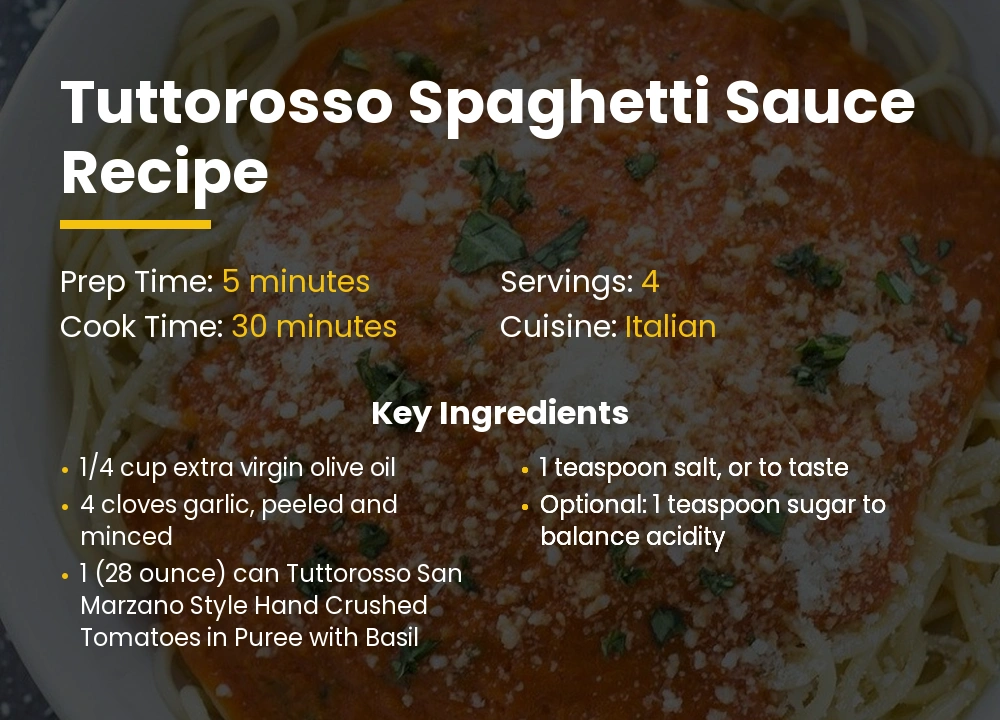
Many home cooks seek a reliable spaghetti sauce that balances flavor and simplicity. This Tuttorosso recipe delivers both with minimal effort.
I first made this sauce during a busy week when I needed a quick dinner solution. Its rich taste reminded me of sauces from my family’s kitchen.
You will appreciate how few ingredients create such a deep, satisfying tomato base. Let me guide you through each step to achieve perfect results.
How to Make Tuttorosso Spaghetti Sauce Recipe
This simple sauce comes together with just a few key ingredients and steps. Follow the detailed sections below for precise measurements and methods.
Recipe Details
- Prep Time: 5 minutes
- Cook Time: 30 minutes
- Servings: 4
- Course: Main Course
- Cuisine: Italian
- Diet: Vegetarian
Ingredients
- 1/4 cup extra virgin olive oil
- 4 cloves garlic, peeled and minced
- 1 (28 ounce) can Tuttorosso San Marzano Style Hand Crushed Tomatoes in Puree with Basil
- 1 teaspoon salt, or to taste
- Optional: 1 teaspoon sugar to balance acidity
Instructions
- Heat the olive oil in a large pot over medium heat.
- Add the minced garlic and cook for 5 minutes until golden brown and fragrant.
- Pour in the can of Tuttorosso tomatoes and stir to combine.
- Season with salt and add sugar if using, then simmer for 25 minutes.
- Stir occasionally until the sauce thickens to your desired consistency.
Nutrition
- Calories: 150 kcal
- Protein: 3 g
- Fat: 10 g
- Carbohydrates: 15 g
- Sugar: 10 g
- Fiber: 3 g
- Sodium: 400 mg
- Cholesterol: 0 mg
Cooking Method
This sauce uses a straightforward stovetop simmering method. First, you sauté garlic in oil to build a flavor base.
Then, tomatoes are added and cooked slowly to develop richness. Constant stirring is not required, but occasional checks prevent sticking.
Tools Needed
- Large pot or Dutch oven
- Wooden spoon or spatula
- Measuring cups and spoons
- Can opener
San Marzano Tomatoes Explained
San Marzano tomatoes grow in the volcanic soil of Campania, Italy. This environment gives them a distinctive sweet taste and low seed content.
Tuttorosso offers a San Marzano style product that is hand crushed for texture. Using these tomatoes ensures an authentic foundation for your sauce.
Hand crushing preserves some chunkiness, which adds body to the final dish. For a smoother sauce, you can blend it lightly with an immersion blender.
The can includes puree and basil, simplifying your ingredient list. This combination infuses the sauce with herbal notes from the start.
Garlic and Olive Oil Techniques
Extra virgin olive oil should be heated on medium to preserve its flavor. High heat can break down the oil and create bitter compounds.
Garlic turns golden brown after about five minutes of sautéing. This process mellows its sharpness and introduces a nutty aroma.
These two ingredients form the flavor base of many Italian sauces. Their careful preparation is crucial for a balanced and deep taste.
Quality olive oil adds fruity notes and healthy fats to the dish. Always choose a cold-pressed version for the best nutritional benefits.
Nutritional Benefits of Homemade Sauce
Tomatoes are rich in lycopene, which may reduce the risk of certain diseases. Cooking tomatoes increases the absorption of this antioxidant.
Olive oil provides heart-healthy monounsaturated fats and vitamin E. This combination makes the sauce both nutritious and satisfying.
This recipe is naturally low in cholesterol and can be part of a balanced diet. You control the sodium and sugar levels, unlike many store-bought versions.
Garlic contains allicin, a compound with potential anti-inflammatory properties. Incorporating it into meals supports overall wellness and flavor.
Simple Italian Tomato Sauce Variations
Add red pepper flakes during the garlic step for a spicy variation. Fresh basil stirred in at the end brightens the sauce with herbal notes.
For a meaty version, brown ground beef or Italian sausage before adding tomatoes. Vegetarians can include sautéed mushrooms, onions, or bell peppers.
This sauce also works as a base for pizzas or casseroles. Its versatility makes it a staple in many kitchens for various meals.
Pomodoro Versus Marinara
Pomodoro sauce is a quick-cooked tomato sauce with minimal ingredients. It often features just tomatoes, garlic, olive oil, and basil.
Marinara sauce typically includes onions and herbs like oregano and thyme. It simmers slightly longer to develop a more complex flavor profile.
This Tuttorosso recipe aligns with the Pomodoro style due to its simplicity. Knowing these styles helps you adapt the sauce to different pasta dishes.
Avoiding Common Sauce Mistakes
Cooking garlic on high heat causes it to burn and taste bitter. Always use medium heat for a gradual and even cooking process.
Not simmering the sauce enough can result in a watery texture. Allow it to cook for about 30 minutes to thicken properly.
Over-salting early in the process can concentrate as the sauce reduces. Season lightly at first and adjust at the end of cooking.
Using a pot that is too small may lead to splattering and uneven cooking. A large pot gives ingredients room to meld without overflow.
Serving and Storage Tips
Serve this sauce over al dente pasta like spaghetti or penne. Garnish with grated Parmesan cheese and fresh basil for added flavor.
Store leftover sauce in an airtight container in the refrigerator for up to five days. You can freeze it in portions for convenient future meals.
Reheat the sauce gently on the stovetop, adding a splash of water if needed. This restores its consistency and makes it ready for use.
Pair it with a side salad or garlic bread for a complete dinner. This sauce complements both weeknight meals and special occasions.
Frequently Asked Questions
What is the difference between Pomodoro and marinara sauce?
Pomodoro sauce is a basic Italian tomato sauce cooked quickly with few ingredients. Marinara sauce includes onions and herbs and has a slightly longer cook time.
Can I use other brands of tomatoes for this recipe?
Yes, but San Marzano style tomatoes offer a unique sweet and low-acid profile. Other plum tomatoes can substitute, but you may need to adjust seasoning.
How can I make this sauce vegan?
This recipe is vegan if you omit sugar or use a plant-based alternative. Check the canned tomatoes to ensure no animal products are added.
Why does my sauce taste acidic?
Tomatoes naturally contain acidity, which can be balanced with a pinch of sugar. Simmering the sauce for the full time also reduces acidic notes.
Can I double this recipe for a crowd?
Yes, double all ingredients and use a larger pot to accommodate the volume. The cook time may extend by 5-10 minutes for proper thickening.
What pasta pairs best with this sauce?
Spaghetti is traditional, but any pasta shape that holds sauce well works. Consider penne, rigatoni, or fettuccine based on your preference.
How do I store leftover sauce?
Cool the sauce completely and store it in a sealed container in the fridge. It will keep for up to five days or can be frozen for months.
Is this sauce suitable for canning?
No, this recipe is not safe for canning due to its low acidity and oil content. Use tested canning recipes for preserved tomato sauces.