
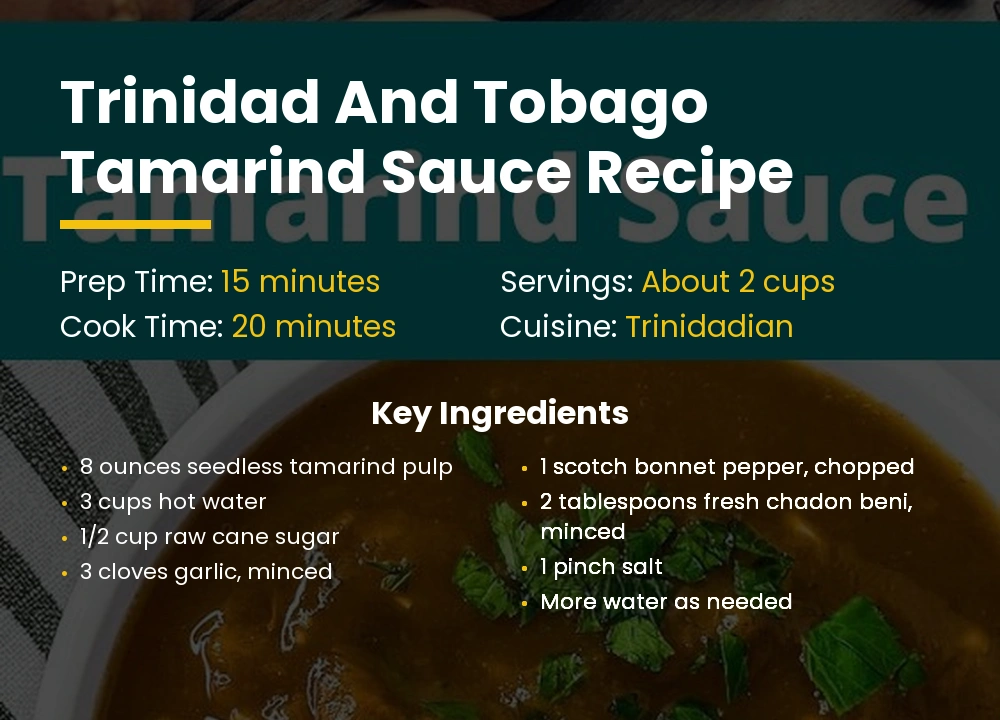
The first time I made this sauce, my kitchen filled with a tangy, sweet scent. It reminded me of street vendors in Trinidad serving hot pholourie.
You can recreate that authentic flavor with a few basic ingredients. This guide walks you through my tested method for perfect tamarind sauce.
Your homemade version will rival any found in Tobago. Let us start with the core recipe to get you cooking.
How to Make Trinidad and Tobago Tamarind Sauce
Recipe Details
- Prep Time: 15 minutes
- Cook Time: 20 minutes
- Servings: About 2 cups
- Course: Condiment
- Cuisine: Trinidadian
- Diet: Vegan
Ingredients
- 8 ounces seedless tamarind pulp
- 3 cups hot water
- 1/2 cup raw cane sugar
- 3 cloves garlic, minced
- 1 scotch bonnet pepper, chopped
- 2 tablespoons fresh chadon beni, minced
- 1 pinch salt
- More water as needed
Instructions
- Place the tamarind pulp in a medium pot. Pour the hot water over it and let soak for 10 minutes.
- Mash the softened tamarind with a potato masher. You will see the pulp separate from any fibers.
- Add the sugar, garlic, scotch bonnet, chadon beni, and salt. Stir everything together until combined.
- Bring the mixture to a boil over medium heat. Then reduce the heat to a gentle simmer.
- Let it cook for 15-20 minutes, stirring occasionally. The sauce should thicken to a syrupy consistency.
- If it gets too thick, add more water a tablespoon at a time. Remove from heat and cool before storing.
Nutrition
- Calories: 20 kcal
- Protein: 0.2 g
- Fat: 0 g
- Carbohydrates: 5 g
- Sugar: 4 g
- Fiber: 0.5 g
- Sodium: 10 mg
- Cholesterol: 0 mg
Cooking Method
This sauce uses a simple simmering technique. The slow heat blends the sour tamarind with sweet and spicy notes.
You must watch the pot to prevent sticking. Stirring ensures a smooth, even texture throughout.
Tools Needed
- Medium saucepan
- Slotted spoon or potato masher
- Measuring cups and spoons
- Knife and cutting board
- Clean glass jar with lid
Tamarind Options for Your Sauce
You can start with whole tamarind pods or prepared pulp. The pods have an outer shell and seeds you must remove.
Seedless tamarind pulp saves time and effort. I find it offers consistent results for this recipe.
Tamarind concentrate is a strong, paste-like alternative. Use it sparingly by diluting with water.
Fresh tamarind is less common but provides vibrant flavor. Look for plump pods with a sticky texture.
Selecting the Best Tamarind
Choose tamarind that is dark brown and slightly sticky. Avoid any with a dry or moldy appearance.
More mature ones have a deeper sour taste. Younger tamarind can be milder and sweeter.
Key Ingredients Explained
Chadon beni, also called culantro, has a strong herbal aroma. It is essential for authentic Trini flavor.
Scotch bonnet pepper brings the characteristic heat. Adjust the amount based on your spice tolerance.
Garlic adds a savory depth that balances the sweetness. Fresh cloves minced finely work best.
Raw cane sugar gives a rich molasses note. You can substitute brown sugar for a similar effect.
Flavor Balance in This Condiment
Its tangy and sour flavor comes from the tamarind fruit. Sugar mellows the sharpness into a pleasant taste.
The scotch bonnet provides a lingering spicy kick. Chadon beni contributes unique aromatic qualities.
You will notice how these elements merge during simmering. The result is a complex sauce that enhances many dishes.
Traditional Pairings and Uses
This sauce is a classic dip for pholourie and accra. These fried snacks are popular street foods in Trinidad.
It also accompanies doubles and aloo pie beautifully. Every bite gains a burst of sweet and sour spice.
Try it with grilled meats or roasted vegetables. Your pantry will find many uses for this versatile condiment.
Nutritional Insights from a Dietitian
Tamarind is a good source of fiber and vitamins. This sauce adds flavor without significant fat or cholesterol.
The sugar content means you should enjoy it in moderation. However, its intense taste means a little goes a long way.
You can adapt the recipe for lower sugar if needed. Use natural sweeteners like stevia for a different profile.
Storing Your Homemade Sauce
Cool the sauce completely before transferring to a jar. A clean dry spoon helps prevent contamination.
Keep it refrigerated for up to two weeks. The flavors often improve after a day or two.
You can also freeze it in small portions for longer storage. Thaw in the refrigerator before using again.
Common Variations to Try
Some cooks add ginger or onion for extra depth. These ingredients are sautéed before adding the tamarind.
A tamarind chutney might include dates or raisins. This creates a sweeter version for different pairings.
For a smoother sauce, strain it after cooking. This removes any remaining pulp fibers or seeds.
Troubleshooting Your Tamarind Sauce
If the sauce is too sour, add more sugar to taste. Simmer for a few more minutes to dissolve it fully.
Too thin a sauce means it needed longer cooking. Continue simmering until it reaches your desired thickness.
If it burns slightly, transfer to a new pot immediately. Stir frequently and lower the heat to prevent this.
Frequently Asked Questions
What is tamarind?
Tamarind is a tropical fruit with a sour, tangy pulp used in cooking. It comes from pods that grow on tamarind trees.
How do I select the best tamarind for this sauce?
Choose seedless tamarind pulp that is dark, sticky, and free from mold. This ensures a strong flavor and easy preparation.
What dishes pair well with Trinidad tamarind sauce?
This sauce pairs perfectly with pholourie, doubles, aloo pie, and fried accra. It also complements grilled meats and vegetables.
How should I store tamarind sauce?
Store cooled tamarind sauce in a sealed glass jar in the refrigerator. It will last for up to two weeks when kept cold.
Can I use tamarind concentrate instead of pulp?
Yes, use tamarind concentrate by mixing one part concentrate with three parts water. Adjust the quantity to match the recipe’s sourness.
How can I adjust the spice level in the sauce?
Control the heat by reducing or omitting the scotch bonnet pepper. You can also remove the seeds for a milder flavor.
Is this tamarind sauce vegan?
Yes, this recipe is vegan as it contains only plant-based ingredients. It uses no animal products or by-products.
How long does it take to make this sauce?
Making this sauce takes about 35 minutes total, including prep and cooking time. Most of that is hands-off simmering.
Can I make this sauce without sugar?
You can make it without sugar, but the sauce will be very sour. Consider using a sugar substitute or less tamarind for balance.