
Many years ago, during a family trip to Trinidad, the tangy bite of homemade tamarind sauce on my plate changed how I saw simple flavors. I remember mixing it with doubles from a street vendor, and that taste stuck with me. Now, I share this recipe so you can make it in your kitchen and feel that same joy.
This sauce brings sour notes from tamarind with a touch of sweet and spice. Follow my steps, and you’ll have a versatile condiment ready for meats or snacks. Let’s get into the details.
How to Make Trini Tamarind Sauce Recipe
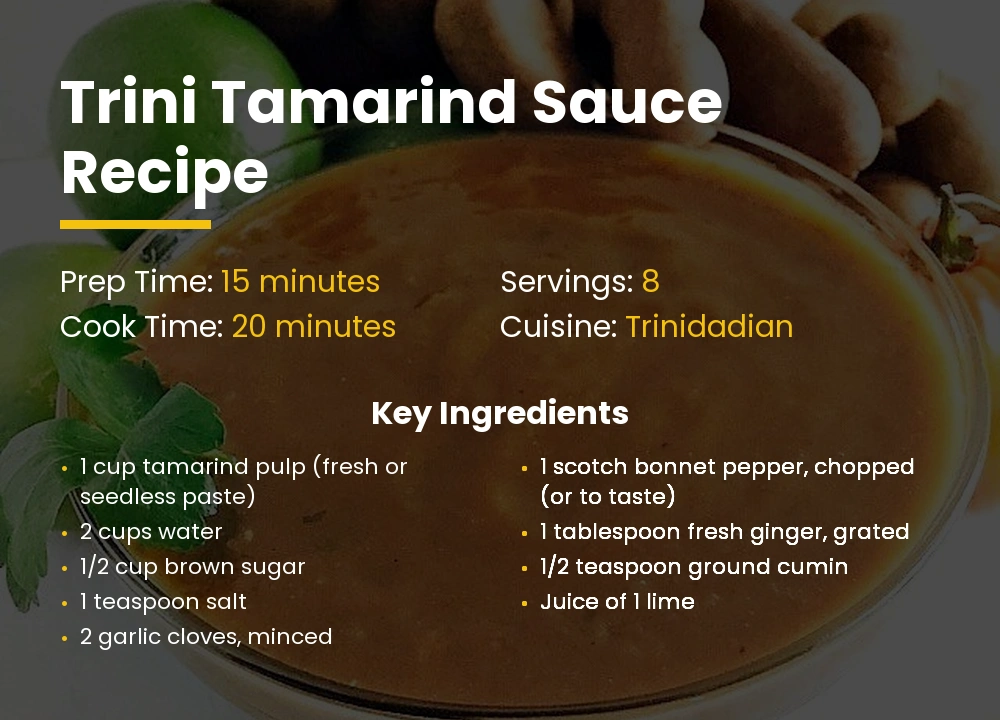
Recipe Details
- Prep Time: 15 minutes
- Cook Time: 20 minutes
- Servings: 8
- Course: Condiment
- Cuisine: Trinidadian
- Diet: Vegan
Ingredients
- 1 cup tamarind pulp (fresh or seedless paste)
- 2 cups water
- 1/2 cup brown sugar
- 1 teaspoon salt
- 2 garlic cloves, minced
- 1 scotch bonnet pepper, chopped (or to taste)
- 1 tablespoon fresh ginger, grated
- 1/2 teaspoon ground cumin
- Juice of 1 lime
Instructions
- Soak the tamarind pulp in warm water for 10 minutes until it softens. Use your hands to break it apart and squeeze out the juice. Strain the liquid through a fine sieve to remove seeds and fibers; you should get about 1.5 cups of thick juice.
- In a medium pot, combine the tamarind juice, brown sugar, salt, minced garlic, chopped scotch bonnet, grated ginger, and ground cumin. Bring the mixture to a gentle boil over medium heat, stirring often. You’ll smell the spicy ginger and garlic as it heats up.
- Lower the heat and let it simmer for 15 minutes. The sauce will thicken and turn a deep reddish-brown; stir now and then to prevent sticking. Watch for bubbles that pop softly, showing it’s reducing nicely.
- Remove from heat and stir in the lime juice. Taste and adjust spice or sweetness if needed. Let it cool; the texture should be smooth and syrupy, coating the back of a spoon.
- Pour into a clean jar and store in the fridge. It will keep for up to two weeks, with flavors growing stronger over time.
Nutrition
- Calories: 60 kcal
- Protein: 0.5 g
- Fat: 0.2 g
- Carbohydrates: 15 g
- Sugar: 12 g
- Fiber: 1 g
- Sodium: 300 mg
- Cholesterol: 0 mg
Cooking Method
The method uses simmering to blend flavors without losing the fresh tang of tamarind. This gentle heat extracts the natural acids and lets spices infuse evenly. You end up with a balanced sauce that clings to food.
Tools Needed
You need a medium pot, wooden spoon for stirring, fine sieve for straining, and a glass jar for storage. A grater helps with ginger, and gloves protect your hands from the pepper. These basics make the process smooth.
Ingredients Breakdown
Tamarind pulp forms the base of this sauce with its sour taste from the fruit pods grown in tropical areas like Trinidad. It comes from the tamarind tree, where pods hold sticky brown flesh around seeds. When soaked, it releases a juice that gives the sauce its signature puckering flavor.
Brown sugar adds sweetness to counter the sourness, coming from cane with molasses for a caramel note. Scotch bonnet peppers bring heat from their capsaicin, native to the Caribbean and much spicier than jalapeños. Garlic and ginger provide earthy depth; garlic is pungent when raw but mellows in heat, while ginger offers a warm zing.
Lime juice brightens the mix at the end, its citric acid cutting through richness. Cumin adds a subtle smokiness, ground from seeds that toast lightly in the pot. Salt ties everything together, enhancing each taste without overpowering.
Each ingredient plays a role in balance—sour, sweet, spicy, and savory. I tested ratios in my kitchen to ensure the sauce works for mild or bold palates. You can swap fresh tamarind for paste if pods are hard to find.
Health Benefits
Tamarind contains antioxidants like polyphenols that fight inflammation in the body. It also has fiber that aids digestion and helps control blood sugar levels. In small amounts, this sauce can add flavor without many calories.
The vitamin C from lime boosts immune function and skin health. Ginger eases nausea and supports gut health with its compounds. Peppers provide capsaicin, which may speed up metabolism.
Overall, this condiment fits into a balanced diet, especially for those watching sodium. I recommend it for vegan meals or as a low-fat dip. Use it sparingly to enjoy benefits without excess sugar.
Serving Ideas
Brush this sauce on grilled chicken or fish for a tangy glaze that caramelizes over fire. It pairs well with roti or pholourie, soaking into fried dough with a spicy kick. Drizzle it over rice and peas for added zest.
Mix a spoonful into mayonnaise for a quick dip with veggies or chips. In Trinidad, we use it on bake and shark, where the sourness cuts through fried fish. You can thin it with water for a marinade.
For snacks, serve it with tamarind balls or channa, letting the flavors mingle. I like it on tofu for a plant-based twist. Experiment to find your favorite way.
Storage and Shelf Life
Store the sauce in an airtight jar in the fridge, where it lasts two weeks. The flavors deepen after a few days, making it taste even better. If it thickens, stir in a bit of water before use.
For longer storage, freeze portions in ice cube trays, then transfer to a bag. It keeps for three months frozen and thaws quickly. Always check for mold before eating.
Label jars with the date to track freshness. I keep mine on the door shelf for easy access. Proper storage keeps the tangy taste intact.
Troubleshooting Tips
If the sauce is too sour, add more brown sugar a tablespoon at a time while simmering. For too much heat, remove the pepper seeds before chopping or use less. Stir constantly if it sticks to the pot bottom.
When straining tamarind, press firmly to get all the juice but avoid forcing fibers through. If lumps form, blend the cooled sauce smooth. Taste midway through cooking to adjust salt.
Overcooking makes it bitter, so watch the timer. I learned this from a batch that boiled too long. These fixes help you get it right every time.
History of Trini Tamarind Sauce
Tamarind arrived in Trinidad with Indian indentured workers in the 1800s, who brought recipes from their homeland. It mixed with local Scotch bonnet peppers and African influences to create this sauce. Street food vendors refined it over generations for doubles and other snacks.
The fruit grows wild in the tropics, its pods harvested by hand. In Trinidad, it’s a staple at festivals and home kitchens. This blend shows the island’s diverse roots.
I first tried it at a market in Port of Spain, where the vendor shared family secrets. That experience inspired me to recreate it authentically. Understanding its past adds depth to every bite.
Variations
For a milder version, skip the scotch bonnet and use bell peppers instead. Add mango chunks during simmering for a fruity twist that sweetens naturally. Make it thicker by cooking longer or thinner for a dipping sauce.
A green version uses fresh herbs like cilantro for brightness. For vegan diets, it’s already perfect, but honey can replace sugar if you prefer. Try infusing with star anise for an extra layer.
I experimented with pineapple juice to boost tropical notes. Each change keeps the core tangy spirit. Pick variations based on what you have on hand.
Pairing Suggestions
This sauce shines with grilled meats like pork or beef, where the tang tenderizes and flavors. It complements starchy sides such as yuca fries or plantains. Cheese platters get a spicy lift from a small bowl nearby.
In salads, whisk it into a dressing with oil for zest. Pair with coconut-based curries to balance richness. I serve it with jerk chicken for a Trini-Jamaican mashup.
Drinks like sorrel pair well, echoing the sour theme. Think about textures—crispy foods contrast the sauce’s smoothness. These combos make meals memorable.
Frequently Asked Questions
Can I use tamarind paste instead of fresh pulp?
Yes, use 1/2 cup of tamarind paste mixed with 1.5 cups water to replace the soaked pulp. This skips the straining step and gives a similar tangy base.
How spicy is this sauce?
The sauce has medium heat from one scotch bonnet, but adjust by removing seeds for mild or adding more for hot. It builds slowly on the tongue.
Is this sauce gluten-free?
Yes, all ingredients are naturally gluten-free, making it safe for those with sensitivities. Check labels on store-bought tamarind if needed.
Can I make this sauce sugar-free?
Replace brown sugar with a sugar substitute like stevia, using half the amount and tasting as you go. It keeps the tang without sweetness.
How do I know when the sauce is done cooking?
The sauce is ready when it thickens to coat a spoon and reduces by about one-third. It should simmer gently without boiling hard for 15 to 20 minutes.
Can I can this sauce for long-term storage?
Yes, follow safe canning methods with a water bath for 10 minutes to store at room temperature up to a year. Use sterilized jars and process properly.
What if my sauce is too thick?
Thin it by adding water or lime juice a tablespoon at a time while heating gently. Stir until it reaches your desired pouring consistency.