
Many people seek a way to enjoy café-style beverages without the high cost or artificial additives. I discovered that brewing Tazo Passion Tea at home not only saves money but also allows for complete control over ingredients and flavor. This approach lets you replicate popular drinks like the Starbucks Iced Passion Tea Lemonade with ease.
My first experience with this tea involved a family gathering where we needed a crowd-pleasing drink for a summer event. By using simple components, I created a version that was both delicious and adaptable to various dietary needs. In this article, I will guide you through detailed recipes, nutritional analysis, and practical tips to master these preparations.
You will learn how to make a base passion tea concentrate, combine it with lemonade, and customize it for different occasions. The core method involves steeping tea bags, mixing with sweeteners, and serving chilled. This foundation supports numerous variations, from copycat Starbucks creations to unique herbal blends.
How to Make Tazo Passion Tea Recipes
This section provides a step-by-step guide to preparing a classic Tazo Passion Tea Lemonade, similar to the Starbucks version. Follow these instructions for a consistent and flavorful result every time. The process focuses on brewing a strong tea base and balancing it with citrus elements.
Recipe Details
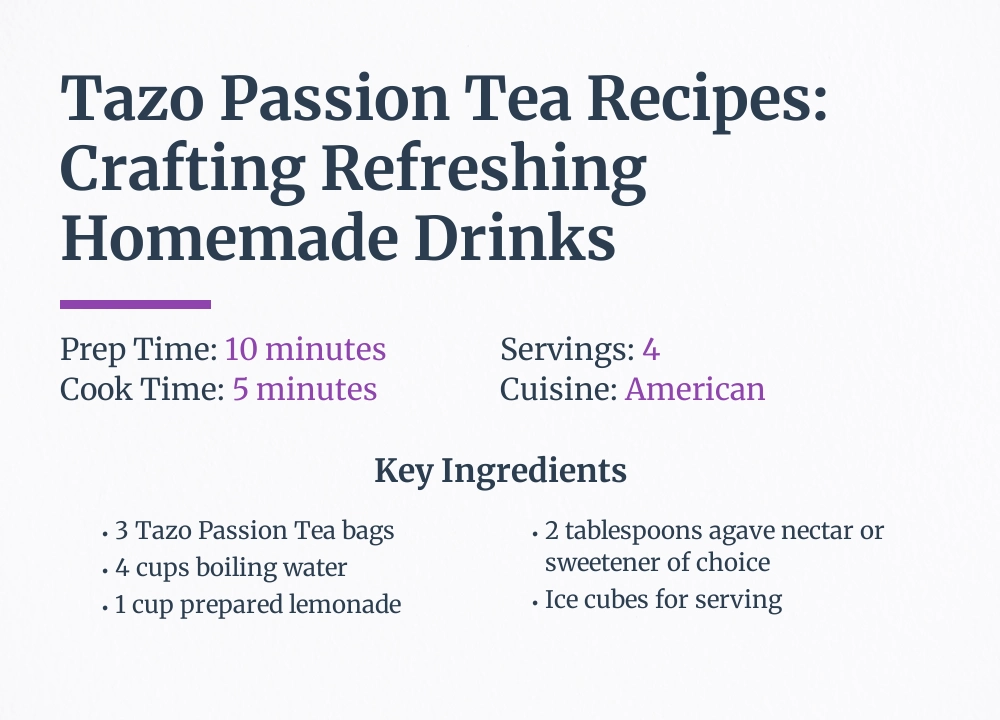
- Prep Time: 10 minutes
- Cook Time: 5 minutes
- Servings: 4
- Course: Beverage
- Cuisine: American
- Diet: Vegan
Ingredients
- 3 Tazo Passion Tea bags
- 4 cups boiling water
- 1 cup prepared lemonade
- 2 tablespoons agave nectar or sweetener of choice
- Ice cubes for serving
- Optional: lemon slices for garnish
Instructions
- Place the Tazo Passion Tea bags in a heatproof pitcher or container.
- Pour the boiling water over the tea bags, ensuring they are fully submerged.
- Allow the tea to steep for 5 minutes, then remove the bags and discard them.
- Stir in the agave nectar until it dissolves completely into the hot tea.
- Let the tea cool to room temperature, then refrigerate it for at least 1 hour until chilled.
- Once cold, combine the tea with lemonade in a serving pitcher.
- Fill glasses with ice, pour the tea mixture over, and garnish with lemon slices if desired.
Nutrition
- Calories: 45 kcal
- Protein: 0 g
- Fat: 0 g
- Carbohydrates: 12 g
- Sugar: 10 g
- Fiber: 0 g
- Sodium: 5 mg
- Cholesterol: 0 mg
Cooking Method
This recipe uses a steeping method to extract flavors from the herbal tea blend. The tea is brewed with hot water to release its natural essences, then cooled and combined with other liquids. No cooking beyond boiling water is required, making it a simple no-heat preparation after initial brewing.
Tools Needed
- Heatproof pitcher or large bowl
- Measuring cups and spoons
- Stirring utensil
- Refrigerator for chilling
- Glasses for serving
Understanding Tazo Passion Tea and Its Components
Tazo Passion Tea is an herbal infusion known for its vibrant color and tropical notes. It contains hibiscus flowers, lemongrass, and other natural ingredients that contribute to its distinct profile. This blend is caffeine-free, making it suitable for any time of day.
The tea’s base often includes hibiscus, which imparts a tart flavor and red hue. Citrus elements from lemongrass and orange peel add brightness, while herbs like rose hips provide subtle sweetness. Knowing these components helps in adjusting recipes to personal taste preferences.
Key Ingredients in Depth
Each element in Tazo Passion Tea plays a role in the final drink’s character. Hibiscus, for instance, is rich in antioxidants and has been linked to potential health benefits such as supporting heart health. Its tartness balances well with sweeteners like agave or honey.
Lemongrass adds a citrusy aroma and may aid digestion, according to traditional uses. When brewing, the quality of water affects extraction; using filtered water can enhance clarity and flavor. Sweeteners such as agave nectar integrate smoothly without overpowering the tea’s natural notes.
Hibiscus and Its Attributes
Hibiscus flowers are harvested from the Hibiscus sabdariffa plant, often grown in tropical regions. They contribute a cranberry-like tartness and are packed with vitamin C. In tea blends, hibiscus helps create a refreshing acidity that pairs well with sweet and citrusy additions.
The flowers are typically dried and steeped to release their vibrant color and flavor. This process allows the tea to develop a robust base for various recipes, from iced drinks to hot infusions. Understanding hibiscus’s properties enables better customization, such as adjusting steeping time for stronger or milder tastes.
Nutritional Benefits of Homemade Passion Tea Drinks
Preparing Tazo Passion Tea at home allows you to manage sugar intake and avoid preservatives. The herbal blend is naturally low in calories and free from caffeine, making it a smart choice for those monitoring their energy consumption. Hibiscus in the tea may offer antioxidant properties that support overall wellness.
By controlling sweeteners, you can reduce added sugars compared to commercial versions. Agave nectar, for example, has a lower glycemic index than refined sugar, which might help in maintaining stable blood glucose levels. Incorporating fresh lemonade adds vitamin C, boosting immune function.
Caloric and Macronutrient Analysis
A standard serving of homemade passion tea lemonade contains around 45 calories, primarily from carbohydrates in the sweetener and lemonade. It has no fat or protein, focusing instead on hydration and flavor. This makes it an ideal beverage for weight management when consumed in moderation.
The sugar content can be adjusted based on dietary needs; using stevia or monk fruit instead of agave can lower calories further. Fiber is absent in this drink, but pairing it with fiber-rich foods can create a balanced meal. Sodium and cholesterol levels are minimal, supporting heart health.
Adapting Recipes for Dietary Needs
Many people require modifications due to allergies, intolerances, or lifestyle choices. For a vegan version, ensure sweeteners like agave are used instead of honey. Gluten-free diets are easily accommodated as the tea and basic ingredients are naturally free from gluten.
Low-sugar adaptations involve substituting agave with zero-calorie sweeteners or reducing the amount used. For those avoiding citrus, try using another herbal tea as a base or dilute with water. Dairy-free needs are met by skipping milk-based additions, focusing on the tea and fruit elements.
Vegan and Low-Sugar Variations
To make this recipe vegan, confirm that the lemonade and sweeteners are plant-based. Agave nectar is derived from plants, making it suitable. For reduced sugar, use half the sweetener or opt for alternatives like erythritol, which doesn’t spike blood sugar.
You can also increase the tea concentration and add sparkling water for a fizzy, low-calorie option. Another idea is to blend the tea with frozen fruits for a smoothie-like consistency without added sugars. These changes maintain flavor while aligning with specific health goals.
Historical and Cultural Background of Passion Tea
Herbal teas like Tazo Passion have roots in traditional medicine practices across cultures. Hibiscus, a key ingredient, has been used in Africa and Asia for centuries in beverages and remedies. The modern commercial blend by Tazo incorporates these global influences into a accessible format.
Passion tea gained popularity in Western markets through coffee shop chains, leading to home versions like the copycat Starbucks recipe. This evolution reflects a broader trend of adapting café culture to household kitchens. Understanding this history enriches the appreciation of the drink’s versatility.
Expert Tips for Perfect Tea Preparation
Achieving the best flavor involves attention to details like water temperature and steeping time. Use freshly boiled water for steeping to fully extract flavors from the tea bags. Avoid over-steeping, as it can make the tea bitter; 5 minutes is optimal for Tazo Passion Tea.
When combining with lemonade, ensure both components are chilled to prevent dilution from melting ice. Taste and adjust sweetness after mixing, as cold temperatures can mute flavors. Store any leftover tea in a sealed container in the refrigerator for up to three days.
Common Mistakes to Avoid
One error is using warm water instead of boiling, which results in weak tea. Another is adding sweetener to cold tea, where it may not dissolve properly. Also, skipping the cooling step before refrigeration can lead to condensation that waters down the drink.
For concentrated versions, like those used in boba or dalgona-inspired drinks, brew with more tea bags per cup of water. This creates a stronger base that stands up to additions like milk or whipped coffee. Always strain the tea if using loose herbs to avoid sediment.
Serving Suggestions and Food Pairings
This tea pairs well with light meals such as salads, sandwiches, or grilled vegetables. For brunch, serve it alongside avocado toast or fruit platters. The refreshing quality makes it ideal for summer events like barbecues, where it can be made in large batches.
Consider garnishing with fresh mint, berries, or citrus slices to enhance visual appeal. For a festive touch, use it as a base for mocktails by adding sparkling water and a splash of juice. Storing prepared tea in a dispenser allows guests to serve themselves easily.
Storage and Leftover Ideas
Leftover passion tea can be frozen into ice cubes to use in future drinks, preventing waste. Alternatively, reduce it into a syrup by simmering with sweetener, which can flavor other beverages or desserts. If the tea loses freshness, reheat it gently and enjoy as a warm infusion.
For long-term storage, keep the concentrate in airtight bottles in the fridge. You can also incorporate it into recipes like braised dishes or marinades, adding a subtle fruity note. This flexibility ensures that every batch is utilized fully.
The Science of Brewing Herbal Tea
Brewing involves extracting soluble compounds from plant materials using hot water. Hibiscus and other herbs release pigments, flavors, and nutrients through this process. Temperature control is crucial; too hot can destroy delicate aromas, while too cool may not extract fully.
The acidity of hibiscus helps preserve the tea’s color and taste over time. When mixed with lemonade, the citric acid can enhance the stability of the blend. Understanding these principles allows for consistent results and innovation in recipe development.
Frequently Asked Questions
What is Tazo Passion Tea made of?
Tazo Passion Tea is a blend of hibiscus flowers, lemongrass, orange peel, and other natural herbs. It is caffeine-free and known for its tart, fruity flavor profile, often used in both hot and cold beverages.
Can I make a passion tea concentrate ahead of time?
Yes, brewing a concentrate with more tea bags and less water allows for efficient storage. Dilute it with water or lemonade when ready to serve, and it can last in the refrigerator for up to five days.
How can I reduce the sugar in this recipe?
Use unsweetened lemonade or dilute with water, and opt for low-calorie sweeteners like stevia. Increasing the tea-to-lemonade ratio also cuts sugar while maintaining flavor.
Is Tazo Passion Tea suitable for children?
Yes, as it is caffeine-free, but monitor sweetener levels to align with dietary guidelines. Serving it diluted or with milk alternatives can make it a family-friendly option.
What are some creative variations of this tea?
Try adding blackberry puree for a berry twist, or mix with dalgona whipped coffee for a layered drink. You can also use it as a base for brown sugar boba or blend into smoothies.
How does homemade passion tea compare to Starbucks version?
Homemade versions often have fewer calories and additives, allowing customization of sweetness and strength. The cost is lower, and you can use organic ingredients for a healthier profile.
Can I use another brand of passion tea?
Yes, but flavor may vary based on the blend. Adjust steeping time and ingredients to match your taste preferences, and ensure the tea is herbal and caffeine-free for similar results.