Reina
Reina 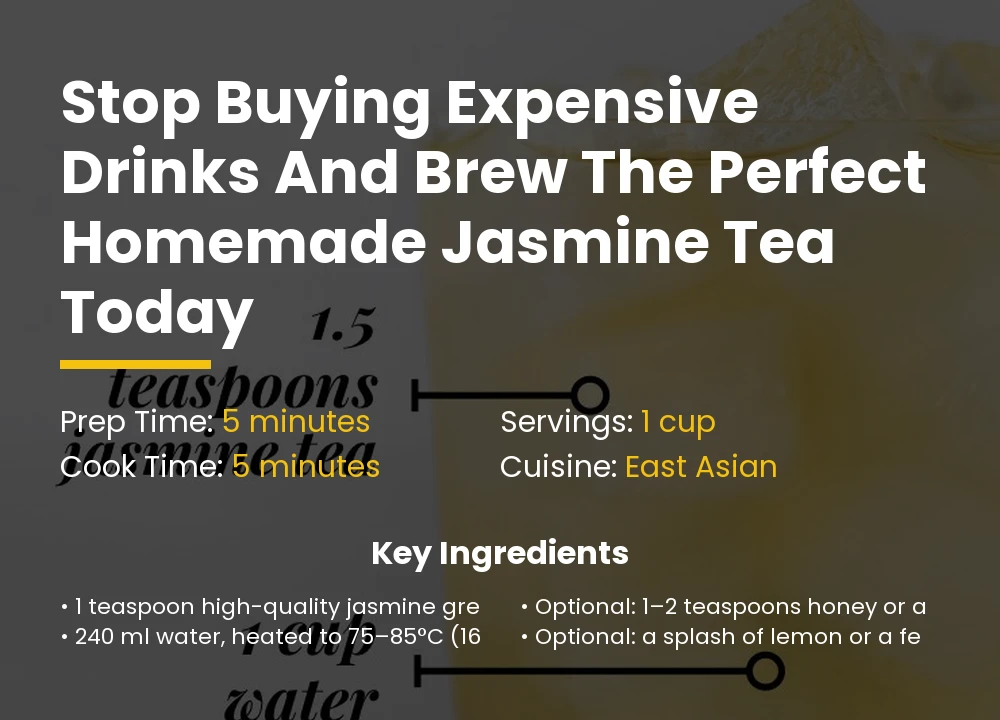
As an Amazon Associate, I may earn a small commission from qualifying purchases at no extra cost to you. This helps me create more valuable, tested content for you.
Skip the bottled beverages that quietly eat into your grocery budget. After years teaching kitchen science and studying tea history, I’ve learned that the difference between a flat cup and a fragrant, uplifting jasmine tea comes down to a few precise choices: temperature, leaf quality, and steep time. You don’t need fancy gear to brew a cup that smells like a summer garden and tastes clean and floral. This guide starts with the steps you’ll actually use, then explains why each choice matters, and finally offers variations and storage tips so you can keep the aroma strong day after day.
Jasmine Tea at Home: Step-by-Step
Recipe Details
- Prep Time: 5 minutes
- Cook Time: 5 minutes
- Servings: 1 cup
- Course: Beverage
- Cuisine: East Asian
- Diet: Vegan
Ingredients
- 1 teaspoon high-quality jasmine green tea leaves
- 240 ml water, heated to 75–85°C (167–185°F)
- Optional: 1–2 teaspoons honey or a drop of stevia for sweetness
- Optional: a splash of lemon or a few citrus zest shavings for brightness
Instructions
- Pre-warm a teapot or cup by rinsing with hot water. This helps maintain a steady steep temperature and prevents a sudden cool-down that dulls aroma.
- Place the jasmine leaves in a teapot, infuser, or cup. You want about 1 teaspoon for every 240 ml of water.
- Pour water at 75–85°C (167–185°F) over the leaves. You should hear a soft hiss of steam and begin to detect a gentle floral aroma rising from the surface.
- Steep for 2–3 minutes. If you can’t smell much jasmine at 2 minutes, give it another 30–60 seconds. This works because jasmine oils release best with moderate heat and short contact time; over-steeping blunts the perfume and can bring out bitterness.
- Strain or remove the infuser. Transfer to your mug and enjoy the bright, pale-gold color and the clean, floral aroma. If you chose a sweetener, add it now while the cup is still hot to help it dissolve.
Nutrition
- Calories: ~2 kcal per cup (unsweetened)
- Caffeine: ~20–40 mg per cup (varies by leaf and steep time)
- Sugar: 0 g (unsweetened); add sugar or honey if desired
Cooking Method
Brewing and steeping. This is a no-bake, no-fry method that relies on controlled heat and timing to coax aroma from jasmine petals into the tea.
Tools Needed
- Teapot or cup with an infuser
- Kettle or pot to heat water
- Fine-mesh strainer (if not using an infuser)
- Measuring spoons
- Thermometer (optional but helpful for precision)
Pro Tips and Troubleshooting for Perfect Jasmine Tea
Temperature is where most home brewers go wrong. This works: aim for 75–85°C. Boiling water scorches the delicate jasmine oils, producing a harsh aftertaste. If you don’t own a thermometer, boil, then wait 1–2 minutes before pouring. Steep for 2–3 minutes; longer is not better for a floral tea and often introduces bitterness. Use good-quality leaves; the aroma of lower-grade jasmine varies wildly and will disappoint you. Finally, pre-warm your cup or pot to keep the infusion at a steady heat. This prevents a weak brew at the end of the cup.
Smart Substitutions and Dietary Variations
If you’re out of jasmine tea, you can substitute a light green tea with a small handful of dried jasmine blossoms to restore aroma, or use a green tea scented with other florals like orange blossom for a similar lift. For a caffeine-free option, try a pure chamomile and jasmine blend, but expect a different flavor profile. You can skip sweeteners entirely to keep it dairy-free and low-calorie, or use a calorie-light sweetener if you want a touch of sweetness. This approach keeps the drink accessible and adaptable to various diets while preserving the aroma and delicate flavor.
Storage Guide and Reheating Instructions
Store jasmine tea leaves in an airtight, opaque tin in a cool, dark place away from strong odors. Heat exposure and light degrade aroma, so keep it sealed and out of the pantry light. Brew fresh for best results; reusing leaves lightly isn’t ideal for jasmine, as fragrance fades with each steep. If you make more than you can drink, refrigerate brewed tea in a sealed bottle for up to 24–48 hours, then reheat gently—avoid boiling it again as that dulls the bouquet. This storage routine preserves aroma without sacrificing flavor, and it’s where many home brewers diverge from the ideal.
Best Serving Ideas and Pairings
A light jasmine tea pairs well with citrus-forward snacks, almond cookies, steamed dumplings, or a simple sesame cracker. Serve in warm cups to keep the aroma vivid, and consider a tiny twist of citrus peel or mint leaf for a fresh finish. If you’re pairing with a meal, choose something mild that won’t compete with the tea’s floral notes. The aim is balance: a bright cup should elevate, not overwhelm, the plate.
Frequently Asked Questions
Should jasmine tea be brewed with boiled water or cooler water?
Cooler water (75–85°C) preserves the delicate aroma and avoids bitterness. Boiling water quickly masks the jasmine perfume and can introduce harsh notes.
How long should jasmine tea steep?
A 2–3 minute steep is ideal for a fragrant, balanced cup. If the aroma is faint, add 30 seconds; if you go longer, expect stronger tea with a potential bitterness.
Can I reuse the same leaves for a second brew?
You can, but the second brew will be noticeably lighter in aroma and flavor. For jasmine, one good steep is usually enough to capture the bloom of fragrance.
Is jasmine tea caffeine-free?
Jasmine tea contains caffeine (from the green tea base). Amounts vary by leaf and steep time. For a lighter lift, use a shorter steep or a decaffeinated green tea base.
What sweeteners work best with jasmine tea?
Light sweeteners, honey, or stevia can work, but add them after steeping to preserve aroma. Sugar can dull the bouquet if stirred in too early.
How should I store jasmine tea leaves?
Keep leaves in an airtight, opaque container away from light and strong odors. Store in a cool, dry place to maintain aroma and flavor.
Can jasmine tea be enjoyed in the evening?
Yes, but it contains caffeine. If you’re sensitive to caffeine, choose a decaf jasmine option or drink it earlier in the day.
What’s the best way to scent water for jasmine tea?
Warm your teapot or cup, then let the leaves steep in filtered water to preserve purity of flavor. Tap water with minerals can mute the aroma.