
Many individuals seek natural methods to manage daily stress and support emotional balance. St. John’s Wort tea serves as a traditional herbal remedy for this purpose. I have personally incorporated this infusion into my routine during periods of seasonal change.
The basic preparation involves steeping the dried aerial parts of the plant in hot water. You can create a simple cup using one to two teaspoons of herb per cup of water. Steeping for five to ten minutes allows for full extraction of its properties.
My first encounter with Hypericum perforatum occurred while walking through a sunny meadow in late June. The bright yellow flowers with their distinctive red sap when crushed left a lasting impression. This experience sparked a deeper interest in its historical uses and preparation methods.
Understanding St. John’s Wort
St. John’s Wort, known scientifically as Hypericum perforatum, is a perennial herb with a long history of use. The plant features yellow flowers that typically bloom around St. John’s Day in late June. Its leaves contain small translucent glands that appear as perforations when held to the light.
This herb grows abundantly in well-drained soils and sunny areas across many temperate regions. You can find it in meadows, along roadsides, and in open woodlands. Proper identification is crucial before foraging, as several look-alike plants exist.
The medicinal compounds are concentrated in the flowering tops and leaves. These include hypericin and hyperforin, which contribute to its characteristic effects. The quality of the plant material significantly influences the potency of your final preparation.
Botanical Identification
Recognizing St. John’s Wort requires attention to several distinct features. The stems are erect and branching, with opposite, oblong leaves. When you crush the flower buds between your fingers, they release a reddish-purple pigment.
The flowers display five bright yellow petals with black dots along the margins. These dots contain hypericin, one of the primary active constituents. The plant typically reaches one to three feet in height during its flowering period.
Foraging should only be done in areas free from pesticide contamination. Always cross-reference with reliable field guides or consult an experienced herbalist. Misidentification could lead to using potentially harmful species.
Historical Significance
The use of St. John’s Wort dates back to ancient Greek and Roman physicians. They employed it for various ailments, particularly nerve-related conditions and wound healing. The plant’s common name derives from its traditional harvesting time around the feast of St. John the Baptist.
Throughout European folk medicine, it was considered a protective herb against negative influences. People would hang the flowering branches over doorways and in homes. The red sap symbolized blood and was associated with vitality and healing.
Herbalists like Rosemary Gladstar have helped revive interest in traditional preparations. Their work demonstrates how historical knowledge combines with modern understanding of plant chemistry.
How to Make St. John’s Wort Tea
Recipe Details
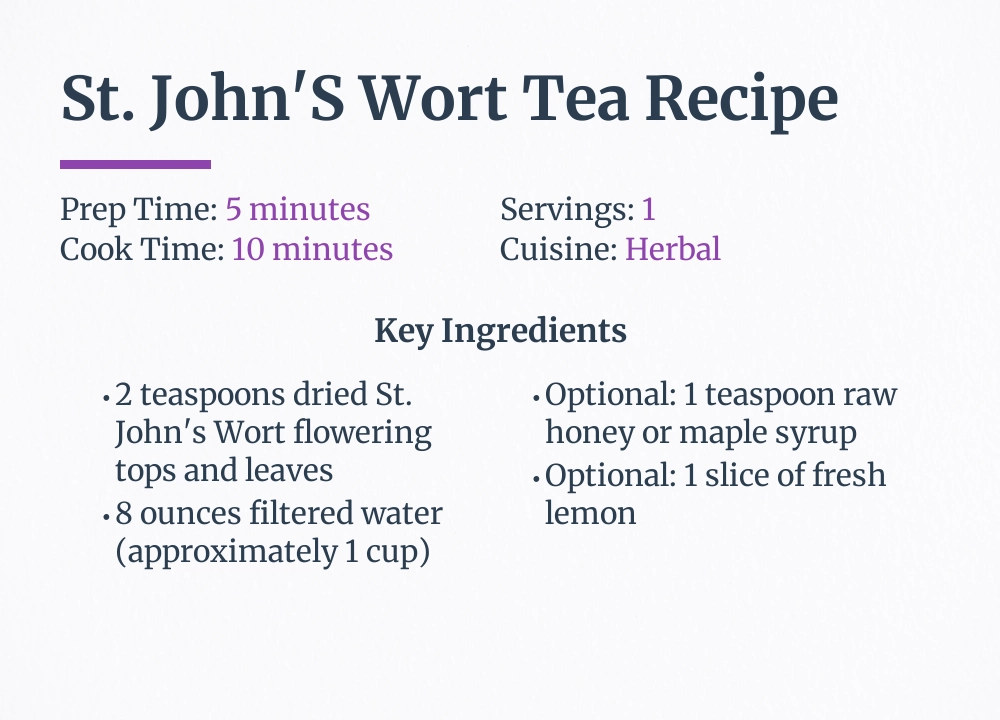
- Prep Time: 5 minutes
- Cook Time: 10 minutes
- Servings: 1
- Course: Beverage
- Cuisine: Herbal
- Diet: Vegan
Ingredients
- 2 teaspoons dried St. John’s Wort flowering tops and leaves
- 8 ounces filtered water (approximately 1 cup)
- Optional: 1 teaspoon raw honey or maple syrup
- Optional: 1 slice of fresh lemon
Instructions
- Bring water to a gentle boil in a stainless steel or glass kettle.
- While water heats, place the dried St. John’s Wort in a tea infuser or directly into a mug.
- Once water reaches boiling, remove from heat and let cool for 30-60 seconds until temperature is approximately 200°F (93°C).
- Pour the hot water over the herbs, ensuring they are fully submerged.
- Cover the mug or teapot with a lid or small plate to prevent volatile oils from escaping.
- Allow the mixture to steep for 5-10 minutes, depending on desired strength.
- Remove the infuser or strain the liquid through a fine mesh sieve.
- Add optional sweetener or lemon if desired, stirring until dissolved.
- Serve immediately while warm for optimal flavor and benefits.
Nutrition
- Calories: 5 kcal
- Protein: 0 g
- Fat: 0 g
- Carbohydrates: 1 g
- Sugar: 0 g
- Fiber: 0 g
- Sodium: 2 mg
- Cholesterol: 0 mg
Cooking Method
This preparation uses an infusion technique, which extracts water-soluble compounds from the plant material. The process involves heating water to just below boiling point to preserve delicate constituents. Steeping with a cover prevents essential oils from evaporating during extraction.
Longer steeping times generally produce a stronger, more bitter beverage. The resulting liquid typically has a golden-yellow color with a slightly astringent taste. Some people detect subtle resinous or floral notes in the aroma.
Tools Needed
- Stainless steel or glass kettle
- Ceramic or glass mug
- Tea infuser or mesh strainer
- Measuring spoons
- Small plate or lid for covering
The Science Behind St. John’s Wort
St. John’s Wort contains multiple bioactive compounds that contribute to its effects. Hypericin and hyperforin are considered primary constituents responsible for much of its activity. These compounds influence neurotransmitter systems in the brain and body.
Research indicates these substances may inhibit the reuptake of serotonin, dopamine, and norepinephrine. This mechanism shares similarities with some pharmaceutical antidepressants. The combination of compounds appears to work synergistically rather than in isolation.
Additional constituents including flavonoids and tannins provide antioxidant and anti-inflammatory properties. The complete pharmacological profile continues to be studied for better understanding.
Biochemical Action
Hypericin demonstrates photodynamic properties and can make skin more sensitive to sunlight. This effect requires significant consumption and sun exposure to become noticeable. Most people drinking occasional tea won’t experience this reaction.
Hyperforin appears to modulate multiple neurotransmitter systems simultaneously. It also influences the hypothalamic-pituitary-adrenal axis, which regulates stress response. These actions contribute to the plant’s traditional use for mood support.
The bitter principles in the herb stimulate digestive function through taste receptor activation. This can support overall nutrient absorption and gastrointestinal comfort.
Clinical Evidence
Multiple systematic reviews have examined St. John’s Wort for mild to moderate depressive symptoms. Many studies show favorable comparisons to conventional antidepressants with fewer side effects for some individuals. Results vary based on extract standardization and population characteristics.
Research on anxiety reduction shows promising but less consistent outcomes. The tea preparation likely provides lower concentrations of active constituents compared to standardized extracts. Traditional use suggests cumulative benefits with regular consumption.
Current evidence supports its historical application while highlighting the importance of proper preparation and dosing.
Nutritional and Wellness Benefits
While not a significant source of macronutrients, this herbal infusion provides various phytochemicals. These plant compounds support multiple body systems through different mechanisms. The combination offers a holistic approach to wellness rather than isolated nutrient supplementation.
Regular consumption may contribute to emotional balance through the modulation of stress hormones. The ritual of preparing and drinking tea itself can provide mindfulness benefits. This dual action addresses both physiological and psychological aspects of wellbeing.
The bitter properties support digestive function by stimulating enzyme production and bile flow. This can enhance nutrient assimilation from other foods consumed throughout the day.
Mood Support Mechanisms
The influence on neurotransmitter systems may help maintain emotional equilibrium during stressful periods. Unlike pharmaceutical options, the effect tends to be gradual and subtle. Many users report improved resilience rather than dramatic mood alteration.
Traditional use includes addressing seasonal mood changes associated with reduced daylight. The timing of harvest around the summer solstice connects to this application. Modern research has explored this relationship with mixed results.
Combining with other supportive herbs like oat tops or chamomile can enhance these benefits. The gentle action makes it suitable for occasional use when needed.
Physical Wellness Applications
Topically, St. John’s Wort has been used in oil preparations for nerve-related discomfort and minor skin irritations. The tea can be cooled and applied as a compress for similar purposes. Anti-inflammatory properties contribute to these traditional uses.
Some herbalists recommend it for supporting the nervous system during recovery from illness or exhaustion. The bitter components may stimulate appetite in cases of reduced hunger. These applications align with its historical use as a strengthening tonic.
The antioxidant content helps protect cells from oxidative damage associated with daily stressors. This contributes to overall vitality and resilience.
Historical and Cultural Context
St. John’s Wort has been incorporated into healing traditions across Europe for centuries. Its association with light and the sun appears in many folk practices. Gathering the plant around Midsummer was believed to capture the peak of its solar energy.
The plant was traditionally considered protective against negative influences and misfortune. People would place it in homes or carry it as a charm. This symbolic use paralleled its physical applications for wellbeing.
Different cultures developed various preparation methods based on available resources and knowledge. Teas, tinctures, and oils each extract different constituents for specific purposes.
Traditional Preparation Methods
Historical preparations often used fresh plant material harvested at peak flowering. The red sap expressed from flowers symbolized blood and vitality in sympathetic magic. Infusions in wine or oil were common before water-based teas became popular.
Combinations with other herbs varied by region and available flora. Mint, lemon balm, and chamomile were frequent partners in digestive and calming blends. These combinations addressed multiple symptoms simultaneously.
Dosage was typically guided by experience rather than standardized measurements. Herbalists adjusted preparations based on individual response and seasonal variations in plant potency.
Modern Evolution
Contemporary herbalism has refined traditional knowledge with scientific understanding. Standardized extracts allow for more consistent dosing in clinical settings. Tea preparations remain popular for their accessibility and gentle action.
The work of herbalists like Rosemary Gladstar has helped bridge traditional and modern practice. Her recipes often combine St. John’s Wort with complementary herbs for enhanced effect. This approach honors historical use while incorporating current knowledge.
Increased scientific validation has led to wider acceptance in integrative medicine approaches. Research continues to explore optimal preparations for different applications.
Common Mistakes and Expert Tips
Many beginners use water that is too hot, destroying delicate volatile compounds. Ideal water temperature is just below boiling, around 200°F. Using a thermometer initially can help develop intuition for the correct temperature.
Insufficient steeping time fails to extract the full spectrum of constituents. Five minutes represents a minimum for therapeutic benefit, while ten minutes provides stronger extraction. Covering during steeping is essential for preserving oil-based components.
Using old or improperly stored herbs results in weakened potency. Dried St. John’s Wort should retain some yellow color and distinct aroma. Store in airtight containers away from light and moisture.
Optimal Preparation Techniques
Freshly harvested and carefully dried plant material produces the best results. The flowers should be collected when newly opened on a sunny morning. Dry quickly in a dark, well-ventilated area to preserve active constituents.
Grinding the herbs just before brewing increases surface area for better extraction. A mortar and pestle works well for small quantities. Pre-ground herbs lose potency more quickly through oxidation.
Experiment with steeping times to find your preferred balance of flavor and effect. Longer steeping increases bitterness but may enhance certain properties. Adding lemon can moderate the astringent quality.
Quality Assessment
High-quality dried St. John’s Wort should have a vibrant yellow color in the flowers. The leaves maintain their characteristic perforated appearance when dried properly. A strong, slightly resinous aroma indicates good preservation of volatile oils.
The tea should produce a deep golden color with reddish undertones when properly prepared. Weak color suggests old material or insufficient steeping. Taste should be distinctly bitter with subtle floral notes.
Purchase from reputable suppliers who can verify botanical identity and harvest conditions. Organic sources reduce potential contamination from pesticides or environmental pollutants.
Dietary Adaptations and Variations
The basic recipe naturally accommodates most dietary preferences and restrictions. It contains no gluten, dairy, or animal products in its simplest form. Sweetener options can be adjusted based on individual needs and preferences.
For sugar-free versions, stevia or monk fruit provide sweetness without carbohydrates. Those avoiding all sweeteners can appreciate the natural bitter flavor profile. The bitterness itself provides digestive benefits through taste receptor stimulation.
Combining with other herbs allows customization for specific health goals or taste preferences. These blends can address multiple concerns simultaneously while modifying the flavor profile.
Herbal Combinations
For enhanced calming effects, combine with lemon balm or chamomile flowers. These herbs complement the mood-supporting properties while adding pleasant flavor notes. Use equal parts of each herb in the blend.
Digestive support blends might include ginger root or peppermint leaves. These additions counter the bitterness while supporting gastrointestinal function. Adjust proportions based on individual tolerance for each herb’s intensity.
Adaptogenic combinations with ashwagandha or holy basil provide broader stress support. These partnerships address both immediate and long-term stress responses. Start with small amounts of additional herbs to assess compatibility.
Preparation Variations
Cold brewing produces a less bitter beverage with different extraction properties. Steep overnight in cool water, then strain and serve over ice. This method preserves more heat-sensitive constituents.
Sun tea preparation harnesses solar energy in keeping with traditional symbolism. Place herbs and water in a clear glass jar in direct sunlight for several hours. This gentle extraction method works well during warm months.
Concentrated infusions can be prepared stronger and diluted with hot water when needed. This approach saves time for daily consumption while ensuring consistent strength.
Serving and Storage Recommendations
Freshly brewed tea provides the fullest flavor and maximum beneficial constituents. Serve immediately after straining while still warm. The heat helps release aromatic compounds that contribute to the experience.
If preparing in advance, store in a sealed container in the refrigerator for up to 24 hours. Gently rewarm without boiling to preserve delicate components. Avoid microwave heating which can create hot spots and degrade active compounds.
The flavor profile pairs well with light snacks that complement its bitter character. Whole grain crackers, mild cheeses, or fresh fruit provide pleasant contrasts. These combinations make the tea part of a mindful break rather than hurried consumption.
Optimal Consumption Timing
Many people find morning or early afternoon consumption works well for mood support throughout the day. Evening use may interfere with sleep for some individuals due to its potential energizing effects. Observe your personal response to determine ideal timing.
Consistency often yields better results than occasional large doses. A daily cup provides steady exposure to the plant’s constituents. This mimics traditional use patterns that developed over generations.
Cyclical use, such as several weeks followed by a break, prevents potential habituation. This approach maintains sensitivity to the herb’s effects while allowing the body to reset.
Long-Term Storage
Properly dried St. John’s Wort maintains potency for approximately 12-18 months when stored correctly. Keep in airtight glass containers away from direct light and heat sources. Label with harvest date if foraging your own material.
Check stored herbs periodically for signs of moisture or aroma loss. The material should remain fragrant and brightly colored. Discard if musty odors develop or if the plant material appears dull.
Consider preparing tinctures or oils from fresh plant material for longer preservation. These alternative preparations extract different constituents and offer variety in application methods.
Potential Considerations and Interactions
St. John’s Wort influences certain liver enzymes that metabolize medications. This can alter the effectiveness of prescription drugs including antidepressants, birth control pills, and blood thinners. Always disclose herbal supplement use to healthcare providers.
Photosensitivity represents another potential consideration, though rare with tea consumption. Fair-skinned individuals might notice increased sun sensitivity with regular high intake. Normal dietary consumption typically doesn’t cause this effect.
Some people experience gastrointestinal discomfort or allergic reactions. Begin with small amounts to assess individual tolerance. Discontinue use if adverse effects occur and consult a healthcare professional.
Medication Interactions
The cytochrome P450 enzyme system, particularly CYP3A4, is induced by consistent St. John’s Wort consumption. This acceleration of drug metabolism can reduce plasma concentrations of affected medications. The impact depends on dosage, frequency, and individual metabolism.
Oral contraceptives may become less effective, requiring additional protection methods. Anticoagulants like warfarin require careful monitoring if using this herb concurrently. Immunosuppressants such as cyclosporine also demonstrate significant interactions.
Serotonin syndrome risk exists when combining with SSRIs or other serotonergic medications. Symptoms include confusion, agitation, rapid heart rate, and elevated body temperature. This serious condition requires immediate medical attention.
Special Populations
Pregnant and breastfeeding women should avoid St. John’s Wort due to limited safety data. The herb’s influence on hormone systems and neurotransmitter activity warrants caution during these periods. Safer alternatives exist for addressing mood concerns during pregnancy.
Children under twelve typically shouldn’t use this herb without professional guidance. Developing systems may respond differently to its constituents. Family history and individual health status influence appropriate use decisions.
Individuals with bipolar disorder should use particular caution as mood-stabilizing medications may interact. The herb potentially triggers manic episodes in susceptible individuals. Professional supervision is essential in these circumstances.
Frequently Asked Questions
What is the best time to harvest St. John’s Wort for tea?
Peak potency occurs when flowers are newly opened, typically in late June to early July. Harvest on a sunny morning after dew has evaporated but before afternoon heat. Choose vibrant, undamaged flowering tops for optimal quality.
Can I use fresh St. John’s Wort instead of dried?
Fresh plant material requires approximately twice the volume compared to dried. The higher water content in fresh herbs dilutes the active constituents. Some traditional preparations specifically call for fresh material, particularly for oil infusions.
How long does it take to notice effects from drinking this tea?
Individual response varies based on metabolism, dosage, and constitution. Some people report subtle calming effects after a single cup. Consistent use over several weeks typically provides more noticeable benefits for mood support.
Is St. John’s Wort tea safe for long-term use?
Traditional use suggests safety with appropriate cycling, such as several weeks on followed by a break. Monitoring by a healthcare professional helps identify any developing concerns. Regular reassessment ensures continued appropriateness for your situation.
Can I combine St. John’s Wort with other herbal teas?
Combining with complementary herbs often enhances benefits and improves flavor. Lemon balm, chamomile, and oat straw represent traditional partners. Avoid combining with other strong-acting herbs without understanding potential interactions.
What does St. John’s Wort tea taste like?
The flavor profile includes distinct bitterness with subtle floral and resinous notes. The aroma often reminds people of summer meadows with a slightly astringent quality. Adding lemon or honey moderates the bitterness while preserving beneficial properties.
Are there any specific contraindications for this herb?
Major contraindications include concurrent use of certain prescription medications, pregnancy, and specific medical conditions. Organ transplant recipients, people with Alzheimer’s disease, and those with certain genetic conditions should avoid use. Always discuss with your healthcare provider before beginning any herbal regimen.
How should I store prepared tea?
Refrigerate leftover tea in a sealed glass container for up to 24 hours. The liquid may darken slightly but remains safe to consume. Gently reheat without boiling to preserve delicate constituents before drinking.
Can I use St. John’s Wort tea topically?
Cooled tea can be applied as a compress for minor skin irritations or nerve discomfort. The anti-inflammatory and analgesic properties work through skin absorption. Test on a small area first to check for sensitivity reactions.
What is the difference between tea and tincture preparations?
Tea extracts water-soluble constituents while tinctures using alcohol extract both water and alcohol-soluble compounds. Tinctures typically provide more concentrated doses and longer shelf life. Tea offers gentler action and the therapeutic benefits of the brewing ritual itself.